
Joyful Creations: An Easy Birdhouse Craft for Kids
 By Speech Blubs Team•Jan 13, 2026•19 min.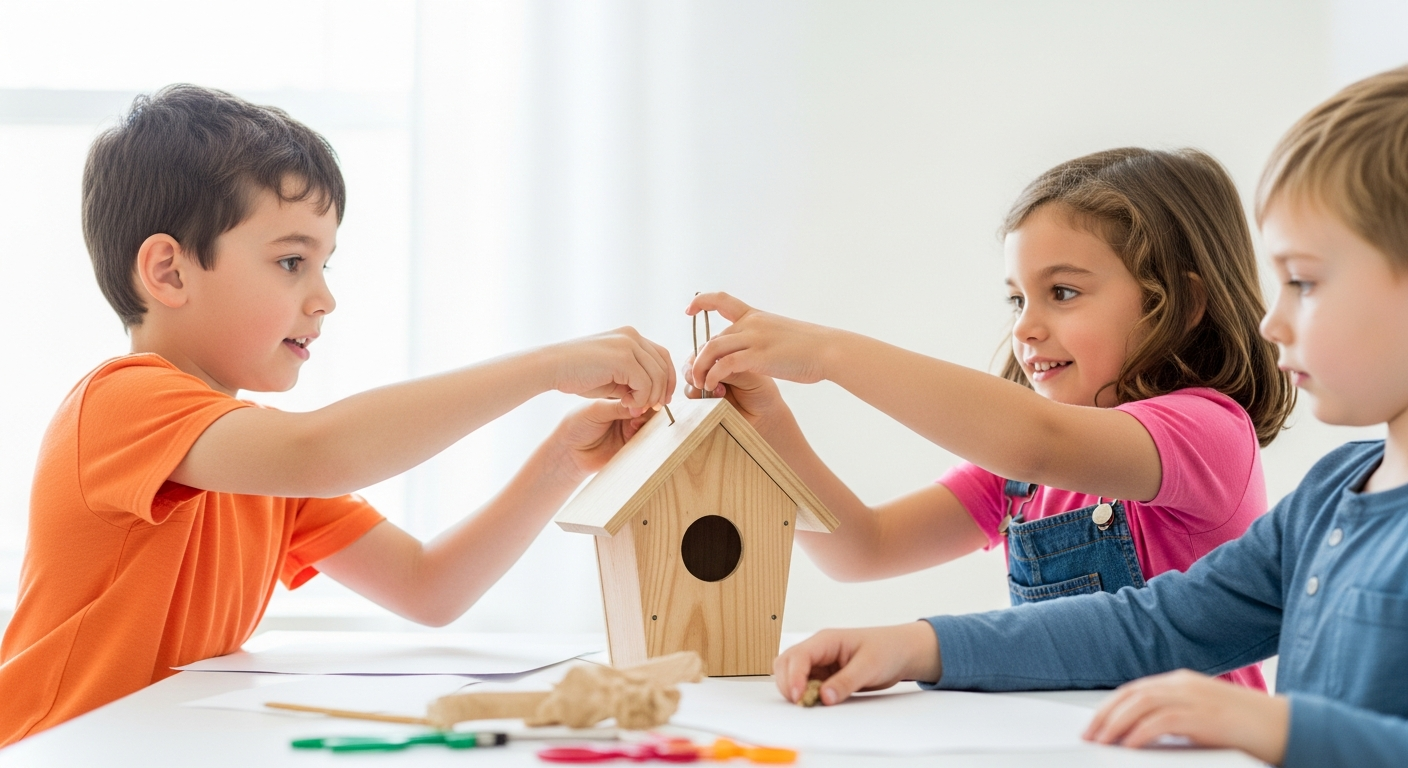
Table of Contents
- Why an Easy Birdhouse Craft is a Nest Egg for Development
- Choosing Your Feathered Friend's Home: Crafting Options for Every Age
- Safety First: A Little Supervision Goes a Long Way
- Transforming Craft Time into Communication Time with Speech Blubs
- Is Your Child Ready for a Communication Boost? Discover Speech Blubs!
- Where to Hang Your Masterpiece: Birdhouse Placement Tips
- Beyond the Birdhouse: Cultivating a Lifelong Love for Learning
- Conclusion
- FAQ
Have you ever watched a tiny bird flit gracefully through your garden, perhaps searching for a safe haven, and wished you could help? Or maybe you’re simply looking for a screen-free activity that sparks your child's imagination, nurtures their growing minds, and encourages them to express themselves? Creating an easy birdhouse craft with your child is a wonderfully rewarding answer to all these desires. It’s more than just a craft; it's an opportunity for connection, learning, and fostering a love for nature and communication. In this comprehensive guide, we’ll explore various types of easy birdhouse crafts suitable for different ages and skill levels, delve into the profound developmental benefits they offer, and show you how to seamlessly weave these hands-on experiences with powerful speech and language development tools like Speech Blubs.

Why an Easy Birdhouse Craft is a Nest Egg for Development
Crafting isn't just about glue, glitter, and pretty results; it's a powerhouse for a child’s holistic development. When your little one dives into making an easy birdhouse craft, they’re not just building a home for a feathered friend; they’re building foundational skills that impact everything from their fine motor control to their ability to articulate their thoughts and feelings.
Beyond the Birdseed: Core Skills Cultivated
- Fine Motor Dexterity and Coordination: From gripping a paintbrush to carefully placing a piece of tissue paper or threading string, birdhouse crafts require precise hand movements. These activities strengthen small muscles in the hands and fingers, essential for tasks like writing, buttoning clothes, and using utensils. The intricate actions involved in cutting, gluing, and decorating enhance hand-eye coordination, a vital skill for learning and everyday life.
- Language Expansion and Communication Confidence: This is where the magic truly happens. Crafting provides a rich, natural environment for language development. As you work together, you'll find countless opportunities to discuss colors, shapes, textures, and actions. "What color should we paint the roof?" "Can you hand me the blue stick?" "We're gluing the perch now!" These simple conversations build vocabulary, encourage descriptive language, and help children understand and follow instructions. At Speech Blubs, our mission is to empower children to "speak their minds and hearts," and activities like crafting lay a crucial groundwork for this self-expression.
- Cognitive Growth: Problem-Solving and Sequencing: Every craft project is a series of steps. Children learn to follow instructions in a sequence ("first we paint, then we glue"), anticipate outcomes, and problem-solve when things don't go exactly as planned ("Oh, the glue is sticky, let's use a little less next time!"). This strengthens their cognitive abilities, teaching them to plan, organize, and adapt.
- Emotional Development: Patience and Pride: Crafting teaches patience as children wait for paint to dry or carefully assemble small parts. The reward? A tangible creation they can proudly display. This sense of accomplishment boosts self-esteem and encourages persistence, teaching them that effort leads to wonderful results.
- Connecting with Nature and Empathy: An easy birdhouse craft naturally connects children to the natural world. It sparks conversations about birds, their habitats, and their needs, fostering empathy and a sense of responsibility towards wildlife. It encourages observation and curiosity about the environment around them.
Choosing Your Feathered Friend's Home: Crafting Options for Every Age
No matter your child's age or your available materials, there’s an easy birdhouse craft waiting to be made. We'll explore three popular and accessible types, each offering its own unique charm and learning opportunities.

Recycled Carton Birdhouses: Eco-Friendly & Accessible Fun
This is perhaps one of the most popular and frugal options, turning everyday household waste into a delightful bird abode. It's a fantastic way to teach about recycling and repurposing.
Materials Needed:
- Empty and clean cardboard cartons (milk, juice, half-and-half, cereal boxes work great!)
- Acrylic paints or tempera paints (non-toxic is key!)
- Paintbrushes
- Water and paper towels for cleaning brushes
- Scissors (adult-use for cutting cartons)
- Utility knife (adult-use only)
- Craft glue or hot glue gun (adult-use/supervision)
- Sticks or dowels for perches
- String, twine, or yarn for hanging
- Optional: Glitter, colorful tissue paper squares, permanent markers, pom-poms, natural elements like small leaves or twigs, bird seed
Step-by-Step Guide:
- Clean and Prepare Cartons: Thoroughly wash and dry your chosen cartons. This is crucial to prevent mold and unpleasant smells. If there are any stubborn stickers, a little Goo Gone can help, but ensure it's fully cleaned off afterward.
- Cut Entrance and Perch Holes (Adult help emphasized): With adult supervision, use a utility knife to carefully cut out a circular entrance hole on the front of the carton, near the top. The size of the hole can vary depending on the birds you hope to attract (e.g., smaller for wrens, larger for bluebirds). Below the entrance hole, poke a smaller hole for the perch. A nail or screwdriver works well for this.
- Decorate with Paint & Glitter: Lay down some newspaper or a drop cloth. This is where your child's creativity can truly shine! Encourage them to paint the entire carton with vibrant colors. Discuss the colors they're using ("You're choosing bright yellow for the sun, and green for the grass!"). While the paint is still wet, they can sprinkle glitter for a touch of sparkle. If using various colors, consider alternating sides or creating patterns like stripes or polka dots. Let the paint dry completely.
- Add a Perch and Hanging Loop: Insert a stick or dowel into the smaller hole you made for the perch. It should fit snugly. Add a dab of craft glue or hot glue (adult supervision!) to secure it in place from the inside. Then, poke two small holes at the very top of the carton, on either side of the carton's natural peak. Thread a piece of string or twine through these holes and tie the ends together to form a hanging loop. Make sure this is secure before adding the roof!
- Secure the Roof: For a decorative and protective roof, you can use popsicle sticks. Paint them in coordinating colors and, with adult help, glue them side-by-side to the top of the carton, overlapping slightly to create a pitched roof effect. This adds extra charm and a bit more weather resistance. If your carton has a plastic pour spout, you might need to trim it down so the popsicle sticks lie flat.
- Final Touches & Drying: Let all the glue and paint dry completely. Your child can add extra details with glitter pens, stickers, or even small crafted cutouts. Once dry, you have a beautiful, unique birdhouse!
Wooden Craft Birdhouses: A Canvas for Creativity
Pre-made wooden birdhouses, readily available at craft stores or even dollar stores, offer a sturdy base and a different set of crafting opportunities. They’re durable and can become lasting decorations.
Materials Needed:
- Plain wooden birdhouses (often unfinished)
- Acrylic craft paints in various colors
- Paintbrushes
- Mod Podge (glossy or matte, or outdoor formula for exterior use)
- Colorful tissue paper (pre-cut squares are convenient)
- Scissors
- Optional: Embellishments like faux flowers, small wooden cutouts, vinyl decals, spray sealer
Step-by-Step Guide:
- Base Coat: Start by giving the wooden birdhouse a base coat of paint. White or a light color can make subsequent decorations pop more, but any color will work! Discuss why you're choosing this color, and what effect it might have on the final look. Let it dry thoroughly.
- Prepare Tissue Paper/Decorations: While the base coat dries, your child can cut or tear colorful tissue paper into small squares or other shapes. This is great for developing scissor skills (with supervision) or simply tearing for a more organic look.
- Apply Mod Podge & Decorate: Using a paintbrush, apply a layer of Mod Podge to a small section of the birdhouse. Have your child carefully place a tissue paper square onto the wet Mod Podge, then brush another thin layer of Mod Podge over the top of the tissue paper to seal it down. Continue this process, overlapping colors and patterns, until the birdhouse is covered to their liking. This step is wonderfully meditative and excellent for focus.
- Optional: Add Embellishments & Seal: Once the tissue paper and Mod Podge layers are dry, your child can add extra decorations like small beads, painted wooden shapes, or even drawings with permanent markers. If the birdhouse will be placed outdoors, apply several coats of Mod Podge Outdoor or a clear spray sealer to protect it from the elements.
Simple DIY Wooden Birdhouse Kits: Building Foundational Skills
For families looking for a slightly more involved project, constructing a birdhouse from pre-cut wooden pieces (often found as kits or easily cut from a single board with adult help) is a fantastic way to introduce basic woodworking skills. This is a project that truly fosters a sense of building and creation.
Materials Needed:
- Pre-cut wooden birdhouse pieces (cedar or untreated pine are good options for birds)
- Small nails or wood screws
- Hammer (child-sized if appropriate) or screwdriver
- Wood glue (optional, but adds strength)
- Drill with small bit (adult-use for pre-drilling pilot holes)
- Measuring tape or ruler
- Safety glasses
- Exterior-grade paint or wood stain (optional)
Step-by-Step Guide:
- Pre-Drilling & Safety (Adult Role): The adult should pre-drill small pilot holes where nails or screws will go. This prevents wood splitting and makes it much easier for children to hammer or screw. Always wear safety glasses!
- Assembling the Walls: Guide your child in matching the wooden pieces. Start by attaching the side panels to the front panel, using wood glue if desired before nailing or screwing. This is where teamwork shines, with one person holding the pieces steady while the other secures them.
- Attaching the Roof: Once the walls are assembled, attach the roof panels. If it’s a gabled roof, you'll attach two pieces. Ensure there’s a slight overhang to protect the bird entrance from rain.
- Adding the Bottom: The bottom piece is usually the last to be installed. It's helpful to cut off the corners of the bottom piece or drill a few small holes for drainage. Some designs allow the bottom to be removable for easy cleaning, secured by one or two screws that aren't fully tightened.
- Hanging Mechanism: Screw a hook into the top of the roof or attach a sturdy wire loop. You might want to carve out a small flat spot on the roof for the hook to sit flush.
- Optional: Paint or Stain: If desired, paint the finished birdhouse with exterior-grade, non-toxic paint. Natural wood is also a beautiful and safe choice, as bright colors can sometimes attract predators. Let it dry completely before hanging.
Safety First: A Little Supervision Goes a Long Way
Crafting with children should always prioritize safety. Here are some essential tips:
- Adult Supervision is Key: Never leave children unattended with craft supplies, especially sharp tools or hot glue guns.
- Sharp Tools: Utility knives, sharp scissors, and drills should only be handled by adults. Children can participate in safer steps like painting or placing decorations.
- Non-Toxic Materials: Ensure all paints, glues, and sealers are labeled as non-toxic and safe for children.
- Ventilation: If using spray paints or sealers, do so in a well-ventilated area, preferably outdoors.
- Read Labels: Always read product labels for specific safety instructions and drying times.
Transforming Craft Time into Communication Time with Speech Blubs
While the tactile experience of crafting is incredibly valuable, we can supercharge the developmental benefits by intentionally integrating language and communication practices. This is where Speech Blubs, a powerful tool for developing speech and language skills, perfectly complements hands-on activities.
Nurturing Little Voices: Beyond Basic Sounds
The process of making an easy birdhouse craft is inherently rich with communication opportunities:
- Describing the Process: Colors, Shapes, Actions: As you paint, cut, and glue, use descriptive language. "We're painting the bright red roof." "Look at these tiny green square pieces of tissue paper." "You are gluing the stick to make a perch!" This active labeling and describing helps expand vocabulary and understanding.
- Following Multi-Step Directions: Crafting is a fantastic way to practice following instructions. Start with simple one-step commands ("Give me the brush") and gradually increase to multi-step directions as your child progresses ("First, paint the roof, then put on the glitter"). This is a crucial skill for both language comprehension and overall learning.
- Imaginative Play and Storytelling: Once the birdhouse is complete, let your child imagine who will live in it. What kind of bird is it? What's its name? What does it like to eat? This encourages storytelling, narrative development, and imaginative play – all vital for social-emotional growth and language use.
- Sound Imitation: What sounds do different birds make? "Chirp, chirp!" "Caw, caw!" Imitating animal sounds is a fun way to practice various speech sounds and develop oral motor skills.
How Speech Blubs Amplifies Learning: Our "Smart Screen Time" Approach
At Speech Blubs, we believe in turning screen time into "smart screen time" – an active, engaging experience that drives real developmental progress. Our app is designed to be a powerful supplement to real-world interactions like crafting, building on the same principles of observation, imitation, and joyful learning.
- Our "Video Modeling" Magic: Just as children learn by observing you paint or glue during crafting, our app leverages a unique "video modeling" methodology. Children learn by watching and imitating their peers on screen, activating mirror neurons in the brain. This peer-to-peer learning is incredibly effective and motivating, transforming complex communication skills into an engaging and natural process. Our method is backed by science, placing us in the top tier of speech apps worldwide, as you can explore on our Research page.
- Beyond Passive Viewing: Unlike passive cartoons, Speech Blubs requires active participation. It's interactive, encouraging children to make sounds, repeat words, and express themselves. This complements the active engagement of crafting, ensuring that children are always learning and growing. Our mission at Speech Blubs is to empower children to "speak their minds and hearts," and we provide a screen-free alternative to passive viewing (like cartoons) and a powerful tool for family connection.
- Real-World Scenarios: For a parent whose 3-year-old "late talker" loves animals, the crafting experience offers tangible objects to name, like "bird," "nest," "tree," and "house." They can practice sounds like "b-b-bird" or "ch-ch-chirp." The "Animal Kingdom" section in Speech Blubs offers a fun, motivating way to reinforce these words and sounds through engaging videos of children articulating them. For a child working on verb phrases, describing "painting the roof" or "gluing the stick" during the craft provides perfect practice, which can then be reinforced by interactive activities in our app that focus on action words. The app's structured activities, like those focusing on describing objects, colors, and actions, provide excellent practice that can be immediately applied and reinforced during hands-on play.
- Connecting Families, One Word at a Time: Speech Blubs is designed to be a shared experience, encouraging parents to play and learn alongside their children. Just like crafting together, it creates joyful family learning moments, strengthening bonds while building essential communication skills. Our company was born from the personal experiences of our founders, who all grew up with speech problems and created the tool they wished they had, ensuring that we understand the journey you and your child are on.
Is Your Child Ready for a Communication Boost? Discover Speech Blubs!
You've seen how a simple craft can open doors to incredible learning. If you're wondering if your child could benefit from additional support in their speech and language development, Speech Blubs is here to help.
A Simple Check-Up: Our Preliminary Screener
Unsure if your child could benefit from speech support? Take our quick 3-minute preliminary screener to get a simple assessment and a next-steps plan. It's a helpful starting point to understand your child's communication journey.
Experience the Difference: Try Speech Blubs Free!
We are committed to providing an immediate, effective, and joyful solution for the 1 in 4 children who need speech support. We blend scientific principles with play into one-of-a-kind "smart screen time" experiences.
- The Best Value: Our Yearly Plan: For just $59.99 per year, which breaks down to an incredible $4.99/month, you can unlock the full Speech Blubs experience. This plan not only saves you 66% compared to the monthly option but also includes exclusive, high-value features: a 7-day free trial, the extra Reading Blubs app to foster early literacy, early access to new updates, and 24-hour support response time.
- Monthly Plan Option: We also offer a Monthly plan for $14.99 per month, but it does not include the 7-day free trial, the Reading Blubs app, early access, or 24-hour support.
- Start Your Journey Today: We encourage you to choose the Yearly plan to get the free trial and the full suite of features! Download Speech Blubs on the Apple App Store or Google Play Store to claim your free trial and unlock a world of expressive communication. Or, create your account on our website.
Hear From Other Parents:
Don't just take our word for it! See what other parents are saying about their child's success with Speech Blubs and how it has transformed their families' communication journeys on our Testimonials page.
Where to Hang Your Masterpiece: Birdhouse Placement Tips
Once your beautiful, easy birdhouse craft is complete, the next exciting step is to find the perfect spot for it! Thoughtful placement can increase the chances of attracting feathered residents and ensures their safety.
- Safety from Predators: Hang your birdhouse in a location that is difficult for predators (like cats or squirrels) to reach. Ideally, it should be at least 5-10 feet off the ground, away from low branches or fences that predators could use to jump onto the birdhouse. Adding a baffle around the pole or trunk can also deter climbers.
- Shelter and Direction: Birds prefer houses that are sheltered from harsh winds and direct afternoon sun. Facing the entrance hole away from prevailing winds (often east or south-east) can protect nestlings. Nearby trees or dense bushes offer cover from predators and a place for young birds to practice flying.
- Quiet Location: Choose a spot that is relatively quiet and undisturbed by constant human activity.
- Maintenance: Ensure the birdhouse is accessible for cleaning at the end of nesting season (after birds have fledged). Drainage holes are important to prevent water accumulation.
Beyond the Birdhouse: Cultivating a Lifelong Love for Learning
The journey doesn’t end with one birdhouse! The skills your child gains from this easy birdhouse craft for kids—creativity, fine motor control, patience, and communication—are transferable to countless other activities. Encourage their curiosity about birds, observe nature together, read books about animals, and continue engaging in hands-on projects that stimulate their minds and foster their voices. Every creative endeavor is an opportunity for growth, learning, and expressing the wonderful thoughts and feelings inside.
Conclusion
Creating an easy birdhouse craft for kids is a heartwarming activity that offers far more than just a decorative outcome. It's a vibrant blend of fun, creativity, and essential developmental benefits, from honing fine motor skills to sparking rich language interactions. By engaging in hands-on projects like these, we empower our children to explore their world, express their ideas, and build confidence in their communication abilities. When paired with innovative tools like Speech Blubs, these experiences become even more powerful, transforming playtime into impactful learning. We believe every child deserves the chance to "speak their minds and hearts," and by combining joyful, active play with smart, science-backed support, we can help them soar.
Ready to nurture your child’s communication journey? Download Speech Blubs on the Apple App Store or Google Play Store today and embark on a 7-day free trial. Remember to select the Yearly plan to get the free trial and unlock the Reading Blubs app, early access to new features, and dedicated support, all for the best value. Create your account on our website to begin today!
FAQ
Q1: What is the best material for an easy birdhouse craft for young children? A1: For young children, recycled cardboard cartons (like milk or juice cartons) or pre-made unfinished wooden birdhouses from craft stores are excellent choices. They are easy to decorate, require minimal cutting (which an adult can handle), and are readily available, making them perfect for an easy, low-stress project.
Q2: How can I ensure the birdhouse is safe for real birds to use? A2: Always use non-toxic, exterior-grade paints, glues, and sealers. Avoid pressure-treated or chemically stained wood. Ensure there are small drainage holes in the bottom and no sharp edges inside. Also, consider placing it in a location safe from predators and sheltered from harsh weather.
Q3: My child gets frustrated easily with crafts. How can I make this activity more enjoyable? A3: Break the craft into smaller, manageable steps, allowing your child to choose colors or designs to give them a sense of control. Focus on the process, not just the perfect outcome. Offer lots of praise for their effort, and remember that activities like crafting, combined with tools like Speech Blubs, help build patience and confidence over time.
Q4: How does Speech Blubs connect to hands-on activities like making a birdhouse? A4: Speech Blubs reinforces the language skills naturally used during crafting. While making a birdhouse, you describe colors, shapes, and actions. The app provides structured, engaging activities that reinforce vocabulary, articulation, and following instructions through video modeling, making "smart screen time" a complementary tool to enhance the language-rich environment of hands-on play.
About the author