
Joyful Easter Crafts: Fun & Easy Ideas for Kids
 By Speech Blubs Team•Jan 13, 2026•26 min.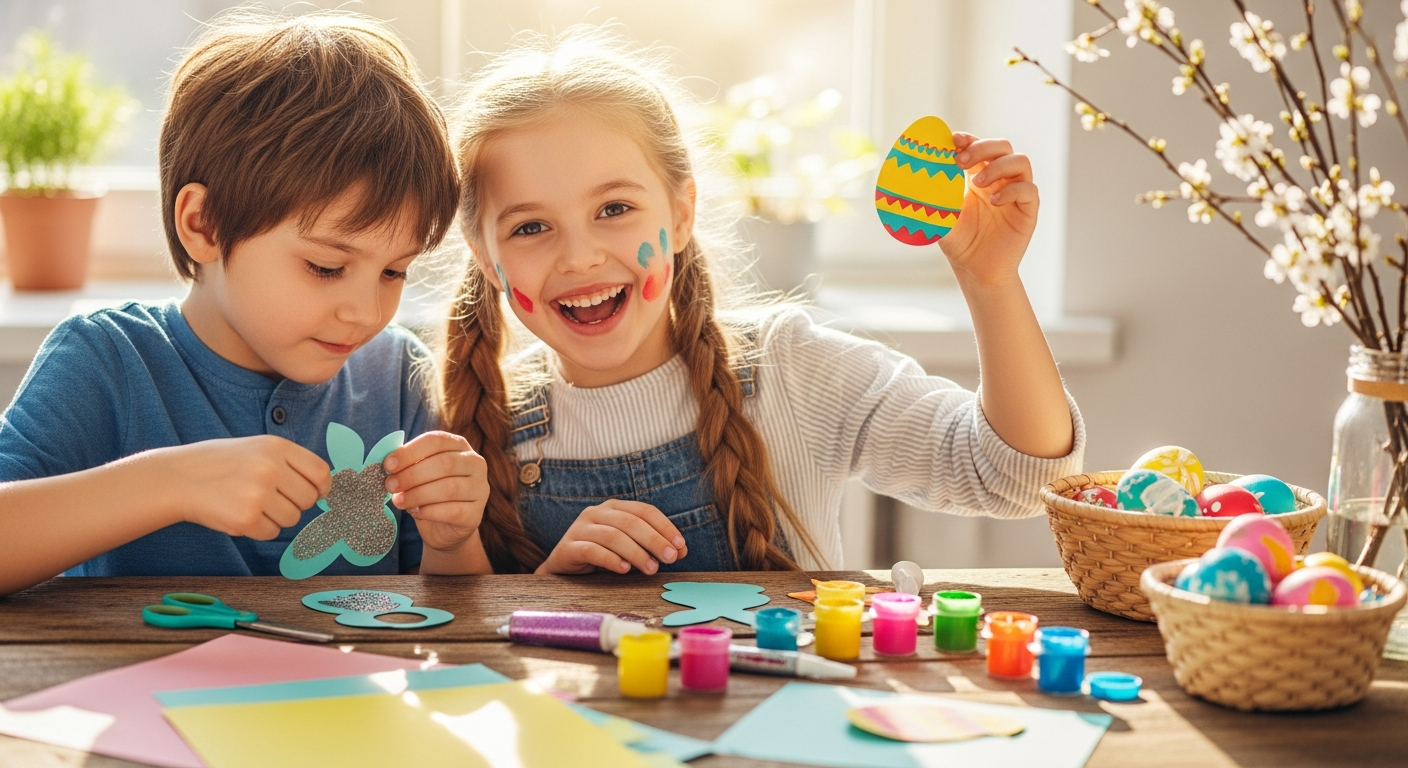
Table of Contents
- Introduction
- Why Crafts Are More Than Just Fun: The Developmental Edge
- Getting Started: Essential Crafting Tips for Parents
- Hoppy Hands, Happy Hearts: Our Favorite Fun & Easy Easter Crafts for Kids
- Boosting Communication Through Crafting: How Speech Blubs Helps
- Ready to Empower Your Child's Voice? Join the Speech Blubs Family!
- Conclusion
- FAQ
The air hums with the promise of spring, signaling the arrival of one of the year's most cherished holidays: Easter! For many families, Easter brings with it a special kind of magic—a time for renewal, togetherness, and, of course, delightful traditions. While the thought of chocolate eggs and bunny visits often sparks excitement, there's an equally enchanting world waiting to be explored through crafting. Imagine your child's eyes lighting up as they transform simple materials into a charming Easter decoration, or the quiet focus as tiny hands meticulously glue, snip, and paint. These moments aren't just about creating a festive keepsake; they're powerful opportunities for growth, learning, and connection.
At Speech Blubs, we believe in empowering children to speak their minds and hearts, and we understand that every activity, from playtime to crafting, is a chance to nurture their developmental journey. This comprehensive guide will take you through a vibrant array of fun, easy Easter crafts designed not only to spark creativity and fill your home with seasonal cheer but also to subtly boost crucial developmental skills, particularly in communication. Get ready to dive into projects that are perfect for toddlers, preschoolers, and even older children, ensuring this Easter is brimming with joyful learning and memorable family moments.

Introduction
Easter, with its symbols of new life and vibrant spring colors, offers a perfect canvas for creativity. While many parents seek engaging activities to keep their little ones happily occupied during school breaks, few realize the profound impact simple crafts can have on a child's overall development. It's more than just keeping busy; it's about building foundational skills, sparking imagination, and fostering meaningful interactions.
This blog post isn't just a list of craft ideas; it's a journey into how playful creation can become a powerful tool for learning and growth. We'll explore a variety of delightful Easter-themed projects, from decorating eggs with unexpected materials to transforming everyday items into adorable spring characters. Each craft will come with easy-to-follow instructions, material lists, and, most importantly, insights into how it supports different aspects of child development—especially language and communication. We'll delve into the ways these hands-on activities enhance fine motor skills, encourage problem-solving, boost confidence, and provide rich opportunities for verbal expression. Our aim is to show you how to turn festive crafting into a truly enriching experience that supports your child's communication journey and strengthens family bonds. Let's make this Easter a celebration of creativity, learning, and connection.
Why Crafts Are More Than Just Fun: The Developmental Edge
Crafting is a universal language of childhood. It's how children explore, express, and understand the world around them. While the end product—a colorful paper bunny or a sparkly egg—is certainly rewarding, the true magic lies in the process. For a child who might be a "late talker" or one who sometimes struggles to articulate their thoughts, engaging in a hands-on craft provides a low-pressure, high-engagement environment that naturally encourages communication.
Think about the parent whose 3-year-old loves animals but only uses a few sounds. As they create an egg carton chick, the parent can narrate: "We're painting the chick yellow! Can you say 'cheep-cheep'?" These small, repeated exposures within a meaningful context are incredibly powerful. At Speech Blubs, we've seen firsthand how blending scientific principles with play creates one-of-a-kind "smart screen time" experiences, but we also champion the immense value of screen-free activities like crafting. These activities are a powerful supplement to a child's overall development plan and, when applicable, professional therapy.

The benefits of crafting extend far beyond just occupying little hands:
- Fine Motor Skill Development: Holding a paintbrush, manipulating glue, cutting with scissors, tearing paper—these actions refine the small muscles in the hands and fingers. This precision is vital not only for writing later on but also for the intricate muscle movements required for clear speech articulation.
- Cognitive Growth: Following multi-step instructions, problem-solving when a design doesn't quite work, identifying colors and shapes, and understanding cause and effect (e.g., "if I press this hard, the glue spreads") all stimulate cognitive functions.
- Language and Communication Enhancement: Crafts are ripe with opportunities for verbal interaction. From describing materials ("This paper is rough," "That paint is sparkly") to narrating actions ("I'm cutting the ears," "You're gluing the pom-pom"), children practice vocabulary, sentence structure, and descriptive language. Asking open-ended questions like "What color should we use next?" or "How does your bunny feel?" encourages active participation and expression.
- Social-Emotional Learning: Crafting alongside a caregiver promotes bonding and cooperation. It teaches patience, resilience when mistakes happen, and the pride of accomplishment. Sharing tools and ideas fosters social skills, while choosing colors and designs allows for self-expression, empowering children to "speak their minds and hearts."
- Sensory Exploration: Many crafts involve different textures, temperatures, and smells. Touching fluffy cotton balls, sticky glue, smooth paper, or cool salt dough engages the senses, which is crucial for brain development and processing information.
Our mission at Speech Blubs, born from the personal experiences of our founders who all grew up with speech problems, is to provide an immediate, effective, and joyful solution for the 1 in 4 children who need speech support. We developed a tool we wished we had as children. Integrating activities like crafting into your daily routine is a fantastic way to reinforce the foundational skills that our app builds upon, creating a holistic approach to your child's communication journey. To learn more about the science behind our unique approach, including our highly-rated video modeling methodology, we invite you to explore our in-depth research page.
Getting Started: Essential Crafting Tips for Parents
Before we dive into the delightful world of Easter crafts, a few practical tips can make your crafting sessions smoother, more enjoyable, and truly beneficial for your child's development:
- Embrace the Mess: Crafting, especially with young children, can be messy. Lay down old newspapers, a plastic tablecloth, or a washable mat. Dress children in old clothes or smocks. A little mess is a sign of engaged creativity!
- Focus on the Process, Not Perfection: The goal isn't to create a Pinterest-perfect masterpiece. It's about the child's experience, their exploration, and their learning. Encourage their unique vision, even if it's different from your expectation. This builds confidence and fosters independent thinking.
- Prepare Materials in Advance: Gather everything you need before you start. This minimizes interruptions and keeps your child engaged. For younger children, pre-cutting shapes or preparing paint palettes can make the activity more accessible and less frustrating.
- Talk, Talk, Talk: This is where the communication magic happens! Narrate your actions, describe materials, ask open-ended questions, and encourage your child to talk about what they're doing and feeling. "What color are you using?" "How does that feel?" "Tell me about your bunny!"
- Encourage Imitation: Just as children learn from watching and imitating peers in our video modeling activities on Speech Blubs, they also learn from watching you. Demonstrate a step, then invite them to try. "Watch how I glue this ear, now you try!"
- Safety First: Supervise closely, especially with scissors, glue guns (for older children only, if used), and small parts that could be choking hazards for toddlers. Choose age-appropriate materials and tools.
- Celebrate Their Efforts: Display their finished crafts proudly! This reinforces their sense of accomplishment and encourages them to engage in future creative endeavors.
For parents who might be wondering if their child could benefit from additional communication support, we offer a quick 3-minute preliminary screener. It involves 9 simple questions and provides an assessment along with a personalized next-steps plan, offering immediate value and guidance.
Hoppy Hands, Happy Hearts: Our Favorite Fun & Easy Easter Crafts for Kids
Now, let's dive into some fantastic Easter craft ideas, each packed with opportunities for fun and learning!
Egg-cellent Creations: Decorating & More!
Easter eggs are the quintessential symbol of the holiday, offering endless possibilities for creative expression. These crafts go beyond simple dyeing, inviting children to explore textures, patterns, and new ways to decorate.
1. Classic Painted Easter Eggs (with a Twist!)
Description: While traditional egg dyeing is always fun, let's make it even more engaging! We'll explore painting techniques on blown-out eggs, pebble eggs, and even salt dough versions. This allows for more intricate detail and less mess than liquid dyes.
Materials: Blown-out eggshells (adult supervision for blowing!), small pebbles/rocks, salt dough (flour, salt, water), acrylic paints, paintbrushes, clear varnish (for pebbles/salt dough).
Steps:
- Blown Eggs: Carefully blow out eggs (adult task). Let children paint designs, patterns, or even faces onto the clean, dry shells.
- Pebble Eggs: Gather smooth, flat pebbles. Children can paint them to resemble decorated eggs, hiding them later for a unique "rock hunt."
- Salt Dough Eggs: Mix 2 parts flour, 1 part salt, 1 part water to form dough. Roll out and use an oval cookie cutter. Poke a hole at the top if you want to hang them. Bake at a low temperature (around 250°F or 120°C) until hard, then paint!
Developmental Benefits:
- Fine Motor Skills: Holding small paintbrushes, controlling paint strokes, and decorating small surfaces are excellent for hand-eye coordination and precision.
- Language & Cognition: Discuss colors ("This is vibrant yellow!"), shapes ("Can you paint a stripe?"), patterns, and descriptive words ("This egg is bumpy like a dinosaur!"). Sequencing words like "first we paint, then we dry" are also valuable. For a child learning to combine words, "yellow egg" or "paint blue" are natural phrases to encourage.
2. Washi Tape & Marbled Eggs
Description: These techniques offer unique visual effects without the fuss of traditional dyeing. Washi tape is easy for little fingers, and marbling is a delightful sensory experience.
Materials: Hard-boiled eggs or blown-out eggshells, various patterns of washi tape, shaving cream, liquid food coloring gels, skewers/toothpicks, paper towels, disposable tray.
Steps:
- Washi Tape Eggs: Children can tear or cut strips of washi tape and stick them onto eggs in any pattern they like. Overlap them, create stripes, or make geometric designs.
- Marbled Eggs: In a shallow tray, spread a layer of shaving cream. Drip various colors of food coloring gels onto the foam. Use a skewer or toothpick to swirl the colors, creating a marbled pattern. Gently roll an egg through the marbled foam, let it sit for a few minutes, then wipe off the foam to reveal the pattern.
Developmental Benefits:
- Fine Motor & Visual Perception: Tearing and sticking washi tape enhances fine motor control and visual planning. Marbling helps children observe color mixing and pattern formation.
- Sensory Input: The tactile experience of sticky tape and the creamy, cool shaving cream offers rich sensory input.
- Vocabulary: Introduce words like "pattern," "stripe," "swirl," "sticky," "smooth." Encouraging children to describe the patterns they create ("My egg has zigzag lines!") builds their descriptive language.
3. Easter Egg Suncatchers
Description: Capture the beautiful spring light with these translucent, colorful egg suncatchers, perfect for hanging in windows.
Materials: Cardboard, scissors/craft knife (adults), contact paper, pressed flowers, leaves, small pieces of tissue paper, string.
Steps:
- Adults: Cut an egg shape from cardboard, then cut out the middle to create an "egg frame."
- Trace the egg frame onto contact paper and cut out two pieces.
- Peel the backing off one piece of contact paper and lay it sticky-side up.
- Children arrange pressed flowers, leaves, and tissue paper pieces onto the sticky surface within the egg frame.
- Once decorated, peel the backing off the second piece of contact paper and carefully place it over the first, sealing in the natural elements.
- Punch a hole at the top and add string for hanging.
Developmental Benefits:
- Creativity & Nature Connection: Encourages observation of natural elements and creative arrangement.
- Fine Motor Skills: Picking up small pieces of flowers or paper and placing them accurately on the sticky surface requires precision and develops the pincer grasp.
- Language & Observation: Talk about the colors, shapes, and textures of the natural elements. "Look at the delicate petals!" "This leaf has jagged edges." Observing light shining through can lead to conversations about transparency. These are exactly the kinds of observational skills we encourage through our interactive video modeling lessons on the Speech Blubs app, where children learn by watching and imitating their peers, fostering keen observation and vocal imitation. Ready to see the difference smart screen time can make? Download Speech Blubs on the App Store or Google Play to begin!
Bunny & Chick Adventures: Paper & Recycled Fun!
These crafts transform simple, often recycled, materials into adorable Easter characters, encouraging resourcefulness and imaginative play.
1. Paper Plate Chicks & Bunnies
Description: Classic and versatile, paper plates can easily become cute chicks or bunnies with just a few snips and dabs of paint or glue.
Materials: Paper plates, yellow and white paint, construction paper (orange, pink, black), googly eyes, cotton balls, glue, scissors.
Steps:
- Chicks: Paint a paper plate yellow. Once dry, cut out a small orange triangle for a beak and two orange feet from construction paper. Glue these on, add googly eyes. Optional: Glue yellow feathers or shredded paper for extra texture.
- Bunnies: Paint a paper plate white. Cut out two long ear shapes from white construction paper, and smaller pink inner ear shapes. Glue them to the top. Add googly eyes, a pink pom-pom nose, and drawn whiskers. Glue cotton balls for a fluffy tail on the back.
Developmental Benefits:
- Shape Recognition & Color Matching: Identifying circles, triangles, and associating colors with animals.
- Fine Motor & Scissor Skills: Cutting out shapes and applying glue precisely helps strengthen hand muscles and coordination.
- Imaginative Play & Storytelling: Once the characters are made, encourage children to make animal sounds ("cheep-cheep," "hop-hop") and create stories about their paper plate friends. This is fantastic for nurturing early narrative skills.
2. Egg Carton Chicks & Flowers
Description: Repurpose egg cartons into delightful 3D spring creations. This craft champions sustainability and creativity.
Materials: Cardboard egg cartons, yellow and green paint, pipe cleaners, small pom-poms, googly eyes, glue, scissors.
Steps:
- Chicks: Cut individual egg cups. Paint them yellow. Once dry, glue googly eyes and a tiny orange paper triangle for a beak. Glue a small yellow pom-pom on top for a tuft of "hair."
- Flowers: Cut out individual egg cups. Snip the edges to create petal shapes. Paint various colors. Once dry, glue a pom-pom in the center. Poke a hole in the bottom and insert a green pipe cleaner stem.
Developmental Benefits:
- Scissor Skills & Hand Strength: Snipping through cardboard requires more effort than paper, building valuable hand strength crucial for tasks like writing and even controlling the mouth muscles for speech.
- Recycling & Resourcefulness: Teaches children about repurposing materials and seeing potential in everyday objects.
- Vocabulary: Introduce words like "recycled," "transform," "petal," "stem," "tuft." For a parent whose child is working on expanding their vocabulary, simply pointing to the egg carton and saying, "Look, we can transform this into a flower!" provides a clear model. Ready to foster your child's communication journey? Create your account and begin your 7-day free trial today!
3. Toilet Roll Bunnies
Description: These adorable bunnies are a testament to the magic of turning trash into treasure.
Materials: Empty toilet paper rolls, construction paper (white, pink), markers, googly eyes, cotton balls, glue, scissors.
Steps:
- Wrap a toilet roll in white construction paper (or paint it white).
- Cut out two long white ear shapes and two smaller pink inner ear shapes. Glue them to the top of the roll.
- Glue on googly eyes. Use markers to draw a nose and whiskers.
- Glue a cotton ball to the back for a fluffy tail.
Developmental Benefits:
- Imagination & Role-Playing: These cylindrical bunnies are perfect for puppet shows or imaginative play, encouraging children to invent stories and dialogues.
- Bilateral Coordination: Holding the toilet roll with one hand while gluing or drawing with the other develops bilateral coordination.
- Vocabulary Expansion: Introduce words like "cylinder," "fluffy," "whiskers." Describe the bunny's actions: "The bunny hops," "The bunny nibbles."
Nature's Touch & Sensory Play: Exploring the Outdoors Indoors
Bring the beauty of spring indoors with crafts that incorporate natural elements and engage multiple senses.
1. Nature-Printed Dyed Eggs & Cardboard Nature Eggs
Description: Use the subtle beauty of leaves and flowers to create unique patterns on dyed eggs, or let nature itself decorate cardboard cutouts.
Materials: Hard-boiled eggs, small leaves/flowers (parsley works well!), old stockings/cheesecloth, rubber bands, natural dyes (onion skins, turmeric, beet juice) or food coloring, cardboard egg cutouts, double-sided tape or glue, collected small natural items (pressed flowers, tiny twigs, leaves, biodegradable glitter).
Steps:
- Nature-Printed Eggs: Place a small leaf or flower against a hard-boiled egg. Carefully wrap the egg tightly in an old stocking or cheesecloth, securing with rubber bands. Dye the eggs as usual. When dry, remove the stocking and leaf to reveal a beautiful silhouette.
- Cardboard Nature Eggs: Provide children with cardboard egg cutouts and double-sided tape or glue. Let them create collages using collected natural items like pressed flowers, small twigs, colorful leaves, or even biodegradable glitter.
Developmental Benefits:
- Observation & Patience: Children learn to observe the delicate details of nature and practice patience while waiting for the dye or glue to set.
- Sensory & Fine Motor: Handling delicate natural items, feeling different textures, and carefully applying them to a surface.
- Nature Vocabulary: Introduce specific names for plants, leaves, and flowers. Discuss colors, shapes, and patterns found in nature. "This leaf has a serrated edge." This observational language is key to descriptive communication.
2. Ice Eggs
Description: A fantastic sensory and science activity, perfect for younger children, exploring states of matter and hidden treasures.
Materials: Eggshells (cracked open at the top, emptied, and rinsed), food coloring, water, small waterproof toys or flower petals, a freezer.
Steps:
- Gently crack the top of an eggshell to create a small opening, empty, and rinse.
- Add a few drops of food coloring to the bottom of each shell.
- Place small toys or flower petals inside.
- Fill the shells with water, almost to the top.
- Freeze for at least 24 hours.
- Children can then peel off the eggshells to reveal colorful ice eggs! Older children can try to "chisel" out the hidden treasures as the ice melts.
Developmental Benefits:
- Sensory Exploration: The cold, the melting ice, the vibrant colors create a rich sensory experience.
- Science Concepts: Introduces basic concepts of freezing, melting, and states of matter.
- Language: Discuss "cold," "melt," "solid," "liquid," "transparent," "surprise!" Encouraging predictions ("What do you think will happen when the ice melts?") boosts problem-solving language.
3. Cress Egg Heads
Description: A living craft that teaches about plant growth and responsibility, resulting in adorable "hairy" egg characters.
Materials: Eggshells (cracked open at the top, emptied, and rinsed), cotton wool, cress seeds, water, waterproof marker pens or googly eyes, glue.
Steps:
- Decorate the outside of the empty eggshells with funny faces using marker pens or googly eyes.
- Place damp cotton wool inside each eggshell.
- Sprinkle cress seeds generously onto the damp cotton wool.
- Place the eggshells in a sunny spot and keep the cotton wool moist (but not waterlogged).
- Watch the "hair" grow over a few days! Once long enough, children can "trim" their cress hair.
Developmental Benefits:
- Life Cycles & Responsibility: Teaches children about plant growth, nurturing, and the concept of a life cycle.
- Patience & Observation: Requires daily checking and watering, fostering patience and observational skills.
- Language & Storytelling: Narrate the plant's growth ("The cress is sprouting!"), give the egg heads names, and create stories about them. Words like "grow," "sprout," "moist," "trim" become part of their active vocabulary.
Sweet Treats & STEM Challenges: Edible & Educational Fun
Combine the joy of eating with the thrill of discovery in these engaging crafts.
1. Marshmallow Bunnies & Cupcake Toppers
Description: These edible crafts are sure to be a hit, allowing children to create delicious decorations for Easter treats.
Materials: Large and mini marshmallows, edible marker pens, tubes of icing, pink and black food coloring, cupcakes or crispy cakes.
Steps:
- Marshmallow Bunnies: Use icing to stick a large marshmallow (body) to a medium marshmallow (head). Cut mini marshmallows in half for ears and stick them on. Use edible markers or icing to draw on faces.
- Cupcake Toppers: Decorate cupcakes or crispy cakes with green icing "grass." Children can then place their marshmallow bunnies or other small Easter candies on top.
Developmental Benefits:
- Following Instructions: A delicious way to practice multi-step instructions and sequencing.
- Sensory & Descriptive Language: Engaging taste, smell, and texture ("sticky," "sweet," "fluffy"). Encourage children to describe what they are making and how it tastes.
- Fine Motor & Precision: Using icing tubes and edible pens requires fine motor control.
2. Egg Drop Challenge
Description: A classic STEM activity that encourages problem-solving and engineering skills, all with a raw egg at its heart!
Materials: Raw eggs, various protective materials (straws, tape, bubble wrap, cotton balls, popsicle sticks, rubber bands), a safe drop zone (e.g., from a small ladder, over grass).
Steps:
- Challenge children to design and build a protective structure around a raw egg using the provided materials, with the goal of preventing it from breaking when dropped from a certain height.
- Let children experiment with different designs and materials.
- Test each "egg-mobile" by dropping it and observing the outcome. Discuss why some designs worked and others didn't.
Developmental Benefits:
- Problem-Solving & Critical Thinking: This hands-on challenge requires children to think creatively, hypothesize, and analyze results.
- Scientific Vocabulary: Introduce terms like "cushion," "impact," "design," "hypothesis," "gravity."
- Collaboration & Communication: Working in teams (if applicable) fosters communication and negotiation skills. Articulating their design choices and explaining the results of the drop are powerful ways to build language. For families navigating communication challenges, the process of discussing predictions and outcomes offers practical scenarios for practicing expressive language. We love hearing about how our app helps children find their voice; you can explore other parents' success stories on our testimonials page.
Boosting Communication Through Crafting: How Speech Blubs Helps
As you embark on these fun easy Easter crafts for kids, remember that every snip, glue, and paint stroke is an opportunity to nurture your child's growth. These activities, while seemingly simple, lay crucial groundwork for cognitive development, fine motor skills, and, significantly, communication.
At Speech Blubs, our commitment to empowering children to "speak their minds and hearts" runs deep. Our company was born from the personal experiences of our founders, who all grew up with speech problems and created the tool they wished they had. We are dedicated to providing an immediate, effective, and joyful solution for the 1 in 4 children who need speech support. Our unique approach blends scientific principles with play into one-of-a-kind "smart screen time" experiences, offering a screen-free alternative to passive viewing (like cartoons) and a powerful tool for family connection.
Our methodology, often referred to as "video modeling," is where children learn by watching and imitating their peers. This natural way of learning aligns perfectly with the interactive, imitative nature of crafting. When your child watches you demonstrate a craft step and then attempts it themselves, they are engaging in a form of modeling that directly supports the learning principles within our app. By pairing these hands-on crafting sessions with the targeted, engaging activities on Speech Blubs, you create a robust environment for holistic communication development, fostering a love for communication, building confidence, and reducing frustration.
Ready to Empower Your Child's Voice? Join the Speech Blubs Family!
We believe that every child deserves the chance to communicate confidently and joyfully. Integrating fun, easy Easter crafts into your family's routine is a wonderful step, and Speech Blubs is here to complement and enhance that journey. We invite you to experience the transformative power of our app, designed by experts to make speech and language development an engaging adventure.
We believe in transparency and value. Here are our subscription options:
- Monthly Plan: For just $14.99 per month, you can access a wealth of interactive speech activities.
- Yearly Plan: Our most popular and highly recommended option, priced at an incredible $59.99 per year. This breaks down to just $4.99 per month, allowing you to save 66% compared to the monthly plan!
The Yearly Plan isn't just about significant savings; it's about unlocking the full potential of Speech Blubs with exclusive, high-value features:
- 7-day free trial: Experience the full app risk-free before committing.
- The extra Reading Blubs app: Dive into early literacy skills with our companion app.
- Early access to new updates: Be the first to enjoy new features and content.
- 24-hour support response time: Get prompt assistance whenever you need it.
Please note, the Monthly plan does not include these incredible benefits. To give your child the best start and access our complete suite of tools, we highly encourage you to choose the Yearly Plan. This will unlock your 7-day free trial and all the fantastic features that make Speech Blubs an unparalleled resource for language development.
Ready to see your child flourish? Download Speech Blubs on the App Store or Google Play today! You can also create your account and begin your 7-day free trial directly on our website. We can't wait to welcome you to the Speech Blubs family and support your child on their joyful communication journey.
Conclusion
Easter is a wonderful time to create cherished memories and fill your home with the spirit of spring. As we've explored, embarking on fun, easy Easter crafts with your children offers so much more than just a decorative outcome. Each project becomes a mini-lesson in fine motor skills, problem-solving, emotional expression, and, most importantly, language development. Through these shared experiences, you're not just making a paper bunny; you're building bridges for communication, nurturing confidence, and fostering a lifelong love for learning.
At Speech Blubs, we are honored to be a part of your child's journey, providing engaging and scientifically backed tools that empower them to speak their minds and hearts. By combining the hands-on magic of crafting with the interactive power of our app, you're creating a rich, supportive environment where your child's voice can truly blossom. This Easter, let's celebrate creativity, connection, and the incredible potential within every child.
Don't wait to empower your child's communication skills! Begin your family's journey with Speech Blubs this Easter. We highly recommend selecting our Yearly plan to unlock all the premium features, including a 7-day free trial, the Reading Blubs app, and dedicated support. Download Speech Blubs today on the App Store or Google Play, or sign up for your free trial through our website and start making every moment a learning moment.
FAQ
Q1: What are the best Easter crafts for toddlers that are safe and easy?
A1: For toddlers, focus on crafts with large, easy-to-handle materials and minimal steps. Great options include:
- Sponge Painting: Cut sponges into simple Easter shapes (eggs, bunnies) and let toddlers dip them in paint to create colorful prints on paper.
- Cotton Ball Bunnies: Provide pre-cut bunny outlines and let toddlers glue cotton balls on for a fluffy texture. Add googly eyes for fun.
- Sticker Eggs: Give them egg-shaped paper cutouts and a variety of stickers to decorate. This builds fine motor skills without the mess of paint.
- Ice Eggs: As described above, this is a fantastic sensory play activity with simple setup. Always supervise to ensure safety with small parts and materials.
Q2: How can I incorporate speech and language development into crafting sessions?
A2: Every craft offers abundant language opportunities!
- Narrate everything: "I'm cutting the paper. You're gluing the ears."
- Describe materials: "This glue is sticky! This paper is soft."
- Ask open-ended questions: "What color should we use next?" "How does your chick feel?"
- Use action words: "Cut," "glue," "paint," "stick," "press," "dab."
- Encourage choices: "Do you want blue paint or green paint?"
- Make animal sounds: If crafting a bunny or chick, encourage "hop-hop" or "cheep-cheep" sounds.
- Model vocabulary: Introduce new words naturally as you work. Remember, activities like these complement the targeted practice children get with Speech Blubs, fostering a holistic approach to communication.
Q3: What if my child gets frustrated or loses interest quickly during a craft?
A3: It's completely normal for children, especially younger ones, to have short attention spans or get frustrated.
- Keep it short: Don't expect a long crafting session. Even 10-15 minutes of focused engagement is valuable.
- Simplify: Break down complex steps or pre-prepare more of the craft for them.
- Offer choices: Let them choose colors or materials to give them a sense of control.
- Focus on fun: If it stops being fun, take a break. The goal is positive association with learning and creativity, not finishing a project.
- Celebrate effort: Praise their attempts and enthusiasm, regardless of the outcome. Remember, the process is always more important than the perfect product.
Q4: How does Speech Blubs help with communication challenges, and what's the best way to get started?
A4: Speech Blubs is a leading speech therapy app designed to empower children to speak their minds and hearts. Our unique "video modeling" methodology allows children to learn by watching and imitating their peers, making speech practice engaging and effective. We offer a wide range of interactive activities targeting various speech and language skills, from early sounds and words to more complex sentences. It's a joyful, effective solution for children needing speech support, blending play with scientific principles.
The best way to get started is by choosing our Yearly Plan. Not only does it offer significant savings (66% off compared to monthly), but it also includes a 7-day free trial to explore the full app, the extra Reading Blubs app, early access to new updates, and 24-hour support. This plan provides the most comprehensive experience for your child's communication journey. Simply download Speech Blubs from the App Store or Google Play or sign up for your free trial on our website and select the Yearly Plan to unlock all these benefits.
About the author