
Joyful & Easy Paint Crafts for Kids
 By Speech Blubs Team•Jan 13, 2026•29 min.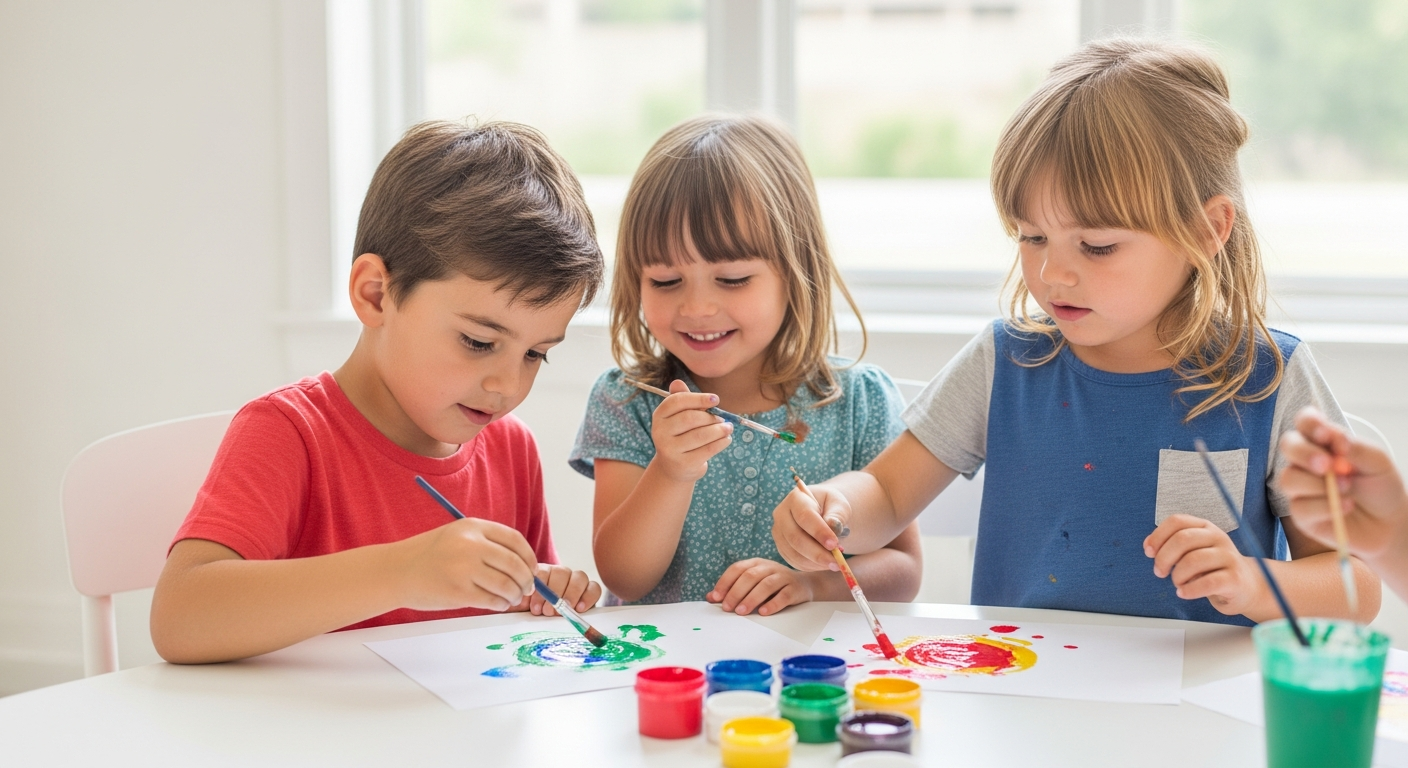
Table of Contents
- Introduction
- The Magic of Paint: More Than Just Colors
- Gearing Up for Creative Adventures: Essential Supplies & Safety First
- Classic & Beloved Paint Techniques Made Easy
- Beyond the Brush: Unique & Exciting Paint Crafts
- Themed Painting Adventures for Every Season & Holiday
- Fostering Communication & Connection Through Art with Speech Blubs
- Conclusion
- Frequently Asked Questions (FAQ)
Introduction
Do you ever find yourself searching for engaging activities that pull your child away from screens, spark their imagination, and genuinely contribute to their development? In a world brimming with digital distractions, offering children hands-on, creative outlets is more crucial than ever. The mere thought of "painting" can sometimes conjure images of elaborate setups and inevitable messes, perhaps causing parents to shy away. But what if we told you that easy paint crafts for kids are not just about making a pretty picture, but about unlocking a world of learning, boosting confidence, and weaving unforgettable family moments?
At Speech Blubs, we understand the profound impact of joyful, interactive experiences on a child's growth. Our company was born from the personal journeys of our founders, who, having navigated speech challenges themselves, created the empowering tool they wished they had. We believe in providing immediate, effective, and joyful solutions for the 1 in 4 children who need speech support, blending scientific principles with play. Just as our app transforms screen time into "smart screen time" through engaging video modeling, hands-on activities like painting can become powerful catalysts for development, enriching a child’s world far beyond the canvas.

This comprehensive guide is designed to empower you, the parent or caregiver, to embrace the vibrant world of easy paint crafts. We'll explore a diverse collection of simple yet captivating ideas, delve into the incredible developmental benefits behind each colorful splash, and share practical tips to make your creative sessions enjoyable and stress-free. Get ready to transform your home into a dynamic studio, equipped with basic supplies and a sense of wonder, fostering not just beautiful artwork, but also critical skills and joyful memories that will last a lifetime.
The Magic of Paint: More Than Just Colors
Painting might initially appear as a purely artistic pursuit, a delightful pastime. However, when children engage with colors, textures, and the act of creation, they are actually immersing themselves in a fascinating, multi-faceted learning experience. This hands-on exploration touches upon critical areas of development, echoing our philosophy at Speech Blubs that true learning is organic, engaging, and often disguised as play. We are committed to empowering children to "speak their minds and hearts," and activities like painting lay crucial groundwork for this self-expression.
Let's unpack some of the profound benefits that easy paint crafts for kids offer, and how they intrinsically link to overall child development, including foundational speech and language skills:
Cultivating Fine Motor Skills and Hand-Eye Coordination
The very act of painting, from grasping a paintbrush to squeezing a tube of paint, meticulously strengthens the small muscles in a child’s hands and fingers. Guiding a brush across paper, dipping a cotton swab, or even tearing paper for a collage all refine precision and coordination. These are not just art skills; they are foundational for everyday tasks like writing, buttoning clothes, tying shoelaces, and using eating utensils. The intricate movements required for detailed dot painting or delicate brushstrokes significantly enhance dexterity, preparing little hands for future academic and life skills.

Exploring Color Theory and Early Scientific Concepts
Every time your child mixes blue and yellow to create green, they are conducting a mini-science experiment! Painting offers an accessible introduction to basic chemistry and physics. Children learn about primary and secondary colors, observe how colors blend and transform, and discover the properties of different paints—how thick acrylics behave differently from runny watercolors, or how paint spreads on various surfaces. This experiential learning fosters curiosity, observation skills, and an early understanding of cause-and-effect, all while disguised as vibrant fun.
Nurturing Creativity and Imagination
A blank canvas is an invitation to dream. Painting provides an open-ended platform where children can freely express their inner worlds, feelings, and ideas without the pressure of "right" or "wrong." This freedom encourages imaginative thinking, allowing them to translate abstract concepts into tangible forms. In a world of prescribed activities, providing opportunities for unguided creativity is invaluable for developing original thought, problem-solving skills, and a unique personal voice—much like learning to articulate one's own thoughts and feelings verbally.
Boosting Problem-Solving and Critical Thinking
From deciding which colors to use to achieve a desired effect, to experimenting with different tools for unique textures, painting naturally involves problem-solving. Children learn to plan, execute, observe the outcomes, and adapt their approach. "What if I try a sponge instead of a brush?" or "How can I make this part darker?" These questions foster critical thinking and resilience, building foundational skills that extend far beyond the art table into every aspect of learning.
Rich Sensory Exploration
The tactile experience of paint is a feast for the senses. Its coolness, stickiness, smoothness, or grittiness provides rich sensory input that contributes to cognitive development. Different textures—smooth watercolors, thick acrylics, foamy shaving cream, or bumpy bubble wrap prints—offer diverse experiences that stimulate the senses, helping children process and understand their environment. This sensory engagement is vital for developing a comprehensive understanding of the world around them, enriching their descriptive vocabulary.
Fostering Emotional Expression and Stress Relief
Painting can be profoundly therapeutic. Children can channel feelings, explore emotions, and even release pent-up energy through vigorous strokes or calming, repetitive motions. It offers a safe, non-verbal space for self-expression, particularly beneficial for children who might find it challenging to articulate their emotions verbally. This process fosters emotional intelligence and provides a wonderful avenue for stress reduction, leading to a more balanced and confident child.
Building Confidence and Self-Esteem
There is immense pride in creating something with one's own hands. Displaying a child’s finished artwork, even if it’s just on the refrigerator, provides a powerful sense of accomplishment and validation. This boosts their self-esteem, encourages them to take on new challenges, and instills a belief in their own capabilities. This self-assurance is a critical component of feeling empowered to communicate and "speak their hearts."
Enhancing Language and Communication Skills
Perhaps one of the most direct benefits for speech and language development comes from the discussions surrounding the art. Describing colors, textures, shapes, and what they've created helps children expand their vocabulary and articulate their thoughts. Asking open-ended questions like "Tell me about your painting," "What inspired these colors?", or "How does that feel?" can lead to rich conversations, encouraging descriptive language and narrative skills. For a parent whose child is a "late talker," even the simple act of labeling colors and actions during painting ("red," "brush," "mix," "dab") can provide valuable language practice, making learning fun and immediate.
At Speech Blubs, our unique approach, developed by mothers and educators, is all about making learning engaging and accessible. We know that when children are having fun, they absorb information more readily. These easy paint crafts for kids are a perfect example of how play becomes a powerful educational tool, seamlessly complementing the targeted speech and language development journey that our app facilitates.
Gearing Up for Creative Adventures: Essential Supplies & Safety First
Embarking on painting adventures with your children doesn't demand a professional art studio or expensive, specialized supplies. In fact, some of the most exciting and easy paint crafts for kids utilize everyday household items! The true key is to have a few fundamental supplies on hand and, most importantly, a willingness to embrace the creative process—and perhaps a little bit of glorious mess. We believe that joyful learning often comes with a bit of hands-on exploration, and a little preparation goes a long way.
Gathering Your Palette of Possibilities
Here’s a breakdown of fundamental supplies and tips on choosing them for various age groups and projects:
Paints:
- Washable Tempera Paints: These are your go-to for young children. They’re non-toxic, come in vibrant colors, and—crucially for parents—clean up easily from hands, clothes, and surfaces. Perfect for finger painting, sponge art, and large-scale projects.
- Acrylic Paints: For older children (and always with adult supervision, as they can stain), acrylics offer richer, more opaque colors and better coverage. They dry quickly and are permanent once dry, so be sure to protect your workspace! Look for non-toxic varieties specifically marketed for crafts.
- Watercolor Paints: A budget-friendly and classic choice, watercolors are excellent for teaching about color layering, transparency, and delicate effects. They typically come in convenient palettes and only require water, making them ideal for minimal mess.
- Finger Paints: Specifically designed for tactile exploration, these paints are thick, creamy, and completely non-toxic. They are perfect for toddlers and preschoolers who love to get hands-on and experience the paint directly. For an extra element of fun, you can even make your own homemade versions using cornstarch and food coloring!
- Puffy Paint: Create your own fun, three-dimensional paint by mixing craft glue with shaving cream and a few drops of food coloring. This adds a fantastic texture that dries raised, offering a unique sensory experience.
Tools Beyond the Brush:
Don’t limit yourself to traditional paintbrushes! The world is full of interesting tools for applying paint.
- Paintbrushes: A variety of sizes and bristle types is beneficial—wide brushes for broad strokes, thinner ones for details, and foam brushes for smooth coverage.
- Sponges: Natural sea sponges create unique textures, while kitchen sponges cut into shapes (like circles, squares, or stars) can be used for stamping. Even dish scrubbers can offer interesting patterns.
- Cotton Swabs (Q-tips): Perfect for pointillism, dot art, and fine details, Q-tips are excellent for enhancing fine motor control and precision.
- Forks: Believe it or not, forks can create fantastic textured effects, from animal fur to abstract swirls, reminiscent of Van Gogh’s famous brushstrokes.
- Straws: For blow painting, where kids literally blow drops of liquid paint around the paper to create abstract designs, "exploding" effects, or monster hair.
- Bubble Wrap: A truly unique way to add interesting patterns and textures. Simply dab a piece of bubble wrap into paint and press it onto your paper.
- Recycled Items: Old gift cards or credit cards make excellent paint scrapers, creating bold, abstract designs. Rolling pins (especially if wrapped in yarn or rubber bands) can create fascinating prints. Even toilet paper rolls can be cut and shaped into stamps!
- Hands and Feet: The original and most natural tools! Nothing beats the sensory fun and personal touch of handprint and footprint art, creating cherished keepsakes.
Surfaces:
Expand beyond plain paper to explore different textures and finishes.
- Paper: Standard printer paper, construction paper, cardstock (for sturdier projects), and watercolor paper (for specific techniques) each offer a different experience.
- Cardboard: Great for large-scale projects, sturdy, and often available for free from old boxes.
- Rocks: Transform plain stones into colorful creatures, story elements, or decorative garden art.
- Foil: Offers a uniquely slippery, reflective surface that kids find fascinating to paint on, providing an unexpected sensory experience.
- Fabric: Old t-shirts, plain canvas bags, or even scrap fabric can become personalized wearable art or decorative pieces.
- Paper Plates: Incredibly versatile for creating masks, animals, flowers, or even as sturdy canvases for small projects.
Preparing Your Creative Zone: Tips for a Stress-Free Session
The thought of potential mess often deters parents from engaging in easy paint crafts for kids. However, with a little proactive preparation, you can contain the chaos and fully embrace the fun. At Speech Blubs, we advocate for creating environments where children feel safe to explore and experiment, and that includes managing expectations around tidiness.
- Protect Your Workspace: Lay down old newspapers, large sheets of cardboard, a plastic tablecloth, or even an old shower curtain on your table or floor. A designated "art zone" can significantly reduce cleanup anxiety.
- Dress for Success (and Mess): Have your children wear old clothes that you don't mind getting paint on, or provide an art smock. An old adult t-shirt with the sleeves rolled up works perfectly as a makeshift smock.
- Easy Access to Water and Wipes: Keep a cup of water handy for rinsing brushes and plenty of paper towels or wet wipes for quick cleanups of hands and accidental spills.
- Set Boundaries: Before starting, clearly communicate where painting is allowed and where it isn't. "Paint stays on the paper and on your smock."
- Embrace the Process: Remember, the goal is exploration and creativity, not perfection. A little mess is a sign of engagement! Focus on the joy and learning, not just the finished product.
By gathering these simple supplies and setting up a dedicated, protected space, you'll find that embarking on easy paint crafts for kids becomes a joyful, enriching experience rather than a daunting task. These creative sessions are not only about artistic expression but also about building the cognitive and communicative foundations that our app, Speech Blubs, works to strengthen.
Classic & Beloved Paint Techniques Made Easy
Sometimes the simplest ideas are the most profound. These classic painting techniques are perfect for children of all ages, offering immediate engagement and a fantastic foundation for exploring color, texture, and creative expression. They are wonderful ways to encourage descriptive language and build confidence, aligning perfectly with our mission at Speech Blubs to empower children to "speak their minds and hearts."
1. Finger Painting: The Ultimate Sensory Experience
There's nothing quite like the primal joy of dipping fingers directly into vibrant paint. This technique is fantastic for toddlers and preschoolers, offering rich sensory input.
- How-To: Place dollops of washable finger paint directly onto a large piece of paper or a smooth, washable surface (like a high-chair tray or a laminated placemat). Let your child use their fingers, hands, and even forearms to spread, swirl, and mix the colors.
- Benefits: Excellent for sensory exploration, fine motor development (strengthening hand muscles), and pure uninhibited creative expression.
- Language Connection: As your child paints, talk about the sensations: "Oooh, that's squishy!" "Look how slippery the yellow paint is!" Describe the colors: "Big blue swirl!" "Let's make a tiny red dot." These simple descriptions help build early vocabulary.
2. Sponge Painting: Textural Wonders
Sponge painting introduces children to different textures and patterns, making art accessible and fun.
- How-To: Cut kitchen sponges into various shapes or simply use them as is. Pour tempera paint onto shallow plates. Children dip the sponge into the paint and then dab, press, or drag it across paper to create interesting patterns.
- Benefits: Develops fine motor skills (grasping the sponge), introduces concepts of texture, pattern, and repetition.
- Language Connection: Discuss the textures created: "Is that bumpy, or smooth?" "Look at the dots the sponge made!" "Can you make a big green cloud with the sponge?" For children working on articulation, practicing descriptive words like "soft," "hard," "bumpy," "smooth," or action words like "dab," "press," "wipe" can be highly beneficial. Our research page highlights how multisensory experiences like these reinforce learning.
3. Q-Tip (Dot) Painting: Precision and Patience
This technique is wonderful for developing fine motor control and precision.
- How-To: Provide cotton swabs (Q-tips) and watercolors or tempera paint in small dishes. Children dip the Q-tip into the paint and create dots, lines, or fill in outlines with a series of tiny dots.
- Benefits: Significantly enhances fine motor skills, hand-eye coordination, and encourages patience and focus. It’s a great way to introduce pointillism.
- Language Connection: "Make a tiny red dot." "Put the dots close together." "Can you count how many dots you made?" This is fantastic for practicing size adjectives, spatial concepts, and counting.
4. Potato/Veggie Stamping: Shapes and Patterns
Using vegetables as stamps is an engaging way to explore shapes, patterns, and printmaking.
- How-To: Cut potatoes or other firm vegetables (like bell peppers or carrots) into interesting shapes or patterns. Dip the cut side into tempera paint and press onto paper.
- Benefits: Introduces concepts of positive and negative space, pattern creation, and cause-and-effect. Also a fun way to connect art with nature or food.
- Language Connection: "What shape is your stamp?" "Can you make a repeating pattern?" "Let's stamp the blue star, then the red circle." This encourages identification of shapes, colors, and understanding of sequences.
For parents whose young child loves animals and is a "late talker," the simple act of painting an animal shape with a sponge, then making the animal sound, can be incredibly motivating. This playful, integrated approach to learning new sounds and words is at the core of what we do at Speech Blubs. Our app offers engaging "Animal Kingdom" activities where children learn by imitating peers, reinforcing the sounds they might make while sponge-painting a "moo" cow or a "baa" sheep. Download Speech Blubs on the App Store or Google Play Store to see how our video modeling method brings learning to life, just like these fun crafts.
Beyond the Brush: Unique & Exciting Paint Crafts
Once your child has explored the basics, it's time to venture into more unconventional and exciting painting methods that go "beyond the brush." These techniques offer fresh perspectives on creativity, introduce new sensory experiences, and continue to build crucial developmental skills in innovative ways. They're perfect for encouraging experimentation and providing non-verbal avenues for expression, which can often be scaffolded into valuable communication opportunities.
1. Scrape Painting: Bold Strokes and Color Blending
Scrape painting is a simple yet stunning technique that creates beautiful, blended backgrounds and abstract art.
- How-To: Squirt lines or dollops of different colored tempera or acrylic paint across one edge of a piece of paper or cardstock. Use an old gift card, a sturdy piece of cardboard, or a squeegee to scrape the paint across the paper in one swift motion.
- Benefits: Fantastic for understanding color blending, creating bold textures, and developing gross motor control and arm strength.
- Language Connection: Describe the colors merging: "The blue and yellow are mixing to make green!" Discuss the direction: "Scrape up! Scrape down!" "Look at those long lines!"
2. Pour Painting: Fluid Art Fun
Acrylic pour painting is a popular technique that can be adapted for kids, resulting in mesmerizing, marbleized effects.
- How-To: Place a canvas or sturdy paper inside a box or on a protected surface. Mix acrylic paints with a pouring medium (available at craft stores) or a little water until it's a runny consistency. Drizzle or pour different colors directly onto the canvas, then tilt the canvas to let the colors flow and mix. For festive ornaments, children can pour paint directly into clear plastic or glass ornaments, swirling to coat the inside.
- Benefits: Introduces concepts of fluid dynamics, color flow, and unpredictable beauty. Encourages experimentation and appreciation for abstract art.
- Language Connection: Discuss the movement of the paint: "It's flowing!" "It's dripping!" "Look at how the colors swirl together!" This provides great opportunities for action verbs and descriptive adjectives.
3. Resist Painting (Tape, Glue, Yarn, Salt): Layers of Discovery
Resist painting involves using one material to "resist" paint, revealing a hidden design underneath.
- How-To:
- Tape Resist: Place strips of painter’s tape on paper in a design. Children paint over the entire paper, and once the paint is dry, the tape is carefully peeled off to reveal the unpainted areas.
- Glue Resist: Draw a design with white school glue on paper. Let it dry completely (it will be transparent). Children then paint over the entire paper with watercolors; the paint will resist the glue lines, highlighting the design.
- Yarn Resist: Glue yarn onto paper in a pattern, let dry, then paint over with watercolors.
- Salt Painting: Draw a design with white school glue. Sprinkle generously with table salt, shake off excess. Drip watercolors onto the salt lines; the color will spread beautifully along the salt.
- Benefits: Introduces concepts of positive/negative space, layering, and discovery. Enhances fine motor skills (peeling tape, dripping paint) and encourages patience.
- Language Connection: "What is hiding under the tape?" "Watch the color spread on the salt!" "Can you trace the glue lines?" These activities naturally prompt questions and descriptions of anticipation and discovery.
4. Nature Painting: Connecting with the Environment
Bring the outdoors in by using natural elements as paint tools or canvases.
- How-To: Collect leaves, sticks, pinecones, or even feathers. Use them as brushes or stamps with tempera paint. Alternatively, paint directly onto smooth rocks, pinecones, or dried leaves to create decorative pieces.
- Benefits: Fosters an appreciation for nature, encourages creative problem-solving with unconventional tools, and connects art to the natural world.
- Language Connection: "What does this leaf feel like?" "What colors do you see on the pinecone?" "We're painting with a stick!" Discussing natural objects expands vocabulary and categorization skills.
5. Bubble Wrap Painting: Pop, Print, and Play
Bubble wrap isn't just for popping; it makes for fantastic textured prints!
- How-To: Place a piece of bubble wrap (bubbles facing up) onto a tray. Squirt different colors of tempera paint onto the bubble wrap. Use a small roller or brush to spread the paint evenly. Then, gently press a piece of paper onto the painted bubble wrap, peel it off, and reveal a textured, dotty print.
- Benefits: Engaging sensory experience (popping sounds, unique texture), introduces printing techniques, and explores pattern creation.
- Language Connection: "Listen to the pop!" "What does the bubble wrap feel like?" "Look at all the dots on your paper!"
6. Sidewalk Chalk Paint: Outdoor Art Fun
Take the paint party outside with easy-to-make sidewalk chalk paint.
- How-To: Mix equal parts cornstarch and water, then add a few drops of food coloring or tempera paint for vibrant hues. Pour into squeeze bottles or small containers. Children can then "paint" on sidewalks, driveways, or fences. It washes away with water!
- Benefits: Encourages gross motor movement, outdoor play, large-scale creation, and makes art less intimidating due to easy cleanup.
- Language Connection: "Draw a giant rainbow!" "Make a big blue circle!" "Walk on your masterpiece!" Great for spatial concepts, size, and action verbs.
For a child who struggles with verbally expressing their ideas, these crafts offer a powerful non-verbal outlet. They can create a "starry night" with a fork, much like an artist expresses emotion through strokes. This can then be a stepping stone to verbalization, with parents asking, "What were you thinking when you made this beautiful sky?" Speech Blubs champions this transition, offering a tool for targeted speech practice where children learn by watching and imitating their peers, fostering confident communication. Learn more about our scientifically-backed video modeling approach on our research page.
Themed Painting Adventures for Every Season & Holiday
Adding a seasonal or holiday twist to your easy paint crafts for kids makes them even more engaging and provides a rich context for learning new vocabulary and concepts. Themed activities naturally spark curiosity and offer relatable scenarios, perfectly complementing a child's developmental journey and enriching family connection.
1. Fall Fun: Leaf Prints and Pumpkin Art
Autumn offers a palette of warm colors and natural textures for inspiration.
- Leaf Printing: Collect fallen leaves. Paint one side of a leaf with tempera or acrylic paint, then press it onto paper to create beautiful prints. Discuss the shapes, veins, and colors of the leaves.
- Pollock Pumpkins: Instead of carving, try "drip painting" pumpkins! Lay down a drop cloth, place pumpkins on it, and let children drip, splatter, and pour paint over them in a Jackson Pollock-inspired style. Talk about the action verbs: "drip," "splatter," "pour."
- Pop Art Pumpkin Pie Paintings: Using bright, bold colors, children can paint slices of pumpkin pie, focusing on color, pattern, and design. This can introduce concepts of pop art in a fun, accessible way.
2. Winter Wonders: Snowflakes and Ornaments
Embrace the chill with cool-toned paints and festive projects.
- Bubble Wrap Winter Snowflakes: Paint bubble wrap with white or blue paint, press onto paper, then cut out snowflake shapes from the textured prints. This combines printing with cutting skills.
- Pour Painting Ornaments: As mentioned earlier, clear plastic or glass ornaments become stunning, unique decorations when filled with swirled pour paint. These make wonderful, personalized gifts.
- Sponge Painted Christmas Trees: Cut a sponge into a triangle shape. Dip it in green paint and stamp it repeatedly to build a Christmas tree on paper. Add dots for ornaments with Q-tips.
3. Spring Blooms: Flowers and Garden Creatures
Celebrate new life and vibrant colors with spring-themed crafts.
- Colorful Paper Plate Flowers: Use paper plates as canvases to paint bright, layered flowers. Children can paint individual plates, cut them into petals, and layer them to create three-dimensional blooms.
- Handprint Rainbows: A classic! Paint each finger a different rainbow color and press them onto paper to create a vibrant rainbow arch. This is a highly sensory activity, great for color recognition and sequencing.
- Butterfly Symmetry Painting: Fold a piece of paper in half. On one side, squirt dollops of paint. Fold the paper again and press down, then unfold to reveal a symmetrical butterfly pattern. Discuss symmetry and color mixing.
4. Summer Sunshine: Ice Cream and Ocean Scenes
Capture the warmth and fun of summer in your art.
- Ice Cream Cone Paintings: Encourage imaginative flavors! Children can paint whimsical ice cream cones with "tutti-frutti stewed tomato" or "tuna taco baked potato" inspired by silly poems, making it a connection to literature.
- Rainbow Octopus Art: A super easy and fun project. Children paint a round octopus body and then use their fingers or a fork to create colorful, wavy tentacles emanating from the body.
- Jellyfish Salt Painting: Draw jellyfish shapes with glue, cover with salt, then drip watercolors for a textured, vibrant effect, creating a shimmering underwater world.
Imagine painting a vibrant fall scene and then practicing words like "leaf," "orange," "crunch," and "tree" using the fun, interactive exercises in the Speech Blubs app. Our platform offers thousands of engaging activities across various themes that naturally complement these hands-on crafts. For instance, after painting ocean creatures, you can reinforce vocabulary like "fish," "swim," "blue," and "bubble" directly within the app, enhancing the learning experience. These joyful, collaborative moments between parent and child are at the heart of what we do at Speech Blubs, making learning effective and memorable. To see what other parents are saying about their child's success, check out our testimonials page.
Fostering Communication & Connection Through Art with Speech Blubs
Engaging in easy paint crafts for kids is a powerful way to foster creativity, develop essential skills, and create cherished memories. These hands-on activities provide a vital screen-free alternative to passive viewing, encouraging active participation and imaginative play. As parents, we often seek out resources that not only entertain but genuinely contribute to our child's holistic development, especially when it comes to crucial areas like communication. This is precisely where Speech Blubs shines as a complementary, powerful tool.
At Speech Blubs, our core mission is to empower children to "speak their minds and hearts." This commitment stems from the personal experiences of our founders, all of whom grew up with speech problems and were driven to create the immediate, effective, and joyful solution they wished they had access to. We understand the frustrations that can come with communication challenges, and we are dedicated to providing support for the 1 in 4 children who need speech assistance.
How Speech Blubs Enhances the Learning Journey
While painting sparks creativity and fine motor skills, Speech Blubs provides a scientifically-backed platform that leverages the power of "smart screen time" to develop complex communication skills. Our unique "video modeling" methodology allows children to learn by watching and imitating their peers, engaging mirror neurons in their brains. This approach makes speech practice feel like play, transforming potentially frustrating exercises into fun, interactive adventures.
For example, imagine a scenario where a child struggles with verbalizing their favorite animal while painting it. After the hands-on fun, you can seamlessly transition to the Speech Blubs app. Our "Animal Kingdom" section, filled with peer video models, offers a motivating way to practice "moo" and "baa" sounds, or learn the names of different animals. This creates a bridge between the tactile, imaginative world of painting and targeted, playful speech therapy, truly fostering family connection as you learn and grow together.
Identifying the Need for Support
Sometimes, during creative play, parents might notice subtle signs that their child could benefit from additional speech support. Perhaps they are pointing more than speaking, using gestures instead of words, or showing frustration when trying to communicate. If you're unsure whether your child could benefit from a little extra help, we offer a valuable first step: our quick 3-minute preliminary screener. This simple tool involves just 9 questions and provides an immediate assessment and next-steps plan, guiding you towards the support your child might need.
Unlocking Full Potential with Speech Blubs
When you're ready to dive into the world of joyful speech and language development, Speech Blubs offers flexible subscription plans designed to fit your family's needs:
- Monthly Plan: Priced at $14.99 per month, this plan provides access to our core speech therapy activities.
- Yearly Plan: Our Yearly plan offers superior value at just $59.99 per year, which breaks down to an incredible $4.99/month! This means you save 66% compared to the monthly plan, making it the clear best choice for long-term progress.
The Yearly plan isn't just more affordable; it's packed with exclusive, high-value features designed to maximize your child's learning journey:
- A 7-day free trial to experience the full app before committing.
- Access to the extra Reading Blubs app, further expanding your child’s literacy skills.
- Early access to new updates and features, keeping content fresh and engaging.
- 24-hour support response time, ensuring you always have assistance when you need it.
The Monthly plan, by contrast, does not include these invaluable benefits. We encourage you to choose the Yearly plan to get the free trial and unlock the full suite of features that empower your child's communication journey.
Just like a blank canvas invites creativity, a supportive environment and the right tools invite communication. By integrating easy paint crafts into your child's routine and complementing them with the targeted, playful learning offered by Speech Blubs, you are providing a powerful foundation for them to thrive. We are committed to helping every child discover their voice, build confidence, and truly "speak their minds and hearts."
Conclusion
The journey through easy paint crafts for kids reveals far more than just colorful creations; it unveils a vibrant pathway to developmental growth, emotional expression, and invaluable family connection. From strengthening fine motor skills and encouraging scientific exploration to nurturing imagination and boosting self-esteem, each brushstroke, dab, and swirl contributes significantly to your child's holistic development. These hands-on, screen-free activities provide a rich tapestry for learning, fostering a love for creativity and the joy of making something unique with their own hands.
At Speech Blubs, we deeply understand the synergy between engaging play and meaningful development. Our mission to empower children to "speak their minds and hearts" is realized through our unique, scientifically-backed approach, transforming screen time into "smart screen time" that truly works. By integrating the tactile joy of painting with the targeted, playful speech and language practice offered by our app, you create a comprehensive and joyful learning experience for your child. It's about building foundational skills, boosting confidence, reducing frustration, and celebrating every small victory in their communication journey.
Ready to embark on this enriching adventure and provide your child with the tools they need to thrive? Don't miss out on the incredible value and comprehensive features available with our Yearly plan. It's the best way to support your child's communication growth while enjoying the full Speech Blubs experience.
Empower your child to find their voice and speak their heart. Download Speech Blubs today on the Apple App Store or Google Play Store and make sure to select the Yearly plan to unlock your 7-day free trial, gain access to the Reading Blubs app, receive early updates, and benefit from 24-hour support. Alternatively, you can create your account directly on our website to get started on this transformative journey. Let's paint, play, and speak our way to a brighter future, together!
Frequently Asked Questions (FAQ)
1. What's the best type of paint for very young children or beginners?
For very young children or those just starting with paint crafts, washable tempera paints and finger paints are highly recommended. They are non-toxic, vibrant, and incredibly easy to clean from hands, clothes, and surfaces, making the experience stress-free for both children and parents.
2. How can I manage the mess when doing paint crafts with my kids?
Managing mess is key to enjoying paint crafts. Prepare your workspace by laying down newspapers, an old plastic tablecloth, or a shower curtain. Dress your child in old clothes or an art smock. Keep a cup of water for rinsing brushes and plenty of paper towels or wet wipes readily available for quick cleanups. Setting clear boundaries for where paint is allowed also helps.
3. How do easy paint crafts help with a child's speech and language development?
Paint crafts significantly boost speech and language development by enhancing fine motor skills (crucial for pre-writing), providing rich sensory input for descriptive language, and fostering emotional expression and confidence. Discussions about colors, textures, actions, and what they've created expand vocabulary, encourage articulation, and build narrative skills, seamlessly complementing targeted speech practice.
4. My child isn't always interested in traditional painting with brushes. What can I do?
If your child isn't keen on traditional brushes, try introducing unconventional tools like sponges, cotton swabs, forks, bubble wrap, or even natural items like leaves and sticks. Experiment with different surfaces like rocks, foil, or cardboard, or take the painting outdoors with sidewalk chalk paint. The goal is to explore and make it fun, allowing their imagination to lead the way!
About the author