
Joyful & Free Christmas Crafts for Kids
 By Speech Blubs Team•Dec 22, 2025•22 min.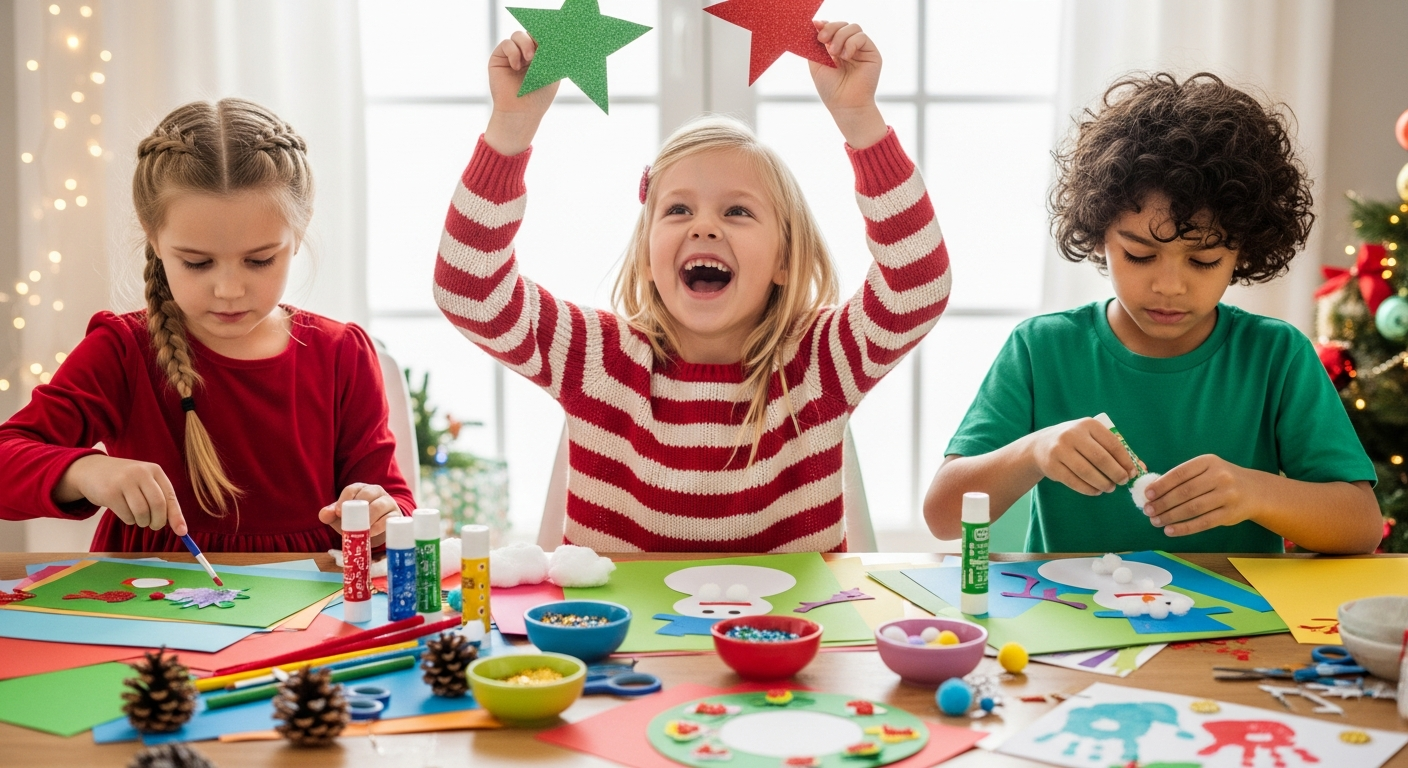
Table of Contents
- Introduction
- Why Crafts are More Than Just Fun: A Developmental Boost
- Our Philosophy: Blending Play and Purpose
- Gathering Your Treasure Trove: Free Craft Supplies at Home
- Our Favorite Free Christmas Crafts for Kids (with Language-Rich Tips!)
- Elevating the Crafting Experience with Speech Blubs
- How Speech Blubs Supports Every Step of the Journey
- Getting Started with Speech Blubs: Your Path to Confident Communication
- Conclusion
- Frequently Asked Questions
Do you remember the quiet joy of creating something magical with your own hands during the holidays? The scent of pine, the glitter on your fingers, the pride in a handmade ornament hanging crookedly on the tree? For many parents, the holiday season brings a desire to create these cherished memories with their children, but often the thought of elaborate, expensive craft supplies can feel overwhelming. What if we told you that some of the most memorable and developmentally beneficial Christmas crafts are completely free, requiring only a sprinkle of imagination and materials you already have around the house?
This holiday season, let's rediscover the simple pleasure of crafting with purpose. This post is your guide to a sleigh-full of wonderful, free Christmas craft for kids ideas that won't cost a penny but will enrich your child's creativity, fine motor skills, and, crucially, their language development. We'll explore how these joyful activities can be seamlessly integrated with targeted communication support, helping your child find their voice while making cherished holiday keepsakes. Get ready to transform everyday items into festive masterpieces and create beautiful connections, both in conversation and through creation.

Introduction
The twinkling lights, the cozy sweaters, the scent of gingerbread – Christmas is a season of wonder, especially through a child's eyes. It's a time when magic feels palpable, and the simplest activities can become extraordinary adventures. While holiday shopping and festive events often dominate the season, there's an undeniable charm and profound benefit in stepping back and engaging in hands-on, creative play. We're talking about the kind of play that sparks imagination, develops crucial skills, and doesn't require a trip to the craft store.
In this comprehensive guide, we're diving deep into the world of free Christmas crafts for kids, focusing on how these accessible activities can do so much more than just entertain. We'll show you how to utilize common household items and nature's bounty to create festive decorations and gifts. More importantly, we'll illustrate how these crafting sessions are golden opportunities to foster language development, build confidence, and strengthen family bonds. We'll share practical tips, connect these activities to important developmental milestones, and reveal how our mission at Speech Blubs aligns perfectly with enriching these moments, turning "smart screen time" into a powerful complement for real-world engagement.
Why Crafts are More Than Just Fun: A Developmental Boost
Engaging in craft activities, especially those that are open-ended and use readily available materials, offers a treasure trove of developmental benefits for children of all ages. It's not just about the pretty end product; it's about the entire process – the planning, the doing, the talking.
Fine Motor Skills
From toddlers learning to grasp a chunky crayon to older children mastering the art of cutting with scissors, crafts are a fantastic workout for fine motor skills. Activities like tearing paper, squeezing glue, threading beads (even homemade ones), painting with brushes, or molding salt dough require precision and coordination of the small muscles in the hands and fingers. These skills are foundational for everyday tasks like dressing, eating, and eventually, writing.

Cognitive Development
Crafting is a powerful cognitive exercise. Children learn to follow multi-step instructions, problem-solve when something doesn't go as planned, and plan their creations. They engage in sequencing ("first we cut, then we glue"), categorize materials, and understand cause and effect ("if I use too much glue, the paper gets soggy"). This hands-on learning makes abstract concepts tangible and helps build critical thinking skills.
Emotional Development
The act of creating fosters self-expression, allowing children to communicate ideas and feelings visually. Completing a craft, no matter how simple, provides a sense of accomplishment and boosts self-esteem. It teaches patience and perseverance, especially when a project requires multiple steps or doesn't look "perfect" on the first try. Sharing their creations with others also nurtures pride and social connection.
Language Development
Perhaps one of the most significant, yet often overlooked, benefits of crafting is its impact on language development. Every step of a craft project is an opportunity for communication:
- Vocabulary Expansion: Learning new words for materials (e.g., "pinecone," "glitter," "cardboard"), actions (e.g., "snip," "fold," "dab," "mix," "smooth"), colors, shapes, and textures.
- Descriptive Language: Encouraging children to describe what they are making, the colors they are using, or how something feels. ("This pinecone is spiky and brown." "My Santa has a fluffy beard.")
- Following Instructions: Practicing listening comprehension and following multi-step directions.
- Narrative Skills: Telling a story about their creation or explaining the steps they took to make it.
- Social Communication: Asking for help, sharing materials, taking turns, expressing preferences, and engaging in conversations about the craft with a parent or sibling.
At Speech Blubs, we understand that every interaction is a chance to build communication skills. Just as a child learns to mimic the actions of an adult during crafting, our unique video modeling methodology allows children to learn by watching and imitating their peers, providing a powerful, natural pathway to developing speech and language. We believe that by blending playful, hands-on activities with targeted, scientifically-backed language support, we can empower children to truly speak their minds and hearts.
Our Philosophy: Blending Play and Purpose
At Speech Blubs, our core mission is to empower children to "speak their minds and hearts." This isn't just a catchy phrase; it's born from the personal experiences of our founders, who all navigated childhood speech challenges and yearned for a tool that could make their journey easier, more immediate, and genuinely joyful. We recognize that the journey to clear communication can sometimes feel daunting for children and their families, which is why we're committed to providing an immediate, effective, and joyful solution for the 1 in 4 children who need speech support.
We achieve this by blending scientific principles with play, creating a truly one-of-a-kind "smart screen time" experience. Our app is a screen-free alternative to passive viewing, actively engaging children rather than simply entertaining them. It transforms what could be solitary screen time into a powerful tool for family connection and interactive learning.
Central to our approach is our innovative "video modeling" methodology. Children learn best by observing and imitating, and our app harnesses this natural inclination. By watching and imitating their peers in short, engaging video clips, children develop complex communication skills in a fun and natural way. This process activates mirror neurons in the brain, making learning feel intuitive and highly effective. Imagine a child learning to say "open" by watching another child joyfully opening a toy – that's the power of video modeling at work.
This philosophy extends beyond our app and into how we view all forms of play, including crafting. Just as children learn from watching and doing in our app, they learn from watching you demonstrate craft steps and imitating those actions. Each snip of the scissors, each dab of glue, each word spoken about the craft is a step towards building confidence and enhancing communication.
Gathering Your Treasure Trove: Free Craft Supplies at Home
One of the best things about these free Christmas crafts is that the "supplies" are often things you already have, or can easily find on a nature walk. This encourages resourcefulness and shows children that creativity doesn't always require a trip to a store.
Here's a list of common "free" craft supplies you can gather:
- Recycled Items:
- Toilet paper or paper towel rolls (Santa, reindeer, angels)
- Cardboard (cereal boxes, delivery boxes – for gingerbread houses, sturdy ornaments)
- Newspaper, magazines (collage, paper mache, garlands)
- Plastic bottles (cut bottoms for snowflakes, or entire bottles for larger decorations)
- Bottle caps (small ornaments, faces for characters)
- Scraps of fabric, yarn, ribbon (old clothes, gift wrapping)
- Buttons (from old shirts)
- Nature Finds:
- Pinecones (ornaments, critters)
- Leaves (dried and pressed for collages, painted)
- Twigs and small branches (mini trees, frames for wreaths)
- Stones (painted as ornaments or characters)
- Acorns, seeds (small embellishments)
- Pantry Staples:
- Flour, salt, water (for salt dough)
- Food coloring (to dye dough or make simple paints)
- Pasta (various shapes for stringing, gluing, painting)
- Rice, dried beans (for sensory bins, textural elements)
- Lemon juice (for invisible ink messages)
- Basic Stationery & Tools:
- Paper (junk mail, old drawings, printer paper scraps)
- Scissors (child-safe)
- Glue (PVA glue, or a simple flour-and-water paste)
- Crayons, markers, pencils (even broken ones are useful!)
- Tape
- Hole punch
- Old paintbrushes or cotton swabs
Before you begin crafting, involve your child in the "hunt" for supplies. This adds another layer of excitement and a wonderful opportunity for vocabulary building and classification (e.g., "Can you find something smooth? How about something that's crinkly?").
Our Favorite Free Christmas Crafts for Kids (with Language-Rich Tips!)
Now, let's dive into some fantastic, free Christmas craft ideas that are perfect for kids, complete with suggestions on how to maximize their language-building potential. Remember, the goal is always interaction and communication, not just the perfect craft.
1. Paper Plate & Cotton Ball Santa
This classic craft is perfect for little hands and offers abundant language opportunities.
- Materials: Paper plate, cotton balls, red construction paper (or a red magazine page), black marker, glue.
- Steps:
- Cut the paper plate in half to create Santa's face and hat base.
- Cut a triangular hat from red paper and glue it to the top.
- Glue cotton balls around the edge of the hat for trim and along the bottom of the plate for Santa's beard.
- Draw eyes, a nose, and a rosy cheek on the plate.
- Language Tips:
- Vocabulary: "red," "white," "circle," "fluffy," "cutting," "gluing," "beard," "hat."
- Descriptive: "Santa's beard is soft and fluffy." "The hat is pointy and red."
- Verbs: "cut," "glue," "draw," "stick."
- Concepts: "top," "bottom," "half."
- Role-play: Once Santa is complete, you can have Santa "talk," practicing different voice tones or simple holiday phrases.
- Speech Blubs Connection: If your child is struggling with identifying or naming colors, or building descriptive vocabulary, exploring categories like "Colors" or "Animals" in Speech Blubs can provide focused practice. Our app's video modeling helps children hear and imitate new words in a fun, engaging way. You can
[download Speech Blubs today on the App Store](https://apps.apple.com/us/app/speech-blubs-language-therapy/id1239522573?utm_source=flyrank&utm_medium=blog&utm_campaign=content_marketing)to complement your crafting adventure.
2. Pinecone Critters & Ornaments
A nature walk can provide the perfect free materials for these charming crafts.
- Materials: Pinecones of various sizes, small twigs, leaves, tiny stones, googly eyes (optional, but a small dot of marker works too), glue.
- Steps:
- Go on a nature walk to collect pinecones and other natural treasures. Talk about what you find!
- Clean the pinecones.
- Glue small twigs for legs or antlers, leaves for wings, or tiny stones for noses to turn them into forest critters.
- Add a loop of string (from an old shoelace or yarn scrap) to the top for an ornament.
- Language Tips:
- Sensory Vocabulary: "spiky," "rough," "smooth," "brown," "green," "tiny," "big."
- Action Verbs: "gathering," "gluing," "decorating," "finding," "searching."
- Categorization: "This is a pinecone, it comes from a tree!" "These are leaves, they fall down."
- Storytelling: Create a small story about your pinecone creature and its adventures in the forest or on the Christmas tree.
3. Salt Dough Ornaments
Simple, tactile, and endlessly customizable, salt dough is a fantastic medium.
- Materials: 1 cup flour, 1/2 cup salt, 1/2 cup water (adjust as needed), cookie cutters (or a knife for adult-supervised cutting), baking sheet, string. Optional: paint, glitter, markers for decorating.
- Steps:
- Mix flour and salt in a bowl. Gradually add water, mixing until a dough forms. Knead for 5-10 minutes until smooth.
- Roll out the dough to about 1/4 inch thick.
- Use cookie cutters (stars, trees, bells) or a knife (adult supervision) to cut shapes. Make a small hole at the top of each for hanging.
- Bake at 250°F (120°C) for 2-3 hours, or until completely hard. Let cool.
- Decorate with paint, markers, or glitter. Thread a string through the hole.
- Language Tips:
- Action Verbs: "mix," "knead," "roll," "cut," "bake," "paint," "decorate."
- Descriptive: "The dough is smooth," "It's sticky," "Now it's hard." "My ornament is sparkly and green."
- Sequencing: "First, we mix. Next, we roll. Then, we cut." This is excellent practice for following multi-step instructions, a skill crucial for both daily life and language comprehension. For children who benefit from visual cues for sequencing, Speech Blubs offers many guided activities that break down complex actions into manageable steps, similar to making salt dough.
[Ready to try? Create your account and begin your 7-day free trial today!](https://account.speechblubs.com/?utm_source=flyrank&utm_medium=blog&utm_campaign=content_marketing)
4. Recycled Cardboard Gingerbread House
Transform old cereal boxes and toilet paper rolls into a festive gingerbread house.
- Materials: Empty cereal boxes, toilet paper/paper towel rolls, glue, scissors, markers/crayons, scraps of paper/fabric for decoration.
- Steps:
- Use an empty cereal box as the main structure. Cut out a door and windows.
- Cut and glue cardboard scraps for a roof.
- Use toilet paper rolls cut in half for decorative pillars or chimneys.
- Decorate with markers, crayons, or glued-on paper scraps to mimic candy, frosting, or snow.
- Language Tips:
- Shapes & Spatial Concepts: "square," "rectangle," "triangle" (for roof), "door," "window," "on top," "beside," "inside."
- Descriptive: "My gingerbread house is tall and brown." "It has a red roof."
- Imagination & Storytelling: Encourage your child to imagine who lives in the house, what they eat, and what they do. "The gingerbread man lives here. He loves cookies!"
5. Handprint/Footprint Reindeer or Santa Cards
Personalized and precious, these make wonderful gifts for family.
- Materials: Paper (any kind!), paint (brown for reindeer, red for Santa), black/red marker.
- Steps:
- Paint your child's hand (fingers together for a reindeer face, thumb out for an ear) or foot (for a reindeer body).
- Carefully press onto paper.
- Once dry, use markers to add antlers, eyes, and a red nose for a reindeer, or Santa's hat and beard for Santa.
- Language Tips:
- Body Parts: "hand," "foot," "fingers," "thumb," "toes."
- Colors: "brown," "red," "black."
- Action Verbs: "paint," "press," "dry," "draw."
- Personal Connection: Talk about whose hand/foot it is. "This is your handprint! We made a reindeer with your hand."
6. Newspaper Christmas Trees/Garlands
A creative way to reuse old newspapers and magazines.
- Materials: Newspaper or old magazines, glue, scissors. Optional: paint, glitter, string.
- Steps:
- For Trees: Roll newspaper pages into cones. Cut and fringe the edges to create branches, or glue on crumpled paper circles. Decorate.
- For Garlands: Cut strips of newspaper. Create paper chains by gluing the ends of one strip to form a circle, then looping the next strip through and gluing.
- Language Tips:
- Action Verbs: "roll," "cut," "fringe," "glue," "loop."
- Descriptive: "The newspaper is crinkly." "Our garland is long."
- Counting & Patterns: Count the links in the garland. Talk about patterns if you use different colored paper scraps.
7. Nature Collages/Wreaths
Take inspiration from the outdoors to create beautiful art.
- Materials: Cardboard base (from a cereal box), collected natural items (leaves, twigs, small stones, dried berries, pine needles), glue.
- Steps:
- Cut a circle or another shape from cardboard for the base.
- Arrange and glue natural items onto the base to create a collage or a wreath shape.
- Let dry completely.
- Language Tips:
- Sensory Vocabulary: "rough," "smooth," "pointy," "soft," "crunchy."
- Colors & Shapes: Identify the colors and shapes of the natural items.
- Spatial Concepts: "on top," "under," "next to," "around."
- Environmental Awareness: Talk about where these items come from and how nature provides beautiful things.
Elevating the Crafting Experience with Speech Blubs
While these crafts are inherently language-rich, you can amplify their developmental benefits by intentionally integrating targeted speech and language strategies, much like we do within Speech Blubs. Think of the app as your partner in creating a holistic learning environment.
Before the Craft
- Pre-teach Vocabulary: Introduce new words related to the craft before you even start. If you're making a Santa, show pictures of Santa, discuss his "beard," "hat," and "suit." In Speech Blubs, you could explore sections like "Body Parts" or "Colors" to build foundational vocabulary.
- Discuss the Plan: Talk about what you're going to make and the steps involved. "First, we get the plate. Next, we get the cotton balls." This preps your child for following instructions and understanding sequence.
During the Craft
- Narrate Actions: Verbally describe what you and your child are doing. "I am cutting the paper. You are gluing the cotton." This models correct sentence structure and vocabulary.
- Ask Open-Ended Questions: Instead of yes/no questions, ask "What are you doing?" "What color will you use?" "How does that feel?" This encourages more elaborate responses and critical thinking.
- Encourage Description: Prompt your child to describe their chosen materials or their progress. "Tell me about your pinecone." "What's happening now?"
- Practice Specific Sounds: If your child is working on a particular sound, look for opportunities to use words containing that sound within the crafting context. For a parent whose child is working on their 's' sound, crafting a 'Santa' with 'scissors' and 'sparkles' creates natural opportunities for practice. Afterwards, they can reinforce these sounds and words with an activity in Speech Blubs' "Sounds" section, mirroring peers making similar sounds. This intentional practice in a playful setting makes learning more natural and less like a drill.
[Learn more about our scientifically-backed video modeling methodology](https://speechblubs.com/research/?utm_source=flyrank&utm_medium=blog&utm_campaign=content_marketing).
After the Craft
- Talk About the Finished Product: Display the craft and discuss it. "Tell me about your beautiful gingerbread house." "What's your favorite part?"
- Tell a Story: Encourage your child to create a story about their craft. "Imagine this Santa is flying on Christmas Eve, what does he see?"
- Show and Share: Encourage your child to show their creation to another family member and explain what they made and how. This builds confidence in presenting ideas and fosters social communication.
How Speech Blubs Supports Every Step of the Journey
At Speech Blubs, we believe in empowering parents with tools that seamlessly integrate into their daily lives, turning everyday moments into powerful learning opportunities. Our app is more than just a collection of games; it's a carefully designed, scientifically supported program built on the understanding that children learn best through engaging, interactive experiences. We aim to be the immediate, effective, and joyful solution for families seeking to support their child's speech and language development.
- Immediate Support, Born from Experience: Our company was born from the personal experiences of our founders, who all grew up with speech problems and created the tool they wished they had. This personal connection drives our commitment to providing accessible support when and where families need it most.
- Scientifically-Backed Approach: Our unique "video modeling" methodology is at the heart of our app. By observing and imitating their peers, children's mirror neurons are activated, making the learning process intuitive and highly effective. This approach is validated by extensive research, placing us in the top tier of speech apps worldwide with a high MARS scale rating. You can
[explore the research behind Speech Blubs here](https://speechblubs.com/research/?utm_source=flyrank&utm_medium=blog&utm_campaign=content_marketing). - Engaging, "Smart Screen Time": We provide a screen-free alternative to passive viewing experiences like cartoons. Instead, Speech Blubs offers interactive activities that actively engage your child, turning screen time into "smart screen time" that nurtures communication skills.
- Comprehensive Skill Development: From producing first sounds and building vocabulary to mastering complex sentences and telling stories, our app supports a wide range of speech and language milestones. It’s designed to be a powerful supplement to a child's overall development plan and, when applicable, professional therapy.
- Fostering Family Connection: Our activities are designed for co-play, encouraging parents and children to learn and grow together. This creates joyful family learning moments, strengthening bonds while building essential communication skills.
[Read what other parents are saying about their child's success with Speech Blubs](https://speechblubs.com/reviews-speech-delay/?utm_source=flyrank&utm_medium=blog&utm_campaign=content_marketing).
Getting Started with Speech Blubs: Your Path to Confident Communication
We understand that as a parent, you want the best for your child, and sometimes knowing where to start can be the hardest part. That's why we've made it easy to discover how Speech Blubs can support your family's journey.
Unsure if your child could benefit from speech support? Take the guesswork out of the equation. We offer a [quick 3-minute preliminary screener](https://speechblubs.com/sb/screener-intro?utm_source=flyrank&utm_medium=blog&utm_campaign=content_marketing) that involves just 9 simple questions. This provides you with an instant assessment and a personalized next-steps plan, along with the opportunity to start a free 7-day trial.
When you're ready to dive in, choosing the right plan is simple, and we want to ensure you get the absolute best value:
- Monthly Plan: For $14.99 per month, you get access to our core speech therapy activities.
- Yearly Plan: This is by far our most popular and value-packed option at just $59.99 per year. That breaks down to an incredible $4.99 per month, allowing you to save 66% compared to the monthly plan!
The Yearly plan isn't just cheaper; it comes with exclusive, high-value features designed to give your child the most comprehensive support:
- A 7-day free trial: Experience the full power of Speech Blubs before committing. The Monthly plan does not include a free trial.
- The extra Reading Blubs app: Unlock another amazing educational resource focused on early literacy skills.
- Early access to new updates: Be the first to enjoy new features and content.
- 24-hour support response time: Get faster assistance whenever you need it.
We strongly encourage you to [choose the Yearly plan](https://account.speechblubs.com/?utm_source=flyrank&utm_medium=blog&utm_campaign=content_marketing) to unlock the free trial and enjoy the full suite of features that will empower your child's communication journey. It's the smartest choice for long-term progress and the best value for your family.
Conclusion
This holiday season, let's embrace the magic of creation without the pressure of expense. Simple, free Christmas crafts for kids offer an incredible opportunity to foster creativity, develop essential fine motor and cognitive skills, and most importantly, enrich language development. From the sensory exploration of salt dough to the imaginative storytelling inspired by a cardboard gingerbread house, every craft session is a chance to connect, communicate, and create lasting memories.
By narrating actions, asking open-ended questions, and encouraging descriptive language during these hands-on activities, you're building a rich linguistic environment for your child. And when combined with the targeted, engaging, and scientifically-backed approach of Speech Blubs, these joyful moments become even more powerful. We are here to support you in empowering your child to speak their minds and hearts, blending the magic of play with the purpose of progress.
Don't let another holiday season pass without giving your child the gift of confident communication. [Download Speech Blubs on the App Store](https://apps.apple.com/us/app/speech-blubs-language-therapy/id1239522573?utm_source=flyrank&utm_medium=blog&utm_campaign=content_marketing) or [get it on Google Play](https://play.google.com/store/apps/details?id=org.blubblub.app.speechblubs?utm_source=flyrank&utm_medium=blog&utm_campaign=content_marketing) today. Remember to select the Yearly plan to unlock your 7-day free trial, gain access to the Reading Blubs app, and enjoy all the exclusive benefits that will make this holiday season, and beyond, a truly transformative experience for your child's communication journey.
Frequently Asked Questions
Q1: What age group are these free Christmas crafts suitable for?
These crafts are generally suitable for a wide range of ages, from toddlers (with adult assistance for cutting and gluing) to older elementary children. The complexity can be adjusted – for younger kids, focus on simple steps like tearing paper and sticking cotton balls. Older children can handle more intricate cutting, detailed decorating, and multi-step projects like salt dough ornaments. The key is adaptation and focusing on the process rather than a perfect outcome.
Q2: How can I encourage my child to talk more during craft activities?
The best way to encourage conversation is to make it natural and fun. Narrate your own actions ("I am cutting the red paper"), ask open-ended questions ("What color will you use next?"), and encourage description ("Tell me about your shiny star"). Avoid correcting every mistake; instead, model correct language. Using Speech Blubs before or after crafting can also help reinforce new vocabulary and sounds in an engaging, playful way, providing a strong foundation for real-world communication.
Q3: What if my child isn't interested in crafting?
Not every child will love every craft. If your child shows disinterest, try to figure out why. Is it too difficult? Too messy? Is the activity too long? Offer choices of crafts or materials to give them a sense of control. Focus on the playful interaction rather than the craft itself, allowing them to participate in small ways, or simply observe. Sometimes, even just being present and talking about what you are making can be beneficial. Remember, connection is key.
Q4: How does Speech Blubs specifically help with language development alongside these crafts?
Speech Blubs complements hands-on crafts by providing targeted, structured opportunities for language practice that might be harder to create spontaneously. For example, after making a "Santa" craft, you can go into Speech Blubs and find activities that focus on the "S" sound or vocabulary related to holiday characters, reinforcing the words and sounds learned during crafting. Our video modeling approach helps children practice pronunciation and build vocabulary by imitating peers, a perfect bridge from the imitation involved in following craft instructions. It turns "smart screen time" into a tool that supports and extends the benefits of creative, screen-free play.
About the author