
Joyful & Frugal: Inexpensive Christmas Crafts for Kids
 By Speech Blubs Team•Dec 22, 2025•17 min.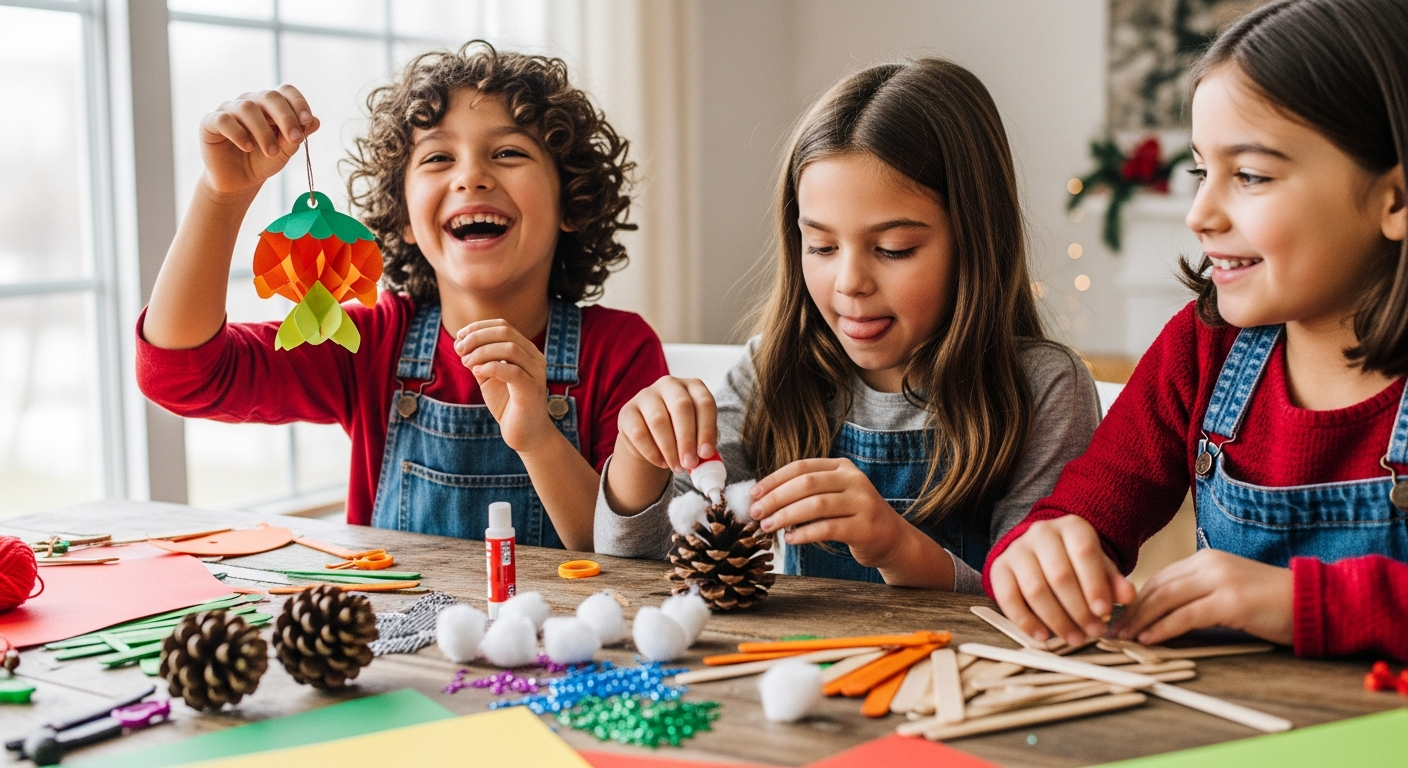
Table of Contents
- Introduction
- The Magic of DIY Christmas Crafts: More Than Just Decoration
- Our Top Picks: Inexpensive Christmas Crafts with Everyday Materials
- Turning Crafts into Communication Opportunities: Our Philosophy
- How Speech Blubs Supercharges Holiday Learning
- Making the Most of Speech Blubs: Our Value-Packed Plans
- Conclusion
- FAQ
Introduction
As the festive season approaches, the air fills with a unique kind of magic – the sparkle of lights, the scent of gingerbread, and the joyful anticipation in children's eyes. Christmas is a time for making cherished memories, but for many families, the financial pressures can sometimes overshadow the magic. How can we embrace the spirit of giving and creating without stretching our budgets thin? The answer lies in the simple, heartwarming tradition of crafting.
This blog post is your ultimate guide to creating delightful and inexpensive Christmas crafts with your kids. We'll explore a treasure trove of ideas using materials you likely already have around the house or can acquire for mere pennies. Beyond the obvious cost savings, we'll delve into the incredible developmental benefits these activities offer, from boosting fine motor skills and fostering creativity to, most importantly, enhancing crucial communication abilities. We believe these crafts can transform your holiday season, bringing joy, connection, and a unique opportunity for language development.

Unsure if your child might benefit from a little extra support with their communication skills, especially during engaging activities like crafting? You can take our quick 3-minute preliminary screener to get a simple assessment and a free 7-day trial of Speech Blubs. Ready to discover how to make this Christmas both merry and meaningful for your child's growth? Let's dive in!
The Magic of DIY Christmas Crafts: More Than Just Decoration
There's a special charm to handmade Christmas decorations. They carry stories, memories, and the unique touch of little hands. But beyond their aesthetic appeal, engaging in DIY Christmas crafts offers a wealth of developmental advantages for children of all ages.
Fostering Creativity and Imagination
Crafting provides a blank canvas for children's imaginations. When given simple materials and a concept, their minds soar, envisioning possibilities and bringing unique ideas to life. This freedom to create, experiment, and express themselves builds confidence and fuels innovative thinking. It’s not just about replicating an image but about personalizing it and making it their own.
Boosting Fine Motor Skills and Hand-Eye Coordination
Many craft activities inherently involve tasks that refine fine motor skills – the coordinated movements of small muscles, especially in the hands and fingers. Cutting with scissors, gluing small pieces, threading beads, painting intricate details, or even tearing paper all contribute to the development of these essential skills, which are foundational for writing, dressing, and other daily activities. Hand-eye coordination also gets a robust workout as children learn to manipulate tools and materials precisely.
Enhancing Cognitive Development
Crafts are rich in opportunities for cognitive growth. Children learn to follow multi-step instructions, problem-solve when materials don't behave as expected, plan their designs, and understand spatial relationships. They learn about cause and effect ("If I put too much glue, it gets messy") and develop patience and perseverance as they work towards a finished product. Identifying colors, shapes, and textures further expands their cognitive understanding of the world.

The Speech and Language Connection: Crafting Conversations
Perhaps one of the most underrated benefits of crafting is its profound impact on speech and language development. When children engage in a hands-on activity with a caregiver, the natural environment becomes ripe for communication.
- Descriptive Language: As you craft, you can encourage your child to describe what they see, feel, and do. "What color is this paper?" "How does the glitter feel?" "Tell me about your reindeer's nose!"
- Following Directions: Craft recipes are perfect for practicing multi-step commands. "First, get the glue. Then, put the cotton on Santa's beard. Next, find the googly eyes."
- Vocabulary Expansion: Introduce new words related to materials (yarn, felt, tinsel), actions (cut, glue, sprinkle, mold, paint), and Christmas themes (ornament, garland, sleigh).
- Asking and Answering Questions: "What should we add next?" "Where do you want to put this star?" "Can you hand me the red crayon?"
- Storytelling: Once a craft is complete, it can become a prop for imaginative play and storytelling. "This is our happy snowman, and he loves to sing carols!"
- Social Communication: For older children, crafting together teaches turn-taking, sharing materials, negotiating ideas, and offering compliments – all crucial social communication skills.
At Speech Blubs, we understand the profound joy and developmental power of these shared experiences. Our mission, born from our founders' personal journeys with speech challenges, is to empower children to speak their minds and hearts. We believe that integrating playful activities like crafting with targeted speech support can create a truly holistic approach to communication development.
Our Top Picks: Inexpensive Christmas Crafts with Everyday Materials
Let's explore some fantastic, budget-friendly craft ideas that will ignite your child's creativity and create countless opportunities for speech and language practice. Remember, the goal isn't perfection, but participation and joyful interaction!
1. Paper Plate Creations: A Canvas of Holiday Cheer
Paper plates are incredibly versatile and almost always on hand. They are excellent for creating characters, decorations, and even simple masks.
Materials: Paper plates, construction paper scraps, markers, crayons, cotton balls, pipe cleaners, googly eyes, glue, child-safe scissors.
Craft Ideas & Language Opportunities:
- Santa Face: Use half a paper plate for Santa's face. Kids can glue cotton balls for his beard and hat trim, draw eyes, and a rosy nose.
- Speech Focus: Naming body parts ("beard," "nose," "eyes"), colors ("red hat," "white beard"), actions ("glue," "draw," "stick"), sensory words ("soft cotton").
- Relatable Scenario: For a child working on identifying facial features, asking "Where is Santa's nose?" or "What color is Santa's beard?" while crafting provides a natural context for learning and repetition.
- Reindeer Faces: Paint a paper plate brown. Add construction paper antlers, googly eyes, and a bright red pom-pom for Rudolph's nose.
- Speech Focus: Animal sounds ("neigh!"), counting antlers, describing size ("big antlers," "small nose"), comparing ("this reindeer is happy, this one is silly").
- Snowmen/Snow Angels: Paint the plate white, add button eyes, a carrot nose (orange paper), and twig arms. You can even cut a hole for a child's face to make a photo prop.
- Speech Focus: Weather words ("snow," "cold"), action words ("paint," "cut"), describing actions ("The snowman is smiling!").
2. Pinecone Wonders: Nature's Little Ornaments
Pinecones are free, abundant, and have a wonderful texture. A trip to collect them can be an adventure in itself!
Materials: Pinecones, paint, glitter, googly eyes, small pom-poms, felt scraps, glue, string or yarn.
Craft Ideas & Language Opportunities:
- Glitter Pinecones: Paint pinecones with festive colors (green, red, gold) and sprinkle generously with glitter. Attach a string for hanging.
- Speech Focus: Sensory language ("rough," "bumpy," "sparkly"), colors, action words ("paint," "sprinkle," "hang").
- Pinecone Animals: Turn a pinecone into an owl, a hedgehog, or a little gnome by adding felt wings, googly eyes, and a pom-pom nose.
- Speech Focus: Animal names and sounds, creative storytelling about the pinecone character, prepositions ("eyes on the pinecone," "hat on top").
- Mini Pinecone Trees: Stand pinecones upright, paint them green, and glue on small beads or sequins as ornaments.
- Speech Focus: Counting beads, describing small objects, Christmas vocabulary ("tree," "ornament," "decorate").
3. Popsicle Stick Structures: Building Holiday Cheer
Popsicle sticks are inexpensive and fantastic for building, gluing, and creating structured designs.
Materials: Popsicle sticks (various sizes), glue, paint, glitter, buttons, small beads, string.
Craft Ideas & Language Opportunities:
- Popsicle Stick Snowflakes: Arrange and glue popsicle sticks into snowflake patterns. Paint them white or silver and add glitter.
- Speech Focus: Shapes ("star," "triangle"), counting sticks, describing symmetry, following patterns.
- Popsicle Stick Picture Frames: Glue sticks around a small holiday photo. Decorate with paint and glitter.
- Speech Focus: Naming family members in the photo, talking about memories, describing emotions ("happy," "smiling").
- Popsicle Stick Ornaments: Build small designs (trees, stars, fences) and decorate them.
- Speech Focus: Spatial concepts ("above," "below," "next to"), action words ("build," "glue"), describing what they are making.
4. Salt Dough Ornaments: Timeless Treasures
Salt dough is a classic for a reason – it's cheap, easy to make, and creates beautiful, lasting ornaments.
Materials: 1 cup flour, 1/2 cup salt, 1/2 cup water (approx.), cookie cutters, straw (for hole), paint, glitter, string.
Craft Ideas & Language Opportunities:
- Handprint/Footprint Ornaments: Press your child's hand or foot into the dough. Bake, paint, and write the year.
- Speech Focus: Body parts ("hand," "foot"), describing size ("big hand," "little hand"), talking about growth, memory recall ("remember when you made this?").
- Cookie Cutter Shapes: Use Christmas cookie cutters (stars, trees, bells, gingerbread men) to cut shapes.
- Speech Focus: Naming shapes, identifying Christmas symbols, comparing sizes, sensory language ("smooth dough," "sticky").
- Imaginative Creations: Let children mold the dough into their own unique creations.
- Speech Focus: Storytelling about their creation, describing what they are making, explaining their process.
5. Recycled Material Masterpieces: Giving New Life to Old Things
Rethink your recycling bin! Toilet paper rolls, cardboard, and bottle caps can become amazing Christmas crafts.
Materials: Toilet paper rolls, paper towel rolls, cardboard boxes, bottle caps, egg cartons, paint, glue, construction paper, fabric scraps, pipe cleaners.
Craft Ideas & Language Opportunities:
- Toilet Paper Roll Characters: Transform rolls into Santas, elves, reindeer, or snowmen.
- Speech Focus: Role-playing, character voices, imaginative play, describing characters' attributes ("tall elf," "round snowman").
- Cardboard Gingerbread Houses: Use cereal boxes or other cardboard to build and decorate small houses.
- Speech Focus: Spatial reasoning ("put the roof on"), planning, problem-solving ("How can we make this stand?"), descriptive words for decoration.
- Egg Carton Wreaths/Bells: Cut out individual cups, paint them, and string them together or add glitter for bells.
- Speech Focus: Counting cups, identifying colors, sequencing ("first paint, then glitter").
6. Nature's Palette: Twigs, Leaves, and Stones
A walk in nature can provide all the craft supplies you need.
Materials: Twigs, leaves (collected and dried), small stones, berries (non-toxic), glue, paint, string.
Craft Ideas & Language Opportunities:
- Twig Stars/Snowflakes: Glue twigs together to form stars or snowflakes. Paint them white or silver.
- Speech Focus: Counting twigs, discussing shapes, describing natural textures ("rough bark," "smooth stone").
- Leaf Collages: Arrange dried leaves into festive shapes or scenes on paper.
- Speech Focus: Naming leaf colors and shapes, discussing seasons, creating a narrative for the collage.
- Painted Stones: Paint small stones to look like Christmas ornaments, gifts, or characters.
- Speech Focus: Naming colors, imaginative play with the painted stones, describing the designs.
Turning Crafts into Communication Opportunities: Our Philosophy
At Speech Blubs, we view every interaction as a chance for learning and growth. These craft activities are not just about the final product; they are powerful vehicles for language development, especially when approached with intention and active participation from caregivers.
Intentional Communication Strategies During Crafting
- Narrate Your Actions: Talk about what you are doing, even if your child isn't responding verbally yet. "I'm cutting the red paper," "Now I'm gluing the eyes." This models language.
- Ask Open-Ended Questions: Instead of "Do you like it?" ask "What's your favorite part?" or "Tell me about your snowman." This encourages more than a yes/no answer.
- Expand on Their Words: If your child says "star," you can respond with "Yes, a sparkly, yellow star!" This adds descriptive vocabulary.
- Practice Following Directions: Break down complex tasks into simple, single-step commands for younger children, gradually increasing complexity. "Give me the blue crayon," then "First color, then cut."
- Use Repetition: Many crafts involve repetitive actions (gluing, cutting). Use this to your advantage by repeating target words or phrases. "Glue, glue, glue the cotton!"
- Encourage Choice-Making: "Do you want red or green glitter?" "Should the star go here or here?" Giving choices empowers your child and elicits communication.
For a parent whose 3-year-old 'late talker' loves animals and struggles with making sounds, crafting a reindeer can become an interactive learning experience. While attaching the antlers, you can focus on the word "deer" or the sound "r-r-r." Afterwards, you can seamlessly transition to the "Animal Kingdom" section within Speech Blubs, where our unique video modeling methodology allows children to practice animal sounds and names by watching and imitating their peers. This direct link between a tangible craft and an engaging digital activity reinforces learning in a powerful way.
How Speech Blubs Supercharges Holiday Learning
We understand that parents are always looking for effective, engaging ways to support their child's development, especially during busy times like the holidays. At Speech Blubs, we've designed an app that seamlessly blends scientific principles with play, offering one-of-a-kind "smart screen time" experiences. Our company was born from the personal experiences of our founders, who all grew up with speech problems and created the tool they wished they had. We are committed to providing an immediate, effective, and joyful solution for the 1 in 4 children who need speech support.
Our Unique Approach: Video Modeling and Peer Learning
Unlike passive viewing like cartoons, Speech Blubs provides a screen-free alternative in the sense that it requires active participation and interaction. Our core methodology is "video modeling," where children learn by watching and imitating their peers. This approach leverages the power of mirror neurons, encouraging children to mimic sounds, words, and even facial expressions in a fun and natural way. When you combine this with the interactive nature of crafting, you create a dynamic learning environment.
Our unique approach of video modeling is backed by extensive research, placing us in the top tier of speech apps worldwide. We're proud to offer a tool that truly makes a difference.
Integrating Speech Blubs with Your Crafting Fun
Imagine this:
- Making a Snowman Craft: As you glue cotton and draw a smile, you can use words like "white," "round," "happy." Afterward, open Speech Blubs to our "Sounds" section to practice the "S" sound for "snowman" or "smile," seeing other children articulate it clearly.
- Creating Animal Ornaments: After making a pinecone owl or a paper plate reindeer, jump into the "Animal Kingdom" section of Speech Blubs to practice animal names and sounds. Your child will see other kids making "hoo-hoo" or "neigh" sounds, reinforcing what they've learned through play.
- Developing Early Words: While crafting, you might focus on words like "cut," "glue," "red," "big." Then, switch to Speech Blubs' "Early Words" section to see videos of children saying these very words, solidifying their understanding and pronunciation.
- Enhancing Social Skills: Crafting teaches sharing and collaboration. Speech Blubs includes activities that encourage turn-taking and listening, further building these foundational social communication skills.
Speech Blubs is a powerful tool for family connection, designed for adult co-play and support. It's not about isolating your child with a device, but about providing a shared, engaging experience that supplements their overall development plan and, when applicable, professional therapy. Don't just take our word for it; read testimonials from other parents who have seen incredible progress with Speech Blubs.
Ready to empower your child to speak their minds and hearts, blending fun activities with effective speech support? Get started today!
Making the Most of Speech Blubs: Our Value-Packed Plans
We believe that every child deserves the opportunity to communicate effectively and joyfully. That's why we strive to make Speech Blubs as accessible and valuable as possible for families. When considering an investment in your child's communication journey, transparency in pricing and features is key.
We offer two main subscription plans, designed to fit different family needs, but one clearly stands out as the best value.
Monthly Plan
- Price: $14.99 per month
- What you get: Access to the core Speech Blubs app features.
- What's missing: This plan does not include a free trial, the extra Reading Blubs app, early access to new updates, or our prioritized 24-hour support response time.
Yearly Plan – The Smart Choice for Maximum Value
- Price: $59.99 per year. This breaks down to just $4.99 per month!
- Savings: You save a remarkable 66% compared to the monthly plan.
- Exclusive Benefits: The Yearly plan is packed with extra value:
- 7-Day Free Trial: Try out the full Speech Blubs experience before committing. This is the perfect way to see the magic of video modeling firsthand.
- The Extra Reading Blubs App: Enhance early literacy skills with our companion app, included at no additional cost.
- Early Access to New Updates: Be the first to enjoy new activities, features, and improvements as we roll them out.
- 24-Hour Support Response Time: Get your questions answered quickly and efficiently with our dedicated support team.
We strongly encourage you to choose the Yearly plan. It's not just significantly more affordable in the long run; it provides a comprehensive suite of tools and benefits that will enrich your child's learning journey far beyond just speech therapy.
Unlock the full potential of your child's communication this holiday season and beyond. The best way to get started is with our Yearly plan, which includes a free 7-day trial and the full suite of features. You can download Speech Blubs on Google Play or the Apple App Store today!
Conclusion
This holiday season, let's embrace the true spirit of giving: the gift of connection, creativity, and communication. Inexpensive Christmas crafts for kids offer a beautiful way to create lasting memories without financial strain, while simultaneously nurturing critical developmental skills. From the simplest paper plate Santa to a charming pinecone ornament, each craft provides a unique opportunity to engage your child's imagination, refine their fine motor skills, and most importantly, foster their speech and language abilities through joyful interaction.
At Speech Blubs, we are passionate about empowering every child to find their voice. By seamlessly integrating the playful learning of crafting with our scientifically-backed video modeling approach, you can create a truly holistic and engaging environment for your child's communication growth. We provide a powerful supplement to a child's overall development plan, turning screen time into "smart screen time" that sparks interaction and learning.
Don't let the opportunity to combine festive fun with meaningful development pass you by. Begin your journey today and discover how Speech Blubs can help your child speak their minds and hearts with confidence and joy. Start your 7-day free trial now by choosing our best-value Yearly plan, unlocking the Reading Blubs app and exclusive benefits. Make this Christmas a season of not just beautiful crafts, but also beautiful words.
FAQ
Q1: How can I make Christmas crafts more educational for my child?
A1: To maximize the educational value of Christmas crafts, focus on engaging your child in conversation throughout the process. Ask open-ended questions about colors, shapes, and textures. Encourage them to describe their actions and what they are creating. Practice following multi-step directions. Use the craft as a springboard for storytelling or role-playing, and introduce new vocabulary related to the materials and the holiday theme.
Q2: What age group are these inexpensive crafts best for?
A2: Many of these inexpensive crafts are adaptable for a wide range of ages. Younger children (toddlers and preschoolers) can focus on simpler tasks like gluing cotton balls, tearing paper, or painting with large brushes. Older children (school-aged) can engage in more intricate cutting, detailed painting, and complex assembly, allowing them to follow more detailed instructions and express greater creativity. Adult supervision and assistance are recommended for all ages, especially with scissors or hot glue.
Q3: How does Speech Blubs help with communication development during holiday activities?
A3: Speech Blubs enhances communication development by providing interactive, video-modeling activities that complement hands-on play. For instance, after making an animal craft, your child can practice animal sounds and names within the app by imitating peers. If they're focusing on descriptive words during crafting (like "red," "big," "happy"), Speech Blubs' "Early Words" sections can reinforce these concepts with real-child videos. It turns passive viewing into active, targeted speech practice, strengthening the language skills learned through creative play.
Q4: Is there a free trial for Speech Blubs?
A4: Yes, Speech Blubs offers a 7-day free trial, but it's exclusively available when you opt for our Yearly plan. This allows you to experience the full range of Speech Blubs features, along with the bonus Reading Blubs app and other benefits, before committing. The Yearly plan also provides the best value, saving you 66% compared to the monthly subscription.
About the author