
Joyful Jingle: Fun Christmas Activities for Kids
 By Speech Blubs Team•Dec 19, 2025•23 min.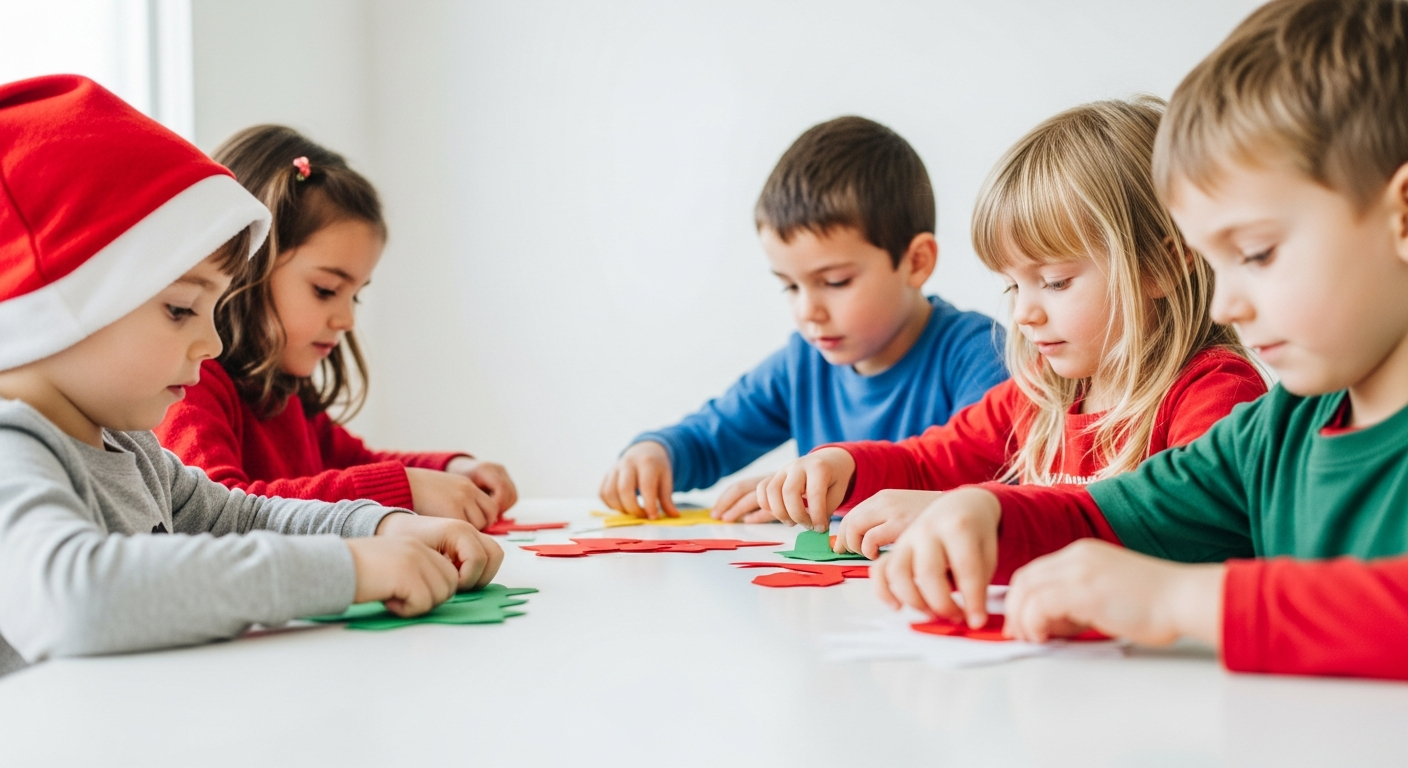
Table of Contents
- The Magic of Christmas Through a Child's Eyes: More Than Just Presents
- Crafting Connections: Creative Christmas Activities
- Culinary Christmas Adventures: Cooking & Baking Together
- Storytime & Sensory Exploration: Engaging Minds and Senses
- Outdoor & Active Christmas Fun: Moving and Learning
- Giving Back: The Spirit of Kindness
- Integrating Speech Blubs into Your Holiday Routine: Smart Screen Time
- Unlock Your Child's Full Potential: Choosing the Right Speech Blubs Plan
- Conclusion
- Frequently Asked Questions
The air is crisp, the lights are twinkling, and a sense of wonder fills every corner. For many of us, the holiday season evokes cherished memories of childhood joy and anticipation. But beyond the glitter and gifts, Christmas offers a unique and invaluable opportunity: a chance to truly connect with our children, ignite their imaginations, and foster vital developmental skills, especially in communication. For parents, this time of year can feel like a whirlwind, yet it’s precisely in these festive moments that we can create rich, language-building experiences that last a lifetime.
This blog post is designed to be your ultimate guide to transforming the magic of Christmas into meaningful developmental milestones for your little ones. We’ll dive into a sleigh-load of engaging, interactive, and undeniably fun Christmas activities to do with kids that do more than just entertain—they encourage dialogue, develop vocabulary, and build confidence. From crafting sparkly ornaments to baking delicious treats, each suggestion is crafted to open doors for communication and connection. Join us as we explore how these joyful moments can become powerful learning experiences, helping your child to articulate their thoughts and feelings, and truly "speak their minds and hearts."

The Magic of Christmas Through a Child's Eyes: More Than Just Presents
Christmas is a season steeped in wonder and tradition, a time when the ordinary transforms into something extraordinary through the eyes of a child. It's not just about the presents under the tree; it's about the shared laughter, the whispered secrets, the anticipation of Santa's arrival, and the warmth of family togetherness. These experiences are the building blocks of core memories, but they are also crucial for cognitive and linguistic development.
When children participate in holiday traditions, they engage with new vocabulary, learn to follow multi-step instructions, practice social greetings, and express their burgeoning emotions. For children who might be navigating speech development challenges, these naturally occurring, low-pressure environments are incredibly fertile ground for growth. Our mission at Speech Blubs is rooted in the personal experiences of our founders, who all grew up facing speech challenges themselves. We understand firsthand the desire for effective, joyful solutions that blend scientific principles with play. We believe that every child deserves the opportunity to communicate their thoughts and feelings, and the holiday season provides countless organic chances to support this journey.
Crafting Connections: Creative Christmas Activities
Creative activities are more than just messy fun; they are powerful platforms for fostering fine motor skills, imaginative play, and, crucially, language development. As children engage with different textures, colors, and concepts, they naturally encounter new words and contexts to use them.
Ornament Making Extravaganza
There's something incredibly special about handmade ornaments, whether they're perfectly painted keepsakes or delightfully lopsided creations. Engaging in DIY ornament making, using materials like salt dough, paper, or natural elements, offers a fantastic sensory experience and countless opportunities for communication.
- Communication Focus:
- Vocabulary: Introduce words like "sparkle," "glue," "paint," "red," "star," "smooth," "rough," "sticky," "shiny."
- Action Verbs: "Cut," "glue," "paint," "sprinkle," "hang," "roll," "mix."
- Following Instructions: "First, roll the dough. Next, cut the shape. Then, paint it red."
- Descriptive Language: "Look at the bumpy glitter! This star is big and yellow."
- Relatable Scenario: Imagine a parent whose 3-year-old is a "late talker" but absolutely loves getting their hands messy. As they make salt dough ornaments, the parent can model language: "Roll, roll, roll the dough!" while demonstrating. When the child picks up a cookie cutter, the parent might say, "Star! Do you want a star?" and encourage the child to imitate the word or sound. If the child points to the paint, the parent can ask, "What color? Red paint?" This activity reinforces early vocabulary and following instructions in a highly motivating way.
- Speech Blubs Connection: This kind of interaction mirrors the "video modeling" methodology at the heart of our Speech Blubs app. Just as children learn by watching and imitating their peers on screen, they learn by watching and imitating a parent during hands-on activities. After making an ornament, you could transition to our app, which is designed as a screen-free alternative to passive viewing, and explore sections like "Things We Like" or "Colors and Shapes" to reinforce new vocabulary in a fun, interactive way. Download Speech Blubs on the App Store or Get it on Google Play to explore activities that build on these real-world experiences.
Homemade Holiday Cards & Gifts
Crafting personalized cards and small gifts for loved ones is a beautiful way to teach children about thoughtfulness and generosity. It's also a fantastic opportunity to practice early literacy and social communication skills.

- Communication Focus:
- Names & Greetings: "Merry Christmas, Grandma!" "Love, [Child's Name]."
- Storytelling: "What did you draw for Auntie Sue? Tell me about it."
- Emotional Vocabulary: Discussing feelings of giving and receiving. "It makes me happy to give you this!"
- Requesting: "Can I have the blue crayon?" "More glue, please."
- Relatable Scenario: For a child learning to express affection or understand social reciprocity, creating a card for a grandparent provides a concrete reason to practice names and greetings. A parent might guide them: "Let's write 'Merry Christmas' for Grandma. Can you say 'Grandma'?" and then help them trace the letters or draw a picture. This helps solidify the connection between words and their meaning in a social context.
- Speech Blubs Connection: Our app complements these social skills by providing contexts for expressing emotions and engaging in social narratives. You can find activities that encourage children to express what they like or how they feel, reinforcing the empathetic lessons learned through gift-giving.
Gingerbread House Decorating Challenge
Building and decorating a gingerbread house is a feast for the senses and a goldmine for descriptive language. The sticky candies, the sweet smell of gingerbread, and the challenge of assembling it all create a rich environment for learning.
- Communication Focus:
- Descriptive Adjectives: "Sticky icing," "sparkly gumdrops," "crunchy candy canes," "sweet."
- Spatial Concepts: "On top," "next to," "under," "above," "inside."
- Problem-Solving Language: "Uh oh, it fell down! How can we fix it?" "We need more icing here."
- Asking Questions: "Where should this go?" "Can I have another gumdrop?"
- Relatable Scenario: A child who is developing their vocabulary might struggle to describe an object beyond its basic name. During gingerbread house decorating, a parent can model and prompt descriptive words: "That's a round, red M&M! Where should we put the sparkly, green sprinkles?" This direct modeling helps children internalize new adjectives and integrate them into their speech.
- Speech Blubs Connection: After the delightful chaos of gingerbread decorating, transition to the "Food" or "Colors and Shapes" sections in Speech Blubs to reinforce the vocabulary you just used. Our fun activities make learning feel like play, cementing the new words in your child's memory. This is part of our commitment to providing an immediate, effective, and joyful solution for the 1 in 4 children who need speech support. Explore the science behind our method, which places us in the top tier of speech apps worldwide for its effectiveness.
Culinary Christmas Adventures: Cooking & Baking Together
The kitchen during Christmas is often the heart of the home, filled with inviting aromas and delicious treats. Involving children in cooking and baking not only creates wonderful memories but also offers a structured yet fun way to develop language skills.
Baking Festive Cookies
From mixing ingredients to rolling dough and decorating, baking cookies is a multi-step process that builds sequencing skills and vocabulary.
- Communication Focus:
- Sequencing: "First, we add the flour. Next, the sugar. Then, we mix!"
- Action Verbs: "Pour," "mix," "stir," "roll," "cut," "bake," "decorate."
- Sensory Vocabulary: "Sticky dough," "sweet smell," "warm cookie," "smooth icing."
- Quantity: "A little," "a lot," "more," "less," "one spoon."
- Relatable Scenario: For a child working on understanding and following multi-step directions, baking cookies is a perfect, delicious exercise. A parent might break down the recipe into small, manageable steps, verbally guiding them: "Okay, first, let's pour the flour into the bowl. Good job! Now, stir it with the spoon." This direct, hands-on experience helps them connect actions with words and build essential sequencing skills.
- Speech Blubs Connection: Our app offers numerous categories that can reinforce this kitchen vocabulary, such as "Things We Eat" or "Verbs." After baking, you can use Speech Blubs to practice saying words like "cookie," "bake," "mix," or "sweet," building on the real-world context you just created.
Decorating Holiday Treats
Once the cookies are baked, the decorating begins! This activity is fantastic for fine motor skills and for expanding descriptive language.
- Communication Focus:
- Colors & Shapes: "Red sprinkles," "star cookie," "round frosting swirl."
- Spatial Concepts: "Put the sprinkles on top," "frost the cookie all over."
- Choices & Preferences: "Do you want red or green sprinkles?" "I like the chocolate frosting best."
- Relatable Scenario: A child with limited vocabulary might benefit from having choices clearly presented. When decorating, a parent can ask, "Do you want the blue frosting or the white frosting?" and wait for the child to point or attempt the word. This encourages expressive language in a low-pressure, high-reward situation.
- Speech Blubs Connection: The "Colors and Shapes" category within Speech Blubs is a fun and engaging way to practice the new vocabulary encountered during decorating. We provide "smart screen time" experiences that are interactive and educational, offering a powerful tool for family connection, not just passive viewing.
Hot Cocoa Bar Creations
Setting up a hot cocoa bar with various toppings gives children agency and promotes requesting and choice-making language.
- Communication Focus:
- Requesting: "Marshmallows, please!" "More whipped cream." "Can I have a candy cane?"
- Preferences: "I like mine with lots of sprinkles." "I don't want chocolate syrup."
- Quantity: "A little bit," "a big scoop," "just one."
- Relatable Scenario: For a child who is learning to make specific requests, a hot cocoa bar is ideal. Instead of simply handing them items, a parent can prompt, "What would you like in your hot cocoa?" and encourage the child to use words, even single words initially, to make their selections. This helps empower them to communicate their desires effectively.
- Speech Blubs Connection: Our app helps children practice requesting and expressing preferences through various interactive exercises, building confidence in their communication abilities. This reduces frustration and empowers them to express themselves more clearly, aligning with our commitment to joyful speech development.
Storytime & Sensory Exploration: Engaging Minds and Senses
Holidays provide a wonderful backdrop for storytelling, imaginative play, and sensory experiences that stimulate different parts of the brain and encourage communication.
Christmas Story Time & Puppet Play
Cozying up with Christmas books and creating puppet shows fosters narrative skills, comprehension, and imaginative language.
- Communication Focus:
- Narrative Skills: Retelling the story, describing characters and settings.
- Character Voices: Experimenting with different tones and pitches.
- Comprehension Questions: "What happened next?" "How did Santa feel?"
- Predicting: "What do you think will happen on the next page?"
- Relatable Scenario: For a child who struggles with comprehension or narrative sequencing, reading a repetitive Christmas story and then using puppets to act it out can be incredibly beneficial. A parent can ask, "Who is this?" (holding up a reindeer puppet) and then prompt, "What does the reindeer say?" encouraging sound imitation and character identification.
- Speech Blubs Connection: Speech Blubs features various categories that enhance narrative skills and imaginative play. For example, some of our activities encourage children to describe actions and characters, much like they would during a puppet show.
Sensory Bins & Playdough
Themed sensory bins (like "snow" with cotton balls and jingle bells) or holiday-colored playdough offer tactile exploration and a rich vocabulary environment.
- Communication Focus:
- Descriptive Language: "Soft," "cold," "sparkly," "squishy," "bumpy," "smooth."
- Action Verbs: "Squeeze," "roll," "pat," "hide," "find," "dump."
- Sound Words: "Jingle," "crinkle," "thump."
- Relatable Scenario: A child who is hesitant to speak might open up in a sensory play environment. While playing with a "snow" sensory bin, a parent can model language: "Ooh, the cotton is so soft! Can you squeeze it?" or "Listen! The bells jingle, jingle!" The low-pressure, engaging nature of sensory play encourages exploration and imitation of sounds and words.
- Speech Blubs Connection: Many of our Speech Blubs activities are built around engaging sensory experiences on screen, translating real-world tactile learning into digital interaction. This helps children connect what they feel and see with the words that describe them.
Singing Christmas Carols & Rhymes
Music and rhythm are fantastic tools for developing phonological awareness, memory, and clear articulation.
- Communication Focus:
- Auditory Memory: Remembering song lyrics and sequences.
- Rhythm & Pitch: Understanding the musicality of language.
- Pronunciation: Practicing clear articulation of words.
- Repetition: Repeating lines and refrains helps build fluency.
- Relatable Scenario: For a child struggling with articulation or rhythm in their speech, singing carols can be a joyful way to practice. A parent can emphasize certain words or sounds, like the "s" sound in "Santa Claus" or the "j" sound in "Jingle Bells," encouraging the child to sing along and imitate.
- Speech Blubs Connection: While Speech Blubs isn't a music app, our focus on auditory processing and clear pronunciation through video modeling complements the benefits of singing. We use engaging visual and auditory cues to help children articulate sounds and words correctly.
Outdoor & Active Christmas Fun: Moving and Learning
Don't let the colder weather deter you! Outdoor activities, even simple ones, provide sensory input and opportunities for observation and descriptive language.
Neighborhood Light Tour
A simple drive or walk around the neighborhood to admire Christmas lights can spark incredible conversations.
- Communication Focus:
- Observation Skills: Pointing out specific decorations.
- Descriptive Language: "Big Santa," "blinking lights," "sparkly star," "tall tree."
- Question Formation: "What's that house?" "Why is that light blue?"
- Color & Shape Identification: "Look at the red wreath! The ornament is a circle."
- Relatable Scenario: For a child who is expanding their vocabulary, a light tour is a natural way to introduce new descriptive words. A parent can narrate: "Wow, look at that bright, glowing reindeer! It has big antlers!" and then prompt the child to describe another decoration they see.
- Speech Blubs Connection: After seeing all the lights, you could use the "Colors and Shapes" section within Speech Blubs to reinforce identification, or discuss "Things We See" during the holidays. It's a perfect example of connecting real-world experiences with targeted language practice.
Winter Wonderland Nature Walk (if applicable)
If you live in an area with snow, a nature walk can be a magical sensory experience.
- Communication Focus:
- Sensory Vocabulary: "Cold wind," "crunchy snow," "slippery ice," "bare branches."
- Sound Words: "Crunch," "whoosh," "drip."
- Comparing & Contrasting: "This snow is soft, but this ice is hard."
- Relatable Scenario: A child with limited expressive language can benefit from simple modeling during a nature walk. "Feel the cold snow!" "Listen to the crunchy leaves!" This provides direct, sensory-rich input for new words.
- Speech Blubs Connection: Our app's diverse categories, like "Nature" or "Sounds," can help reinforce the vocabulary and auditory experiences from your winter walk, helping your child connect the sounds and sights of the natural world with their corresponding words.
Building a Snowman/Snow Fort
This classic winter activity is fantastic for teamwork, following instructions, and spatial language.
- Communication Focus:
- Sequencing: "First, we make a small ball. Then, a bigger one. Last, the biggest one!"
- Action Verbs: "Roll," "stack," "push," "pat," "decorate."
- Spatial Concepts: "On top," "next to," "under," "bigger," "smaller."
- Cooperative Play: "Let's work together!" "My turn, your turn."
- Relatable Scenario: For a child working on cooperative play and following directions, building a snowman provides immediate, tangible results. A parent can guide them: "Okay, let's roll the snow to make the bottom. Now, we need to stack the middle ball on top." This promotes both physical and verbal collaboration.
- Speech Blubs Connection: Activities within Speech Blubs that focus on action verbs and prepositions can perfectly complement the hands-on learning from building a snowman, making the learning stick through varied and engaging practice.
Giving Back: The Spirit of Kindness
The holiday season is also a wonderful time to instill values of kindness, empathy, and giving. These activities not only foster social-emotional development but also provide rich contexts for discussing feelings and understanding others.
Volunteering/Donation Sorting
Participating in simple acts of charity, like sorting toys or clothes for donation, can open discussions about empathy and community.
- Communication Focus:
- Social-Emotional Vocabulary: "Kind," "helpful," "share," "needs," "happy," "sad."
- Categorization: "These are clothes," "these are toys."
- Reasoning: "Why do people need help?" "It makes others happy when we share."
- Relatable Scenario: For a child learning about empathy, sorting toys for donation provides a concrete way to discuss helping others. A parent might say, "Some children don't have toys for Christmas. When we share our toys, it makes them happy." This links actions to feelings and introduces social-emotional vocabulary.
- Speech Blubs Connection: Our app aims to empower children to "speak their minds and hearts," which includes helping them express empathy and understanding of social situations. We have activities designed to help children identify and articulate emotions, preparing them for such conversations.
Making Gifts for Loved Ones
Creating small, heartfelt gifts for family and friends emphasizes thoughtfulness and planning, prompting rich discussions.
- Communication Focus:
- Expressing Ideas: "I think Grandma would like a drawing of a flower."
- Reasoning: "I made this for Dad because he likes blue."
- Questioning: "What color should I use for Mom's gift?"
- Anticipation: "I can't wait for Grandpa to open his present!"
- Relatable Scenario: A child learning to plan and express their thoughts can benefit from discussing gift ideas. A parent can ask, "What do you think Uncle Mark would like? What's his favorite color?" and encourage the child to articulate their choices and reasons.
- Speech Blubs Connection: Speech Blubs can support this by encouraging children to express preferences and ideas, building their confidence in sharing their thoughts with others, thus truly empowering them to speak their minds.
Integrating Speech Blubs into Your Holiday Routine: Smart Screen Time
While these hands-on activities are incredibly valuable, we understand that modern families also navigate screen time. At Speech Blubs, we believe in "smart screen time" – using technology intentionally to support development, rather than replacing essential interactions. Our app is born from the personal experiences of our founders who faced speech challenges, and we created the tool we wished we had: an immediate, effective, and joyful solution for the 1 in 4 children who need speech support.
Speech Blubs perfectly complements your holiday activities by providing targeted language practice that reinforces what your child learns in real-world contexts. Instead of passive viewing like cartoons, our app offers a screen-free alternative through interactive, engaging lessons.
Here’s how Speech Blubs enhances your child's holiday learning:
- Reinforcing Vocabulary: After decorating a gingerbread house, a child can visit the "Things We Eat" section in Speech Blubs to practice saying "house" or "cookie." If your child is fascinated by the "sparkly" Christmas lights, they can explore "Colors and Shapes" in the app to reinforce those adjectives.
- Video Modeling Methodology: Our unique approach utilizes "video modeling," where children learn by watching and imitating their peers. This is incredibly effective because children are naturally drawn to observing and copying other children. This method is scientifically backed and helps activate mirror neurons, making learning intuitive and engaging. This powerful technique is a cornerstone of why our research shows Speech Blubs in the top tier of speech apps globally.
- Targeted Practice: If your child struggles with specific sounds or word categories, Speech Blubs provides focused exercises. For example, a child who loves animals but is having trouble with animal sounds after a nature walk can spend time in our "Animal Kingdom" section, practicing "moo" or "baa" with their on-screen peer mentors.
- Building Confidence and Reducing Frustration: For children experiencing speech delays, the holiday season, with its increased social demands, can sometimes be frustrating. Speech Blubs offers a supportive, low-pressure environment where they can practice at their own pace, building foundational skills and gaining confidence in their ability to communicate. We believe in setting realistic expectations; while we don't guarantee overnight public speaking, we promise to foster a love for communication and provide valuable tools to reduce frustration and build self-assurance.
- Family Connection: Speech Blubs is designed for active participation. It's a powerful tool for family connection, encouraging parents to play alongside their children, engaging in the activities together, and celebrating every small victory.
By weaving Speech Blubs into your holiday routine—perhaps for 10-15 minutes after a crafting session or as a warm-up before a family gathering—you’re providing consistent, high-quality support for your child’s speech development. To learn more about our innovative approach and how we empower children to communicate effectively, visit the Speech Blubs homepage. If you're wondering if your child might benefit from speech support, take our quick 3-minute preliminary screener to get a simple assessment and a free 7-day trial.
Unlock Your Child's Full Potential: Choosing the Right Speech Blubs Plan
We are committed to providing accessible and effective tools for every family. To ensure your child gets the most out of our innovative platform, it’s helpful to understand our subscription options. We offer two main plans, and while both provide access to our core engaging content, one stands out for its incredible value and additional features.
Our plans are designed to fit your family's needs:
- Monthly Plan: For $14.99 per month, you get access to the Speech Blubs app on a month-to-month basis. This plan is flexible, but it doesn't unlock the full suite of benefits.
- Yearly Plan: This is our most popular and highly recommended option, priced at an unbeatable $59.99 per year. When broken down, that's just $4.99 per month, allowing you to save a significant 66% compared to the monthly subscription.
The Yearly Plan isn't just about saving money; it’s about unlocking the complete Speech Blubs experience and providing the most comprehensive support for your child’s communication journey:
- 7-Day Free Trial: The Yearly plan begins with a full 7-day free trial, giving you ample time to explore all the features and see the magic of Speech Blubs firsthand before committing. Please note: the Monthly plan does not include a free trial.
- Extra Reading Blubs App: Exclusively with the Yearly plan, you’ll also receive access to our complementary Reading Blubs app, designed to further enhance early literacy skills.
- Early Access to New Updates: Be among the first to experience exciting new content and features that we continuously add to the app, keeping the learning fresh and engaging.
- 24-Hour Support Response Time: Get priority customer support with a guaranteed response within 24 hours, ensuring any questions or concerns you have are addressed swiftly.
We genuinely believe the Yearly plan offers superior value, providing long-term benefits and an enriched learning experience for your child. It's the best way to support your child’s development consistently throughout the year, making it easier to weave "smart screen time" into your daily routine.
Ready to see how Speech Blubs can transform your child’s communication skills? Start your journey today! Create your account and begin your 7-day free trial with the Yearly plan to unlock all these amazing benefits and join thousands of parents who are empowering their children to speak their minds and hearts. You can also read parent testimonials to see the success stories of families like yours.
Conclusion
The holiday season is a beautiful, fleeting time filled with opportunities for joy, connection, and growth. By engaging in these fun Christmas activities with your kids, you’re not just making memories; you’re actively fostering their communication skills, building confidence, and creating a supportive environment for them to thrive. From the descriptive language used in crafting to the sequencing skills learned through baking, every festive moment holds potential for developmental leaps.
At Speech Blubs, we are honored to be a part of your child’s journey. Our app is designed to be a powerful supplement to these real-world interactions, offering scientifically-backed "video modeling" that makes learning speech and language an immediate, effective, and joyful experience. We are here to empower your child to "speak their minds and hearts," turning every holiday giggle and shared word into a step towards confident communication.
Don't let this precious season pass without harnessing its full potential for your child's development. Give your child the gift of confident communication this Christmas. Ready to empower your child and make this holiday season truly transformative? Download Speech Blubs from the App Store or Get it on Google Play today! Remember to select the Yearly plan during signup to enjoy a 7-day free trial, access to Reading Blubs, early updates, and priority support—the best value for your family’s speech journey.
Frequently Asked Questions
How can Christmas activities specifically help with my child's speech and language development?
Christmas activities are rich in new vocabulary, sensory experiences, and social interactions. They provide natural contexts for children to practice asking questions, following instructions, describing objects and feelings, and engaging in imaginative play. For example, decorating cookies uses action verbs ("mix," "sprinkle"), descriptive words ("sweet," "colorful"), and sequencing ("first, then"). These hands-on experiences make learning language more concrete and memorable, fostering communication in a joyful, low-pressure setting.
Is Speech Blubs a replacement for traditional speech therapy?
No, Speech Blubs is designed as a powerful supplement to a child's overall development plan and, when applicable, professional speech therapy. We provide an immediate, effective, and joyful solution for children needing speech support, blending scientific principles with play into "smart screen time." Our app helps build foundational skills, boost confidence, and reduce frustration between therapy sessions or for children who need extra support at home. We always recommend consulting with a speech-language pathologist for personalized advice if you have concerns about your child's development.
What makes Speech Blubs' video modeling methodology effective?
Our unique "video modeling" methodology is highly effective because children learn by watching and imitating their peers. This approach naturally activates mirror neurons in the brain, making the learning process intuitive and engaging. Instead of passively watching cartoons, children actively participate, mimicking sounds, words, and phrases demonstrated by real children on screen. This provides a dynamic, interactive experience that supports articulation, vocabulary expansion, and social communication skills in a way that feels like play. Our commitment to this scientifically-backed method is a cornerstone of our high ratings and positive parent testimonials.
Which Speech Blubs plan offers the best value for my family?
The Yearly plan offers significantly superior value and is our most recommended option. For just $59.99 per year (equating to $4.99/month, a 66% saving compared to the monthly plan), it includes a 7-day free trial, access to our Reading Blubs app, early access to new updates, and 24-hour support response time. The Monthly plan ($14.99/month) does not include these valuable extra benefits. We encourage families to choose the Yearly plan to get the full suite of features and the most comprehensive support for their child's language development journey.
About the author