
Joyful Kid Christmas Activities for Speech & Connection
 By Speech Blubs Team•Dec 19, 2025•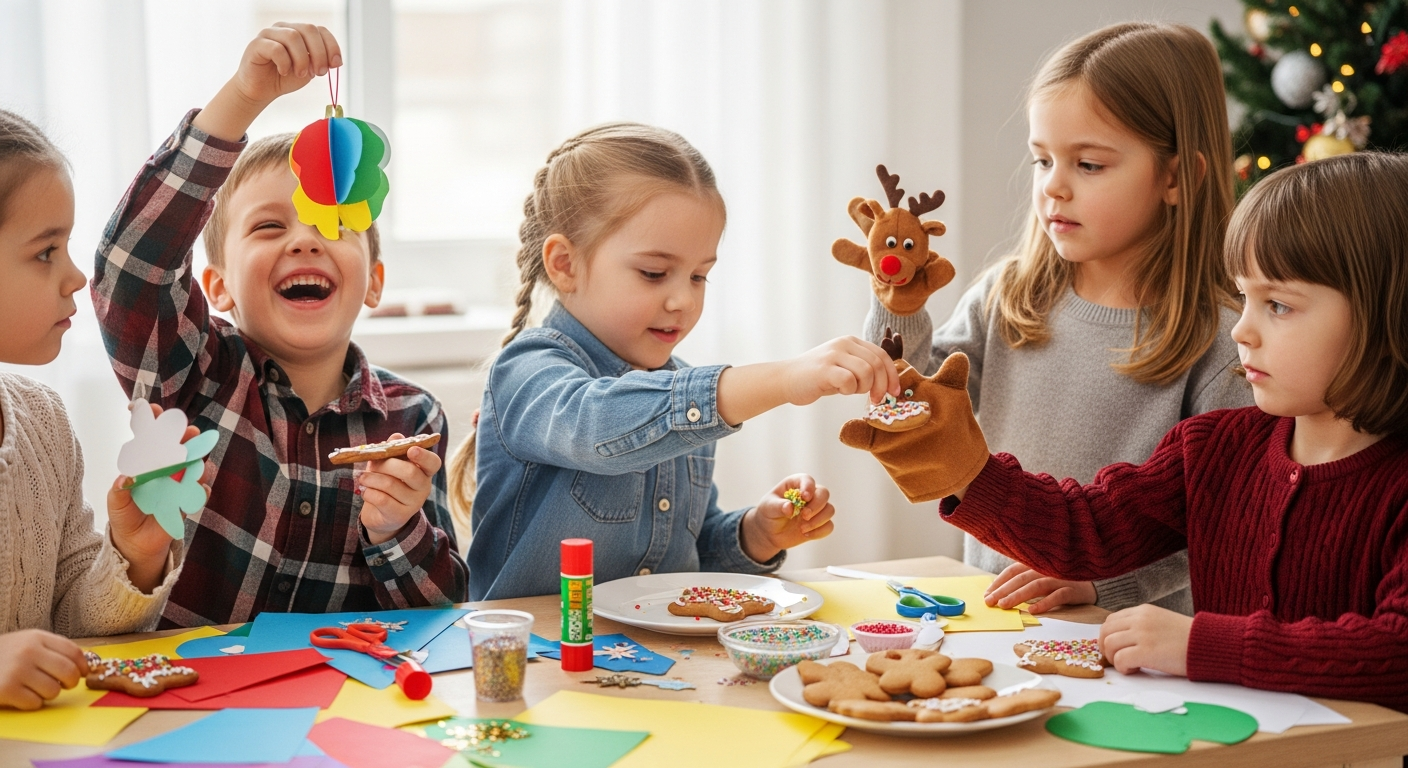
Table of Contents
- Introduction
- The Magic of Christmas and Early Communication
- Why Christmas Activities are More Than Just Fun
- Creative & Crafty Christmas Fun: Boosting Fine Motor & Language
- Kitchen Adventures: Cooking & Baking for Language Growth
- Musical & Movement-Based Christmas Activities: Rhythm, Imitation, & Gross Motor
- Storytelling & Imaginative Play: Narrative Skills & Creativity
- Outdoor & Nature-Inspired Christmas Activities: Observation & Descriptive Language
- The Role of "Smart Screen Time" with Speech Blubs During the Holidays
- Choosing the Right Plan for Your Family's Speech Journey
- Realistic Expectations & Joyful Progress
- Conclusion
- FAQ
Introduction
As the festive season twinkles into view, parents everywhere brace themselves for a delightful mix of holiday magic and energetic children. While the sights, sounds, and smells of Christmas naturally create cherished memories, they also offer an unparalleled opportunity for fostering language and communication skills. Far from being just another item on an already long holiday to-do list, engaging in Christmas-themed activities with your child can ignite their curiosity, expand their vocabulary, and build crucial social communication abilities, all while basking in the warmth of family connection. This post isn't just about finding ways to entertain; it's about transforming everyday holiday moments into powerful learning experiences. We'll explore a wealth of creative, engaging, and speech-boosting activities that you can weave into your Christmas preparations, emphasizing how these joyful endeavors can empower your child to "speak their minds and hearts," a mission that is deeply personal to us at Speech Blubs.
The Magic of Christmas and Early Communication
The Christmas season is inherently rich with sensory experiences and novel situations, making it a natural language laboratory for young children. From the vibrant reds and greens of decorations to the sweet scent of gingerbread and the jingle of bells, every element presents an opportunity for discussion, description, and discovery. For a child who might be a "late talker" or is still building their vocabulary, these new experiences provide concrete context for learning new words and concepts. Imagine the sheer delight as a child discovers the sticky texture of cookie dough, the crinkle of wrapping paper, or the soft glow of fairy lights. Each of these moments is a chance to introduce new vocabulary, practice sounds, and encourage descriptive language.
At Speech Blubs, we understand that every child's journey to confident communication is unique. Our founders, all of whom experienced speech challenges as children, created Speech Blubs from the desire to provide the immediate, effective, and joyful solution they wished they had. We believe that learning to communicate should be an engaging adventure, not a chore. That's why our approach blends scientific principles with play, creating one-of-a-kind "smart screen time" experiences that complement the rich, real-world interactions you create during the holidays. When your child participates in holiday activities, they are not just having fun; they are building the foundational blocks for confident communication.
Why Christmas Activities are More Than Just Fun
Beyond the obvious joy, Christmas activities are treasure troves for holistic child development, significantly impacting speech and language:
- Sensory Exploration: Engaging multiple senses (touching pinecones, smelling spices, seeing twinkling lights) helps children build richer mental maps and vocabulary. Describing these sensations ("sticky," "spicy," "bright") boosts descriptive language.
- Fine Motor Skills: Activities like decorating cookies, wrapping presents, or stringing popcorn for garland strengthen the small muscles in hands and fingers, which are crucial for pre-writing skills and even articulation, as mouth muscles are also fine-tuned.
- Cognitive Development: Following instructions for a recipe, sequencing steps for a craft, or remembering lyrics to a carol enhances memory, attention, and problem-solving — all vital for language comprehension and expression.
- Language-Rich Environment: The sheer volume of new vocabulary (reindeer, sleigh, carols, ornaments, garland), narrative opportunities (telling stories about Santa, reminiscing about past Christmases), and social communication practice (asking for ingredients, singing together, sharing) is unparalleled.
- Social-Emotional Growth: Sharing, taking turns, expressing wishes, and understanding others' emotions during gift-giving fosters empathy and crucial pragmatic language skills.
These moments of shared experience and guided interaction are precisely what our mission at Speech Blubs supports. We offer a screen-free alternative to passive viewing, encouraging active participation and powerful family connection. For instance, while decorating a tree, you might use new words like "bauble" or "tinsel," then reinforce those concepts later with our app, focusing on object naming and descriptive language, making screen time productive and engaging.
Creative & Crafty Christmas Fun: Boosting Fine Motor & Language
Crafts are fantastic for engaging little hands and minds, providing a natural pathway to language development. They offer concrete objects and actions to talk about, making abstract words tangible.
Ornament Making Extravaganza
Making ornaments is a classic holiday activity that offers endless opportunities for language practice.
- Description: As you choose materials, talk about colors ("red glitter," "shiny gold"), shapes ("round ball," "star"), and textures ("soft cotton," "rough sandpaper"). Encourage your child to describe their choices.
- Following Directions: "First, we glue the cotton here, then we sprinkle the glitter." Use sequencing words.
- Prepositional Phrases: "Put the star on top," "Hang the hook through the hole."
- Action Verbs: "Cut," "glue," "sprinkle," "hang," "tie."
For a child who is struggling with expressive language, you might show them two colors of glitter and ask, "Do you want blue or green?" This gives them a clear choice and a chance to practice a specific word. For children focusing on fine motor skills that support articulation, the precise movements of placing beads or tying string help develop hand-eye coordination.
Greeting Card Creation
Crafting holiday cards allows children to express creativity while practicing early literacy skills.
- Vocabulary: Discuss who the card is for ("Grandma," "Uncle John") and what special message they might want to convey. Introduce words like "greeting," "envelope," "stamp."
- Name Recognition & Writing: Help them practice writing their name or the names of family members. For younger children, they can "dictate" a message for you to write, developing pre-literacy and narrative skills.
- Descriptive Art: Encourage them to draw pictures and then describe what they've drawn ("This is a happy snowman," "Here are three big presents").
The yearly plan for Speech Blubs includes the extra Reading Blubs app, which makes activities like these even more impactful by building foundational literacy skills alongside speech development. Imagine them practicing letter sounds in Reading Blubs, then applying that knowledge by "writing" their name on a card!
Salt Dough Ornaments
Salt dough is a wonderfully tactile material that provides rich sensory input.
- Sensory Language: Describe the process – "It's squishy!" "Now it's smooth." "It smells salty."
- Action Verbs: "Mix," "knead," "roll," "cut," "bake."
- Creative Storytelling: Once the ornaments are made, painted, and hanging, ask your child to tell a story about their favorite ornament. "Who lives in this gingerbread house?" "What adventures will this star have?"
Kitchen Adventures: Cooking & Baking for Language Growth
The kitchen is a fantastic place for natural language development, especially during the holidays when baking becomes a central activity. These experiences engage multiple senses and require following sequences, perfect for language learning.
Decorating Christmas Cookies
A beloved tradition, cookie decorating is a vibrant scene for vocabulary and descriptive language.
- Colors & Shapes: "Let's use the red icing for the heart-shaped cookie." "This star needs green sprinkles."
- Action Verbs: "Squeeze," "spread," "sprinkle," "dip," "eat!"
- Quantitative Concepts: "How many sprinkles do you want?" "Just a little more icing." "We have five cookies left."
- Sensory Descriptors: "Sweet," "sticky," "crunchy," "soft."
For a child working on specific sounds, you might guide them to choose sprinkles for a "star" cookie, focusing on the /st/ blend, or describe the "sweet" taste, emphasizing the /s/ sound. Our app's "Sounds" section offers targeted practice that can be reinforced during these real-world interactions.
Simple Holiday Recipes
Even the simplest recipes provide a framework for language and cognitive development.
- Following Multi-Step Directions: "First, get the flour. Next, add the sugar. Then, mix it all together." This builds crucial listening comprehension and sequencing skills.
- Ingredient Vocabulary: Introduce names of spices, ingredients, and utensils.
- Sequencing & Retelling: After the activity, ask your child to retell the steps you followed. "What did we do first?" "What happened next?" This strengthens narrative skills.
We know that some children need extra support in these areas. If you're wondering if your child could benefit from targeted speech support, consider taking our quick 3-minute preliminary screener. It involves 9 simple questions and provides an assessment and a next-steps plan, often including a free 7-day trial of Speech Blubs.
Musical & Movement-Based Christmas Activities: Rhythm, Imitation, & Gross Motor
Music and movement are powerful tools for engaging children, especially those who learn best through active participation. The rhythm and repetition inherent in songs are excellent for language acquisition.
Christmas Carols & Songs
Singing together is a joyful way to boost speech and language skills.
- Articulation & Pronunciation: The rhythmic nature of songs helps children practice clear speech sounds.
- Vocabulary Expansion: Carols introduce new words and concepts in a memorable context.
- Memory & Sequencing: Remembering lyrics helps with auditory memory.
- Rhyme & Rhythm: Essential pre-reading skills are developed through exposure to rhyme and rhythm.
- Imitation: Encouraging children to imitate the words and actions of songs, like "Rudolph the Red-Nosed Reindeer," mirrors our core methodology.
Our video modeling approach at Speech Blubs is based on the scientific principle of mirror neurons, where children learn by watching and imitating their peers. This natural learning mechanism is precisely what happens when they sing along to carols and imitate the movements. It's a testament to how children learn best — through engagement and imitation.
Holiday-Themed Dances & Games
Movement games add an element of fun and integrate gross motor skills with language.
- Action Words: "Jump," "twirl," "march," "tip-toe" like an elf.
- Following Instructions: "Do the Santa shake!" "Freeze like a snowman!"
- Turn-Taking: Games encourage taking turns and understanding social cues.
- Body Awareness: Identifying body parts as you move to the music.
For a child who might be hesitant to speak, these activities offer a low-pressure environment to engage. They can participate with actions first, gradually adding sounds and words as their confidence grows. Seeing what other parents are saying about how Speech Blubs builds this confidence is incredibly inspiring; you can read their testimonials here.
Storytelling & Imaginative Play: Narrative Skills & Creativity
The magic of Christmas lends itself perfectly to storytelling and imaginative play, which are cornerstone activities for developing advanced language skills.
Reading Christmas Books
Curling up with a festive book is a quintessential holiday experience that nourishes language development.
- Vocabulary & Concepts: Introduce seasonal words, emotions, and abstract ideas.
- Sequencing & Comprehension: Discuss the plot, "What happened first?" "What will happen next?"
- Predicting: "What do you think will happen to the gingerbread man?"
- Emotional Literacy: Talk about characters' feelings. "Why is Tiny Tim sad?"
- Story Retelling: Encourage your child to retell their favorite Christmas story in their own words, building narrative skills.
For a child who loves animals, reading a book about arctic animals might be followed by a session in Speech Blubs' "Animal Kingdom" section, where they can practice making animal sounds and naming them, creating a cohesive learning experience.
Creating Christmas Stories
Empower your child to be the storyteller.
- Imagination & Creativity: Ask open-ended questions: "What if Santa got stuck in the chimney?" "What adventure did your favorite elf have today?"
- Past & Future Tense: As they tell their story, gently introduce and reinforce correct verb tenses.
- Character & Setting Development: Help them describe characters and the festive setting.
- Problem-Solving: Encourage them to think about how characters solve dilemmas in their stories.
Dress-Up & Role-Play
Transform into Santa, an elf, or a reindeer!
- Social Scripts: Practice common phrases and interactions ("Ho ho ho!" "Merry Christmas!").
- Emotional Vocabulary: Expressing different emotions through characters.
- Perspective-Taking: Understanding what it's like to be another character.
These activities foster a love for communication and build confidence, reducing the frustration that can sometimes accompany speech delays. Our founders understood this frustration firsthand, which is why they designed Speech Blubs to be a joyful and empowering tool.
Outdoor & Nature-Inspired Christmas Activities: Observation & Descriptive Language
Even in colder weather, the outdoors offers unique Christmas experiences that can spark language development.
Winter Wonderland Walks
Bundle up and explore the festive decorations in your neighborhood or a local park.
- Observation & Description: "Look at the sparkling lights!" "Do you see that big, inflatable snowman?" "The air feels crisp and cold."
- Color & Size Concepts: Count the lights, describe their colors, compare the sizes of different decorations.
- Sound Identification: "Listen to the crunch of the snow under our feet." "Do you hear the faint sound of sleigh bells?"
Decorating an Outdoor Tree for Animals
This activity teaches kindness and offers language practice.
- Simple Instructions: "First, we'll put the birdseed ornament on the branch. Next, hang the orange slices."
- Animal Vocabulary: Talk about the animals who might visit the tree (birds, squirrels, deer).
- Descriptive Language: "The birdseed is rough," "The orange smells zesty."
These sensory-rich experiences complement the structured learning found in our app. Speech Blubs is a powerful tool for family connection, offering activities you can do together, but also moments of guided independent learning. You can learn more about Speech Blubs on our homepage.
The Role of "Smart Screen Time" with Speech Blubs During the Holidays
While holiday activities are crucial for real-world interaction, we also understand that families often look for tools to support their child's development, especially during busy times. This is where Speech Blubs shines, offering a distinct alternative to passive screen time.
At Speech Blubs, our mission is to empower children to "speak their minds and hearts." This commitment was born from the personal experiences of our founders, who all grew up with speech problems and created the tool they desperately wished they had. We are dedicated to providing an immediate, effective, and joyful solution for the 1 in 4 children who need speech support. Our app is a blend of scientific principles and play, delivering one-of-a-kind "smart screen time" experiences. Instead of passively watching cartoons, children actively engage with our app.
How Speech Blubs Enhances Language Development
Our unique approach lies in our "video modeling" methodology, where children learn by watching and imitating their peers. This isn't just entertainment; it's a powerful, research-backed technique that capitalizes on how young children naturally learn new skills. For example, for a parent whose 3-year-old "late talker" loves animals, the "Animal Kingdom" section offers a fun, motivating way to practice "moo" and "baa" sounds by watching other children make those sounds. This focused imitation helps build confidence in vocalizing and articulating.
During the busy Christmas season, Speech Blubs can be a valuable partner:
- Targeted Practice: If your child needs to work on specific sounds or vocabulary, the app offers focused sections that reinforce those skills.
- Engagement on the Go: Whether you're traveling to visit relatives or waiting in line to see Santa, Speech Blubs provides an engaging, educational activity that keeps little minds active.
- Reduces Frustration: When a child struggles to communicate, it can be frustrating for both them and you. Speech Blubs offers a playful, supportive environment to practice, helping to build their confidence and reduce that frustration.
- Complements Real-World Learning: The words and concepts learned through holiday activities can be reinforced and expanded upon within the app, creating a holistic learning journey.
We are proud that our method is backed by science, placing us in the top tier of speech apps worldwide. Our commitment is to provide tools that genuinely support your child's developmental path, making learning to communicate a joyful experience. Ready to experience this difference? Download Speech Blubs on the App Store or Get Speech Blubs on Google Play to begin your journey.
Choosing the Right Plan for Your Family's Speech Journey
We believe in transparency and making our powerful tools accessible to every family. When you decide to join the Speech Blubs community, you have two primary options for subscription:
- Monthly Plan: This plan is available for $14.99 per month. It offers access to the core Speech Blubs app content.
- Yearly Plan: Our Yearly plan is priced at $59.99 per year.
We want to be clear: the Yearly plan offers significantly more value and features, making it the superior choice for most families.
With the Yearly plan, you not only save 66% compared to the monthly subscription (which breaks down to just $4.99/month), but you also unlock exclusive, high-value benefits:
- A 7-day free trial: This allows you to explore the full potential of Speech Blubs risk-free before committing. The Monthly plan does not include a free trial.
- The extra Reading Blubs app: This invaluable companion app focuses on early literacy skills, complementing the speech and language development in Speech Blubs. This feature is exclusive to Yearly subscribers.
- Early access to new updates: You'll be among the first to experience new features and content.
- 24-hour support response time: Our dedicated support team is there for you, ensuring quick assistance whenever you need it.
The Monthly plan, while providing access to the main Speech Blubs app, does not include these additional benefits like the free trial, Reading Blubs, early access, or priority support.
To get the full suite of features and the best possible value for your child's speech and language development, we strongly encourage you to choose the Yearly plan. It's designed to provide comprehensive support throughout your child's journey.
Realistic Expectations & Joyful Progress
It’s important to approach these activities and tools with realistic expectations. No app or single activity can guarantee specific outcomes like "your child will be giving public speeches in a month." Instead, our focus, and the power of these combined approaches, lies in:
- Fostering a love for communication: Creating positive, engaging experiences around speaking.
- Building confidence: Empowering children to use their voices without fear of judgment.
- Reducing frustration: Providing avenues for expression when words are hard to find.
- Developing key foundational skills: Laying the groundwork for clear articulation, rich vocabulary, and strong narrative abilities.
- Creating joyful family learning moments: Strengthening bonds through shared, meaningful interactions.
Remember, Speech Blubs is a powerful supplement to your child's overall development plan and, when applicable, professional therapy. The activities we've discussed are most effective with active adult co-play and support. Your presence, encouragement, and participation are the most important ingredients for your child’s success. We are here to support you in every step of this wonderful journey.
Conclusion
The Christmas season is a truly magical time, brimming with opportunities to connect with your children and nurture their developing language skills. From crafting festive decorations and baking holiday treats to singing carols and telling imaginative stories, every activity becomes a chance to explore new vocabulary, practice sounds, and build communication confidence. These joyful experiences, rich in sensory input and social interaction, are invaluable for holistic development.
To further support your child's journey, Speech Blubs offers a unique "smart screen time" solution that complements these real-world activities. Born from a deeply personal mission, our app uses video modeling to empower children to speak their minds and hearts, turning screen time into an engaging and effective learning experience. By blending scientific principles with playful activities, we provide a tool that fosters a love for communication, builds confidence, and reduces frustration, ensuring that your child’s voice can truly shine.
As you plan your festive celebrations, we invite you to integrate these fun, language-rich activities into your holiday traditions. And for an extra boost of speech and language support that's both effective and joyful, we encourage you to explore Speech Blubs.
Ready to make this Christmas a season of growth and confident communication? Start your 7-day free trial today by creating an account or Download Speech Blubs on the App Store or Get Speech Blubs on Google Play. Remember to choose the Yearly plan to unlock the 7-day free trial, the bonus Reading Blubs app, early updates, and 24-hour support, giving your child the best start possible this holiday season.
FAQ
Q1: How can I encourage my child to talk more during Christmas activities if they are shy or a "late talker"?
A1: Create a low-pressure environment. Instead of demanding speech, model language yourself by narrating actions ("Mommy is stirring the cookie dough!"), describing what you see, and using open-ended questions that don't require a specific verbal answer at first (e.g., "Wow, what do you think of these lights?"). Offer choices ("Do you want red or green sprinkles?"), giving them a simple way to respond. Incorporate songs and movements, which can be less intimidating than direct conversation. Remember that imitation is a powerful learning tool, which is why our video modeling approach is so effective, and you can encourage this during play.
Q2: My child has specific articulation challenges. Can holiday activities help with that?
A2: Absolutely! Many Christmas activities naturally encourage the practice of specific sounds. For example, singing carols helps with rhythm and pronunciation. Describing "sparkling stars" or "sweet treats" can help practice /s/ blends or /t/ sounds. While making ornaments, you might focus on words with the sound your child is working on, like "glue," "green," or "gift." Speech Blubs offers targeted sections for sound practice, which can be wonderfully reinforced during these real-world, festive moments.
Q3: How do I balance traditional holiday activities with screen time, especially if my child needs speech support?
A3: The key is "smart screen time." Instead of passive viewing, use apps like Speech Blubs as an active, engaging tool. We offer a screen-free alternative to passive viewing, making it a powerful tool for family connection. You can use Speech Blubs to reinforce vocabulary or sounds learned during an activity. For example, after decorating the Christmas tree, your child could go into the app to practice words related to "tree" or "colors." Set clear time limits and engage with your child during and after their app sessions, discussing what they learned. Our mission is to empower children to "speak their minds and hearts," blending scientific principles with play into meaningful screen time experiences.
Q4: My child isn't interested in some of the suggested activities. How can I make them more appealing?
A4: Tailor activities to your child's interests. If they love cars, create a Christmas-themed "car wash" for toy reindeer. If they're obsessed with dinosaurs, make dinosaur-shaped Christmas cookies! Involve them in the planning process, giving them choices. Remember to keep it playful and flexible. The goal is engagement and connection, not perfection. And if you're ever unsure about your child's speech development, our quick 3-minute preliminary screener can offer valuable insights and a personalized plan.