
Joyful Kid Craft Christmas Ornaments for Family Fun
 By Speech Blubs Team•Dec 22, 2025•21 min.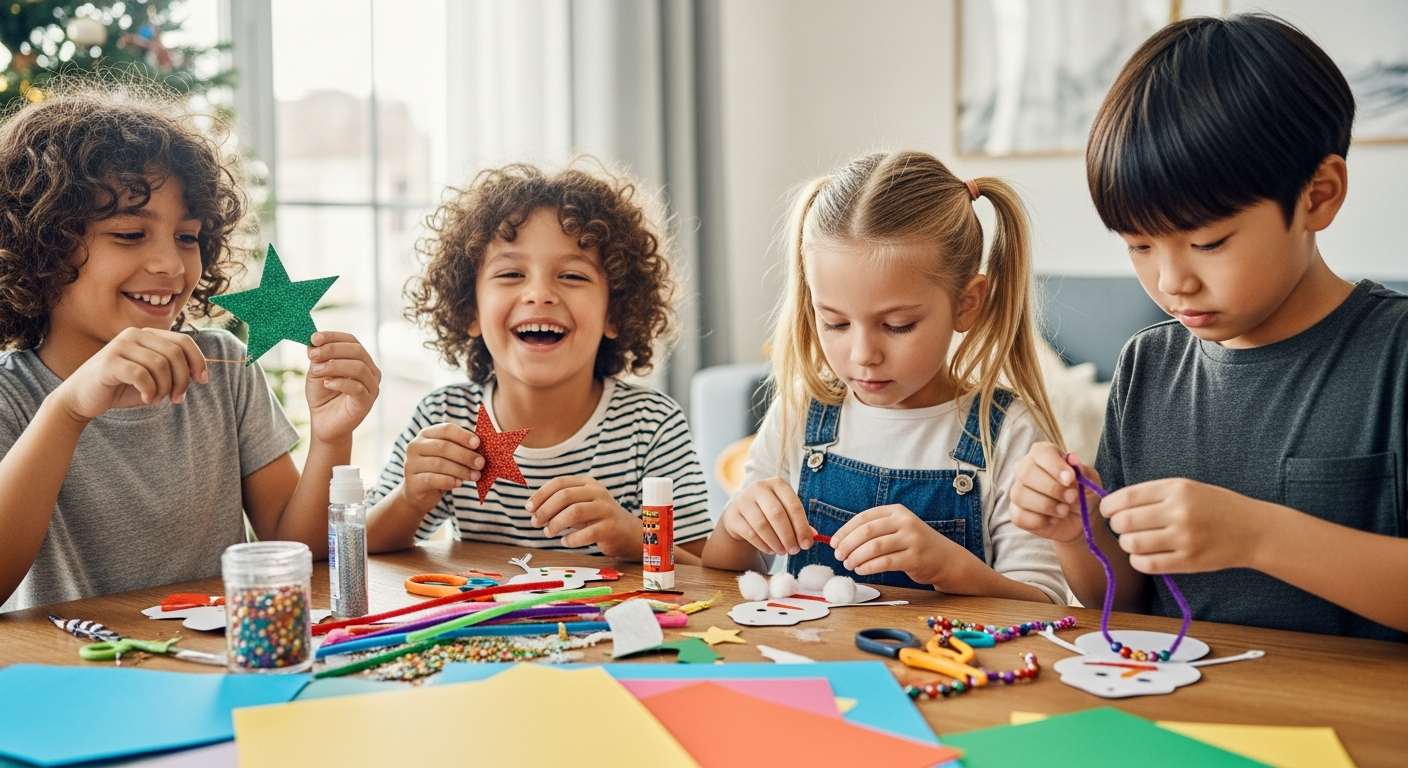
Table of Contents
- Introduction
- Why Kid Craft Christmas Ornaments Are More Than Just Decorations
- The Speech and Language Superpowers of Crafting
- Our Favorite Kid Craft Christmas Ornament Ideas
- Tips for Making Craft Time a Language-Rich Experience
- The Speech Blubs Difference: More Than Just an App
- Unlocking the Full Potential: Speech Blubs Pricing and Value
- Conclusion
- Frequently Asked Questions (FAQ)
Introduction
The holiday season often twinkles with magic, anticipation, and perhaps a touch of delightful chaos. Amidst the flurry of gift-wrapping and cookie-baking, there’s a quiet, profound magic in the simple act of creating. Imagine your child, eyes wide with wonder, proudly hanging their very own handmade ornament on the Christmas tree. It’s more than just a decoration; it’s a tangible piece of their creativity, a memory in the making, and a powerful catalyst for growth. But did you know that these festive crafting sessions offer a treasure trove of developmental benefits, particularly for your child's speech and language skills?
Many parents, ourselves included, grew up with speech challenges, which is why we at Speech Blubs are so passionate about empowering children to "speak their minds and hearts." We know firsthand the desire for tools that make learning fun and effective. This holiday season, we want to show you how making kid craft Christmas ornaments isn't just a beloved tradition; it's a "smart screen time" experience when paired with active engagement, fostering everything from fine motor skills to complex communication. In this post, we'll dive into the incredible developmental advantages of crafting, share some of our favorite easy ornament ideas, and provide practical tips to turn every crafting session into a rich language-learning opportunity. By the end, you'll see why these festive creations are not only charming additions to your tree but also invaluable stepping stones on your child's journey to confident communication.

Why Kid Craft Christmas Ornaments Are More Than Just Decorations
Crafting is an immersive, multi-sensory activity that engages various parts of a child's brain, promoting holistic development. While the end product – a sparkly, unique ornament – is certainly rewarding, the true magic lies in the process itself.
Beyond the Bling: The Developmental Power of Holiday Crafting
The act of turning simple materials into something beautiful provides immense satisfaction and a sense of accomplishment. This process isn't just about creating a pretty bauble; it's a rich landscape for cultivating essential skills that extend far beyond the craft table. From the moment your child chooses their materials to the final flourish of glitter, they are learning, growing, and developing in profound ways. These activities are particularly vital in early childhood, laying foundational skills that will support their learning in school and their ability to navigate the world around them. Engaging in hands-on activities, especially those that are fun and festive, helps solidify these skills in a way that passive learning often cannot.
Fostering Fine Motor Skills and Coordination
Think about all the intricate movements involved in crafting: grasping a paintbrush, squeezing glue, cutting paper with scissors, threading beads onto a pipe cleaner, or rolling out salt dough. Each action requires precise control of small muscles in the hands and fingers, as well as hand-eye coordination. These fine motor skills are critical for everyday tasks like buttoning clothes, tying shoelaces, and eventually, writing. When a child works with various textures and tools, they are refining their dexterity and strengthening the muscles that will serve them throughout their lives. For a child who might struggle with the precision needed for tasks like drawing or writing, the forgiving nature of many craft materials allows them to practice these skills without pressure, building their confidence with every successful glue dot or snip of the scissors.

Boosting Creativity and Imagination
Crafting is a playground for the imagination. With a pile of materials, children are free to envision, experiment, and create without boundaries. A simple toilet paper roll can become a reindeer, a pipe cleaner can transform into a swirling snowflake, and a plain piece of paper can be folded into an angel. This freedom to explore different ideas, to combine colors and textures, and to invent new designs helps children think outside the box. It teaches them that there isn't just one "right" way to do something, fostering innovative thinking and problem-solving. This imaginative play is a cornerstone of cognitive development, helping children to understand abstract concepts and to develop narratives, both internal and external.
Encouraging Problem-Solving and Following Directions
Every craft project presents mini-challenges. "How can I make this stick to that?" "Which color will look best here?" "What's the next step after cutting?" Children learn to troubleshoot, adapt, and make decisions. Furthermore, most crafts involve a sequence of steps. Following multi-step directions – whether spoken by a parent or illustrated in a simple guide – is a crucial skill for listening comprehension and executive function. This ability to understand and execute a series of instructions translates directly into academic success and the ability to manage more complex tasks later in life. For a parent whose child might benefit from structured guidance, the inherent sequence of craft activities provides an ideal, low-pressure environment for practicing these vital skills.
Building Confidence and Self-Esteem
There’s an undeniable glow that radiates from a child who has just completed a project they're proud of. Crafting provides tangible evidence of their effort and skill. Displaying their handmade ornaments on the family Christmas tree validates their hard work and creativity, boosting their self-esteem. This sense of accomplishment encourages them to take on new challenges and fosters a positive attitude towards learning and trying new things. When a child sees their unique creation valued and celebrated by their family, it reinforces their sense of self-worth and encourages them to continue expressing themselves through creative outlets.
Creating Cherished Family Memories
Beyond all the developmental benefits, crafting Christmas ornaments together creates precious, lasting family memories. These moments of shared laughter, collaboration, and creativity become part of your family's holiday tradition, strengthening bonds and providing stories to recount for years to come. These are the moments when families truly connect, free from the distractions of everyday life, focusing on shared joy and creation. These traditions foster a sense of belonging and provide a stable foundation of loving memories that children can carry with them long into adulthood.
The Speech and Language Superpowers of Crafting
While crafting offers a multitude of general developmental advantages, its impact on speech and language development is particularly significant. Crafting creates a natural, engaging environment for rich communication, often without children even realizing they are learning.
Vocabulary Expansion: Naming Colors, Shapes, Materials, Actions
As you craft together, you naturally introduce a wealth of new words. "Pass me the sparkly red glitter," "Let's cut this circle," or "This paper is rough." Children learn the names of colors, shapes, textures, materials (glue, scissors, pipe cleaner, felt), and actions (cut, paste, draw, paint, sprinkle, fold, attach, decorate). This active labeling and description helps build their expressive and receptive vocabulary in a meaningful context. For a child learning new words, seeing, touching, and manipulating the object while hearing its name helps solidify the concept far more effectively than simply hearing the word in isolation.
Descriptive Language: "Rough," "Sparkly," "Sticky," "Tiny"
Beyond basic vocabulary, crafting encourages the use of descriptive language. You can ask, "How does the glitter feel?" (sparkly, rough), "What about the glue?" (sticky, wet), or "Is that bead big or tiny?" This helps children learn adjectives and adverbs, enabling them to articulate details and observations more effectively. When they describe their creations, they're practicing a higher level of language use, moving beyond simple nouns and verbs. This ability to use descriptive language is crucial for storytelling, explaining ideas, and engaging in more complex conversations.
Sequencing and Retelling: "First we glue, then we glitter"
Craft projects are inherently sequential. This provides a fantastic opportunity to practice sequencing words like "first," "next," "then," and "finally." You can narrate the steps as you go, and then encourage your child to retell the process afterward. This skill is vital not just for following directions but also for storytelling, understanding narratives, and organizing thoughts. For a parent whose 3-year-old "late talker" loves animals, making animal-themed ornaments can be a great way to practice, "First, we cut out the sheep," then "Next, we glue on the cotton," reinforcing both vocabulary and sequencing. The "Getting Ready" section in Speech Blubs, which helps children sequence and vocalize daily routines, offers a perfect complement to these real-world sequencing activities.
Following Multi-Step Directions: Crucial for Comprehension
"Please get the red paper, then the scissors, and cut out two small squares." This type of instruction challenges a child to listen carefully, remember multiple pieces of information, and execute them in the correct order. Regularly engaging in activities that require following multi-step directions significantly improves their auditory processing and comprehension skills. This translates directly into classroom success and the ability to understand more complex instructions in various environments. If you're wondering about your child's communication milestones, a quick check can offer clarity. Take our quick 3-minute preliminary screener to get a simple assessment and a free 7-day trial.
Expressing Preferences and Making Choices
"Do you want blue glitter or green glitter?" "Should we put a star on top or a circle?" Offering choices gives children a voice and encourages them to express their preferences using language. This empowers them, builds confidence in their decision-making, and provides opportunities to use words like "I want," "I like," "my turn," and "this one." This autonomy in decision-making is not only empowering but also provides natural opportunities for verbal expression and negotiation.
Storytelling and Imagination: Giving Life to Their Creations
Once an ornament is complete, encourage your child to tell a story about it. "Who is this snowman? What's his name? What adventures will he have on the tree?" This fosters narrative skills, imagination, and the ability to organize thoughts into a coherent story. Crafting provides the props, and their imagination provides the plot! These storytelling exercises help develop complex sentence structures and conversational turns, which are fundamental to effective communication.
Connecting with Speech Blubs: Empowering Communication Through Play
At Speech Blubs, our mission is to empower children to "speak their minds and hearts." We understand that building communication skills is a journey, and integrating various engaging activities, like crafting, can make that journey joyful and effective. Our unique "video modeling" methodology, where children learn by watching and imitating their peers, complements the natural imitation that occurs during crafting. Just as your child watches you demonstrate how to cut paper or apply glue, they learn speech sounds and words by observing real children their age in our app.
For instance, if your child is working on animal sounds and names in our "Animal Kingdom" section, you can extend that learning by creating animal-themed ornaments. As they practice "moo" for a cow or "baa" for a sheep in the app, they can then proudly glue cotton onto a sheep ornament while repeating the sound and word. This provides a powerful, multi-sensory reinforcement of vocabulary and sounds, turning screen time into "smart screen time." Our app provides a screen-free alternative to passive viewing, promoting active engagement and a powerful tool for family connection, much like crafting itself. Download Speech Blubs on the App Store or Google Play to begin a joyful communication journey that blends scientific principles with play.
Our Favorite Kid Craft Christmas Ornament Ideas
Here are some beloved, simple, and developmentally rich kid craft Christmas ornament ideas that are perfect for little hands and big imaginations. Each one offers unique opportunities for speech and language development.
Salt Dough Ornaments
Salt dough is a classic for a reason! It's incredibly versatile, uses common household ingredients, and provides fantastic sensory input.
- Ingredients: 1 cup flour, 1/2 cup salt, 1/2 cup water.
- Process: Mix ingredients, knead until smooth, roll out, cut with cookie cutters (stars, trees, bells). Poke a hole for hanging. Bake at 250°F (120°C) until hard (2-3 hours), then let cool and decorate with paint, glitter, or markers.
- Developmental Benefits:
- Sensory Play: Touching the soft, pliable dough; smelling the baking dough. This engages tactile and olfactory senses, providing rich descriptive language opportunities (e.g., "sticky," "smooth," "warm," "hard").
- Vocabulary: "Dough," "flour," "salt," "water," "mix," "knead," "roll," "cut," "bake," "paint," "smooth," "hard."
- Fine Motor: Kneading the dough strengthens hand muscles. Rolling with a rolling pin and using cookie cutters improves hand-eye coordination and precision.
- Sequencing: Explaining the steps: "First, we mix the flour and salt. Next, we add water..."
Popsicle Stick Ornaments
Popsicle sticks are inexpensive and incredibly adaptable for creating various shapes and figures.
- Materials: Popsicle sticks, glue, paint or markers, glitter, small pom-poms, buttons, ribbon.
- Process: Glue popsicle sticks into shapes like triangles (for trees), stars, or simple frames. Once dry, children can paint, color, and embellish them with craft supplies.
- Developmental Benefits:
- Shapes & Counting: Creating geometric shapes like triangles and stars introduces these concepts. Counting the sticks used ("one, two, three sticks for a tree").
- Vocabulary: "Stick," "glue," "attach," "decorate," "triangle," "star," "straight," "crossed."
- Following Directions: "Put this stick here, then glue this one on top." "Make a point at the top."
- Creativity: Decorating offers endless possibilities for color choice and material application.
Cinnamon Applesauce Ornaments
These fragrant ornaments fill your home with a wonderful holiday scent and are simple for even young children to help with.
- Ingredients: 1 cup ground cinnamon, 1/2 cup applesauce (approx.), 1 tablespoon white glue (optional, for extra durability).
- Process: Mix cinnamon and applesauce (and glue) until it forms a stiff dough. Roll out and cut with cookie cutters. Poke a hole for hanging. Let air dry for 2-3 days, flipping occasionally.
- Developmental Benefits:
- Sensory & Smell: The strong cinnamon smell is wonderful for sensory engagement. The dough is tactile and pleasant to handle.
- Vocabulary: "Cinnamon," "applesauce," "mix," "press," "scented," "fragrant," "dry."
- Sequencing: A great opportunity to practice the sequence of steps, from mixing to drying.
- Fine Motor: Rolling and cutting, similar to salt dough.
Paper Plate Ornaments
Paper plates are a versatile and budget-friendly base for countless craft ideas.
- Materials: Paper plates, scissors, glue, construction paper, glitter, pom-poms, pipe cleaners, googly eyes.
- Process: Children can cut the paper plates, paint them, or decorate them to look like snowmen, Santa faces, angels, or wreaths. Fringe the edges for a sun or snowflake effect.
- Developmental Benefits:
- Cutting & Gluing: Simple and accessible cutting practice (straight lines, curves).
- Vocabulary: "Circle," "cut," "fringe," "decorate," "shiny," "rough," "smooth."
- Creativity: Allows for broad interpretation and imaginative play – turning a simple plate into a character.
Beaded Pipe Cleaner Ornaments
These ornaments are fantastic for developing fine motor precision and pattern recognition.
- Materials: Pipe cleaners, various beads (pony beads, letter beads), scissors.
- Process: Children thread beads onto pipe cleaners and then bend the pipe cleaners into festive shapes like candy canes, stars, or spirals.
- Developmental Benefits:
- Fine Motor Precision: Threading small beads requires significant hand-eye coordination and dexterity.
- Patterns & Colors: Naming colors as they thread ("red bead, green bead, red bead"). Creating patterns fosters early math skills.
- Vocabulary: "Bead," "thread," "bend," "sparkle," "pattern," "long," "short."
- Following Instructions: "Put a blue bead, then a white bead."
Nature-Inspired Ornaments
A walk outside to collect materials turns this craft into a two-part adventure!
- Materials: Pinecones, small twigs, dried leaves, acorns, glue, glitter, paint, ribbon.
- Process: After collecting natural treasures, children can decorate pinecones with glitter, paint twigs, or glue small leaves onto cardstock shapes.
- Developmental Benefits:
- Outdoor Exploration: Encourages observation and discovery in nature.
- Vocabulary: "Pinecone," "leaf," "twig," "acorn," "smooth," "prickly," "rough," "brown," "green."
- Observation & Description: Discussing textures, shapes, and colors found in nature. "The pinecone feels bumpy."
- Connecting to the World: Understanding that art can come from natural elements.
Tips for Making Craft Time a Language-Rich Experience
To truly harness the speech and language potential of crafting, integrate these simple strategies into your holiday craft sessions.
- Narrate Everything: Describe your actions and the materials you're using. "I'm squeezing the sticky glue," "Now I'm cutting the red paper carefully." This models language and builds vocabulary.
- Ask Open-Ended Questions: Instead of "Do you like it?" try "What should we do next?" "How does that feel?" "What do you think will happen if...?" These questions encourage more elaborate answers and critical thinking.
- Offer Choices: "Do you want the blue glitter or the gold glitter?" "Should we use the big button or the small button?" Offering choices helps children express preferences and use descriptive words.
- Expand on Their Words: If your child says "star," you can expand by saying, "Yes, a sparkly yellow star!" If they say "cut," you can say, "Yes, you are cutting the paper carefully." This models correct grammar and adds descriptive vocabulary.
- Sing Songs & Read Books: Integrate holiday-themed songs or read a festive book before or during crafting. This builds literacy, reinforces holiday vocabulary, and creates a joyful atmosphere.
- Be Patient and Follow Their Lead: Allow for exploration and mistakes. The goal isn't a perfect ornament but a joyful learning experience. Let their creativity guide the process, offering support and encouragement.
- Focus on the Process, Not Just the Product: Emphasize the effort, creativity, and fun had during the activity, rather than solely the final outcome. Celebrate their unique approach and dedication.
- Connect to Prior Learning: If your child used the Speech Blubs app earlier, you can link the crafting activity to what they learned. "Remember how we learned about 'sticky' in the app? This glue is sticky too!"
These tips create an environment where communication is natural and engaging, making learning feel like play. Our approach at Speech Blubs similarly encourages active participation and repetition through engaging activities. Our method is backed by science, placing us in the top tier of speech apps worldwide. You can explore how Speech Blubs is backed by research and highly rated, showcasing our commitment to effective, evidence-based practices.
The Speech Blubs Difference: More Than Just an App
At Speech Blubs, we believe every child deserves the chance to "speak their minds and hearts." Our company was born from the personal experiences of our founders, who all grew up with speech problems and created the tool they wished they had. This personal connection drives our commitment to providing an immediate, effective, and joyful solution for the 1 in 4 children who need speech support. We blend scientific principles with play into one-of-a-kind "smart screen time" experiences that actively engage children in their language development journey.
Unlike passive viewing like cartoons, Speech Blubs offers a screen-free alternative through our innovative "video modeling" methodology. Children learn complex communication skills by watching and imitating their peers, harnessing the power of mirror neurons to facilitate learning. This active engagement turns screen time into a powerful tool for family connection and developmental progress. For example, activities like "Yummy Time" help children learn food vocabulary and simple requests, while "Getting Ready" aids in sequencing daily routines – skills directly applicable to describing crafting steps or discussing ingredients. Our app is designed not just to teach words, but to foster confidence, reduce frustration, and build a lifelong love for communication. Check out our main homepage to learn more about our comprehensive approach.
Unlocking the Full Potential: Speech Blubs Pricing and Value
We're transparent about our pricing because we believe in providing exceptional value to families. We offer two main plans for our Speech Blubs app:
- Monthly Plan: This plan costs $14.99 per month. While it offers flexibility, it provides a limited experience without some of our most valuable features.
- Yearly Plan: This is our most popular and highly recommended plan, priced at $59.99 per year. When you break it down, that's just $4.99 per month, which means you save a remarkable 66% compared to the monthly option!
The Yearly plan isn't just cheaper; it's the clear best choice because it includes exclusive, high-value features designed to maximize your child's progress and your family's learning experience:
- A 7-Day Free Trial: Try out the full Speech Blubs experience before committing, ensuring it's the right fit for your child. The Monthly plan does not include this free trial.
- The Extra Reading Blubs App: This bonus app helps your child develop early literacy skills, complementing their speech and language development for a holistic learning approach. This valuable addition is not included with the Monthly plan.
- Early Access to New Updates: Get the latest features and content as soon as they're released.
- 24-Hour Support Response Time: Our dedicated support team is there for you, ensuring quick assistance whenever you need it.
Choosing the Yearly plan gives you the full suite of tools to empower your child's communication journey and save significantly. Hear what other parents are saying about their child's success with Speech Blubs by visiting our testimonials page.
Ready to give your child the gift of confident communication this holiday season? Maximize your child's learning journey and save big – download Speech Blubs today from Google Play or on the App Store and choose the Yearly plan to unlock your 7-day free trial and all the exclusive features!
Conclusion
Creating kid craft Christmas ornaments is far more than just a festive activity; it's a powerful and joyful pathway to nurturing your child's holistic development. From strengthening fine motor skills and sparking creativity to fostering problem-solving and boosting self-esteem, each ornament carries a wealth of developmental benefits. Crucially, these crafting sessions serve as incredible opportunities for speech and language growth, expanding vocabulary, improving descriptive language, enhancing sequencing abilities, and refining the skill of following multi-step directions.
By integrating simple strategies like narration, open-ended questions, and choice-making, you can transform ordinary craft time into extraordinary learning moments. When paired with innovative tools like Speech Blubs, which offers "smart screen time" through video modeling and interactive play, you create a comprehensive and engaging environment for your child to flourish. We are committed to providing an immediate, effective, and joyful solution for children needing speech support, allowing them to truly "speak their minds and hearts."
This holiday season, embrace the magic of making memories and boosting communication skills simultaneously. Don't just decorate your tree; enrich your child's world. Ready to empower your child's voice and create lasting family connections? Start your 7-day free trial today by creating an account on our sign-up page and be sure to select the Yearly plan to gain access to the full suite of features, including the bonus Reading Blubs app and priority support, all while enjoying significant savings. Happy crafting and happy communicating!
Frequently Asked Questions (FAQ)
Q1: How old should my child be to start making Christmas ornaments?
A1: Children as young as toddlers (1-2 years old) can participate in simple tasks like squeezing glue, pressing glitter, or decorating pre-cut shapes. Preschoolers (3-5 years old) can handle more complex tasks like cutting with safety scissors, threading large beads, or rolling dough. The key is to choose age-appropriate crafts and focus on the process, not perfection. Adult supervision and assistance are always recommended.
Q2: What if my child gets frustrated during crafting?
A2: Frustration is a natural part of learning. When it arises, offer gentle encouragement and break down the task into smaller, more manageable steps. Remind them that it's okay for things not to be perfect and that the goal is to have fun and be creative. You can also model patience and problem-solving. If frustration persists, consider taking a break and revisiting the activity later, or choose an even simpler craft. Speech Blubs encourages a similar positive, low-pressure learning environment, focusing on progress and joy.
Q3: How can I best encourage language development during crafting, especially for a shy child?
A3: Start by narrating your own actions and describing materials, providing a language model. Offer choices (e.g., "Do you want the red or blue paint?"), which encourages them to vocalize preferences. Use open-ended questions like "What do you think about this?" or "How does that feel?" and patiently wait for their response. Follow their lead, letting them choose activities they enjoy, which increases engagement. Speech Blubs uses engaging video modeling to naturally draw children into communication, which can be particularly helpful for shy learners.
Q4: Besides crafting, what other activities can help with my child's speech and language development?
A4: Beyond crafting, everyday activities offer rich opportunities. Reading books together, singing songs, playing pretend games, having conversations during meals, and even describing your surroundings on a walk are all incredibly beneficial. Interactive games that involve following directions, rhyming, or storytelling also help. Supplementing these activities with a structured, play-based tool like Speech Blubs can significantly boost progress. Our app provides a wide range of engaging exercises that complement these real-world interactions.
About the author