
Joyful Kids' Christmas Crafts: Fun Ideas & Family Fun
 By Speech Blubs Team•Dec 22, 2025•20 min.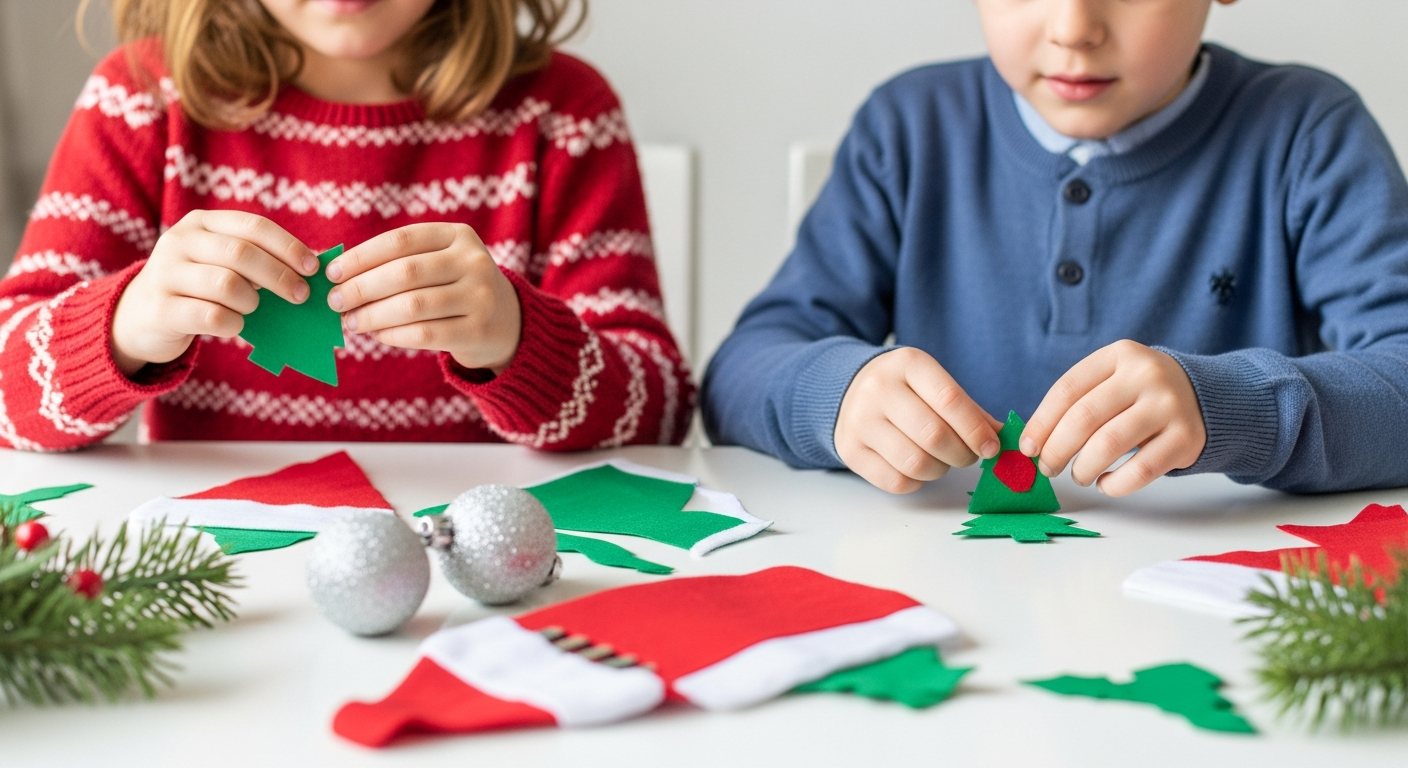
Table of Contents
- Why Christmas Crafts Are More Than Just Fun
- Getting Started: Crafting Essentials for the Holidays
- Easy & Engaging Christmas Craft Ideas for Little Hands (Ages 2-5)
- Creative Crafts for Growing Minds (Ages 6-9)
- Advanced & Collaborative Projects for Older Kids (Ages 10+)
- Turning Craft Time into Language Learning Time with Speech Blubs
- Making the Most of Your Speech Blubs Experience
- Unlock the Full Potential: Speech Blubs Pricing & Features
- Conclusion
- FAQ
Does the thought of holiday crafting with your little ones fill you with a mix of excitement and perhaps a tiny bit of dread? You're not alone! Many parents dream of those picture-perfect moments of shared creativity, only to wonder how to keep small hands engaged, make it meaningful, and, let's be honest, manage the glitter. But what if we told you that Christmas crafts are more than just a way to decorate your home? They're powerful tools for developing crucial skills, fostering communication, and building cherished family memories. This season, let's transform simple materials into delightful creations and turn craft time into an opportunity for growth and connection. Join us as we explore a sleigh-full of easy, engaging kids' Christmas crafts ideas that promise fun for every age and open doors to brighter communication.

Why Christmas Crafts Are More Than Just Fun
Beyond the glitter and glue, engaging in holiday crafts offers a treasure trove of developmental benefits for children. It’s a hands-on, multi-sensory experience that taps into various learning pathways, making it an invaluable activity during the festive season.
Developing Fine Motor Skills
Crafting is a fantastic workout for tiny hands and fingers. Activities like cutting with child-safe scissors, peeling stickers, squeezing glue, threading beads, and manipulating small pieces of paper or fabric all contribute to the refinement of fine motor skills. These are the muscles needed for writing, dressing, and many daily tasks. The precision required to place an ornament on a tree or draw a detail on a Santa face helps improve hand-eye coordination and dexterity. For instance, when a child carefully glues cotton balls onto a snowman, they are not only creating art but also strengthening the muscles essential for holding a pencil later on.
Sparking Creativity and Imagination
Christmas crafts provide an open canvas for imagination. There’s no single "right" way to make a reindeer or decorate a gingerbread house. Children are encouraged to express themselves, experiment with colors, textures, and shapes, and bring their unique visions to life. This freedom to explore and invent nurtures creative thinking, problem-solving abilities, and an appreciation for art. It's about the process, not just the perfect product. A child might decide their snowman needs three hats or a purple nose, and that's where true creativity blossoms.
Fostering Communication and Language
Perhaps one of the most overlooked benefits of crafting is its profound impact on language development. As children engage with materials and create, they naturally want to talk about what they're doing, planning, and observing. This provides rich opportunities for vocabulary expansion, describing objects (colors, textures, shapes), following instructions, and expressing ideas.
At Speech Blubs, we deeply understand the link between engaging activities and fostering communication. Our mission is to empower children to "speak their minds and hearts," and we know that tools like crafting, when paired with thoughtful interaction, can lay a strong foundation for this. Our company was born from the personal experiences of our founders, who all grew up with speech problems and created the tool they wished they had—an immediate, effective, and joyful solution. When you ask your child, "What color is that paper?" or "How does the glitter feel?" you're building their descriptive language. When they tell you, "I want to make a big star," they're practicing sentence structure and expressing a desire. These everyday interactions during craft time are invaluable for language growth.

Building Family Bonds and Memories
In our busy lives, dedicated family time can sometimes feel elusive. Crafting together provides a wonderful opportunity for focused interaction, laughter, and collaboration. It’s a chance to step away from screens and connect over a shared project. The memories created while making a slightly lopsided gingerbread house or a sparkly, handmade ornament will last far longer than the decorations themselves. These shared experiences strengthen relationships and create a sense of togetherness that is truly magical during the holidays.
Patience and Following Instructions
Crafting often requires a degree of patience, whether it’s waiting for glue to dry or meticulously placing small pieces. It also involves following multi-step instructions, like "first cut the shape, then glue it onto the card." These are crucial skills that transfer to academic learning and daily life. Breaking down complex tasks into smaller, manageable steps during a craft project helps children develop their ability to plan, sequence, and persist until a task is complete.
Getting Started: Crafting Essentials for the Holidays
Before diving into the fun, a little preparation goes a long way. Having your supplies ready and a designated workspace will make your crafting sessions much smoother and more enjoyable for everyone.
Basic Supplies Checklist
You don't need to break the bank to have a fantastic crafting experience. Many essential supplies are likely already in your home or can be purchased affordably.
- Paper Products: Construction paper (various colors), cardstock, paper plates, paper bags, tissue paper.
- Adhesives: Child-safe glue sticks, liquid school glue, tape (masking, painter's, or clear tape).
- Cutting Tools: Child-safe scissors (blunt-tip for younger kids).
- Coloring Tools: Crayons, washable markers, colored pencils, tempera or finger paints.
- Decorations: Glitter, cotton balls, googly eyes, pipe cleaners, pom-poms, craft sticks (popsicle sticks), buttons, yarn or string.
- Natural Elements: Pinecones, small sticks, leaves (if collected and dried).
- Recycled Materials: Cardboard tubes (toilet paper/paper towel rolls), bottle caps, old magazines.
Safety First! Tips for Crafting with Kids
Supervision is key, especially with younger children.
- Age-Appropriate Tools: Always use child-safe scissors and non-toxic glues and paints.
- Small Parts: Be mindful of small items like beads or buttons that could be choking hazards for toddlers.
- Ventilation: If using any sprays or strong glues, ensure the area is well-ventilated.
- Allergies: Be aware of any potential allergies to materials like glitter or certain paints.
- Mess Management: Cover your workspace with newspaper or a plastic tablecloth. Smocks or old t-shirts are great for protecting clothes.
Setting Up Your Crafting Space
A dedicated, organized space helps children focus and feel ready to create.
- Clear Surface: A clean table or floor area is essential.
- Accessible Supplies: Keep all materials within easy reach but organized to prevent overwhelming your child. Small bins or containers work wonders.
- Easy Cleanup: Have wipes or paper towels ready for spills.
Easy & Engaging Christmas Craft Ideas for Little Hands (Ages 2-5)
For toddlers and preschoolers, the joy is in the exploration and sensory experience. Keep projects simple, focus on repetition, and allow for plenty of hands-on fun. These kids Christmas crafts ideas are perfect for fostering early development.
Popsicle Stick Ornaments
These are wonderfully versatile and allow for endless creativity. Provide pre-cut craft sticks (or let older kids practice cutting if safe) and let children glue them into shapes like triangles (for trees), squares (for gifts), or simple cross patterns. Once the glue dries, they can paint, glitter, or stick on sequins. Add a loop of yarn to hang them. This activity is fantastic for developing fine motor skills and encouraging color recognition.
- Practical Scenario Integration: For a parent whose 3-year-old "late talker" loves animals, crafting a popsicle stick animal ornament can be a fun, motivating way to practice simple animal sounds and names. For example, making a reindeer, you can encourage "deer," "nose," "brown," and "antlers." Then, you can reinforce these words and concepts through Speech Blubs' "Animal Kingdom" section, where children learn by watching and imitating their peers say animal names and sounds. Download Speech Blubs on the App Store or Google Play Store to explore this feature!
Handprint/Footprint Santas & Reindeer
These personalized keepsakes are cherished for years. Use washable paint to create a handprint for Santa's beard (with fingers pointing down) or a footprint for a reindeer's head. Once dry, add details with markers: a red hat, googly eyes, a red pom-pom nose for Rudolph, or a friendly smile. These are great for sensory exploration and creating a tangible memory of your child's size.
Cotton Ball Snowmen
Simple yet satisfying! Draw a snowman outline on blue or black paper, or let your child draw their own circles. Then, let them glue cotton balls onto the outline. Add googly eyes, a small paper carrot for a nose, and tiny sticks for arms. This helps with texture exploration and strengthens hand muscles through squeezing glue bottles.
Paper Plate Christmas Characters
Transform plain paper plates into festive characters! Paint a plate red for Santa, brown for a reindeer, or green for an elf. Cut out shapes for features – Santa's beard, reindeer antlers, elf ears – and glue them on. This is excellent for shape recognition and imaginative play.
Salt Dough Ornaments
A classic for a reason! Mix flour, salt, and water to create a pliable dough. Roll it out, and let kids use cookie cutters to make stars, trees, bells, or gingerbread men. Poke a hole for hanging before baking or air-drying. Once hard, children can paint them. This activity engages multiple senses (touch, smell) and develops fine motor skills through rolling and cutting.
Creative Crafts for Growing Minds (Ages 6-9)
At this age, children can handle more complex instructions and enjoy adding personal touches to their projects. These kids Christmas crafts ideas encourage creativity and problem-solving.
DIY Christmas Cards
Making homemade cards is a wonderful way for kids to express love and gratitude. Provide cardstock, markers, glitter, stickers, and fabric scraps. Encourage them to draw festive scenes, write personalized messages (or dictate them to you), and decorate with flair. This activity promotes writing skills, emotional expression, and fine motor control.
- Practical Scenario Integration: For a child developing narrative skills, explaining their card design or thinking aloud about who the card is for can be highly beneficial. For instance, "I'm drawing a snowman for Grandma because she loves snow." This encourages descriptive language and storytelling. Speech Blubs offers various categories that encourage descriptive language and storytelling, helping children build confidence in expressing themselves. Discover how our unique approach, backed by scientific principles, helps children learn. Check out our Research page to learn more.
Pinecone Animals & Elves
Collect pinecones from your yard or a local park. These natural elements make fantastic bases for woodland creatures or whimsical elves. Use felt, googly eyes, pom-poms, and glue to add features. Turn a pinecone into a snowy owl with white felt wings or a jolly elf with a tiny hat. This fosters creativity and connection with nature.
Paper Chain Garlands
A simple, repetitive, yet satisfying craft. Cut strips of colorful construction paper. Children can then glue or tape the ends together to form rings, linking them to create long chains. This is excellent for practicing patterns, counting, and developing an understanding of cause and effect (linking creates a chain). It’s also a great collaborative project for multiple children.
Homemade Gift Tags
Elevate your gift-giving with personalized tags. Kids can draw festive mini-pictures, stamp designs, or use stickers on small pieces of cardstock. Punch a hole and tie with ribbon. This encourages attention to detail and creative expression.
Button Wreaths
Gather an assortment of colorful buttons. Children can glue them onto a cardboard ring (cut from a cereal box) or a felt base. They can create patterns, color gradients, or a random, cheerful mix. This craft enhances fine motor skills, color recognition, and encourages planning.
Advanced & Collaborative Projects for Older Kids (Ages 10+)
Older children often enjoy more intricate projects that require sustained attention and allow for greater artistic detail. These kids Christmas crafts ideas are perfect for collaboration and developing more complex skills.
Felt Christmas Stockings
This project can be as simple or as elaborate as you like. Provide felt sheets, fabric glue (or a sewing kit for older, supervised children), and embellishments like sequins, beads, and embroidery floss. Children can cut out stocking shapes, glue or sew them together, and then personalize them with their names or festive designs. This teaches basic sewing skills or detailed gluing and encourages patience.
Origami Christmas Decorations
Introduce children to the art of origami with festive shapes like stars, trees, or Santa faces. There are many online tutorials for various skill levels. This activity significantly boosts fine motor control, spatial reasoning, and the ability to follow multi-step, precise instructions. It's a wonderful way to challenge growing minds.
Gingerbread House Decorating
A true holiday centerpiece, decorating a gingerbread house is a collaborative and multi-sensory experience. Use pre-baked kits or bake your own gingerbread pieces. Provide an array of candies, icing, and sprinkles. This project encourages teamwork, planning, fine motor control (decorating with icing), and sensory exploration. It’s also a fantastic opportunity for children to describe their vision and collaborate on how to execute it.
Personalized Ornaments (Painting, Glitter, Detailed Work)
Purchase plain ceramic, wood, or clear plastic ornaments. Provide acrylic paints, fine-tip markers, glitter glue, and small rhinestones. Children can paint intricate designs, write messages, or create miniature scenes. This activity refines fine motor skills, encourages artistic expression, and allows for creating truly unique keepsakes.
Recycled Material Sculptures
Challenge older children to create a festive sculpture using only recycled materials like cardboard tubes, cereal boxes, bottle caps, plastic bottles, and aluminum foil. They can construct a robotic Santa, an abstract Christmas tree, or a village scene. This promotes critical thinking, problem-solving, and encourages sustainable practices.
Turning Craft Time into Language Learning Time with Speech Blubs
While crafting is inherently beneficial, we can amplify its impact on language development by being intentional about our interactions. This is where the principles behind Speech Blubs shine, offering a powerful complement to your crafting adventures.
The Power of Video Modeling in Play
At Speech Blubs, we leverage a unique "video modeling" methodology, where children learn by watching and imitating their peers. This approach is rooted in the understanding that mirror neurons in the brain are activated when we observe others, making learning through imitation incredibly effective. Imagine a child watching another child articulate the word "star" or "tree" with enthusiasm – this visual and auditory input is profoundly engaging and aids in speech development.
When you're crafting, you're naturally doing a form of video modeling. Your child watches you cut, glue, or paint, and then imitates your actions. By adding language to these actions, you enhance the learning. "Look, I'm cutting the paper. Can you cut?" Or, "I'm painting the tree green. What color are you using?" These verbal cues, combined with your actions, create a rich learning environment. Many parents have shared success stories about their children making great strides with our approach. See what other parents are saying about their child's success with Speech Blubs.
Connecting Crafts to Speech Blubs Activities
Here’s how you can seamlessly integrate language learning during your crafting sessions, mirroring the holistic approach of Speech Blubs:
- Vocabulary Building: As you craft, introduce new words. "This is a wreath," "The glitter is sparkly," "Can you hand me the glue?" After crafting, you can open Speech Blubs to categories like "Colors," "Shapes," or "Actions" to reinforce this vocabulary through interactive exercises featuring real children.
- Describing: Encourage descriptive language. "Tell me about your snowman. What color is his hat? Is it big or small?" Prompt them to use adjectives. "This star is yellow and shiny."
- Following Instructions: Crafting is a series of instructions. "First, we draw the circle, then we glue the eyes." This helps with sequential processing and comprehension.
- Storytelling: After a craft is complete, encourage your child to tell a story about it. "What will your reindeer do today?" "Who is this snowman going to visit?" This helps develop narrative skills and imaginative play. Speech Blubs’ "Story Time" activities are perfect for nurturing this skill.
- Emotional Expression: Discuss feelings associated with the craft. "Are you proud of your ornament?" "This craft makes me feel so happy!" This helps children label and express emotions, a vital part of social communication.
Our Mission in Action
At Speech Blubs, our mission is to empower children to speak their minds and hearts. Our founders, having personally navigated speech challenges, created a tool that blends scientific principles with play into one-of-a-kind "smart screen time" experiences. We provide a screen-free alternative to passive viewing (like cartoons) and a powerful tool for family connection, much like crafting itself. We're committed to providing an immediate, effective, and joyful solution for the 1 in 4 children who need speech support, ensuring that every child has the opportunity to communicate confidently.
Making the Most of Your Speech Blubs Experience
To truly harness the potential of both crafting and Speech Blubs, it’s about thoughtful integration and understanding how our platform complements your child’s development.
Smart Screen Time
We understand that parents are discerning about screen time. That's why Speech Blubs is designed to be "smart screen time." Unlike passive viewing experiences, our app actively engages children, prompting them to imitate, respond, and interact. It’s an active learning tool that encourages communication, making screen time productive and enriching. This makes it a perfect counterbalance to hands-on activities like crafting, providing a diverse and balanced approach to learning.
Family Connection
Just as crafting brings families closer, Speech Blubs is designed to be a tool for family connection. We encourage parents to play alongside their children, engaging in the activities together. This co-play strengthens bonds, provides positive reinforcement, and makes learning an enjoyable shared experience. Imagine your child proudly showing you their handmade ornament, then together you open Speech Blubs to practice descriptive words about it!
The Preliminary Screener: Your First Step
Unsure if your child could benefit from speech support? We offer a valuable resource to help you understand your child's communication development. Take our quick 3-minute preliminary screener to get a simple assessment and a personalized next-steps plan. It involves just 9 simple questions and can provide immediate insights. This is a great starting point for any parent wondering about their child's speech journey.
Unlock the Full Potential: Speech Blubs Pricing & Features
We believe in making effective speech development accessible to all families. Speech Blubs offers flexible plans designed to suit your needs, with the Yearly plan providing the best value and an enriched experience.
Monthly Plan:
- Priced at $14.99 per month.
- Offers access to the core Speech Blubs app features.
Yearly Plan: The Ultimate Value & Experience
- Priced at $59.99 per year, which breaks down to just $4.99/month. That's a 66% savings compared to the monthly plan!
- Exclusive Benefits with the Yearly Plan:
- 7-Day Free Trial: A full week to explore all the incredible features and see the magic of Speech Blubs firsthand before committing.
- The Extra Reading Blubs App: Gain access to our award-winning Reading Blubs app, designed to build foundational literacy skills alongside speech development. It's like getting two powerful learning tools for the price of one!
- Early Access to New Updates: Be among the first to experience exciting new activities, categories, and features as soon as they're released.
- 24-Hour Support Response Time: Enjoy priority customer support, ensuring your questions are answered quickly and efficiently.
The Monthly plan does not include these exclusive benefits, making the Yearly plan the clear best choice for families committed to their child's long-term development and seeking the most comprehensive support.
Ready to provide your child with joyful, effective speech development? Create your account and begin your 7-day free trial today by choosing our Yearly plan to unlock all the fantastic features, including the Reading Blubs app!
Conclusion
This holiday season, let's embrace the magic of creation with these engaging kids' Christmas crafts ideas. From simple popsicle stick ornaments to intricate gingerbread houses, each project offers a unique opportunity for your child to develop essential fine motor skills, spark their creativity, build patience, and strengthen family bonds. More importantly, it's a golden chance to foster communication and language, transforming ordinary moments into extraordinary learning experiences.
Remember, every "snip," "glue," and "sparkle" can be a step towards clearer speech and greater confidence. By actively engaging with your child during craft time, describing actions, asking questions, and encouraging their unique expressions, you're laying a robust foundation for their communication journey. And for those moments when you want to amplify these efforts with scientifically-backed, playful learning, Speech Blubs is here to support you. We are dedicated to providing an immediate, effective, and joyful solution for children, combining the best of scientific principles with engaging, interactive content.
We encourage you to explore our app and witness the positive impact it can have. Give your child the gift of confident communication this Christmas. The best way to experience everything Speech Blubs has to offer is by selecting our Yearly plan. Not only do you get incredible value, saving 66% compared to the monthly option, but you also unlock a 7-day free trial to explore all features, including the bonus Reading Blubs app, early access to new content, and priority support. Don't wait to empower your child's voice.
Ready to embark on a journey of joyful learning and confident communication? Download Speech Blubs on the App Store or Google Play Store today and choose the Yearly plan to get started with your free trial!
FAQ
Q1: What age are these Christmas crafts suitable for? A1: We've provided a range of kids Christmas crafts ideas suitable for various age groups, from toddlers (2-5 years old) needing more supervision and simpler tasks to older children (10+) who can handle more intricate projects. Always adapt the complexity and required fine motor skills to your child's developmental stage, and ensure adult supervision, especially with younger children and small parts.
Q2: How can crafts specifically help with my child's speech and language development? A2: Crafting offers numerous opportunities for language learning. Children use descriptive language when talking about colors, shapes, and textures ("red," "sparkly," "rough"). They practice following multi-step instructions ("first glue, then cut"). They expand their vocabulary by naming materials and actions ("paint," "glitter," "scissors"). Additionally, crafting can spark imaginative play and storytelling, allowing children to express ideas and create narratives about their creations, all crucial for robust speech development.
Q3: Where can I find more ideas for engaging activities that support my child's development? A3: For more comprehensive and structured activities focused on speech and language development, we invite you to explore the Speech Blubs app. Our app is packed with thousands of engaging video-modeling activities across various categories like "Animal Kingdom," "What's in the Box," and "Story Time," designed to build vocabulary, pronunciation, and conversational skills. You can visit our Speech Blubs homepage to learn more about our methodology and extensive features.
Q4: Is Speech Blubs suitable for all children, even those without diagnosed speech delays? A4: Yes, Speech Blubs is beneficial for a wide range of children. While it's an excellent tool for children with speech delays or those needing support, it's also a fantastic resource for any child looking to expand their vocabulary, improve pronunciation, build confidence in communication, or simply engage in enriching "smart screen time." Our playful, interactive approach helps all children develop foundational language skills in a fun and engaging way, fostering a love for communication and helping them speak their minds and hearts.
About the author