
Joyful Kids Christmas Party Crafts
 By Speech Blubs Team•Dec 22, 2025•24 min.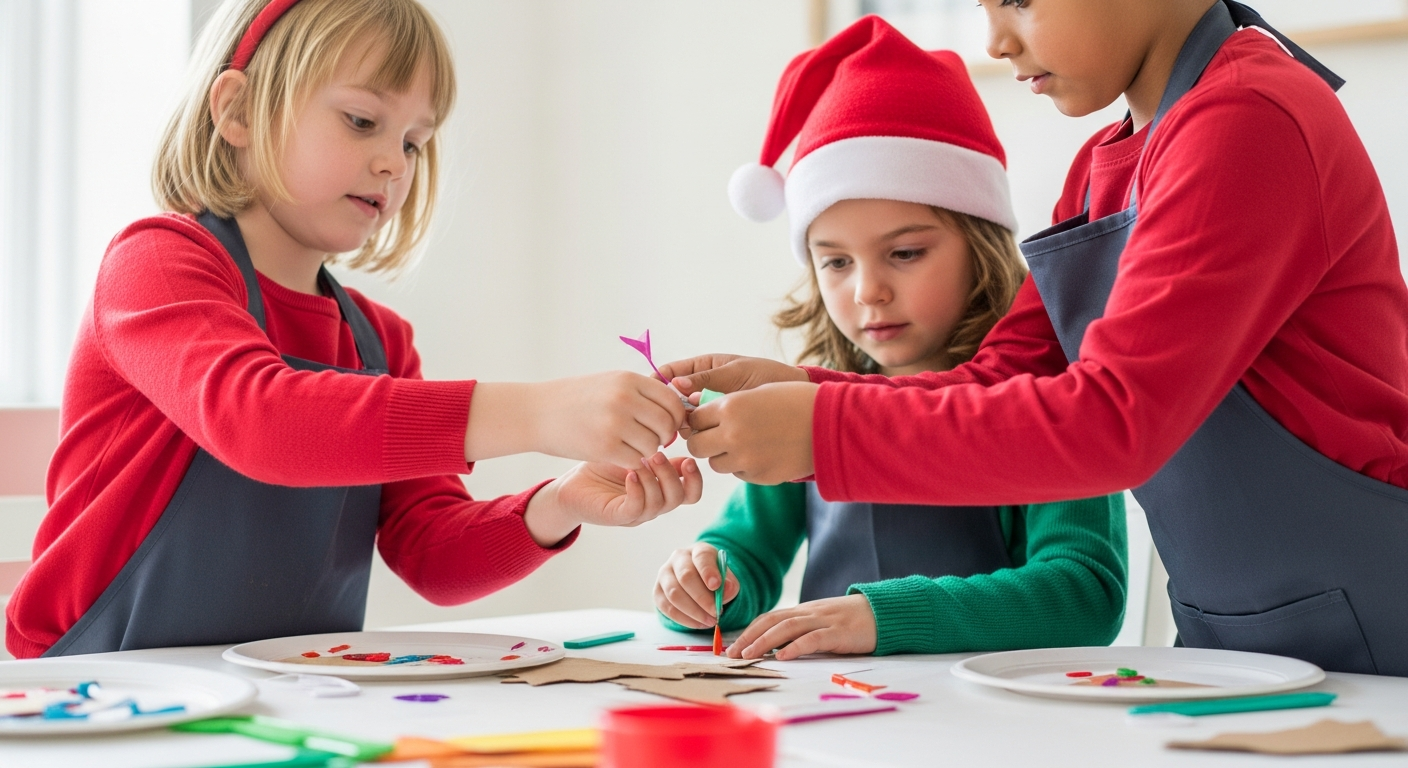
Table of Contents
- Introduction
- Why Christmas Crafts are More Than Just Fun: Developmental Benefits
- Planning Your Kids' Christmas Craft Party: Key Considerations
- Top Festive & Easy Christmas Crafts for Young Children (Toddlers & Preschoolers)
- Engaging Christmas Crafts for School-Aged Kids (5-10 years)
- Integrating Communication & Language Skills with Crafts (Speech Blubs Connection)
- Making it a "Smart Screen Time" Experience with Speech Blubs
- Ready to Empower Your Child's Voice? Discover Speech Blubs!
- Conclusion
- FAQ Section
Introduction
The holiday season often brings a whirlwind of activity, from festive meals to gift exchanges, and for many families, the idea of hosting a kids' Christmas party can feel both exciting and a little overwhelming. How do you keep a room full of energetic little ones engaged and entertained without resorting to endless screen time? The answer lies in the magic of hands-on creativity: Christmas party crafts! Imagine the joy on their faces as they transform simple materials into sparkling ornaments, whimsical reindeer, or personalized holiday cards. More than just a way to pass the time, these activities offer a precious opportunity to foster creativity, develop crucial motor and cognitive skills, and most importantly, encourage communication and connection. In this comprehensive guide, we'll dive into a sleigh-load of delightful, easy-to-organize Christmas crafts perfect for kids of all ages, offering practical tips for planning your party and highlighting how these fun projects naturally pave the way for rich language development. Get ready to create lasting memories and cultivate essential skills, turning your holiday gathering into a truly meaningful and magical experience.

Why Christmas Crafts are More Than Just Fun: Developmental Benefits
While the primary goal of any children's party is fun, incorporating crafts adds a powerful layer of developmental benefits that extend far beyond simply keeping little hands busy. These seemingly simple activities are rich learning opportunities, touching upon various crucial areas of a child's growth.
Fine Motor Skill Development
Crafting inherently involves a lot of precise hand and finger movements. From cutting shapes with child-safe scissors to gluing tiny googly eyes, manipulating glitter, threading beads, or peeling stickers, these actions are vital for strengthening the small muscles in the hands and wrists. This development is foundational for tasks like writing, drawing, fastening buttons, and many other daily self-care activities. The repetition and variety of movements in crafting provide an excellent workout for these crucial motor skills, enhancing dexterity and coordination.
Cognitive Growth and Problem-Solving
Every craft project presents a miniature challenge. Children learn to follow multi-step instructions, whether verbal or visual, to achieve a desired outcome. They engage in spatial reasoning, figuring out where a piece should go or how to arrange elements to create a picture. If a piece doesn't fit, they learn to problem-solve, adjusting their approach or finding an alternative. This kind of hands-on thinking builds critical cognitive pathways, fostering patience, focus, and logical thinking – skills that are transferable to all areas of learning.
Language and Communication Enhancement
Perhaps one of the most significant, yet often overlooked, benefits of crafting is its profound impact on language and communication. As children engage with materials and each other, a natural environment for conversation emerges. They describe what they are doing ("I'm cutting the red paper!"), ask questions ("Where does this star go?"), narrate their steps ("First, I glue, then I glitter!"), and share their finished creations ("Look at my sparkly snowman!"). This is especially true when adults actively participate, narrating their own actions, asking open-ended questions, and praising efforts. For a child who might be a "late talker" or struggling with specific sounds, crafting provides concrete, tangible prompts for speech. If they are making a reindeer, they might practice the "r" sound, or the "sn" sound for "snowman."

At Speech Blubs, we believe in empowering children to speak their minds and hearts, and we understand that natural, playful interactions are key. Crafting is a fantastic example of a "screen-free alternative" that encourages this kind of organic communication, which can then be reinforced and expanded through our app's video modeling activities.
Social-Emotional Learning
Group crafting activities are excellent for teaching valuable social skills. Children learn to share materials, take turns, offer help to peers, and politely ask for items. The process of creating something unique gives them a sense of accomplishment and pride, boosting their self-esteem. When their craft is admired by others, it reinforces their sense of capability and encourages further creative expression. Dealing with minor frustrations, like a piece not sticking, also builds resilience and emotional regulation.
Sensory Exploration
Crafts engage multiple senses. Children feel the stickiness of glue, the softness of cotton balls, the rough texture of pinecones, or the coolness of paint. They see a vibrant array of colors and sometimes even smell distinct scents from materials like scented markers or playdough. This rich sensory input is crucial for brain development and helps children process information about their world, making learning multisensory and memorable.
Planning Your Kids' Christmas Craft Party: Key Considerations
A successful craft party hinges on thoughtful planning. Before you gather your glitter and glue, consider these important aspects to ensure a smooth, enjoyable, and mess-manageable experience for everyone.
Age Appropriateness: Tailoring Crafts for Every Child
This is paramount. A craft that delights a 3-year-old might bore an 8-year-old, and one too complex for a toddler can lead to frustration.
- Toddlers (1-3 years): Focus on large, chunky items that are easy to grasp. Think big stickers, pre-cut shapes, cotton balls, finger painting, and simple gluing. Supervision is essential, and ensure all materials are non-toxic. Keep projects short and achievable, focusing on sensory exploration and basic actions like sticking and dabbing.
- Preschoolers (3-5 years): They can handle more intricate gluing, simple cutting with child-safe scissors, and more detailed drawing. They enjoy themed crafts and can follow two- to three-step instructions.
- School-Aged Kids (5-10+ years): These children can manage more complex cutting, intricate designs, detailed painting, and multi-step projects. They might enjoy crafts that involve assembly, like making a mini-gingerbread house or a DIY snow globe, and can often work more independently.
Mess Factor & Clean-up Strategies
Crafts can get messy – it's part of the fun! But a little preparation goes a long way in managing the chaos.
- Protection: Cover tables with disposable tablecloths (old newspapers or plastic sheeting work too). Have kids wear old t-shirts or craft aprons.
- Containment: Use trays or individual placemats to contain materials and glitter. Have wet wipes, paper towels, and a small dustpan and brush readily available.
- Designated Area: Set up your craft station in an area that's easy to clean, ideally with hard floors rather than carpet.
- Pre-Pour/Pre-Measure: For very young children, pre-pour glue into small, easily manageable cups or onto plates. Pre-cut strings or paper if cutting is too challenging for them.
Budget-Friendly Options
You don't need to break the bank to have a fantastic craft party. Many materials can be sourced cheaply or even found around the house.
- Recycled Materials: Toilet paper rolls (reindeer, snowmen), cardboard (templates, bases), bottle caps, old magazines (collage), pinecones (ornaments, animals).
- Dollar Store Finds: Craft foam, pipe cleaners, googly eyes, cotton balls, pom-poms, stickers, basic craft glue, plain ornaments.
- Bulk Buys: If you're hosting many children, consider buying essential items like construction paper, glue sticks, and glitter in bulk.
Time Management: How Long Will Each Craft Take?
Consider the attention span of your target age group.
- Toddlers/Preschoolers: Aim for crafts that can be completed in 10-15 minutes. Have a couple of options ready in case they finish quickly or lose interest.
- School-Aged: They can often focus for 20-30 minutes, especially if the craft is engaging. For more complex projects, you might dedicate a longer block of time.
- Drying Time: Factor in drying time for paint or glue. Have alternative activities ready or suggest crafts that don't require extensive drying if time is short.
Setting Up Your Craft Station
A well-organized station makes for a smoother experience.
- Individual Kits: For older children, consider creating individual craft kits with all the necessary materials for one project.
- Centralized Supplies: For younger children, a centralized, easily accessible table with labeled containers for each material works well.
- Examples: Have a finished example of each craft on display to inspire and guide the children.
- Instructions: Post simple, visual instructions for older children, or be ready to demonstrate for younger ones.
Safety First!
Always prioritize safety, especially with young children.
- Non-Toxic Materials: Ensure all paints, glues, and markers are clearly labeled "non-toxic."
- Child-Safe Scissors: Provide appropriate scissors for each age group.
- Supervision: Never leave young children unattended with craft materials. Actively supervise gluing, cutting, and any small parts that could be choking hazards.
- Allergies: Be mindful of any potential allergies, especially if using food-related crafts.
Top Festive & Easy Christmas Crafts for Young Children (Toddlers & Preschoolers)
For our youngest crafters, simplicity, bold colors, and tactile experiences are key. These crafts focus on basic motor skills and sensory exploration, making them perfect for little hands and budding imaginations. Remember, adult participation is crucial for guiding and narrating the process.
Adorable Ornament Crafts
1. Handprint & Footprint Ornaments (Salt Dough or Paper) These are timeless keepsakes.
- Materials: Salt dough (flour, salt, water) or construction paper, non-toxic paint, glitter (optional), ribbon.
- How-to:
- Salt Dough: Mix 2 cups flour, 1 cup salt, and 1 cup water until a dough forms. Roll it out, press a child's hand or foot into it, cut around the print, make a hole for a ribbon, and bake at 250°F (120°C) until hard. Once cooled, children can paint their ornaments.
- Paper: Paint a child's hand or foot and press it onto construction paper. Cut it out once dry.
- Language Focus: "My hand," "My foot," "Red paint," "Sparkle," "Press," "Cut." Describe the shape: "A star for the top," "Round like a ball."
- Speech Blubs connection: If your child is working on body parts, naming "hand" and "foot" during this craft can be a fantastic real-world application, followed by fun naming games in the Speech Blubs app.
2. Popsicle Stick Ornaments Simple to assemble and highly customizable.
- Materials: Popsicle sticks, craft glue, glitter, sequins, pom-poms, pipe cleaners, string.
- How-to: Children glue popsicle sticks together to form basic shapes like triangles (for trees), squares (for gifts), or crosses (for stars). Once dry, they can decorate with glitter, pom-poms, or sequins. Add a loop of string for hanging.
- Language Focus: "Stick," "Glue," "Green tree," "Shiny star," "Pom-pom," "Round," "Red." Practice counting the sticks.
- Scenario: For a parent whose 3-year-old struggles with color identification, using different colored pom-poms on the popsicle stick tree provides a natural way to practice "red pom-pom," "green tree," or "yellow star." Our app's "Colors" section can then reinforce these concepts with engaging video modeling.
3. Cotton Ball Snowman A delightful tactile craft.
- Materials: Blue or black construction paper, cotton balls, craft glue, googly eyes, small pieces of orange/black felt or paper for nose/mouth.
- How-to: Draw a snowman outline on the paper. Children glue cotton balls inside the outline. Then, they add googly eyes, an orange carrot nose, and a black dot mouth.
- Language Focus: "Soft cotton," "Sticky glue," "Big snowman," "Round body," "Eyes," "Nose," "Happy face."
Creative Card & Gift Tag Crafts
1. Fingerprint Christmas Lights Easy, colorful, and requires minimal fine motor skills.
- Materials: Cardstock, washable paint (various colors), black marker.
- How-to: Draw a squiggly line (the "wire") across the card. Children dip their fingers in different colored paints and press them along the line to create "light bulbs."
- Language Focus: "Red light," "Green light," "Many lights," "One, two, three," "Press."
2. Potato Stamp Cards A classic with a festive twist.
- Materials: Potatoes, cookie cutters (star, tree, bell shapes), washable paint, cardstock.
- How-to: Cut potatoes in half. Use cookie cutters to press shapes into the potato half, then cut away the excess potato around the shape to create a stamp. Children dip the potato stamps in paint and press them onto cards.
- Language Focus: "Star stamp," "Green paint," "Press," "Pattern," "Christmas tree."
Fun Party Hat/Headband Crafts
1. Reindeer Antlers Headband Simple and allows for imaginative play.
- Materials: Brown construction paper, thin elastic string or a plain headband, glue, glitter, red pom-poms (for Rudolph).
- How-to: Cut out antler shapes from brown paper. Children decorate them with glitter or other embellishments. Glue the antlers to a headband or punch holes in the base of the antlers and attach elastic string to tie around the head. Add a red pom-pom nose!
- Language Focus: "Brown antlers," "Sparkly," "Reindeer," "Rudolph," "My turn to be a reindeer!" Practice animal sounds or "Run, run, reindeer!"
Engaging Christmas Crafts for School-Aged Kids (5-10 years)
Older children thrive on crafts that offer more complexity, opportunities for creativity, and a sense of accomplishment. These projects allow for more independence and intricate detailing.
Decorations & Keepsakes
1. Pinecone Animals or Ornaments Nature-inspired and open-ended.
- Materials: Pinecones, googly eyes, small pom-poms, felt scraps, pipe cleaners, craft glue, string for hanging.
- How-to: Children transform pinecones into owls, hedgehogs, or even miniature Christmas trees. They glue on googly eyes, felt ears or wings, and pipe cleaner antlers. If making ornaments, they can paint the pinecones green and decorate them like trees.
- Language Focus: "Spiky pinecone," "Soft pom-pom," "Owl's eyes," "Flying bird," "Green tree." Encourage them to describe their animal's characteristics.
2. Paper Chain Garlands A classic that teaches sequencing and pattern recognition.
- Materials: Red, green, and white construction paper (cut into strips), glue sticks or staples.
- How-to: Children create loops by gluing or stapling paper strips together, linking them to form a long chain. Encourage creating patterns (red, green, white, red, green, white).
- Language Focus: "Long chain," "Short strip," "Glue together," "Red loop," "Green loop," "Pattern." Practice counting the loops.
3. DIY Snow Globes A magical keepsake that requires careful assembly.
- Materials: Small glass jars with tight-fitting lids, waterproof glue, distilled water, glitter, small plastic figurines (miniature trees, snowmen, Santa).
- How-to: Children glue figurines to the inside of the jar lid. Fill the jar with distilled water, add a teaspoon or two of glitter. Tightly screw on the lid (you might want to add extra glue around the rim for a permanent seal). Shake and watch the "snow" fall!
- Language Focus: "Sparkly glitter," "Little snowman," "Shake, shake, shake," "Falling snow," "Magic." Describe what's inside their globe.
4. Button Wreaths or Trees Colorful and textural.
- Materials: Cardboard (cut into a wreath or tree shape), various colorful buttons, strong craft glue.
- How-to: Children arrange and glue buttons onto the cardboard shape, overlapping them to create a textured design. They can sort buttons by color, size, or shape before gluing.
- Language Focus: "Big button," "Small button," "Red button," "Many buttons," "Sticky glue," "Round wreath."
Wearable Crafts
1. Elf Hats or Santa Hats Fun for role-playing after crafting.
- Materials: Red and green construction paper, cotton balls, craft glue, stapler, optional bells.
- How-to: Help children roll paper into cone shapes for elf hats (green) or Santa hats (red). Secure with glue or staples. Decorate the brim with cotton balls for Santa, or bells for an elf.
- Language Focus: "Pointy hat," "Soft cotton," "Ring the bell," "Elf," "Santa." Encourage imaginative play and character voices.
Edible Crafts (with supervision)
1. Gingerbread House Decorating A classic holiday activity.
- Materials: Pre-baked gingerbread house kits or pre-assembled houses, royal icing (as "glue"), various candies (gumdrops, peppermints, M&Ms, sprinkles).
- How-to: Provide each child (or small group) with a house and a generous selection of candies. They use icing to "glue" candies onto the house, creating unique decorations.
- Language Focus: "Sweet candy," "Sticky icing," "Red gumdrop," "Green tree," "Decorate," "Yummy." Practice positional words: "on top," "next to," "under."
2. Marshmallow Snowmen or Reindeer Simple, delicious, and engaging.
- Materials: Large marshmallows, pretzel sticks, mini chocolate chips, edible markers (food coloring pens), small candies (e.g., M&Ms for buttons).
- How-to: Use pretzel sticks to connect marshmallows to form a snowman's body or reindeer's head and body. Use mini chocolate chips for eyes and buttons, edible markers for faces, and small candies for scarves or noses.
- Language Focus: "White marshmallow," "Crunchy pretzel," "Chocolate eyes," "Tall snowman," "Eat it!"
Integrating Communication & Language Skills with Crafts (Speech Blubs Connection)
Crafting is not just about the finished product; it's a dynamic process that naturally fosters a rich linguistic environment. By consciously weaving in language-building strategies, you can maximize the developmental impact of these festive activities.
Pre-Craft Talk: Setting the Stage for Success
Before any glue is opened, engage your child in conversation about the upcoming activity.
- Discuss Materials: Lay out all the materials and name them together. "Look, we have red paper, shiny glitter, and sticky glue!"
- Plan the Steps: Briefly talk through what you'll be doing. "First, we'll cut the paper, then we'll glue it, and finally, we'll make it sparkle!" Use clear, simple action verbs.
- Ask Predictive Questions: "What do you think we'll make with these pinecones?" or "What color do you want your snowman's scarf to be?"
During Crafting: Narrate, Question, Describe
This is where the real language magic happens. Your active participation is key.
- Narrate Actions: Describe what you or your child is doing. "You're cutting the green paper so carefully!" "I am gluing the eyes on my reindeer." This models language and vocabulary.
- Ask Open-Ended Questions: Instead of "Do you like it?", try "Tell me about your shiny star!" or "What's your favorite part of your Christmas tree?" These encourage more than a yes/no answer.
- Encourage Description: Prompt them to use adjectives. "Is that glue sticky or slippery?" "What a sparkly ornament!" "Your snowman has big buttons."
- Focus on Sounds and Words: If your child is making an animal, encourage the animal sound. If they're making a Santa, practice "Ho Ho Ho." For a child working on consonant-vowel combinations, the repetitive actions of a craft (e.g., "glue, glue, glue") can be a great natural prompt.
- Relatable Scenario: Consider a child who struggles with descriptive language. As they create a button wreath, you can guide them: "Which button is big? What color is this one? Is it round? You used a sparkly button here!" This direct, contextualized vocabulary practice makes learning meaningful. The repetition of "big," "round," "red" helps reinforce these words. This real-world application of vocabulary can then be powerfully supported by activities in our app, like "What Am I?" or "Wild Animals," which also focus on rich descriptive words. For more targeted support, you can take our quick 3-minute preliminary screener to get a simple assessment and next-steps plan.
Post-Crafting: Show-and-Tell and Storytelling
The learning doesn't stop when the glue dries.
- Show-and-Tell: Encourage children to proudly present their creations. Ask them to name their craft and point out specific features. "Who did you make this special card for?"
- Display and Discuss: Hang up the finished crafts and talk about them throughout the day or week. "Remember when you made this beautiful pinecone owl?"
- Storytelling: Turn the craft into a prop for a story. "Imagine this little snowman is going on an adventure..." This fosters narrative skills and imaginative play.
At Speech Blubs, we deeply understand that speech and language development is a journey, not a race. Our founders, who themselves grew up with speech problems, created the tool they wished they had – a joyful, immediate, and effective solution. We provide a powerful tool for family connection, complementing these wonderful hands-on activities by offering a "smart screen time" experience where children learn complex communication skills by watching and imitating their peers through our unique "video modeling" methodology. Our mission is to empower every child to speak their minds and hearts.
Making it a "Smart Screen Time" Experience with Speech Blubs
In today's digital world, parents are constantly seeking ways to make screen time beneficial. While hands-on crafts are invaluable, Speech Blubs offers a unique approach to digital learning that works hand-in-hand with these activities to foster comprehensive communication skills. We are committed to providing an immediate, effective, and joyful solution for the 1 in 4 children who need speech support, blending scientific principles with play.
Passive Viewing vs. Active Engagement
Unlike passive screen time, such as watching cartoons, Speech Blubs provides an active learning experience. Our app is designed to transform screen time into "smart screen time" – a period of focused, interactive engagement that stimulates language development. Children aren't just watching; they're imitating, practicing, and building confidence. This makes Speech Blubs a powerful screen-free alternative to passive viewing, promoting interaction and communication.
Our Unique Video Modeling Methodology
The core of our approach lies in our "video modeling" methodology. Children learn by watching and imitating their peers, not just animated characters. This social learning aspect is incredibly powerful, as children are naturally inclined to mimic others their age. This method helps children develop crucial skills such as:
- Articulation: Practicing specific sounds and words.
- Vocabulary Expansion: Learning new words in context.
- Sentence Formation: Constructing longer, more complex sentences.
- Social Skills: Learning to interact and communicate effectively.
Our methodology is backed by science and has earned a high MARS scale rating, placing us in the top tier of speech apps worldwide. You can explore the science behind our approach and see how our scientifically-driven design translates into real-world benefits for children.
A Powerful Tool for Family Connection
Speech Blubs isn't just an app for kids; it's a tool for families to connect and learn together. Parents can play alongside their children, participating in the activities and reinforcing learning through joyful interactions. This co-play environment mirrors the benefits of hands-on crafting, creating shared experiences that strengthen bonds and encourage communication. When your child is practicing words like "snowman" in the app, you can seamlessly transition to making a cotton ball snowman, reinforcing the vocabulary in multiple contexts.
Our founders' personal experiences with speech problems inspired them to create the tool they wished they had – a supportive, engaging platform that truly helps children find their voice. We're proud to offer a resource that not only supports speech development but also brings families closer. Don't just take our word for it; read testimonials from other parents who have seen incredible progress with Speech Blubs.
Ready to Empower Your Child's Voice? Discover Speech Blubs!
We hope this guide to kids' Christmas party crafts has inspired you to create wonderful, language-rich memories this holiday season. And as you continue your child's developmental journey, remember that Speech Blubs is here to support you every step of the way, offering a blend of scientific principles and playful engagement.
At Speech Blubs, our mission is clear: to empower children to speak their minds and hearts, providing an immediate, effective, and joyful solution for the 1 in 4 children who need speech support. We offer a unique "smart screen time" experience, where children learn complex communication skills by watching and imitating their peers through our proven video modeling methodology. This is a powerful tool for family connection and a valuable supplement to your child's overall development plan.
Ready to see the difference Speech Blubs can make? We offer flexible plans designed to fit your family's needs:
- Monthly Plan: For just $14.99 per month, you can access a wide array of our engaging speech activities.
- Yearly Plan: The BEST Value! Our Yearly plan is priced at only $59.99 per year, which breaks down to an incredible $4.99 per month. That's a 66% saving compared to the monthly plan!
Choosing the Yearly Plan not only gives you significant savings but also unlocks exclusive, high-value features:
- A 7-day free trial: Experience the full power of Speech Blubs before committing.
- The extra Reading Blubs app: Double the fun and learning with our complementary reading app.
- Early access to new updates: Be the first to enjoy new features and content.
- 24-hour support response time: Get prompt assistance whenever you need it.
The Monthly plan, while flexible, does not include these additional benefits, making the Yearly plan the clear choice for families looking for the most comprehensive and valuable experience.
Don't let another holiday season pass without giving your child the gift of clear communication and confidence. Embrace the festive spirit with joyful crafts, and then extend that learning with our scientifically-backed, playful app.
Download Speech Blubs on the App Store or Get Speech Blubs on Google Play today! To access your 7-day free trial and all the exclusive features, make sure to select the Yearly plan after signing up.
Start your 7-day free trial and empower your child's voice!
Conclusion
The holiday season is a precious time for creating cherished memories, and hosting a kids' Christmas party filled with engaging crafts is an exceptional way to do just that. We've explored how these festive activities go far beyond simple entertainment, offering profound developmental benefits ranging from fine motor skill refinement and cognitive growth to crucial social-emotional learning and, significantly, rich language and communication enhancement. By actively engaging with children during crafting – narrating actions, asking open-ended questions, and encouraging descriptions – we can transform every snip, glue, and glitter sprinkle into a powerful opportunity for speech development.
Just as these hands-on crafts provide a nurturing environment for communication, Speech Blubs stands as a dedicated partner in your child's journey to finding their voice. Our unique video modeling methodology and commitment to "smart screen time" offer a joyful, effective, and scientifically-backed way to complement these real-world interactions, ensuring that every child has the opportunity to speak their minds and hearts.
This Christmas, let's embrace the mess, celebrate the creativity, and champion every word. Ready to unlock your child's full communication potential?
Take the next step today! Download Speech Blubs on the App Store or Download on Google Play and begin your free 7-day trial. Remember to choose the Yearly plan to gain access to all our exclusive features, including the Reading Blubs app and priority support, for the best value. Start your free trial now and embark on a joyful learning adventure with Speech Blubs!
FAQ Section
Q1: How can I make sure my Christmas craft party is inclusive for children of different ages and abilities? A1: The key is offering a variety of craft stations with varying complexity. Provide simpler, larger-material crafts for younger children and more intricate projects for older ones. For children with different abilities, pre-cut shapes, larger glue sticks, or adaptive tools can be helpful. Always have adult helpers available at each station to provide individual support and guidance. Breaking down steps into small, manageable parts also helps everyone feel successful.
Q2: What are some tips for managing the mess that inevitably comes with kids' crafts? A2: Preparation is your best friend! Lay down disposable tablecloths or old newspapers. Have kids wear old clothes or smocks. Use trays or individual placemats to contain materials like glitter or beads. Keep wet wipes, paper towels, and a small dustpan and brush handy for quick clean-ups. Consider setting up a "cleaning station" where kids can wash hands after crafting. For glue, pre-pour small amounts into cups or on plates to prevent overuse.
Q3: How can I encourage my child to talk more during crafting activities? A3: Be an active participant and a language model! Narrate your own actions ("I am gluing the red button"), ask open-ended questions ("What colors are you using for your tree?"), and encourage descriptions ("Tell me about your sparkly star!"). Avoid yes/no questions. Label objects, actions, and attributes consistently. Praise their efforts and creations, prompting them to share more about what they've made. Remember, the goal isn't perfect speech, but joyful communication.
Q4: How does Speech Blubs fit in with hands-on activities like Christmas crafts? A4: Speech Blubs complements hands-on crafts beautifully by reinforcing and expanding the language skills children develop in real-world interactions. Crafts provide the context and motivation for using words and sounds, while Speech Blubs offers structured, engaging practice. For example, if a child learns words like "tree" or "star" while crafting, they can then practice the pronunciation and use of these words within the app's video modeling activities. This creates a holistic learning experience, blending active play with "smart screen time" to empower children's communication. Learn more about how our app supports speech development.
About the author