
Joyful Kids Crafts: Christmas Gifts from Little Hands
 By Speech Blubs Team•Dec 22, 2025•21 min.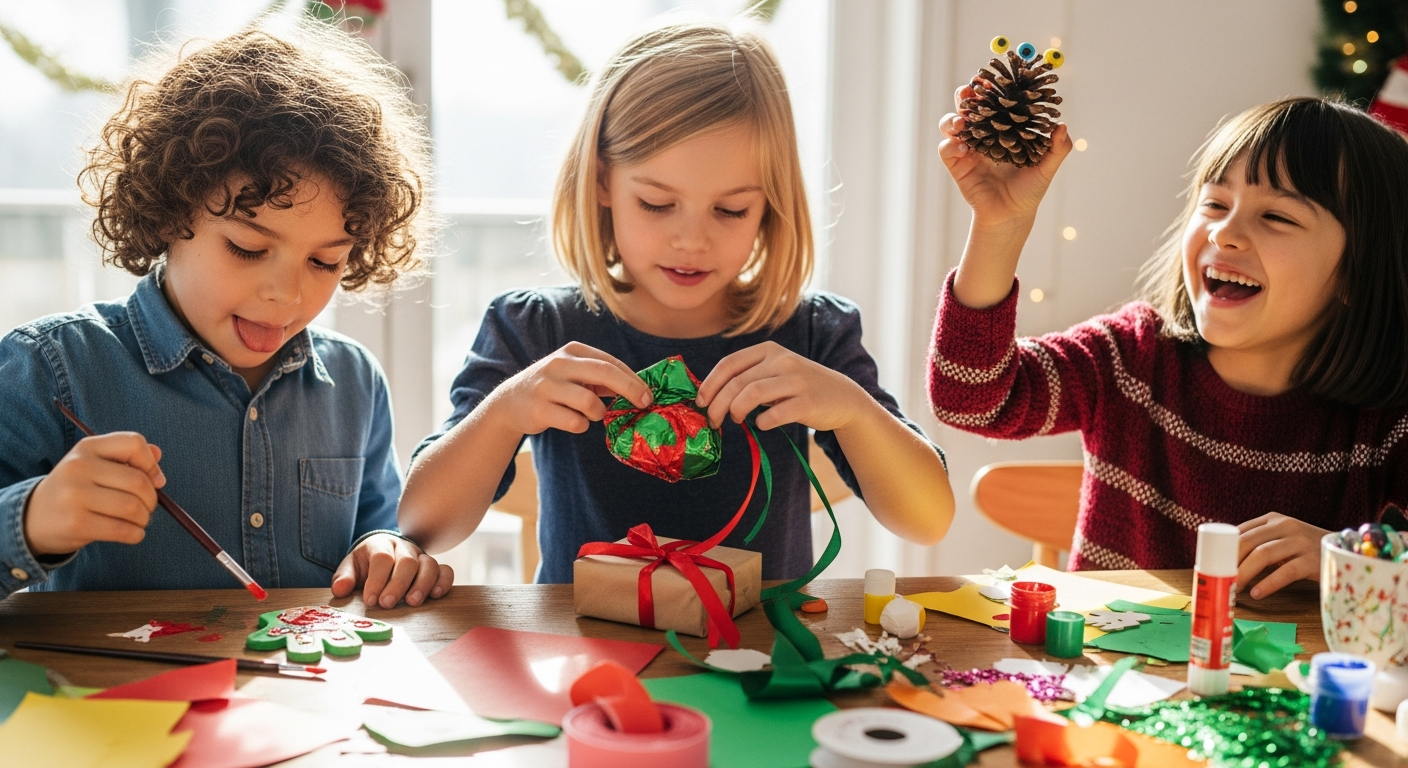
Table of Contents
- Introduction
- Beyond the Glitter: Why Kids Crafts Are More Than Just Fun
- Preparing for Crafting Success: Tips for Parents
- Heartfelt Kids Crafts: Christmas Gift Ideas for Every Age
- Boosting Communication with Every Craft: The Speech Blubs Approach
- Making the Most of Speech Blubs: Your Partner in Joyful Learning
- Conclusion
- FAQ
Introduction
As the festive season twinkles into view, the magic of Christmas fills our homes and hearts. While store shelves brim with tempting toys, there's a unique and profound joy found in a gift made with love by little hands. Imagine the delighted gasp of a grandparent receiving a wonky, glitter-covered ornament or a hand-painted mug—these aren't just presents; they are tangible expressions of affection, effort, and imagination. Far more than simple trinkets, these handmade Christmas gifts become cherished keepsakes, carrying stories and warmth that no mass-produced item ever could.
This blog post celebrates the art of giving from a child's perspective, exploring the incredible developmental benefits that crafting Christmas gifts provides for children of all ages. We'll delve into practical, engaging craft ideas suitable for toddlers to tweens, offering tips for parents to make the experience smooth, safe, and immensely rewarding. Crucially, we'll reveal how these creative endeavors are powerful catalysts for enhancing communication skills and fostering crucial developmental growth. At Speech Blubs, we understand that every activity can be a learning opportunity, and we are here to support your child in speaking their minds and hearts, making every craft session a step towards clearer, more confident communication.

Beyond the Glitter: Why Kids Crafts Are More Than Just Fun
Engaging in crafting activities during the festive season offers a treasure trove of developmental advantages for children. It's not merely about keeping them occupied; it’s about nurturing their growth in multiple, interconnected ways. When a child creates a Christmas gift, they embark on a journey that touches upon their physical, cognitive, emotional, and social development, building foundational skills that extend far beyond the craft table.
The Developmental Power of Crafting
Fine Motor Skills and Dexterity
Crafting is a workout for little hands and fingers. Activities like cutting paper with child-safe scissors, peeling stickers, pinching small beads, gluing pieces together, drawing intricate lines, or molding clay all require precise movements and coordination. These tasks strengthen the small muscles in their hands, improve hand-eye coordination, and develop dexterity, which are essential for everyday skills like writing, dressing themselves, and even using utensils. The repetitive actions involved in many crafts refine these motor skills, turning awkward movements into fluid, controlled actions.
Cognitive Growth and Problem-Solving
From choosing the right colors to figuring out how to attach two different materials, crafting presents a constant stream of mini-challenges that children must overcome. They learn to follow instructions, sequence steps (first glue, then glitter!), and adapt when things don't go exactly as planned. This process cultivates critical thinking, encourages problem-solving, and boosts planning skills. Children develop an understanding of cause and effect, spatial reasoning, and creative thinking as they envision their final product and work towards it. Moreover, crafting can introduce basic mathematical concepts through measuring, counting, and understanding shapes.
Emotional and Social Development
The act of creating a gift for someone else instills a powerful sense of empathy and generosity. Children learn to think about the recipient, what they might like, and the joy their handmade gift will bring. This fosters emotional intelligence and a sense of connection. The patience required to complete a project, the satisfaction of a job well done, and the pride in their unique creation all contribute to building self-esteem and confidence. When crafting with others, children also learn crucial social skills like sharing materials, collaborating on a project, and celebrating each other's achievements.

Language and Communication Skills
Perhaps one of the most significant, yet often overlooked, benefits of crafting is its profound impact on language and communication development. As children engage with materials and tasks, they naturally want to describe what they are doing, ask questions, or comment on their creations. This organic need to communicate provides a rich environment for vocabulary expansion, sentence structure development, and narrative skills.
For a parent whose 3-year-old "late talker" loves animals and is showing signs of frustration when unable to express ideas, crafting provides a non-threatening, engaging context for communication. When making a reindeer ornament, a child might naturally want to name the parts ("antlers," "nose"), describe the colors ("brown," "red"), or imitate sounds associated with the animal. This is where Speech Blubs steps in to enhance this experience. Our research-backed methodology utilizes "video modeling" where children learn by watching and imitating their peers, much like they watch you craft. If they are making a "sparkly star," they can practice saying "sparkly" and "star" within our app, reinforcing the vocabulary in a playful, interactive way. We are committed to providing an immediate, effective, and joyful solution for the 1 in 4 children who need speech support, blending scientific principles with play.
Preparing for Crafting Success: Tips for Parents
To maximize the fun and developmental benefits of holiday crafting, a little preparation goes a long way. Creating a positive and supportive environment ensures that both you and your child enjoy the creative process without unnecessary stress.
Setting Up a 'Yes' Space
Designate a specific area for crafting, whether it's a kitchen table covered with a disposable tablecloth or a dedicated craft corner. Make sure materials are easily accessible to your child (within reason, depending on age and potential mess). A "yes" space means fewer "no"s from you, allowing your child more freedom to explore and create.
Choosing Age-Appropriate Crafts
Matching the craft to your child's developmental stage is key. Simpler crafts with larger pieces and fewer steps are ideal for toddlers, while older children can handle more complex projects requiring finer motor skills and multiple instructions. Overly challenging crafts can lead to frustration, while overly simple ones might bore an older child.
Process Over Product: Embracing Imperfection
The true value of handmade gifts lies in the effort and love put into them, not in their flawless execution. Encourage your child to enjoy the process of creating, experimenting with colors, textures, and techniques. Resist the urge to "fix" their creations or make them "perfect." The crooked lines, mismatched colors, and unconventional designs are precisely what make a child's gift unique and heartfelt. Focus on their enthusiasm and engagement.
Safety First
Always ensure you are using child-safe, non-toxic materials. Supervise young children closely, especially when using scissors, glue guns (for older kids), or small embellishments that could be choking hazards. Read labels on paints and adhesives to confirm they are suitable for children's use.
Embrace the Mess
Crafting often involves mess, and that's okay! Lay down old newspapers, plastic tablecloths, or even a large sheet to protect surfaces. Dress your child in old clothes or an apron. Anticipating and accepting a bit of mess can significantly reduce parental stress and allow for more creative freedom. Remember, a messy craft session often means a deeply engaged and joyful child!
Heartfelt Kids Crafts: Christmas Gift Ideas for Every Age
Now for the fun part! Here are some wonderful Christmas craft ideas, broken down by age group, designed to be both enjoyable for children to make and cherished by their recipients. We'll also highlight how each craft can be a springboard for language development, linking back to how Speech Blubs supports communication.
For the Littlest Hands (Toddlers & Preschoolers, 1-4 years)
At this age, crafts should be simple, tactile, and focus on sensory exploration, basic naming, and simple actions. Adult supervision and assistance are essential.
1. Fingerprint Ornaments or Cards
These are timeless and incredibly personal.
- Materials: Plain ceramic ornaments or cardstock, washable tempera paint in festive colors (red, green, gold), fine-tip markers.
- Instructions: Help your child press their finger into the paint and then onto the ornament or card. They can make individual fingerprints or create patterns. Once dry, you can add details with markers (e.g., turning fingerprints into tiny reindeer or snowflakes).
- Communication Boost: This is perfect for naming colors ("red," "green," "gold"), identifying body parts ("finger," "hand"), and practicing simple action words ("press," "paint," "dry"). You can ask, "What color paint do you want?" or "Show me your finger!" For a child learning new words, this hands-on activity provides a direct, concrete experience to pair with vocabulary. Our app features categories like "Colors" and "Body Parts" that can reinforce these words in a fun, interactive way. To explore the full range of activities, visit the Speech Blubs homepage.
2. Painted Rock Paperweights
Simple, sturdy, and charmingly unique.
- Materials: Smooth river rocks (washed and dried), washable acrylic paints, paintbrushes, clear sealant spray (adult use only).
- Instructions: Let your child paint the rocks however they wish. They can use single colors, multiple colors, or create abstract designs. Once dry, an adult can spray with sealant to protect the paint.
- Communication Boost: Encourage naming colors, describing textures ("smooth rock," "wet paint"), and actions ("paint," "mix"). You can prompt them with "Tell me about your rock!" or "What color are you using now?" This builds descriptive language and expressive vocabulary.
3. Photo Magnets or Coasters
A wonderfully personal gift for family.
- Materials: Wooden craft blocks or large flat pebbles, Mod Podge (non-toxic glue sealant), family photos (printed on regular paper, cut to size), clear sealant (optional, adult use), magnet strips (for magnets).
- Instructions: Help your child apply Mod Podge to the block/pebble, place the photo on top, and then apply another layer of Mod Podge over the photo to seal it. Once dry, glue a magnet to the back or leave as a coaster.
- Communication Boost: Talk about the people in the photos ("Who is this?"), describe their expressions ("Happy Grandpa!"), and discuss the steps ("First glue, then photo, then more glue!"). This strengthens vocabulary related to family members and sequencing. For parents whose toddlers are expanding their vocabulary, Speech Blubs offers engaging segments that can help reinforce family member names and related actions through fun, interactive exercises. Ready to see how? Download Speech Blubs on the App Store or Get Speech Blubs on Google Play today!
For Growing Minds (Early Elementary, 5-8 years)
At this stage, children can follow more complex instructions, use scissors more proficiently, and engage in more detailed creative expression.
1. Personalized Bookmarks
Perfect for the avid reader in the family.
- Materials: Sturdy cardstock or watercolor paper, markers, colored pencils, watercolors, glitter, stickers, ribbon, hole punch.
- Instructions: Cut cardstock into bookmark shapes. Children can decorate them with drawings, names, quotes, or their favorite colors. Punch a hole at the top and tie a ribbon through it.
- Communication Boost: Encourage them to describe their design choices ("I made a superhero for Dad's bookmark!"), explain who the bookmark is for, and why. This activity promotes narrative skills and the use of descriptive adjectives. If your child struggles with confidently expressing their ideas, Speech Blubs can provide a supportive environment for practicing expressive language and building vocabulary related to storytelling and describing objects.
2. DIY Snow Globes
A magical gift that sparks imagination.
- Materials: Small, clear jars with tight-fitting lids, waterproof glue, distilled water, glycerin (a few drops help glitter float), glitter, small waterproof figurines (e.g., miniature plastic animals, tiny trees).
- Instructions: Have your child glue the figurine(s) to the inside of the jar lid. Once dry, fill the jar almost to the top with distilled water, add a few drops of glycerin and a pinch of glitter. Tightly screw on the lid. Adult supervision for gluing and sealing.
- Communication Boost: This craft is excellent for sequencing instructions ("First glue the snowman, then fill with water!"), using descriptive words ("sparkly," "swirling," "tiny"), and narrating the action ("The glitter is falling like snow!"). For a child who might be shy about speaking up, guiding them through the steps and encouraging them to describe the process can build confidence. We believe in empowering children to "speak their minds and hearts," and activities like this, paired with our interactive app, can make a huge difference.
3. Handprint or Footprint Towels/Aprons
A practical and personal keepsake.
- Materials: Plain kitchen towels or cotton aprons, fabric paint, paintbrushes, iron (adult use).
- Instructions: Help your child apply fabric paint to their hand or foot and press it firmly onto the towel/apron. They can add details with paintbrushes. Once dry, an adult will need to iron the design to set the fabric paint according to instructions.
- Communication Boost: Talk about the size of their hand/foot, the colors used, and who the gift is for. "Look at your big handprint! Who is this special towel for?" This reinforces vocabulary, object identification, and the concept of giving. For parents concerned about their child's language development, our quick 3-minute preliminary screener can provide a simple assessment and a free 7-day trial to see how Speech Blubs can support their communication journey.
For Creative Tweens (Late Elementary/Pre-Teens, 9-12 years)
Tweens can handle more intricate projects, follow multi-step instructions, and enjoy expressing their unique personality through their gifts.
1. Scented Candles or Bath Bombs
These require following a recipe, which is a great skill builder.
- Materials: Candle-making kit (soy wax, wicks, fragrance oil, containers) OR Bath bomb kit (baking soda, citric acid, essential oils, molds, food coloring). Adult supervision for heating wax or handling oils.
- Instructions: Follow the kit instructions. This usually involves measuring ingredients, mixing, and careful pouring or molding.
- Communication Boost: This activity naturally involves rich descriptive language, especially around senses ("sweet scent," "fizzy," "smooth wax"). It also requires precise sequencing and the ability to explain complex steps to someone else. "First, we melt the wax, then add the oil." Asking "Why did you choose that scent?" encourages justification and preference expression.
2. Personalized Mugs or Plates
A canvas for their creativity.
- Materials: Plain ceramic mugs or plates, oil-based paint markers (Sharpie brand works well), oven (adult use).
- Instructions: Children draw or write on the ceramic surface with the paint markers. Once complete, an adult bakes the item in the oven according to marker instructions to set the design.
- Communication Boost: Encourage them to explain their design choices, the meaning behind symbols, or why they chose a specific pattern for a specific person. This promotes storytelling, abstract thinking, and descriptive language. They can practice articulating their creative process, building confidence in presenting their ideas.
3. Upcycled Art or Desk Organizers
Encourages problem-solving and environmental awareness.
- Materials: Recycled items like cardboard boxes, toilet paper rolls, plastic bottles, old magazines, various craft supplies (glue, paint, fabric scraps, buttons).
- Instructions: Challenge your child to transform these "trash" items into functional or decorative gifts. They might create a multi-compartment desk organizer from cereal boxes or a piece of wall art from bottle caps.
- Communication Boost: This is fantastic for problem-solving discussions ("How can we make this stable?"), planning ("What materials do we need for this idea?"), and explaining purpose ("This compartment is for pens, and this one is for paperclips."). It also allows for imaginative storytelling about the "journey" of the recycled materials.
Boosting Communication with Every Craft: The Speech Blubs Approach
Every snip of the scissors, every dab of glue, and every stroke of paint offers a golden opportunity to enhance your child's communication skills. At Speech Blubs, we believe in turning everyday activities into powerful learning moments.
From Craft to Conversation: How to Turn Crafting into Speech Practice
- Describe Everything: Use descriptive words for colors, shapes, sizes, textures, and actions. "This is sticky glue!" "The paper is rough." "You're drawing a big, red heart."
- Sequence the Steps: Talk through each stage of the craft. "First, we cut the paper. Then, we glue it." This helps children understand order and develop narrative skills.
- Ask Open-Ended Questions: Move beyond "yes/no" questions. "What are you making?" "How does that feel?" "Why did you choose green?" This encourages more elaborate responses and critical thinking.
- Narrate Your Child's Actions: Provide a running commentary. "You're carefully cutting the blue paper." "Now you're adding lots of glitter!" This models correct sentence structure and vocabulary.
- Discuss Feelings and Purpose: "How do you feel about making this gift?" "Who will get this special present?" This connects emotions and social understanding to the activity.
How Speech Blubs Enhances the Experience
Our mission at Speech Blubs is to empower children to "speak their minds and hearts." We know that fostering communication is a holistic process, and our app is designed to be a powerful supplement to real-world interactions like crafting.
- Video Modeling in Action: Just as your child learns crafting techniques by watching you, they learn to speak by watching other children. Our unique "video modeling" approach uses thousands of videos of real children pronouncing words and sounds. This natural, engaging method is highly effective because children are naturally drawn to imitating their peers. This means that if your child is practicing saying "red" or "glue" during a craft, they can then reinforce those words by seeing and imitating other kids in the app.
- Interactive and Engaging: Unlike passive cartoons, Speech Blubs provides "smart screen time." Our app requires active participation, just like crafting. Children are prompted to make sounds, repeat words, and identify objects, turning screen time into an active learning experience that encourages family connection and active play.
- Targeted Vocabulary and Sounds: Speech Blubs offers a vast library of activities organized into themed sections (e.g., "Animal Kingdom," "Wonderful World," "When I Grow Up"). These themes introduce and reinforce thousands of words relevant to everyday life and, by extension, to many crafting activities. For example, practicing animal sounds and names in the app can then be applied when creating animal-themed ornaments.
- Building Confidence: Successfully completing a craft and then confidently using related vocabulary builds a child's self-esteem. Our founders personally experienced speech challenges as children, which fueled their desire to create the tool they wished they had—a joyful, effective, and immediate solution for children needing speech support. This deep understanding underpins our commitment to building confidence in every child.
For instance, consider a parent whose 4-year-old child loves to create but often gets frustrated when trying to describe their finished artwork because they lack specific vocabulary. After making a "sparkly, green Christmas tree" craft, the child can then open the Speech Blubs app and find activities that help them practice words like "sparkly," "green," and "tree." This connection makes learning relevant and reinforces new words in a fun, pressure-free environment, turning potential frustration into a joyful learning moment.
Making the Most of Speech Blubs: Your Partner in Joyful Learning
We understand that every parent wants the best for their child, especially when it comes to communication. At Speech Blubs, our commitment is to provide a valuable, accessible, and enjoyable tool that empowers children to "speak their minds and hearts." Our app is more than just a collection of activities; it's a carefully designed, scientifically-backed program that fosters communication skills and builds confidence.
Our Approach to Smart Screen Time
We recognize the concerns parents have about screen time. That's why Speech Blubs is designed as a smart screen time alternative to passive viewing. Instead of simply watching, children actively participate, interact, and learn through our video modeling technology. This ensures that time spent with the app is productive, engaging, and often leads to more interactive, screen-free playtime as children practice what they've learned. It's a powerful tool for family connection, where parents can play and learn alongside their children.
Why Choose Speech Blubs?
- Scientifically-Backed: Our "video modeling" method is supported by extensive research, demonstrating its effectiveness in stimulating speech and language development. We are proud of our research, which places us in the top tier of speech apps worldwide based on the MARS scale rating.
- Trusted by Millions: Over 4 million families worldwide have experienced the positive impact of Speech Blubs. Don't just take our word for it—see what other parents are saying about their child's success with Speech Blubs.
- Created by Experts & Parents: Our company was born from the personal experiences of our founders, who all grew up with speech problems and created the tool they wished they had. We collaborate with speech therapists to ensure our content is effective and aligned with developmental milestones.
- Immediate and Joyful Solution: We provide an immediate, effective, and joyful solution for children needing speech support, blending scientific principles with play.
Transparent Value and Pricing
We believe in making our empowering tools accessible to every family. We offer two clear subscription plans:
- Monthly Plan: For $14.99 per month, you get access to all core Speech Blubs features.
- Yearly Plan: For just $59.99 per year, this plan breaks down to an incredible value of only $4.99 per month! This means you save 66% compared to the monthly plan.
Unlock Exclusive Benefits with the Yearly Plan:
Choosing the Yearly Plan isn't just about saving money; it's about unlocking the full Speech Blubs experience with exclusive high-value features:
- 7-Day Free Trial: Only with the Yearly Plan do you get a full 7-day free trial to explore everything Speech Blubs has to offer before committing. The Monthly Plan does not include this trial.
- The Extra Reading Blubs App: Expand your child's learning with our companion app, Reading Blubs, included exclusively with the Yearly Plan.
- Early Access to New Updates: Be among the first to experience our latest features and content.
- 24-Hour Support Response Time: Get priority assistance from our dedicated support team.
To truly get the most value, the best features, and a risk-free start, we highly recommend the Yearly Plan.
Conclusion
The act of creating a Christmas gift with your child is a truly special journey. It's an opportunity to create cherished memories, celebrate their unique creativity, and instill the joy of giving. Beyond the sentiment, these crafting sessions are powerful engines for developmental growth—honing fine motor skills, sparking cognitive problem-solving, nurturing emotional intelligence, and, perhaps most importantly, building vital communication skills. Every craft provides a natural, engaging context for your child to describe, question, narrate, and express themselves.
At Speech Blubs, we are here to support every step of this wonderful journey. Our app provides the perfect complement to these hands-on activities, using our innovative video modeling to reinforce vocabulary and sounds in a fun, interactive way. We are dedicated to helping children gain the confidence to "speak their minds and hearts," turning every conversation and creation into a joyous learning experience.
Ready to empower your child's voice and enrich your family's festive season? Take the first step today! We encourage you to choose the Yearly Plan to unlock all exclusive benefits, including a 7-day free trial, the extra Reading Blubs app, and priority support.
Download Speech Blubs on the App Store or Get Speech Blubs on Google Play and begin your 7-day free trial with the Yearly Plan today. Let's make this Christmas a season of creativity, connection, and confident communication!
FAQ
Q1: What age ranges are these kids' Christmas crafts suitable for?
A1: We've divided the craft ideas into three general age ranges: "Littlest Hands" (1-4 years), "Growing Minds" (5-8 years), and "Creative Tweens" (9-12 years). This ensures that the crafts are age-appropriate in terms of complexity, required skills, and safety. Always remember to supervise young children closely and adapt crafts as needed for your child's individual abilities.
Q2: How can these crafts specifically help my child's speech development?
A2: Crafts naturally encourage communication through description (colors, textures, actions), sequencing (explaining steps), asking and answering questions, and narrating the creative process. They provide concrete objects and actions to talk about, expanding vocabulary and improving sentence structure. For example, a child might practice saying "sticky glue" or "red paper." Pairing these activities with Speech Blubs' video modeling can further reinforce these words and sounds in an engaging, interactive way, helping your child "speak their minds and hearts."
Q3: Do I need special or expensive supplies for these Christmas crafts?
A3: Not at all! Many of these crafts utilize common household items, recycled materials, or inexpensive craft supplies readily available at most stores. The focus is on creativity and the process, not costly materials. We encourage using what you have on hand and adapting ideas to fit your budget and resources.
Q4: How does Speech Blubs integrate with making Christmas gifts?
A4: Speech Blubs enhances the communication opportunities that naturally arise during crafting. While your child is creating, they are learning new words and actions. Our app's "video modeling" allows them to then reinforce these words by watching and imitating their peers in a fun, interactive environment. For instance, if a child struggles to describe the texture of a craft, they can practice descriptive adjectives within the app. Speech Blubs acts as a powerful supplement, turning crafting conversations into effective speech practice and building overall communication confidence. If you're wondering how Speech Blubs can specifically help your child, take our quick 3-minute preliminary screener to get a simple assessment and a free 7-day trial.
About the author