
Joyful Kids Games for Birthday Parties at Home
 By Speech Blubs Team•Jan 28, 2026•22 min.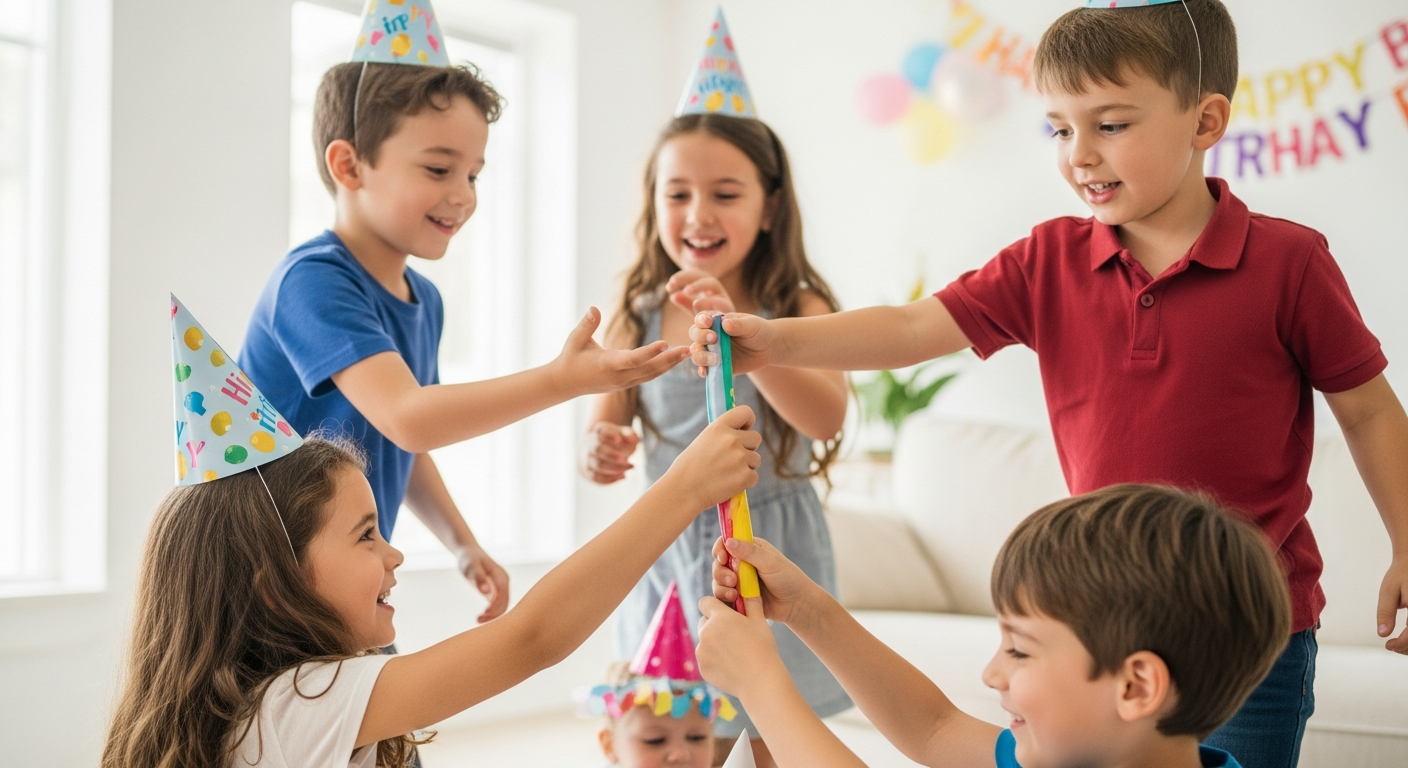
Table of Contents
- Introduction
- Setting the Stage for Unforgettable Play
- Games to Get Them Moving: Active Adventures and Energy Burners
- Sparking Imagination: Creative Crafts and Quiet Play
- Brain Games and Classic Fun: Cognitive Challenges and Time-Tested Favorites
- Water & Outdoor Games: Fun Under the Sun (or Stars!)
- Nurturing Communication Through Play: The Speech Blubs Connection
- Unlock a World of Communication with Speech Blubs
- Conclusion
- Frequently Asked Questions
That feeling of exhilaration mixed with a dash of overwhelm? It’s the universal parent experience when planning a child's birthday party at home. We dream of laughter, memorable moments, and happy faces, but the reality of keeping a group of energetic kids entertained can sometimes feel like navigating a joyful storm. How do you orchestrate a celebration that’s not just fun, but also fosters interaction, creativity, and perhaps even a little bit of learning, all within the comforting walls of your own home?
The secret lies in a well-chosen repertoire of games. Forget elaborate setups or expensive entertainment; the most cherished memories often spring from simple activities that encourage participation, spark imagination, and build connection. This guide is your treasure map to unlocking a fantastic home birthday party experience, packed with engaging, easy-to-organize games for kids of all ages. We’ll explore everything from active adventures to creative crafts and cognitive challenges, offering practical tips to ensure every child feels included and every moment is ripe for joy. Beyond just fun, we’ll see how these playful interactions naturally nurture crucial communication skills, echoing our mission at Speech Blubs to empower every child to speak their minds and hearts. Get ready to transform your living room or backyard into the ultimate birthday bash arena!

Introduction
Throwing a memorable birthday party at home for your child can be one of the most rewarding experiences. It's a chance to create intimate memories, personalize every detail, and truly celebrate your little one in a comfortable, familiar environment. However, the thought of managing a gaggle of excited children, keeping them engaged, and ensuring everyone has a fantastic time can feel like a daunting task. The good news is that you don't need a professional entertainer or a huge budget to pull off an unforgettable celebration. With a thoughtful selection of games, your home can become the most exciting party venue imaginable.
This comprehensive guide is designed to equip you with a diverse array of kid-approved games perfect for any at-home birthday party. We'll dive into activities that cater to various energy levels and interests, from high-octane team challenges to quiet, creative endeavors. Beyond simply filling time, we'll explore how these games inherently foster vital developmental skills, especially in the realm of communication and social interaction. Our goal is to provide you with the tools to host a party that's not only incredibly fun but also subtly educational, building confidence and encouraging every child to express themselves freely. So, let’s banish party-planning stress and embrace the magic of play!
Setting the Stage for Unforgettable Play
Before we dive into the game specifics, a little planning can go a long way in ensuring a smooth and joyful party experience. Consider these fundamental elements to set the perfect stage for your at-home celebration:
Understanding Your Audience: Age, Interests, and Group Size
The key to successful party games is matching them to your guests. Are you hosting toddlers, school-aged children, or a mix of ages? Toddlers thrive on simple, repetitive actions and sensory experiences, while older children enjoy games with rules, strategy, and teamwork. Knowing their general interests—dinosaurs, superheroes, princesses, science—can also help you choose a thematic game that truly resonates. Additionally, adjust the number of games and their complexity based on your group size; fewer, more engaging options often work best for larger groups to prevent chaos.

Space Assessment: Indoors, Outdoors, or Both?
Take a good look at your party area. Do you have a spacious backyard for active play, or will most activities be confined to an indoor space? Many games can be adapted for either, but some are clearly better suited for one over the other. If you're indoors, think about moving furniture to create open areas and protect anything fragile. For outdoor parties, consider the weather, shade, and potential hazards. Having a backup plan for indoor games in case of rain is always a smart move.
Prioritizing Safety and Inclusivity
Safety should always be paramount. Clear play areas of obstructions, ensure adult supervision for all activities, and use age-appropriate materials. Equally important is fostering an inclusive environment where every child feels welcome and encouraged. Adapt games for children with varying abilities, emphasize teamwork over intense competition, and have small, non-competitive prizes or recognition for participation rather than just winning. A supportive atmosphere builds confidence, especially for children who might be shy or developing their social skills. At Speech Blubs, we know that building confidence is crucial for a child to truly "speak their mind and heart," and an inclusive party environment is a wonderful place to nurture that.
The Role of Grown-Ups: Facilitators, Models, and Cheerleaders
Remember, you're not just the host; you're the chief game facilitator! Be ready to explain rules clearly, demonstrate actions, arbitrate disputes gently, and, most importantly, participate and cheer on the kids. Your enthusiasm is contagious and will significantly elevate the party's energy. For children learning new skills, observing adults or peers engaged in an activity provides valuable "video modeling"—a core principle behind our app at Speech Blubs, where children learn by imitating their peers. Your active involvement also creates wonderful opportunities for family connection, turning screen-free time into joyful learning moments.
Games to Get Them Moving: Active Adventures and Energy Burners
Kids have boundless energy, and channeling it into structured, fun activities is key to a successful party. These games are perfect for getting hearts pumping, bodies moving, and laughter echoing! Many of these also require listening to instructions and responding quickly, building crucial foundational language skills.
1. Balloon Pop Relay
This game is simple, energetic, and guarantees giggles. Divide kids into two teams. Each child runs to a designated spot, sits on a balloon to pop it, and races back to tag the next teammate. The first team to pop all their balloons wins! This encourages teamwork and gross motor skills. For a child working on articulation, they can shout "Pop!" as they burst their balloon, practicing that P sound in a fun context.
2. Red Light, Green Light
A classic for a reason! One person is the "stoplight" and faces away from the other players (the "traffic"). The stoplight calls out "Green light!" and the traffic moves forward. When the stoplight yells "Red light!" and turns around, everyone must freeze. Anyone caught moving has to go back to the starting line. The first person to reach the stoplight wins. This game hones listening skills, impulse control, and following multi-step directions—abilities that are incredibly valuable for language development.
3. Party Limbo
How low can you go? All you need is a broomstick or a sturdy stick held by two adults (or even two chairs). Play some upbeat music and have the children take turns bending backward to pass under the stick without touching it or falling. Lower the stick with each round. This is great for flexibility and coordination, and the collective encouragement from the group helps build social bonds.
4. Hop to It (Paper Squares)
Using colorful paper squares (or even old towels or pillows), create a winding path on the floor. Kids jump from square to square, trying not to touch the "floor" in between. If they do, they're out! You can add variations like "jump on blue," "jump on two squares," which reinforces color recognition and counting, along with listening comprehension.
5. Zombie Tag or Capture the Flag
For older, more energetic groups, these games are fantastic. In Zombie Tag, chosen "zombies" must move stiff-legged and try to tag others, who then also become zombies. Capture the Flag involves two teams hiding flags and trying to capture the opponent's while protecting their own. These games encourage strategy, teamwork, and lots of verbal communication – from calling out warnings to coordinating moves. These kinds of activities are excellent for practicing communication in a dynamic, real-world setting, supporting the holistic development we champion at Speech Blubs. For more ways to blend fun and learning, explore our unique approach on our Speech Blubs homepage.
6. Cone Relay Race
Give each child an empty ice cream cone and have them pass a small ball (like a ping-pong ball or a small pom-pom) from one cone to another without dropping it. The first team to get the ball to every player wins. This is an exercise in careful movement and collaboration, perfect for developing fine motor skills and encouraging gentle communication within a team.
7. Wheelbarrow Race
Divide players into pairs. One child walks on their hands while the other holds their legs, pushing them like a wheelbarrow. They race to a finish line. This classic game builds strength, coordination, and requires clear communication between partners to move effectively.
Sparking Imagination: Creative Crafts and Quiet Play
Sometimes, a party needs a shift in gears—a moment for quiet concentration, imaginative expression, or a chance to create something tangible. These activities are perfect for fostering creativity and can also provide a wonderful opportunity for descriptive language.
1. Fun Photobooth
Set up a simple backdrop (a colorful sheet or poster board works wonders) and gather some silly props like oversized sunglasses, feather boas, hats, and speech bubble cutouts. Encourage kids to pose and make funny faces. This activity promotes imaginative play, expressive non-verbal communication, and can spark conversations about feelings and expressions. You can even print out the photos later as a memorable party favor!
2. Party Painting
Cover a long table with a disposable tablecloth or butcher paper and set out washable paints, markers, crayons, and small canvases or paper. Let kids create their own masterpieces. This open-ended activity encourages self-expression and can lead to rich conversations about colors, shapes, and what they’re drawing. For a child working on early language, you can ask, "What color is that?" or "Tell me about your painting!"
3. DIY Slime Station
Slime is almost universally loved by kids. Set up a station with glue, baking soda, contact lens solution, glitter, and food coloring. Provide clear instructions (or a recipe card) and let kids mix their own batch. This sensory activity is fantastic for developing fine motor skills and provides a wonderful opportunity for descriptive language: "It's sticky!" "It's squishy!" "Look, it's green!" Each child can take their slime home as a party favor.
4. Handmade Flower Crowns or Animal Masks
Provide simple craft supplies like faux flowers, twine, glue, colorful paper, and muffin tin liners (for frog masks). Guide the children in creating their own wearable art. This activity encourages following instructions, making choices, and discussing their creations. For a child who loves animals, asking them to describe their frog mask can be a fun way to elicit language. This creative engagement mirrors the "smart screen time" philosophy of Speech Blubs, where digital interaction is designed to be active, engaging, and encourage real-world communication.
5. Craft Station
Sometimes, the simplest crafts are the best. Offer materials for decorating small wooden frames, creating superhero masks, or making paper plate animals. Having a designated craft station allows children who might need a break from high-energy games to engage their creativity at their own pace. It's a wonderful way to foster imagination and can be a quiet space for one-on-one interaction and language practice.
Brain Games and Classic Fun: Cognitive Challenges and Time-Tested Favorites
These games are perfect for honing critical thinking, memory, and cooperative play. They encourage active listening and verbal participation, making them excellent for language development.
1. Indoor Treasure Hunt / Scavenger Hunt
Hide clues around the house, each leading to the next, with a final "treasure" (like a small bag of treats or a shared prize). For younger kids, use pictures or simple objects as clues. For older kids, riddles add an extra layer of challenge. This game encourages problem-solving, teamwork, and the use of spatial language ("under the chair," "behind the curtain," "next to the plant"). At Speech Blubs, we know how vital following multi-step directions and understanding prepositions are for comprehensive language skills. If you're looking for an immediate and effective solution to boost your child's communication, create your account and begin your 7-day free trial today.
2. Saran Wrap Ball / Pass the Parcel
In the Saran Wrap Ball game, wrap a prize (and smaller treats in inner layers) in many layers of plastic wrap. Kids take turns unwrapping it while wearing oven mitts or with one hand, collecting whatever falls out. In Pass the Parcel, a prize is wrapped in multiple layers of paper, with small treats between each layer. As music plays, kids pass the parcel. When the music stops, the child holding it unwraps one layer. Both games teach turn-taking, patience, and can prompt descriptive language as they reveal what’s inside.
3. Pin the Tail on the Donkey (or Themed Variations)
This classic never gets old. Print a large picture (a donkey, a superhero, a princess) and cut out individual "tails," "masks," or "crowns" for each child. Blindfold each child, spin them gently, and have them try to pin the item in the correct spot. It's simple, hilarious, and encourages following instructions and good sportsmanship.
4. Riddle Balloon Game
Write simple riddles on slips of paper and their answers on others. Place a riddle and an answer (not necessarily matching) inside separate balloons before inflating. Give each child two balloons. They pop them, then work together to match the riddles to their correct answers. This game boosts problem-solving skills, reading comprehension (or listening if an adult reads them), and cooperative communication.
5. Kim's Game (Memory)
Place 10-15 small, common items (a toy car, a spoon, a coin, a block) on a tray. Let the children observe the tray for one minute, then cover it. Give them two minutes to write down or verbally list as many items as they can remember. This game enhances observation skills, memory recall, and vocabulary.
6. Simon Says / Opposites
In "Simon Says," one person gives commands, but players only follow if the command begins with "Simon Says." In "Opposites," players do the opposite of the command (e.g., if you say "stand up," they sit down). Both games are fantastic for auditory processing, attention, and following rules. For children needing support with listening and understanding commands, these provide a playful, low-stakes environment for practice. Our founders, who all grew up with speech problems, created Speech Blubs to be the tool they wished they had—a joyful solution rooted in scientific principles for developing these exact foundational skills. To see the research behind our highly-rated method, visit our Research page.
7. Charades
Write various words or phrases on slips of paper. Children take turns picking a slip and acting out the word without speaking. Others guess. This game is phenomenal for non-verbal communication, expressive language, and creative thinking. Theme your charades around animals, fairy tales, or movie characters for extra fun.
8. I Spy
A gentle, observational game perfect for any age. One person says, "I spy with my little eyes, something..." and describes an object they see (e.g., "something green," "something shiny"). Others guess. This game develops descriptive language, observation skills, and helps children learn to categorize and identify objects in their environment.
Water & Outdoor Games: Fun Under the Sun (or Stars!)
If your party happens on a beautiful day and you have outdoor space, these games are fantastic for making a splash and enjoying the fresh air.
1. Giant Bubbles
Make a simple giant bubble solution (recipes abound online) and large wands. Let adults create enormous, shimmering bubbles, while children delight in chasing and popping them. This simple activity brings immense joy and provides endless opportunities for words like "big," "pop," "wow," and "more!"
2. Outdoor Can Toss / Bottle Toss / Ring Toss
Repurpose tin cans or bleach bottles by decorating them, then stack them into a pyramid or line them up. Kids take turns tossing beanbags, small balls, or rings to knock them down or land rings around them. These carnival-style games teach hand-eye coordination, counting, and friendly competition.
3. Water Balloon Toss or Fight
On a hot day, nothing beats water balloons! For a gentler game, kids can partner up and toss balloons, stepping further apart after each successful catch until they burst. For a full-on splash fest, a water balloon fight is always a hit! This is excellent for sensory play and expressing excitement.
4. Slip and Slide / Sprinkler Tag
Set up a plastic tarp as a homemade slip and slide with a hose, or just turn on the sprinkler. Kids can take turns sliding or playing tag, trying to avoid getting soaked. This is pure, unadulterated fun and a fantastic way to cool down.
5. Treasure Dig (Sandbox or Bin)
Fill a sandbox or large bin with sand. Hide small, inexpensive toys (plastic animals, bouncy balls, play jewelry) and give children small shovels and buckets to dig for "buried treasure." This activity provides sensory stimulation, encourages imaginative play, and allows for discovery and descriptive language.
6. NERF Wars
If you have enough NERF blasters and darts (and willing participants!), set up a backyard NERF battlefield with inflatable obstacles or blankets draped over furniture. This game promotes strategic thinking, teamwork, and lots of active movement. Emphasize safety goggles and clear rules beforehand.
Nurturing Communication Through Play: The Speech Blubs Connection
At Speech Blubs, we believe that every interaction is an opportunity for growth, and birthday parties are no exception. The games we’ve discussed aren't just about fun; they are powerful vehicles for developing vital communication skills that lay the groundwork for your child to truly "speak their minds and hearts."
Think about it:
- Following Directions: Games like "Red Light, Green Light" or a "Treasure Hunt" demand careful listening and understanding of multi-step commands.
- Turn-Taking: Almost every game, from "Pass the Parcel" to "Outdoor Can Toss," naturally teaches children the rhythm of waiting their turn and respecting others.
- Expressive Language: Whether it's describing their masterpiece in "Party Painting," calling out "Pop!" in the "Balloon Pop Relay," or negotiating strategies in "Capture the Flag," children are constantly practicing vocabulary, sentence structure, and expressing their thoughts and feelings.
- Social Interaction: Games foster collaboration, empathy, and problem-solving within a group—all crucial components of effective communication and social competence.
- Building Confidence: Successfully participating in a game, winning a round, or even just making a friend laugh, boosts a child’s self-esteem, making them more willing to engage and communicate.
Our company was born from the personal experiences of our founders, who all grew up with speech problems and created the tool they wished they had. We understand the challenges and the profound impact that confident communication has on a child’s life. That's why we are committed to providing an immediate, effective, and joyful solution for the 1 in 4 children who need speech support. Our unique approach blends scientific principles, like "video modeling" (where children learn by watching and imitating their peers), with play into one-of-a-kind "smart screen time" experiences. This isn't passive viewing like cartoons; it's an active, engaging tool that promotes family connection and provides structured practice for complex communication skills.
Just as these party games create a rich environment for learning, Speech Blubs offers a consistent, supportive platform for speech and language development right at home. It’s a powerful supplement to a child's overall development plan and, when applicable, professional therapy, ensuring that the love for communication continues to grow long after the last party guest has gone home. Hear what other parents are saying about their child's incredible progress by visiting our Testimonials page.
Unlock a World of Communication with Speech Blubs
Nurturing your child's communication journey is one of the most important and rewarding tasks a parent undertakes. Just as a variety of games keeps a party lively and engaging, a diverse and consistent approach is key to fostering strong speech and language skills. That's why we've designed Speech Blubs to be a comprehensive and evolving resource, packed with thousands of engaging activities that children genuinely love.
We offer flexible subscription plans to suit your family’s needs, but for the very best value and access to our full suite of empowering features, we highly recommend our Yearly plan:
- Monthly Plan: For $14.99 per month, you get access to our core app features.
- Yearly Plan: At just $59.99 per year, this plan breaks down to an incredible $4.99 per month, allowing you to save 66% compared to the monthly option!
Choosing the Yearly plan isn't just about significant savings; it unlocks exclusive, high-value benefits designed to supercharge your child's development:
- A 7-day free trial: Experience the magic of Speech Blubs completely risk-free.
- The extra Reading Blubs app: An entire additional app dedicated to early literacy, blending seamlessly with their speech development.
- Early access to new updates: Be the first to enjoy our latest content and features.
- 24-hour support response time: Get prompt assistance whenever you need it.
The Monthly plan does not include these invaluable benefits. By choosing the Yearly plan, you ensure your child gets the most comprehensive, supportive, and cost-effective communication-boosting experience we offer. Ready to give your child the gift of confident communication? Download Speech Blubs on the App Store or Google Play to start your 7-day free trial and select the Yearly plan to unlock everything! Or, if you prefer, you can also create your account on our website.
Conclusion
Hosting a birthday party at home is a wonderful opportunity to create cherished memories, foster social connections, and witness the joy of children engaged in playful learning. By carefully selecting games that cater to different interests and energy levels, you can ensure a lively, inclusive, and fun-filled celebration that doesn't require extravagant planning or costs. From active relays that burn off energy to creative crafts that spark imagination and cognitive challenges that sharpen minds, each game offers more than just entertainment; it provides a valuable platform for developing crucial communication skills, building confidence, and reducing frustration.
Remember, the goal isn't perfection, but connection and joy. Your active participation, encouragement, and the loving atmosphere you create are the most important ingredients for a successful party. And as you witness your child and their friends laughing, cooperating, and communicating through play, know that you're laying essential groundwork for their future. Just as these games bring out the best in social interaction, tools like Speech Blubs are here to support your child's continuous communication journey, making every step of their development an exciting adventure.
Ready to transform play into powerful progress? Give your child the gift of confident communication that extends far beyond the party. We invite you to experience the transformative power of Speech Blubs for yourself. Download Speech Blubs on the App Store or Google Play and start your 7-day free trial today! Remember to choose our best-value Yearly plan to unlock the free trial, the Reading Blubs app, early access to new updates, and 24-hour support, ensuring your child gets the most comprehensive and joyful learning experience. You can also create your account directly on our website to begin!
Frequently Asked Questions
Q1: How do I choose the right games for my child's age group?
A1: Consider the developmental stage of your guests. For toddlers (1-3 years), focus on simple, sensory, and repetitive games like "Pop the Bubbles" or "I Spy." Preschoolers (3-5 years) enjoy games with clear rules, imaginative play, and gross motor activities like "Red Light, Green Light" or a "Craft Station." School-aged children (6+) can handle more complex rules, strategy, and team-based games such as "Treasure Hunts," "Charades," or "Capture the Flag." It's also wise to have a mix of active and quiet games to cater to different energy levels and personalities.
Q2: How can I ensure all children get a turn and stay engaged, especially in a larger group?
A2: To promote engagement and fair play, make sure to clearly explain the rules before starting any game and demonstrate how it's played. For turn-based games, use methods like drawing names from a hat, assigning numbers, or rotating positions to ensure everyone gets a chance. For team games, emphasize cooperation over individual wins. Keep games relatively short to maintain interest, and have a few backup activities ready in case one isn't a hit. Giving small, non-competitive prizes for participation rather than just winning can also help keep everyone feeling valued.
Q3: What if a child is shy or doesn't want to participate in games?
A3: It's completely normal for some children to be hesitant. Never force a child to join a game. Instead, offer gentle encouragement and invite them to observe from the sidelines. Having a "quiet corner" with drawing supplies or building blocks can provide a comforting alternative. Often, once they see others having fun and feel comfortable in the environment, they might slowly join in. You can also try engaging them in a less intimidating role, like being a scorekeeper or helping you manage the music for "Musical Chairs."
Q4: How can Speech Blubs complement these birthday party games in my child's communication development?
A4: While birthday party games provide wonderful spontaneous opportunities for communication, Speech Blubs offers a structured, consistent, and scientifically-backed approach to speech and language development. The app’s "video modeling" feature, where children imitate their peers, directly reinforces the observational learning that happens naturally in games like "Simon Says" or "Follow the Leader." It builds foundational skills like articulation, vocabulary, and sentence formation in a fun, engaging, and personalized way. Speech Blubs acts as a powerful supplement, ensuring that the joyful communication fostered during a party continues to grow and strengthen throughout your child's daily life, empowering them with the confidence to express themselves fully.
About the author