
Joyful Little Hands: Easy Christmas Crafts for Little Kids that Spark Communication
 By Speech Blubs Team•Dec 22, 2025•20 min.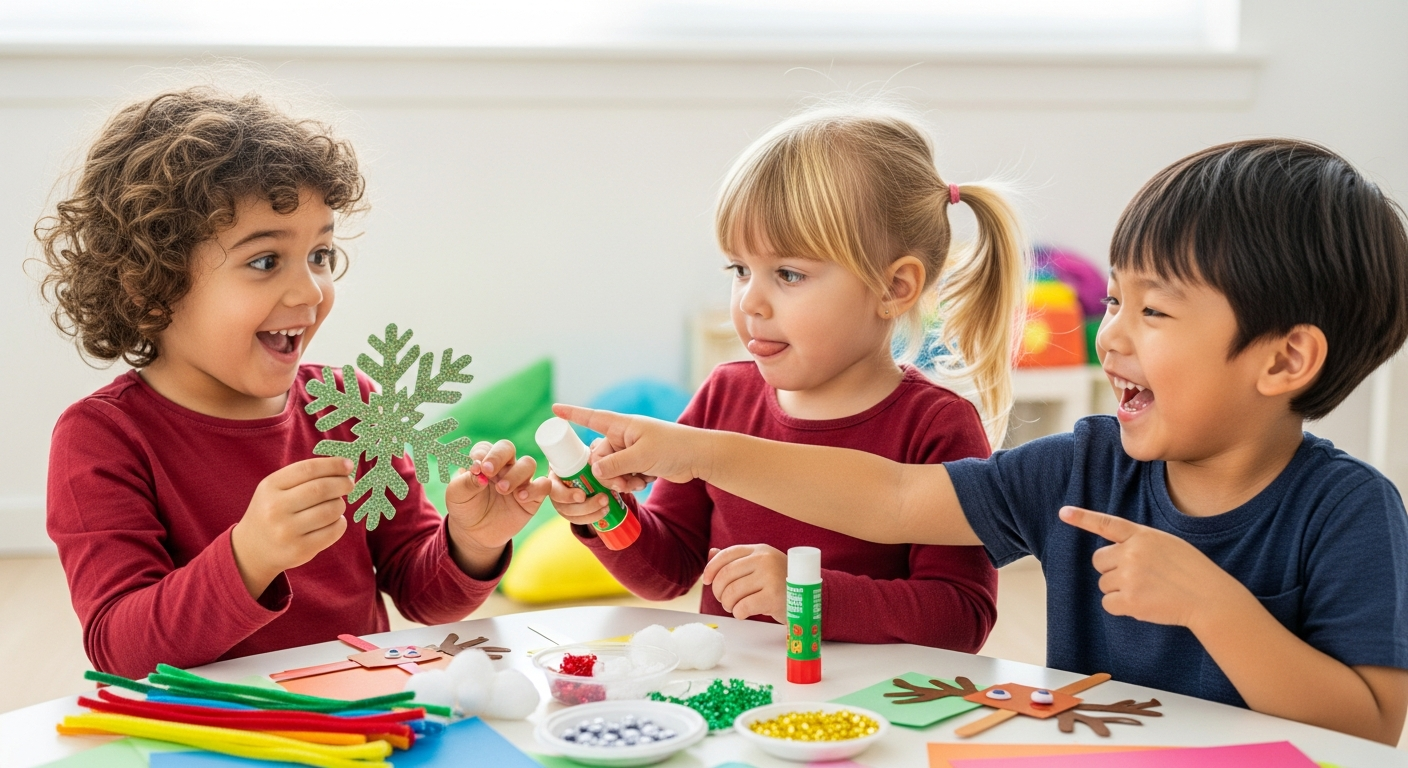
Table of Contents
- Introduction
- Why Crafts Matter for Little Kids: Beyond the Glitter
- The Magic of Christmas Crafts: A Special Spark for Little Communicators
- Getting Started: Tips for Successful Crafting with Toddlers and Preschoolers
- Easy Christmas Crafts for Little Kids: Sparking Speech and Joy!
- Crafting & Communication: How Creative Play Boosts Speech Skills
- Empowering Communication with Speech Blubs
- Conclusion
- FAQ: Easy Christmas Crafts for Little Kids
The magic of Christmas often feels most vibrant through the eyes of a child. Their excitement, their wonder, and their innocent belief in holiday enchantment are truly contagious. But beyond the twinkling lights and festive songs, the holiday season offers a unique and invaluable opportunity for growth and connection, especially when it comes to communication. Imagine your little one, usually engrossed in their world of play, giggling as they smear glue or proudly display a glitter-covered creation. These moments aren't just about making a pretty decoration; they are rich with potential for language development, social interaction, and emotional expression.
At Speech Blubs, we believe that every child deserves to find their voice and "speak their minds and hearts." This conviction stems from the personal journeys of our founders, who experienced speech challenges themselves and envisioned a tool that could empower children to communicate with confidence and joy. We understand that finding immediate, effective, and fun solutions for the 1 in 4 children who need speech support is crucial. That's why we’ve dedicated ourselves to blending scientific principles with engaging play, creating unique "smart screen time" experiences that foster communication skills. This blog post isn't just a collection of delightful holiday activities; it's a guide to transforming easy Christmas crafts for little kids into powerful platforms for speech and language growth, offering a screen-free complement to the learning journey we champion. We’ll explore how simple craft projects can boost everything from fine motor skills to vocabulary, and how these joyful, hands-on experiences perfectly align with our mission to empower children's voices.

Introduction
The holiday season is a whirlwind of sensory experiences: the smell of pine, the sound of carols, the sight of shimmering decorations. For little ones, this festive period is an exciting canvas for exploration, learning, and making cherished memories. But did you know that simple, festive crafts can be much more than just a way to pass the time? They are incredible tools for fostering communication and developing essential speech and language skills in toddlers and preschoolers. This guide will dive deep into a collection of easy Christmas crafts designed specifically for little hands, outlining not just how to make them, but why they are so beneficial for your child's developmental journey.
We’ll cover everything from simple ornament ideas that encourage descriptive language to festive card projects that boost fine motor skills crucial for articulation. You’ll learn practical tips for successful crafting with young children, discover how to seamlessly integrate language-building into each activity, and understand how these joyful, hands-on experiences can complement other communication support tools. Our goal is to empower you to create magical holiday moments that are not only fun but also profoundly enriching for your child’s speech and overall development. Get ready to transform everyday materials into festive masterpieces and, more importantly, into opportunities for your child to grow their voice, their confidence, and their connection with you.
Why Crafts Matter for Little Kids: Beyond the Glitter
Before we dive into specific craft ideas, let's understand why engaging in creative projects, especially during a special time like Christmas, is so profoundly beneficial for young children. It’s about much more than just the end product.
Fostering Fine Motor Skills and Hand-Eye Coordination
For little kids, manipulating craft materials—holding a crayon, squeezing glue, cutting paper, placing stickers—is a fantastic workout for their developing fine motor skills. These small, precise movements strengthen the muscles in their hands and fingers, which are vital for future tasks like writing, buttoning clothes, and even the intricate movements of the tongue and mouth needed for clear speech. Hand-eye coordination also gets a significant boost as they learn to guide their hands to achieve a desired outcome.

Boosting Cognitive Development and Problem-Solving
Crafting encourages children to think creatively and solve problems. "How do I make the Santa beard fluffy?" "Where should the googly eyes go?" These seemingly simple questions spark critical thinking and planning. They learn about cause and effect, shapes, colors, and textures. Following multi-step instructions for a craft also strengthens their cognitive sequencing abilities, which are foundational for understanding and producing narratives in language.
Igniting Language and Communication Skills
This is where the magic truly happens for speech development. Crafts provide a natural, engaging context for conversation. Parents can model language, ask open-ended questions, and encourage children to describe what they are doing, seeing, and feeling.
- Vocabulary Expansion: Naming materials ("glue," "glitter," "ribbon," "pinecone"), actions ("cut," "stick," "paint," "sprinkle"), colors, shapes, and textures ("sticky," "soft," "bumpy") naturally introduces new words.
- Descriptive Language: Encouraging children to describe their creations ("It's a sparkly star!" "My reindeer has a big, red nose!") helps them use adjectives and expand their expressive language.
- Following Instructions: Simple craft steps are perfect for practicing listening comprehension and following directions, from one-step commands ("Get the glue!") to multi-step sequences ("First, paint the hand, then press it on the paper, then wash your hands.").
- Articulation Practice: Certain words or sounds come up frequently in crafting, offering natural opportunities for repetition and practice. For instance, "scissors" for 's' sounds, "glue" for 'g' sounds, or "red" for 'r' sounds.
- Turn-Taking and Social Communication: Crafting together is a shared experience that naturally involves turn-taking, sharing materials, and expressing ideas, laying the groundwork for conversational skills.
We at Speech Blubs are incredibly passionate about helping children find their voice, and we know that early, joyful engagement in communication-rich activities like crafting can make a world of difference. Our mission is to empower children to "speak their minds and hearts," and we do this by transforming screen time into "smart screen time" through our unique video modeling methodology, where children learn by watching and imitating their peers. This active, imitative learning process is very similar to how children learn through hands-on activities like crafts – by observing, trying, and communicating.
The Magic of Christmas Crafts: A Special Spark for Little Communicators
Christmas crafts hold a special place because they combine all the developmental benefits of crafting with the unique joy and sensory richness of the holiday season. The festive themes, vibrant colors, and anticipation of giving or decorating create an extra layer of motivation and excitement for little ones.
- Sensory Engagement: From the feel of cotton balls to the smell of pinecones and the sparkle of glitter, Christmas crafts engage multiple senses, creating stronger memory pathways and making learning more impactful.
- Building Traditions: Crafting together can become a cherished family tradition, creating lasting memories and a sense of belonging. This shared experience naturally encourages conversation and strengthens family bonds, providing a powerful tool for family connection.
- Purpose and Pride: When children create an ornament for the tree, a card for a grandparent, or a gift for a friend, they experience immense pride and a sense of purpose. This boosts their self-esteem and provides a tangible reason to talk about their creation – "Look what I made!" – naturally encouraging expressive language.
Getting Started: Tips for Successful Crafting with Toddlers and Preschoolers
To make your Christmas crafting sessions fun and language-rich, a little preparation goes a long way.
1. Gather Your Materials (and Embrace the Mess!)
- Child-Safe and Accessible: Use non-toxic glues, paints, and materials. Place everything within your child’s reach.
- Simple is Key: For little kids, less is often more. Focus on a few core materials for each craft.
- Contain the Chaos: Lay down a newspaper, old tablecloth, or craft mat. Have wipes or a wet cloth ready for quick clean-up.
2. Set Realistic Expectations
- Process Over Product: For young children, the joy is in the doing, not necessarily the perfect outcome. Their "star" might look like a blob, and that's perfectly okay! Focus on their effort and enthusiasm.
- Short Attention Spans: Be prepared for crafting sessions to be brief. It’s better to have a few short, fun sessions than one long, frustrating one.
- Adult Support is Essential: These are not "set-it-and-forget-it" activities. Your active participation, guidance, and conversation are crucial for both safety and developmental benefit.
3. Turn it into a Language Party!
- Narrate Everything: "Now we're putting the red paint on the brush." "We need to glue the fluffy cotton ball here."
- Ask Open-Ended Questions: Instead of "Do you like it?", try "What's your favorite part?" or "Tell me about your shiny star."
- Offer Choices: "Do you want blue glitter or green glitter?" This empowers them and encourages them to use choice words.
- Model New Vocabulary: Introduce new words naturally. "This glue is sticky!" "We're making a wreath for the door."
- Sing Songs and Make Sounds: Incorporate festive songs or animal sounds if relevant to the craft. This is wonderful for pre-linguistic skills and early sound imitation.
Easy Christmas Crafts for Little Kids: Sparking Speech and Joy!
Here are some fantastic, easy Christmas crafts that are perfect for toddlers and preschoolers, along with ideas for how to turn them into powerful speech and language learning opportunities.
1. Salt Dough Ornaments: Sensory Play & Sequential Language
Salt dough is wonderfully tactile and safe for little ones. Making ornaments is a classic Christmas activity that offers endless opportunities for language.
- Materials Needed:
- 1 cup flour
- 1/2 cup salt
- 1/2 cup water (adjust as needed)
- Cookie cutters (Christmas shapes like stars, trees, gingerbread men)
- Rolling pin (child-safe)
- Straw or toothpick (for making holes)
- Baking sheet and parchment paper
- Acrylic paints, glitter, paintbrushes
- Ribbon or string for hanging
- Process & Speech Opportunities:
- Mixing the Dough: "Let's put the flour in the bowl. One cup! Now the salt. In it goes! And some water." Talk about the ingredients, count, and use prepositions ("in," "on"). "Now we mix! Stir, stir, stir!" This is great for action words.
- Kneading and Rolling: "The dough feels soft! Or maybe sticky? Let's knead it with our hands." Describe textures. "Now we roll the dough flat with the rolling pin." Use descriptive words and action verbs.
- Cutting Shapes: "Which cutter do you want? The star or the tree?" Offer choices. "Press it down hard! Pop! Look, a star!" Emphasize target words like "star," "tree," "cut," "press."
- Baking: Explain what's happening. "The oven is hot! We're baking our ornaments to make them hard."
- Decorating: "What color paint should we use? Red or green?" Focus on color words. "Let's add some sparkly glitter!" Use adjectives. "Put the ribbon through the hole." Practice prepositions.
- Developmental Connection: This craft reinforces multi-step instructions, expands vocabulary related to cooking and colors, and provides sensory input. For a child who enjoys tactile exploration but needs encouragement with new words, this hands-on process creates a joyful context for imitating sounds and words associated with the actions. Just like in Speech Blubs' "Animal Kingdom" or "Yummy Time" sections, where children learn sounds and words through engaging visuals and imitation, this activity allows them to mimic actions and sounds in a real-world setting.
- Try it! You can find more engaging, skill-building activities by downloading Speech Blubs on the App Store or Google Play.
2. Handprint Reindeer Cards: Body Parts & Animal Sounds
A classic for a reason! Handprint crafts create precious keepsakes and offer fantastic opportunities for language.
- Materials Needed:
- Brown construction paper or cardstock
- Red washable paint
- Red pom-poms (for Rudolph's nose)
- Googly eyes
- Glue stick or liquid glue
- Markers (black, brown)
- Process & Speech Opportunities:
- Painting the Hand: "Let's put brown paint on your hand." Focus on "hand," "brown," "paint." "Tickle, tickle!"
- Making the Print: "Now press your hand down hard on the paper. One, two, three! Lift up! Wow, a handprint!" Emphasize action words and body parts.
- Adding Features: "Where should Rudolph's red nose go? Right here! Glue the red pom-pom." "Now for the eyes! Two big eyes!" "Let's draw the antlers." Focus on color ("red," "brown"), body parts ("nose," "eyes"), and animal features. Make reindeer noises ("snort, snort!").
- Sending the Card: "Who are we sending this card to? Grandma? Grandpa?" Discuss family members and the purpose of the card.
- Developmental Connection: This craft helps children identify and name body parts, understand basic instructions, and engage in imaginative play. For a parent whose 3-year-old 'late talker' loves animals, the "Animal Kingdom" section of Speech Blubs offers a fun, motivating way to practice "moo," "baa," and "woof" sounds, building on the animal theme introduced by the reindeer. Our app provides a screen-free alternative to passive viewing, making it a powerful tool for family connection.
3. Cotton Ball Santa: Textures & Descriptive Adjectives
Soft, fluffy cotton balls make for a fun sensory experience and a charming Santa!
- Materials Needed:
- Red construction paper (for Santa's hat and body)
- Pink or peach construction paper (for Santa's face)
- Cotton balls
- Glue stick or liquid glue
- Googly eyes
- Red marker (for mouth)
- Process & Speech Opportunities:
- Cutting Shapes: (Adult assistance needed) "We need a red hat for Santa. And a round face." Talk about shapes and colors.
- Gluing Cotton: "Now for Santa's fluffy white beard! Let's glue the cotton balls here. It's so soft!" Focus on textures ("fluffy," "soft"), colors ("white"), and descriptive adjectives. "More cotton! More, please!" Encourage requesting.
- Adding Face Features: "Where should Santa's eyes go? Up here! And a happy red mouth!" Name body parts and emotions.
- Developmental Connection: This craft is excellent for sensory exploration and expanding descriptive vocabulary. It also encourages children to follow a visual model and replicate it, mirroring the observational learning that is so effective in early language acquisition. We continuously work to ensure our content is backed by cutting-edge research, confirming that our methods, like video modeling, provide significant benefits for speech development.
4. Pinecone Bird Feeder/Ornaments: Nature's Craft & Prepositions
Bring nature indoors with these simple, effective crafts that can either feed birds or decorate your tree.
- Materials Needed:
- Pinecones (collected from nature walk – a language opportunity in itself!)
- Peanut butter (or sunflower butter for allergies)
- Birdseed
- String or twine
- Butter knife or popsicle stick
- Process & Speech Opportunities:
- Pinecone Exploration: "Look at this bumpy pinecone! It came from a big tree." Describe features, discuss where pinecones come from. "Does it feel prickly?"
- Spreading Butter: "Let's put the sticky peanut butter all over the pinecone. Spread, spread, spread!" Focus on action words ("spread"), prepositions ("over"), and textures ("sticky").
- Rolling in Seeds: "Now, roll the pinecone in the birdseed! So many tiny seeds!" Practice prepositions ("in") and descriptive words ("tiny").
- Adding String: "We need string to hang it up. Tie a knot." Discuss actions and locations.
- Placement: "Where should we hang our bird feeder? Outside for the birds, or on the tree as an ornament?"
- Developmental Connection: This craft encourages interaction with nature, expands vocabulary related to natural elements and food, and is fantastic for understanding and using prepositions ("on," "in," "over," "up"). For children who might be hesitant to use new words, the sensory experience of working with textures like sticky peanut butter and crunchy seeds can lower inhibitions and make verbalization more spontaneous. If you're wondering if your child could benefit from more structured speech support, take our quick 3-minute preliminary screener. It involves 9 simple questions and provides an assessment and next-steps plan to guide you.
5. Paper Plate Wreath: Shapes, Colors & Grouping
A simple and colorful way to decorate for the holidays!
- Materials Needed:
- Paper plates (cut out the center to create a ring)
- Green construction paper (cut into strips or leaf shapes)
- Glue stick
- Various small festive decorations: pom-poms, glitter, small bows, cut-out stars (optional)
- Process & Speech Opportunities:
- Creating the Base: "We have a round paper plate! It's a circle." Name shapes.
- Adding Greenery: "Let's glue the green strips all around the wreath. One, two, three..." Count, use prepositions ("around"), and discuss colors ("green"). "More green, please!" Encourage requesting.
- Decorating: "Now for some colorful decorations! Do you want a red bow or a yellow star?" Offer choices. "Put the sparkly glitter here!" Use descriptive words and practice colors.
- Developmental Connection: This craft is excellent for shape and color recognition, counting, and understanding spatial concepts. The repetitive gluing of items around the plate also helps with fine motor skills. For children who enjoy structure and categorization, this craft provides an intuitive way to group similar items (all green leaves, all sparkly decorations) which helps with cognitive organization, a skill that transfers to language structure. Many parents have seen remarkable progress in their children's communication skills, even with playful, consistent efforts. You can see what other parents are saying about their success with Speech Blubs.
Crafting & Communication: How Creative Play Boosts Speech Skills
These easy Christmas crafts for little kids are more than just delightful activities; they are prime opportunities for "smart screen time" experiences, even without a screen! The principles we apply in Speech Blubs—active engagement, imitation, repetition, and a joyful learning environment—are all naturally present in hands-on crafting.
- Active Engagement: Unlike passive viewing, crafting demands active participation, which is critical for learning. Children are physically, mentally, and emotionally involved, making the learning stick.
- Imitation: When you demonstrate how to spread glue or press a handprint, your child is learning through imitation, a fundamental aspect of early language acquisition. Our app’s core video modeling methodology harnesses this powerful learning mechanism by showing children real peers demonstrating words and sounds, making it incredibly effective.
- Repetition: You’ll naturally repeat words like "glue," "cut," "red," and "tree" throughout a craft session. This repetition, in a meaningful context, helps cement new vocabulary and sound production.
- Joyful Learning: When learning is fun, children are more receptive and motivated. The festive atmosphere of Christmas crafts naturally creates a positive, low-pressure environment for communication practice.
Empowering Communication with Speech Blubs
While these crafts provide invaluable screen-free bonding and learning moments, Speech Blubs is here to supplement and enhance your child's communication journey with targeted, engaging activities. Our app was born from the personal experiences of our founders, who all grew up with speech problems and created the tool they wished they had. We are committed to providing an immediate, effective, and joyful solution for children who need speech support.
At Speech Blubs, we blend scientific principles with play into one-of-a-kind "smart screen time" experiences. We provide a screen-free alternative to passive viewing (like cartoons) and a powerful tool for family connection. We teach complex communication skills through our unique "video modeling" methodology, where children learn by watching and imitating their peers. This means your child is engaged in active, imitative learning, making speech practice feel like play.
Unlock Your Child's Voice Today
Ready to give your child the gift of clear communication this holiday season and beyond? We offer flexible plans designed to fit your family's needs:
- Monthly Plan: For $14.99 per month.
- Yearly Plan: Our best value at just $59.99 per year, which breaks down to an incredible $4.99 per month! You'll save a remarkable 66% compared to the monthly option.
Why choose the Yearly Plan? It's not just about saving money; it's about unlocking the full potential of Speech Blubs and ensuring continuous, consistent support for your child's development. The Yearly Plan includes:
- A 7-day free trial: Explore all our amazing features risk-free!
- The extra Reading Blubs app: Double the fun, double the learning!
- Early access to new updates: Be the first to experience our latest innovations.
- 24-hour support response time: Get prompt assistance whenever you need it.
The Monthly plan does not include these fantastic benefits. We encourage you to choose the Yearly plan to get the free trial and the full suite of features that will empower your child to speak their minds and hearts.
Start your 7-day free trial and choose the Yearly Plan today!
You can also download Speech Blubs directly to your device and start your journey:
Conclusion
The holiday season is a precious time for creating memories, and incorporating easy Christmas crafts for little kids into your traditions offers so much more than just festive decorations. These simple, joyful activities are powerful catalysts for developing fine motor skills, boosting cognitive abilities, and, most importantly, igniting speech and language growth. By engaging in hands-on play, narrating actions, and asking open-ended questions, you can transform every glitter-covered pinecone or handprint reindeer into a rich learning opportunity for your child.
Remember, the goal isn't perfection in crafting, but connection and communication. These moments of shared creativity build confidence, reduce frustration, and foster a lifelong love for communication in your child. Just as we believe in fostering a joyful and effective path to speech development at Speech Blubs, these crafts underscore the power of play in learning. We hope this guide inspires you to embrace the festive mess, engage in meaningful conversations, and celebrate every new sound and word your little one discovers.
Ready to further empower your child's communication journey? Don't miss out on the incredible benefits and value that Speech Blubs offers. We invite you to experience the difference our app can make.
Start your 7-day free trial today by choosing our Yearly plan! Not only will you save 66% and pay just $4.99/month, but you'll also gain access to the extra Reading Blubs app, early updates, and 24-hour support. This is the best way to support your child's growth and help them truly speak their minds and hearts.
Create your account and begin your 7-day free trial today!
FAQ: Easy Christmas Crafts for Little Kids
Q1: What are the best age groups for these easy Christmas crafts?
A1: These crafts are primarily designed for toddlers (ages 1-3) and preschoolers (ages 3-5). The emphasis is on simple steps, safe materials, and hands-on fun, with adult guidance and participation being key. For younger toddlers, focus on sensory exploration and very basic actions like sticking or patting. Older preschoolers can handle more steps and may even begin to use child-safe scissors with supervision.
Q2: How can I make these crafts even more beneficial for my child's speech development?
A2: The best way to boost speech development during crafts is through active communication. Narrate every step, describe materials, ask open-ended questions ("What color do you want next?"), offer choices, and encourage your child to talk about their creations. Repeat new words often, make animal sounds or other relevant noises, and sing songs related to the craft. Remember, your enthusiastic engagement is the most powerful tool!
Q3: What if my child gets frustrated or doesn't want to do the craft?
A3: It's important to remember that for little kids, the process is more important than the product. If your child shows frustration or disinterest, don't force it. You can simplify the activity, take a break, or try again another day. Sometimes, just sitting alongside them and doing the craft yourself can spark their interest. The goal is a positive, pressure-free experience. If you're concerned about consistent frustration with communication or learning, our preliminary screener can offer insights and next steps.
Q4: How does Speech Blubs complement these hands-on craft activities?
A4: Speech Blubs perfectly complements hands-on crafts by providing a structured, engaging, and joyful environment for targeted speech and language practice. While crafts build foundational skills and create real-world communication opportunities, our app utilizes "video modeling"—where children learn by imitating peers—to help them practice specific sounds, words, and sentences in a fun, interactive way. It’s an effective supplement to reinforce and expand upon the communication skills developed during screen-free activities, helping children build confidence and expressive language, turning learning into play.
About the author