
Joyful Painting Christmas Crafts for Kids
 By Speech Blubs Team•Dec 22, 2025•19 min.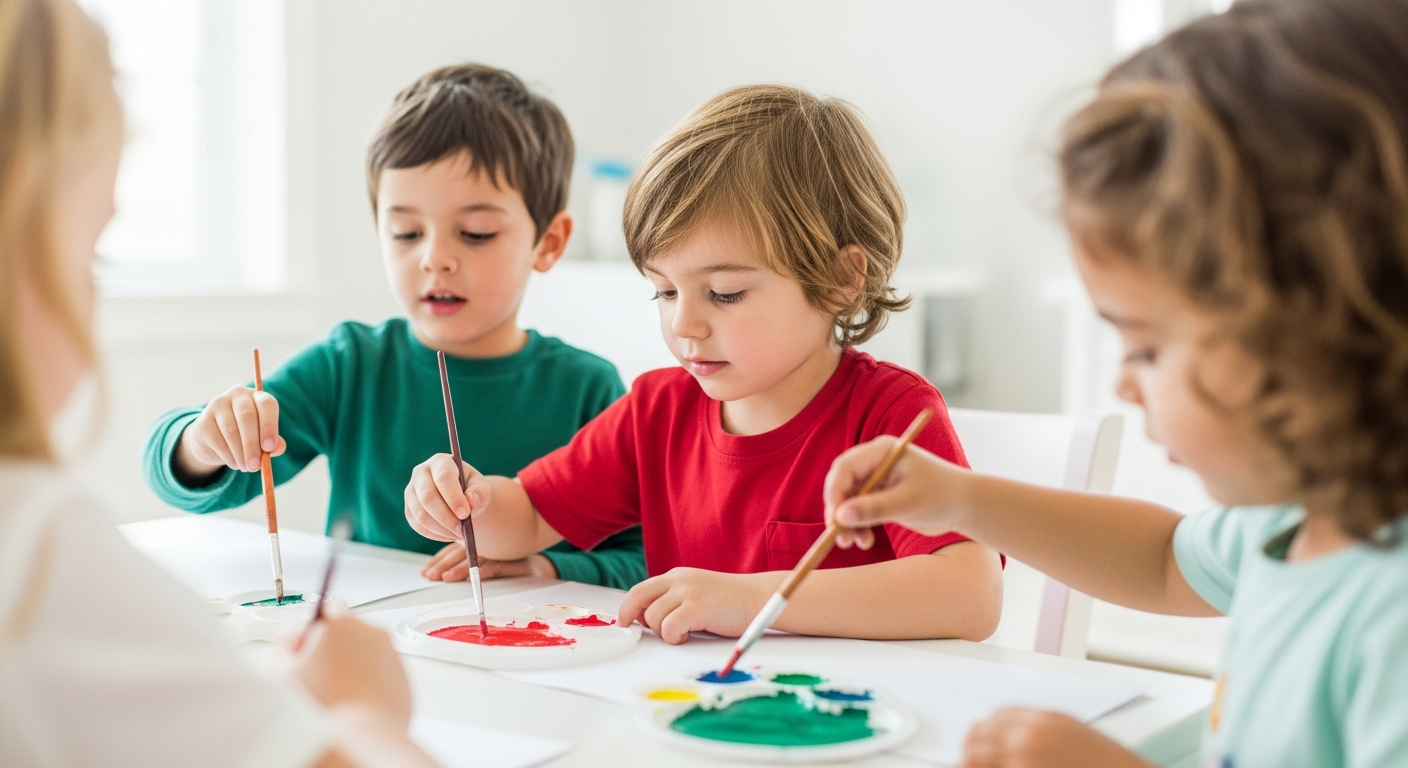
Table of Contents
- Introduction
- The Enchanting World of Christmas Crafts and Child Development
- Why Painting is the Perfect Medium for Holiday Creativity
- Setting Up Your Festive Painting Station
- A Sleigh-Full of Painting Christmas Crafts for Kids
- Turning Craft Time into Language Learning Time
- The Speech Blubs Difference: Empowering Every Child's Voice
- Setting Realistic Expectations and Embracing the Journey
- Unlock Your Child's Full Potential with Speech Blubs: Our Pricing and Value
- Conclusion
- Frequently Asked Questions
Introduction
As the festive season twinkles into view, a special kind of magic fills the air, igniting imaginations and stirring the desire for cozy family moments. For many families, this magic culminates in the joyful tradition of decorating the home, baking treats, and, perhaps most cherished of all, diving into creative Christmas crafts. Have you ever noticed the silent language spoken through a child's eyes as they carefully select a color for their ornament, or the excited babble as they describe their handprint Santa? These aren't just moments of fun; they're profound opportunities for connection, creativity, and, crucially, language development.
This blog post is your comprehensive guide to transforming simple art supplies into cherished holiday memories and powerful learning experiences. We'll explore a sleigh-full of engaging painting Christmas crafts for kids that are not only fun but also naturally encourage communication and fine motor skills. Our aim is to provide practical ideas that blend seamlessly with your family's holiday traditions, turning ordinary craft time into extraordinary moments of growth and bonding. By the end, you'll see how these festive activities can be a fantastic springboard for building confidence in communication, beautifully complemented by the thoughtful support offered by tools like Speech Blubs.

The Enchanting World of Christmas Crafts and Child Development
The festive season offers a unique backdrop for children to explore, create, and express themselves. Engaging in Christmas crafts, especially those involving painting, goes far beyond simply making something pretty for the mantelpiece. These activities are rich with developmental benefits, touching on crucial areas like fine motor skills, cognitive processing, sensory exploration, and emotional expression.
Think about the process: a child picks up a paintbrush, dips it into vibrant red paint, and carefully applies it to a wooden ornament. This seemingly simple action involves hand-eye coordination, grip strength, color recognition, and the ability to plan and execute a creative vision. Each stroke is a mini-workout for their developing muscles and a boost for their problem-solving abilities.
Beyond the physical and cognitive, Christmas crafts foster a sense of accomplishment and pride. When a child proudly presents their handmade reindeer or glittering snowflake, they're not just sharing a craft; they're sharing a piece of their imagination and effort. This positive reinforcement is invaluable for building self-esteem and encouraging further creative exploration.
At Speech Blubs, we deeply understand that every child has a unique voice and a heart full of ideas waiting to be expressed. Our mission is to empower children to "speak their minds and hearts," and we believe that playful, hands-on activities like painting Christmas crafts are a wonderful way to lay foundational communication skills in a natural, joyful setting. These moments create a fantastic canvas for children to describe, question, and connect, making them perfect partners for our scientifically-backed approach to speech development.
Why Painting is the Perfect Medium for Holiday Creativity
Among the myriad of craft options, painting stands out as a particularly beneficial and versatile activity for children during the holidays. Its accessibility and sensory appeal make it an instant hit with kids of all ages, from toddlers to school-aged children.

- Sensory Exploration: Painting is a feast for the senses. The vibrant colors stimulate visual perception, while the feel of cool, wet paint on fingers or the glide of a brush across paper provides rich tactile input. This sensory engagement is crucial for brain development and helps children process information about their environment. Different types of paint – thick tempera, smooth watercolors, or squishy finger paints – offer varied sensory experiences, adding another layer of learning and fun.
- Freedom of Expression: Unlike some crafts that require precise cutting or folding, painting offers immense freedom. There's no "right" or "wrong" way to paint a snowflake or Santa. This encourages children to explore their creativity without fear of making a mistake, fostering a healthy attitude towards self-expression. They can mix colors, experiment with strokes, and create unique masterpieces that reflect their individual personalities.
- Fine Motor Skill Development: Holding a paintbrush, squeezing a bottle of glitter glue, or carefully dabbing paint onto a small area all require fine motor control. These actions strengthen the small muscles in the hands and fingers, which are essential for tasks like writing, buttoning clothes, and self-feeding. As children refine their control, their paintings become more detailed, and their confidence in manipulating tools grows.
- Cognitive Benefits: Painting involves decision-making (What color next? Where should this go?), problem-solving (How do I make green? How do I fix this smudge?), and understanding cause and effect. It also enhances color recognition, shape identification, and spatial awareness. When children paint a scene, they are visually organizing information and translating their mental image onto a physical surface.
- A Foundation for Communication: Perhaps most importantly for us at Speech Blubs, painting activities naturally lend themselves to language development. As children paint, they can describe what they are doing, the colors they are using, and the ideas behind their artwork. This interaction with caregivers provides invaluable opportunities for vocabulary expansion, sentence structure practice, and narrative development. We'll delve deeper into this aspect shortly.
Setting Up Your Festive Painting Station
Before the creative magic begins, a little preparation goes a long way in ensuring a fun, safe, and relatively mess-free painting experience. Gather your supplies and create an inviting space for your little artists.
Essential Supplies for Your Crafting Adventure
- Paints: Opt for washable, non-toxic paints. Tempera paints are great for general crafting, acrylics work well for more permanent projects (like ornaments or wood), and finger paints are perfect for younger children's sensory exploration. Consider a festive palette: reds, greens, whites, silvers, and golds.
- Brushes and Applicators: A variety of brush sizes encourages different painting techniques. Sponges, cotton balls, Q-tips, and even fingers can also be fantastic painting tools.
- Surfaces to Paint On:
- Paper (construction paper, cardstock, watercolor paper)
- Cardboard (cut from old boxes)
- Clear plastic or glass ornaments (unbreakable ones are best for younger kids)
- Wooden slices or shapes
- Pinecones (collected from nature)
- Salt dough cut-outs
- Rocks (smooth, flat ones)
- Small canvases
- Protection:
- Aprons or old shirts for the kids (and adults!).
- Newspaper, old sheets, or a plastic tablecloth to protect your workspace.
- Wipes and paper towels for quick clean-ups.
- Embellishments (Optional, but highly encouraged for extra sparkle!):
- Glitter (biodegradable, if possible!)
- Googly eyes
- Pom-poms
- Pipe cleaners
- Ribbons, yarn
- Child-safe glue
- Stickers (holiday themed)
Creating an Inspiring Workspace
Designate a specific area for crafting. A kitchen table covered with a drop cloth works wonderfully. Ensure good lighting and enough space for each child to spread out their materials. Having all supplies readily accessible but organized helps keep the creative flow going and minimizes interruptions. Remember to fill a cup with water for rinsing brushes and have a paper towel nearby for drying them.
A Sleigh-Full of Painting Christmas Crafts for Kids
Now for the main event! Here are some fantastic painting Christmas crafts that your kids will love, each offering unique opportunities for artistic expression and language development.
1. Dazzling Painted Ornaments
Ornaments are classic Christmas crafts, and painting them allows for endless personalization.
- Swirl Painted Ornaments: Provide clear plastic or glass ornaments (unbreakable ones are safer for kids). Let children choose 2-3 colors of acrylic paint. They can pour a small amount of each color inside the ornament and then gently swirl it around to create mesmerizing patterns.
- Language Focus: "Swirl," "drip," "mix," "shine." "Look at the blue and green mixing!"
- Handprint/Fingerprint Ornaments: Paint a child's hand or fingers and press them onto a solid colored ornament. Transform fingerprints into tiny reindeer, snowmen, or elves with a few added details.
- Language Focus: "Press," "stamp," "tiny," "decorate." "Which finger should we use for the snowman's hat?"
- Wooden Slice Characters: Purchase plain wooden slices from a craft store. Children can paint these to create festive characters like Santa, reindeer, elves, or even mini Christmas trees. Add googly eyes, pom-pom noses, or glitter for extra flair.
- Language Focus: Describing emotions ("happy Santa," "silly reindeer"), identifying body parts, storytelling ("Santa is flying his sleigh!"). For a parent whose child is working on expanding their descriptive vocabulary, painting a wooden Santa allows them to ask, "What color is Santa's suit? How does his beard feel? Is he happy or surprised?" These prompts, mirrored in Speech Blubs' "Describe It" activities, encourage richer verbal responses.
2. Handprint & Footprint Keepsakes
These crafts are not just fun to make; they become treasured mementos for years to come.
- Santa's Sleigh Handprint: Paint your child's palm red, fingers white (for Santa's beard), and thumb white (for his hat). Press onto paper. Once dry, add a face, hat details, and googly eyes.
- Language Focus: "Red," "white," "beard," "hat," "eyes." "Whose handprint is this? It's YOUR handprint, Santa!"
- Reindeer Footprints: Paint your child's foot brown and press onto paper. Once dry, add antlers, googly eyes, and a red pom-pom nose.
- Language Focus: "Brown," "foot," "antlers," "nose," "hoof." "Can you stomp your reindeer foot?"
- Snowman Family: Use white paint for handprints (larger ones for adults, smaller for kids) on blue paper to create a snowy scene. Add painted details like scarves, hats, and carrot noses.
- Language Focus: "Snow," "cold," "family," "big," "small," "scarf." "Let's make a big snowman and a little snowman!"
These activities are fantastic for encouraging imitation, a core principle of our "video modeling" methodology at Speech Blubs. Just as children watch and learn from their peers in our app, they'll watch you demonstrate how to make a handprint Santa and then imitate the actions, naturally absorbing new vocabulary and concepts along the way.
3. Pinecone Wonderland Decorations
Transform humble pinecones into delightful Christmas decor.
- Glittery Pinecone Trees: Have kids paint pinecones green (or white for snow-dusted look) using tempera or acrylic paint. While the paint is still wet, sprinkle generously with glitter. Once dry, they can add small pom-poms or beads as "ornaments."
- Language Focus: "Pinecone," "green," "sparkly," "decorate," "tree." "How many pom-poms should we put on our tree?"
- Pinecone Animals: Paint pinecones in various colors. Once dry, glue on googly eyes, felt ears, or pipe cleaner legs to create whimsical forest animals or even little reindeer.
- Language Focus: Animal names, "ears," "legs," "tail," "soft," "spiky." "This pinecone looks like a sleeping owl!"
4. Magical Salt Dough Ornaments
Salt dough is incredibly versatile and creates beautiful, lasting ornaments.
- Making the Dough (A Multi-Sensory Experience):
- Mix 2 cups flour, 1 cup salt, 1 cup water. Knead until smooth. This part alone is a fantastic sensory play opportunity!
- Roll out the dough and use cookie cutters (Christmas shapes like stars, trees, gingerbread men) to create ornaments. Don't forget to poke a hole for hanging!
- Bake at 250°F (120°C) for 2-3 hours until hard, or air dry for several days.
- Painting the Creations: Once cool and hard, children can paint their salt dough ornaments with acrylics or tempera.
- Language Focus: Making: "Mix," "knead," "roll," "cut," "smooth," "sticky," "soft." Painting: Describing shapes, colors, and patterns. "First, we mix the flour. Then, we roll the dough. What shape are you making?"
5. Festive Rock Painting
Transform ordinary rocks into extraordinary Christmas scenes.
- Character Rocks: Collect smooth, flat rocks. Children can paint them to resemble snowmen, Santa faces, elves, or even pieces of a nativity scene.
- Language Focus: "Smooth," "round," "character names," "storytelling." "Let's make a whole family of snowman rocks!"
- Gift Tags/Paperweights: Paint simple Christmas designs on rocks (candy canes, holly, presents) to use as unique gift tags or charming paperweights.
- Language Focus: "Gift," "present," "tag," "heavy," "light."
6. Personalized Christmas Cards & Wrapping Paper
These crafts add a personal touch to your holiday greetings.
- Fingerprint Christmas Lights: Draw a string on a blank card. Children can dip their fingertips into different colors of paint and press them along the string to create colorful "Christmas lights."
- Language Focus: "Lights," "colorful," "string," "bright."
- Sponge-Painted Wrapping Paper: Use large sheets of plain paper. Cut sponges into Christmas shapes (stars, trees, bells). Children dip sponges into paint and press them onto the paper to create their own custom wrapping paper.
- Language Focus: "Sponge," "stamp," "pattern," "repeat," "gift." "Let's make a green tree, then a red star!"
Turning Craft Time into Language Learning Time
The true magic of these painting Christmas crafts lies in their potential to spark meaningful communication. As child development experts, we know that language flourishes in engaging, interactive environments. Here's how to maximize the language-learning benefits:
- Descriptive Language: Encourage your child to describe what they are seeing, doing, and feeling. Ask open-ended questions: "What color is that? How does it feel? What are you making?" This prompts them to use adjectives (e.g., "sparkly," "rough," "bright"), nouns (e.g., "star," "tree," "snowflake"), and verbs (e.g., "paint," "mix," "dab").
- Action Verbs and Following Instructions: Use clear, simple action verbs as you craft together: "Let's squeeze the paint," "Now, brush it here," "Can you hand me the red?" Give two- or three-step instructions, like "First, paint the tree green, then add some glitter."
- Questioning and Answering: Model asking questions and answering them yourself, then encourage your child to do the same. "What will your snowman wear?" "I think my reindeer needs a shiny nose!"
- Storytelling and Narrative: As children create, prompt them to tell a story about their artwork. "What is your Santa doing? Where is he going?" This helps develop narrative skills and imagination.
- Emotional Expression: Talk about how the activity makes them feel. "Are you proud of your painting? Is it exciting to see the colors mix?"
- Vocabulary Expansion: Introduce new words related to colors, shapes, textures, tools, and holiday themes. Repetition is key!
Remember, the goal is interaction. Sit with your child, engage in the activity alongside them, and model communication. These shared moments are invaluable for fostering a love for communication and building confidence. For families seeking additional support and structure in speech development, Speech Blubs is a fantastic resource. We provide a unique "smart screen time" experience that complements these real-world interactions, offering guided practice in a fun and engaging way.
The Speech Blubs Difference: Empowering Every Child's Voice
At Speech Blubs, we believe every child deserves the opportunity to "speak their minds and hearts." Our company was born from a very personal place; our founders all grew up with speech problems and created the tool they wished they had. This deep empathy drives our commitment to providing an immediate, effective, and joyful solution for the 1 in 4 children who need speech support.
We blend scientific principles with play, transforming screen time from a passive activity (like watching cartoons) into a powerful, interactive learning experience. Our one-of-a-kind "video modeling" methodology is at the heart of what we do. Children learn by watching and imitating their peers, which is incredibly motivating and effective. This approach is backed by extensive research, placing us in the top tier of speech apps worldwide, as detailed on our research page.
Imagine a child who loves animals but struggles to pronounce "moo." Our "Animal Kingdom" section allows them to watch a peer make the sound, encouraging them to imitate and practice in a playful, low-pressure environment. This is just one example of how Speech Blubs acts as a powerful supplement to your child's overall development plan, and when applicable, professional therapy. It’s designed to be a tool for family connection, where parents can co-play and support their child's learning journey. You can see the success stories and heartwarming feedback from other parents on our testimonials page.
Setting Realistic Expectations and Embracing the Journey
It’s important to remember that progress in communication, like mastering a new craft, is a journey, not a race. Celebrate every small victory – a new word spoken, an attempt to describe a color, or even just sustained engagement with an activity. Our goal at Speech Blubs isn't to guarantee your child will be giving public speeches in a month, but rather to foster a love for communication, build confidence, reduce frustration, and develop key foundational skills. We aim to create joyful family learning moments that empower children to become effective communicators.
These painting Christmas crafts, combined with the structured practice offered by Speech Blubs, provide a holistic approach to your child's development. Always prioritize joy, connection, and exploration over perfection. The process of creating and communicating is far more valuable than the final product.
If you're unsure whether your child could benefit from additional speech support, we've created a simple tool to help. Take our quick 3-minute preliminary screener. It involves just 9 simple questions and provides you with an instant assessment and a personalized next-steps plan. It’s a great way to gain insight and can even lead to a free 7-day trial of Speech Blubs.
Unlock Your Child's Full Potential with Speech Blubs: Our Pricing and Value
We believe in making effective speech development accessible to every family. We offer clear, transparent pricing options for Speech Blubs, and we want to highlight the incredible value of our Yearly plan.
Our Plans:
- Monthly Plan: $14.99 per month.
- Yearly Plan: $59.99 per year. This breaks down to just $4.99 per month, which means you save 66% compared to the monthly plan!
Why the Yearly Plan is the Best Choice:
The Yearly plan is not just significantly cheaper; it also includes a host of exclusive, high-value features designed to give your child the best possible start and continuous support:
- 7-Day Free Trial: Only with the Yearly plan can you access a full 7-day free trial. This allows you and your child to explore all the engaging activities and see the benefits firsthand before committing.
- The Extra Reading Blubs App: This bonus app helps develop literacy skills, making the Yearly plan an even more comprehensive learning tool.
- Early Access to New Updates: Get first dibs on new features, activities, and improvements.
- 24-Hour Support Response Time: Our dedicated support team is there for you, ensuring any questions or concerns are addressed promptly.
The Monthly plan does not include these fantastic benefits, making the Yearly plan the clear best choice for families seeking the most comprehensive support and value.
Conclusion
The holiday season is a time for magic, connection, and cherished memories. Engaging in painting Christmas crafts for kids offers a wonderful avenue for festive fun, creative expression, and significant developmental growth. From painting sparkling ornaments to creating sentimental handprint keepsakes, these activities naturally enhance fine motor skills, cognitive abilities, and, most importantly, provide a rich environment for language development. Every brush stroke, every color choice, and every shared giggle becomes a building block for better communication.
At Speech Blubs, we are honored to be a part of your family's journey to empower your child's voice. We're committed to providing innovative, science-backed tools that complement these real-world interactions, making speech development engaging and effective. We encourage you to embrace the mess, celebrate the creativity, and cherish the communication that blossoms from these joyful holiday crafts.
Ready to embark on a festive journey of creativity and communication with your child? Why wait? We invite you to experience the full potential of Speech Blubs with our value-packed Yearly plan.
Download Speech Blubs on the App Store today!
Or if you're an Android user, you can Get Speech Blubs on Google Play.
For desktop users, you can also create your account and start your 7-day free trial today – just remember to select the Yearly plan to unlock your free trial and all the exclusive features, including the Reading Blubs app and priority support! Let's make this holiday season a time of joyful creation and confident communication for your child.
Frequently Asked Questions
Q1: What age is best for painting Christmas crafts?
Painting Christmas crafts can be adapted for almost any age! For toddlers (1-3 years), focus on simple finger painting or sponge painting on large surfaces, using chunky brushes and washable paints. Preschoolers (3-5 years) can explore more detailed painting, like ornament decorating or handprint art, with adult supervision. School-aged children (5+) can handle more intricate projects, like salt dough painting or designing their own Christmas cards, and can often follow multi-step instructions more independently. The key is to choose age-appropriate materials and adjust expectations based on your child's developmental stage.
Q2: What if my child makes a huge mess with paint?
Mess is a natural and often beneficial part of creative play! To manage it, designate a specific craft area, preferably with an easy-to-clean surface. Cover your table with old newspaper, a plastic tablecloth, or an old sheet. Dress your child in an art smock or old clothes, and consider putting down a large mat or drop cloth if you're worried about spills on the floor. Have wipes, paper towels, and a bucket of soapy water handy for quick clean-ups. Frame the mess as part of the creative process and focus on the joy of exploration, rather than striving for perfection.
Q3: How do these painting crafts specifically help with speech development?
Painting Christmas crafts are incredibly beneficial for speech development because they create natural, engaging opportunities for communication. As children paint, they can practice:
- Vocabulary: Naming colors, shapes, tools (brush, sponge), textures (smooth, sticky), and holiday themes (Santa, tree, star).
- Descriptive Language: Using adjectives to describe their artwork (e.g., "sparkly," "bright," "big," "small").
- Action Verbs: Talking about what they are doing (e.g., "paint," "mix," "squeeze," "dab").
- Following Instructions: Responding to simple commands ("Give me the red paint," "Paint the top green").
- Questioning and Answering: Engaging in conversations about their creations, fostering turn-taking and narrative skills.
The interactive nature of crafting encourages spontaneous speech and provides a rich context for language learning.
Q4: How does Speech Blubs fit into our family's craft time?
Speech Blubs perfectly complements your family's craft time by providing structured, engaging practice that reinforces the communication skills learned through hands-on play. While you're making painting Christmas crafts, your child is developing fine motor skills, understanding new vocabulary, and practicing descriptive language in a real-world context. Afterwards, or at another dedicated "smart screen time" moment, Speech Blubs can solidify these learnings. For example, if your child loved painting a snowman, you could then use the app's "People" or "Winter" sections to practice related words and phrases through our unique video modeling. Our app helps children generalize newly acquired vocabulary and sounds, empowering them to "speak their minds and hearts" with greater confidence. It’s a powerful tool that transforms passive screen time into an active, educational experience, designed for co-play and family connection.
About the author