
Joyful Toddler Snowflake Craft Ideas for Winter Play
 By Speech Blubs Team•Feb 23, 2026•14 min.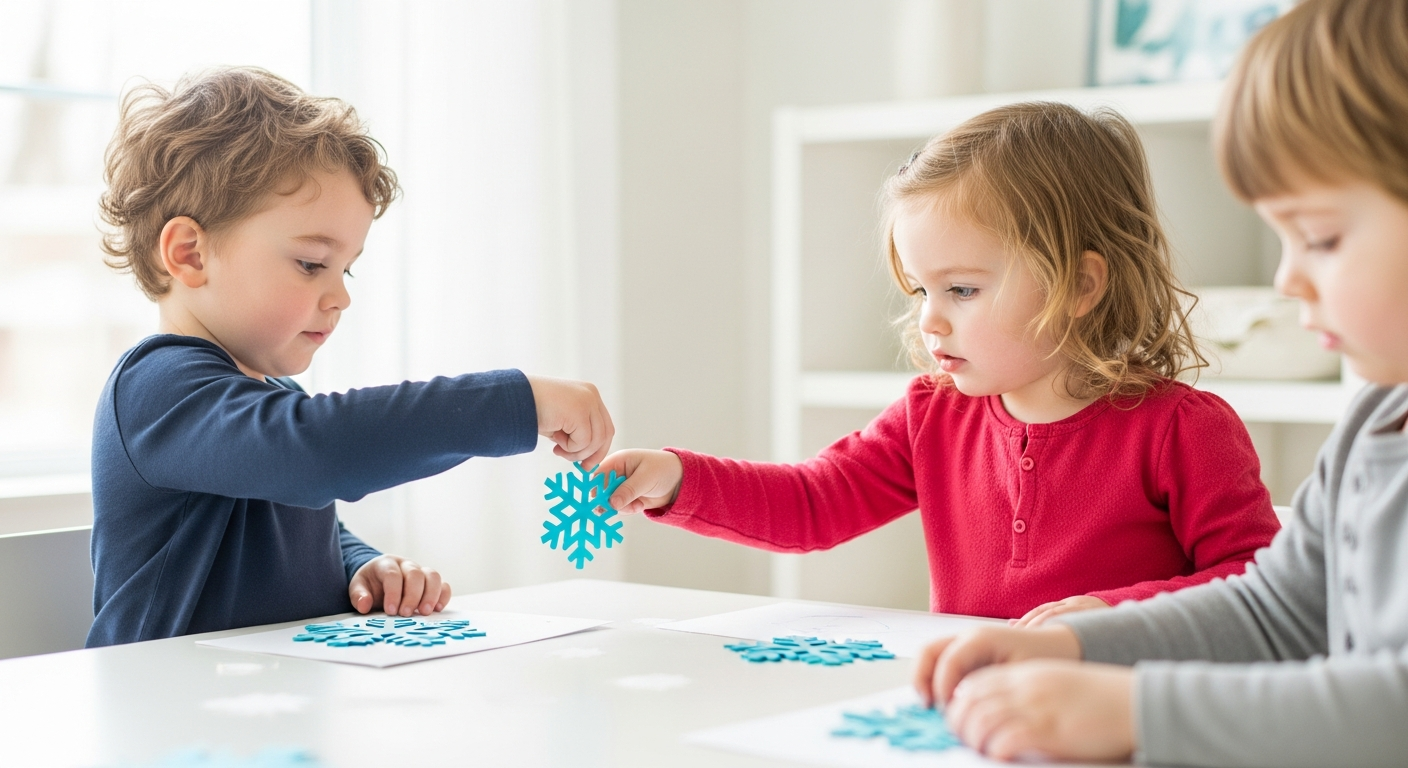
Table of Contents
- Introduction
- The Developmental Power of a Toddler Snowflake Craft
- 6 Engaging Toddler Snowflake Craft Projects
- Why "Video Modeling" Enhances These Activities
- Practical Scenarios: Connecting Play to Speech
- Beyond Crafting: Winter Literacy for Little Ones
- Why Speech Blubs is a "Smart Screen Time" Choice
- Understanding Our Plans and Value
- Setting Realistic Expectations
- Tips for a Mess-Free (or Mess-Managed) Craft Session
- Conclusion
- Frequently Asked Questions
Introduction
Have you ever watched your child’s face light up at the sight of the first flurry of winter? There is something truly magical about snowflakes—each one unique, delicate, and fleeting. But as the temperatures drop and the days grow shorter, parents often find themselves facing the "afternoon slump." It is that specific window of time after the nap but before dinner when energy is high, but the options for outdoor play are limited. How do we transform those indoor hours into moments of connection and developmental growth?
The purpose of this guide is to provide you with a treasure trove of toddler snowflake craft ideas that are more than just "busy work." We will explore how simple materials like cotton balls, popsicle sticks, and coffee filters can become powerful tools for building fine motor skills, expanding vocabulary, and fostering a love for creative expression. Beyond the glitter and glue, we will discuss how these activities integrate with a holistic approach to child development, including how we at Speech Blubs support your child's journey toward confident communication.

At Speech Blubs, our mission is to empower children to "speak their minds and hearts." We believe that every craft project is an opportunity for a "language explosion." By the end of this article, you will have a full itinerary of winter-themed activities that blend the joy of play with the science of learning, helping your little one develop the foundational skills they need to thrive.
The Developmental Power of a Toddler Snowflake Craft
When a toddler reaches for a cotton ball or tries to balance a popsicle stick, they aren't just making a decoration for the refrigerator; they are performing complex neurological work. Crafting is a multi-sensory experience that engages the brain in ways that passive entertainment—like sitting in front of a cartoon—simply cannot.
Fine Motor Skills and Hand Strength
Creating a toddler snowflake craft often involves "pincer grasp" movements—using the thumb and index finger to pick up small items like sequins or bits of torn paper. This strength is essential for future skills, such as holding a pencil or buttoning a coat. Activities like ripping construction paper for "tear art" snowflakes actually build the intrinsic muscles of the hand, which are vital for dexterity.
Language and Vocabulary Building
Think about the words associated with winter: cold, white, lacy, frozen, flurry, melting, sticky, soft. When you sit down with your child to craft, you are providing a rich linguistic environment. By narrating the process—"You are putting the sticky glue on the white paper"—you are helping them map words to physical sensations and actions. This is a core part of how we encourage "smart screen time" at Speech Blubs, where we focus on active participation rather than passive viewing.
Emotional Regulation and Confidence
Completing a task provides a child with a sense of "mastery." For a toddler who might feel frustrated by their inability to communicate a complex thought, the success of finishing a snowflake can build the confidence needed to try new words. Our company was born from the personal experiences of our founders, who all grew up with speech problems and created the tool they wished they had. We know that building a child’s confidence is the first step toward building their voice.

6 Engaging Toddler Snowflake Craft Projects
Here are several tried-and-true snowflake crafts designed specifically for the developmental stage of toddlers and preschoolers. These activities are open-ended, meaning the focus is on the process of creating rather than making a "perfect" final product.
1. The Classic Cotton Ball Snowflake
This is a sensory delight. The soft texture of the cotton balls contrasts beautifully with the sticky sensation of the glue.
- Materials: Blue construction paper, white glue, and a handful of cotton balls.
- The Process: Draw a simple snowflake shape (three intersecting lines) with glue on the paper. Show your toddler how to pull the cotton balls apart to make them "fluffy" and then press them onto the glue.
- Language Tip: Use words like soft, fluffy, puffy, and press. Ask them, "Does the cotton feel like a real cloud?"
2. Coffee Filter Watercolor Snowflakes
This project introduces the concept of "absorption" and color mixing.
- Materials: White coffee filters, washable markers (blue and purple), and a spray bottle with water.
- The Process: Let your child scribble all over the coffee filter with markers. Once they are finished, let them spray the filter with water. Watch as the colors bleed and blend to create a tie-dye effect. Once dry, an adult can fold and snip the edges to create a snowflake pattern.
- Language Tip: This is great for "action words." Talk about the water spraying, dripping, and the colors changing.
3. Sparkly Popsicle Stick Snowflakes
For older toddlers who are developing better spatial awareness, popsicle sticks are a fantastic medium.
- Materials: Four popsicle sticks per snowflake, a hot glue gun (for adult prep), white school glue, and sequins or glitter.
- The Process: Pre-glue the sticks into a star/snowflake shape. Give the "frame" to your child to decorate. They can use dot markers to add color and then drizzle glue to add "sparkles" (sequins or jewels).
- Language Tip: Focus on shapes and counting. "One stick, two sticks, three sticks, four! We made a star!"
4. Q-Tip Painted Snowflakes
Q-tips are the perfect size for toddler hands and encourage a refined grip.
- Materials: Dark blue paper, white tempera paint, and Q-tips.
- The Process: Instead of a brush, use a Q-tip as a "stamp." Show your child how to make "dots" along the lines of a snowflake.
- Language Tip: This is perfect for rhythm and repetition. Say "dot, dot, dot" as they work.
5. Marshmallow Architecture
Who says you can’t play with your food? This is a tactile (and tasty) way to build 3D structures.
- Materials: Mini marshmallows and toothpicks (supervised) or pretzel sticks (safer for younger toddlers).
- The Process: Use the marshmallows as "connectors" for the sticks to build a 3D snowflake.
- Language Tip: Discuss sticky and pointy. This also helps with "prepositions"—put the marshmallow on top or under the stick.
6. Masking Tape Resist Art
This feels like magic to a young child.
- Materials: White paper, masking tape, and blue watercolor paint or sponges.
- The Process: Place strips of masking tape on the paper in a snowflake shape. Let your toddler paint over the entire page. Once the paint is dry, peel off the tape to reveal the white snowflake underneath.
- Language Tip: Use the word hide and reveal. "Where did the snowflake go? It’s hiding under the tape!"
Why "Video Modeling" Enhances These Activities
While you are crafting, you might wonder how to further encourage your child’s speech. This is where the methodology behind Speech Blubs comes into play. We use a technique called video modeling, which is a scientifically-proven method where children learn new behaviors or skills by watching their peers.
Research shows that toddlers are highly motivated by watching other children. On our app, your child doesn't just watch a cartoon; they watch a "peer model" performing a sound or a word. This triggers "mirror neurons" in the brain, making the child more likely to imitate what they see. Our method is backed by science, placing us in the top tier of speech apps worldwide. You can read more about the science and research behind our approach to see how we blend play with evidence-based practices.
Imagine your child is making a "Snowman Snowflake" craft. While they work, you can use the Speech Blubs app to show them a peer making the "S" sound for "Snow" or the "M" sound for "Melt." This creates a joyful family learning moment where the physical craft and the digital tool work in harmony.
Practical Scenarios: Connecting Play to Speech
To help you see how this works in real life, let’s look at how these crafts can be tailored to specific developmental needs.
For the "Late Talker" Who Loves Texture
If you have a 3-year-old who is a "late talker" and is currently more interested in sensory play than words, the Cotton Ball Snowflake is your best friend. Instead of pressuring them to say "snowflake," focus on the physical sensation. As they touch the cotton, you model the sound "Ooooh, soft!" Use the "Early Sounds" section in Speech Blubs to find peers making simple vowel sounds. This reduces frustration and builds a bridge between the physical feeling and the verbal expression.
For the Child Who Struggles with Precision
If your child finds fine motor tasks difficult, they might get discouraged quickly. Using Tear Art Snowflakes (ripping paper) removes the "failure" element of trying to use scissors. As they rip the paper, you can use the app to show them videos of animals (the "Animal Kingdom" section is a favorite!). They can practice the "rrrrip" sound like a lion's roar. This turns a potentially frustrating motor task into a game. You can see what other parents are saying about how this playful approach has helped their children's confidence.
Beyond Crafting: Winter Literacy for Little Ones
A toddler snowflake craft session is even more impactful when paired with a good book. Reading together builds "joint attention"—the ability to focus on the same thing with another person—which is a critical foundational skill for communication.
- The Mitten by Jan Brett: This classic features beautiful illustrations of animals squeezing into a lost mitten. It’s perfect for teaching the names of animals and the concept of "big" versus "small."
- Snowmen at Night by Caralyn and Mark Buehner: This whimsical story imagines what snowmen do when we are asleep. It’s a great way to spark a child’s imagination. Ask them, "What do you think our paper snowflakes do at night?"
- Un-Brella by Scott Franson: This is a wordless picture book. Wordless books are incredible for speech development because you and your child have to tell the story together. You can describe the snowflake shapes you see on the pages.
- Snowbots by Aaron Reynolds: If your child loves robots, this is a fun, rhythmic book that makes "machine sounds"—perfect for practicing different phonetic sounds.
Why Speech Blubs is a "Smart Screen Time" Choice
We understand the hesitation many parents feel about screen time. However, not all screens are created equal. Passive viewing, where a child sits silently watching fast-paced cartoons, can actually lead to "brain fog" and decreased interaction.
At Speech Blubs, we provide a screen-free alternative to passive viewing. Our app is designed for co-play. This means you and your child use the tool together. It is an immediate, effective, and joyful solution for the 1 in 4 children who need speech support. We don't promise that your child will be giving public speeches in a month; instead, we focus on fostering a love for communication and reducing the frustration that comes when a child can't express their "mind and heart."
If you are unsure if your child could benefit, we encourage you to take our quick 3-minute preliminary screener. It involves 9 simple questions and provides you with a personalized assessment and a next-steps plan.
Understanding Our Plans and Value
We believe in being transparent about our pricing so you can make the best choice for your family. Our goal is to provide a high-quality, scientifically-backed tool that is accessible to everyone.
We offer two main ways to join our community:
- Monthly Plan: $14.99 per month. This is a great way to test the waters and see how your child responds to the video modeling sessions.
- Yearly Plan: $59.99 per year. This is our best value choice, breaking down to just $4.99 per month.
When you choose the Yearly plan, you aren't just saving 66%; you are gaining access to an entire suite of features designed to accelerate your child’s progress. The Yearly plan includes:
- A 7-day free trial so you can explore everything risk-free.
- The Reading Blubs app, which focuses on early literacy and phonics.
- Early access to all new updates and content.
- 24-hour support response time from our dedicated team.
The Monthly plan does not include the free trial or the Reading Blubs app, making the Yearly plan the clear choice for families committed to their child's long-term development. Create your account and begin your 7-day free trial today to see the difference for yourself.
Setting Realistic Expectations
As a child development expert, I always remind parents that progress is a marathon, not a sprint. Using a toddler snowflake craft or an app like Speech Blubs is about building a foundation.
- Week 1: You might notice your child is more engaged and attentive.
- Month 1: You might see an increase in imitation and a decrease in frustration.
- Month 6: You may notice a significant expansion in their vocabulary and confidence.
The goal is to create joyful family learning moments. Whether you are covered in glue from making coffee filter snowflakes or laughing along with a video of a peer on the app, you are doing the important work of connecting with your child.
Tips for a Mess-Free (or Mess-Managed) Craft Session
Let's be honest: crafting with a toddler can be messy. Here are a few ways to keep the "chaos" contained so you can focus on the fun:
- The Tray Method: Perform all glue and glitter activities inside a large baking tray or a plastic bin. This keeps the sequins from migrating across the entire house.
- Wet Wipes are Key: Keep a pack of wipes or a damp cloth nearby. Tending to sticky fingers immediately prevents "glue-prints" on your furniture.
- Prep in Advance: Toddlers have a very short "wait time." Have your paper cut and your glue opened before you invite them to the table.
- Dress for Success: Use an old oversized t-shirt as a smock, or simply craft in just a diaper if the house is warm enough!
Conclusion
Winter doesn't have to be a season of feeling "cooped up." By embracing the simple beauty of a toddler snowflake craft, you are opening a door to creativity, motor development, and language growth. Every snip of the scissors, every dab of white paint, and every fluffy cotton ball is a step toward your child finding their voice.
At Speech Blubs, we are honored to be a part of that journey. We invite you to supplement your hands-on play with our "smart screen time" experiences. Our methodology is designed to be a powerful tool for family connection, helping your little one "speak their minds and hearts" with joy and confidence.
Ready to take the next step? Download Speech Blubs on the App Store or Google Play to begin. We highly recommend selecting the Yearly plan to unlock your 7-day free trial, the Reading Blubs app, and our full suite of supportive features. Let’s make this winter a season of growth, one snowflake at a time.
Frequently Asked Questions
1. What is the best age to start snowflake crafts with my toddler?
Most children can begin very simple crafts, like the Cotton Ball Snowflake, around 18 to 24 months. At this age, the focus should be on the sensory experience—touching the cotton and the glue. As they reach age 3 or 4, you can introduce more complex tasks like Q-tip painting or using safety scissors for paper snowflakes.
2. My child is a "late talker." How can these crafts help?
Crafting provides a low-pressure environment for "narrated play." When you describe what you are doing in real-time, you are providing a linguistic map for your child. Furthermore, using the Speech Blubs app alongside crafting allows them to see peers modeling the very words you are using, which is highly effective for late talkers.
3. Is the Speech Blubs app a replacement for speech therapy?
Speech Blubs is a powerful supplement to professional therapy and overall development. It is designed to be used at home to reinforce the skills learned in therapy or to provide foundational support for children who may not yet have access to a professional pathologist. Always consult with a professional if you have serious concerns about your child's milestones.
4. Why should I choose the Yearly plan over the Monthly plan?
The Yearly plan is designed for maximum value and effectiveness. At just $59.99 (which is $4.99/month), it is 66% cheaper than the monthly option. Most importantly, it includes the 7-day free trial and the Reading Blubs app, which are essential tools for a comprehensive approach to communication and literacy.
About the author