
Joyful Valentine's Activities for Kids & Families
 By Speech Blubs Team•Jan 13, 2026•15 min.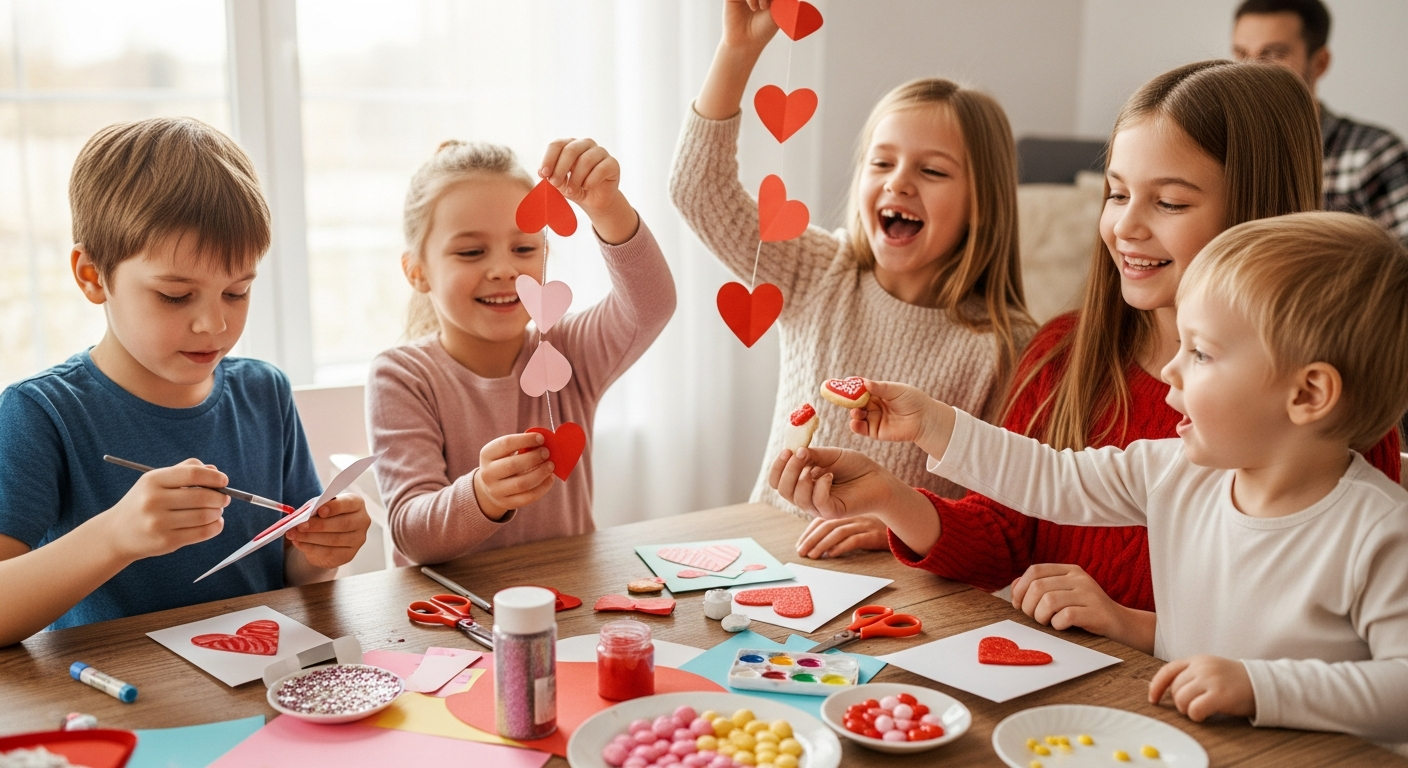
Table of Contents
- The Heart of Valentine's Day: Connection & Communication
- Crafting Connections: Hands-On Fun
- Sweet Science & Sensory Play
- Movement & Mindful Moments
- Family Food Fun: Cooking with Love
- Speech Blubs: Your Partner in Joyful Communication
- Conclusion
- FAQ
Valentine's Day often brings to mind images of red roses, boxes of chocolates, and romantic dinners. But for families with young children, this special day offers a beautiful opportunity to redefine love, making it all about connection, kindness, and joyful learning. Far beyond commercialism, Valentine's Day is a chance to express affection, practice empathy, and create cherished memories, all while boosting crucial developmental skills in your little ones. In this comprehensive guide, we'll explore a plethora of fun, engaging activities that will fill your home with love and laughter, encouraging communication, fine motor skills, and social-emotional growth. We'll delve into creative crafts, exciting science experiments, active games, and delicious kitchen adventures, showing how each moment can be a stepping stone in your child's communication journey. Our mission at Speech Blubs is to empower children to speak their minds and hearts, and we believe that everyday celebrations, like Valentine’s Day, are perfect canvases for this important work.

The Heart of Valentine's Day: Connection & Communication
At its core, Valentine’s Day is about expressing love. For children, this translates into understanding empathy, sharing affection, and learning to articulate their feelings. It’s an ideal time to shift focus from receiving gifts to the joy of giving and connecting with others. By engaging in thoughtful activities, children learn that love is an action, a feeling, and a powerful way to bond. This foundational understanding is vital for developing strong communication skills, as expressing and interpreting emotions are key components of effective language.
We know that every child's journey to confident communication is unique. That's why we champion "smart screen time" experiences that blend scientific principles with play. Our founders, who themselves navigated speech challenges as children, created Speech Blubs to be the immediate, effective, and joyful solution they wished they had. We aim to support the 1 in 4 children who need speech assistance, turning everyday moments into opportunities for growth. Through the activities below, we encourage parents to engage actively with their children, fostering real-world communication and connection, much like the interactive learning found in our app.
Fostering Kindness and Empathy
Valentine's Day is a wonderful occasion to teach children about kindness. Simple acts, like making a card for a grandparent or sharing a homemade treat with a neighbor, instill a sense of community and generosity. These experiences open doors for conversations about how others might feel, helping children develop empathy – a cornerstone of social communication. Talking about "who we are making this for" and "how they might feel" when they receive it helps children connect actions to emotions and provides rich vocabulary practice.
Crafting Connections: Hands-On Fun
Crafts are not just about making pretty things; they are powerful tools for developing fine motor skills, creativity, and language. The act of creating together provides countless opportunities for conversation, problem-solving, and emotional expression.

Heartfelt Cards and Artistic Explorations
- Wax Resist Watercolor Valentines: This classic activity is pure magic for kids. Draw designs with a white crayon on white cardstock (hearts, X’s, O’s, or simple words like “Love”). When your child paints over the paper with watercolors, the crayon design mysteriously appears! This sparks wonder and encourages descriptive language. "Look! The heart is hiding!" "The paint is red!" For a child working on early sounds, mimicking the "whoosh" of the brush or the "drip, drip, drip" of the water can be a fun way to practice.
- DIY Heart Stamps: Turn everyday items into art tools! Cut a toilet paper roll into a heart shape, or use foam hearts glued to clothespins. Dip them in paint and stamp away! This simple activity encourages repetition, color naming, and action words ("stamp," "press," "dip").
- Suncatchers with Tissue Paper: Cut contact paper into heart shapes and let your child stick colorful tissue paper squares onto it. When hung in a window, these catch the light beautifully. This activity is fantastic for fine motor development (peeling and sticking), color identification, and spatial vocabulary ("on top," "next to," "all over").
- Salt Dough Hearts: Making salt dough is a sensory experience in itself. Once made, children can roll it out, cut heart shapes, and decorate them before baking. This encourages following instructions, descriptive words ("squishy," "smooth," "rough"), and imaginative play. You can also press small toys into the dough to make impressions, asking, "What did we make?"
When children are engaged in these crafts, they're naturally prompted to communicate. A child whose 3-year-old is a 'late talker' and loves creative play might find the simple act of painting hearts a motivating way to practice "more" colors or "big" and "small" shapes. Parents can narrate actions ("You're cutting the paper," "Let's glue the heart") to model language. Our approach at Speech Blubs, which uses engaging video modeling where children imitate their peers, works on similar principles. By seeing and doing, children build their communication skills in a natural, joyful way.
Sweet Science & Sensory Play
Who knew Valentine's Day could be so educational? Science experiments and sensory bins provide rich, multi-sensory experiences that ignite curiosity and foster language development.
Explorations in Learning
- Dancing Candy Hearts: Combine candy hearts, baking soda, and vinegar for a fizzy, dancing spectacle! Children can observe the chemical reaction and describe what they see ("bubbling," "moving," "fizzing"). This is perfect for cause-and-effect learning and expanding descriptive vocabulary. "What's happening?" "The heart is jumping!"
- Candy Heart Oobleck: Mix cornstarch and water, then add candy hearts for a truly unique sensory experience. Oobleck behaves like both a solid and a liquid, leading to fascinating tactile exploration. Encourage your child to describe the texture ("slimy," "gooey," "hard," "soft") and their actions ("squishing," "poking," "dripping"). This type of open-ended play is excellent for fostering imaginative language and problem-solving skills.
- Grow Crystal Hearts: With borax, hot water, and pipe cleaners shaped into hearts, children can grow their own beautiful crystals overnight. This activity teaches patience, observation, and introduces new vocabulary related to science ("crystal," "dissolve," "solution"). Documenting the changes with simple drawings or words can further enhance language practice.
- Valentine's Sensory Bins: Fill a bin with colored rice, black beans, or even water. Add themed items like felt hearts, pom-poms, beads, silk flowers, and cookie cutters. Provide scoops, funnels, and tongs. Sensory bins are fantastic for imaginative play, fine motor skill development, and creating opportunities for descriptive language. A child might narrate their play, saying, "The red heart is hiding in the rice," or "I'm scooping the beans." This kind of engaging, hands-on play is exactly what we champion at Speech Blubs. It provides a screen-free alternative to passive viewing (like cartoons) and a powerful tool for family connection, where children learn by interacting with their environment and caregivers.
For a parent whose child is particularly curious and loves to investigate, these science and sensory activities offer a motivating context to practice new words. Imagine a child fascinated by fizzy hearts, practicing words like "pop," "more," and "wow," or describing the colors they see. These moments of wonder naturally encourage vocalization and inquiry. If you're wondering if your child could benefit from more targeted support in these areas, you can take our quick 3-minute preliminary screener to get a simple assessment and a free 7-day trial.
Movement & Mindful Moments
Incorporating movement and mindful activities not only burns energy but also builds crucial cognitive and social-emotional skills, all while enhancing communication.
Active Fun and Thoughtful Gestures
- Valentine's Candy Relay Race: Set up a simple obstacle course and have children move candy hearts from one point to another using spoons, chopsticks, or their hands. This promotes gross motor skills, following instructions, and encourages cheering on siblings, fostering cooperative language. "Go, go, go!" "My turn!"
- Valentine's Scavenger Hunt: Hide heart-shaped clues around the house, each leading to the next, with a special treat at the end. This is excellent for problem-solving, following directions, and practicing positional words ("under," "behind," "next to," "on top"). A child looking for a hidden clue will naturally ask, "Where is it?" or excitedly exclaim, "I found it!"
- Kindness Cards & "Be My Valentine" Jar: Encourage acts of kindness by having family members write down compliments or loving gestures for each other. Place them in a decorated jar and read one aloud each day in February. This activity promotes empathy, emotional vocabulary, and positive self-expression. Children learn to identify and articulate positive feelings about others, saying things like, "I love when you share with me!" or "You are so helpful."
- Love Posters & Compliment Boxes: Dedicate a large piece of paper as a "Love Poster" where family members can draw or write things they appreciate about each other. Alternatively, create individual "compliment boxes" for each person. This provides a tangible way for children to express affection and practice writing or drawing messages of love.
- Reading Valentine's Day Books: Snuggling up with a themed book is a cozy way to expand vocabulary and narrative skills. Choose books that explore different facets of love, friendship, and kindness. Discuss the characters' feelings and the story's message. "How does the mouse feel?" "Why is it important to be kind?"
These activities provide perfect contexts for a child to practice complex communication skills. For example, during a scavenger hunt, children use positional words like "under," "behind," and "next to," reinforcing comprehension and expressive language. The shared experience of reading a book provides opportunities to discuss emotions, predict outcomes, and connect stories to real-life feelings.
Family Food Fun: Cooking with Love
Getting messy in the kitchen is a fantastic way to bond and develop a wide range of skills. From following recipes to identifying ingredients, cooking is a multi-sensory learning experience that naturally sparks communication.
Culinary Creations and Conversations
- Heart-Shaped Pizzas or Pancakes: Let children help prepare meals by kneading dough, adding toppings, or flipping pancakes. Use heart-shaped cookie cutters to make them extra festive. This encourages following multi-step directions, naming ingredients ("cheese," "pepperoni," "flour," "strawberries"), and descriptive language about taste and texture ("yummy," "sweet," "spicy"). A child might practice requesting "more cheese" or excitedly pointing out "my heart pizza!"
- Valentine's Treat Board: Arrange a variety of red and pink treats – strawberries, raspberries, conversation hearts, pretzels dipped in colored chocolate – on a platter. Children can help wash fruit, arrange items, and talk about the colors, shapes, and flavors. This is great for categorizing, sharing, and expanding food vocabulary.
- Red-Themed Food Day: Dedicate Valentine's Day to eating only red or pink foods! Think strawberries, red peppers, tomato soup, raspberry yogurt, or even red velvet cupcakes. This makes meals an engaging game, encouraging color identification and discussions about healthy eating. "What red foods can we eat?" "This strawberry is so sweet!"
For a parent whose child is a picky eater, making heart-shaped foods or a fun "red food day" can introduce new vocabulary around food and make mealtime more enjoyable. Practicing words like "mix," "bake," "eat," and asking for "more" or "please" becomes a natural part of the process. These hands-on activities, where children learn by doing and interacting, are integral to our philosophy at Speech Blubs.
Speech Blubs: Your Partner in Joyful Communication
At Speech Blubs, we understand that supporting your child's speech and language development is a journey, and we're here to walk alongside you. Our app offers an immediate, effective, and joyful solution for children needing speech support, blending scientific principles with play to create one-of-a-kind "smart screen time" experiences. We believe that every child deserves to find their voice and speak their minds and hearts.
Our unique approach uses "video modeling," where children learn by watching and imitating their peers. This technique is incredibly powerful because it activates mirror neurons in the brain, making learning intuitive and engaging. Instead of passively watching cartoons, children actively participate, making sounds, practicing words, and building sentences. This method is backed by scientific principles, placing us in the top tier of speech apps worldwide, as detailed on our research page. We're proud to be rated highly on the MARS scale, which evaluates the quality of health apps.
We offer various programs designed to target specific communication skills, from early sounds and words to more complex sentences and social skills. Whether your child is working on articulation, expanding vocabulary, or understanding emotions, Speech Blubs provides a motivating and supportive environment. Many parents have seen remarkable progress, and you can see what other parents are saying about their child's success with Speech Blubs.
Discovering the Value of Speech Blubs
We believe in transparency and providing exceptional value to families. When you choose Speech Blubs, you're investing in your child's future, fostering confidence, reducing frustration, and creating joyful learning moments.
Our subscription plans are designed to fit your family's needs:
- Monthly Plan: Priced at $14.99 per month. This plan offers access to our core content and helps you start your journey.
- Yearly Plan: Our best value, priced at $59.99 per year. This breaks down to just $4.99 per month, allowing you to save 66% compared to the monthly option!
The Yearly Plan is truly the superior choice, not just for its significant cost savings, but also for the exclusive, high-value features it includes:
- A 7-day free trial: Experience the full power of Speech Blubs before committing.
- The extra Reading Blubs app: Enhance your child's literacy skills alongside their speech development.
- Early access to new updates: Be the first to enjoy new features and content.
- 24-hour support response time: Get prompt assistance whenever you need it.
The Monthly plan, while flexible, does not include these additional benefits, such as the free trial, Reading Blubs, early access, or priority support. We highly encourage families to choose the Yearly plan to unlock the full suite of features and ensure your child gets the most comprehensive support from our tools.
Ready to see the difference Speech Blubs can make in your child's communication journey? Start your 7-day free trial today and explore a world where learning to speak is a joyful adventure. You can Download Speech Blubs on the App Store or Download Speech Blubs on Google Play to get started!
Conclusion
Valentine's Day offers a unique canvas to paint a picture of love, connection, and growth with your children. From the simple joy of crafting a heartfelt card to the exciting discoveries of a science experiment, each activity is an opportunity to foster communication, build confidence, and create lasting memories. These moments of shared experience naturally encourage language development, fine motor skills, and emotional intelligence.
By actively engaging with your children in these fun activities, you're not just celebrating a holiday; you're building a foundation for their overall development. And when you're ready to amplify those learning moments, Speech Blubs is here to support you with our unique, scientifically-backed approach to speech and language therapy. We empower children to find their voice through engaging "smart screen time" that complements your family's loving interactions.
We invite you to make this Valentine's Day truly special, filled with joyful learning and heartfelt connections. Sign up today and begin your 7-day free trial by selecting our Yearly plan, which unlocks the best value and a full suite of features, including the Reading Blubs app, early access to new updates, and 24-hour support. Together, let's empower your child to speak their minds and hearts!
FAQ
Q1: Why are hands-on activities important for speech development?
A1: Hands-on activities are crucial for speech development because they engage multiple senses and provide concrete experiences for learning new vocabulary and concepts. When children actively participate, they have more opportunities to use descriptive language, follow instructions, ask questions, and narrate their actions, which strengthens their communication skills in a natural and meaningful context.
Q2: How can I encourage my child to talk more during Valentine's activities?
A2: To encourage more talking, narrate what you and your child are doing, ask open-ended questions (e.g., "What colors are you using?" or "How does that feel?"), and leave pauses for your child to respond. Model new words and phrases, sing songs, and make silly sounds related to the activity. Remember to follow your child's lead and celebrate every attempt at communication.
Q3: Is Speech Blubs suitable for children of all ages?
A3: Speech Blubs is designed for children primarily between the ages of 1 and 8, offering programs that cater to various stages of speech and language development, from first sounds and words to more complex sentences and social communication. Our video modeling approach is highly engaging for young learners, and the app continuously adds new content to grow with your child.
Q4: What's the best way to get started with Speech Blubs for Valentine's Day fun?
A4: The best way to get started with Speech Blubs is to choose our Yearly plan, which includes a 7-day free trial. This allows you to explore all our features, including the bonus Reading Blubs app, before committing. Simply Download Speech Blubs on the App Store or Download Speech Blubs on Google Play, select the Yearly plan to activate your free trial, and begin your child's joyful communication journey.
About the author