
Joyful Valentines Craft Toddler Activities for Home
 By Speech Blubs Team•Feb 23, 2026•14 min.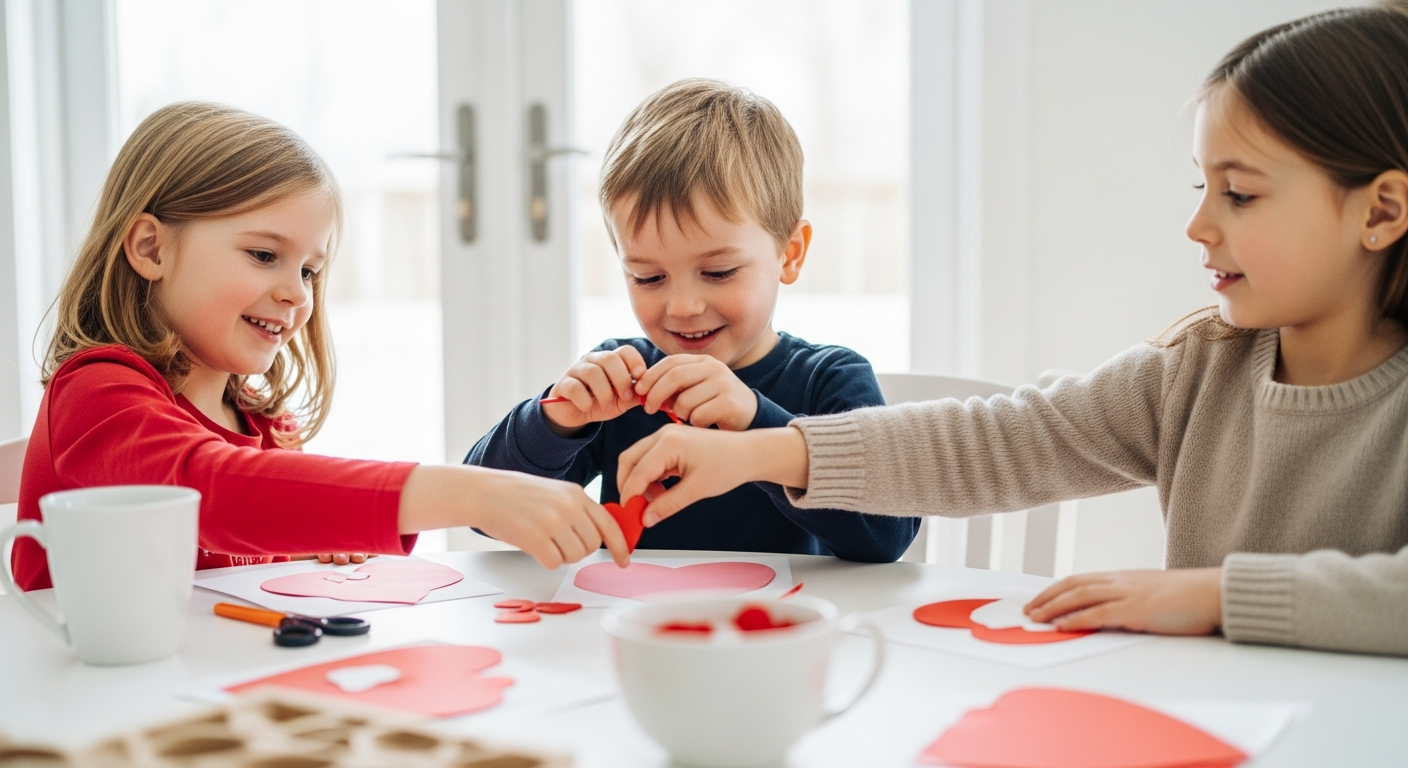
Table of Contents
- Introduction
- Why Crafting Matters for Toddler Speech and Development
- The Speech Blubs Methodology: Learning Through Play
- Top 10 Valentines Craft Toddler Ideas to Try at Home
- Sensory Play and Communication
- Building Confidence and Reducing Frustration
- Choosing the Best Plan for Your Child’s Success
- Practical Scenarios: Connecting Speech Blubs to Real Life
- Smart Screen Time vs. Passive Viewing
- FAQs About Toddler Valentine’s Crafts and Speech
- Conclusion
Introduction
Did you know that for a toddler, a simple heart shape isn't just a symbol of love, but a complex geometric challenge that helps build essential visual-spatial skills? When your little one picks up a red crayon or tries to stick a piece of tissue paper onto a card, they aren't just making a mess; they are engaging in a sophisticated developmental workout. Valentine's Day is a wonderful time to slow down and connect with your child through creative play. However, for many parents, the holiday can also bring a bit of anxiety. If your child is struggling with speech or hitting developmental milestones later than their peers, a "simple" craft can sometimes feel like another reminder of what they haven't mastered yet.
At Speech Blubs, we believe every child deserves to "speak their minds and hearts." Our mission is rooted in the personal experiences of our founders, who navigated speech challenges themselves and wanted to create the joyful, effective tool they wish they’d had. We understand that about 1 in 4 children need speech support, and we are here to provide an immediate solution that blends scientific principles with the magic of play. In this post, we will explore a variety of engaging valentines craft toddler ideas that are designed to boost communication, build fine motor skills, and—most importantly—create happy memories for your family. We will cover low-mess art projects, sensory bins, and ways to integrate language-building techniques into your holiday fun. Our goal is to show you that with the right approach and a few "smart screen time" tools, crafting can be a powerful gateway to your child’s next big breakthrough.

Why Crafting Matters for Toddler Speech and Development
Crafting is far more than just a way to fill an afternoon. It is a multi-sensory experience that lays the groundwork for complex communication. When we engage in a valentines craft toddler project, we are asking our children to follow directions, identify colors, and express their needs. This "joint attention"—the shared focus of two people on an object—is one of the most critical precursors to language development.
When you sit down to make a heart-shaped card, you are naturally modeling language. You might say, "I see the red paint," or "Can you push the button?" These simple phrases, paired with a physical action, help toddlers map words to meanings. Furthermore, the fine motor skills required for crafting—like grasping a paintbrush or tearing paper—are closely linked to the motor skills needed for speech. The same brain regions that control the hands are often involved in the production of language.
By incorporating activities that require precision and coordination, we are helping our children's brains build the pathways necessary for clearer articulation. If you are curious about how your child is progressing in these areas, you can always take our quick 3-minute preliminary screener. It involves just 9 simple questions and provides an assessment and next-steps plan to help you support your child's journey.
The Speech Blubs Methodology: Learning Through Play
At the heart of everything we do is a commitment to "smart screen time." We know that passive viewing, like watching cartoons, doesn't offer the same developmental benefits as interactive play. That’s why Speech Blubs utilizes a unique "video modeling" methodology. In our app, children learn by watching and imitating their peers. When a toddler sees another child making a specific sound or completing a task, it activates their mirror neurons—the brain's way of learning through observation.
Our approach is backed by science and places us in the top tier of speech apps worldwide. You can read more about the research behind our method to see how we’ve helped thousands of families. Just as your child might mimic your hand movements during a craft session, they mimic the children in our app to practice vocalizations and mouth movements. This peer-led model reduces the pressure a child might feel when an adult asks them to "say this," making the learning process joyful and stress-free.

Top 10 Valentines Craft Toddler Ideas to Try at Home
Ready to get started? These crafts are designed to be accessible, fun, and rich with opportunities for language modeling.
1. Heart Scrape Art
This is a fantastic "process art" activity, meaning the focus is on the doing, not the final result.
- Materials: White cardstock, washable paint, a piece of cardboard.
- The Process: Draw a large heart on the cardstock. Place small "globs" of red, pink, and white paint inside the heart. Give your toddler the cardboard strip and show them how to "scrape" the paint across the paper.
- Speech Tip: Use action words like "push," "pull," "slide," and "more." If your child is using Speech Blubs, this is a great time to visit the "Colors" section of the app to practice the word "red."
2. Cotton Ball Heart Dabbing
For children who are still developing their pincer grasp, cotton balls are a great tool.
- Materials: Clothespins, cotton balls, paint, paper.
- The Process: Clip a cotton ball into a clothespin to create a "brush." Let your child dip it in paint and dab it onto a heart template.
- Speech Tip: Focus on the "d-d-d" sound in "dab." Encourage your child to say "pop" or "dot" every time they touch the paper.
3. Mess-Free Finger Painting
Perfect for parents who want to avoid a massive cleanup!
- Materials: A Ziploc bag, paint, a heart cut-out, tape.
- The Process: Place a paper heart inside a Ziploc bag and squirt a little paint on top. Seal the bag (tape it shut for extra security) and tape it to a table or window. Your toddler can "paint" by squishing the paint around through the plastic.
- Speech Tip: Talk about the texture. Is it "squishy"? Is it "cold"? This builds descriptive vocabulary.
4. Heart Tear Art
Tearing paper is an excellent way to build hand strength.
- Materials: Construction paper scraps, glue stick, a heart outline.
- The Process: Let your toddler rip up pieces of red and pink paper. Then, help them apply glue to the heart and stick the pieces down.
- Speech Tip: Model the word "rip" every time a piece of paper is torn. This repetitive, rhythmic language is very helpful for late talkers.
5. Toilet Paper Roll "Love Bugs"
Transform everyday items into cute characters.
- Materials: Cardboard tubes, googly eyes, markers, paper wings.
- The Process: Let your child decorate a tube with markers or stickers. Glue on heart-shaped wings and googly eyes.
- Speech Tip: Practice body parts! "Where are the bug’s eyes?" "Where are the wings?" For a parent whose 3-year-old "late talker" loves animals, the "Animal Kingdom" section in the Speech Blubs app offers a fun, motivating way to practice "bzzzz" sounds alongside this craft.
6. Coffee Filter Hearts
Watch colors blend and move in this simple science-meets-art project.
- Materials: Coffee filters cut into hearts, markers, a water dropper.
- The Process: Let your toddler color the filter with markers. Then, use a dropper to add drops of water and watch the colors bleed together.
- Speech Tip: Use "ready... set... go!" before dropping the water to encourage your child to anticipate and potentially fill in the word "go."
7. Sticker Heart Mosaic
Stickers are a toddler's best friend and great for precision.
- Materials: Heart stickers, a piece of paper.
- The Process: Draw a large heart and have your child fill it in with stickers.
- Speech Tip: Use the word "on" repeatedly. "Sticker on!" "Put it on!"
8. Handprint "Bee My Valentine"
Personalized gifts are always a hit with grandparents.
- Materials: Yellow paper plate, black marker, white paper for handprints.
- The Process: Color the plate yellow and black. Trace your child’s hands on white paper, cut them out, and attach them as wings.
- Speech Tip: Tracing hands is a sensory experience. Talk about the "fingers" and the "tickle" of the pencil.
9. Tissue Paper Wreath
This creates a beautiful decoration for your front door.
- Materials: A cardboard ring (cut from a cereal box), tissue paper squares, glue.
- The Process: Have your child crinkle up tissue paper and glue it onto the ring.
- Speech Tip: Focus on the "c-c-c" sound in "crinkle."
10. Valentine Sensory Bin
Not all crafts need to end in a product; sometimes the process is the point.
- Materials: Dried rice (dyed red with food coloring), scoops, heart-shaped containers.
- The Process: Fill a bin with the rice and hide small heart-themed toys inside.
- Speech Tip: Use verbs like "dig," "pour," and "hide." This is a great way to expand on the "Smart Timer" activities in the app, which encourage focused play sessions.
Sensory Play and Communication
Sensory play is a vital part of any valentines craft toddler experience. When children explore different textures—the stickiness of glue, the softness of cotton, the graininess of rice—they are building a library of sensory information that they will eventually label with words.
For many children with sensory processing differences or speech delays, these activities provide a safe way to explore their environment. At Speech Blubs, we advocate for "co-play." This means sitting on the floor with your child, getting your hands messy alongside them, and following their lead. If they want to dump the rice instead of scooping it, go with it! Use that moment to say "Uh-oh, it fell!" or "Dump!" Meeting them where they are is the quickest way to build confidence and trust. To see how other parents have navigated these moments and found success, you can read our collection of parent testimonials.
Building Confidence and Reducing Frustration
It is important to remember that crafting with a toddler isn't about perfection. It’s about the journey. We want to foster a love for communication and self-expression. If your child gets frustrated because they can't get a sticker off the sheet, that’s an opportunity for "functional communication." Encourage them to use a sign, a gesture, or a word to ask for "help."
We never want to suggest that using an app or doing a craft will result in overnight public speeches. Instead, we focus on the foundational skills: eye contact, imitation, turn-taking, and confidence. Frame your time together as a joyful family learning moment. Speech Blubs is a powerful supplement to your child's overall development plan and can be a wonderful companion to professional therapy. By creating a low-pressure environment at home, you are giving your child the space they need to grow at their own pace.
Choosing the Best Plan for Your Child’s Success
We are committed to being a transparent and effective partner in your child's development. To help you get started, we offer two clear pricing options designed to fit different family needs.
- Monthly Plan: For $14.99 per month, you get full access to our library of over 1,500 activities and the video modeling tools that have helped over 5 million families.
- Yearly Plan (Best Value): Our yearly plan is the clear choice for families looking for long-term support. At $59.99 per year, it breaks down to just $4.99 per month—a 66% savings compared to the monthly plan.
The Yearly plan isn't just more affordable; it includes exclusive, high-value features that aren't available on the monthly plan:
- A 7-day free trial: Experience the full power of Speech Blubs with no upfront cost.
- Reading Blubs: You get access to our companion app, Reading Blubs, which focuses on early literacy and phonics.
- Priority Support: Enjoy a 24-hour support response time and early access to all new updates and features.
We encourage you to choose the Yearly plan to ensure you have all the tools you need to support your child’s speech journey throughout the entire year.
Practical Scenarios: Connecting Speech Blubs to Real Life
Let’s look at how a simple valentines craft toddler activity can be paired with our app for maximum impact.
Imagine you are working on the "Heart Scrape Art" mentioned earlier. Your child is using their hands to move the cardboard. Later that day, you can open the "Move Around" section of the Speech Blubs app. As the children on the screen show your child how to wave their arms or touch their nose, your toddler is already "primed" for movement because of the crafting they did earlier.
Or, consider a child who is particularly fond of the "Yummy Time" section in the app. You could create a "Valentine’s Cookie Decorating" craft (using paper or real cookies!). As your child practices saying "apple" or "banana" in the app, you can translate that interest into choosing red "strawberries" or pink "icing" for their craft. This bridge between digital learning and physical play is where the most significant progress happens.
Smart Screen Time vs. Passive Viewing
We often hear from parents who are worried about screen time. We share that concern! That’s why we differentiate between "passive" and "smart" screen time. Passive screen time is when a child zones out in front of a cartoon. Smart screen time, like Speech Blubs, requires the child to be an active participant. They are prompted to speak, move, and interact.
Our app serves as a screen-free alternative to passive viewing because it encourages "off-screen" behavior. After a session with Speech Blubs, children are often more vocal and more interested in interacting with the world around them. It’s not about keeping them glued to a device; it’s about using the device as a springboard for real-world connection.
FAQs About Toddler Valentine’s Crafts and Speech
1. What if my toddler just wants to eat the craft supplies?
This is very common! Always use non-toxic, age-appropriate materials. If your child is in an oral-exploration phase, stick to edible-safe "crafts" like decorating heart-shaped pancakes or using yogurt as "paint." This still builds those important fine motor and language skills without the worry.
2. My child has a short attention span. How can I keep them engaged?
Keep activities short and sweet—5 to 10 minutes is plenty for a toddler! Follow their lead. If they only want to put one sticker on a card and then run away, that’s okay. You can always come back to it later. The goal is a positive association with the activity, not a finished masterpiece.
3. How do I know if these crafts are actually helping my child's speech?
Look for "micro-wins." Is your child making more eye contact? Are they attempting to mimic a sound you made? Are they pointing to a color when you name it? These are all signs of progress. Using Speech Blubs alongside these activities provides a consistent way to track these milestones through our in-app progress reports.
4. Can I use Speech Blubs if my child is already in professional speech therapy?
Absolutely! We frame the app as a powerful supplement to professional therapy. It’s a way to keep the momentum going between sessions and provide your child with extra practice in a fun, low-pressure way. Many speech-language pathologists actually recommend Speech Blubs to their clients.
Conclusion
Valentine's Day is about celebrating love, and there is no greater love than the bond between a parent and a child. By engaging in a valentines craft toddler project, you are doing so much more than making a card; you are building a bridge of communication, fostering confidence, and creating a world where your child feels heard and understood. Whether you are scraping paint, tearing paper, or "bzzzing" like a love bug, every moment spent together is a step forward.
We invite you to make Speech Blubs a part of your family’s journey. Our yearly plan offers the best value, providing a full suite of tools to empower your child to speak their mind and heart. You’ll get a 7-day free trial, the bonus Reading Blubs app, and the peace of mind that comes with science-backed, peer-led learning.
Ready to see your child's face light up with the joy of communication? Download Speech Blubs on the App Store or get it on Google Play today. Don’t forget to select the Yearly plan to unlock your free trial and all our premium features. Let's make this Valentine's Day the start of something beautiful!
About the author