
Joyful Voices: Easy Christmas Ornament Kid Crafts
 By Speech Blubs Team•Dec 22, 2025•18 min.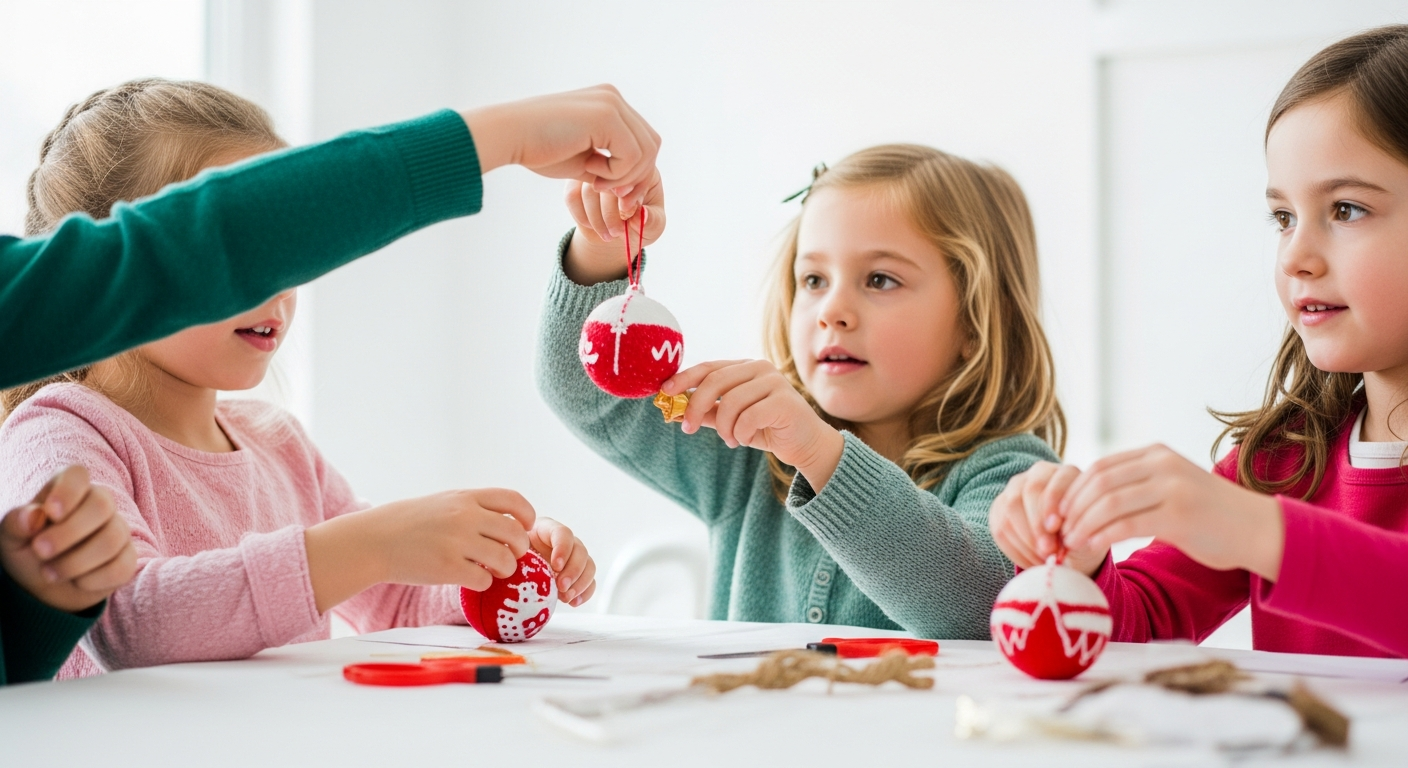
Table of Contents
- Introduction
- The Developmental Magic of Crafting Christmas Ornaments
- Crafting as a Catalyst for Communication and Language Development
- A Sleigh-Full of Easy Christmas Ornament Kid Crafts
- Making Crafting Extra Speech-Friendly
- Safety First: Crafting with Care
- Preserving and Gifting These Tiny Treasures
- Speech Blubs: Your Partner in Communication Development
- Conclusion
- Frequently Asked Questions
The festive season often evokes cherished memories: the scent of pine, the twinkle of lights, and the joyful anticipation in a child's eyes. Among these treasured traditions, crafting handmade Christmas ornaments stands out as a unique opportunity. It's more than just decorating the tree; it's about creating lasting family heirlooms, fostering creativity, and — perhaps surprisingly — nurturing crucial developmental skills, especially communication. Imagine your little one proudly pointing to their sparkly, slightly lopsided creation, exclaiming, "I made this!"—a moment brimming with confidence and the power of expression. This blog post will guide you through a sleigh-full of easy, engaging Christmas ornament crafts perfect for kids of all ages, highlighting how these activities can boost fine motor skills, cognitive development, and, most importantly, provide rich opportunities for speech and language growth. We’ll also explore how these hands-on moments beautifully complement the communication journey we champion at Speech Blubs, helping children speak their minds and hearts.

Introduction
As winter's chill settles in and holiday lights begin to sparkle, families worldwide look for ways to embrace the spirit of the season. For many, this means diving into the delightful world of crafting. Christmas ornament kid crafts offer a unique blend of creative expression and memory-making, transforming simple materials into treasured keepsakes. Yet, beyond the glitter and glue, these activities are powerful catalysts for child development. They provide a natural, low-pressure environment for enhancing fine motor skills, problem-solving abilities, and, critically, speech and language development. Engaging in a craft together creates a shared experience, sparking conversations, encouraging descriptive language, and fostering the vital back-and-forth of communication. We’ll delve into a collection of kid-friendly Christmas ornament ideas that are not only fun and easy to make but also packed with opportunities to boost your child's confidence and communication skills, demonstrating how these simple joys align with our mission to empower children's voices.
The Developmental Magic of Crafting Christmas Ornaments
Crafting is far more than just a pastime; it's a multi-faceted developmental powerhouse, especially for young children. When little hands get busy with materials for a Christmas ornament, a symphony of learning unfolds. From the moment they pick up a crayon to the proud display of their finished piece, children are engaging numerous cognitive and physical processes.
Nurturing Fine Motor Skills and Hand-Eye Coordination
One of the most immediate benefits of crafting is the development of fine motor skills. Activities like cutting paper, squeezing glue, threading beads, or carefully painting a small surface all require precise movements of tiny muscles in the hands and fingers. These skills are fundamental for tasks such as writing, dressing, and self-feeding. As your child focuses on attaching a piece of yarn to a cardboard star or carefully placing a sequin, their hand-eye coordination is also getting a robust workout. This precision is essential for everyday independence and academic readiness.

Boosting Cognitive Development and Problem-Solving
Crafting involves a series of steps and decisions, making it an excellent exercise for cognitive development. Children learn to follow instructions (both verbal and visual), sequence actions, and understand cause and effect ("If I put too much glue, it gets soggy!"). They also engage in creative problem-solving: "How can I make this ribbon stay?" or "What color should I use next to make it really pop?" These small challenges build critical thinking skills and foster a sense of accomplishment as they navigate the creative process.
Fostering Creativity and Self-Expression
Every child's ornament will be unique, a testament to their individual creativity and personality. Crafting provides a safe space for self-expression, allowing children to choose colors, shapes, and textures that appeal to them. This freedom cultivates imagination and helps children understand that their ideas are valuable and can be brought to life. It’s a wonderful way for them to explore their identity and develop a sense of aesthetic appreciation.
Emotional Regulation and Patience
Crafting requires patience and focus. Children learn to persevere through challenges, waiting for glue to dry or carefully completing a repetitive task. These moments teach valuable lessons in emotional regulation, helping them manage frustration and celebrate small victories. The pride in completing a handmade ornament, especially one that might have taken a little extra effort, reinforces resilience and self-esteem.
Crafting as a Catalyst for Communication and Language Development
Perhaps one of the most exciting aspects of crafting with children, especially for us at Speech Blubs, is its incredible potential for speech and language development. Every snip, stick, and sparkle offers a natural prompt for communication.
Rich Vocabulary Expansion
As you craft together, you naturally introduce new words. Think about the descriptive language you can use: "sticky glue," "sparkly glitter," "bumpy pipe cleaners," "soft felt," "shiny beads," "jagged edges," "smooth surface." You can discuss actions: "cut," "glue," "paint," "thread," "fold," "press," "twist." You can talk about colors, shapes, and sizes. This immersive vocabulary exposure in a meaningful context helps children grasp new words and integrate them into their active language.
Encouraging Conversational Turn-Taking
Crafting is an inherently interactive activity, providing countless opportunities for conversational turn-taking. "What color should we use next?" "Can you pass me the blue crayon?" "My turn to glue, then your turn to sprinkle the glitter!" These exchanges teach the rhythm of conversation, the importance of listening, and how to express desires and ideas effectively. For a parent whose child is just starting to string words together, these simple back-and-forth interactions are golden.
Developing Sequencing and Direction Following
Most crafts involve a series of steps. Verbally guiding your child through these steps—"First, we cut the circle. Next, we put glue on the edges. Then, we sprinkle the glitter"—helps them develop sequencing skills. This is a crucial pre-reading and language comprehension ability. It also strengthens their capacity to follow multi-step directions, a skill vital in school and daily life.
Articulation and Sound Practice
Specific craft actions and materials can be excellent prompts for sound practice. Making a snip-snip sound with scissors, describing a smooth surface, or saying blob as glue comes out. For a child who might be working on specific sounds, you can subtly emphasize these words. For example, if your child is working on the "s" sound, you can say, "Let's make this star so sparkly!" If you're wondering about your child's speech development, remember you can always take our quick 3-minute preliminary screener for a simple assessment and a free 7-day trial.
Connecting to Our Mission at Speech Blubs
At Speech Blubs, our mission is to empower children to "speak their minds and hearts." We believe that communication is the foundation of confidence, connection, and joy. Our founders grew up with speech challenges themselves and created the tool they wished they had—an immediate, effective, and joyful solution for the 1 in 4 children who need speech support. Just as crafting creates a fun, low-pressure environment for communication, our app provides a "smart screen time" alternative to passive viewing. Through our unique video modeling methodology, children learn by watching and imitating their peers, much like they learn by watching and imitating you during a craft. Both activities foster a love for communication, build confidence, and create invaluable family learning moments. Explore the science behind Speech Blubs to see how our approach is backed by research and rated highly by experts.
A Sleigh-Full of Easy Christmas Ornament Kid Crafts
Now, let's dive into some fantastic, easy-to-make Christmas ornament crafts that are perfect for kids and packed with communication-boosting opportunities!
1. Classic Salt Dough Ornaments
Salt dough is a timeless classic for a reason: it's incredibly versatile, uses simple ingredients, and is wonderfully tactile.
- Materials: 1 cup flour, ½ cup salt, ½ cup water, cookie cutters, straw, paint, glitter, string/ribbon.
- Steps:
- Mix flour, salt, and water to form a dough. Let your child help measure and mix!
- Roll out the dough (great for bilateral coordination).
- Use cookie cutters to make festive shapes like stars, trees, and bells. "What shape is this?" "Can you find the star cookie cutter?"
- Poke a hole at the top of each ornament with a straw for hanging.
- Bake at 250°F (120°C) for 2-3 hours until hard, or air dry for 24-48 hours.
- Once cooled, paint and decorate! "What color paint do you want for the star?" "Let's make it sparkle with glitter!"
- Thread with string or ribbon.
- Language Focus: Action verbs (mix, roll, cut, poke, paint, thread), shape names, color names, descriptive adjectives (hard, soft, wet, dry, sparkly).
2. Colorful Pipe Cleaner Creations
Pipe cleaners are fantastic for little hands because they are easy to bend, twist, and manipulate, offering instant gratification.
- Materials: Assorted pipe cleaners, beads (optional).
- Steps:
- Show your child how to bend pipe cleaners into shapes like candy canes, snowflakes, or small wreaths. "Can you make a circle?" "Let's twist the red and white to make a candy cane."
- For snowflakes, twist several pipe cleaners together in the center and then shape the ends.
- Children can also thread beads onto pipe cleaners for added decoration (excellent for fine motor skills). "Let's put a round bead on the green pipe cleaner."
- Loop one end to create a hanger.
- Language Focus: Directional words (bend, twist, loop), colors, descriptive adjectives (fuzzy, soft, shiny), counting beads.
3. Paper Plate Santa/Reindeer Ornaments
These crafts use simple household items and are wonderful for younger children to practice cutting, gluing, and decorating.
- Materials: Small paper plates, cotton balls, googly eyes, red/brown construction paper, glue, markers, ribbon.
- Steps (Santa):
- Cut the paper plate in half. One half is Santa's face.
- Glue cotton balls along the curved edge for his beard and a small bit for his hat's pom-pom. "Stick the fluffy cotton for Santa's white beard."
- Cut a red triangle for his hat and glue it on.
- Draw a face with markers and glue on googly eyes. "Draw a happy mouth for Santa!"
- Attach a ribbon loop to the back.
- Steps (Reindeer):
- Paint or color a full paper plate brown.
- Glue on googly eyes and a red pom-pom for Rudolph's nose. "Find the red nose!"
- Cut out brown construction paper antlers and glue them to the top.
- Attach a ribbon loop.
- Language Focus: Body parts (eyes, nose, beard, antlers), colors, size (small, big), emotions (happy), action verbs (cut, glue, paint, draw).
4. Pinecone Critter Ornaments
Bringing nature indoors for crafting is a fantastic sensory experience.
- Materials: Pinecones, googly eyes, felt scraps, pom-poms, glue, string/ribbon.
- Steps:
- Collect pinecones (a great outdoor adventure!). "Let's find spiky pinecones!"
- Glue googly eyes onto the pinecone.
- Use felt scraps for wings, ears, or hats. "What color felt do you want for the ears?"
- Add a pom-pom nose or hat.
- Tie a string around the top for hanging.
- Language Focus: Sensory words (spiky, rough, soft), animal names (owl, bird, squirrel), colors, action verbs (find, glue, tie). This is a great craft for encouraging descriptive language about textures and shapes.
5. Dried Orange Slice Ornaments
Simple, fragrant, and beautiful, these ornaments are a multi-sensory delight.
- Materials: Oranges (or other citrus), baking sheet, parchment paper, string/ribbon, optional: cloves, cinnamon sticks.
- Steps:
- Adult supervision: Slice oranges about ¼ inch thick.
- Place slices on a parchment-lined baking sheet.
- Bake at 200°F (90°C) for 2-3 hours, flipping occasionally, until dried and translucent. (Warning: this step makes your house smell amazing!) "Wow, it smells so good!"
- Once cooled, children can gently press cloves into the rind or tie cinnamon sticks to the slices with string. "Can you press a spicy clove into the orange?"
- Thread a ribbon through the center or poke a small hole for hanging.
- Language Focus: Sensory words (fragrant, warm, sticky, translucent), action verbs (slice, bake, flip, press, thread), shapes (round, circle).
6. Handprint/Footprint Ornaments
These are truly precious keepsakes that capture your child's growth.
- Materials: Salt dough (as above), or non-toxic air-dry clay, paint, glitter, ribbon.
- Steps:
- Roll out dough or clay.
- Gently press your child's hand or foot into the material to make an impression. "Press your little hand! Good job!"
- Cut around the impression to make a shape (circle, heart).
- Poke a hole for hanging.
- Bake/dry as per salt dough instructions.
- Decorate with paint, glitter, or write your child's name and the year on the back. "What color paint for your handprint?"
- Language Focus: Body parts (hand, foot, fingers, toes), size (big, small), descriptive words (smooth, bumpy), counting fingers/toes. This is a wonderful opportunity to discuss the passage of time and creating memories.
Making Crafting Extra Speech-Friendly
To maximize the language-learning potential of your crafting sessions, consider these tips:
- Simple, Clear Instructions: Break down complex steps into smaller, manageable chunks. Use visual cues and model the actions yourself. "First, cut the paper. Then, glue it here."
- Encourage Descriptive Language: Ask open-ended questions like, "Tell me about your ornament," or "What colors did you choose and why?" Prompt them to describe textures, shapes, and their creative process.
- Model New Vocabulary: Consistently use new words related to the craft and gently encourage your child to repeat them.
- Repetitive Phrases: Use recurring phrases like "more glue," "my turn," "your turn," "all done," which are great for early communicators.
- Turn-Taking: Ensure equal opportunities for both you and your child to participate and contribute to the conversation. This mirrors the social reciprocity essential for effective communication.
- Follow Their Lead: If your child takes the craft in an unexpected direction, embrace it! Their engagement is key, and their unique choices provide new avenues for conversation.
For parents concerned about their child’s communication, remember that while crafting is incredibly beneficial, some children may need additional support. That's where Speech Blubs comes in. Our app is designed to provide engaging and effective speech practice. For instance, if your child is working on animal sounds, the "Animal Kingdom" section in Speech Blubs offers a fun, motivating way to practice "moo" and "baa" sounds, which can then be reinforced during craft time when decorating an animal ornament. You can download Speech Blubs on the App Store or get Speech Blubs on Google Play to explore how our "smart screen time" can be a powerful complement to your child's development.
Safety First: Crafting with Care
Always prioritize safety when crafting with children.
- Age-Appropriate Materials: Ensure all materials are non-toxic and suitable for your child's age. Avoid small parts that could be choking hazards for toddlers.
- Supervision: Never leave young children unsupervised with craft supplies, especially scissors, hot glue guns (for older kids and adult use only), or small beads.
- Clean-Up: Teach children the importance of cleaning up after crafting, helping them learn responsibility and organization.
Preserving and Gifting These Tiny Treasures
Once your beautiful ornaments are complete, the fun isn't over!
- Memory Lane: As you hang each ornament on the tree, take a moment to reminisce. "Remember when we made this sparkly star? That was so much fun!" This reinforces memory and narrative skills.
- Thoughtful Gifts: Handmade ornaments make incredibly thoughtful gifts for grandparents, teachers, or friends. This teaches children about giving and sharing their creations.
- Storage: Carefully store your handmade ornaments in tissue paper or individual boxes to preserve them for years to come, ensuring they become cherished family heirlooms.
Speech Blubs: Your Partner in Communication Development
At Speech Blubs, we understand that every child's communication journey is unique. Our platform was born from personal experiences, created by founders who navigated their own speech challenges and envisioned a tool that blends scientific principles with joyful play. We are committed to providing an immediate, effective, and joyful solution for families seeking to support their child's speech and language development.
While crafting provides wonderful opportunities for interaction and organic language learning, Speech Blubs offers a structured yet playful environment to target specific communication skills. Our app utilizes a unique "video modeling" methodology, where children learn by watching and imitating their peers, fostering skills from articulation to social communication. This approach has been scientifically validated and earned us a high rating on the MARS scale, placing us among the top-tier speech apps globally. Read what other parents are saying about their children’s successes with Speech Blubs.
We want to make this valuable resource accessible to all families. When you decide to join our Speech Blubs family, we offer flexible plans to suit your needs:
- Monthly Plan: For $14.99 per month, you get access to our comprehensive speech therapy app.
- Yearly Plan: Our best value at just $59.99 per year, which breaks down to an incredible $4.99 per month! This plan allows you to save 66% compared to the monthly option and unlock a host of exclusive, high-value features.
With the Yearly Plan, you don't just save money; you invest in a complete language learning experience. It includes a 7-day free trial so you can experience the full benefits before committing. You also get access to the extra Reading Blubs app, providing additional literacy support. Plus, Yearly subscribers receive early access to new updates and a dedicated 24-hour support response time, ensuring you always have the best and most current resources at your fingertips. The Monthly plan, while an option, does not include these fantastic benefits. We highly encourage you to choose the Yearly plan to get the free trial and the full suite of features that will empower your child’s communication journey.
Ready to see the difference Speech Blubs can make? Start your 7-day free trial today and discover a world where every child can speak their mind and hearts with confidence.
Conclusion
Christmas ornament kid crafts offer a truly special way to celebrate the holiday season, weaving together threads of creativity, family tradition, and invaluable developmental growth. From the joyful mess of glitter and glue to the proud display of a handmade treasure, these activities are more than just pretty decorations; they are catalysts for fine motor skill development, cognitive processing, emotional regulation, and, significantly, communication and language acquisition. Engaging in these crafts creates a vibrant environment for conversation, vocabulary expansion, and practicing crucial speech skills.
As you embark on your festive crafting adventures, remember that every shared moment of creation is an opportunity to connect, communicate, and empower your child's voice. These hands-on experiences beautifully complement the comprehensive support offered by Speech Blubs, an app dedicated to helping children "speak their minds and hearts" through engaging, scientifically-backed methods. We are committed to providing families with joyful and effective tools for speech development, turning "screen time" into "smart screen time" that sparks communication.
This holiday season, give the gift of communication. Encourage your child’s creativity with festive crafts, and reinforce their speech development with the support of Speech Blubs. We invite you to experience the full potential of our app and join our mission to help every child find their voice. Don't miss out on the incredible value and exclusive features of our Yearly plan. Create your Speech Blubs account today and select the Yearly plan to unlock your 7-day free trial, the Reading Blubs app, and continuous support, setting the stage for a season filled with joyful communication.
Frequently Asked Questions
Q1: What age group are these Christmas ornament crafts best suited for?
A1: Most of these crafts are adaptable for various age groups, from toddlers (with significant adult supervision for cutting and small parts) to elementary school children. Simple crafts like salt dough, paper ornaments, and pipe cleaner creations are great for younger children, focusing on large motor movements and sensory exploration. Older children can handle more intricate details, finer motor tasks, and independent decision-making in their designs.
Q2: How can I encourage my shy child to talk more during crafting?
A2: Create a relaxed, pressure-free environment. Instead of direct questions like "What is that?", try open-ended prompts like "Tell me about what you're making" or descriptive comments such as "I love how sparkly your ornament is!" Model language by talking through your own actions ("Now I'm cutting the red paper") and use repetitive phrases. Offer choices ("Do you want the blue glitter or the green glitter?") to encourage verbal responses. Remember, the goal is joyful interaction, not perfect speech.
Q3: What materials are essential for starting a Christmas ornament craft stash?
A3: To get started, you don't need much! Essential items include construction paper (various colors), child-safe scissors, non-toxic glue sticks and liquid glue, markers, crayons, cotton balls, pipe cleaners, pom-poms, googly eyes, and some string or ribbon for hanging. Recycled materials like cardboard, toilet paper rolls, and bottle caps can also be incredibly useful. You can gradually add items like glitter, felt scraps, beads (for older kids), and paint as you explore different crafts.
Q4: How does Speech Blubs specifically complement these hands-on crafting activities?
A4: While crafting provides organic, real-world language practice, Speech Blubs offers structured, targeted exercises in a fun, engaging digital format. For example, if your child practices colors and shapes during ornament making, Speech Blubs reinforces this vocabulary through interactive games and video modeling. If they are working on specific sounds while describing their craft, the app provides playful activities to practice those exact sounds. It turns independent screen time into an active learning experience, bridging the gap between guided play and specific speech skill development, helping children build foundational communication skills that enhance all their interactions, including creative play.
About the author