
Kids Birthday Game Ideas: Fun for Every Child
 By Speech Blubs Team•Jan 28, 2026•19 min.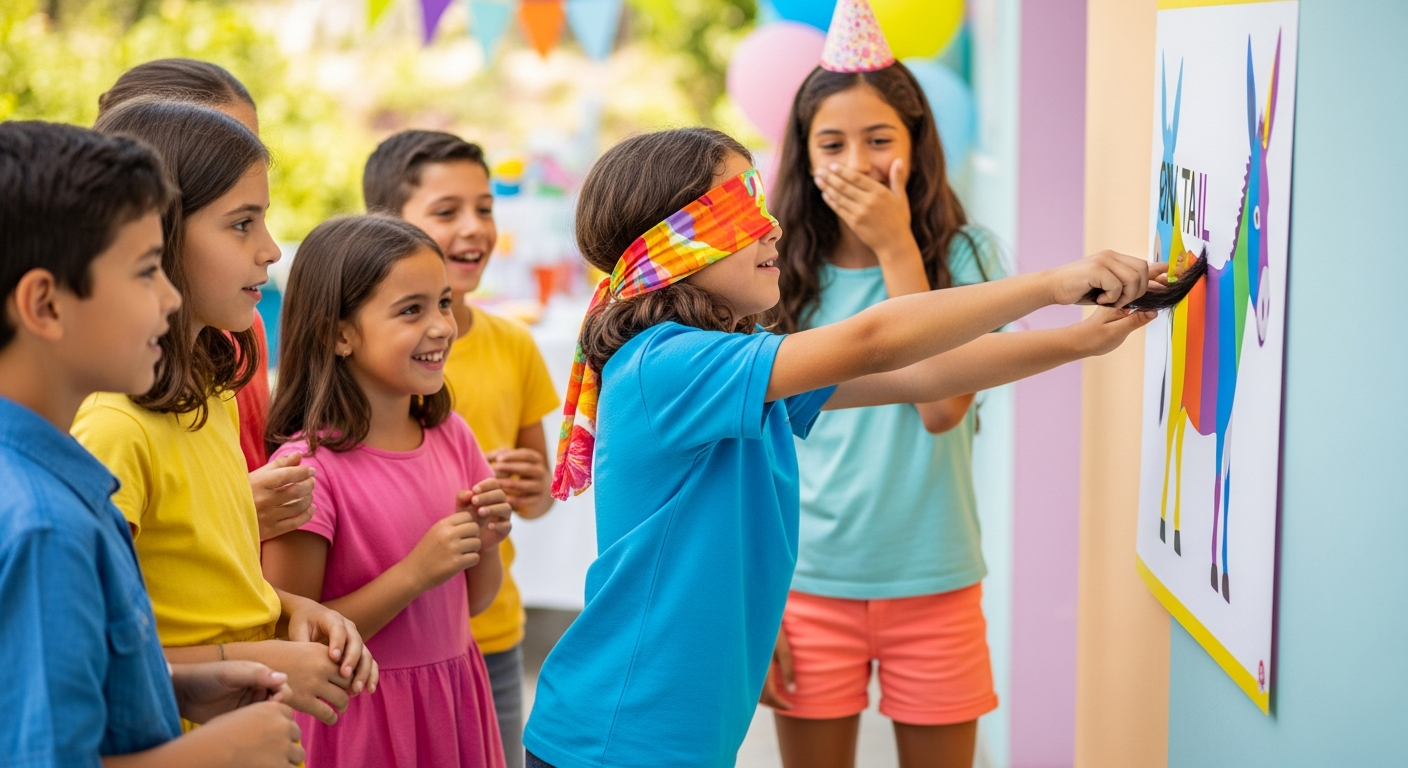
Table of Contents
- Introduction
- The Timeless Appeal of Classic Birthday Games
- Energetic Games to Get Kids Moving
- Creative & Cognitive Challenges
- Outdoor & Water-Themed Adventures
- Creating Connections and Confidence with Speech Blubs
- Conclusion
- FAQ
Birthday parties are a kaleidoscope of joy, laughter, and sometimes, a little bit of delightful chaos. For parents, planning the perfect celebration can feel like a high-stakes mission, especially when it comes to keeping a group of energetic kids happily engaged. The right games don't just fill time; they create unforgettable memories, encourage social interaction, and even subtly boost developmental skills. But with so many options, how do you pick games that are easy to organize, budget-friendly, and guaranteed to be a hit with every child?
We understand that every child is unique, and so is every party. Whether you're hosting indoors or out, for toddlers or pre-teens, the goal is to spark joy and connection. This guide is designed to take the stress out of party planning by offering a diverse collection of birthday game ideas that are tried, true, and loved by kids of all ages. From timeless classics that get everyone moving to creative challenges that inspire imagination and communication, we'll help you craft a party program that resonates with your child's interests and empowers every little guest to speak their minds and hearts through play and interaction.

Introduction
Picture this: a room full of excited children, their eyes sparkling with anticipation. You've planned the cake, the decorations, and the treats. But what about the moments in between? The backbone of any truly memorable birthday party lies in the games. Without engaging activities, even the most beautifully decorated party can quickly devolve into restless energy or screen time. The challenge is finding games that are inclusive, stimulating, and adaptable for various age groups and spaces, ensuring every child feels like a star.
This post will guide you through a treasure trove of birthday game ideas, categorized for easy selection. We’ll explore classic party pleasers, energetic outdoor adventures, quiet creative challenges, and even how certain games can foster essential communication and social skills. Our aim is to equip you with practical tips, variations, and insights, ensuring your child's next birthday is not just fun, but genuinely enriching. By focusing on interaction and engagement, we can transform simple play into powerful moments of learning and connection, setting the stage for confident communication and joyful memories.
The Timeless Appeal of Classic Birthday Games
There's a reason some games have graced birthday parties for generations: they’re simple, universally understood, and incredibly fun. These classics tap into fundamental play instincts and are fantastic icebreakers, getting every child comfortable and involved from the get-go.
Musical Chairs
A perpetual crowd-pleaser, Musical Chairs is a fantastic way to inject energy and excitement into any party.
- How to Play: Arrange chairs in a circle, one fewer than the number of players, with seats facing outwards. As music plays, children walk around the chairs. When the music stops, everyone scrambles to find a seat. The child left standing is out, one chair is removed, and the game continues until only one winner remains.
- Why Kids Love It: The anticipation, the mad dash for a seat, and the thrill of narrowly avoiding elimination make this game exhilarating.
- Developmental Benefits: Enhances listening skills, quick reactions, and gross motor coordination. It also teaches children about winning and losing gracefully.
- Speech Blubs Connection: Games like Musical Chairs require children to follow auditory cues and understand rules, mirroring the structured yet playful learning experiences within Speech Blubs. Our interactive activities, based on video modeling, help children strengthen their auditory processing and receptive language skills, crucial for both game-playing and confident communication.
Pin the Tail on the Donkey (or Any Variation!)
This game is a staple for a reason: it’s funny, easy, and always gets giggles.

- How to Play: Hang a large picture of a donkey (or another character) on the wall. Give each child a numbered "tail" (or a different item like a hat for a cat, a crown for a princess, a mustache for a pirate) with a piece of tape on the back. Blindfold the child, spin them around a few times, and direct them towards the picture to try and stick their item in the correct spot. The closest one wins.
- Why Kids Love It: The blindfold adds an element of silliness and challenge, leading to hilarious attempts and plenty of laughter.
- Developmental Benefits: Improves spatial awareness, fine motor skills (manipulating the tape), and turn-taking. It's also a great exercise in following instructions.
Simon Says
A brilliant game for honing listening skills and self-control.
- How to Play: One person is "Simon" and gives commands. Players must only follow commands that begin with "Simon says." If Simon says, "Simon says touch your nose," players do it. If Simon just says, "Touch your ear," and a player touches their ear, they are out. The last player remaining wins.
- Why Kids Love It: The trickery involved makes it engaging, challenging their focus and ability to distinguish instructions.
- Developmental Benefits: Critically important for developing auditory processing, selective attention, and impulse control. For children learning to listen carefully and follow multi-step directions, this game is a playful practice.
- Relatable Scenario: For a parent whose child sometimes struggles with following spoken instructions, Simon Says can be a fun, low-pressure way to practice. Just as Speech Blubs offers engaging "What Do You Say?" activities where children learn by imitating actions and words shown by peers, Simon Says encourages children to listen and respond to verbal commands, building foundational communication skills in a joyful context.
Pass the Parcel
A delightful game that builds suspense and anticipation.
- How to Play: Wrap a prize in many layers of wrapping paper, placing a small treat (like a sticker or a piece of candy) between some of the layers. Children sit in a circle and pass the parcel around while music plays. When the music stops, the child holding the parcel unwraps one layer. The game continues until the final layer is unwrapped, revealing the main prize.
- Why Kids Love It: The suspense of waiting for the music to stop and the joy of unwrapping a layer or revealing the final prize are highly motivating.
- Developmental Benefits: Encourages turn-taking, patience, and good sportsmanship. It also helps with fine motor skills for unwrapping.
Energetic Games to Get Kids Moving
Sometimes, children just need to run, jump, and release some energy. These active games are perfect for burning off birthday excitement, whether you have a large backyard or a spacious indoor area.
Limbo
Get ready to bend backward and laugh!
- How to Play: Two adults hold a broomstick or pole horizontally. Children take turns trying to pass underneath the stick by bending backward, without touching the stick or the ground with any part of their body except their feet. After each round, the stick is lowered. The last person remaining wins.
- Why Kids Love It: The challenge of getting lower and lower, combined with the often-comical attempts, makes it a huge hit.
- Developmental Benefits: Excellent for gross motor skills, flexibility, balance, and coordination.
Tag (and its Many Variations)
A fundamental game of chase that never gets old.
- How to Play: One player is "it" and tries to tag other players. Once tagged, that player becomes the new "it."
- Why Kids Love It: Simple, fast-paced, and offers immediate gratification. It’s pure, unadulterated running fun.
- Developmental Benefits: Boosts cardiovascular health, agility, speed, and spatial awareness.
- Variations:
- Freeze Tag: When tagged, players freeze in place. Another non-“it” player can unfreeze them by tagging them.
- Zombie Tag: "It" players must move like zombies (no bending knees or elbows) to tag others, who then also become zombies.
- Crouch Tag: Players can avoid being tagged by crouching down, but can only crouch for a limited time or number of times.
Red Light, Green Light
A classic game of stop and go, perfect for a yard or open space.
- How to Play: One person stands at one end of the play area (the "stoplight") facing away from the other players who line up at the opposite end. The stoplight calls out "Green Light!" and players run forward. When the stoplight yells "Red Light!" and quickly turns around, all players must freeze. Anyone caught moving must go back to the starting line. The first player to reach the stoplight wins.
- Why Kids Love It: The suspense of moving and freezing, and the thrill of trying not to get caught, makes it incredibly engaging.
- Developmental Benefits: Strengthens impulse control, listening skills, and gross motor coordination. It also teaches children about body awareness and spatial reasoning.
Musical Hats
A lively spin on a classic, encouraging quick thinking and movement.
- How to Play: Similar to musical chairs, but instead of chairs, you use hats (one less than the number of players). Place the hats in a circle. As music plays, children walk around the hats. When the music stops, everyone tries to grab a hat. The child without a hat is out, one hat is removed, and the game continues.
- Why Kids Love It: The silliness of grabbing hats and the fast-paced nature keeps everyone on their toes.
- Developmental Benefits: Enhances auditory processing, reaction time, and coordination.
Creative & Cognitive Challenges
Not all fun requires high-octane energy. Some of the most rewarding games engage children's minds, encourage problem-solving, and spark their imagination. These are wonderful for balancing out the more active parts of a party or for smaller spaces.
Scavenger Hunt / Photo Scavenger Hunt
A thrilling adventure that encourages teamwork and observation.
- How to Play: Hide a series of clues or objects around the party area that lead to a final "treasure" (like party favors). For a photo scavenger hunt, create a list of items for teams to find and photograph with a smartphone or tablet. The first team to complete the list wins.
- Why Kids Love It: The thrill of the chase, solving riddles, and discovering hidden treasures is incredibly exciting.
- Developmental Benefits: Boosts problem-solving skills, critical thinking, teamwork, reading (for older kids), and observation. It also encourages communication as teams work together.
Kim’s Game (Memory Game)
A quiet game that puts observation and memory to the test.
- How to Play: Place a collection of 10-15 small, distinct objects on a tray (e.g., a spoon, a small toy car, a button, a crayon). Allow children one minute to observe the tray. Then, cover the tray with a cloth. Give the children two minutes to write down or verbally list as many items as they can remember. The child who remembers the most wins.
- Why Kids Love It: It's a fun challenge that taps into their competitive spirit and sense of accomplishment.
- Developmental Benefits: Significantly improves short-term memory, attention to detail, and visual recall. For children developing their descriptive language, recounting the items also provides an opportunity to practice new vocabulary.
Charades
A fantastic game for encouraging non-verbal communication and creativity.
- How to Play: Write various words or phrases (animals, actions, movie titles) on slips of paper and put them in a bowl. Children take turns picking a slip and acting out the word or phrase without speaking. Other players guess what they are acting out. The first to guess correctly takes the next turn.
- Why Kids Love It: The silliness of acting things out and the challenge of guessing makes this game a consistent hit.
- Developmental Benefits: Fosters creativity, imagination, non-verbal communication skills, and empathy (trying to understand others' expressions). It’s also excellent for expanding vocabulary and understanding concepts.
- Communication Focus: Charades is a wonderful way to encourage expressive communication, even without words. For children who may be hesitant to speak, acting out can build confidence and help them understand how different forms of communication convey meaning. Our mission at Speech Blubs is to empower children to speak their minds and hearts, and games like Charades are a playful parallel to the kind of expressive development we support.
Minute to Win It Games
A series of quick, fun challenges using everyday items.
- How to Play: Set up various challenges where players have one minute to complete a task. Examples include:
- Cookie Face: Move a cookie from your forehead to your mouth using only facial muscles.
- Stack Attack: Stack 25 plastic cups into a pyramid and then unstack them into a single tower.
- Penny Stack: Stack pennies using only one hand.
- Why Kids Love It: The fast-paced nature, simple rules, and often hilarious outcomes make these games incredibly exciting and easy to replay.
- Developmental Benefits: Boosts fine motor skills, hand-eye coordination, perseverance, and problem-solving under pressure.
Outdoor & Water-Themed Adventures
If you have access to an outdoor space and the weather permits, outdoor games add another layer of excitement, especially water games during warmer months.
Giant Bubbles
Simple, mesmerizing, and universally loved.
- How to Play: Mix up a giant bubble solution (recipes online often use dish soap, glycerin, and water) and use homemade or store-bought large wands. Let children chase and pop the enormous bubbles.
- Why Kids Love It: Bubbles are magical! The sheer size of giant bubbles creates awe and wonder.
- Developmental Benefits: Encourages gross motor movement (running, jumping), visual tracking, and cause-and-effect understanding. It’s also a calming, sensory experience.
Water Balloon Games
Perfect for a hot day, offering refreshing fun.
- How to Play: Fill dozens of water balloons.
- Water Balloon Toss: Children pair up and toss balloons back and forth, taking a step back after each successful catch until only one pair remains.
- Water Balloon Fight: Simply let the kids loose for an epic, refreshing battle!
- Why Kids Love It: The splish-splash, the anticipation of getting wet, and the sheer messiness of it all are thrilling.
- Developmental Benefits: Improves hand-eye coordination, throwing and catching skills, and encourages active play.
Obstacle Course
Transform your backyard into an adventurous challenge!
- How to Play: Use everyday items like hula hoops to crawl through, blankets to army crawl under, pillows to jump over, buckets to zig-zag around, and small tunnels. Time each child as they complete the course.
- Why Kids Love It: The challenge, the physical exertion, and the feeling of accomplishment make obstacle courses incredibly engaging.
- Developmental Benefits: Enhances gross motor skills, planning, problem-solving, and body awareness.
Capture the Flag
A strategic, team-based game for older kids with plenty of energy.
- How to Play: Divide players into two teams, each with a "flag" (a bandana or piece of fabric). Each team has a territory where they hide their flag. The goal is to capture the opposing team's flag and bring it back to your own territory without being tagged. Tagged players might be out, frozen, or sent to a "jail" where they can be rescued.
- Why Kids Love It: The strategy, teamwork, and excitement of raiding the opponent's territory are incredibly stimulating.
- Developmental Benefits: Fosters teamwork, strategic thinking, problem-solving, gross motor skills, and sportsmanship. It’s a complex game that encourages a lot of communication and planning amongst teammates.
Creating Connections and Confidence with Speech Blubs
While birthday games are fantastic for immediate fun and development, consistent support for communication skills is a gift that lasts a lifetime. At Speech Blubs, we believe in empowering children to truly "speak their minds and hearts." Our founders, having personally experienced speech challenges, created the very tool they wished they had: an immediate, effective, and joyful solution for the 1 in 4 children who need speech support.
We blend scientific principles with play, transforming screen time into "smart screen time." Unlike passive viewing, our app provides a screen-free alternative that fosters active engagement and powerful family connection. Our unique "video modeling" methodology is at the heart of our approach. Children learn by watching and imitating their peers, a natural and highly effective way to acquire complex communication skills. This peer-to-peer learning environment builds confidence and makes the learning process feel like play.
Seamlessly Supporting Your Child's Communication Journey
Just as a variety of games enriches a birthday party, a diverse approach supports your child's communication development. Speech Blubs offers thousands of engaging, expert-designed activities that can be seamlessly integrated into your daily routine.
- Building Foundational Skills: Many of our activities focus on early sounds, words, and sentences, much like how party games build gross or fine motor skills. For instance, our "Animal Kingdom" section can help a child practice animal sounds and names, strengthening their speech muscles and vocabulary.
- Encouraging Social Interaction: While our app is screen-based, its design promotes interaction with parents. We encourage "co-play" – using the app together, talking about what you see, and celebrating successes. This shared experience reinforces communication in a loving family environment.
- Boosting Confidence: Mastering new sounds and words within Speech Blubs, much like winning a party game, gives children a tremendous confidence boost. This confidence translates into a greater willingness to communicate in all aspects of their lives, from asking for more cake to sharing a story from school.
Is Speech Blubs Right for Your Child?
Sometimes, parents wonder if their child could benefit from additional communication support. We’ve made it easy to get a preliminary understanding. You can take our quick 3-minute preliminary screener – it involves just 9 simple questions and provides an assessment along with a next-steps plan. This can be a valuable starting point for understanding your child's developmental needs.
Our method is backed by science, placing us in the top tier of speech apps worldwide with high MARS scale ratings. You can read more about our research and methodology here.
What Other Parents Are Saying
The true measure of our impact lies in the stories of the families we serve. We've seen countless children blossom, gaining the ability to express themselves more clearly and confidently. You can read testimonials from other parents who have witnessed remarkable progress in their children's communication journey with Speech Blubs. Their experiences highlight the joy and relief that comes from empowering a child to communicate effectively.
Your Speech Blubs Journey: Pricing and Value
We believe in making high-quality speech and language development accessible. Our flexible plans are designed to provide maximum value and support for your child's communication journey.
- Monthly Plan: For $14.99 per month, you get access to our core Speech Blubs features. It's a great option for those who prefer month-to-month flexibility.
- Yearly Plan: The Best Value! Our Yearly plan is by far the most popular and value-packed option at just $59.99 per year. This breaks down to an incredible $4.99 per month, allowing you to save 66% compared to the monthly plan! Beyond the significant cost savings, the Yearly plan unlocks exclusive benefits:
- A 7-day free trial: Experience the full power of Speech Blubs before committing.
- The extra Reading Blubs app: Double the fun and learning with an additional app focused on early reading skills.
- Early access to new updates: Be the first to try out our latest features and content.
- 24-hour support response time: Get prompt assistance whenever you need it.
The Monthly plan does not include these exclusive benefits, making the Yearly plan the clear choice for comprehensive support and incredible savings.
Conclusion
Planning a child's birthday party doesn't have to be overwhelming. By incorporating a thoughtful selection of games, you can create an atmosphere of pure joy, active engagement, and meaningful connection. From the spirited chase of "Tag" to the imaginative depths of "Charades," each game offers not just entertainment, but invaluable opportunities for social, cognitive, and communication development. Remembering to adapt games to your child's age and interests, and to focus on participation over perfection, will ensure everyone leaves with happy memories.
And as your child grows and develops, remember that the journey of communication is ongoing. Just like a well-chosen birthday game, continuous, playful learning can make a world of difference. At Speech Blubs, we are committed to providing engaging, expert-backed tools that empower children to find their voice.
Ready to bring more communication joy into your child's life? We invite you to experience the transformative power of Speech Blubs. Choose our Yearly plan to unlock a 7-day free trial, get the Reading Blubs app, and enjoy all our exclusive features and savings!
Download Speech Blubs on the App Store or Google Play today! Alternatively, create your account and begin your 7-day free trial on our website. Let's make every day a celebration of communication!
FAQ
Q1: How do I choose the best birthday games for different age groups?
A1: When selecting games, consider the developmental stage and attention span of the children attending. For toddlers, focus on simple, sensory games with quick turns like "Pop the Bubbles" or "Red Light, Green Light." For preschoolers, add classics like "Musical Chairs" and "Pin the Tail." School-aged children (6-9) enjoy more complex rules and teamwork, making "Scavenger Hunts" and "Minute to Win It" games great choices. Pre-teens (10-12) might prefer strategic games like "Capture the Flag" or "Charades," alongside more active challenges. Always have a mix and be prepared to adapt rules on the fly!
Q2: What if some kids are shy or reluctant to join games?
A2: It's common for some children to be hesitant. Encourage, but don't force, participation. Start with inclusive, low-pressure games where everyone can join in without being singled out, like "Musical Hats" or "Giant Bubbles." Having a supportive adult co-play can also help. Offer roles that don't require being in the spotlight, like holding the limbo stick or helping to reset a "Minute to Win It" station. Sometimes, after observing for a bit, shy children will naturally join in the fun.
Q3: How can I make sure all children get a prize, not just the winners?
A3: To ensure everyone feels included, consider having small, inexpensive participation prizes for all guests, in addition to any larger prizes for game winners. You can also design games where everyone gets a "turn" at a reward, such as in "Pass the Parcel" where small treats are found in layers, or "Saran Wrap Ball" where each unwrapped item is a small prize. The true "prize" of a party is the fun and shared experience, so emphasize that over individual competition.
Q4: Are there games that can help with communication skills?
A4: Absolutely! Many games naturally foster communication. "Simon Says" strengthens listening and following instructions, while "Charades" encourages non-verbal expression and vocabulary expansion. Team-based games like "Capture the Flag" or "Scavenger Hunts" require verbal planning and cooperation. Even simple turn-taking games like "Pass the Parcel" teach patience and social reciprocity. Beyond party games, tools like Speech Blubs, with its video modeling and engaging activities, provide dedicated support for developing speech, language, and confident communication, helping children practice skills that make party interactions even more enjoyable.
About the author