
Kindergarten Fun: Engaging Games for Early Learners
 By Speech Blubs Team•Jan 19, 2026•16 min.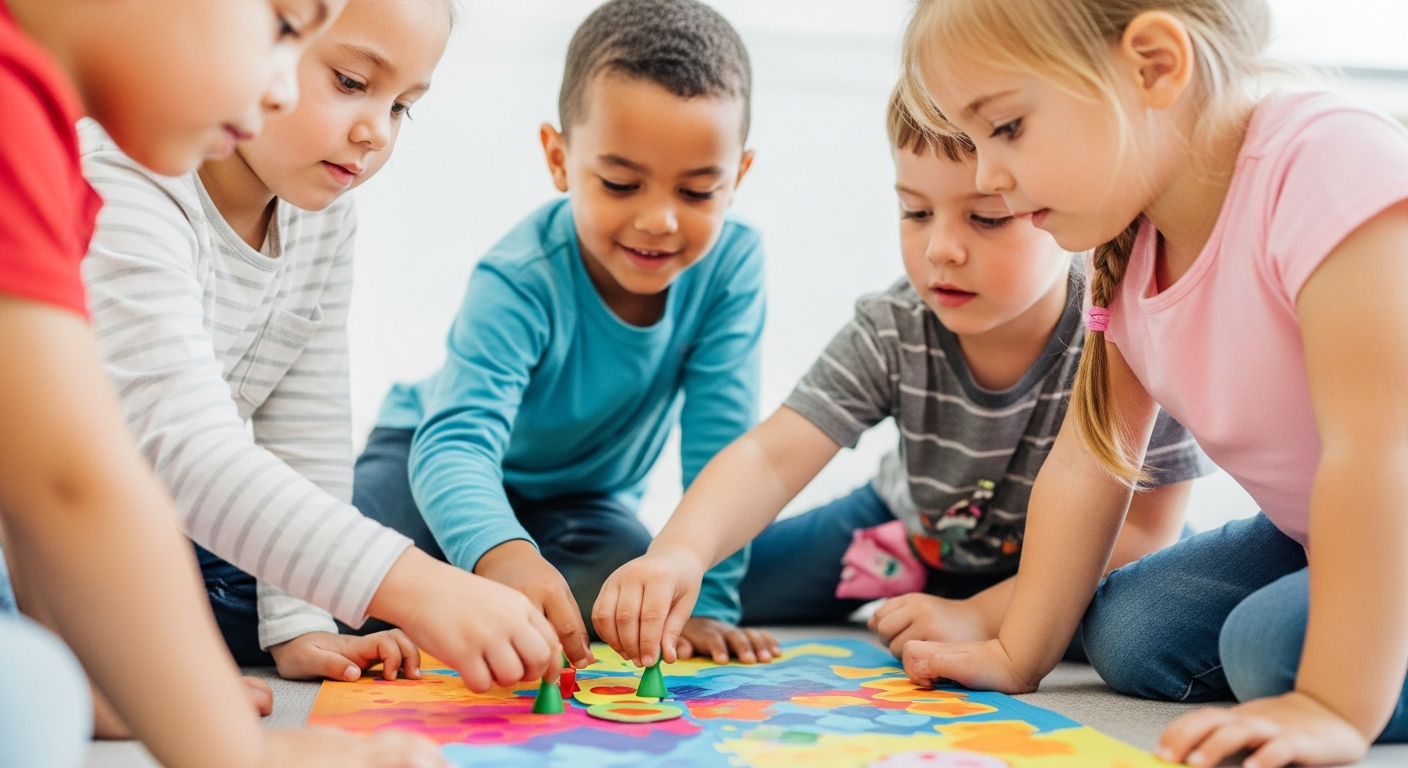
Table of Contents
- The Unstoppable Power of Play: Why Games Matter for Kindergarteners
- Harnessing Play at Home: Diverse Games for Diverse Skills
- Maximizing the Magic: Tips for Parents
- Speech Blubs: Your Partner in Joyful Communication
- Conclusion
- Frequently Asked Questions (FAQ)
Dee Ray, a leading expert in early childhood education, puts it simply: "Play is education for children." For kindergarteners, this truth couldn't be more profound. At this magical age, children are wired to explore, experiment, and make sense of their world through active engagement. It's during these playful moments that they lay the groundwork for lifelong learning, developing everything from their ability to communicate effectively to their capacity for empathy. As parents and caregivers, we have an incredible opportunity to harness this natural instinct, transforming everyday activities into powerful, joyful learning experiences.
In this comprehensive guide, we'll dive deep into the world of engaging games for kindergarten kids, exploring how different types of play contribute to vital developmental milestones. We'll cover everything from boosting language and cognitive skills to nurturing creativity and social-emotional growth. Most importantly, we'll explore how to integrate these activities into your family's routine, and introduce you to our own Speech Blubs app, which offers a unique "smart screen time" solution designed to help children speak their minds and hearts.

The Unstoppable Power of Play: Why Games Matter for Kindergarteners
Kindergarten is a pivotal stage where children transition from purely unstructured play to more guided learning. Yet, the essence of play remains paramount. It’s not just a way to pass the time; it’s a critical component of holistic development. Through games, kindergarteners:
- Develop Cognitive Skills: They learn to problem-solve, strategize, think critically, understand cause and effect, and enhance their memory and focus. Simple activities like building blocks or matching games are powerful tools for brain development.
- Boost Language and Communication: Whether it’s negotiating rules, describing actions, or telling stories, games provide rich contexts for vocabulary expansion, sentence formation, and clearer articulation. Children learn to listen, respond, and express their thoughts and feelings.
- Cultivate Social and Emotional Intelligence: Cooperative games teach sharing, turn-taking, and empathy. Even competitive games, when managed well, help children learn about winning gracefully and handling disappointment. They practice self-regulation and build confidence in interacting with others.
- Enhance Physical Development: From fine motor skills needed to manipulate game pieces to gross motor skills used in active games like "Freeze Dance," play refines coordination, balance, and dexterity.
- Spark Creativity and Imagination: Pretend play, storytelling games, and art-based activities encourage children to think outside the box, invent scenarios, and express their unique perspectives.
At Speech Blubs, we wholeheartedly believe in the power of play. Our mission is to empower children to speak their minds and hearts, and we understand that the most effective learning happens when it feels like an adventure, not a task. We've dedicated ourselves to blending scientific principles with joyful play, creating experiences that support the 1 in 4 children who need speech support.
Harnessing Play at Home: Diverse Games for Diverse Skills
Bringing the benefits of play into your home doesn’t require elaborate setups or expensive toys. Often, the most impactful games are those that encourage interaction, imagination, and communication using everyday objects or simple concepts. Let’s explore various categories of games and activities that foster essential skills in kindergarteners.

Boosting Communication & Language Skills
Language is the foundation for all learning and social interaction. Kindergarteners are rapidly expanding their vocabulary, refining their articulation, and learning to construct more complex sentences. Games specifically designed to encourage speaking, listening, and storytelling are invaluable.
- Storytelling Games: Games like Rory’s Story Cubes, where children roll dice with pictures and weave a narrative, are fantastic for building expressive language, sequencing events, and sparking imagination. You can also create your own by using random objects or picture cards and asking your child to tell a story that includes them all.
- Descriptive Games: "I Spy" helps with vocabulary and descriptive adjectives. Dixit, a card game with dreamlike illustrations, encourages players to describe their cards in unique ways, pushing children to use a richer vocabulary and think metaphorically. You can adapt this at home by showing your child an object and asking them to describe it in as many ways as possible.
- Role-Playing and Pretend Play: Setting up a "store," "doctor's office," or "restaurant" encourages children to adopt different personas, use varied vocabulary, and engage in conversational exchanges. This type of play naturally encourages negotiation and social communication.
- Nursery Rhyme Illustration & Discussion: After reciting a favorite nursery rhyme, ask your child to illustrate it. Then, talk about the characters, the sequence of events, and what might happen next. This strengthens comprehension and encourages verbalization.
Introducing Speech Blubs: Smart Screen Time for Language Growth
While traditional games are wonderful, we understand that modern families also navigate screen time. At Speech Blubs, we offer a unique solution: "smart screen time" that transforms passive viewing into active learning and meaningful connection. Our company was born from the personal experiences of our founders, who all grew up with speech problems and wished for a tool like Speech Blubs during their childhood. This deep understanding fuels our commitment to providing an immediate, effective, and joyful solution for children requiring speech support.
- Our Video Modeling Approach: At the heart of Speech Blubs is our unique "video modeling" methodology. Children learn by watching and imitating their peers, not animated characters. This approach leverages mirror neurons in the brain, making learning natural and highly effective. When a child sees another child successfully produce a sound or word, it creates a powerful, motivating learning experience. You can learn more about the science behind our method and our high MARS scale rating by visiting our Research page.
- Practical Scenarios with Speech Blubs:
- For a kindergartener who is struggling with specific sounds, such as 'r' or 's,' our "Sounds" section offers engaging video models of real peers articulating these sounds clearly. This makes practicing feel like a fun game, not a chore, helping them build confidence in their speech.
- If your child loves animals, the "Animal Kingdom" category in Speech Blubs provides a joyful way to learn new vocabulary, practice animal sounds, and engage in conversational prompts, all while imitating their peers. This active participation turns screen time into a powerful tool for developing expressive language and sparking imaginative play even after the screen is off.
- For children who are shy about speaking up, the encouraging peer models in Speech Blubs can provide a safe and motivating environment to try out new words and sounds, gradually building their confidence in communication.
Ready to empower your child's voice and experience the difference active learning can make? You can download Speech Blubs on the App Store or Google Play Store today and begin your 7-day free trial!
Sharpening Cognitive & Problem-Solving Abilities
Kindergarteners are natural scientists, constantly observing, questioning, and trying to figure things out. Games that challenge their minds are crucial for developing critical thinking, logic, memory, and strategic planning.
- Board Games for Strategy and Logic: Many board games are perfectly suited for kindergarteners.
- Pengoloo teaches memory and strategy as kids remember where colored penguins are hiding.
- Goblet Gobblers adds a strategic twist to Tic Tac Toe, requiring forward-thinking.
- Rivers, Roads, and Rails helps children understand logical planning and flexibility as the game board evolves.
- Qwirkle focuses on shapes, colors, and patterns, encouraging logical planning and sequence building.
- Sleeping Queens introduces basic addition (often in increments of 5 or 10) in a fun, card-game format, enhancing memory and simple math skills.
- Catan Jr., a simplified version of the classic, introduces resource management and basic strategy.
- Puzzles and Building Challenges: Jigsaw puzzles enhance spatial awareness and problem-solving. Building challenges, like constructing the tallest tower with blocks or creating a protective structure for an "egg drop" experiment, foster engineering skills and creative thinking.
- Logic Activities: Ask "What Happens Next?" while reading a story to encourage prediction. Play "How Are These Things Alike?" with pictures of diverse objects (e.g., a sink and a bathtub, birds and lizards) to promote comparative thinking.
- Early Coding Games: Games like Robot Turtles introduce basic coding concepts, sequencing, and strategic thinking in a playful, tangible way. Digital options like codeSpark also make learning to code accessible and fun for young children.
- Memory Games: Simple matching games or classic "Memory" card games are excellent for strengthening working memory and attention.
Nurturing Creativity & Imagination
Creativity isn't just about art; it's about innovative thinking and finding new solutions. Encouraging imaginative play helps kindergarteners express themselves, explore emotions, and develop flexible thinking.
- Art and Craft Challenges:
- Box Transformations: Give your child an empty box and various craft supplies, challenging them to transform it into something new – a car, a house, a robot.
- Nature Collages: After a nature walk, use collected leaves, flowers, and sticks to create a collage, fostering appreciation for nature and artistic expression.
- Pipe Cleaner Masterpieces: Simply giving children pipe cleaners encourages them to bend and shape them into sculptures, promoting fine motor skills and abstract thinking.
- Dramatic Play and Puppet Shows: Creating sock puppets and putting on a show helps children develop storytelling, voice modulation, and imaginative scenarios. Setting up a dedicated dramatic play area with dress-up clothes ignites spontaneous role-playing.
- Illustrating Seasons or Nursery Rhymes: Ask your child to draw what each season looks like or illustrate their favorite nursery rhyme, encouraging them to visualize and represent concepts artistically.
- Music and Movement: "Freeze Dance" allows children to express themselves freely through movement, while "Limbo" challenges their flexibility and coordination in a fun, group setting.
Developing Physical & Sensory Skills
Kindergarteners are bundles of energy, and channeling that energy into games that refine their physical abilities is essential. These activities also help them connect with their bodies and their environment.
- Gross Motor Games:
- Obstacle Courses: Create a simple obstacle course in your living room or backyard using pillows, chairs, and blankets. Jumping, crawling, and balancing help develop gross motor skills and coordination.
- Classic Classroom Games: "Hot Potato," "Duck, Duck, Goose," "Musical Chairs," and "Four Corners" are fantastic for practicing following directions, quick reactions, and spatial awareness in a group setting.
- Fine Motor and Hand-Eye Coordination:
- Playdough Letters: Forming letters or their name out of playdough strengthens fine motor skills, crucial for writing.
- Giggle Wiggle: This game, requiring children to place marbles on a wiggling caterpillar, enhances hand-eye coordination and fine motor precision.
- Sensory Bins: Filling a bin with rice, beans, kinetic sand, or shaving cream and burying small toys or letters encourages tactile exploration and fine motor manipulation. For instance, an "ABC Sensory Bin" helps with letter recognition while engaging the senses.
- Science Experiments: A "Sink or Float Experiment" or mixing cornstarch and water to create "oobleck" (a non-Newtonian fluid) provides sensory input while introducing basic scientific concepts.
Building Social-Emotional Intelligence & Character
The ability to understand and manage emotions, show empathy, and interact positively with others is a cornerstone of success in school and life. Games and activities can foster these vital social-emotional skills.
- Cooperative Games: Games like Race to the Treasure require players to work together to achieve a common goal, teaching teamwork, communication, and collective problem-solving. This ensures everyone feels included and no one is left out.
- Empathy and Feeling Games:
- Role Play Empathy: Act out different scenarios, asking your child how a character might feel and what a kind response would be. This helps them practice putting themselves in others' shoes.
- Emotion Collages: Create a collage using pictures depicting different emotions. Discuss each emotion and when your child might feel that way, helping to build their emotional vocabulary.
- The Learn with Sesame Street app by Begin is another excellent resource for helping children develop social-emotional skills through engaging content.
- Gratitude and Kindness:
- Gratitude Journal: Encourage your child to draw or write one thing they are thankful for each day.
- Random Acts of Kindness: Challenge your kindergartener to do one kind thing for someone daily, fostering compassion and generosity.
- Mindfulness and Self-Regulation:
- Mindful Breathing: Teach simple breathing exercises to help children calm down when feeling overwhelmed or upset.
- Yoga: Doing a simple yoga routine together can help children learn focus, calmness, and self-regulation.
- Chores and Responsibility: Assigning age-appropriate chores, like sweeping or tidying toys, instills a sense of purpose and responsibility, boosting their confidence and understanding of contributing to the family unit.
Maximizing the Magic: Tips for Parents
To truly make play a powerful learning tool, parental involvement is key. Here are some tips to maximize the benefits of these fun games for kindergarten kids:
- Be an Active Participant: Don't just set up the game; play it with your child. Your engagement models enthusiasm, provides support, and creates wonderful bonding opportunities. This is especially true for Speech Blubs, where adult co-play enhances the "smart screen time" experience, turning it into a moment of family connection rather than isolation.
- Create a Positive Learning Environment: Make playtime stress-free. Focus on effort and participation over winning. Celebrate small victories and encourage perseverance.
- Follow Your Child's Lead: Observe what truly sparks your child's interest. If they're fascinated by dinosaurs, find games and activities that incorporate them. Their natural curiosity is a powerful motivator.
- Consistency is Key: Short, regular play sessions are often more effective than infrequent, long ones. Incorporate games naturally into your daily routine.
- Set Realistic Expectations: Remember that development is a journey, not a race. Your child won't master public speaking in a month, nor will they become a chess grandmaster overnight. Focus on fostering a love for communication, building confidence, reducing frustration, and developing foundational skills.
- Know When to Seek Further Support: If you have concerns about your child's speech or language development, early intervention can make a significant difference. Unsure if your child could benefit from additional support? Take our quick 3-minute preliminary screener to get a simple assessment and a free 7-day trial of Speech Blubs, along with a personalized next-steps plan.
Speech Blubs: Your Partner in Joyful Communication
At Speech Blubs, we are committed to providing the tool our founders wished they had when they were growing up with speech challenges. We believe that every child deserves to find their voice and speak their minds and hearts. Our app is a powerful supplement to your child's overall development plan and can be a fantastic complement to professional therapy. It's a screen-free alternative to passive viewing experiences like cartoons, offering active, engaging "smart screen time" that sparks communication and strengthens family bonds.
We take pride in making our pricing transparent and accessible, ensuring every family can provide their child with this invaluable resource.
- Monthly Plan: For just $14.99 per month, you get access to our extensive library of engaging speech activities.
- Yearly Plan: The Best Value! Our Yearly plan is the clear best choice, offering incredible value at just $59.99 per year. This breaks down to an amazing $4.99 per month – a 66% savings compared to the monthly plan!
Choosing the Yearly plan isn't just about saving money; it unlocks a full suite of premium benefits designed to maximize your child's learning journey:
- 7-Day Free Trial: Experience the full potential of Speech Blubs before committing.
- The Extra Reading Blubs App: Gain access to our companion app focused on early reading skills, enhancing literacy alongside speech development.
- Early Access to New Updates: Be among the first to explore new features and content.
- 24-Hour Support Response Time: Get quick assistance whenever you need it.
The Monthly plan does not include these exclusive benefits. To get the most out of Speech Blubs and give your child the full advantage, we strongly encourage you to choose the Yearly plan. It’s an investment in your child's future, providing sustained support for their communication journey.
Don't just take our word for it. See what other parents are saying about their child's success with Speech Blubs by visiting our testimonials page.
Conclusion
Kindergarten is a vibrant time of discovery, and play is the most natural, effective, and joyful way for children to learn and grow. By integrating a variety of fun games into your child's routine, you're not just providing entertainment; you're actively nurturing their language, cognitive, social-emotional, and physical development. Remember that your presence and enthusiastic participation are the most valuable components of any game.
As you embark on this exciting journey, consider Speech Blubs as your dedicated partner. Our "smart screen time" app, built on scientific principles and designed with love, offers a unique way to support your child's communication skills, helping them find their voice and speak their minds and hearts.
Ready to embark on a fun, effective journey to boost your kindergartener's communication skills? Empower your child to speak their mind and hearts. We invite you to experience the magic for yourself. Download Speech Blubs on the App Store or Google Play Store today! To unlock all exclusive features and start your risk-free 7-day free trial, remember to select the Yearly plan during sign-up. You can also create your account on our website to get started!
Frequently Asked Questions (FAQ)
Q1: How much screen time is appropriate for a kindergartener?
A1: While recommendations vary, the American Academy of Pediatrics suggests limiting screen use for children aged 2-5 to 1 hour per day of high-quality programming. For kindergarteners (ages 5-6), quality and active engagement are more important than strict time limits. "Smart screen time" like Speech Blubs, which requires active participation and interaction, is considered more beneficial than passive viewing, as it turns screen time into a learning opportunity that can be shared with an adult.
Q2: How can I tell if my child needs speech support?
A2: Common signs that a kindergartener might need speech support include difficulty pronouncing certain sounds, struggling to put words together into sentences, not being understood by others outside the family, or getting frustrated when trying to communicate. If you have concerns, a professional assessment is always recommended. For a preliminary indication, you can take our quick 3-minute screener to get an immediate assessment and a personalized plan of action.
Q3: What makes Speech Blubs different from other educational apps?
A3: Speech Blubs stands out through its unique "video modeling" methodology, where children learn by imitating real peers rather than animated characters. This approach is rooted in scientific principles, including the activation of mirror neurons, making learning more intuitive and effective. We focus specifically on speech and language development, providing a fun, active, and engaging experience that transforms screen time into "smart screen time," fostering communication and family connection.
Q4: Is the Speech Blubs app a replacement for professional speech therapy?
A4: Speech Blubs is a powerful, engaging tool designed to supplement and support your child's speech and language development. While it offers immediate and effective activities rooted in scientific principles, it is not a direct replacement for personalized professional speech therapy. We always recommend consulting with a certified speech-language pathologist for diagnosis and a comprehensive treatment plan. Speech Blubs can be a valuable complement to therapy, providing consistent practice and joyful learning opportunities at home.
About the author