
Kwanzaa Toddler Crafts: Celebrating Culture and Language Through Play
 By Speech Blubs Team•Feb 20, 2026•14 min.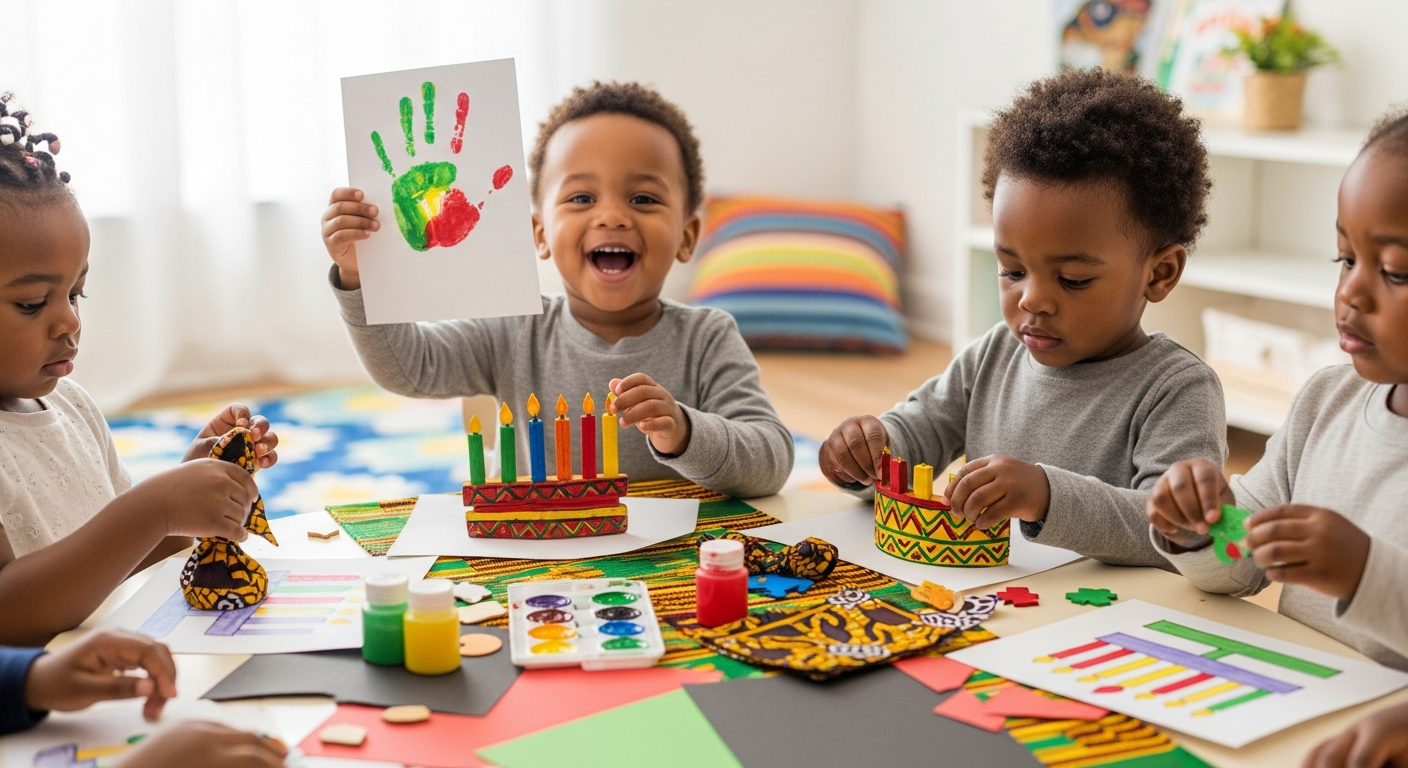
Table of Contents
- Introduction
- Understanding the Heart of Kwanzaa
- Why Crafting Boosts Speech and Language
- 7 Engaging Kwanzaa Toddler Crafts
- The Speech Blubs Methodology: Why Play Works
- Integrating Speech Blubs into Your Holiday Routine
- Choosing the Best Support for Your Child
- Practical Scenarios: Connecting Play to Progress
- Frequently Asked Questions (FAQs)
- Conclusion
Introduction
Have you ever noticed how a toddler’s entire face transforms when they successfully mimic a new sound or master a tricky craft? That moment of "I did it!" is more than just a milestone; it’s a spark of confidence that fuels their desire to communicate. At Speech Blubs, we believe that every child deserves the chance to "speak their minds and hearts," and there is no better time to foster this than during the joyful, communal celebration of Kwanzaa.
Kwanzaa, a holiday dedicated to family, community, and culture, provides a rich tapestry of symbols and stories that are perfect for early language development. Whether you are introducing your little one to their heritage or simply teaching them about the diverse world around them, Kwanzaa toddler crafts are a fantastic way to blend cultural education with "smart screen time" and hands-on play. In this guide, we will explore a variety of engaging crafts, explain the beautiful principles of Kwanzaa, and show you how to use these activities to boost your child’s communication skills.

Our goal is to provide you with a comprehensive toolkit to make this holiday season meaningful and educational. We’ll dive into step-by-step instructions for seven unique crafts, discuss the science behind our video modeling methodology, and help you create joyful family learning moments that last far beyond the seven days of the festival.
Understanding the Heart of Kwanzaa
Before we roll up our sleeves and get messy with glue and paint, it’s helpful to understand what we are celebrating. Kwanzaa was created in 1966 by Dr. Maulana Karenga as a way for African Americans to connect with their African roots and heritage. The name comes from the Swahili phrase "matunda ya kwanza," which means "first fruits."
The holiday runs from December 26th to January 1st, and each day is dedicated to one of the seven principles, known as the Nguzo Saba. For a toddler, these principles might seem complex, but through the "Kuumba" (creativity) of crafting, we can make them accessible.
The Seven Principles (Nguzo Saba)
- Umoja (Unity): Joining together as a family.
- Kujichagulia (Self-Determination): Learning to speak for ourselves.
- Ujima (Collective Work and Responsibility): Helping each other.
- Ujamaa (Cooperative Economics): Supporting our community.
- Nia (Purpose): Having a goal.
- Kuumba (Creativity): Making things beautiful.
- Imani (Faith): Believing in our people and teachers.
When we engage in Kwanzaa toddler crafts, we aren't just making "stuff"; we are practicing these principles. For example, when you and your child work together to paint a Kinara, you are practicing Ujima. When they choose their own colors, they are exercising Kujichagulia.
If you're unsure where your child stands in their developmental journey, we invite you to take our quick 3-minute preliminary screener. It consists of 9 simple questions and provides a personalized assessment to help you support your child's specific needs.
Why Crafting Boosts Speech and Language
At Speech Blubs, our founders grew up with speech challenges themselves. They created the tool they wished they had—one that turns learning into a joyful, interactive experience. Crafting serves a similar purpose.

When a toddler engages in Kwanzaa toddler crafts, they are doing much more than refining their fine motor skills. They are:
- Expanding Vocabulary: Using words like red, black, green, candle, sticky, paint, and weave.
- Following Directions: Learning to process "first," "then," and "next."
- Practicing Articulation: Mimicking the sounds of new Swahili words.
- Building Confidence: Feeling the pride of completing a task, which reduces the frustration often associated with speech delays.
Our approach is rooted in the science of mirror neurons. Just as children learn by watching their peers in our app, they learn by watching you during craft time. This "video modeling" methodology is a cornerstone of our scientific methodology, which emphasizes that children are most motivated when they see other children—or their favorite adults—having fun and succeeding.
7 Engaging Kwanzaa Toddler Crafts
Let's dive into some practical, hands-on activities. These crafts use common household items, making them an accessible way to celebrate.
1. The Recycled Egg Carton Kinara
The Kinara is the candle holder that holds the seven candles (Mishumaa Saba). This craft is excellent for practicing counting and color recognition.
Materials:
- An empty egg carton (cardboard works best)
- Paint (Red, Black, Green, and Gold/Brown)
- 7 Yellow craft sticks or yellow construction paper "flames"
- Glue
Step-by-Step:
- Cut the Carton: Cut a strip of seven cups from the egg carton.
- Paint the Base: Have your child paint the base gold or brown to represent the wood of a traditional Kinara.
- The Candles: Paint three cups on the left red, the center cup black, and the three cups on the right green.
- Add the "Flames": On each day of Kwanzaa, help your toddler glue a yellow craft stick or a paper flame into the corresponding cup.
Speech Tip: As you paint, emphasize the colors. "Look, I am using red. Can you say red?" This simple interaction mirrors the peer-led learning found in Speech Blubs on the App Store.
2. Pan-African Pasta Necklaces
This is a fantastic sensory activity. The texture of the pasta and the vibrant colors make it a toddler favorite.
Materials:
- Dried pasta (ziti or penne)
- Red, black, and green paint
- Yarn or twine
- A plastic bag for mixing
Step-by-Step:
- Color the Pasta: Place some pasta in three separate bags. Add a few drops of paint to each.
- Shake it Up: Let your toddler shake the bags! This is a great high-energy activity.
- Dry: Spread the pasta on parchment paper to dry.
- Stringing: Once dry, help your child thread the pasta onto the yarn in a pattern: Red, Black, Green.
Speech Tip: Patterns are foundational for language. As you string the pasta, say the sequence aloud: "Red, black, green. What comes next?" This encourages predictive thinking and vocabulary retrieval.
3. Fingerprint "Muhindi" (Corn) Art
In Kwanzaa, corn (Muhindi) represents the children in the family. Each ear of corn stands for a child in the home.
Materials:
- Yellow and green paint
- White paper
- A black marker
Step-by-Step:
- The Husk: Draw a simple husk shape on the paper and let your toddler paint it green.
- The Kernels: Have your child dip their index finger into yellow paint and press it repeatedly inside the corn shape to create kernels.
- Talk About Family: While they work, talk about the children in your family or their friends.
Practical Scenario: For a parent whose 3-year-old "late talker" loves sensory play, this tactile "finger-painting" offers a low-pressure way to practice the "k" sound in "corn" or the "p" sound in "paint." By focusing on the fun of the sensation, the child forgets the "work" of speaking.
4. Woven Construction Paper Mkeka Mat
The Mkeka is the woven mat upon which all other symbols are placed. It represents tradition as the foundation of the culture.
Materials:
- Red, black, and green construction paper
- Scissors (for adult use)
- Tape
Step-by-Step:
- The Base: Take the black paper and fold it in half. Cut slits from the fold toward the edges, leaving a border.
- The Strips: Cut the red and green paper into long strips.
- Weaving: Show your toddler how to weave the strips "over and under" through the black base.
- Secure: Tape the ends to keep them in place.
Speech Tip: "Over" and "under" are important spatial prepositions. Use these crafts to reinforce these concepts in a physical way. If your child finds these concepts difficult, you might find similar interactive games in the Speech Blubs app on Google Play.
5. DIY Kwanzaa Unity Cup (Kikombe Cha Umoja)
The Unity Cup is used to pour a libation to the ancestors. A toddler-friendly version can be a decorated cup for their daily juice or water.
Materials:
- A plain plastic or paper cup
- Kwanzaa-themed stickers
- Markers or glitter glue
Step-by-Step:
- Decorate: Let your child go wild with the stickers and markers.
- The "Unity" Talk: Explain that we use this cup to show we are a team.
- Use it: Let them drink from their special cup during your Kwanzaa meal.
Speech Tip: This is a perfect time to practice social language like "Cheers," "Thank you," or "My turn." These functional phrases are key to reducing frustration in toddlers who are still finding their voice.
6. Pan-African Flag Popsicle Sticks
The Bendera (flag) has three colors: Red (the struggle), Black (the people), and Green (the future).
Materials:
- 3 Popsicle sticks
- Red, black, and green markers or paint
- Glue
Step-by-Step:
- Color: Have your child color one stick red, one black, and one green.
- Assemble: Glue them together side-by-side or onto a larger piece of paper to create a flag.
- Wave it: Let them wave their flag while you listen to Kwanzaa music.
7. Kwanzaa "I Spy" Sensory Bottle
This is a great "quiet time" activity that encourages focus and descriptive language.
Materials:
- A clear plastic bottle
- Rice or sand (can be dyed red/green)
- Small items: a tiny plastic ear of corn, a small black bead, a red button, a green ribbon.
Step-by-Step:
- Fill: Fill the bottle about 3/4 full with rice.
- Add Items: Drop in the small Kwanzaa-themed items.
- Seal: Glue the cap shut for safety.
- Play: Shake the bottle and ask your child, "What do you see?"
Speech Tip: This "I Spy" game is excellent for building descriptive skills. If they find the red button, encourage them to say "Red button!" or even "I see red!"
The Speech Blubs Methodology: Why Play Works
You might wonder why we emphasize crafts so much at Speech Blubs. It’s because our mission is to blend scientific principles with play. We provide a screen-free alternative to passive viewing (like cartoons) and instead offer a powerful tool for family connection. When you use our app, you aren't just letting your child "watch a screen." You are engaging in a shared experience.
Our "video modeling" approach—where children watch and imitate their peers—is exactly what happens when you sit down to do Kwanzaa toddler crafts. Your child watches you, mimics your actions, and hears your words. This is how the brain is wired to learn.
Our app is rated highly on the MARS scale, placing us in the top tier of speech apps worldwide. This isn't just because it's fun; it's because it's effective. Many parents have shared how our approach has transformed their daily routines. You can read some of these heartwarming success stories here.
Integrating Speech Blubs into Your Holiday Routine
While Kwanzaa is about tradition, we believe that "smart screen time" can be a modern part of that tradition. Use the app as a supplement to your crafting and storytelling.
- Before Crafting: Watch the "Colors" or "Shapes" sections in Speech Blubs to prime your child's brain for the vocabulary they will use.
- During Crafting: Take breaks to watch a peer make a similar sound.
- After Crafting: Celebrate their hard work with a few minutes of their favorite Speech Blubs activity.
We don't promise that your child will be giving public speeches in a month. Every child’s journey is unique. However, we do focus on fostering a love for communication, building confidence, and creating those joyful family learning moments that are so central to the spirit of Kwanzaa.
Choosing the Best Support for Your Child
If you’re ready to take the next step in supporting your child’s speech journey, we recommend starting with our Free Trial & Sign-Up Page.
We are committed to transparency, and we want you to choose the plan that offers the most value for your family.
Our Plans:
- Monthly Plan: $14.99 per month. This is a great way to test the waters if you're unsure.
- Yearly Plan (Best Value): $59.99 per year.
Why the Yearly Plan is the clear choice: The Yearly plan breaks down to just $4.99/month, which is a 66% saving compared to the monthly option. But the value goes beyond the price. The Yearly plan includes:
- A 7-day free trial to ensure it's the right fit.
- The Reading Blubs app, which extends the learning into literacy.
- Early access to all new updates and features.
- Priority Support: A 24-hour response time for any questions you have.
The Monthly plan does not include the free trial, Reading Blubs, or priority support. To give your child the full suite of tools they need to succeed, the Yearly plan is the most effective and economical choice.
Practical Scenarios: Connecting Play to Progress
We know that every parent faces unique challenges. Here are a few ways that Kwanzaa toddler crafts and Speech Blubs can work together to solve them:
- For the "Late Talker": If your child is slow to start using words, the "Animals" section of our app can help them practice simple "moo" and "baa" sounds. You can then connect this to Kwanzaa by talking about the "crops" (Mazao) and the animals that live on the farm.
- For the Child with Articulation Frustration: Sometimes kids know what they want to say, but the sounds don't come out right. The tactile nature of weaving a Mkeka mat provides a calming, repetitive motion that can lower their stress levels, making them more willing to try new sounds during app time.
- For the Child Who Needs Visual Cues: If your child responds best to seeing things, the video modeling in Speech Blubs is a game-changer. Seeing another child's mouth move as they say "Umoja" helps them understand how to form the word themselves.
Frequently Asked Questions (FAQs)
1. Do I have to be of African descent to celebrate Kwanzaa with my toddler?
Not at all! While Kwanzaa was created to celebrate African-American heritage, its principles—like unity, creativity, and faith—are universal. It is a wonderful way for children of all backgrounds to learn about and respect different cultural traditions, fostering empathy and global awareness from a young age.
2. My toddler has a very short attention span. Will these crafts work?
Absolutely. The key is to keep it "toddler-paced." You don't have to finish a whole Kinara in one sitting. Maybe you paint it one day and add the flames over the next week. We design our Speech Blubs activities with the same philosophy—short, engaging bursts of "smart screen time" that respect a child's natural development.
3. How do these crafts specifically help with speech delays?
Crafts encourage "functional language." Instead of just naming objects, your child is using language to do things. "Give me glue," "More red," or "Look at mine!" These are the building blocks of communication. When paired with the video modeling in Speech Blubs, your child gets both the visual instruction and the physical practice they need.
4. Which Speech Blubs plan should I choose for a toddler?
We highly recommend the Yearly Plan. At just $4.99/month (billed annually at $59.99), it’s the most budget-friendly way to get long-term results. Plus, it includes a 7-day free trial and the Reading Blubs app, which is perfect as your toddler begins to transition into preschool skills. It’s an investment in their confidence and their future.
Conclusion
Kwanzaa is more than just a holiday; it’s an opportunity to slow down, connect with your child, and celebrate the incredible progress they are making every day. Through Kwanzaa toddler crafts, you aren't just creating decorations; you are building a foundation for language, culture, and confidence.
At Speech Blubs, we are honored to be a part of your journey. Whether you are using our app to supplement professional therapy or simply looking for ways to make screen time more meaningful, we are here to support you. Our mission is to provide an immediate, effective, and joyful solution for the 1 in 4 children who need speech support, and we believe that the combination of family play and our scientifically-backed app is the perfect recipe for success.
Ready to start a new tradition this holiday season? Create your account and begin your 7-day free trial today. Remember to select the Yearly plan to unlock the best value, including Reading Blubs and our priority support. Let's work together to help your child speak their mind and heart—one joyful moment at a time. Happy Kwanzaa!
About the author