
Lucky & Easy St. Patrick's Day Crafts for Kids
 By Speech Blubs Team•Jan 13, 2026•22 min.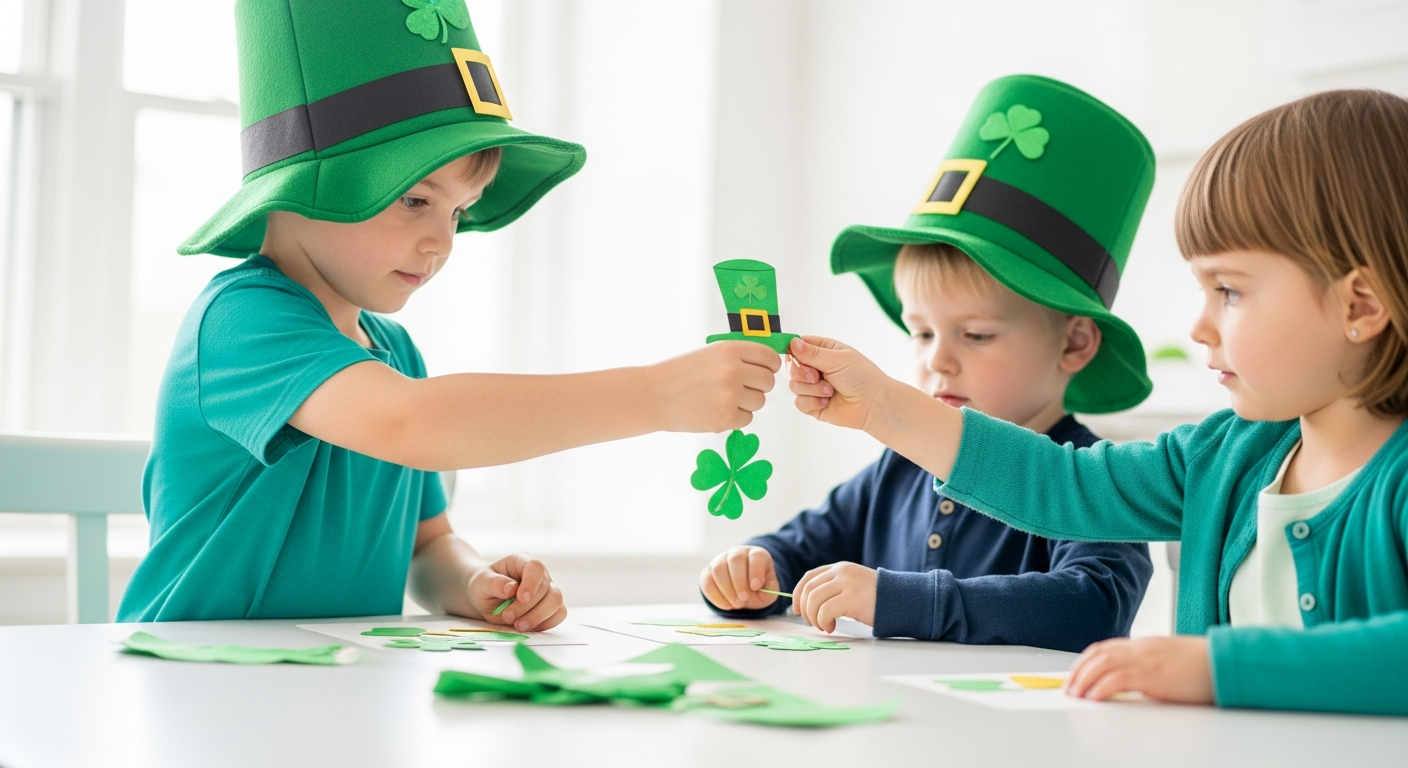
Table of Contents
- Introduction
- Why St. Patrick's Day Crafts Are More Than Just Fun
- Getting Started: Crafting Essentials for Your Pot of Gold
- Shamrock Shenanigans: Easy Shamrock Crafts
- Leprechaun Laughter: Adorable Leprechaun Crafts
- Rainbow Wonders & Pots of Gold: Colorful Crafts
- Turning Craft Time into Talk Time with Speech Blubs
- Choosing Your Path to Communication: Speech Blubs Plans & Value
- Conclusion
- FAQs
Does the thought of tiny leprechauns, shimmering rainbows, and four-leaf clovers bring a sparkle to your child's eye? St. Patrick's Day, with its vibrant green hues and promises of hidden treasures, offers a magical opportunity to connect with your children through engaging, creative play. Beyond just being a fun way to celebrate, crafting together provides a treasure trove of developmental benefits, from fine motor skill enhancement to cognitive growth and, crucially, a rich environment for language development. This post isn't just about making pretty decorations; it's about transforming simple craft sessions into powerful learning experiences that foster confidence and communication.
Introduction
As parents, we often seek activities that are both entertaining and enriching for our children. St. Patrick's Day crafts fit this bill perfectly, offering a unique blend of cultural celebration and developmental opportunity. Imagine your child's delight as they transform everyday materials into a sparkly shamrock or a funny leprechaun, all while unknowingly building essential skills. From selecting materials to following instructions and articulating their creative choices, every step in the crafting process is a chance for growth.

We’re here to guide you through a vibrant collection of easy St. Patrick’s Day crafts, specially curated to engage little hands and minds. More importantly, we’ll explore how these hands-on activities can naturally boost your child's speech and language development, making "smart screen time" with tools like Speech Blubs an even more effective part of their day. Get ready to sprinkle some magic into your holiday celebrations, knowing you're also nurturing your child's ability to express themselves fully, to "speak their minds and hearts."
Why St. Patrick's Day Crafts Are More Than Just Fun
Crafting with your child is far more than just a way to fill an afternoon; it’s a dynamic pathway for holistic development. When little fingers are busy cutting, gluing, and painting, a symphony of learning unfolds. These activities naturally stimulate multiple areas of growth, making them an invaluable part of your child's early years.
Boosting Sensory Exploration
Crafts inherently engage multiple senses. The smooth feel of paper, the stickiness of glue, the vibrant colors of paint, and even the scent of different materials all contribute to a rich sensory experience. This exploration helps children understand the world around them, building neural connections that are vital for learning. For example, feeling the fuzziness of a pipe cleaner while making a shamrock or the cool stickiness of glitter glue can be incredibly stimulating and provide new vocabulary opportunities like "bumpy," "smooth," "soft," or "sticky."
Refining Fine Motor Skills
The intricate actions involved in crafting—like holding a paintbrush, snipping with scissors, peeling stickers, or twisting pipe cleaners—are fundamental for developing fine motor skills. These skills are crucial precursors to tasks like writing, buttoning clothes, and self-feeding. When your child meticulously places cereal pieces to form a rainbow, they're not just making art; they're honing their pincer grasp and hand-eye coordination.
Cultivating Cognitive Development
Crafting is a fantastic exercise in problem-solving and following instructions. From understanding the sequence of steps to choosing the right colors or materials, children are constantly engaging their cognitive abilities. They learn about cause and effect ("If I put too much glue, the paper gets wrinkly"), spatial reasoning ("How will these pieces fit together?"), and decision-making ("Should the leprechaun's hat be tall or short?"). This process fosters independent thinking and creativity, encouraging them to think outside the box.

Nurturing Social-Emotional Growth
Craft time can be a wonderful opportunity for social and emotional development. Sharing materials, taking turns, and collaborating on a project teaches valuable social skills. Experiencing the joy of creation, the pride in a finished piece, or even the frustration of a project not turning out as expected, helps children develop emotional regulation and resilience. It's a safe space to express feelings and build confidence in their abilities.
Unlocking Language & Communication Potential
Perhaps one of the most significant benefits of crafting, especially for little ones, is its profound impact on language and communication. As children engage in crafts, they encounter new vocabulary (e.g., "shamrock," "leprechaun," "pot of gold," "emerald," "clover"), practice descriptive language ("The paint is sparkly green," "This hat is tall"), and follow multi-step instructions ("First, cut the paper, then glue it"). They learn to express their ideas, ask questions, and narrate their actions.
For a child who is a "late talker" or struggling with specific sounds, crafting provides a natural, low-pressure environment for speech practice. For instance, making a "pot of gold" offers numerous chances to practice the "P" sound: "pot," "paint," "put," and "open." The shared focus on the craft object can ease communication demands and make speaking more enjoyable. This is precisely where tools like Speech Blubs shine, reinforcing these foundational skills with engaging, interactive experiences that make learning feel like play.
Getting Started: Crafting Essentials for Your Pot of Gold
Before you dive into the rainbow of St. Patrick's Day crafts, it’s helpful to have a few basic supplies on hand. Think of these as your essential "pot of gold" for creativity! Having them ready will make your crafting sessions smooth and enjoyable.
Basic Supplies List:
- Paper Power: Construction paper in various colors (especially green, yellow, orange, rainbow colors), paper plates, cardstock.
- Adhesive Allies: Child-safe glue sticks, liquid craft glue, glue dots.
- Cutting & Shaping: Child-safe scissors, pipe cleaners (green, rainbow colors), cotton balls.
- Color & Texture: Non-toxic craft paints (green, gold, rainbow), crayons, markers, glitter (optional, but very festive!), googly eyes.
- Recycled Riches: Empty toilet paper rolls, cardboard boxes (for leprechaun traps or larger projects).
- Tiny Treasures: Pom-poms, buttons, small beads (for older children), gold chocolate coins or plastic coins.
- Special Touches: Yarn, ribbon, stickers (shamrock, rainbow themed).
Safety First, Fun Always
Always prioritize safety. Ensure all materials are non-toxic and age-appropriate. Supervise children, especially with scissors or small items that could be choking hazards. Cover your workspace with newspaper or an old tablecloth to protect surfaces, and have wet wipes or a damp cloth nearby for quick clean-ups.
Setting Up a "Crafting Station"
Designate a special area for your crafts. This could be a kitchen table, a cleared space on the floor, or a dedicated craft corner. Lay out all materials within easy reach but organized to prevent overwhelming your child. A sense of order can encourage focus and make the activity more enjoyable. An organized space also provides a good opportunity to use prepositions and descriptive words: "The glue is on the table," "The scissors are next to the paper," "Let's put away the green paint."
Shamrock Shenanigans: Easy Shamrock Crafts
Shamrocks are the quintessential symbol of St. Patrick's Day, representing luck and the spirit of Ireland. These simple crafts are perfect for little hands and offer fantastic opportunities for language development.
Paper Plate Shamrocks
This classic craft is fantastic for practicing cutting skills, painting, and shape recognition.
- Materials: Two paper plates, green paint or markers, child-safe scissors, glue.
- Instructions:
- Have your child paint both paper plates green. This is a great time to discuss the color green and different shades! "This is bright green," "This green is darker."
- Once dry, help your child cut a heart shape out of each plate. You’ll need three heart shapes for the shamrock leaves and one for the stem.
- Arrange three of the heart shapes with the points meeting in the middle to form a shamrock leaf. Glue them together.
- Cut a long, thin rectangle from the fourth plate to create the stem. Glue it to the bottom of your shamrock.
- Developmental Benefits: Enhances fine motor skills through painting and cutting, practices shape identification (hearts), and encourages following sequential instructions.
- Speech Blubs Connection: While crafting, use descriptive words: "This paint is slippery!" "We need a round plate." For a parent whose child is working on early vocabulary, naming actions like "paint," "cut," "glue," "wait," and "dry" is highly beneficial. The Speech Blubs app offers a "Colors" section where children can reinforce color names by imitating peers, making the connection between the green paint and the word "green" even stronger.
Felt & Pipe Cleaner Shamrocks
These tactile shamrocks are great for sensory exploration and developing finger dexterity.
- Materials: Green felt, green pipe cleaners, a small pot, black beans (as "soil").
- Instructions:
- Help your child cut shamrock shapes (or even just simple leaf shapes) out of the green felt.
- Cut green pipe cleaners in half. Bend one end of a pipe cleaner into a small hook and push it through the bottom of a felt shamrock to create a stem. Twist to secure.
- Fill your small pot with black beans, then "plant" your felt shamrocks by sticking the pipe cleaner stems into the beans.
- Developmental Benefits: Improves scissor skills, encourages imaginative play ("planting"), and develops fine motor control for manipulating felt and pipe cleaners.
- Speech Blubs Connection: Discuss textures: "The felt is soft," "The pipe cleaner is bumpy." Use action verbs: "Cut the felt," "Plant the shamrock," "Twist the pipe cleaner." You can also count the shamrocks together: "One shamrock, two shamrocks..."
Shamrock Stamps
A simple yet effective way to create shamrock patterns and practice repetition.
- Materials: Green pipe cleaners, clothespins, green paint, paper.
- Instructions:
- Help your child bend a pipe cleaner into a shamrock shape (three small loops for the leaves, one straight part for the stem).
- Attach the pipe cleaner shamrock to a clothespin, gripping the stem part. This creates a handle for stamping.
- Pour a small amount of green paint onto a flat plate.
- Dip the shamrock stamp into the paint and press it onto paper to create shamrock prints.
- Developmental Benefits: Fosters creativity through pattern making, strengthens hand muscles, and provides a tactile sensory experience.
- Speech Blubs Connection: Repetitive actions lend themselves to repetitive speech: "Stamp! Stamp! Stamp!" "More green paint!" Practice prepositions: "Dip in the paint," "Stamp on the paper." For a child working on consonant-vowel combinations, "Pop!" for each stamp can be a fun sound to practice.
Leprechaun Laughter: Adorable Leprechaun Crafts
No St. Patrick's Day celebration is complete without a bit of leprechaun magic! These crafts bring the mischievous little men to life, encouraging imaginative storytelling.
Toilet Paper Roll Leprechaun Hats
A fantastic way to upcycle and create festive decorations.
- Materials: Empty toilet paper rolls, green craft paint, yellow and black construction paper, glue, scissors.
- Instructions:
- Have your child paint the toilet paper roll green. "Roll, roll, roll the paint!"
- While the roll dries, cut a circle from green construction paper (slightly larger than the roll's diameter) for the brim of the hat. Cut a smaller circle out of the center of this brim, so it fits around the toilet paper roll.
- Cut a small strip of black construction paper for the hat band and a tiny yellow square for the buckle.
- Glue the brim onto one end of the painted toilet paper roll. Glue the black strip around the base of the roll, and attach the yellow buckle in the center of the black strip.
- Developmental Benefits: Promotes recycling, hones scissor skills, and practices assembly sequences.
- Speech Blubs Connection: Discuss attributes: "This hat is tall," "The paint is wet." Practice color names: "Green hat, black band, yellow buckle." Use verbs: "Paint," "cut," "glue," "dry." For a child working on descriptive words, this craft offers plenty of opportunities to describe the leprechaun's hat.
Popsicle Stick Leprechauns
Create your own friendly leprechauns that can be customized with unique expressions!
- Materials: 3-4 popsicle sticks per leprechaun, skin-colored, orange, and green craft paint, googly eyes, markers, orange yarn (for beard).
- Instructions:
- Glue three popsicle sticks together side-by-side to form the body.
- Paint the top third of the popsicle sticks (for the face) skin-colored. Paint the middle section (for the beard) orange, and the bottom section (for the coat) green.
- Once dry, glue on googly eyes. Use markers to draw a mouth, nose, and rosy cheeks.
- Cut small pieces of orange yarn and glue them around the orange beard section to create a bushy beard. You can also add a small green hat cut from paper.
- Developmental Benefits: Encourages creativity in designing faces, develops fine motor control with painting and gluing small details.
- Speech Blubs Connection: Talk about body parts: "Eyes," "nose," "mouth," "beard." Discuss emotions: "Is your leprechaun happy? Silly?" For a child working on facial features or expressing emotions, mimicking these expressions can be beneficial. The Speech Blubs app's "Talking Heads" feature, where children imitate real kids making sounds, can be a great complement to practicing these expressions.
Leprechaun Handprint/Footprint Crafts
A sweet way to capture your child's growth and create a cherished keepsake.
- Materials: Skin-colored paint, orange paint, green construction paper, white paper, markers.
- Instructions (Handprint Leprechaun):
- Paint your child's palm skin-colored and their fingers orange.
- Press their hand onto white paper to create the face and beard.
- Once dry, add googly eyes, a small nose, and a smile with a marker.
- Cut a leprechaun hat shape from green construction paper and glue it onto the top of the handprint.
- Instructions (Footprint Shamrock):
- Paint your child's foot green.
- Carefully make four footprints on a piece of white paper, arranging them so the heels meet in the middle, forming a four-leaf clover.
- Add a small green stem with a marker or green paper.
- Developmental Benefits: Creates a lasting memory, involves sensory experience of paint on skin, and practices identifying body parts.
- Speech Blubs Connection: Emphasize "My hand," "Your foot," "Big hand," "Little foot." Talk about the colors "green" and "orange." "Let's stamp your hand!" "Look at your footprint!" This activity is excellent for early descriptive words and personal pronouns.
Rainbow Wonders & Pots of Gold: Colorful Crafts
Rainbows and pots of gold are iconic symbols of hope and luck on St. Patrick's Day. These crafts are bursting with color and opportunities for learning.
Cereal Rainbow Craft
A fantastic craft for younger children that also doubles as a sorting activity.
- Materials: White paper, glue, various colored cereals (e.g., Fruit Loops, Trix, or even candy like Skittles), cotton balls.
- Instructions:
- On a piece of white paper, draw large arcs for each color of the rainbow.
- Have your child sort the cereal by color. This is a great pre-craft activity! "Find all the red ones!"
- Apply a line of glue along the first arc (e.g., red). Have your child place the red cereal pieces onto the glue line. Repeat for each color of the rainbow.
- Once the rainbow is complete, glue cotton balls to either end of the rainbow to create fluffy clouds.
- Developmental Benefits: Excellent for fine motor skills (picking up and placing small objects), color recognition and sorting, and following multi-step directions.
- Speech Blubs Connection: Practice color names ("Red," "orange," "yellow," "green," "blue," "purple"). Use action words ("Sort," "glue," "place," "stick"). "Sticky glue!" "More red!" For a parent whose child is working on expanding their descriptive vocabulary, talking about the crunchy cereal or the soft clouds adds depth. The "Early Sounds" section of Speech Blubs helps children master basic sounds and words, which can then be applied to naming colors and actions during crafting.
Pot of Gold Mason Jars
A charming gift or decoration that combines creativity with a touch of magic.
- Materials: Small mason jars, black craft paint, gold chocolate coins or plastic coins, white cardstock, marker.
- Instructions:
- Help your child paint the outside of the mason jar black to represent a cauldron. "Paint the whole jar black!"
- Once dry, fill the jar with gold chocolate coins or plastic coins.
- Cut a small rectangular "label" from white cardstock. Your child can draw a shamrock on it or write "My Gold!" Glue this label to the front of the jar.
- Developmental Benefits: Encourages imaginative play around "finding treasure," practices counting (the coins), and develops fine motor skills through painting and filling.
- Speech Blubs Connection: Count the coins: "One, two, three gold coins!" Talk about the colors: "Black pot," "Gold coins." Use prepositions: "Put the coins in the jar." This is also a good opportunity for simple requests: "Can I have more coins?"
Layered Felt Rainbow Magnet
A colorful and tactile craft that can brighten up any fridge.
- Materials: Sheets of felt in rainbow colors (red, orange, yellow, green, blue, purple), strong craft glue, magnet strips.
- Instructions:
- Help your child cut wavy strips of felt, one for each color of the rainbow, varying slightly in length to create the arc effect.
- Layer the felt strips, starting with the longest (red) at the bottom and ending with the shortest (purple) on top, to form a rainbow shape.
- Glue the layers together securely.
- Once dry, glue a magnet strip to the back of the felt rainbow.
- Developmental Benefits: Enhances scissor skills, teaches sequencing and layering, and provides a multi-sensory experience (feeling the soft felt).
- Speech Blubs Connection: Discuss colors and sizes: "Long red," "Short purple," "Big rainbow," "Little magnet." Practice words related to texture: "The felt is soft." This craft is excellent for expanding descriptive vocabulary and understanding relative size. You can also explore the Speech Blubs research page to learn more about how our methodologies, which rely on strong visual cues, complement learning through colorful crafts.
Turning Craft Time into Talk Time with Speech Blubs
Crafting is an inherently social activity, and it provides a fantastic, low-pressure environment for communication. As you work side-by-side with your child, you're not just making a pretty object; you're building a bridge for words, sounds, and ideas. This interactive approach aligns perfectly with our mission at Speech Blubs, where we believe in empowering children to "speak their minds and hearts."
Our company was born from the personal experiences of our founders, who all grew up with speech problems and created the tool they wished they had. We are committed to providing an immediate, effective, and joyful solution for the 1 in 4 children who need speech support, blending scientific principles with play into one-of-a-kind "smart screen time" experiences. We provide a screen-free alternative to passive viewing (like cartoons) and a powerful tool for family connection, just like crafting.
How Speech Blubs Complements Hands-On Activities
- Video Modeling: At the core of Speech Blubs is our unique "video modeling" methodology. Children learn by watching and imitating their peers, making learning intuitive and fun. Think about how naturally your child imitates your actions during a craft: "You're cutting, I'll cut!" Similarly, in Speech Blubs, they see other kids making sounds and words, which naturally encourages them to do the same. This method is backed by science and rated in the top tier of speech apps globally, as you can see by visiting our research page.
- Vocabulary Expansion: Crafting naturally introduces new words. Pairing this with Speech Blubs can reinforce that learning. For example, if you're making a "clover" craft, you can practice words like "cut," "color," and "green." Then, switch to the Speech Blubs app, which might have sections on colors or common objects, allowing your child to hear and practice these words in a new, engaging context. For a child who loves animals, the "Animal Kingdom" section in the app offers a motivating way to practice "moo" and "baa" sounds, just as naming animals during a craft would.
- Active Engagement vs. Passive Viewing: Just like crafting encourages active participation, Speech Blubs promotes "smart screen time." Instead of passively watching cartoons, your child is actively engaged, imitating, interacting, and making choices. This transforms screen time into a powerful developmental tool. You can learn more about our approach and watch testimonials from other parents who have seen amazing results by visiting our main homepage.
- Reducing Frustration and Building Confidence: For children struggling with speech, communication can be frustrating. Both crafting and Speech Blubs offer supportive, non-judgmental environments. The success of completing a craft, even a simple one, builds confidence. Similarly, the playful and encouraging nature of Speech Blubs helps children feel successful as they make progress, reducing anxiety around speaking.
When to Consider Speech Blubs
If you've noticed your child is a "late talker," has difficulty with certain sounds, or gets frustrated when trying to communicate, Speech Blubs can be an invaluable supplement to their overall development plan. Sometimes, it's hard to know if a child's speech patterns are within typical developmental ranges. That's why we offer a helpful resource: take our quick 3-minute preliminary screener to get a simple assessment and a free 7-day trial. This screener involves just 9 simple questions and provides an immediate assessment and next-steps plan.
Remember, Speech Blubs is designed to be a powerful supplement, not a replacement for professional therapy if your child has significant speech delays. However, it can significantly enhance and accelerate progress, turning learning into a joyful family activity.
Choosing Your Path to Communication: Speech Blubs Plans & Value
We understand that investing in your child's development is a top priority, and we want to ensure you get the best possible value from Speech Blubs. We offer two clear subscription options, and we're transparent about the benefits of each.
Monthly Plan:
- Cost: $14.99 per month.
- Features: Access to the core Speech Blubs app content.
Yearly Plan: The Smart Choice
- Cost: $59.99 per year. This breaks down to just $4.99 per month, offering an incredible 66% savings compared to the monthly plan!
- Exclusive, High-Value Features: The Yearly plan isn't just about saving money; it unlocks the full Speech Blubs experience and extra benefits designed to maximize your child's learning journey:
- A 7-day free trial: Experience the full app before committing. The Monthly plan does not include this trial.
- The extra Reading Blubs app: An entire additional app focused on early reading skills, enhancing literacy alongside speech.
- Early access to new updates: Be the first to enjoy new features, activities, and content as soon as they're released.
- 24-hour support response time: Get faster assistance whenever you need it.
We strongly encourage you to choose the Yearly plan. It's the clear best choice, offering superior value and a comprehensive suite of tools to empower your child's communication journey. It provides all the features, flexibility, and support you need to make the most of Speech Blubs.
Ready to unlock your child's communication potential and join thousands of other happy families? Download Speech Blubs on the App Store or Google Play to begin, or create your account today and start your 7-day free trial! Remember to select the Yearly plan to get the free trial and the full suite of features that will make a real difference in your child's development.
Conclusion
St. Patrick's Day crafts are a golden opportunity to create cherished memories, celebrate a fun holiday, and, most importantly, foster critical developmental skills in your child. From the joyful creation of a sparkly shamrock to the imaginative play with a paper roll leprechaun, each activity is a step towards enhanced fine motor control, cognitive growth, and a richer vocabulary. These hands-on experiences lay a powerful foundation for confident communication, making learning an integrated and enjoyable part of family life.
As you embark on these festive crafting adventures, remember that every interaction, every shared word, and every moment of focused play contributes to your child's ability to express themselves. Tools like Speech Blubs are designed to seamlessly extend this learning, offering "smart screen time" that reinforces the very skills you're nurturing during craft time. Our app’s video modeling and engaging activities are rooted in scientific principles, providing a joyful, effective solution for empowering your child to "speak their minds and hearts."
Don't let this St. Patrick's Day pass without unlocking the full potential of creative play and supportive learning. Give your child the gift of confident communication. Ready to see the magic unfold? Download Speech Blubs on the App Store or Google Play today! To ensure you get the best value and access to all the fantastic features, remember to choose the Yearly plan when you create your account and start your 7-day free trial. Here's to a St. Patrick's Day filled with luck, laughter, and lots of wonderful communication!
FAQs
1. What age are these crafts suitable for?
Many of these crafts are adaptable for various age groups! Younger children (toddlers and preschoolers) will enjoy the sensory aspects, painting, gluing, and simple steps with adult assistance. Older preschoolers and school-aged children can handle more intricate cutting, detailed drawing, and assembly independently. Always supervise to ensure safety and adjust tasks to your child's skill level.
2. How can I make crafting educational for my child?
Crafting is inherently educational! To maximize learning, engage your child in conversation throughout the process. Ask open-ended questions ("What color should we use next?"), describe actions ("I'm cutting the paper"), introduce new vocabulary ("This is a shamrock"), and encourage them to explain their choices. Counting materials, sorting colors, and following instructions all contribute to cognitive and language development.
3. Do these crafts require special materials?
Not at all! Our selection of St. Patrick's Day crafts focuses on using common household items and basic craft supplies that are easily accessible and affordable. Think construction paper, paper plates, toilet paper rolls, glue, paint, and pipe cleaners. You likely have many of these materials around your home already, making these activities both fun and budget-friendly.
4. How does Speech Blubs help with language development?
Speech Blubs utilizes a unique video modeling approach, where children learn by watching and imitating their peers, making the learning process natural and engaging. Our app provides interactive exercises and games that target specific sounds, words, and early literacy skills, complementing hands-on activities like crafting. It encourages active participation over passive viewing and supports children in building confidence and expressing themselves, offering a "smart screen time" solution that works effectively alongside your child's play and learning.
About the author