
Lucky Little Hands: Easy Saint Patrick's Day Crafts for Kids
 By Speech Blubs Team•Jan 13, 2026•25 min.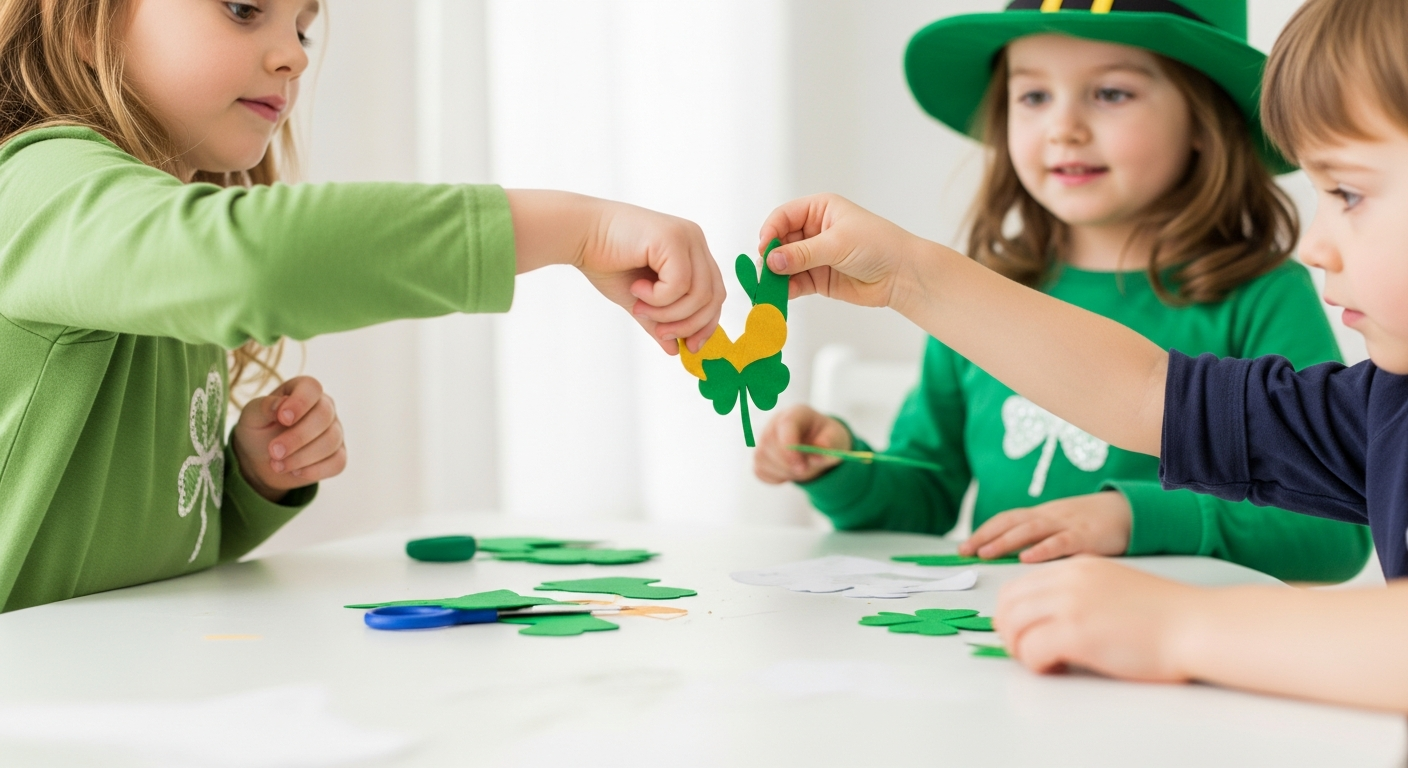
Table of Contents
- Why Crafting Matters for Little Voices
- Our Favorite Easy St. Patrick's Day Crafts
- Crafting & Communication: How Speech Blubs Helps Your Child Speak Their Heart
- Empowering Your Child's Voice with Speech Blubs: Our Commitment and Value
- Conclusion: Embrace the Luck of Language
- FAQs
Do you remember the sheer delight of creating something with your own hands as a child? The sticky glue, the vibrant colors, the proud moment of holding up your masterpiece? For many children, crafting isn't just a fun pastime; it's a powerful avenue for growth, discovery, and communication. This St. Patrick's Day, as we celebrate the emerald isle, we invite you to tap into that magic with easy, engaging crafts that do more than just decorate your home – they help little voices find their confidence.
At Speech Blubs, we believe every child deserves to speak their minds and hearts. Our company was born from a personal understanding of speech challenges, created by founders who wished for a tool like ours when they were young. We’re dedicated to providing an immediate, effective, and joyful solution for the 1 in 4 children who need speech support. Through play and scientifically-backed methods, we offer one-of-a-kind "smart screen time" experiences that are a wonderful complement to hands-on activities like crafting. This post will guide you through simple St. Patrick's Day crafts designed to spark creativity, boost development, and, of course, add a touch of Irish cheer to your home. We'll explore how these hands-on activities lay crucial groundwork for speech and language, and how Speech Blubs can further amplify these benefits, helping your child on their journey to confident communication.

Why Crafting Matters for Little Voices
Crafting is far more than just gluing and coloring; it’s a multi-sensory experience that engages various parts of a child's brain, building foundational skills that directly support speech and language development. When children create, they are not just making something pretty; they are learning, expressing, and communicating.
Boosting Fine Motor Skills for Speech Readiness
Think about the intricate movements involved in speaking: the subtle shifts of the tongue, lips, and jaw. These are all controlled by fine motor skills. Activities like cutting with scissors, tearing paper, squeezing glue, grasping small pom-poms, or painting with a brush are excellent exercises for developing the dexterity needed for clear articulation. When a child carefully places a sequin on a shamrock, they are refining the same muscle control that will later help them form precise speech sounds.
For a toddler learning to tear green tissue paper for a shamrock collage, they are building hand strength and coordination. This controlled tearing can be linked to the early motor planning involved in babbling and producing first words. If your little one is working on specific speech sounds, like 'p' or 'b', the physical act of "pinching" a pom-pom or "pressing" a stamp can create a physical association that reinforces the motor actions needed for those sounds. Our Speech Blubs app uses a similar principle in its "video modeling" approach, where children watch and imitate their peers, effectively practicing the fine motor movements of the mouth and face for speech. You can explore how our scientifically-backed methods engage these crucial skills by visiting our research page.
Expanding Vocabulary and Concept Understanding
Crafts provide a natural, engaging context for introducing and reinforcing new words. As you work side-by-side with your child, you can name colors ("What a bright green shamrock!"), describe textures ("This slime feels so sticky and slimy!"), identify shapes ("Can you find the round leprechaun hat?"), and discuss actions ("Let's cut the paper, then glue it down"). These concrete experiences help children build a robust vocabulary by linking words directly to objects, actions, and sensations.

For instance, while making a "Rainbow Wonders" craft, you might discuss the concept of "over" and "under" as you layer paper strips, or talk about "first," "next," and "last" in sequence. A child making a "St. Patrick's Day Windsock" will learn words like "streamer," "blow," and "flow," connecting these abstract concepts to a tangible creation. This kind of descriptive language is vital for cognitive development and forming complex thoughts. Our Speech Blubs app complements this beautifully with categories like "Colors," "Shapes," and "Actions," where children learn and practice new vocabulary through engaging video models, solidifying the words they encounter during craft time.
Encouraging Expression and Confidence
When a child creates something, they are expressing an idea, a feeling, or a vision. This act of self-expression is a foundational aspect of communication. Crafting provides a non-verbal outlet for children who might be struggling to articulate their thoughts verbally, reducing frustration and building confidence. Seeing their finished product, praised and admired, boosts their self-esteem and encourages them to share their experiences.
A child who might be a "late talker" and hesitant to speak might proudly point to their "puffy paint leprechaun" and beam. This positive interaction can be a gentle bridge to verbal communication, as you ask them about their creation. "Tell me about your leprechaun! What does he like to do?" This sense of accomplishment encourages them to take more risks in communication. At Speech Blubs, we are committed to empowering children to express themselves, whether through words, gestures, or creative play. Our activities are designed to build confidence in a supportive, fun environment, turning screen time into a joyful learning experience that helps kids "speak their minds and hearts."
The Power of Play: Learning Through Doing
Play is a child's natural way of learning, and crafting is play with a purpose. It allows for experimentation, problem-solving, and imaginative thinking without the pressure of "getting it right." This playful context reduces anxiety and makes learning enjoyable, which is key for language acquisition. When learning is fun, children are more engaged and receptive to new information.
Consider the simple joy of making "Shamrock Slime." The sensory experience of squishing and stretching can be incredibly calming and stimulating. This relaxed state is ideal for language practice. You can talk about the slime being "stretchy," "sticky," "green," and "sparkly." This playful interaction fosters connection and encourages shared attention, both critical for language development. If you're wondering if Speech Blubs could be a playful solution for your child's communication journey, why not take our quick 3-minute preliminary screener? It involves 9 simple questions and provides an assessment with a next-steps plan, including a free 7-day trial!
Our Favorite Easy St. Patrick's Day Crafts
Ready to get crafty? We've curated a list of easy, engaging St. Patrick's Day crafts perfect for little hands and developing minds. Each activity comes with simple instructions and materials you likely already have around the house, ensuring minimal fuss and maximum fun.
Shamrock Sensations: Green & Lucky Creations
Shamrocks are the quintessential symbol of St. Patrick's Day, and there are countless ways to incorporate them into your crafting adventures. These activities are fantastic for practicing shape recognition, color identification, and basic descriptive words.
Simple Paper Shamrocks
Materials: Green construction paper, scissors (kid-safe), glue stick, glitter (optional), marker.
Instructions:
- Help your child trace or draw three heart shapes that connect at their points, with a small rectangle stem at the bottom. Alternatively, you can pre-cut heart shapes and have your child arrange and glue them.
- Carefully cut out the shamrock shape.
- Let your child decorate their shamrock with glitter, drawings, or by gluing on smaller pieces of green paper for a mosaic effect.
- Language Tip: As you craft, talk about the "three leaves" of the shamrock and how it's "green" and "lucky." Practice counting the leaves and describing the shape. For a child working on following multi-step directions, you can say, "First, we draw. Next, we cut. Then, we glue!" This direct practice with sequential instructions is a great real-world application of language skills that our Speech Blubs app reinforces in various learning categories.
Salt Paint Shamrocks
Materials: Shamrock printable or drawing, white glue, table salt, green watercolor paint or food coloring mixed with water, paintbrush.
Instructions:
- Print or draw a large shamrock outline on thick paper or cardstock.
- Have your child trace the lines of the shamrock with white glue.
- Immediately sprinkle a generous amount of salt over the glue, ensuring it's completely covered. Shake off any excess salt.
- Once the glue is dry (this can take a few hours), dip a paintbrush into green watercolor (or colored water) and gently touch it to the salt. Watch the color magically spread!
- Language Tip: This craft is wonderful for sensory descriptions. Encourage your child to describe the "bumpy" texture of the salt, the "wet" paint, and the "magic" of the spreading color. You can ask, "How does the salt feel?" or "What color is spreading?" For a child learning to combine words, "wet paint," "green salt," and "magic color" are excellent phrases to practice. This sensory-rich activity is a natural fit for expanding descriptive vocabulary, much like the "Around the House" section in Speech Blubs which encourages children to describe everyday objects and their properties.
Ooey-Gooey Shamrock Slime
Materials: Green glitter glue, liquid starch or contact lens solution, baking soda, small shamrock confetti (optional), bowl, spoon.
Instructions:
- Pour a bottle of green glitter glue into a bowl.
- Add a pinch of baking soda and mix well.
- Slowly add liquid starch (or contact lens solution) a little at a time, mixing continuously until the mixture starts to pull away from the sides of the bowl and forms a cohesive slime.
- Knead the slime with your hands until it reaches the desired consistency.
- Mix in shamrock confetti for extra festive sparkle.
- Language Tip: Slime is fantastic for sensory vocabulary. Encourage your child to describe the slime using words like "sticky," "stretchy," "squishy," "cold," "smooth," or "bumpy." Ask open-ended questions like, "What does it feel like?" or "Can you make it long?" This tactile play paired with descriptive language helps build a rich understanding of adjectives.
Rainbow Wonders: Colorful Creations for Little Explorers
Rainbows are a vibrant and hopeful symbol often associated with the pot of gold at the end of them. These crafts are perfect for color recognition, sequencing, and developing fine motor skills.
Fruit Loop Rainbows
Materials: Paper, glue, Fruit Loops cereal.
Instructions:
- Draw a simple rainbow arc outline on a piece of paper.
- Help your child apply lines of glue along the rainbow arcs.
- Have them carefully place Fruit Loops onto the glue, matching the colors to the rainbow order if desired (red, orange, yellow, green, blue, purple).
- Language Tip: This craft is excellent for practicing color names and counting. "How many red Fruit Loops do we need?" "What color comes next?" You can also talk about the "crunchy" texture of the cereal. For a child who enjoys edible crafts, this provides a motivating reward for practicing language. Our Speech Blubs app has a dedicated "Colors" section that reinforces color identification through engaging video models, making this craft a perfect real-world application.
Cardboard Tube Rainbow Blowers
Materials: Empty toilet paper or paper towel roll, green paint or construction paper, tissue paper in rainbow colors, glue, scissors.
Instructions:
- Decorate the cardboard tube in green paint or wrap it with green construction paper. Let it dry.
- Cut strips of rainbow-colored tissue paper (about 1-inch wide and 12-inches long).
- Glue one end of each tissue paper strip around the inside rim of one end of the cardboard tube.
- Once dry, have your child blow through the tube to watch the "rainbow" streamers fly!
- Language Tip: This interactive craft is great for practicing action words like "blow," "fly," and "wave." You can also talk about cause and effect: "When you blow, the streamers fly!" It's also an excellent way to practice breath control, which is important for speech production.
Rainbow Garland Fun
Materials: Construction paper in rainbow colors, scissors, glue stick or stapler, string or yarn.
Instructions:
- Cut strips of rainbow-colored construction paper (about 1-inch wide and 6-8 inches long).
- Form the first strip into a loop and secure it with glue or a staple.
- Thread the next color strip through the first loop, form a loop, and secure. Continue this process, linking the paper strips together to create a chain.
- Once your chain is long enough, you can hang it up or attach it to a piece of string to create a garland.
- Language Tip: This craft is perfect for discussing "patterns" and "sequencing" the colors. "What color comes after blue?" "Can you make a pattern with red and yellow?" This kind of activity encourages structured thinking and expressive language, much like the sequencing activities found within our Speech Blubs app, which help children build coherent narratives and follow instructions.
Leprechaun Lore: Magical Friends & Traps
Leprechauns, with their mischievous charm and elusive pots of gold, offer a fantastic theme for imaginative play and storytelling. These crafts can inspire creative narratives and descriptive language.
Fork Print Leprechaun Beards
Materials: Paper, green and orange paint, plastic fork, googly eyes, marker.
Instructions:
- Draw a simple leprechaun face on paper (just the head outline, ears, and nose).
- Dip the tines of a plastic fork into orange paint and stamp it around the bottom of the leprechaun's face to create a "beard" texture.
- Once dry, glue on googly eyes and draw a smile.
- Language Tip: This craft is wonderful for describing facial features and textures. Talk about the "fuzzy" or "spiky" beard created by the fork prints. "He has a long, orange beard!" You can also use it to inspire imaginative play: "What do you think this leprechaun likes to do?" This helps children practice descriptive language and narrative skills.
Paper Plate Leprechaun Hats
Materials: Paper plate, green paint, yellow construction paper, black construction paper, glue, scissors.
Instructions:
- Cut the center out of a paper plate, leaving a ring. This will be the brim of the hat.
- Paint the entire paper plate ring green. Let dry.
- Cut a tall cylinder shape from green construction paper for the top of the hat. Glue it to the inside of the paper plate ring.
- Cut a small black rectangle for the hat band and a yellow square for the buckle. Glue them onto the green cylinder.
- Language Tip: This craft allows for discussion of shapes ("circle," "rectangle," "square") and colors. You can ask, "Where does the black band go?" or "What shape is the buckle?" This spatial language practice is incredibly valuable. For a parent whose child is learning action verbs, "paint the plate," "cut the paper," and "glue the buckle" provide clear, simple commands to follow. This kind of interaction is at the heart of the Speech Blubs experience, where children learn through observing and then performing actions in various categories like "What Do I Do?"
DIY Leprechaun Traps from Cereal Boxes
Materials: Empty cereal box, green construction paper, scissors, glue, various craft supplies for decoration (glitter, pipe cleaners, coins, cotton balls for clouds), optional: small treat.
Instructions:
- Cover the cereal box with green construction paper.
- Cut a "door" or "trapdoor" into one side of the box (leave one edge attached so it can open and close).
- Decorate the trap with various St. Patrick's Day themes – a rainbow leading to the trap, a pot of gold inside, shamrocks, cotton ball clouds. Encourage your child's creativity!
- Leave a small treat inside for a magical surprise in the morning.
- Language Tip: This craft is a storytelling goldmine! Discuss what kind of leprechaun they hope to catch, what bait they'll use, and where the trap should go. "Will your leprechaun be tiny or big?" "What will he do when he sees the trap?" This activity naturally fosters imaginative play and narrative development, enhancing a child's ability to create and share stories. Our Speech Blubs app, with its focus on encouraging children to "speak their minds and hearts," offers a fantastic digital complement to this kind of imaginative play, helping children articulate their fantastic ideas.
Edible Delights: Crafts You Can Eat!
Who says you can't play with your food? Edible crafts are a fantastic way to engage all senses and often provide a highly motivating reward for your little crafter.
St. Patrick's Day Oreos
Materials: Oreo cookies (mint or regular), green candy melts, sprinkles (green, gold, rainbow), parchment paper, spoon or dipping tool.
Instructions:
- Melt the green candy melts according to package directions.
- Dip each Oreo cookie halfway or fully into the melted green candy.
- Carefully place the dipped Oreo on parchment paper.
- Immediately sprinkle with festive sprinkles before the candy hardens.
- Let cool and harden completely.
- Language Tip: This is a great opportunity to talk about taste ("sweet"), color ("green"), and texture ("crunchy," "smooth"). Practice action words like "dip," "sprinkle," and "eat." It's a highly motivating activity that can spark excitement and verbal interaction.
Rainbow Veggie Pizza
Materials: Pre-made pizza crust or dough, pizza sauce, shredded mozzarella cheese, a variety of colorful vegetables cut into strips (red bell pepper, orange bell pepper, yellow bell pepper, broccoli florets for green, purple onion or eggplant for purple).
Instructions:
- Spread pizza sauce on the crust.
- Sprinkle with mozzarella cheese.
- Arrange the colorful vegetable strips in rainbow arcs across the pizza.
- Bake according to pizza crust directions until cheese is melted and crust is golden.
- Language Tip: This is a fantastic craft for picky eaters and for practicing color and vegetable names. "Can you find the red pepper?" "Let's put the green broccoli on the pizza." It also introduces the concept of healthy eating in a fun, engaging way. You can even talk about the different shapes of the vegetables.
Wearable Wonders: Show Your Green Spirit
Wearing green on St. Patrick's Day is a fun tradition, and what better way to do it than with something your child made themselves? These crafts are great for self-expression and developing fine motor skills.
Shamrock Rings from Pipe Cleaners
Materials: Green pipe cleaners.
Instructions:
- Take one green pipe cleaner and bend it into a heart shape. Twist the ends together to secure the heart.
- Make two more heart shapes and attach them to the first one at the base, forming a shamrock.
- Take another pipe cleaner and wrap it around the base of the shamrock to create a ring band that fits your child's finger.
- Language Tip: This activity is perfect for practicing shape names ("heart"), counting ("three hearts"), and body parts ("finger"). Talk about how the ring feels on their finger: "Is it tight or loose?" It's also great for discussing "small" versus "big" if you make rings for different fingers or people.
Lucky Charms Bracelets
Materials: Lucky Charms cereal, Mod Podge (non-toxic, child-safe), paintbrush, jewelry wire or elastic string, beads (optional).
Instructions:
- Have your child select their favorite marshmallow shapes from the Lucky Charms cereal.
- Using a paintbrush, carefully coat each marshmallow charm with Mod Podge to seal and harden it. Let dry completely (this may take several hours or overnight).
- Once dry, string the hardened charms onto jewelry wire or elastic string to create a bracelet. Add beads if desired.
- Language Tip: This craft offers a wonderful opportunity to name shapes ("star," "rainbow," "moon") and colors of the marshmallows. "What shape is this charm?" "This is a pink heart!" It also helps with fine motor skills for threading. The process of describing the shapes and colors of the charms can be wonderfully reinforced by Speech Blubs, which offers engaging activities for vocabulary building around objects and their attributes.
Crafting & Communication: How Speech Blubs Helps Your Child Speak Their Heart
While hands-on crafting offers invaluable benefits for development, pairing it with targeted language support can create an incredibly powerful learning experience. At Speech Blubs, we believe in "smart screen time" – using technology intentionally to support and enhance a child's growth.
Video Modeling in Action: Imitation and Learning
One of the core principles behind Speech Blubs is our unique "video modeling" methodology. Children learn best by watching and imitating their peers. Just as a child watches you assemble a craft and then attempts to do it themselves, our app provides engaging video examples of real children making sounds, words, and phrases. This provides a clear visual and auditory model for imitation, which is crucial for speech acquisition.
For a parent whose 3-year-old "late talker" loves animals and is making a leprechaun trap with a "rainbow bridge" to catch a magical creature, they might say "green" while painting. Afterward, in Speech Blubs, the "Animal Kingdom" section offers fun, motivating ways to practice animal sounds like "moo" and "baa," or simple words like "cat" and "dog," by watching and imitating their peers. The transition from physical imitation in crafting to verbal imitation in the app is seamless and intuitive, reinforcing the learning process. You can even see what other parents are saying about their child's success with Speech Blubs by checking out our testimonials page.
Real-World Language Practice through Play
The crafts we've discussed offer real-world contexts for language. Children are naturally motivated to talk about what they are doing, seeing, and creating. Speech Blubs takes this motivation and channels it into structured, playful exercises. Our activities are designed to be interactive, encouraging children to actively participate and verbalize, rather than passively consume content.
Imagine a child who just finished their "Fruit Loop Rainbow." They’re excited to show it off! This is the perfect moment to extend their language learning. You can open the Speech Blubs app to a related section, like "Colors" or "Food," and continue the conversation, practicing the names of the colors and food items they just worked with. This blending of physical and digital play creates a comprehensive and highly effective learning environment. Our approach blends scientific principles with play, ensuring that learning is always an adventure.
Connecting Actions to Words: The Power of Joint Attention
Joint attention – when a child and caregiver share focus on the same object or activity – is fundamental for language development. Crafting naturally fosters joint attention as you both focus on the materials, the process, and the final product. As you point to a green shamrock and say "green," your child associates the word with the object because you are both attending to it.
Speech Blubs extends this powerful concept into the digital realm. The app's design encourages active participation from both child and parent, turning screen time into a shared, interactive experience. For example, if you're making a "DIY St. Patrick's Day Sign" and discussing shapes, you can then transition to the Speech Blubs "Shapes" section, reinforcing those concepts with dynamic video models that capture your child's attention and encourage them to vocalize. This shared focus, whether on a craft or an app activity, creates rich opportunities for language learning.
Smart Screen Time: A Complement to Hands-On Learning
We understand that parents seek balanced solutions. Speech Blubs is not meant to replace hands-on play or professional therapy but to act as a powerful supplement. It offers a screen-free alternative to passive viewing (like cartoons) and a tool for family connection, complementing the learning that happens through activities like crafting.
After a fun crafting session, a few minutes with Speech Blubs can consolidate the day's learning. If you spent time making "Leprechaun Hats" and discussing colors, using the app's "Colors" section can help reinforce those words. This creates a holistic approach to development, balancing tactile, sensory experiences with targeted digital support. Our mission is to empower children, and we believe this blend of activities creates the most nurturing environment for their communication journey.
Empowering Your Child's Voice with Speech Blubs: Our Commitment and Value
At Speech Blubs, our commitment goes beyond just providing an app; it's about nurturing confidence, fostering a love for communication, and supporting families every step of the way. We want every child to have the opportunity to express themselves fully, to "speak their minds and hearts."
Why Speech Blubs? Our Story and Mission
Our journey began with a deeply personal connection to speech challenges. Our founders, having experienced speech problems in their own childhoods, set out to create the very tool they wished they had: an immediate, effective, and joyful solution for the 1 in 4 children who need speech support. This mission drives everything we do, from our scientifically-backed video modeling methodology to our dedication to creating engaging, play-based learning experiences. We believe in turning screen time into "smart screen time" – a powerful tool for learning and family connection, designed to complement your child's overall development plan.
Choosing Your Path: Monthly vs. Yearly Plans
We offer flexible plans to suit your family's needs, but we truly believe in the long-term value and benefits of consistent engagement. That's why we've designed our Yearly plan to provide the most comprehensive and valuable experience.
- Monthly Plan: For $14.99 per month, you get access to our core Speech Blubs app content. This plan is a good option for those who prefer month-to-month flexibility. However, it doesn't include some of our most sought-after features.
- Yearly Plan: Our Yearly plan is by far the best value at $59.99 per year. This breaks down to just $4.99 per month, allowing you to save 66% compared to the monthly subscription. This plan is designed for families committed to providing consistent support for their child's speech journey, offering a full suite of features that enhance the learning experience.
Unlock More with the Yearly Plan
Choosing the Yearly plan isn't just about saving money; it's about unlocking the full potential of Speech Blubs and gaining access to exclusive benefits that truly support your child's growth:
- 7-Day Free Trial: The Yearly plan begins with a 7-day free trial, giving you ample time to explore all the features and see the positive impact on your child firsthand before committing. The Monthly plan does not include this trial.
- The Extra Reading Blubs App: Exclusively with the Yearly plan, you also get access to our Reading Blubs app, a fantastic tool designed to build early literacy skills, complementing the speech and language development within Speech Blubs. This is a powerful addition to your child's learning toolkit.
- Early Access to New Updates: Yearly subscribers receive early access to new updates and features, ensuring your child always benefits from the latest advancements and content in our apps.
- 24-Hour Support Response Time: We prioritize our Yearly plan members with a guaranteed 24-hour support response time, ensuring you get prompt assistance whenever you need it.
To truly empower your child's communication journey and experience the full range of benefits, we highly recommend our Yearly plan. It offers the most value, the widest array of features, and the peace of mind that comes with dedicated support.
Conclusion: Embrace the Luck of Language
This St. Patrick's Day, let's remember that the greatest treasure isn't a pot of gold, but the clear, confident voice of a child expressing themselves. Easy crafts offer a fantastic, joyful way to boost fine motor skills, expand vocabulary, and build confidence – all crucial stepping stones for strong speech and language development. Whether it’s creating a sparkly shamrock or building a whimsical leprechaun trap, these moments of shared creation are invaluable for family bonding and learning.
As you explore the magic of St. Patrick's Day crafts, remember that Speech Blubs is here to support and amplify your child's communication journey. Our scientifically-backed, play-based approach turns screen time into a powerful learning tool, designed to help your child "speak their minds and hearts." By combining hands-on creativity with targeted language practice, you're giving your child the best of both worlds.
Ready to embark on a journey of joyful communication with your child? We invite you to experience the full power of our app. Create your account and begin your 7-day free trial today by choosing our Yearly plan to unlock all exclusive features, including the Reading Blubs app and priority support. Download Speech Blubs on the App Store or Google Play to get started!
FAQs
Q1: What age group are these St. Patrick's Day crafts suitable for?
A1: Most of the crafts listed are designed for toddlers, preschoolers, and early elementary school children (ages 2-8) due to their simplicity and use of common materials. However, many can be adapted for older children by adding more intricate details or steps, encouraging their independent creativity. Adult supervision and assistance are always recommended, especially for cutting or using glue.
Q2: How do crafts specifically help with speech development, beyond just fun?
A2: Crafts aid speech development in several key ways: they boost fine motor skills (essential for mouth articulation), expand vocabulary through naming and describing materials/actions, encourage following multi-step directions, and foster expressive language as children talk about their creations. The tactile and visual aspects also enhance cognitive understanding, laying a strong foundation for language acquisition.
Q3: Can Speech Blubs be used as a standalone solution for speech delays?
A3: Speech Blubs is a powerful tool designed to supplement and enhance a child's speech and language development journey. It's an excellent resource for parents seeking engaging, scientifically-backed activities at home. While it can significantly aid in skill building and early intervention, it is not a replacement for professional speech therapy for children with diagnosed speech delays or disorders. We recommend consulting with a speech-language pathologist for personalized advice and diagnosis.
Q4: What's the best way to get started with Speech Blubs for my child?
A4: The best way to get started is to choose our Yearly plan, which includes a 7-day free trial. This allows you to explore all the features, including the additional Reading Blubs app, and experience our unique video modeling methodology firsthand. You can download the app directly from the Apple App Store or Google Play Store, or sign up for an account on our website to begin your journey to confident communication.
About the author