
Magical Christmas Activities for Kids: Boost Communication & Joy
 By Speech Blubs Team•Dec 19, 2025•19 min.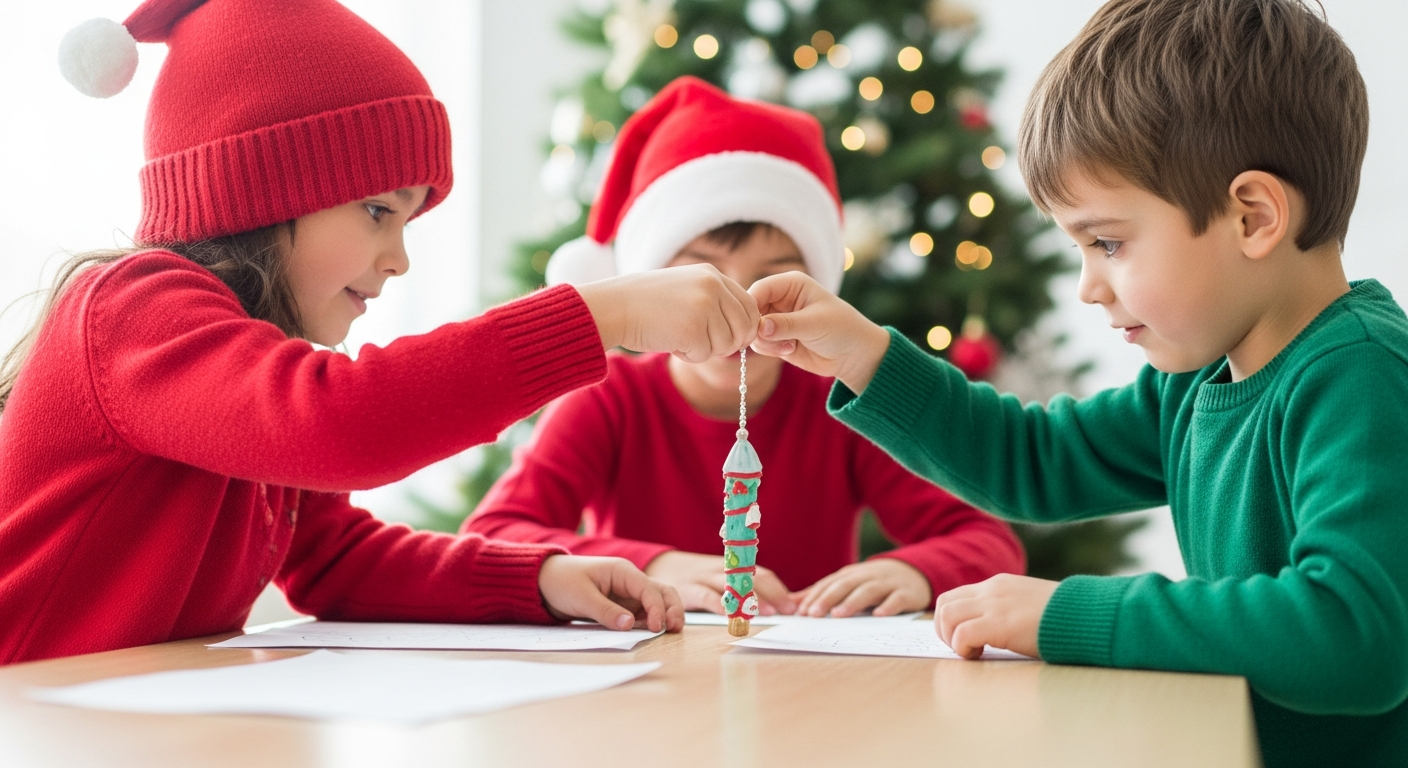
Table of Contents
- Why Christmas Activities are More Than Just Fun
- Setting the Stage for Speech-Boosting Christmas Fun
- Creative Christmas Crafts for Communication
- Sweet & Savory Christmas Kitchen Adventures
- Interactive Christmas Storytelling & Play
- Outdoor & Sensory Christmas Experiences
- Thoughtful Christmas Gifting & Gratitude
- Integrating Speech Blubs into Your Holiday Routine
- Understanding Speech Blubs Value & Pricing
- Conclusion
- Frequently Asked Questions
As the festive lights begin to twinkle and the scent of pine fills the air, a unique kind of magic descends upon our homes. For many children, Christmas is a season of unparalleled wonder, a time when imaginations soar and every moment holds the promise of joy. But what if these precious holiday moments could be more than just fun? What if they could also be powerful catalysts for your child's speech and language development? This isn't just wishful thinking; it's a tangible opportunity waiting to be embraced.
In this comprehensive guide, we'll explore a sleigh-full of engaging Christmas activities that are specifically designed to spark communication, build vocabulary, and foster confident expression in your little ones. From decorating cookies to crafting handmade ornaments, we'll show you how to transform typical holiday traditions into enriching language-learning experiences. We'll also delve into how tools like Speech Blubs can seamlessly integrate into your festive routine, offering a unique blend of scientific methodology and playful learning to help your child truly speak their minds and hearts this holiday season and beyond. Prepare to unwrap a world where festive fun meets meaningful growth, creating cherished memories and invaluable developmental strides for your child.

Why Christmas Activities are More Than Just Fun
The holiday season is a feast for the senses, an immersive experience ripe with new sights, sounds, smells, and textures. For children, this vibrant environment isn't just entertaining; it's a rich landscape for learning and growth. Every twinkling light, every caroled song, every gingerbread cookie offers a fresh opportunity to encounter new words, practice existing sounds, and build complex sentences. Think about it: the unique vocabulary of Christmas – "reindeer," "tinsel," "stocking," "fireplace" – expands a child's lexicon in ways everyday interactions might not. The actions involved – "decorate," "wrap," "bake," "sing" – encourage the use of verbs and descriptive adjectives.
At Speech Blubs, we understand that language development flourishes in engaging, meaningful contexts. Our mission, born from our founders' personal experiences growing up with speech challenges, is to empower children to "speak their minds and hearts." We believe that the joy of communication should be accessible to every child, and the holiday season provides a perfect backdrop for this belief. Instead of passive viewing, we advocate for "smart screen time" that complements active, real-world experiences. By integrating joyful activities with targeted speech practice, we help children connect their experiences to the words they need to express them, fostering not just communication skills, but also confidence and a love for interaction. When children are immersed in an activity they genuinely enjoy, their motivation to communicate skyrockets, making learning feel effortless and natural. This creates a positive feedback loop where fun fuels learning, and learning enhances the fun, paving the way for significant developmental leaps.
Setting the Stage for Speech-Boosting Christmas Fun
Before diving into specific activities, it's essential to understand the underlying principles that make these experiences truly beneficial for speech and language development. The key lies in active participation and engaged adult support. While tempting to let children play independently, especially during the busy holiday season, your involvement is the secret ingredient for turning simple play into powerful learning.

- Active Participation vs. Passive Viewing: When children are actively involved in an activity, whether it's stirring cookie dough or gluing glitter onto a card, their brains are more engaged. This active engagement creates stronger neural pathways for language acquisition than simply watching an activity unfold. Our approach at Speech Blubs aligns with this, offering interactive "video modeling" that encourages children to imitate and participate, rather than just passively consume content. This "smart screen time" provides a screen-free alternative to passive viewing experiences like cartoons, turning screen time into a powerful tool for family connection and learning.
- Adult Co-Play and Support: Your role as a co-player and guide is invaluable. Talk about what you're doing, describe the steps, ask open-ended questions, and narrate your child's actions. "You're pouring the flour! Wow, that's a lot of white powder!" This constant stream of rich, descriptive language provides a model for your child to absorb and imitate. For a child learning to combine words, saying "red ball" or "big star" repeatedly while decorating is far more effective than just seeing the objects.
- Creating a Language-Rich Environment: The holidays naturally lend themselves to a language-rich environment. Point out new decorations, talk about the meaning behind traditions, and encourage conversations with relatives. Use descriptive words for everything: "sparkly tinsel," "warm cider," "jolly Santa." The more language your child is exposed to and encouraged to use, the more their own communication skills will blossom. Remember, every sound, word, and sentence your child attempts is a step forward, building foundational skills that will empower them to express themselves with clarity and confidence.
Ready to transform your holiday season into a language-learning adventure? Download Speech Blubs on the App Store or Google Play today and explore how we make learning to speak joyful and effective!
Creative Christmas Crafts for Communication
Crafting is a fantastic way to engage fine motor skills and creativity, but it's also a goldmine for speech and language development. The act of creating something tangible provides immediate context for new vocabulary and expressive language.
Ornament Making
- What to do: Gather a variety of craft supplies like construction paper, pipe cleaners, pom-poms, glitter, glue, and felt. Encourage your child to create their own unique ornaments for the tree.
- Speech & Language Boost: This activity is perfect for practicing descriptive words. As your child picks up materials, ask: "What color is that pom-pom? Is it soft or hard? What shape will your ornament be?" You can focus on:
- Vocabulary: Colors (red, green, gold), shapes (circle, star, bell), textures (fuzzy, smooth, bumpy, sticky), actions (cut, glue, hang, sprinkle).
- Following Directions: "First, put glue on the paper. Then, add the glitter."
- Prepositions: "Put the star on top of the tree. The ribbon goes around the branch."
- Scenario Link: For a parent whose 3-year-old 'late talker' loves animals and is working on early sounds, creating animal-shaped ornaments offers a fun, motivating way to practice sounds like "moo" for a cow ornament, or "baaa" for a sheep, using the "Animal Kingdom" section within Speech Blubs to reinforce these sounds through video modeling.
Homemade Cards
- What to do: Help your child create personalized Christmas cards for family and friends. Provide various craft supplies, markers, and stickers.
- Speech & Language Boost:
- Expressing Wishes: "What do you want to say to Grandma? 'Merry Christmas, Grandma!'"
- Naming People: Identifying recipients and practicing their names.
- Describing Drawings: "Tell me about your drawing. I see a big snowman and small snowflakes."
- Pre-Writing Skills: Discussing the message and "writing" it down (scribbling for younger children, actual words for older ones).
Gift Wrapping & Decorating
- What to do: Involve your child in wrapping presents for loved ones. Let them choose paper, ribbons, and tags. Even young children can help by holding the tape or pressing down on sticky bows.
- Speech & Language Boost:
- Vocabulary: Names of materials (paper, tape, ribbon, bow), colors, patterns (stripes, dots).
- Action Verbs: Wrap, cut, tape, tie, stick, tear.
- Concepts: Big/small, long/short, shiny/matte.
- Sequencing: "First, we lay out the paper. Next, we put the present on top."
- Scenario Link: A child struggling with two-word combinations can be encouraged to say "red paper" or "shiny bow" as they select wrapping materials, directly applying new vocabulary to a fun, practical task.
Sweet & Savory Christmas Kitchen Adventures
The kitchen during Christmas is often the heart of the home, filled with wonderful aromas and opportunities for connection. Cooking and baking offer a natural, multi-sensory environment for language development.
Baking Cookies
- What to do: Choose a simple cookie recipe and involve your child in every safe step: mixing, stirring, rolling dough, and decorating.
- Speech & Language Boost:
- Following Directions: "Get the red bowl. Pour in the sugar."
- Ingredient Names: Flour, sugar, butter, eggs, sprinkles.
- Action Verbs: Mix, stir, pour, crack, scoop, roll, cut, bake.
- Sensory Descriptions: "The dough is sticky! The cookies smell sweet. Are they warm or cold?"
- Counting: "How many cookies should we make? One, two, three..."
- Scenario Link: A child who struggles with sequencing can practice steps while baking, describing each action as they do it, "First, we add flour. Then, we mix it." This hands-on experience makes abstract concepts concrete and memorable.
Gingerbread House Construction
- What to do: Purchase a gingerbread house kit or bake your own pieces. Then, let your child lead the decorating process with icing, candies, and pretzels.
- Speech & Language Boost:
- Planning & Problem-Solving: "Where should this candy go? Will it stick?"
- Descriptive Language: "We need sticky icing for the roof. Look at the colorful candies!"
- Spatial Concepts: On, under, next to, beside, top, bottom.
- Requesting: "More frosting, please! Can I have a gumdrop?"
- Scenario Link: For a child learning to express preferences, building a gingerbread house provides a perfect context to say "I want a red candy!" or "No more green!"
Hot Chocolate Bar
- What to do: Set up a fun hot chocolate station with different toppings like whipped cream, marshmallows, sprinkles, and chocolate syrup.
- Speech & Language Boost:
- Choices & Preferences: "Do you want whipped cream or marshmallows? Which one do you like best?"
- Action Words: Stir, sip, add, pour.
- Sensory Words: Hot, cold, sweet, creamy.
- Comparing: "This one is bigger than that one."
- Scenario Link: This activity encourages a child to use clear, concise language to make requests, building confidence in expressing their needs and desires.
Feeling inspired to empower your child's communication? Take our quick 3-minute preliminary screener to get a simple assessment and a free 7-day trial of Speech Blubs, and see how our scientifically-backed methods can help!
Interactive Christmas Storytelling & Play
Stories, songs, and imaginative play are the bedrock of early language development. The holidays offer countless narratives and opportunities for creative expression.
Reading Christmas Books
- What to do: Snuggle up and read a variety of Christmas-themed picture books. Don't just read the words; make it interactive!
- Speech & Language Boost:
- Predicting: "What do you think will happen next?"
- Asking/Answering Questions: "Who is that character? Why is Santa so happy?"
- New Vocabulary: Explain unfamiliar words like "sleigh," "elves," "fireplace."
- Retelling: After reading, ask your child to tell you about the story in their own words.
- Character Voices: Using different voices for characters helps with intonation and emotional expression.
- Scenario Link: For a child with limited vocabulary, pointing to pictures of "reindeer" or "presents" while reading and repeating the words helps associate visual cues with new words. Speech Blubs often uses similar visual prompts to reinforce learning, making it a natural extension of story time.
Puppet Shows/Role-Playing
- What to do: Use Christmas-themed puppets (or even stuffed animals and toys) to put on a simple show. Encourage your child to participate or create their own stories.
- Speech & Language Boost:
- Creating Narratives: Developing a simple plot, beginning, middle, and end.
- Taking on Characters: Practicing different voices and perspectives.
- Social Communication: Learning to take turns speaking, listening, and responding.
- Emotional Vocabulary: Expressing how characters feel (happy, sad, excited).
- Scenario Link: A child who struggles with social interactions can use puppets as a safe way to practice dialogue and turn-taking without the pressure of direct eye contact, building confidence in their conversational abilities.
Christmas Caroling/Singing
- What to do: Learn and sing classic Christmas carols together. You can even venture out to carol for neighbors!
- Speech & Language Boost:
- Rhythm & Intonation: Singing naturally helps children develop an understanding of speech rhythm and the rise and fall of their voice.
- Memorization: Learning lyrics strengthens auditory memory.
- Sound Production: Repetitive sounds in songs help with articulation practice in a fun, non-stressful way.
- Emotional Expression: Songs often convey feelings, helping children connect words to emotions.
- Scenario Link: For a child learning early sounds like "s" or "j," singing "Jingle Bells" helps them associate words like "sleigh" or "jingle" with their sounds and actions. Our app's emphasis on imitation through video modeling can further enhance this by providing visual cues for mouth movements.
Outdoor & Sensory Christmas Experiences
The world outside, especially during winter, offers a wealth of sensory input that can stimulate language. These experiences encourage descriptive language and exploration.
Light Gazing
- What to do: Take an evening stroll or a drive to admire Christmas lights and decorations in your neighborhood or a local display.
- Speech & Language Boost:
- Describing Colors: "Look at the red lights! And blue! And green!"
- Shapes & Patterns: "That one is a star. This one looks like a reindeer."
- Size & Quantity: "Big lights, small lights. So many lights!"
- Sensory Words: Twinkling, bright, dark, glowing.
- Scenario Link: A child learning to use descriptive adjectives can practice saying "sparkly lights," "big Santa," or "colorful tree" as they point out various decorations. This natural labeling helps solidify new vocabulary.
Snow Play (If Applicable)
- What to do: If you're lucky enough to have snow, bundle up and head outside for snowball fights, snowman building, or making snow angels.
- Speech & Language Boost:
- Sensory Words: Cold, wet, soft, fluffy, icy.
- Action Verbs: Throw, roll, build, stomp, dig, slide.
- Concepts: Up/down, fast/slow, in/out.
- Narrating Play: "I am rolling a big snowball. It's getting bigger!"
- Scenario Link: For a child working on multi-word phrases, building a snowman provides opportunities to say "big snow," "cold hands," or "carrot nose," extending their utterances in a fun, meaningful context.
Winter Nature Walk
- What to do: Even without snow, a winter walk offers unique sights. Look for bare trees, evergreen branches, listen for winter birds, or search for signs of animals.
- Speech & Language Boost:
- Observing & Describing: "The tree has no leaves. It's brown and bare."
- Asking Questions: "Where do the birds go in winter? What is that sound?"
- Vocabulary: Pinecone, branch, twig, evergreen, frozen, chilly.
- Comparing: "This leaf is crunchy, but that one is soft."
- Scenario Link: This activity helps a child develop observational skills and then verbalize those observations, moving from perception to expression.
Thoughtful Christmas Gifting & Gratitude
The act of giving and receiving gifts offers significant social and communicative lessons, teaching empathy, gratitude, and the joy of sharing.
Making a Wish List
- What to do: Help your child create a Christmas wish list. This can be done by drawing pictures, cutting out magazine clippings, or writing down words.
- Speech & Language Boost:
- Expressing Desires: "I want a new doll. I wish for a big truck."
- Explaining Reasons: "I want the truck so I can play outside."
- Descriptive Language: "A red, fast car. A soft, cuddly teddy bear."
- Categorization: Grouping similar items (toys, books, clothes).
- Scenario Link: This encourages a child to articulate their wants and needs clearly, fostering self-expression and the ability to describe objects with more detail.
Gift Giving & Receiving
- What to do: Emphasize the experience of giving. Talk about who the gift is for and why it's special. When receiving, guide your child to express gratitude.
- Speech & Language Boost:
- Saying "Thank You": Practicing polite phrases and understanding their importance.
- Describing Gifts: "Wow, it's a car! It's blue and fast!"
- Sharing Feelings: "I feel happy! This is exciting!"
- Social Reciprocity: Understanding the give-and-take of social interactions.
- Scenario Link: Practicing "thank you" or "I like it" during gift exchange builds essential social communication skills and confidence, which are vital for healthy development.
Integrating Speech Blubs into Your Holiday Routine
While all these activities are wonderful for fostering language, sometimes you need a little extra support, especially for children who need a boost with specific sounds or concepts. This is where Speech Blubs shines, offering a unique blend of scientific principles and play that complements your holiday fun.
At Speech Blubs, our company was born from the personal experiences of our founders, who all grew up with speech problems and created the tool they wished they had. We are committed to providing an immediate, effective, and joyful solution for the 1 in 4 children who need speech support. Our innovative "video modeling" methodology is at the heart of our approach, where children learn by watching and imitating their peers. This technique leverages mirror neurons, making learning feel natural and engaging.
How Speech Blubs Enhances Holiday Learning:
- Reinforce Holiday Vocabulary: Our app features various sections that can easily tie into holiday themes. For instance, if you're making animal-shaped cookies, explore the "Animal Kingdom" section to practice animal sounds and names. If you're decorating with colors, the "Colors" section can reinforce those new words.
- Targeted Sound Practice: If your child is working on specific speech sounds, our app provides clear, motivating examples. Imagine decorating the Christmas tree and then using Speech Blubs to practice words that start with "T" like "tree" or "tinsel," watching other children articulate them perfectly.
- Interactive "Smart Screen Time": We provide a screen-free alternative to passive viewing (like cartoons) and a powerful tool for family connection. Instead of your child passively watching, Speech Blubs encourages them to actively participate, imitate, and speak. This turns screen time into a productive, shared learning experience.
- Build Confidence & Reduce Frustration: The holidays can be overwhelming, and communication difficulties can add to a child's frustration. Speech Blubs offers a low-pressure, playful environment where children can practice at their own pace, building confidence in their abilities. We focus on fostering a love for communication, building self-assurance, and developing key foundational skills. We always emphasize realistic expectations – our goal is to help your child develop clear, confident speech, not to guarantee they'll be giving public speeches in a month. It's about the process, the progress, and the joy of connection.
Our unique approach, backed by our scientific methodology, has garnered praise from parents worldwide. See what other parents are saying about their child's success with Speech Blubs and discover how we've helped countless families empower their children to speak their hearts and minds.
Ready to make Speech Blubs a part of your family's joyful learning journey? Create your account and begin your 7-day free trial today!
Understanding Speech Blubs Value & Pricing
We believe in transparency and want to ensure you get the most value out of Speech Blubs. We offer two main subscription plans tailored to different needs, but one clearly stands out as the best choice for families committed to their child's speech development.
Our Plans:
- Monthly Plan: For $14.99 per month, you get access to our core Speech Blubs features. However, this plan does not include a free trial, the additional Reading Blubs app, early access to new updates, or our expedited 24-hour support response time.
- Yearly Plan: For just $59.99 per year, this plan offers superior value, breaking down to an incredible $4.99 per month – that's a 66% savings compared to the monthly plan! Beyond the significant cost savings, the Yearly plan unlocks a wealth of exclusive benefits:
- 7-Day Free Trial: A full week to explore all Speech Blubs has to offer before committing.
- Bonus Reading Blubs App: Double the learning with our companion app focused on early reading skills.
- Early Access to New Updates: Be among the first to experience new features and content.
- 24-Hour Support Response Time: Get quick, dedicated assistance whenever you need it.
We highly recommend the Yearly plan. It's designed to give your child the comprehensive support they need for sustained progress throughout the year, with added features that truly enhance the learning experience. The free trial means you can explore all the benefits risk-free.
Conclusion
The Christmas season is a precious time for creating lasting memories and strengthening family bonds. By thoughtfully integrating speech-boosting activities into your holiday traditions, you're not just having fun; you're actively nurturing your child's communication skills, building their confidence, and fostering a lifelong love for language. From the descriptive language used in crafting ornaments to the sequencing skills practiced while baking cookies, every festive moment holds developmental potential.
Remember, the goal is not perfection, but progress – celebrating every sound, word, and sentence your child learns to express. And as you embark on this joyful journey, know that Speech Blubs is here to support you. Our unique blend of scientific video modeling and engaging play offers a powerful supplement to your child's overall development plan, turning "smart screen time" into a tool for connection and growth.
Why wait to give your child the gift of confident communication? Empower them to speak their minds and hearts this holiday season and beyond. Start your 7-day free trial today by choosing the Yearly plan to unlock all exclusive features, including the Reading Blubs app and priority support, all while saving 66%! Download Speech Blubs on the App Store or Google Play and embark on a joyful journey of language development.
Frequently Asked Questions
Q1: How can I make sure my child benefits from these activities for speech?
A: The key is active engagement and adult participation. Talk constantly, narrate your actions, describe objects, ask open-ended questions (e.g., "What do you see?" instead of "Is that red?"), and respond enthusiastically to your child's attempts at communication. Model correct language without pressuring them to repeat. Make it fun and stress-free!
Q2: Is Speech Blubs a substitute for professional speech therapy?
A: Speech Blubs is a powerful tool designed to supplement and enhance a child's overall development and, when applicable, professional therapy. It provides a fun, engaging, and scientifically-backed way to practice speech and language skills at home. However, it is not intended to replace the personalized assessment and intervention provided by a certified speech-language pathologist. If you have concerns about your child's speech development, we always recommend consulting with a professional.
Q3: What age group is Speech Blubs best for?
A: Speech Blubs is primarily designed for children aged 1 to 8 years old who are developing their speech and language skills. Our app is particularly beneficial for late talkers, children with articulation difficulties, or those looking to expand their vocabulary and sentence structure. The "video modeling" approach is effective across this age range, adapting to various developmental stages.
Q4: How do I get the most value from Speech Blubs?
A: To maximize your child's progress and your investment, we strongly recommend choosing the Yearly plan. This plan includes a 7-day free trial, access to the additional Reading Blubs app, early access to new features, and 24-hour support response, all for a significantly lower monthly cost (just $4.99/month compared to $14.99/month for the Monthly plan). Consistent, regular use of the app, ideally with an adult participating alongside the child, will yield the best results.
About the author