
Magical Christmas DIY Activities for Kids
 By Speech Blubs Team•Dec 19, 2025•20 min.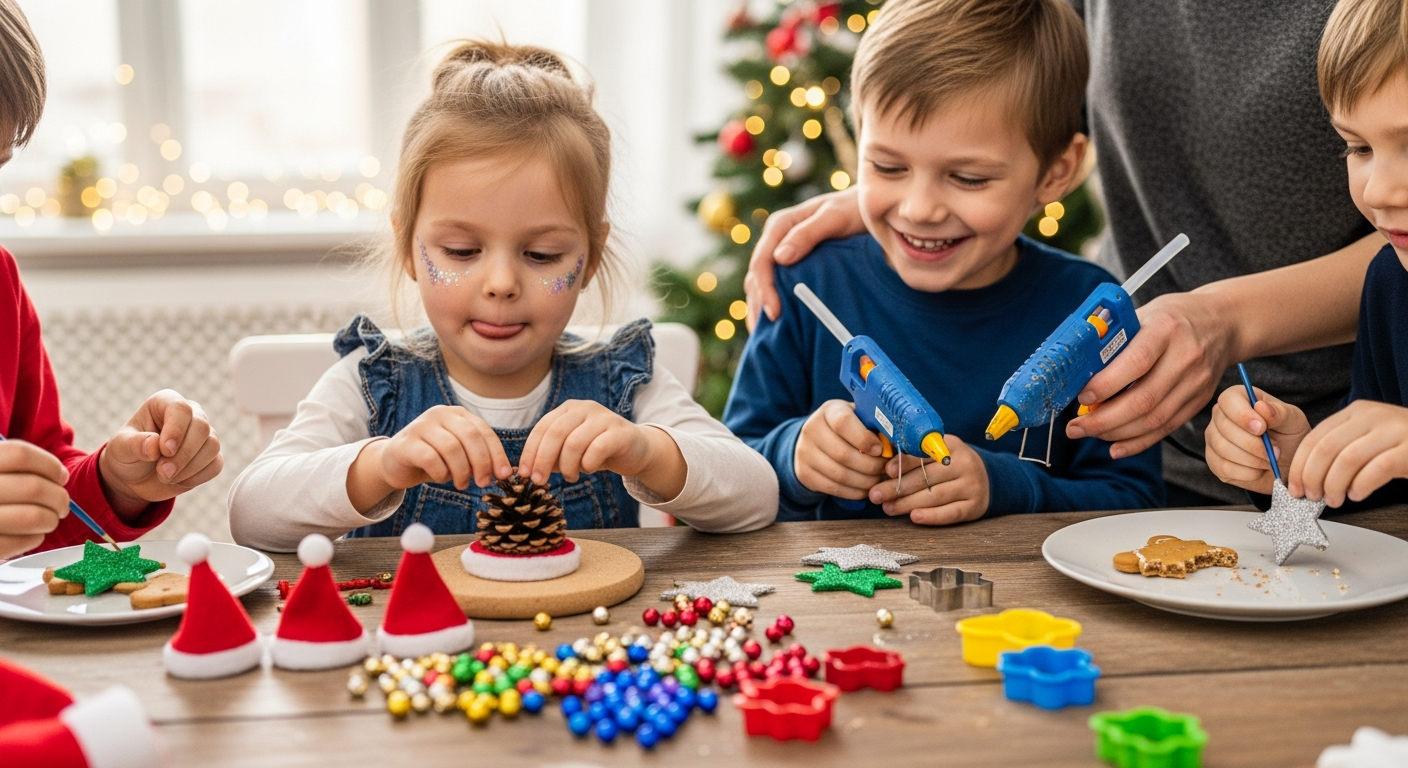
Table of Contents
- Introduction
- Why DIY Christmas Activities are More Than Just Fun
- The Magic of Making: Boosting Communication Through Crafts
- Festive & Fun Christmas DIY Activities for Kids
- How Speech Blubs Enhances Your Holiday Communication Journey
- Getting Started with Speech Blubs: Our Family-Friendly Plans
- Conclusion
- FAQ
Introduction
As the days grow shorter and the festive lights begin to twinkle, there’s an undeniable magic that fills the air. For families with young children, this season offers a unique opportunity to create cherished memories, build new traditions, and engage in activities that are both fun and enriching. While the allure of shiny new toys is strong, there's something profoundly special about creating holiday cheer with your own hands. Beyond the glitter and glue, these hands-on Christmas DIY activities for kids are a powerful way to foster communication, build confidence, and strengthen family bonds. This post will delve into a world of enchanting holiday crafts, showing you how simple, homemade projects can transform into joyful learning experiences, nurturing your child's speech and language development alongside their festive spirit. Let’s embark on a journey to make this holiday season not just memorable, but also wonderfully communicative.

Why DIY Christmas Activities are More Than Just Fun
Christmas DIY activities for kids are far more than just a way to fill an afternoon or decorate your home. They are vibrant canvases for learning and development, offering a rich environment where children can explore, create, and express themselves. In an age where passive screen time often dominates, hands-on activities provide a much-needed alternative, encouraging active engagement and critical thinking.
Beyond Entertainment: A Playground for Skill Development
Engaging in DIY crafts during the holidays is a multisensory experience that naturally supports a wide range of developmental skills. From the intricate movements required to string beads onto a garland to the problem-solving involved in assembling a gingerbread house, children are constantly refining their abilities.
- Fine Motor Skills: Activities like cutting, gluing, painting, and manipulating small decorative items are excellent for developing the small muscles in a child’s hands and fingers. These skills are foundational for tasks like writing, dressing, and self-feeding.
- Cognitive Development: Crafting involves planning, sequencing, and following instructions. Children learn about cause and effect, shapes, colors, and spatial relationships as they bring their creations to life. They practice making choices, adapting to challenges, and seeing a project through to completion.
- Creativity and Imagination: DIY projects provide an open-ended platform for children to express their unique ideas and perspectives. There’s no right or wrong way to decorate a salt dough ornament, allowing their imagination to soar and fostering a sense of artistic freedom. This creative outlet is crucial for emotional expression and problem-solving.
Communication Opportunities: Talking, Listening, and Connecting
Perhaps one of the most significant benefits of Christmas DIY activities is the natural way they open doors to communication. These shared experiences become organic opportunities for rich language interaction between children and caregivers.

- Vocabulary Expansion: As you craft together, you’ll naturally introduce new words related to materials (glitter, felt, pipe cleaner), actions (cut, glue, paint, sprinkle), and festive objects (reindeer, snowflake, ornament).
- Storytelling: Children can narrate their crafting process, describe what they are making, or even create elaborate stories about their finished pieces.
- Following Instructions: Many crafts require multi-step directions, giving children practice in listening carefully and understanding sequences.
- Social Communication: Working together encourages turn-taking, asking for help, sharing materials, and expressing preferences. These are vital social skills that extend far beyond the crafting table.
Family Bonding and Building Traditions
In the hustle and bustle of the holiday season, dedicated family time can sometimes feel elusive. DIY activities offer a precious opportunity to slow down, connect, and create lasting memories. The crafts themselves become tangible reminders of these special moments, building family traditions that can be cherished year after year. Imagine pulling out a handmade ornament from years past and reminiscing about the day it was made – these are the threads that weave the fabric of family history.
At Speech Blubs, we understand the profound impact of these family connections. Our mission is to empower children to "speak their minds and hearts," and we believe that joyful, shared experiences like these Christmas DIY projects are fundamental to that journey. We see these activities as the perfect complement to our own "smart screen time" experiences, which also prioritize engagement and connection.
The Magic of Making: Boosting Communication Through Crafts
Let's delve deeper into how specific aspects of crafting can directly enhance communication skills, offering a supportive environment for every child to thrive.
Vocabulary Expansion
Every DIY activity is a treasure trove of new words waiting to be discovered. Whether you're working with "fluffy" cotton balls, "shiny" tinsel, or "sticky" glue, you're constantly introducing descriptive adjectives, action verbs, and nouns. For instance, while making a simple paper chain, you can talk about the "red" paper, the "green" paper, and the action of "cutting" and "gluing" the strips. The more words a child hears and uses in meaningful contexts, the stronger their vocabulary becomes. This rich linguistic environment builds a robust foundation, making it easier for them to express their thoughts and feelings. Our Speech Blubs app is designed to complement this by introducing thousands of new words through engaging activities and video modeling, allowing children to imitate their peers and build their vocabulary in a fun, interactive way. You can explore how our scientifically backed methodology helps children expand their language skills on our Research page.
Following Directions
Crafting is an excellent way to practice following multi-step instructions, a crucial skill for both academic success and daily life. You might say, "First, get the blue paper, then cut two circles, and finally, glue them to the snowman." Breaking down tasks into smaller, manageable steps helps children process information sequentially. This also offers a chance to introduce temporal concepts like "first," "next," and "last." If a child struggles, you can demonstrate each step, providing a visual model alongside your verbal instructions. This mirror neuron-activating approach is at the core of Speech Blubs, where children learn by observing and imitating, making it easier to grasp complex communication skills.
Descriptive Language
Encourage your child to talk about their creations using descriptive words. "How does the glitter feel?" (Sparkly, rough). "What does the cinnamon smell like?" (Sweet, spicy). "Tell me about your reindeer – what color is his nose?" This encourages them to use adjectives and adverbs, adding richness and detail to their speech. By prompting them to describe textures, colors, shapes, and sizes, you're helping them articulate their observations and experiences more effectively. This skill is vital for sharing ideas, telling stories, and truly "speaking their minds and hearts."
Storytelling & Imagination
Once a craft is complete, the communication doesn't have to stop. Encourage your child to tell a story about their creation. If they made a gingerbread person, ask: "Where does your gingerbread person live? What adventures do they have?" If they made an ornament, "Who will hang this on the tree? What memory does it bring?" These prompts foster imaginative play and narrative skills, which are fundamental to complex communication. Storytelling helps children organize their thoughts, develop a plot, and use expressive language.
Social Communication
Many Christmas DIY activities can be done collaboratively, offering natural opportunities for social interaction. Sharing materials, asking for help, taking turns, and offering compliments all contribute to developing crucial social communication skills. For instance, if you're decorating cookies together, you might say, "Can you please pass me the red sprinkles?" or "It's my turn to put on the icing, then it's your turn." These simple interactions teach polite requests, cooperation, and the joy of shared experiences. These moments of connection are at the heart of our mission at Speech Blubs, where we aim to provide powerful tools for family connection, not just passive entertainment.
Festive & Fun Christmas DIY Activities for Kids
Now, let's explore some wonderful Christmas DIY activities that are not only fun but also excellent for nurturing communication skills. Remember to engage with your child, ask open-ended questions, and narrate your own actions to model good communication.
Sparkling Ornaments: Fine Motor & Vocabulary Wonders
Creating homemade ornaments is a quintessential Christmas activity, and it’s fantastic for little hands and budding talkers.
- Ideas:
- Salt Dough Ornaments: Mix flour, salt, and water, roll it out, cut shapes with cookie cutters, bake, and then paint them. This activity allows for a lot of descriptive language ("squishy dough," "smooth rolling pin," "shiny paint").
- Pipe Cleaner Snowflakes: Children can bend and twist pipe cleaners into snowflake shapes, adding beads or glitter. Talk about "fuzzy" pipe cleaners, "cold" snowflakes, and "sparkly" beads.
- Painted Baubles: Simple, inexpensive baubles can be transformed with paint, glitter, and glue. Focus on color names ("red bauble," "green stripes") and actions ("dip the brush," "gently paint").
- Speech Blubs Connection: As your child chooses shapes, colors, or materials, encourage them to vocalize their choices. For a child working on early sounds, saying "star" for a star-shaped ornament or "red" for a red painted bauble is a great start. Our "Build a Word" activities in Speech Blubs can help reinforce these vocabulary items, making it easier for them to articulate their creative vision. You can find these and many other fun activities when you download Speech Blubs on the App Store or Google Play Store.
Holiday Cards & Gift Tags: Expressive Language & Creativity
Handmade cards and gift tags add a personal touch to holiday giving and offer a wonderful opportunity for expressive language.
- Ideas:
- Fingerprint Cards: Dip fingers in paint to make festive shapes like reindeer (thumbprint body, drawn antlers) or strings of lights. Talk about body parts ("my finger," "my thumb") and the colors.
- Potato Print Designs: Cut shapes into a potato half, dip in paint, and stamp onto cards. Discuss the shapes ("star," "tree"), colors, and the "squishy" potato.
- Speech Blubs Connection: Encourage your child to decide who the card is for and what message they want to convey (even if you write it down for them). "What do you want to tell Grandma?" "Do you want to draw a picture of a Santa?" This helps them formulate thoughts and express intentions. The storytelling sections of our app can help children practice expressing simple narratives, which can then be applied to their creative messages.
Gingerbread House Decorating: Sequencing & Descriptive Language
Decorating a gingerbread house is a holiday classic that naturally involves following steps and using rich descriptive language.
- Ideas: Use pre-made gingerbread house kits for ease, or bake your own. Provide a variety of candies, icing, and sprinkles.
- Speech Blubs Connection: Talk through each step: "First, we put icing on the roof. Next, we add the gumdrops to the sides. Then, we sprinkle the snowflakes on top." Emphasize words like "sticky," "sweet," "colorful," "crunchy," and "soft." For a child working on developing sequences, this is an excellent real-world application. They can even pretend to "eat" the candies, practicing action words.
DIY Advent Calendars: Number Recognition & Anticipation
Building an Advent calendar helps children understand the concept of time, numbers, and anticipation for Christmas.
- Ideas:
- Paper Chain Countdown: Cut strips of paper, glue them into rings, and link them together. Remove one ring each day. Count the rings together daily.
- Simple Pocket Calendars: Decorate small paper bags or envelopes and number them 1-24. Fill with tiny treats or activity ideas.
- Speech Blubs Connection: Practice counting "one, two, three" as you build the chain or count down the days. Talk about "tomorrow," "next," and "Christmas day." "How many more sleeps until Christmas?" This helps develop temporal vocabulary and numeracy skills. If you're wondering about your child's communication milestones, take our quick 3-minute preliminary screener for an assessment and next-steps plan.
Handprint/Footprint Keepsakes: Body Parts & Memory
These personalized crafts create beautiful keepsakes and offer a chance to talk about body parts and memories.
- Ideas:
- Reindeer Handprints: Paint your child's hand brown, press onto paper, then add googly eyes and a red nose to the thumbprint "head" for a reindeer.
- Santa Footprints: Paint a child's foot white for Santa's beard, then add a red hat and rosy cheeks.
- Speech Blubs Connection: Name the body parts as you paint them: "This is your hand," "Here are your fingers." Talk about the sensations: "The paint feels cold/ticklish!" "My hand is messy!" These simple phrases are great for early language learners.
Christmas Sensory Bins: Tactile Exploration & Descriptive Words
Sensory bins are fantastic for exploration and provide endless opportunities for descriptive language.
- Ideas: Fill a bin with rice, dried beans, or shredded paper. Add festive elements like cinnamon sticks, pinecones, small ornaments, cookie cutters, jingle bells, and scoopers.
- Speech Blubs Connection: Encourage your child to describe what they feel, hear, and smell. "The rice feels rough," "The pinecone is bumpy," "The bells jingle loudly," "It smells like cinnamon." This naturally prompts the use of adjectives and sensory vocabulary, helping children articulate their experiences.
DIY Christmas Garlands & Banners: Patterns & Colors
Creating garlands or banners is a collaborative activity that reinforces concepts like patterns, colors, and sequencing.
- Ideas:
- Popcorn and Cranberry Garland: String cranberries and popped popcorn together. Discuss "red" cranberries, "white" popcorn, and the "long" string.
- Paper Chains: As mentioned, a classic. Focus on color patterns ("red, green, red, green") and counting the links.
- Speech Blubs Connection: This is perfect for practicing repetitive phrases and recognizing patterns. "Red, then green. Red, then green!" "What comes next?" This helps reinforce predictive language and visual sequencing.
Cookie Decorating: Following Instructions & Vocabulary
Decorating cookies combines the joy of baking with creative expression and lots of language practice.
- Ideas: Bake simple sugar cookies in festive shapes. Provide various colors of icing, sprinkles, and small candies.
- Speech Blubs Connection: "First, we spread the icing. Then, we sprinkle the stars. What color sprinkles do you want?" This is a perfect scenario for practicing multi-step instructions and making choices. Talk about the shapes of the cookies ("star," "tree"), colors of the icing, and the "yummy" taste. "My cookie is round!" "This one has lots of sprinkles!"
Simple Christmas Puppet Show: Narrative Skills & Role-Playing
After all the crafting, why not put on a show? This activity takes expressive language to the next level.
- Ideas: Use any of the created characters (gingerbread people, reindeer handprints) or make simple paper bag puppets. Create a small stage from a cardboard box.
- Speech Blubs Connection: Encourage your child to give their puppets voices and tell a simple story. "What does Santa say?" "The reindeer wants to fly!" This fosters imaginative play, helps develop narrative skills, and provides a safe space for practicing different vocalizations and role-playing scenarios. It's a fantastic way to bridge the gap between imagination and verbal expression, building confidence in sharing stories.
How Speech Blubs Enhances Your Holiday Communication Journey
While hands-on activities are invaluable, Speech Blubs offers a complementary, science-backed approach to further bolster your child’s communication development. Our app is designed to be a powerful supplement to these real-world experiences, reinforcing skills and providing targeted practice in an engaging way.
We at Speech Blubs believe that every child deserves to "speak their minds and hearts." Our company was born from the personal experiences of our founders, who all grew up with speech problems and created the tool they wished they had. We are committed to providing an immediate, effective, and joyful solution for the 1 in 4 children who need speech support. We achieve this by blending scientific principles with play into one-of-a-kind "smart screen time" experiences.
Reinforcing Skills Learned Through DIY
Imagine your child has just finished making a "shiny red star" ornament. In the Speech Blubs app, they can encounter activities that reinforce words like "shiny," "red," and "star" through our unique "video modeling" methodology. Children learn by watching and imitating their peers, which is incredibly effective because it taps into mirror neurons in the brain, making learning feel natural and fun. Our method is backed by science, placing us in the top tier of speech apps worldwide, as detailed on our Research page.
"Smart Screen Time" vs. Passive Viewing
Unlike passive viewing experiences like cartoons, Speech Blubs provides a screen-free alternative that actively engages your child. Our interactive format encourages children to vocalize, repeat, and imitate, turning screen time into productive learning time. This transforms a potentially isolating activity into a powerful tool for family connection, as parents can co-play and support their child's progress.
Specific Examples of Connecting Activities to Speech Blubs:
- Vocabulary Building: If your child learns new words like "glue," "paint," or "decorate" during crafting, Speech Blubs has sections focused on actions and objects that can reinforce these terms through interactive exercises. This helps solidify their understanding and pronunciation.
- Sound Practice: For children working on specific sounds (e.g., 's' for "star," 'r' for "red reindeer"), the app offers targeted sound practice activities. After making a reindeer ornament, they can practice the 'r' sound with our engaging video models.
- Confidence Building: If your child is shy about describing their creations, the "Guess the Word" or "What's Missing" activities in Speech Blubs can build confidence in a low-pressure, playful environment. This practice translates to increased willingness to communicate during real-world activities.
- Speech Blubs for Early Talkers: For a parent whose 3-year-old 'late talker' loves animals and wants to describe their animal-themed ornaments, the 'Animal Kingdom' section of Speech Blubs offers a fun, motivating way to practice 'moo,' 'baa,' and other animal sounds and names. This immediate application of learned sounds to their crafted items makes learning concrete and exciting.
- Enhancing Social Communication: Our app helps lay the groundwork for better social communication. By building a strong vocabulary and confidence in expressing themselves, children become more adept at sharing, turn-taking, and interacting during group activities like decorating cookies or putting on a puppet show.
Speech Blubs is designed to be an immediate, effective, and joyful solution, ensuring that communication development is never a chore but a delightful adventure. Discover the magic of empowered communication; start your child's journey today by creating your account and beginning your 7-day free trial on our website.
Getting Started with Speech Blubs: Our Family-Friendly Plans
We believe in transparency and providing exceptional value to families. We understand that choosing the right support for your child is an important decision, and we want to make it as straightforward as possible.
At Speech Blubs, we offer two main subscription plans to fit your family's needs:
- Monthly Plan: For just $14.99 per month, you get access to our core Speech Blubs app features, providing a flexible option for families.
- Yearly Plan: Our most popular and highly recommended choice, priced at an incredible $59.99 per year. This breaks down to just $4.99 per month, offering an impressive 66% savings compared to the monthly plan!
Unlock More Value with the Yearly Plan
The Yearly plan isn't just about saving money; it's about unlocking the full Speech Blubs experience and maximizing your child's developmental journey. When you choose the Yearly plan, you receive exclusive, high-value features that are not included with the Monthly plan:
- A 7-Day Free Trial: This is your risk-free opportunity to explore all that Speech Blubs has to offer. Experience the engaging activities, the unique video modeling, and see firsthand how your child responds.
- The Extra Reading Blubs App: Beyond speech and language, the Yearly plan gives you access to our companion Reading Blubs app, designed to further support early literacy skills. It's like getting two apps for the price of one!
- Early Access to New Updates: Be among the first to experience our latest features, activities, and improvements. We're constantly evolving based on user feedback and research.
- 24-Hour Support Response Time: Get priority access to our dedicated customer support team, ensuring your questions are answered quickly and efficiently whenever you need assistance.
We encourage you to choose the Yearly plan to get the absolute best value and the most comprehensive support for your child's communication journey. It's the ideal way to fully experience all the benefits Speech Blubs has to offer, including your free trial and the Reading Blubs app.
Ready to transform your child's communication and make this holiday season even more special? Create your account and begin your 7-day free trial today! You can also download Speech Blubs directly from the Apple App Store or get it on the Google Play Store.
Conclusion
The holiday season is a magical time, brimming with opportunities to create, connect, and communicate. By embracing Christmas DIY activities for kids, you're not just crafting festive decorations; you're actively nurturing your child's fine motor skills, cognitive abilities, creativity, and most importantly, their communication. Each piece of glitter, every brushstroke, and every shared laugh becomes a building block in their journey to "speak their minds and hearts."
These hands-on moments, filled with conversation, instruction, and imaginative play, lay a crucial foundation for strong language development. And when combined with the "smart screen time" experiences offered by Speech Blubs, your child gains a powerful, comprehensive support system designed to make learning joyful and effective. Our unique video modeling methodology and commitment to blending scientific principles with play mean that we are a partner in your child's growth, offering immediate, effective, and joyful solutions.
Don't let this holiday season pass by without harnessing its full potential for connection and communication. Take the first step towards empowering your child with the gift of clear and confident speech.
Ready to embark on a truly magical communication journey? We invite you to experience the full benefits of Speech Blubs. Start your 7-day free trial today by selecting our Yearly plan to unlock all exclusive features, including the Reading Blubs app. You can also find us on the Apple App Store and Google Play Store.
FAQ
Q1: Are these Christmas DIY activities suitable for all ages?
A1: Many of these activities can be adapted for a wide range of ages. For toddlers, focus on simple tasks like painting with fingers, gluing large shapes, or sensory bins. For preschoolers and early elementary children, introduce more complex steps, cutting, and detailed decorating. Always supervise young children, especially with small parts or tools.
Q2: How can I encourage my child to talk more during these activities?
A2: Engage in "parallel talk" by narrating what you and your child are doing ("I'm cutting the red paper," "You're gluing the snowflake"). Ask open-ended questions that require more than a "yes" or "no" answer ("What color should we use next?" "How does that feel?"). Model descriptive language yourself, and provide choices to encourage vocalization.
Q3: How does Speech Blubs fit into our holiday crafting time?
A3: Speech Blubs acts as a wonderful complement. After a crafting session, you can use the app to reinforce vocabulary learned (e.g., finding "star" in the app after making a star ornament) or practice sounds relevant to words used. It's a way to extend the learning and consolidate new language skills in an engaging, interactive "smart screen time" format that leverages our unique video modeling.
Q4: What if my child is already receiving speech therapy?
A4: Speech Blubs is an excellent supplement to professional therapy. Our app provides consistent, daily practice in a fun and motivating way, reinforcing the goals and strategies your child is working on with their therapist. Many therapists recommend Speech Blubs as a home practice tool. Always consult with your child's speech-language pathologist to ensure any supplemental tools align with their individual therapy plan.
About the author