
Magical Christmas Indoor Activities for Kids
 By Speech Blubs Team•Dec 19, 2025•21 min.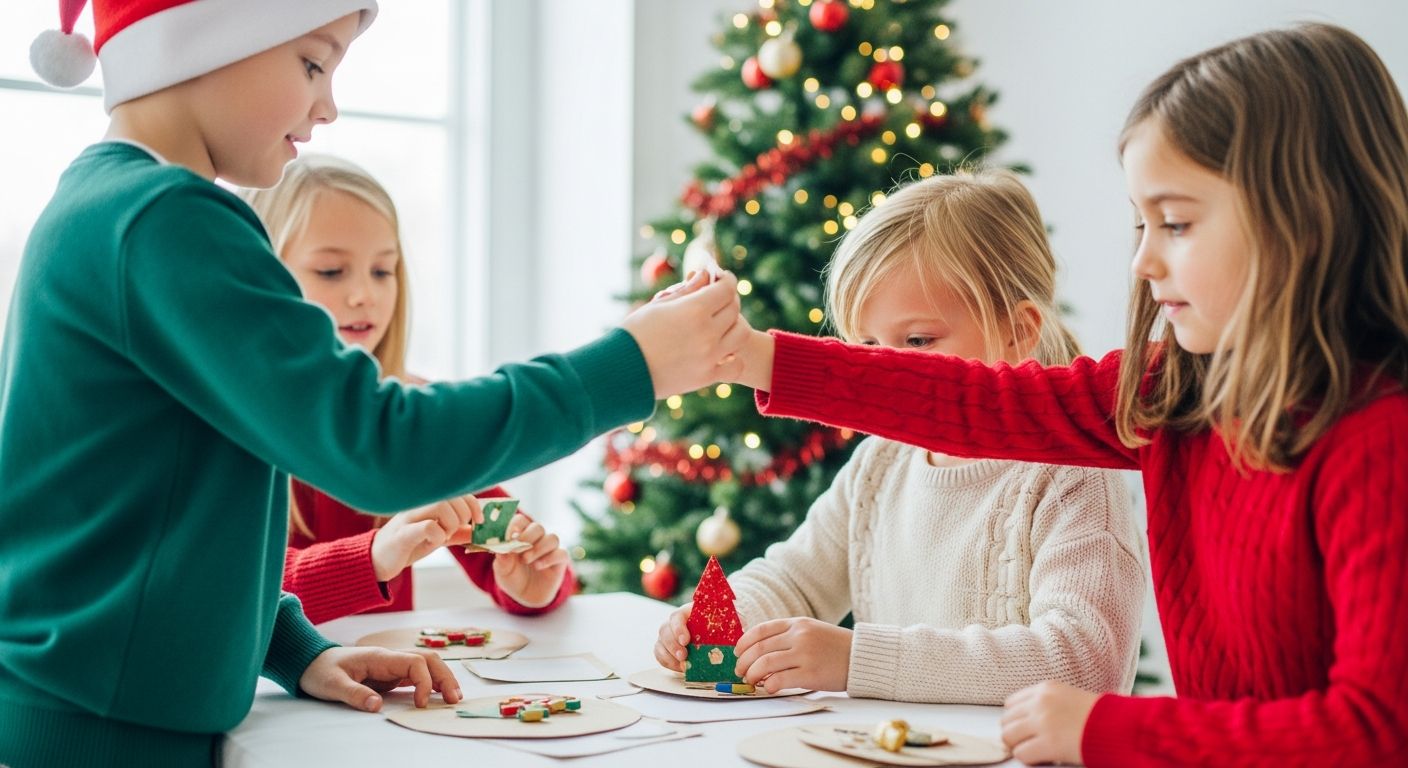
Table of Contents
- Why Embracing Indoor Christmas Activities is a Holiday Essential
- The Power of Playful Communication During the Holidays
- Sensory & Creative Christmas Crafts: Hands-On Communication
- Cozy & Calming Christmas Activities: Connection and Conversation
- Active & Engaging Christmas Games: Movement and Merriment
- Kitchen & Culinary Christmas Adventures: Taste, Texture, and Talk
- Giving Back & Acts of Kindness: Empathy and Expression
- Leveraging Technology for Speech Development This Christmas
- Unlocking the Full Potential: Choosing Your Speech Blubs Plan
- Conclusion
- Frequently Asked Questions (FAQ)
The holiday season twinkles with an undeniable magic, bringing with it a sense of wonder, joy, and often, a flurry of unpredictable weather. One minute you might be enjoying a crisp winter walk, and the next, rain or snow could have everyone cooped up indoors. For parents, this can present a unique challenge: how do you keep the festive spirit alive and children engaged when outdoor play isn't an option? The answer lies in a treasure trove of imaginative and enriching indoor activities that not only entertain but also foster crucial developmental skills, including speech and language. This guide will explore a vibrant array of Christmas indoor activities for kids, offering practical ideas to transform your home into a hub of holiday cheer and learning, even when the winter winds howl outside. We believe that every moment, especially during the holidays, is an opportunity for connection and growth, and with the right approach, indoor Christmas fun can be just as memorable and beneficial as any outdoor adventure.

Why Embracing Indoor Christmas Activities is a Holiday Essential
When the weather outside is frightful, or simply when the holiday rush calls for some much-needed cozy family time, indoor Christmas activities become more than just a pastime; they become a cornerstone of seasonal enjoyment and development. Far from being a last resort, these activities offer a unique set of benefits for children and families alike.
Weather-Proof Fun and Comfort
Let's face it, winter weather can be unpredictable. Instead of letting snow, rain, or extreme cold dampen your holiday spirits, pivoting to indoor Christmas activities ensures the fun never stops. It provides a warm, safe, and comfortable environment where children can play, create, and explore without environmental limitations. This predictability can be incredibly soothing for children, allowing them to relax and fully immerse themselves in the joy of the season.
Unparalleled Family Bonding Opportunities
The holidays are synonymous with family, and indoor activities offer concentrated opportunities for connection. Away from the distractions of the outside world, families can truly engage with each other. Whether it's baking cookies together, reading a festive story, or crafting a homemade ornament, these shared experiences build lasting memories and strengthen familial bonds. These moments of co-play and shared attention are invaluable for fostering a sense of belonging and security in children.
A Rich Environment for Skill Development
Beyond the fun, many Christmas indoor activities for kids are naturally packed with developmental benefits. They can enhance fine motor skills through intricate crafts, boost cognitive abilities with problem-solving games, and, crucially, provide a fantastic platform for language and communication development. Every step of an activity, from planning to execution, offers chances to talk, describe, question, and listen, turning play into powerful learning experiences.
Managing Holiday Overstimulation and Creating Calm
The holiday season, while joyful, can also be overwhelming for children due to new routines, numerous social gatherings, and a deluge of sensory input. Indoor, structured activities provide a welcome change of pace, offering a calmer, more controlled environment. They can help children regulate their emotions, focus their energy, and process the excitement of the season in a relaxed setting. Creating a designated "calm corner" or quiet activity space can be especially beneficial during this bustling time.

The Power of Playful Communication During the Holidays
At Speech Blubs, we understand that every interaction is a chance for a child to grow, to explore their voice, and to ultimately "speak their minds and hearts." Our mission was born from personal experiences; our founders, who all grew up facing speech challenges, created the very tool they wished they had as children. This personal connection drives our commitment to providing immediate, effective, and joyful solutions for the 1 in 4 children who need speech support. The holiday season, with its inherent joy and opportunities for shared activities, presents a natural stage for fostering communication skills.
Many of the Christmas indoor activities for kids we'll explore are not just fun; they are inherently rich in language-building potential. Simple actions like mixing ingredients, describing a decoration, or recounting a story all involve vocabulary, sequencing, turn-taking, and active listening. These are the foundational elements of communication that our app helps to build, blending scientific principles with play to create "smart screen time" experiences. We believe in active engagement over passive viewing, and the activities below embody that spirit, encouraging genuine interaction and conversation.
Sensory & Creative Christmas Crafts: Hands-On Communication
Crafts are a cornerstone of Christmas indoor activities for kids. They offer a fantastic blend of sensory engagement, fine motor skill development, and rich opportunities for language practice.
DIY Ornaments: Crafting and Conversation
- Salt Dough Ornaments: Mixing, kneading, shaping, and painting salt dough ornaments involves a multi-sensory experience. Talk about the texture ("sticky," "smooth," "rough"), the actions ("mix," "roll," "cut," "paint"), and the colors you're using.
- Nature Ornaments: Collect pinecones, twigs, and leaves (if available) and decorate them with glitter, paint, or small beads. Discuss where you found each item, their names, and descriptive words (e.g., "spiky pinecone," "smooth leaf").
- Photo Ornaments: Print out small family photos and frame them in paper or craft stick frames. This is a wonderful opportunity to talk about family members, reminisce about memories, and use descriptive language about the people in the photos.
Language Boosting Tips: Ask open-ended questions like, "What color are you using next?" or "How does that feel?" Describe your own actions as you craft: "I'm rolling the dough," or "Now I'm carefully painting the stripe." This models language for your child. Just like our app uses "video modeling" where children learn by watching and imitating their peers, you can be a communication model for your child during crafts.
Festive Card Making and Gift Tags
Creating personalized Christmas cards or gift tags for family and friends is a thoughtful activity that also supports literacy and fine motor skills.
- Materials Exploration: Provide various materials like construction paper, glitter, stickers, ribbons, and markers. Encourage your child to choose materials and describe why they picked them. "I want the sparkly red paper!"
- Message Writing/Dictation: For older children, practice writing out holiday greetings. For younger children, let them dictate a message to you, practicing sentence formation and vocabulary. "Tell Grandma 'Merry Christmas!'"
- Drawing and Describing: Ask your child to draw something festive, then describe their artwork. "Tell me about your reindeer! What is he doing?"
Holiday Slime or Playdough Creations
Sensory play is incredible for language development because it engages multiple senses, creating strong connections for new vocabulary.
- Making the Slime/Playdough: Follow a recipe together. Talk through each step: "First, we add the glue," "Next, the glitter," "Then we stir." This teaches sequencing and action verbs.
- Playing with Holiday-Themed Playdough: Use cookie cutters, rolling pins, and plastic knives. Pretend to bake festive treats. "I'm making a gingerbread man cookie! What are you making?" Describe shapes, sizes, and colors.
Gingerbread House or Cookie Decorating Extravaganza
This classic Christmas indoor activity for kids is a feast for the senses and a fantastic speech opportunity.
- Ingredient Identification: Lay out all the decorating supplies: candies, frosting, sprinkles. Name each item and ask your child to identify them. "Can you hand me the gumdrops?"
- Following Directions & Sequencing: When decorating, give simple, sequential instructions: "First, put frosting on the roof. Then, add the M&Ms."
- Descriptive Language: Encourage your child to describe their creation. "Look at my colorful gingerbread house! It has a red door and a white roof."
For children who might need a little extra nudge with new vocabulary or sentence structure, Speech Blubs offers engaging activities that reinforce these skills. Imagine pairing a baking session with our "Food" section, where children can learn words like "eat," "drink," and "cook" through fun, interactive video modeling. Download Speech Blubs on the App Store or Google Play Store to explore these features and more.
Cozy & Calming Christmas Activities: Connection and Conversation
The holidays aren't just about high-energy fun; they're also about creating moments of quiet connection and calm. These Christmas indoor activities for kids are perfect for winding down, fostering emotional development, and encouraging deeper conversations.
Christmas Story Time Extravaganza
- Reading Aloud: Snuggle up with favorite Christmas books. Point to pictures, ask predictive questions ("What do you think will happen next?"), and discuss characters' feelings.
- Creating Your Own Stories: Use holiday-themed prompts (e.g., "A lost reindeer," "Santa's busiest day") and take turns adding sentences to create a unique Christmas tale. This boosts narrative skills and imagination.
- Puppet Show: Use simple hand puppets or create stick puppets from paper to re-enact a Christmas story or make up a new one. This encourages imaginative play and dialogue practice.
Language Boosting Tips: Emphasize vocal variety when reading. Use different voices for characters, and adjust your tone to reflect emotions. After the story, ask "wh-" questions: "Who was your favorite character?" "What did they do?" "Why did they feel sad?"
Building a Festive Blanket Fort
A blanket fort transforms a regular room into a magical, cozy hideaway, perfect for reading, whispering secrets, or simply enjoying a quiet moment.
- Planning and Building: This is a collaborative effort! Discuss where to put it, what materials to use ("We need a big blanket and strong chairs!"), and how to make it stable. This involves problem-solving and sequential instruction following.
- Inside the Fort: Bring in books, flashlights, and soft pillows. Encourage imaginative play: is it Santa's workshop? A reindeer stable?
Listening to Christmas Music and Caroling
Music is a powerful tool for language and emotional development.
- Singing Carols: Sing along to traditional Christmas songs. Even if your child doesn't know all the words, the rhythm and repetition are excellent for phonological awareness and early literacy skills.
- Dancing: Put on festive music and have a dance party. Encourage children to move in different ways (e.g., "dance like a snowflake," "march like a toy soldier"). This connects language to movement.
- Discussing Music: Ask about favorite songs and why they like them. "Which song makes you feel happy?"
Christmas Movie Night with a Twist
While typically passive, a Christmas movie night can become interactive with a few simple tweaks.
- Pre-Movie Discussion: Talk about the movie beforehand. What's it about? Who are the characters? What do you expect to see?
- During the Movie: Occasionally pause to ask simple questions or point out details. "Look, what is Santa doing now?" "Why do you think he feels worried?"
- Post-Movie Chat: Discuss favorite parts, characters, and any new words learned.
These calming activities are designed to be shared, creating a powerful tool for family connection, which is at the heart of Speech Blubs. We offer a screen-free alternative to passive viewing experiences like cartoons, ensuring that even our "smart screen time" is active and engaging. Our interactive content encourages children to imitate and participate, reinforcing the communication skills practiced during these cozy moments. Explore our mission and values to learn more about our commitment to fostering joyful communication.
Active & Engaging Christmas Games: Movement and Merriment
For those times when your children need to burn off some holiday energy indoors, active Christmas games are perfect. These games are not only fun but also excellent for developing gross motor skills, cognitive processing, and social communication through turn-taking and instruction following.
Indoor Christmas Scavenger Hunt
- Creating the Hunt: Hide holiday-themed objects (e.g., a small ornament, a Santa hat, a candy cane) around the house. Create picture clues for younger children or written clues for older ones.
- Following Directions: As your child searches, they'll practice listening to and following multi-step directions. "Look under the table, behind the couch."
- Describing Findings: When an item is found, encourage your child to describe it. "I found a sparkly star ornament!"
Christmas Charades or Pictionary
These classic games are fantastic for non-verbal and verbal communication skills.
- Charades: Write down various Christmas-themed actions or characters (e.g., "decorate a tree," "Santa Claus," "open a present"). Children act them out, and others guess. This encourages imaginative movement and interpreting body language.
- Pictionary: Draw Christmas-themed items or concepts, and others guess. This hones descriptive vocabulary and understanding abstract concepts.
Language Boosting Tips: During Charades or Pictionary, use descriptive clues. "It's something you hang on the tree," or "It's a big red man who brings presents." This helps children connect words to actions and images.
Festive Bingo or Memory Games
- Christmas Bingo: Create bingo cards with pictures of Christmas items (reindeer, sleigh, elf, tree). Call out the words or descriptions, and children mark their cards. This reinforces vocabulary and visual recognition.
- Christmas Memory Match: Use pairs of cards with festive images. Lay them face down and take turns flipping two at a time to find matches. This boosts memory, concentration, and turn-taking skills.
"Follow the Leader" with a Holiday Twist
- Creative Movements: One person is the leader and performs holiday-themed actions (e.g., "prance like a reindeer," "wobble like Santa," "tiptoe like an elf"). Everyone else imitates.
- Describing Actions: Encourage the leader to verbally describe their actions as they perform them. "I am leaping!" "Now I am waving!"
These active games require children to listen, respond, and interact, much like the structured yet playful environment we provide at Speech Blubs. Our app blends scientific principles, like the use of mirror neurons activated by "video modeling," with engaging play to teach complex communication skills. Children learn by watching and imitating their peers, a process that mirrors the "follow the leader" concept but focused on speech. Learn more about the science behind our method and why we are rated in the top tier of speech apps worldwide.
Kitchen & Culinary Christmas Adventures: Taste, Texture, and Talk
The kitchen is a fantastic space for learning, especially during the holidays. Cooking and baking together are multi-sensory experiences that are inherently language-rich. These Christmas indoor activities for kids turn delicious treats into developmental opportunities.
Baking Christmas Cookies
- Following a Recipe: Work through a simple cookie recipe together. Read the instructions aloud and have your child help with each step. This teaches sequencing, measurement concepts, and new vocabulary (e.g., "flour," "sugar," "mix," "bake").
- Ingredient Identification and Description: As you add ingredients, name them and describe their properties. "This is sticky molasses," "Feel the smooth butter."
- Decorating: As mentioned before, decorating cookies offers a wealth of descriptive language practice for colors, shapes, and textures.
Making Hot Chocolate from Scratch
- Simple Steps: Even making hot chocolate can be a learning experience. Talk about the ingredients (cocoa, milk, sugar), the actions ("stir," "heat," "pour"), and the sensations ("warm," "sweet," "delicious").
- Topping Choices: Offer various toppings like whipped cream, marshmallows, and sprinkles. Let your child choose and describe their ideal hot chocolate. "I want fluffy marshmallows!"
Simple Festive Snacks
- Reindeer Sandwiches: Use cookie cutters to make bread into reindeer shapes. Add pretzel antlers, olive eyes, and a cherry tomato nose. Talk about the shapes, colors, and ingredients.
- Fruit Skewers: Thread colorful fruits onto skewers. Discuss the names of the fruits, their colors, and their tastes (sweet, tart).
Language Boosting Tips: Use comparative language: "Is this cookie bigger or smaller?" Practice negation: "Don't touch the hot stove!" Focus on verbs and adjectives related to cooking and eating. These practical, relatable scenarios connect directly to the real-world communication skills we aim to build. For instance, for a parent whose 3-year-old 'late talker' loves animals, the 'Animal Kingdom' section of Speech Blubs offers a fun, motivating way to practice sounds and words like 'moo' and 'baa,' much like talking about reindeer in the kitchen.
Giving Back & Acts of Kindness: Empathy and Expression
The spirit of Christmas is also about generosity and thinking of others. Engaging in acts of kindness provides unique opportunities for children to develop empathy and communicate their feelings and intentions.
Creating Handmade Gifts for Loved Ones
- Planning the Gift: Discuss who the gift is for and what that person might like. "Grandma loves flowers, maybe we can draw her some?" This encourages thinking about others' preferences and expressing ideas.
- Crafting with Intention: As you make the gift, talk about the care and love going into it. "We are making this special for Aunt Sarah."
- Gift-Giving Practice: Practice how to present the gift and what to say. "Happy Christmas, Grandpa! We made this for you."
Writing or Drawing Letters to Santa or Family Members
- Expressing Wishes: For Santa letters, children can dictate their wishes, practicing vocabulary and sentence structure.
- Drawing Pictures: For those not yet writing, drawing a picture for a family member and explaining it verbally is a wonderful way to express affection.
- Discussing Gratitude: Talk about what you are thankful for this holiday season.
Discussing the Meaning of Giving
- Simple Concepts: Explain the joy of giving, not just receiving. Talk about why we give gifts and how it makes others feel. Use simple emotional vocabulary: "happy," "loved," "thankful."
These activities help children connect with their emotions and articulate them, a fundamental aspect of communication. At Speech Blubs, we believe in empowering children to "speak their minds and hearts," and fostering communication about feelings and empathy is a crucial part of that.
Leveraging Technology for Speech Development This Christmas
While many Christmas indoor activities for kids are screen-free, technology, when used thoughtfully, can be a powerful ally in speech and language development. Speech Blubs offers a unique "smart screen time" experience that perfectly complements these hands-on activities, reinforcing skills and providing targeted support.
Our app is not about passive consumption; it's about active participation. We offer thousands of fun, interactive exercises designed to help children develop clear speech and communication skills. Our core "video modeling" methodology means children learn by watching and imitating real kids their age, which is incredibly effective because it taps into mirror neurons in the brain, making learning natural and engaging. This isn't just theory; our approach is backed by rigorous scientific principles, which is why Speech Blubs consistently ranks in the top tier of speech apps globally, even scoring a high 4.3 on the MARS scale.
Making the Most of Speech Blubs This Holiday Season
Think of Speech Blubs as a supportive friend in your child's communication journey.
- Reinforce New Vocabulary: After making cookies, explore the "Food" section in Speech Blubs to reinforce words like "eat," "drink," and "bake."
- Practice Sounds: If you’ve been singing carols, use our "Sing Along" section to practice different sounds and rhythms in a fun, musical context.
- Expand Themes: If your child loves talking about Santa's reindeer, dive into our "Animal Kingdom" section, which features a wide array of animals, helping them generalize new animal sounds and names.
- Connect to Emotions: Many holiday stories feature characters experiencing various emotions. Our app includes activities that help children identify and express feelings, building emotional vocabulary.
Remember, using Speech Blubs is always about adult co-play and support. Sit with your child, engage in the activities together, and celebrate their progress. It's designed to be a joyful, interactive experience that strengthens family connection. If you're wondering if your child could benefit from a little extra speech support, we've made it easy to find out. Take our quick 3-minute preliminary screener — it's 9 simple questions that provide an assessment and a personalized next-steps plan. It’s a great first step towards empowering your child's voice.
Unlocking the Full Potential: Choosing Your Speech Blubs Plan
We are committed to providing an immediate, effective, and joyful solution for children needing speech support, and we want to ensure you get the best value possible. We offer two convenient subscription plans, each designed to fit different needs, but one truly stands out for its incredible value and features.
Our plans are:
- Monthly Plan: Priced at $14.99 per month. This plan offers access to the core Speech Blubs app but has limited benefits.
- Yearly Plan: Our most popular and recommended option, priced at $59.99 per year. This breaks down to just $4.99 per month, which means you save a significant 66% compared to the monthly plan!
Why the Yearly Plan is the Best Choice
The Yearly plan isn't just cheaper; it comes packed with exclusive, high-value features designed to give your child the most comprehensive and supportive experience possible:
- 7-Day Free Trial: Only with the Yearly plan do you get a full week to explore the app, risk-free, and see the magic of Speech Blubs for yourself.
- The Extra Reading Blubs App: This bonus app helps children develop early literacy skills, further enhancing their communication journey. It's like getting two apps for the price of one!
- Early Access to New Updates: Be among the first to experience our latest features and content, ensuring your child always has fresh, engaging activities.
- 24-Hour Support Response Time: Get your questions answered quickly and efficiently with priority customer support.
The Monthly plan, by contrast, does not include these invaluable benefits, making the Yearly plan the clear best choice for sustained progress and maximum value.
Don't just take our word for it. We've seen countless families transform their child's communication journey with Speech Blubs. See what other parents are saying about their child's success with Speech Blubs and witness the impact of empowered communication.
Conclusion
The holiday season is a precious time for creating memories, fostering connections, and nurturing growth. By embracing a variety of Christmas indoor activities for kids, you can transform moments spent inside into rich opportunities for learning and development. From crafting festive ornaments and baking delicious treats to engaging in active games and heartwarming story times, each activity provides a unique pathway for building fine motor skills, cognitive abilities, and, most importantly, speech and language confidence.
Remember, every shared laugh, every descriptive word, and every encouraging phrase contributes to your child's journey of finding their voice. And when you're looking for an immediate, effective, and joyful supplement to these wonderful hands-on experiences, Speech Blubs is here to empower your child to speak their minds and hearts. Our "smart screen time" offers scientifically-backed video modeling, turning passive viewing into active learning and strengthening family connection through engaging play.
This Christmas, let's turn indoor time into a vibrant tapestry of shared experiences and communication milestones. Ready to empower your child's voice and create unforgettable holiday memories?
Start your 7-day free trial today by signing up for the Yearly plan on our website and unlock the full suite of features, including the bonus Reading Blubs app and priority support. Or, if you prefer, download Speech Blubs directly from the App Store or Google Play Store and select the Yearly plan to get the best value and access to all our exclusive features this holiday season!
Frequently Asked Questions (FAQ)
Q1: How can I encourage my child to talk more during these indoor Christmas activities?
A1: Focus on open-ended questions that require more than a "yes" or "no" answer, such as "What do you like about this?" or "Tell me about your drawing." Describe your own actions and observations aloud to model language. Use pauses to give your child time to respond, and always acknowledge and celebrate their attempts to communicate, no matter how small. Speech Blubs reinforces these interactions by providing clear video models for children to imitate, making it easier for them to practice new words and phrases.
Q2: My child has a short attention span. How can I keep them engaged in indoor Christmas activities?
A2: Keep activities short and varied. Offer choices to give your child a sense of control (e.g., "Do you want to make ornaments or decorate cookies first?"). Incorporate movement breaks between more stationary activities. Break down complex tasks into smaller, manageable steps. Remember that even short bursts of engaged play are beneficial. Speech Blubs is designed with short, engaging activities that hold a child's attention, making it perfect for children with varying attention spans, and promoting active participation through "smart screen time."
Q3: Are these activities suitable for children of all ages?
A3: Most of these activities can be adapted for a wide range of ages. For toddlers, simplify instructions, focus on sensory exploration, and provide plenty of physical assistance. For preschoolers and early elementary children, encourage more independence, introduce more complex vocabulary, and engage in problem-solving. Older children can take on leadership roles, help younger siblings, or add their own creative twists to crafts and games. The key is to tailor the complexity to your child's developmental stage.
Q4: How does Speech Blubs fit into a holiday schedule already packed with activities?
A4: Speech Blubs is designed for flexibility. Even 5-10 minutes of dedicated "smart screen time" with the app can make a significant difference. It's a wonderful way to reinforce skills learned during other holiday activities or to provide a focused communication boost during quieter moments. Instead of passive screen time, Speech Blubs offers an interactive, educational experience that complements your family's festive fun, ensuring that communication development remains a priority amidst the holiday cheer.
About the author