
Make Spirits Bright: Engaging Christmas Kids Activities for Language and Connection
 By Speech Blubs Team•Dec 19, 2025•18 min.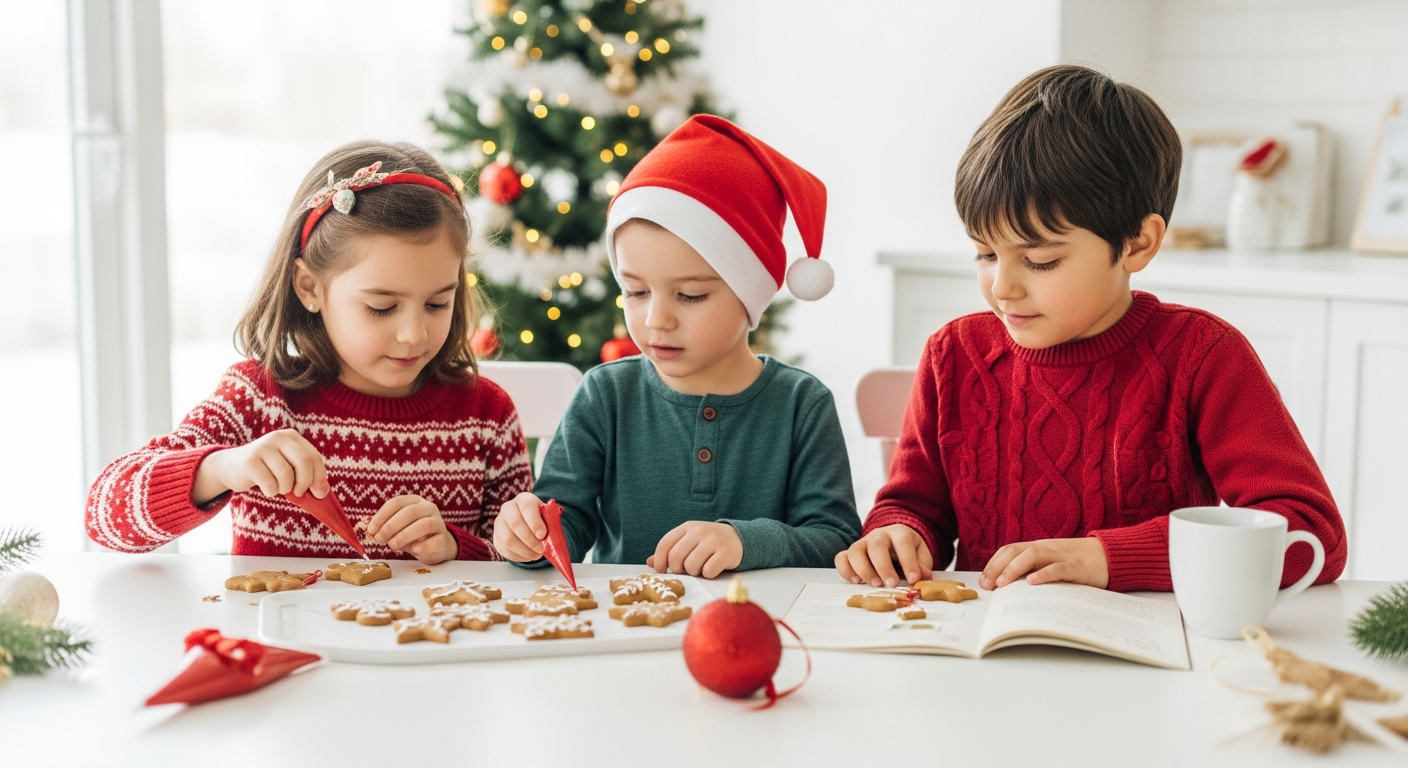
Table of Contents
- Introduction
- Why Christmas Activities Are More Than Just Fun
- Festive Crafting for Little Hands and Tongues
- Sensory Play with a Holiday Twist
- Magical Storytelling and Imaginative Play
- Music and Movement for Merry Moments
- Cooking and Baking Holiday Delights
- Outdoor Winter Wonderland Adventures
- Leveraging Technology for Speech Development This Christmas
- Bringing It All Together: A Joyful, Communicative Christmas
- Conclusion
- FAQ
As the days grow shorter and a special sparkle fills the air, the Christmas season arrives, bringing with it a unique opportunity for family bonding and developmental growth. While visions of sugar plums might dance in children's heads, the reality for many parents is a desire to create memorable, meaningful moments that go beyond passive entertainment. This time of year isn't just about presents; it’s a golden chance to foster your child's communication skills, boost their cognitive development, and build lasting family traditions through engaging christmas kids activities.
Introduction
Picture this: your child, eyes wide with wonder, describing the glitter on a homemade ornament, recounting a favorite holiday story, or joyfully singing a Christmas carol. These aren't just sweet memories; they're powerful moments of language development and emotional connection. The holiday season, with its rich tapestry of traditions, sounds, and tastes, provides an unparalleled backdrop for children to explore their world, express themselves, and grow. This blog post will dive deep into a treasure trove of festive activities designed to ignite your child's imagination, spark their speech, and strengthen family bonds, all while having an absolute blast. We'll explore everything from crafting and sensory play to storytelling and baking, showing you how each activity can be a stepping stone in your child's developmental journey.

Why Christmas Activities Are More Than Just Fun
The magic of Christmas naturally lends itself to learning and connection. Beyond the sheer joy these activities bring, they are invaluable for a child's holistic development, particularly in the realm of communication. At Speech Blubs, we believe in empowering children to "speak their minds and hearts," and the holiday season offers countless natural opportunities to do just that.
Developing Language Skills
Every festive craft, every caroled song, and every shared story is a chance to build vocabulary, practice articulation, and develop narrative skills. When children describe the texture of a pinecone, the colors of a candy cane, or the plot of a holiday book, they are actively engaging their language centers. These real-world contexts make learning words and concepts much more meaningful and memorable than rote memorization. They learn to follow instructions, ask questions, and express their own creative ideas.
Boosting Cognitive Development
Christmas activities are packed with cognitive challenges that children delight in solving. Sorting ornaments by color, counting ingredients for cookies, understanding sequences in a story, or planning how to decorate a gingerbread house all contribute to critical thinking, problem-solving, and executive function skills. These activities stimulate curiosity and encourage children to experiment and learn through discovery.
Emotional Connection and Memory Making
Perhaps most importantly, engaging in holiday activities together creates powerful emotional bonds and lasting memories. When parents and children participate in these joyful moments side-by-side, it fosters a sense of belonging, security, and love. These shared experiences become the foundation for stories told for years to come, further enriching a child's narrative and expressive language abilities. The positive emotions associated with these activities can also reduce communication frustration, making children more willing to try new words and sounds.

Festive Crafting for Little Hands and Tongues
Crafting is a fantastic way to engage fine motor skills while naturally encouraging descriptive language and following directions. The sensory experience of different materials also provides excellent opportunities for vocabulary expansion.
DIY Ornament Creation
Making homemade ornaments is a timeless Christmas tradition. Whether it’s salt dough, glitter-covered pinecones, or handprint keepsakes, the process offers rich language opportunities.
- Salt Dough Ornaments: Kneading, rolling, cutting, and decorating. Talk about the "sticky" dough, the "round" cookie cutter, or the "sparkly" glitter. "Can you make a star? Let's add red paint!"
- Handprint Ornaments: A beautiful keepsake that also encourages discussion about body parts and family. "This is your hand! It's so small."
- Pinecone Critters: Decorate pinecones to look like reindeer, owls, or other festive animals. This is a perfect activity to practice animal sounds and names. For a parent whose child is working on specific animal sounds, our app's Animal Kingdom section offers a fun, motivating way to practice 'moo' and 'baa' sounds, or even the 'reindeer' sound – "click, click, click" – making the craft even more interactive!
Homemade Card Making
Creating and decorating Christmas cards is a wonderful way to practice expressing feelings and basic writing (or pre-writing) skills.
- Message Focus: Discuss who the card is for and what message you want to convey. "What should we write to Grandma? Maybe 'Merry Christmas! I love you!'"
- Descriptive Words: Encourage children to describe the colors, shapes, and textures they use on their cards. "This is a shiny star!" or "Let's use the fuzzy cotton for snow."
Crafting a Gingerbread House
The assembly and decoration of a gingerbread house is a feast for the senses and an excellent exercise in following instructions and spatial reasoning.
- Sequencing: Talk about the steps: "First, we put on the icing. Then, we add the candies."
- Vocabulary: Introduce words like "eaves," "gumdrop," "peppermint," "chimney," and "rooftop."
- Creative Expression: "What kind of house do you want to build? A tall one? A colorful one?"
Sensory Play with a Holiday Twist
Sensory play engages multiple senses, which is crucial for brain development and provides a foundation for language acquisition. When children explore textures, scents, and sounds, they build connections between their experiences and the words that describe them.
Christmas Playdough
Homemade playdough infused with holiday scents like peppermint or cinnamon provides a rich sensory experience.
- Texture Talk: "Is the dough squishy? Is it smooth? It smells like peppermint!"
- Action Verbs: Use action verbs as you play: "roll," "squish," "cut," "pat," "poke."
- Storytelling: Create a playdough Christmas scene and encourage your child to tell a story about it. "The gingerbread man is running away from the big oven!"
Jingle Bell Discovery Bins
Fill a bin with rice or dried beans, hidden jingle bells, small plastic ornaments, and holiday cookie cutters.
- Auditory Focus: The sound of the jingle bells provides auditory input, encouraging listening skills. "Can you hear the jingle bells?"
- Counting and Sorting: Sort the items by color, size, or type. "How many red ornaments can you find?"
- Descriptive Language: "The rice feels grainy," or "The bell is noisy."
Snow and Ice Exploration
If you live in a snowy climate, bring some clean snow inside for sensory play. Otherwise, use crushed ice.
- Temperature Vocabulary: "It's cold! It's icy!"
- Melting Science: Observe how the snow or ice melts, discussing the change of state. "The snow is melting into water."
- Imaginative Play: Build a tiny snowman or create a winter scene with small toy figures.
Magical Storytelling and Imaginative Play
Stories are the backbone of language. They teach structure, vocabulary, and empathy. Imaginative play allows children to apply these skills in their own creative worlds.
Christmas Story Time
Reading holiday books together is a foundational activity for language development.
- Interactive Reading: Don't just read; engage! Ask questions: "What do you think will happen next?" "How do you think the character feels?"
- Vocabulary Building: Point out new words and explain them in context. "Look, a sleigh! That's how Santa travels."
- Retelling: Encourage your child to retell parts of the story in their own words, which strengthens narrative skills.
- Building Connections: For children who might be struggling with verbal expression or understanding, our research-backed video modeling approach, which you can learn more about on our research page, can prepare them to narrate their own stories by watching and imitating peers.
Puppet Show Fun
Simple hand puppets or even finger puppets can transform story time into an active play experience.
- Character Voices: Experiment with different voices for characters, encouraging vocal variety.
- Social Narratives: Use puppets to act out social scenarios, like sharing toys or saying "please" and "thank you."
- Spontaneous Dialogue: Encourage your child to create their own dialogues and storylines.
Building a Fort and Santa's Workshop
Using blankets, pillows, and furniture to build a cozy fort is a classic imaginative play activity.
- Collaborative Planning: Talk about how to build the fort: "Where should we put the roof? We need a door!"
- Role-Playing: Once built, turn it into Santa's workshop, with children acting as elves, Santa, or reindeer. This encourages them to take on different personas and use varied language.
- Descriptive Play: "The workshop is busy! The elves are making toys."
Music and Movement for Merry Moments
Music and movement are powerful tools for language development, especially for younger children. They enhance rhythm, phonological awareness, and gross motor skills, all of which support speech.
Holiday Sing-Alongs
Singing Christmas carols and holiday songs is a joyful way to practice language.
- Rhythm and Rhyme: Songs naturally introduce rhythm and rhyming patterns, which are crucial for phonological awareness.
- Vocabulary Repetition: Repeated lyrics help reinforce new words.
- Action Songs: Incorporate actions with songs like "Jingle Bells" or "Rudolph the Red-Nosed Reindeer" to link words with movements.
Dance Party with Christmas Tunes
Put on some festive music and just dance!
- Gross Motor Skills: Dancing improves coordination and balance.
- Expressive Movement: Encourage different movements: "Can you dance like a twinkling star? Or a hopping elf?"
- Emotional Release: A fun way to expend energy and express joy.
DIY Musical Instruments
Create simple instruments like jingle bell shakers or drum sets from pots and pans.
- Sound Exploration: Talk about the different sounds each instrument makes: "The bells are jingling! The pot is banging!"
- Cause and Effect: "If you shake it hard, it makes a loud sound."
- Following Rhythms: Try to mimic simple rhythms, which supports auditory processing.
Cooking and Baking Holiday Delights
The kitchen is a fantastic learning lab! Cooking and baking involve following instructions, measuring, counting, and a rich array of sensory experiences, making them ideal for language development.
Cookie Decorating
Baking and decorating Christmas cookies is a beloved tradition.
- Sequencing: Discuss the steps: "First, we mix the ingredients. Next, we roll the dough."
- Counting and Measuring: "We need two cups of flour. Let's count the cookies!"
- Descriptive Language: "The sprinkles are colorful," "The frosting is sweet," "This cookie is star-shaped."
Simple Snack Crafts
Creating festive snacks like reindeer sandwiches (pretzel antlers) or fruit skewers (red and green fruits) is quick and engaging.
- Categorization: Sort ingredients: "These are fruits, and these are pretzels."
- Safety Instructions: Discuss kitchen safety: "Be careful with the knife."
- Healthy Choices: Talk about healthy eating while making fun snacks.
Making Hot Cocoa
A simple task that involves a sequence of actions and sensory details.
- Action Verbs: "Pour," "stir," "mix," "sip."
- Temperature and Taste: "It's warm," "It's sweet," "It tastes like chocolate."
- Politeness: Practice asking for specific toppings: "May I have a marshmallow, please?"
Outdoor Winter Wonderland Adventures
Even in colder weather, outdoor play offers unique benefits, combining gross motor activity with sensory exploration and imaginative play in a natural setting.
Nature Scavenger Hunt
Bundle up and head outside to look for winter-themed items.
- Observation and Classification: "Can you find a red berry? A rough branch? A smooth rock?"
- Vocabulary: Introduce words like "pinecone," "twig," "frost," "bare tree."
- Sensory Input: Feel the crisp air, listen to the crunch of leaves or snow underfoot.
Building a Snowman/Snow Fort
If you have snow, building a snowman or a fort is a fantastic collaborative activity.
- Collaborative Play: Work together, discussing roles and ideas. "You make the bottom ball, and I'll make the middle!"
- Spatial Awareness: "Put the eyes above the nose."
- Descriptive Language: "The snow is fluffy," "The snowman is tall."
"Reindeer Games" (Outdoor Gross Motor)
Create your own version of reindeer games, like "pin the nose on Rudolph" outdoors, or simple running and jumping games.
- Action Verbs: "Jump," "run," "skip," "gallop."
- Following Rules: Practice turn-taking and adhering to game rules.
- Directional Language: "Go forward," "Turn left."
Leveraging Technology for Speech Development This Christmas
In our modern world, technology can be a powerful ally in supporting your child's communication journey, especially during busy holiday seasons. While passive screen time can be detrimental, "smart screen time" offers engaging, educational opportunities.
Introducing Speech Blubs: Our Mission and Methodology
At Speech Blubs, we understand the challenges parents face. Our company was born from the personal experiences of our founders, who all grew up with speech problems and created the tool they wished they had. We are committed to providing an immediate, effective, and joyful solution for the 1 in 4 children who need speech support, blending scientific principles with play. We are driven by our mission to empower children to "speak their minds and hearts."
Our unique approach centers on video modeling, where children learn by watching and imitating their peers. This technique leverages the power of mirror neurons in the brain, making it incredibly effective for speech development. We offer a screen-free alternative to passive viewing (like cartoons) by turning screen time into an interactive, engaging experience that builds foundational communication skills. This isn't just an app; it's a powerful tool for family connection, turning playtime into learning time. You can learn more about our values and how we make a difference for families on our homepage.
How Speech Blubs Enhances Christmas Activities
Imagine preparing for a Christmas carol sing-along. Your child might be hesitant to try new words or sounds. Speech Blubs can help by providing a safe and fun environment to practice.
- Practicing Holiday Vocabulary: Before decorating a tree, explore our "Colors" or "Objects" sections to reinforce words like "red," "green," "star," or "ball." This pre-exposure builds confidence for real-world application.
- Imaginative Play Boost: If your child is struggling to verbalize their ideas for building Santa's workshop, Speech Blubs offers activities that encourage sound imitation and word practice, giving them the tools to express their imaginative concepts.
- Emotional Expression: The holidays can be overwhelming. Speech Blubs includes activities focused on emotions, helping children identify and verbalize their feelings, reducing frustration and fostering clearer communication.
- Tailored Support for "Late Talkers": For a parent whose 3-year-old "late talker" loves animals, our "Animal Kingdom" section offers a fun, motivating way to practice 'moo' and 'baa' sounds. This can directly apply to festive crafts like making reindeer or sheep ornaments, making the learning tangible and exciting.
- Building Confidence: By practicing specific sounds and words within the app, children build confidence to use them in real-life holiday conversations, whether it's telling Santa what they want or describing their favorite present.
Ready to see how Speech Blubs can make a difference this holiday season? If you're unsure if your child could benefit, take our quick 3-minute preliminary screener to get a simple assessment and a free 7-day trial. You can also read countless success stories from other families on our testimonials page who have experienced the joy of watching their children "speak their minds and hearts."
Getting Started with Speech Blubs: Our Plans
We want to make Speech Blubs accessible to every family. We offer two straightforward plans, and we believe in transparency about our value.
- Monthly Plan: For $14.99 per month, you get access to our core speech therapy app. This plan is great if you want to try it out for a short period, but it does not include a free trial or some of our most valuable features.
- Yearly Plan: This is our absolute best value and the plan we highly recommend. For just $59.99 per year, it breaks down to an incredible $4.99 per month – saving you a significant 66% compared to the monthly plan! The Yearly plan isn't just cheaper; it comes packed with exclusive benefits:
- 7-day free trial: Experience the full power of Speech Blubs before committing.
- The extra Reading Blubs app: Double the learning with our dedicated reading app, included at no additional cost.
- Early access to new updates: Be the first to enjoy our latest features and content.
- 24-hour support response time: Get prompt assistance whenever you need it.
To unlock the full suite of features and start with a free trial, we strongly encourage you to choose the Yearly plan. It's the most comprehensive and cost-effective way to support your child's speech development.
Why wait to bring more communication joy to your family this Christmas? Download Speech Blubs on the App Store or Google Play to begin your 7-day free trial today! If you prefer, you can also create your account on our website to get started immediately.
Bringing It All Together: A Joyful, Communicative Christmas
The Christmas season is a precious time, brimming with potential for growth, connection, and pure joy. By thoughtfully incorporating engaging christmas kids activities into your family traditions, you're not just making memories; you're building a strong foundation for your child's communication skills, cognitive abilities, and emotional well-being. From the simple act of decorating a cookie to the complex narrative of a puppet show, each moment is an opportunity to learn, express, and connect.
Remember, the goal isn't perfection, but participation. Embrace the sticky messes, the off-key carols, and the imaginative stories. These are the building blocks of language and the threads that weave a family closer together. And for those moments when you need an extra boost or a scientifically-backed tool to empower your child's speech journey, Speech Blubs is here to support you.
Conclusion
This holiday season, let's transform passive observation into active engagement. The joy of Christmas, combined with purposeful, play-based activities, creates an ideal environment for your child's development. We've explored how simple christmas kids activities can nurture language, boost cognitive skills, and forge unforgettable family bonds.
At Speech Blubs, we are passionate about helping every child find their voice. Our unique video modeling approach provides a powerful supplement to your child's development, turning screen time into smart screen time that teaches complex communication skills in an immediate, effective, and joyful way.
Ready to fill your home with not just holiday cheer, but also the wonderful sounds of your child's developing voice? Don't miss out on the incredible value and comprehensive support of our Yearly Plan. Begin your journey today and empower your child to speak their minds and hearts.
Download Speech Blubs on the App Store or Google Play and start your 7-day free trial today! Remember to select the Yearly plan to get the best value, including the Reading Blubs app and priority support. You can also sign up directly on our website to get started right away. This Christmas, give the gift of communication!
FAQ
Q1: How can I encourage my child to talk more during Christmas activities? A1: Engage them with open-ended questions like "What do you think will happen next?" or "How does that feel/smell?" Describe what you're doing and seeing using rich vocabulary. Model language for them, and don't pressure them to respond perfectly. Speech Blubs can also help by providing a fun, low-pressure environment for practicing sounds and words that can then be applied to holiday contexts.
Q2: My child is shy. How can Christmas activities help them open up? A2: Shyness is common. Start with activities that don't require direct interaction with others, like sensory bins or individual crafts, where they can explore at their own pace. As they become comfortable, gently introduce group activities like singing or simple games. Role-playing with puppets or acting out stories can also provide a safe way for children to express themselves without feeling directly "on the spot."
Q3: What if we don't celebrate Christmas? Can these activities still be adapted? A3: Absolutely! Many of these ideas are season-agnostic and can be adapted for any winter holiday or simply themed around general winter fun. Focus on the core developmental benefits: crafting for fine motor and descriptive language, sensory play for exploration, storytelling for narrative skills, and cooking for following instructions. The principles of engaging play for communication apply universally.
Q4: How does Speech Blubs fit into our holiday schedule, which is already busy? A4: Speech Blubs is designed for flexibility, offering engaging 5-10 minute activities that can easily fit into short breaks in a busy day. It's "smart screen time" that can be integrated as a supplement to your other holiday activities, reinforcing new vocabulary and sounds. For example, if you're making Christmas cookies, you could do a quick Speech Blubs session on "colors" or "food words" beforehand to enhance the real-world learning. Remember, the Yearly plan comes with a 7-day free trial and the flexibility to explore at your family's pace.
About the author