
Meaningful Waldorf Toddler Activities for Home
 By Speech Blubs Team•Feb 23, 2026•14 min.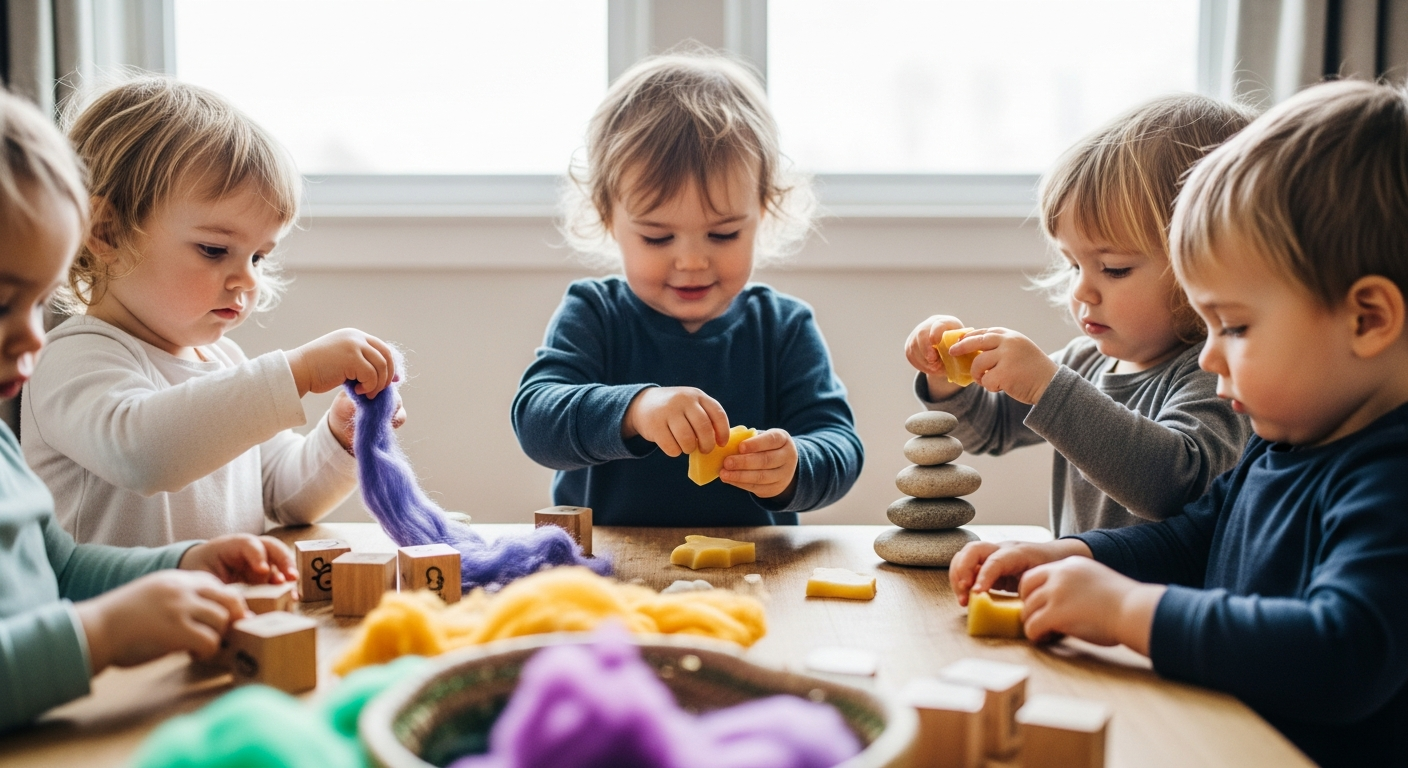
Table of Contents
- Introduction
- The Core Principles of Waldorf in Early Childhood
- Practical Life: Turning Chores into Play
- Sensory Play and Artistic Expression
- Supporting Language Development the Waldorf Way
- Choosing the Right Plan for Your Family
- Creating a Waldorf-Inspired Environment at Home
- Practical Scenarios for Speech Support
- Conclusion
- Frequently Asked Questions (FAQ)
Introduction
Have you ever watched a toddler spend an entire hour moving a single pile of pebbles from one side of a garden path to the other? To an adult, it might look like a repetitive task, but to that child, it is a world-building exercise in concentration, motor skills, and sensory discovery. In a world that often feels like a race toward the next milestone, the Waldorf approach offers a refreshing pause. It reminds us that childhood isn’t a racetrack—a word that actually shares its Latin roots with "curriculum"—but a journey of wonder. Our mission at Speech Blubs is to help every child "speak their minds and hearts," and we believe that fostering a love for communication begins with these simple, joyful moments of play.
In this post, we are going to explore a variety of Waldorf toddler activities that you can easily integrate into your daily life. We’ll look at how the core principles of rhythm, imitation, and sensory-rich play create a foundation for healthy development and speech. Whether you are looking for ways to engage a "late talker" or simply want to bring more intentionality to your home, these activities are designed to foster confidence and curiosity without the pressure of early academics. We’ll also discuss how our unique approach to "smart screen time" can complement these traditional values, providing a bridge between the physical world and the digital tools that support modern parenting.

The heart of the Waldorf philosophy is the belief that toddlers learn best through imitation and rhythm. By the end of this article, you will have a toolkit of practical ideas to turn everyday chores into adventures and quiet moments into opportunities for connection.
The Core Principles of Waldorf in Early Childhood
Before we dive into the specific Waldorf toddler activities, it’s helpful to understand the "why" behind them. Waldorf education, developed by Rudolf Steiner, emphasizes the development of the whole child—head, heart, and hands. For toddlers (roughly ages one to three), the focus is almost entirely on the "hands" and the "heart."
Rhythm: The Heartbeat of the Home
For a small child, the world is a big, unpredictable place. Rhythm is what makes it feel safe. Think of rhythm not as a strict schedule, but as a predictable flow of the day. Much like a heartbeat, it provides a steady pulse that children can rely on. When a child knows that snack time follows outdoor play, or that a specific song signals it's time for a bath, they feel a sense of security that reduces anxiety and frustration.
At Speech Blubs, we understand the power of routine. Many parents find that incorporating our app into a specific part of the day—perhaps during a quiet wind-down period before dinner—helps build a positive habit. If you are curious about how your child is progressing within their developmental rhythm, you can take our quick 3-minute preliminary screener. It involves just nine simple questions and provides an assessment and a next-steps plan to help you support your child's unique journey.
The Power of Imitation
Toddlers are like little sponges, soaking up everything the adults around them do. They don’t need "lessons"; they need examples. This is the core of imitation. If you are folding laundry with care and love, your child will want to "fold" beside you. If you are singing while you cook, they will try to hum along.
This concept of imitation is actually the scientific foundation of our app. We use a "video modeling" methodology based on the discovery of mirror neurons. When children watch their peers on screen performing speech exercises or making fun sounds, they are naturally inclined to imitate them. This is a powerful, joyful way to learn complex communication skills. It’s not about passive viewing; it’s about active participation. You can learn more about the science behind our method by visiting our research page.

Practical Life: Turning Chores into Play
One of the most beautiful aspects of Waldorf toddler activities is that they don’t require expensive toys. In fact, the most engaging "toys" are often the things you already use to run your household.
The "Little Helper" Mentality
Toddlers have a deep, innate desire to be helpful. Instead of trying to finish your chores while they are distracted by a screen, try inviting them into the process.
- Sock Sorting: When doing laundry, ask your child to find the "match" for a sock or to bring you a specific item from across the room. They will be so pleased to be helping, and they’ll learn the names of different pieces of clothing in the process.
- The Grocery List: Let your child carry a (non-functional) grocery list and a pencil while you shop. They might drop them occasionally, but the feeling of having a "job" is incredibly empowering.
- Drawer Independence: Set seasonably appropriate clothing in low, easy-to-reach drawers. Allow your child to choose their own outfit. Even if they end up wearing a striped shirt with polka-dot pants, the pride they feel in their independence is worth it.
For a parent whose 3-year-old "late talker" loves to be in the kitchen, the "Yummy Time" section of Speech Blubs offers a fun, motivating way to practice the names of fruits and vegetables they might see while "helping" you prep a snack. You can download Speech Blubs on the App Store to start exploring these interactive categories together.
Simple Sorting and Transporting
Toddlers are often in a developmental stage where they love to transport objects. This is a perfect opportunity for Waldorf-inspired play.
- The Shoebox Straw Drop: Take a shoebox and a handful of wide milkshake straws and cotton swabs. Show your child how to drop the swabs into the straws. They might carry the straws around or drop them to hear the different sounds they make. It’s simple, screen-free, and incredibly engaging for fine motor development.
- The Treasure Basket: Give your child a basket, a box, or even a rolling step stool, and let them "load" it with their toys to move them from one room to another. This repetitive movement is deeply satisfying for a two-year-old.
Sensory Play and Artistic Expression
Waldorf activities emphasize natural materials and sensory experiences. This helps children connect with the physical world in a tactile, meaningful way.
Natural "Paint" and Dough
You don't need fancy art supplies to foster creativity.
- Conditioner Playdough: Mix two cups of cornstarch with one cup of hair conditioner (or lotion) to create a soft, fragrant dough. Note that this isn't edible, so close supervision is a must! It’s a wonderful way to engage the sense of touch.
- Edible Bath Paint: For a mess-free (and safe) creative session, use whipped topping as "paint" on the inside of the bathtub. Children can "paint" the walls and themselves, and it washes away easily with water.
- Window Drawing: On cold mornings, show your child how to draw shapes in the condensation on the windows. It’s a fleeting, magical form of art that requires nothing but a finger.
Connecting with Nature
Waldorf education places a high value on the "outdoor classroom." Even a simple walk around the block can be a rich educational experience.
- Collecting Nature’s Treasures: Take a walk to collect rose hips, interesting rocks, or fallen leaves. Carry them for a while, feel their textures, and then return them to the earth.
- Garden Exploration: If you have access to a garden, let your child feel the plants (avoiding the prickly ones!), lift the hose, and watch the water spray. These sensory inputs are vital for brain development.
Supporting Language Development the Waldorf Way
The first few years of life are a explosion of language. In the Waldorf tradition, speech is nurtured through stories, rhymes, and songs rather than flashcards or drills.
The Magic of Rhymes and Song
Rhyme and rhythm are the "hooks" that help language stick. When you sing a lullaby or recite a Mother Goose rhyme, you are doing more than just entertaining your child; you are building their vocabulary and their understanding of the melody of speech.
If your child sees a flower, you might recite "Daffy-down-dilly." If they see a bird, you might sing a simple song about a robin. This "living language" is much more effective than scientific explanations at this age.
Our company was born from the personal experiences of our founders, who all grew up with speech problems. They created the tool they wished they had—one that blends these scientific principles of repetition and melody with play. Speech Blubs acts as a powerful supplement to these real-world interactions. To see how other families have used our approach to build confidence, you can read through our parent testimonials.
How Speech Blubs Complements Waldorf Values
While Waldorf generally encourages a screen-free environment for very young children, we believe there is a place for "smart screen time" that aligns with these values. Unlike passive cartoons that can be overstimulating, Speech Blubs is designed to be a "screen-free alternative to passive viewing." It requires the child to look, listen, and then look away from the screen to make a sound or perform an action.
We provide a powerful tool for family connection. We always frame our app activities with the understanding of adult co-play. Sit with your child, laugh at the funny filters, and mirror the sounds together. This turns a digital experience into a shared, joyful learning moment. If you're ready to see the difference for yourself, you can create your account and begin your 7-day free trial today.
Choosing the Right Plan for Your Family
We want to be transparent about our pricing so you can make the best choice for your family's needs. We offer two main paths:
- The Monthly Plan: At $14.99 per month, this is a great way to test the waters. However, it does not include several of our high-value features.
- The Yearly Plan: This is our most popular and cost-effective option at $59.99 per year. When you break it down, it costs just $4.99 per month, saving you 66% compared to the monthly rate.
The Yearly plan is designed for families who want a comprehensive tool for their child's development. It includes:
- A 7-day free trial to ensure it's the right fit for your toddler.
- The Reading Blubs app, which helps transition speech skills into early literacy.
- Early access to all new updates and content.
- Priority 24-hour support response time.
For most parents exploring Waldorf toddler activities, the Yearly plan offers the best long-term value and the most complete suite of tools to support your child's growth. You can also find more information on our homepage regarding our mission and methodology.
Creating a Waldorf-Inspired Environment at Home
You don't need a complete home renovation to bring the Waldorf spirit into your living space. Small, intentional changes can make a big difference in how your toddler plays.
Open-Ended Toys
The best toys are 10% toy and 90% child. This means the toy should be simple enough that the child's imagination has to do the rest of the work.
- Cardboard Boxes: A large pile of small cardboard boxes can be anything—a train, a tower, a house for stuffed animals, or a "mail" sorting station.
- Play Silk and Blankets: Simple pieces of fabric can become capes, tents, or "magic carpets." A "Magic Carpet Ride" (pulling your child around on a blanket) is a fantastic way to engage their vestibular system and bring a sense of wonder to a rainy afternoon.
- Nesting Bowls and Tins: Instead of plastic toys with buttons and lights, offer wooden bowls or cookie tins. Toddlers love to stack them, fill them, and pretend to drink or eat from them.
Setting the Scene
Waldorf teachers often talk about "holding the space." This means creating an environment where a child feels free to play without constant interruption or direction.
- Warmth and Texture: Use natural fibers like wool and cotton. A soft, crocheted baby blanket can provide a sense of comfort and security during rest times.
- Slow Down: Try to avoid rushing through transitions. Whether it's a diaper change or a meal, approach it with a calm, unhurried gesture. If you are folding a towel, do it tenderly. Your child will notice and eventually imitate that same care for their surroundings.
Practical Scenarios for Speech Support
Sometimes, despite our best efforts with rhythm and play, we might notice our children struggling with certain sounds or words. Here is how you can use Waldorf principles alongside Speech Blubs to address common challenges.
Scenario: The "Late Talker" and Animals
If you have a toddler who is slow to start using words but lights up whenever they see a dog or a cow, use that interest! On your daily walks, point out the animals you see and make their sounds. Then, use the "Animal Kingdom" section in Speech Blubs. Because the app uses peer-to-peer modeling, your child will see a real child making the "moo" sound. This peer connection is often the "spark" that encourages a late talker to try the sound themselves. You can find our app on the Google Play Store to get started.
Scenario: Frustration with Daily Routines
If transitions like "putting on shoes" or "getting in the car" always lead to a meltdown, try using a song. Create a simple, repetitive melody for that specific task. To reinforce the vocabulary, you can explore the "Early Sounds" or "Daily Routine" categories in our app. By seeing other children happily engaging in these activities, your child builds a positive mental association, which can reduce frustration and build confidence.
Conclusion
Embracing Waldorf toddler activities isn't about achieving perfection; it's about reclaiming the joy of the present moment. By focusing on rhythm, imitation, and sensory-rich experiences, you are building a foundational love for life and learning. Whether you are sorting socks together, exploring a medicinal herb garden, or sharing a "smart screen time" session on Speech Blubs, you are creating meaningful connections that help your child "speak their minds and hearts."
We don't promise that your child will be giving public speeches in a month. Development is a beautiful, individual process that can't be rushed. Instead, we focus on fostering a love for communication, building confidence, and creating those joyful family learning moments that you will cherish forever.
Are you ready to join our community of over 5 million parents? Choose the Yearly plan to get the best value, including our 7-day free trial and the Reading Blubs app. Download Speech Blubs on the App Store or Google Play Store and begin your journey today!
Frequently Asked Questions (FAQ)
1. What are some of the best Waldorf activities for a 2-year-old?
The best activities for a two-year-old focus on gross motor movement and practical life skills. Examples include pushing a weighted cart, sorting laundry, water play in the bathtub with simple cups, and exploring nature. Since speech is a major focus at this age, reciting nursery rhymes and using peer-modeling tools like Speech Blubs are also excellent choices.
2. Why does Waldorf emphasize natural materials for toys?
Natural materials like wood, wool, silk, and cotton provide a variety of sensory inputs (weight, texture, temperature) that plastic cannot. They are also usually "open-ended," meaning they don't have a single fixed purpose. This encourages a toddler to use their imagination, turning a piece of wood into a phone, a boat, or a piece of bread.
3. How does Speech Blubs fit into a Waldorf-inspired home?
While Waldorf typically avoids traditional screen time, Speech Blubs is designed as "smart screen time." It uses video modeling—a digital form of the Waldorf principle of imitation. It encourages children to be active participants rather than passive viewers, fostering communication skills through play and peer interaction, which aligns with the goal of supporting a child's natural development.
4. What is the benefit of the Yearly plan compared to the Monthly plan?
The Yearly plan offers the best value for families, costing $59.99 (which is only $4.99/month, a 66% savings). Unlike the Monthly plan, it includes a 7-day free trial, the Reading Blubs app for early literacy, early access to new updates, and 24-hour support response time. It’s a comprehensive tool designed to grow with your child.
About the author