
Merry & Bright: Engaging Activities for Kids at Christmas to Boost Their Speech
 By Speech Blubs Team•Dec 19, 2025•19 min.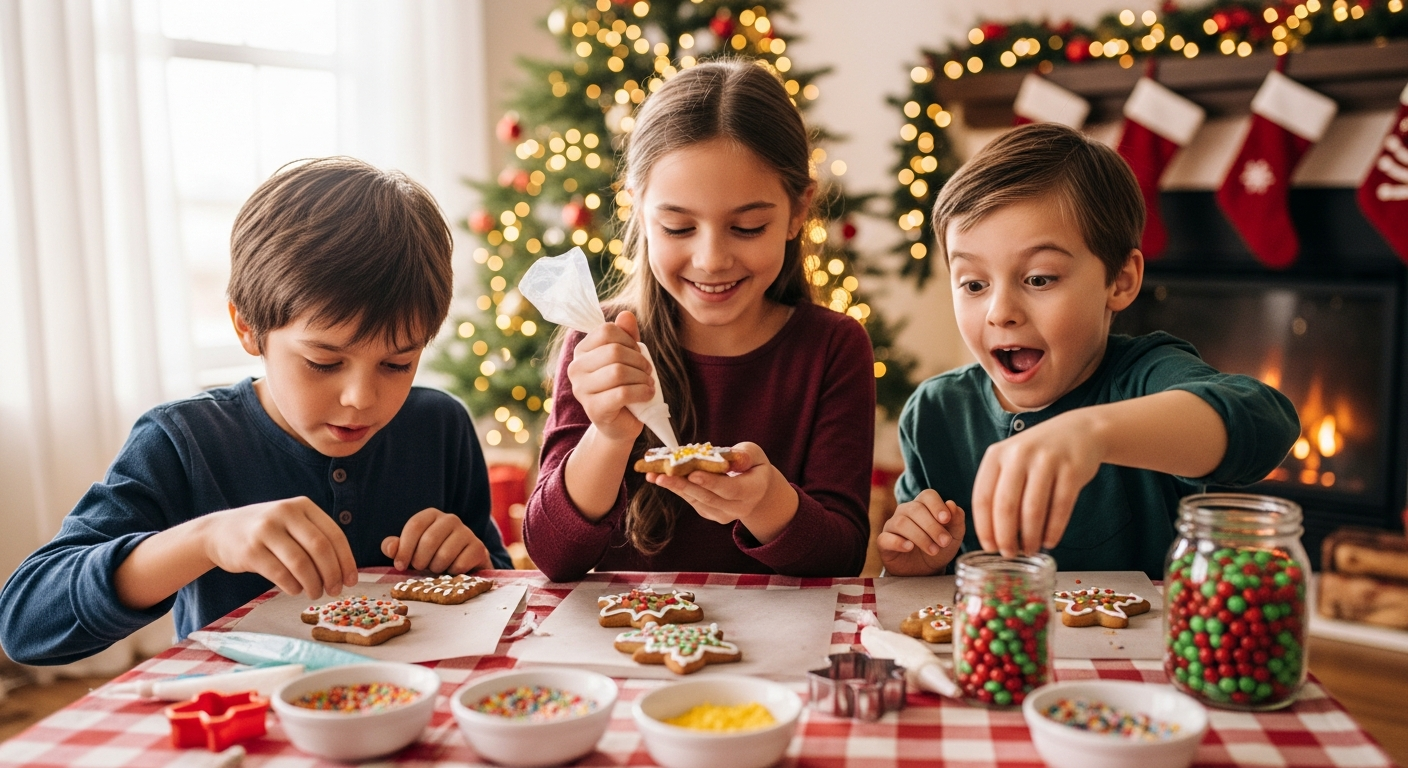
Table of Contents
- The Magic of Christmas: More Than Just Presents
- Crafting Connections: DIY Christmas Activities for Language Growth
- Sensory & Imaginative Play: Engaging All the Senses
- Traditions & Storytelling: Nurturing Narrative Skills
- Beyond the Fun: Why These Activities Matter for Speech Development
- When to Seek Support: Recognizing Communication Milestones
- Speech Blubs: Your Partner in Holiday Language Fun
- Conclusion
- FAQ
The air begins to hum with anticipation as the festive season approaches, transforming our homes into a wonderland of twinkling lights, sweet scents, and joyful melodies. For many children, Christmas is a time of pure magic, but for parents, it's also a unique opportunity to weave language development into the heart of these cherished memories. Imagine a holiday where every craft, every cookie baked, and every carol sung becomes a stepping stone towards stronger communication skills and greater confidence.
At Speech Blubs, we understand that nurturing a child’s voice is a year-round journey, and the holidays offer an unparalleled backdrop for rich, immersive learning experiences. Our mission, born from the personal experiences of our founders who all navigated childhood speech challenges, is to empower every child to "speak their minds and hearts." We believe in transforming everyday moments into powerful developmental opportunities, and Christmas activities are no exception. This festive season, we invite you to discover how these beloved traditions can become joyful, engaging platforms for building vocabulary, improving articulation, and fostering a love for communication, making memories that resonate far beyond December 25th.

The Magic of Christmas: More Than Just Presents
Christmas is a multi-sensory feast, a vibrant tapestry of sights, sounds, smells, and textures that naturally captivates children. This rich environment is a goldmine for language development. Think about it: the crunch of snow underfoot, the aroma of gingerbread, the sparkle of ornaments, the jingle of bells—each element offers countless opportunities for new words, descriptive language, and engaging conversations.
For children who may be a bit slower to pick up words or have challenges with clear speech, the holidays provide a natural, low-pressure setting to practice and explore. Instead of feeling like "therapy," these activities become part of the fun, strengthening neural pathways and encouraging verbal expression through play. This aligns perfectly with our approach at Speech Blubs, where we blend scientific principles with play, transforming screen time into "smart screen time" that offers a screen-free alternative to passive viewing experiences. Our unique video modeling methodology, where children learn by watching and imitating their peers, is designed to make learning complex communication skills feel like play.
By embracing these holiday activities with intentionality and a playful spirit, we can create a powerful tool for family connection, reducing potential frustration and fostering a profound sense of accomplishment in our children as they find their voices amidst the holiday cheer.
Crafting Connections: DIY Christmas Activities for Language Growth
The holiday season is a prime time for crafting, and these creative endeavors are more than just pretty decorations; they're fertile ground for language development.
Ornament Decorating & Storytelling
Decorating the Christmas tree is often one of the first and most anticipated holiday rituals. As you unpack boxes of ornaments, you unlock a treasure trove of language opportunities.
- Scenario: Your child might struggle with descriptive words or expressing memories associated with objects. They point and say "that," but don't elaborate.
- Activity: Instead of just hanging ornaments, make it a descriptive adventure. Pick up an ornament and describe it aloud: "This is a shiny, red, round ornament with sparkly glitter!" Encourage your child to find one that is "blue," "big," or "bumpy." Ask open-ended questions: "How does it feel?" "What shape is this one?" "Where should we hang this delicate angel?" If an ornament has a story, share it! "Remember when we got this one on our beach vacation? It's a seashell ornament!" Then, invite your child to tell you about their favorite ornament and why they love it. This helps build narrative skills and emotional vocabulary.
- Speech Blubs Connection: Our app features numerous sections that encourage descriptive language, like "Animal Kingdom" or "Yummy Time." Children learn to describe colors, sizes, and actions by imitating their peers. This kind of interaction helps children expand their vocabulary for everyday objects, just like they would with holiday decorations.
Homemade Gift Wrapping & "Thank You" Practice
Wrapping presents can be a delightful and practical exercise in language and social skills.

- Scenario: A child might find it challenging to use social greetings or express gratitude, especially when receiving gifts. They might grab a present without saying "please" or "thank you."
- Activity: Involve your child in the wrapping process. Let them choose the wrapping paper – "Do you want the striped paper or the one with snowflakes?" Practice requesting items: "May I have the scissors, please?" or "Can you pass the tape?" As you wrap, discuss who the gift is for and what you might say when giving it. "This gift is for Grandma. What should we say when we give it to her?" Practice saying "Merry Christmas!" and "Thank you!" role-playing different scenarios. You can even dictate a simple "thank you" note for them to sign or trace, reinforcing early literacy and social conventions.
- Speech Blubs Connection: Within Speech Blubs, we have activities designed to help children with social routines and using polite language. Our "People" section often encourages children to interact with characters and practice simple greetings and requests, building foundational social communication skills that are essential for holiday gift exchanges.
Christmas Card Creations & Letter Sounds
Creating holiday cards is a wonderful way to work on fine motor skills, letter recognition, and phonological awareness.
- Scenario: Your child may be starting to recognize letters but struggles with associating sounds with them, or needs practice with the initial sounds in words.
- Activity: Gather construction paper, crayons, markers, and stickers. Encourage your child to draw pictures related to Christmas. As they draw a "tree," emphasize the /t/ sound. When they draw a "star," highlight the /s/ sound. Write out simple messages like "Merry Christmas" or "Happy Holidays" and let your child trace the letters. For older children, help them sound out the names of family members they are writing to. "This card is for Aunt Sarah. S-s-s-Sarah!" This makes learning letter sounds a fun, personalized activity.
- Speech Blubs Connection: Our app integrates early literacy features and activities focused on sound production and recognition. By engaging with Speech Blubs, children can practice specific speech sounds through our "sound production" categories, preparing them for the phonological awareness needed to connect letters to sounds in holiday words and names.
Sensory & Imaginative Play: Engaging All the Senses
Christmas provides a natural backdrop for sensory exploration, which is deeply linked to language development. When children engage their senses, they create stronger neural connections, making new vocabulary and concepts more meaningful.
Christmas Sensory Bins (Cranberry, Cinnamon, Pine Needles)
Sensory bins are fantastic for imaginative play and building descriptive vocabulary.
- Scenario: Your child might have a limited vocabulary for textures, smells, or actions, often relying on generic terms like "good" or "nice."
- Activity: Create a festive sensory bin using safe, holiday-themed items. You could use dried cranberries, cinnamon sticks, pine needles, small bells, miniature ornaments, and scoops or tongs. Encourage your child to explore the bin with their hands. "How does this pine needle feel? Is it prickly or soft?" "What does the cinnamon smell like? Is it spicy or sweet?" Use action verbs: "Can you scoop the cranberries?" "Let's jingle the bells!" This multi-sensory engagement builds a rich vocabulary for describing sensory experiences and actions.
- Speech Blubs Connection: At Speech Blubs, we believe in building vocabulary through real-world experiences, much like the sensory bin. Our app introduces children to a vast array of words and concepts, often pairing visuals with actions or sounds, helping them internalize new language in a fun and interactive way.
Baking & Decorating Christmas Treats: Following Directions & Sequencing
Baking is a delicious way to practice following instructions and understanding sequencing.
- Scenario: A child might struggle with multi-step instructions or understanding the order of events, which impacts their ability to retell a story or follow classroom directions.
- Activity: Choose a simple Christmas cookie recipe and involve your child in every step. Talk through the instructions as you go: "First, we measure the flour. Then, we pour in the sugar. Next, we mix it all together." Use words like "before," "after," "first," "then," and "finally." As you decorate the cookies, talk about the colors of the icing and sprinkles, and the shapes of the cutters. "Let's put red sprinkles on the star cookie, and green icing on the tree cookie." This helps children grasp complex instructions and improves their ability to sequence events.
- Speech Blubs Connection: Our app offers activities that focus on early concept development and action verbs. Children learn to identify and verbalize actions and follow sequences, which are crucial skills reinforced through baking. This practical application of language helps children generalize what they learn in the app to real-life situations.
Christmas Carol Karaoke & Rhythm Play
Singing holiday songs is not just fun; it's a powerful tool for developing speech rhythm, intonation, and articulation.
- Scenario: Your child might have difficulty with speech rhythm, intonation (the rise and fall of their voice), or articulating specific sounds.
- Activity: Turn up the Christmas carols and have a karaoke session! Encourage your child to sing along, paying attention to the rhythm and melody. Use toy instruments—shakers, drums, bells—to add to the fun and emphasize the beat. Clap out the rhythm of familiar songs. "Let's clap 'Jingle Bells, Jingle Bells, Jingle all the way!'" This helps children develop auditory processing skills and practice prosody, which is the musicality of speech. The repetition of lyrics also helps with sound production and memory.
- Speech Blubs Connection: Joyful sound production and rhythm practice are integral to building confident communicators. While not direct singing lessons, the emphasis on imitation and clear articulation within Speech Blubs helps children develop the foundational oral motor skills and auditory awareness necessary for clear and expressive speech, much like singing does.
Traditions & Storytelling: Nurturing Narrative Skills
The holidays are inherently rich with stories – from ancient tales to personal family memories. These narrative opportunities are vital for developing critical language skills.
Reading Christmas Books Aloud & Character Voices
Cozying up with a stack of festive books is a timeless tradition that directly supports literacy and language.
- Scenario: Your child might show limited engagement during story time, struggle with comprehension questions, or have difficulty retelling a story in their own words.
- Activity: Read classic Christmas stories aloud with enthusiasm, using different voices for characters. Pause to ask questions: "Who is this character?" "What do you think will happen next?" "Why is Santa feeling so happy?" Encourage your child to point to pictures, predict outcomes, and retell parts of the story. After finishing, ask them to summarize the story or tell you their favorite part. This enhances vocabulary, comprehension, and develops early narrative skills.
- Speech Blubs Connection: Our app is built on strengthening foundational language skills, including comprehension and narrative building. Through engaging video modeling, children learn to listen actively and process information, which translates directly to their ability to understand and engage with stories. It helps them build the confidence to share their own thoughts about what they've heard.
Family Story Time: Recounting Holiday Memories
Sharing personal stories creates a strong family bond and develops important conversational and narrative skills.
- Scenario: A child might struggle with organizing their thoughts to share personal experiences, often jumping between topics or forgetting key details.
- Activity: Gather the family for a "story time" where everyone shares a favorite Christmas memory. Start with your own memory, modeling how to tell a story with a beginning, middle, and end. "One Christmas, when I was little, we woke up to a huge snowstorm! We couldn't go anywhere, so we built a fort in the living room..." Then, invite your child to share their own holiday memories, prompting them with questions if needed: "What was your favorite present last year?" "What did we do on Christmas morning?" This helps children practice sequencing events, recalling details, and expressing emotions related to their experiences.
- Speech Blubs Connection: Building confidence in expressing personal narratives is central to our mission. Speech Blubs provides a safe and engaging environment for children to practice articulating words and sentences, which are the building blocks for sharing their own stories and connecting with others. You can discover what other parents are saying about their children's newfound confidence with Speech Blubs.
Visiting Christmas Lights & Descriptive Language
A drive or walk to see Christmas lights is a simple yet effective way to expand descriptive vocabulary.
- Scenario: Your child might have a restricted range of adjectives, using "pretty" for everything, or struggle to describe what they see in detail.
- Activity: As you view the lights, encourage your child to use different words to describe what they see. "Look at those twinkling lights!" "The blue lights are so bright!" "That house has flashing lights!" Ask comparative questions: "Are these lights bigger or smaller than the ones on our tree?" Talk about the feelings the lights evoke: "These lights make me feel happy!" This activity naturally broadens a child's descriptive vocabulary and encourages expressive language.
- Speech Blubs Connection: Expanding vocabulary is a core focus of Speech Blubs. Our diverse categories introduce children to hundreds of words and concepts, encouraging them to use a wider range of adjectives and verbs to describe their world, just as they would when marveling at holiday decorations.
Beyond the Fun: Why These Activities Matter for Speech Development
Engaging in these festive activities isn't just about making memories; it's about actively fostering crucial speech and language skills. Every interaction, every new word, and every shared laugh contributes to a child's overall communication development. These real-world experiences provide context and meaning, making language acquisition more organic and enjoyable.
At Speech Blubs, we are committed to providing an immediate, effective, and joyful solution for the 1 in 4 children who need speech support. Our approach is deeply rooted in scientific principles, utilizing the power of "video modeling" where children learn by observing and imitating their peers. This technique leverages mirror neurons in the brain, making learning intuitive and highly effective. We provide a screen-free alternative to passive viewing, transforming what might otherwise be "wasted" screen time into truly "smart screen time" that fosters active engagement and family connection.
By participating in these Christmas activities, you're not just playing; you're creating a rich language environment that complements and reinforces the structured learning found within tools like Speech Blubs. It's about building confidence, reducing frustration, and developing key foundational skills in a way that feels natural and fun.
When to Seek Support: Recognizing Communication Milestones
While every child develops at their own pace, it’s helpful for parents to be aware of typical communication milestones. If you find yourself wondering if your child might benefit from a little extra support, trust your instincts. Early intervention can make a significant difference.
- Scenario: You’ve noticed your child is not using as many words as their peers, or you frequently struggle to understand what they are saying. You're unsure if it's just a phase or something more.
- Activity: Taking a moment to assess your child's communication can provide valuable insights.
- Speech Blubs Connection: Unsure if your child could benefit from targeted support? We offer a quick 3-minute preliminary screener that involves 9 simple questions. It provides a straightforward assessment and a personalized next-steps plan, along with a free 7-day trial of Speech Blubs. This is a great way to gain clarity and explore how we can support your child's communication journey.
Speech Blubs: Your Partner in Holiday Language Fun
At Speech Blubs, we deeply resonate with the joy and challenges of fostering communication in children. Our company was born from the personal experiences of our founders, who all grew up with speech problems and created the tool they wished they had. We are passionate about empowering children to "speak their minds and hearts" and believe that every child deserves the chance to express themselves fully.
We've dedicated ourselves to providing an immediate, effective, and joyful solution for the millions of children who need speech support. Our methodology is backed by science, utilizing our unique "video modeling" technique where children learn by watching and imitating their peers. This natural learning process helps develop complex communication skills in an engaging and inspiring way. Explore the science behind our method and see why we are in the top tier of speech apps worldwide.
We strive to make Speech Blubs a powerful tool for family connection, a valuable supplement to any child's overall development plan, and when applicable, a fantastic aid alongside professional therapy. It’s designed to be a screen-free alternative to passive viewing, making screen time active and productive.
Ready to empower your child's voice this holiday season? Download Speech Blubs today on the Apple App Store or get Speech Blubs on Google Play to begin your family's journey toward confident communication.
Unbeatable Value: Choose the Yearly Plan for Maximum Benefits!
We want to make Speech Blubs accessible and provide the best value for your family. Here’s a clear breakdown of our plans:
- Monthly Plan: $14.99 per month.
- Yearly Plan: Just $59.99 per year, which breaks down to an incredible $4.99 per month! This means you save 66% compared to the monthly plan.
The Yearly Plan is truly the best choice, offering superior value and exclusive features designed to accelerate your child's progress and enhance your experience:
- 7-Day Free Trial: Only available with the Yearly plan, allowing you to experience the full app before committing.
- Extra Reading Blubs App: Gain full access to our companion app, Reading Blubs, to further support your child's literacy development.
- Early Access to New Updates: Be the first to enjoy new content and features.
- 24-Hour Support Response Time: Get priority assistance whenever you need it.
The Monthly plan does not include these invaluable benefits. We highly recommend selecting the Yearly plan to unlock the free trial and the complete suite of features, ensuring your child receives the most comprehensive support possible.
Start your 7-day free trial on our website today and choose the Yearly plan to embark on a joyful journey of communication with your child this holiday season! You can also find more information by visiting the Speech Blubs homepage.
Conclusion
The Christmas season, with its inherent wonder and array of beloved traditions, offers far more than just festive cheer. It provides a unique and powerful opportunity to nurture your child's speech and language development in a way that feels natural, engaging, and deeply connected to family. From crafting ornaments and baking cookies to singing carols and sharing stories, each activity is a chance to build vocabulary, refine articulation, enhance comprehension, and foster the confidence needed to speak their minds and hearts.
At Speech Blubs, we are dedicated to supporting this beautiful journey, blending scientific methodology with the pure joy of play. We offer a valuable supplement to your efforts, providing "smart screen time" that actively engages children and leverages the power of peer video modeling. This Christmas, make language development a cherished part of your holiday traditions, knowing that every shared moment contributes to your child's blossoming voice.
Don't let another holiday season pass without giving your child the gift of confident communication. Ready to embark on this joyful journey? Start your free 7-day trial today by choosing our Yearly plan on our website to unlock all the premium features, including the Reading Blubs app and priority support. You can also download our app for an instant start from the Apple App Store or Google Play Store.
FAQ
Q1: How can I encourage my child to participate in these activities if they're usually shy or reluctant to speak?
A1: Start with simple, low-pressure activities where you model the language first. For instance, you describe an ornament, then gently invite your child to choose one for you to describe. Use questions that don't require a verbal answer initially, like "point to the red light." Follow their lead, keep it playful, and celebrate any attempt at communication, verbal or non-verbal. Remember, building confidence is key, and Speech Blubs provides a safe, engaging environment for imitation and practice.
Q2: My child has significant speech delays. Will these activities be enough?
A2: These activities are wonderful for creating a language-rich environment and reinforcing skills, but they should be seen as a supplement, not a replacement, for professional guidance if your child has significant delays. They work best when integrated with a comprehensive plan. Speech Blubs is designed to be a powerful tool to complement therapy and daily interactions, offering structured practice that is both fun and effective. If you have concerns, consider taking our quick 3-minute preliminary screener for an initial assessment and next steps.
Q3: How does Speech Blubs specifically help with holiday-themed vocabulary or concepts?
A3: While Speech Blubs doesn't have a dedicated "Christmas" category, its comprehensive curriculum covers foundational vocabulary, action verbs, descriptive language, and social communication skills that are directly applicable to holiday activities. For example, our "Colors and Shapes" or "What Do I Do?" categories help children describe ornaments or actions involved in baking. The core skills learned in the app – like imitation, sound production, and expressing wants/needs – empower children to engage more fully with any theme, including the holidays.
Q4: Is the Speech Blubs app suitable for children of all ages during Christmas?
A4: Speech Blubs is primarily designed for children aged 1-8 years, making it suitable for a wide range of ages during the holiday season. Younger children benefit from basic imitation and sound practice, while older children can engage with more complex sentences and narrative-building activities. The app's adaptive learning and engaging peer video modeling make it versatile for various developmental stages, ensuring that families can tailor the experience to their child's specific needs and interests throughout the festive period.
About the author