
Merry & Bright: Engaging Christmas Activity Ideas for Kids to Boost Communication and Joy
 By Speech Blubs Team•Dec 19, 2025•18 min.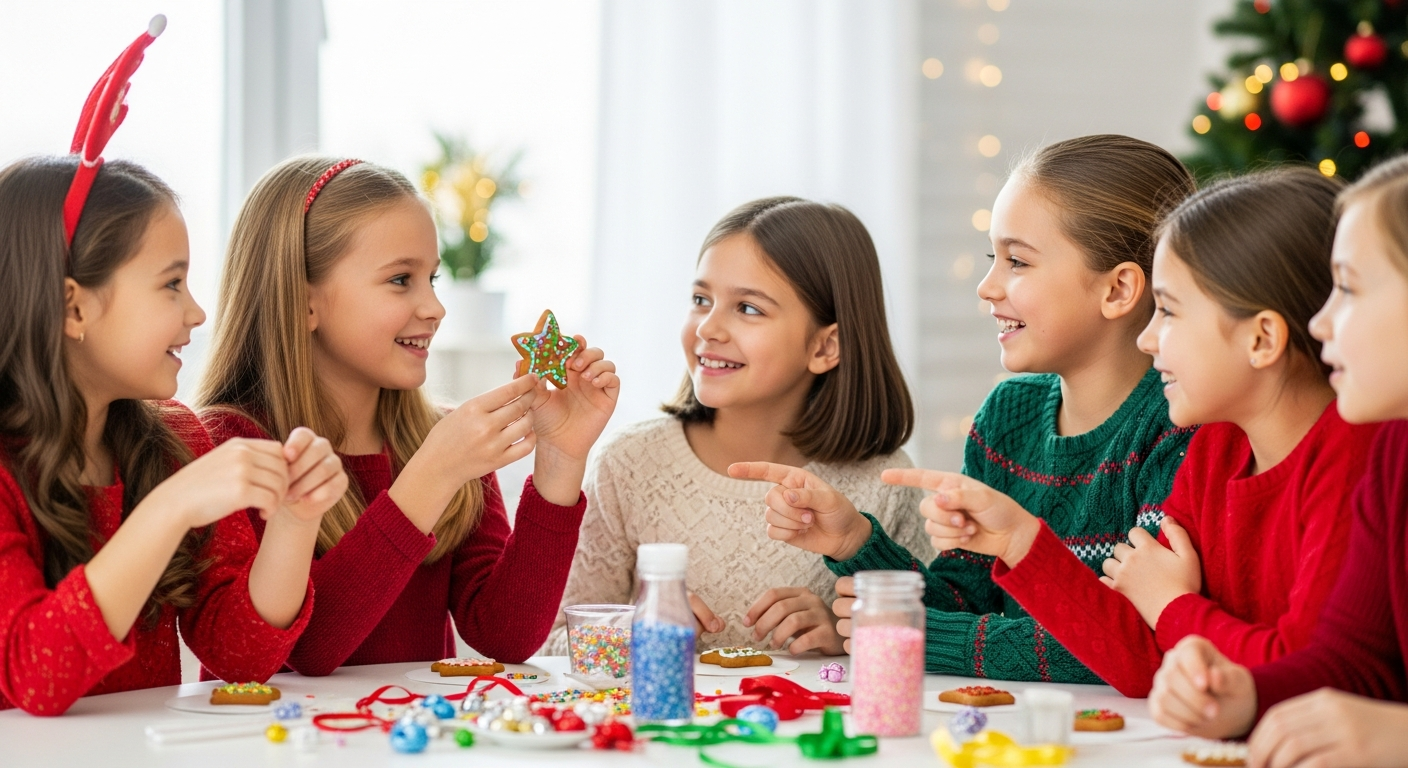
Table of Contents
- Introduction
- The Magic of Christmas for Child Development
- Sparking Communication Through Festive Crafts
- Culinary Adventures: Baking and Cooking Together
- Storytelling, Music, and Dramatic Play
- Sensory & Outdoor Exploration
- Acts of Kindness and Giving Back
- Integrating Smart Screen Time with Speech Blubs
- Choosing the Right Plan for Your Family
- Conclusion
- FAQ
Introduction
The holiday season is a magical time, filled with twinkling lights, festive melodies, and the heartwarming glow of family togetherness. For many parents, it’s a cherished period to create lasting memories and traditions with their children. Yet, beyond the glitter and glee, these special moments hold incredible potential for fostering your child's development, especially their communication skills. When we consider the wonder in a child's eyes as they see their first decorated Christmas tree or the excitement of baking cookies, we see more than just fun – we see rich opportunities for language acquisition, social-emotional growth, and cognitive development. This post isn't just about sharing delightful holiday pastimes; it's about transforming these beloved Christmas activities into powerful tools that help your child "speak their minds and hearts," building confidence and connection one festive moment at a time. We'll explore a sleigh-full of engaging Christmas activity ideas for kids, designed to spark joy, nurture developmental milestones, and seamlessly integrate communication practice into the most wonderful time of the year.

The Magic of Christmas for Child Development
The holiday season offers a unique sensory and social feast that can significantly impact a child's overall development. From the vibrant colors of ornaments to the comforting scent of gingerbread, Christmas activities provide a rich tapestry of experiences that stimulate all senses and encourage interaction. Children are natural explorers, and the novelty of holiday traditions opens up new avenues for learning and expression.
Creating Lasting Memories and Traditions
Traditions, whether grand or simple, offer children a sense of belonging and security. Repeating activities year after year helps them anticipate, recall, and narrate events, strengthening their memory and sequencing skills. It’s during these shared moments that families truly connect, fostering a strong foundation for social-emotional growth. When children participate in beloved traditions, they learn about their family's culture, develop empathy, and understand the joy of giving and sharing. These moments become stories they’ll tell for years, laying the groundwork for narrative development.
A Sensory Feast for Growing Minds
Think about the sheer sensory input of Christmas: the feel of rough pinecones or soft faux snow, the sweet taste of a candy cane, the sound of sleigh bells, the sight of twinkling lights, and the unmistakable smell of cinnamon and pine. This multi-sensory environment is incredibly stimulating for young brains, helping them make connections between objects, sensations, and words. Describing these experiences aloud helps children build a rich vocabulary and develop their descriptive language skills. For instance, articulating "scratchy" when touching a pinecone or "spicy" when smelling ginger reinforces their understanding of adjectives and their ability to express their observations.
Sparking Communication Through Festive Crafts
Christmas crafts are more than just pretty decorations; they are fantastic conduits for fostering communication, fine motor skills, and creative expression. The process of creation itself provides numerous opportunities for interaction, instruction-following, and descriptive language.

Ornament Making: A Canvas for Words
Crafting handmade ornaments is a classic holiday activity that lends itself beautifully to language development.
- Descriptive Language: As you choose materials (glitter, felt, beads, paint), encourage your child to describe them. "Which glitter do you want? The sparkly red or the shiny gold?" "This felt is soft, isn't it?"
- Following Instructions: Simple instructions like "First, glue the cotton ball onto the snowman's head. Next, add two googly eyes" help children practice auditory processing and sequencing.
- Expressing Choices: Empower your child to make decisions, such as "Do you want a blue star or a yellow star on top of your tree ornament?" This builds their ability to express preferences.
- Relatable Scenario: For a child who might be hesitant to initiate conversation, holding up a completed sparkly star ornament and asking, "Wow, look at this! What's your favorite part about it?" can be a gentle invitation to share their thoughts and feelings.
Creating Holiday Cards: Personalized Messages
Making personalized Christmas cards for friends and family offers a wonderful chance to practice writing, drawing, and expressing affection.
- Naming People: Discuss who each card is for. "This card is for Grandma. What should we draw for Grandma?"
- Simple Sentences: Help older children write simple greetings like "Merry Christmas, Uncle John!" or "Love, [Child's Name]." For younger children, focus on identifying letters or drawing pictures that represent their message.
- Color and Shape Identification: As they draw or decorate, talk about the colors and shapes they are using: "You're drawing a green Christmas tree! And look at those round ornaments."
DIY Decorations: Sequencing and Labeling
From paper chains to snowflake cutting, DIY decorations involve steps and specific items, perfect for practicing action verbs and object naming.
- Action Verbs: "Cut," "fold," "glue," "attach," "decorate," "hang." Narrate each step as you do it. "Now we fold the paper. Then we cut it."
- Labeling Materials: Identify all the craft supplies: "scissors," "paper," "ribbon," "tape."
- Spatial Concepts: "Put the star on top of the tree. Hang the lights around the window."
For families looking for additional ways to reinforce these new words and concepts, our app offers a fantastic supplementary tool. Speech Blubs’ unique video modeling methodology allows children to watch and imitate their peers, making learning engaging and effective. If you’re curious about exploring how our app can help your child, you can start by downloading Speech Blubs from the Apple App Store or Google Play Store today!
Culinary Adventures: Baking and Cooking Together
The kitchen during Christmas is a hub of delightful smells and tastes, and inviting children to participate in holiday baking or cooking is a wonderful way to teach practical life skills while boosting their vocabulary and ability to follow directions.
Cookie Decorating: A Sweet Treat for Language
Decorating Christmas cookies is a favorite for many kids, and it’s ripe with opportunities for language practice.
- Colors and Shapes: "Which color icing do you want for your gingerbread man? Red or green?" "What shape sprinkles should we use? Stars or circles?"
- Taste Descriptions: Encourage them to describe the taste: "Is it sweet? Is it crunchy?"
- Quantity: "How many sprinkles do you want? Lots or a little?"
- Relatable Scenario: If your child is working on expanding their vocabulary, comparing two different shaped cookies—"This is a round cookie, and this is a star cookie"—can help them grasp new descriptive words in a fun, tangible way.
Simple Holiday Recipes: Action Verbs and Ingredients
Even simple tasks like mixing ingredients for hot chocolate or stirring a cranberry sauce can be language-rich.
- Action Verbs: Focus on verbs like "mix," "stir," "pour," "spread," "roll," "cut." Narrate your actions and encourage imitation. "Now we pour the milk into the pan."
- Ingredient Names: Name all the ingredients as you use them: "flour," "sugar," "eggs," "vanilla."
- Sequencing: "First, we add the flour. Next, the sugar." This reinforces the concept of order.
These hands-on activities, where children learn by doing and imitating, perfectly align with our core philosophy at Speech Blubs. We believe that learning should be an active, engaging process. Our founders, who grew up with speech challenges themselves, created Speech Blubs to provide the immediate, effective, and joyful solution they wished they had—a tool that blends scientific principles with play. Discover more about our approach and why it's so effective on our Research page.
Storytelling, Music, and Dramatic Play
The holiday season is rich with narratives, songs, and characters, making it an ideal time for engaging in activities that nurture narrative skills, rhythm, and imaginative play.
Reading Christmas Books: Adventures in Language
Snuggling up with a festive book is a quintessential Christmas activity.
- Vocabulary Expansion: Introduce new words found in the story. "Look, a reindeer! Reindeer have big antlers."
- Comprehension and Prediction: Ask questions about the plot. "What do you think will happen next?" "Why is Santa sad?"
- Story Sequencing: Discuss the beginning, middle, and end of the story. "First, the elves made toys. Then, Santa delivered them. Finally, everyone was happy!"
- Emotional Language: Talk about how characters are feeling: "The child is excited to open presents."
Singing Carols: Rhythm, Rhyme, and Articulation
Christmas carols are a joyful way to engage children with language through music.
- Rhythm and Rhyme: Singing helps children develop an ear for rhythm and rhyming words, which are foundational for phonological awareness and early literacy.
- Articulation Practice: Many carols contain repetitive sounds and clear pronunciations, making them excellent for practicing articulation. Encourage them to sing along, even if they just hum or repeat a few words.
- Memory: Memorizing lyrics boosts auditory memory.
- Relatable Scenario: For a child working on their "s" sound, singing "Jingle Bells" provides ample opportunities to practice "sleigh bells," "snow," and "speed."
Impromptu Holiday Plays: Imagination and Expression
Encourage children to act out scenes from their favorite Christmas stories or create their own.
- Role-Playing: Assign roles like Santa, an elf, a reindeer, or a gingerbread man. This helps children understand different perspectives and express emotions.
- Imitation: Children learn by imitating, and acting out characters offers a playful way to practice speech patterns and gestures.
- Emotional Expression: Help them identify and express emotions relevant to the characters. "How would a reindeer feel if it lost its sleigh?"
At Speech Blubs, we understand the power of imitation and play. Our app offers "smart screen time" experiences where children learn by watching and mimicking their peers. This approach is a screen-free alternative to passive viewing like cartoons and provides a powerful tool for family connection, echoing the joy of shared storytelling and dramatic play. Ready to see the magic unfold? Download Speech Blubs on the App Store or Google Play today!
Sensory & Outdoor Exploration
Christmas extends beyond indoor festivities, offering unique sensory experiences both inside and out. These activities naturally invite descriptive language and exploration.
Winter Wonderland Walks: Describing Nature
If you live in a place with snow, a winter walk is a sensory delight. If not, even a walk to admire holiday lights offers much to discuss.
- Descriptive Language: "The snow is cold and white." "The lights are bright and sparkly." "Listen to the crunch of the snow!"
- Observation: Point out details: "Look at the icicles hanging from the roof." "Do you see that tiny bird?"
- Sound Identification: Listen for sounds of the season – carols playing, children laughing, bells jingling.
Christmas Sensory Bins: Textures, Smells, and Sounds
Create a themed sensory bin using items like pinecones, cinnamon sticks, jingle bells, faux snow, cranberries, and small ornaments.
- Texture Exploration: "This pinecone is prickly." "The faux snow is soft."
- Smell Identification: "Can you smell the spicy cinnamon?" "This smells like pine."
- Sound Production: Shake the jingle bells: "Listen to the ding-ding-ding!"
- Comparison: "Which is heavier, the pinecone or the jingle bell?"
Decorating the Tree: Shapes, Colors, and Spatial Concepts
Putting up the Christmas tree is a communal activity that teaches many concepts.
- Shapes and Colors: "This is a round red ornament." "Look at the star-shaped topper."
- Spatial Prepositions: "Put the ornament on the branch." "Hang it low or high." "The lights go around the tree."
- Categorization: "Let's put all the blue ornaments together." "These are the breakable ornaments."
Are you unsure if your child could benefit from more structured speech support alongside these fun activities? Take our quick 3-minute preliminary screener to get a simple assessment and a free 7-day trial. It's a great way to understand your child's needs and explore how Speech Blubs can help.
Acts of Kindness and Giving Back
The spirit of giving is central to Christmas, and involving children in acts of kindness fosters empathy, gratitude, and a deeper understanding of community. These activities also provide rich contexts for discussing feelings, actions, and social concepts.
Making Gifts for Loved Ones: Empathy in Action
Creating simple handmade gifts for family members or friends encourages thoughtful communication.
- Discussing Preferences: "What does Grandma like? Does she like blue or pink?" This encourages children to think about others' feelings and preferences.
- Expressing Affection: "We are making this for Aunt Sarah because we love her."
- Narrating the Process: "We are making a picture frame. We will give it to Grandpa."
Donating Toys or Food: Understanding Gratitude and Helping Others
Involving children in charitable acts, such as donating old toys or helping with a food drive, opens up discussions about important social concepts.
- Explaining Concepts: Talk about why some people need help, using age-appropriate language. "Some children don't have many toys. When we give our toys, we help them feel happy."
- Expressing Gratitude: "We are lucky to have so many toys. It's good to share our blessings."
- Identifying Items: As you sort items for donation, name them: "This is a truck. This is a book."
These acts of kindness help children develop a broader vocabulary related to emotions, community, and social responsibility. They learn the value of their words not just for expressing needs, but for expressing care and connection.
Integrating Smart Screen Time with Speech Blubs
While these traditional Christmas activities are incredibly valuable for development and bonding, we understand that modern parenting often involves a balance with digital resources. At Speech Blubs, we embrace technology as a powerful tool for learning, transforming passive screen time into "smart screen time."
Our mission at Speech Blubs is to empower children to "speak their minds and hearts." We know that 1 in 4 children need speech support, and our company was born from the personal experiences of our founders, all of whom grew up with speech problems. They created the immediate, effective, and joyful tool they wished they had.
How Speech Blubs Complements Holiday Learning
Imagine a day filled with making Christmas crafts, singing carols, and baking cookies. Your child has been immersed in rich language experiences, describing textures, naming colors, and practicing action verbs. Speech Blubs can seamlessly extend and reinforce this learning in a fun, engaging way.
- Video Modeling for Imitation: Our unique methodology, backed by science, uses "video modeling" where children learn by watching and imitating their peers. Just as they might imitate an older sibling decorating a cookie, in Speech Blubs, they watch real kids their age making sounds and words. This taps into mirror neuron systems, making learning incredibly intuitive and effective.
- Practical Scenario: For a parent whose 3-year-old "late talker" loves animals and has been talking about reindeer and sleighs, the "Animal Kingdom" section within Speech Blubs offers a fun, motivating way to practice animal sounds like "moo" and "baa," or simple animal names, building on the excitement of creatures found in Christmas stories.
- Targeted Practice: If your child is struggling with specific sounds (like 'r' in 'reindeer' or 's' in 'Santa'), Speech Blubs offers targeted exercises within a playful context, building confidence without feeling like a chore.
- Vocabulary Reinforcement: The app includes a vast library of words and concepts, perfectly complementing the new vocabulary children encounter during holiday activities. Words like "star," "tree," "present," and "joy" can be practiced in various engaging contexts.
- A Tool for Family Connection: Unlike passive cartoons, Speech Blubs is designed for active co-play. Parents are encouraged to sit with their children, celebrate their successes, and engage in the learning process together. It’s a powerful tool that brings families closer through shared learning experiences. Our app ensures that screen time is interactive, educational, and contributes to developmental goals.
- See what other parents are saying about their child's success with Speech Blubs by visiting our testimonials page.
Choosing the Right Plan for Your Family
We are committed to providing the best possible support for your child's communication journey. To ensure you get the most out of Speech Blubs, we offer flexible plans, with our Yearly plan standing out as the clear best choice for families.
Our plans are:
- Monthly Plan: For $14.99 per month, you get access to the core Speech Blubs app.
- Yearly Plan: At just $59.99 per year, this plan breaks down to an incredible value of only $4.99 per month! This means you save 66% compared to the monthly plan.
Beyond the significant cost savings, the Yearly plan includes exclusive, high-value features designed to give your child the most comprehensive support:
- 7-Day Free Trial: Experience the full power of Speech Blubs before committing. The Monthly plan does not offer this trial.
- Extra Reading Blubs App: Gain access to our supplementary Reading Blubs app, further enhancing your child's literacy development.
- Early Access to New Updates: Be among the first to explore new features and content.
- 24-Hour Support Response Time: Get your questions answered quickly and efficiently by our dedicated support team.
The Monthly plan does not include these additional benefits. We strongly encourage you to choose the Yearly plan to unlock the 7-day free trial and the full suite of features designed to empower your child's communication journey. It's the best way to support your child's development while enjoying incredible value.
Conclusion
The Christmas season is a treasure trove of opportunities to connect with your children, create cherished memories, and, perhaps most importantly, foster their communication skills. By engaging in simple, joyful activities—from crafting ornaments and baking cookies to reading stories and singing carols—you're not just celebrating a holiday; you're building a foundation for lifelong learning and confident expression. Every shared laugh, every decorated cookie, and every caroled lyric is a step towards helping your child navigate their world with words.
At Speech Blubs, we are here to support you every step of the way, transforming screen time into "smart screen time" that complements these real-world experiences. Our app, born from personal passion and grounded in scientific methodology, empowers children to learn speech and language in a fun, engaging, and effective way. It’s a powerful supplement to your child's overall development plan, turning everyday moments into opportunities for growth.
Ready to fill your home with the sounds of joy and confident communication this Christmas? Start your 7-day free trial today by choosing the Yearly plan to unlock all the benefits, including the extra Reading Blubs app and priority support. Download Speech Blubs on the Apple App Store or get it on the Google Play Store and begin a journey of connection, confidence, and joyful communication.
FAQ
Q1: How can I encourage my child to talk more during Christmas activities?
A1: Engage your child by narrating your actions, asking open-ended questions (e.g., "What do you think we should do next?"), and giving them choices (e.g., "Do you want the red ribbon or the green ribbon?"). Use descriptive language to talk about what you see, hear, smell, touch, and taste during the activities. Imitate any sounds or words your child makes to show you are listening and encourage more interaction.
Q2: My child is a late talker. How can these activities specifically help them?
A2: For late talkers, hands-on, multi-sensory activities provide concrete experiences that link words to objects and actions. Focus on single words or short phrases that are relevant to the activity (e.g., "star," "cookie," "mix," "red"). Use gestures, point to objects, and model the words clearly. Speech Blubs can be a great supplement, as our video modeling approach allows children to learn by imitating peers, reinforcing the vocabulary and sounds encountered in holiday play.
Q3: What if my child isn't interested in a particular Christmas activity?
A3: It's okay if your child isn't keen on every activity. Observe what sparks their interest and focus on those. Forcing an activity can lead to frustration. Instead, try adapting it or offering a choice of two different activities. Sometimes just being present and narrating what you are doing can gently invite them to join in when they're ready. Remember, the goal is joyful connection, not forced participation.
Q4: How does Speech Blubs fit into our family's holiday plans?
A4: Speech Blubs is designed to be a flexible, engaging tool that complements your family's routine. Think of it as "smart screen time" that actively supports speech development, unlike passive viewing. You can incorporate short, fun sessions (e.g., 10-15 minutes) after a meal, before bed, or during a quiet moment in the day. It’s a fantastic way to reinforce vocabulary, practice sounds, and build confidence, all while enjoying the festive season. To get the best value and access to all features, including a 7-day free trial, remember to choose the Yearly plan.
About the author