
Merry Making: Fun Kids Christmas Ornament Crafts
 By Speech Blubs Team•Dec 22, 2025•21 min.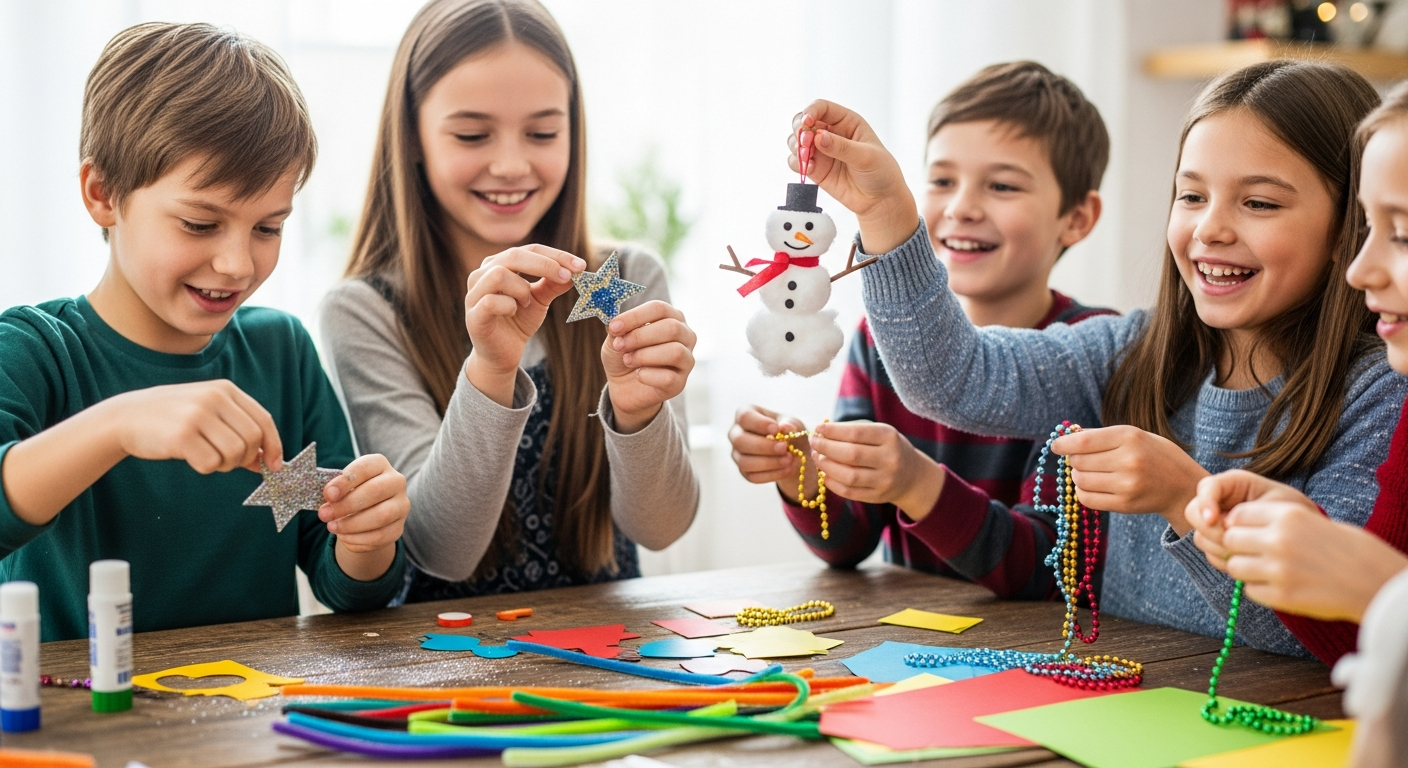
Table of Contents
- Introduction
- The Magic of Making: Why Christmas Crafts are More Than Just Fun
- Crafting Connections: Speech & Language Opportunities in Every Ornament
- Our Favorite Kids Christmas Ornament Crafts for Speech Development
- Maximizing Speech & Language During Craft Time
- When to Seek Additional Support for Speech Development
- How Speech Blubs Supports Your Child's Communication Journey
- Our Flexible Plans for Every Family
- Conclusion
- Frequently Asked Questions (FAQs)
Introduction
The holiday season twinkles with magic, especially through the eyes of a child. What could be more enchanting than tiny hands creating treasured adornments to hang on the Christmas tree, year after year? These aren't just decorations; they're tiny capsules of memory, sparkling with effort and love. Beyond the glitter and glue, engaging in festive crafts offers a profound opportunity for children to develop crucial skills, from fine motor coordination to problem-solving, and perhaps most importantly, communication. Craft time transforms into dedicated time for connection, shared laughter, and rich language exploration.
This post will delve into a delightful array of kids Christmas ornament crafts, perfect for all ages and skill levels. We'll explore how each craft specifically targets developmental areas, with a keen focus on enhancing speech and language skills. From the joy of squishing salt dough to the pride of hanging a handmade pinecone, we'll guide you through activities designed to foster creativity and boost communication, showing how simple holiday projects can become powerful learning experiences. Our main message is clear: these festive crafts are not only about creating beautiful keepsakes but also about building confidence, expanding vocabulary, and fostering a love for communication in a uniquely joyful, festive setting.

The Magic of Making: Why Christmas Crafts are More Than Just Fun
Engaging children in holiday crafting is about so much more than just keeping them occupied or decorating the home. It’s a multi-faceted developmental powerhouse, offering benefits that ripple through various aspects of a child's growth. When little ones sit down with craft supplies, they embark on a journey of discovery and skill-building.
Sensory Exploration and Engagement
Crafting is a feast for the senses. Children encounter a variety of textures – the stickiness of glue, the smoothness of paper, the prickliness of a pinecone, the softness of cotton balls. They explore vibrant colors, the sweet scent of cinnamon from dried oranges, and the sound of jingle bells. This rich sensory input is vital for cognitive development, helping children process information about their world and forming strong neural connections. It’s also incredibly calming and focusing for many children, providing a wonderful alternative to more passive activities.
Boosting Fine Motor Skills
The precise movements involved in crafting are exceptional for developing fine motor skills. Activities like cutting with child-safe scissors, threading beads onto a pipe cleaner, peeling stickers, squeezing glue bottles, painting delicate details, or even simply crumbling paper all strengthen the small muscles in the hands and fingers. These skills are fundamental precursors to tasks like writing, fastening buttons, and self-feeding, laying the groundwork for greater independence and academic success.
Cultivating Cognitive Growth and Creativity
Every craft project presents a miniature challenge. Children learn to follow multi-step instructions, solve problems when something doesn't go as planned, and make choices about colors, materials, and designs. This process nurtures their cognitive abilities, enhancing their critical thinking and planning skills. Moreover, crafting is a direct pathway to creativity. There's no single "right" way to decorate an ornament, empowering children to express their unique ideas and build confidence in their own artistic vision.

Fostering Emotional and Social Development
Crafting can be a deeply satisfying experience, offering children a sense of accomplishment and pride in their creations. Sharing their finished ornament, whether with family or as a gift, boosts self-esteem and teaches generosity. When crafting together, children learn cooperation, patience, and how to share materials, strengthening social bonds. It’s a wonderful way to create shared experiences and cherished family traditions that build lasting memories.
Laying the Groundwork for Language
Perhaps one of the most exciting, yet often overlooked, benefits of crafting is its profound impact on language development. The entire process is rich with opportunities for conversation, vocabulary expansion, and practicing various communication skills. At Speech Blubs, our mission is to empower children to "speak their minds and hearts," and we see hands-on activities like crafting as powerful avenues to achieve this. Just as our founders, who grew up with speech problems, created a tool they wished they had, we believe in blending scientific principles with play to support every child's communication journey. These craft moments become vibrant conversational springboards.
Crafting Connections: Speech & Language Opportunities in Every Ornament
Holiday crafting is a natural and engaging setting for targeted speech and language practice. As parents, we can intentionally weave in strategies that help children build crucial communication skills, transforming a fun activity into a powerful learning session.
Expanding Vocabulary with Festive Words
Every new material, color, shape, and action word introduced during crafting is a chance to expand a child's vocabulary. Think of all the holiday-specific words: "sparkle," "jingle," "garland," "pinecone," "ribbon," "glitter," "festive," "ornament," "decorate." As you craft, point to items and name them, describing their qualities. "Look at this shiny red star!" or "Feel the rough pinecone." This consistent exposure helps solidify new words in a child's mind. For a child who might be a "late talker" and loves exploring different textures, introducing words like "sticky glue" or "bumpy glitter" while making a paper ornament can be incredibly motivating.
Mastering Multi-Step Instructions
Following directions is a fundamental skill for both language comprehension and overall learning. Craft projects naturally involve a sequence of steps: "First, we cut the paper. Then, we glue it here. Next, we add glitter." By guiding your child through these steps and encouraging them to repeat the instructions or anticipate the next one, you strengthen their ability to understand and remember sequences. This is especially beneficial for children who are learning to process more complex sentences.
Developing Descriptive Language
Crafting provides endless opportunities for children to describe what they are seeing, feeling, and creating. Encourage them to articulate their choices and observations: "Tell me about your shiny, red, sparkly star!" or "What color paint do you want to use next?" Prompt them with questions that go beyond simple "yes" or "no" answers. Asking them to compare their ornament to yours, or to describe how it feels, promotes richer, more complex descriptive language.
Practicing Sequencing and Storytelling
Once an ornament is complete, invite your child to recount the steps they took to make it. "What did you do first? What happened next? And then?" This helps them practice sequencing events, a critical skill for narrative development and later, reading comprehension. They can tell a story about their ornament, giving it a name or imagining where it will hang. This kind of imaginative play, born from a tangible creation, is a wonderful way to encourage expressive language.
Targeting Specific Articulation Sounds
For children working on specific speech sounds, crafting can be a playful way to practice. If your child is working on the "s" sound, point out "stars" and "sparkles." For "r" sounds, emphasize "red ribbon" or "round ornament." Model the correct pronunciation clearly and encourage them to imitate, always keeping the atmosphere light and fun. For parents looking for additional support in this area, our app provides a joyful solution for the 1 in 4 children who need speech support, blending scientific principles with play into "smart screen time" experiences. Many of our activities focus on specific sounds and words, making them an excellent complement to hands-on craft practice. Discover more about our research-backed methodology here.
Enhancing Social Communication
Crafting together inherently involves social interaction. Children learn to ask for materials politely, express their preferences ("I want the blue glitter!"), share tools, and comment on each other's work. These are crucial social communication skills that foster cooperative play and build stronger relationships.
For a parent whose 3-year-old struggles with requesting and using short phrases, making a beaded ornament provides a perfect scenario. Instead of just pointing, the parent can hold up two colors of beads and ask, "Red or green?" prompting the child to say "Red bead!" or "Green, please!" This practical, relatable scenario makes language learning immediate and meaningful.
Our Favorite Kids Christmas Ornament Crafts for Speech Development
Here are some wonderfully engaging and speech-rich Christmas ornament crafts that children will adore making. Each one offers unique opportunities for language development.
Easy & Classic: Salt Dough Ornaments
Salt dough ornaments are a timeless tradition, wonderfully tactile, and incredibly versatile.
- Materials: 1 cup flour, 1/2 cup salt, 1/2 cup water. Cookie cutters, rolling pin, straw (for hanging hole), acrylic paints, paintbrushes, glitter, string or ribbon.
- How to Make: Mix flour, salt, and water until a firm dough forms. Knead on a lightly floured surface for a few minutes. Roll the dough flat (about 1/4 inch thick). Use cookie cutters to make shapes. Punch a hole at the top of each ornament with a straw. Bake at 250°F (120°C) for 2-3 hours or until hardened. Once cool, decorate with paint and glitter.
- Speech Focus:
- Vocabulary: "dough," "flour," "salt," "water," "mix," "knead," "roll," "flat," "cookie cutter," "star," "tree," "bell," "bake," "paint," "dry," "glitter," "shiny," "string," "hang."
- Action Words: "pour," "stir," "press," "cut," "lift," "poke," "spread," "sprinkle."
- Sensory Descriptions: "sticky," "soft," "smooth," "cold," "warm," "rough" (after baking), "smelly" (of paint).
- Following Instructions: "First, we mix the flour and salt. Then, we add the water." "Roll the dough, then cut the shapes."
- Descriptive Phrases: "Big green tree," "little red star," "sparkly blue bell."
- Practical Scenario: If your child is working on early phrases, you can hold up the flour and ask, "What is this?" encouraging "white flour." When rolling, say "Roll, roll, roll the dough!" and prompt them to imitate the action and words. This reinforces the sounds and words, much like the engaging "Animal Kingdom" section of Speech Blubs helps children practice animal sounds and names.
Personalized Treasures: Photo & Handprint/Footprint Ornaments
These crafts become instant heirlooms, capturing a moment in time while fostering warm conversations.
- Materials (Photo Ornaments): Clear plastic or glass ornaments (shatterproof for kids!), small photos (printed on thin paper), glitter, fake snow, ribbon.
- How to Make (Photo Ornaments): Roll up a small photo and carefully insert it into the clear ornament. Add glitter or fake snow if desired. Replace the top and tie a ribbon.
- Materials (Handprint/Footprint Ornaments): Air-dry clay or salt dough, paint, paintbrushes, clear glaze or sealant.
- How to Make (Handprint/Footprint Ornaments): Roll out clay or salt dough. Press your child's hand or foot firmly into it. Trim around the print if desired. Punch a hole for hanging. Let air-dry completely (or bake salt dough). Paint, decorate, and seal.
- Speech Focus:
- Naming & Identifying: Naming family members in photos. "Who is this?" "That's Grandma!"
- Describing Emotions: "Look, Daddy is smiling!" "You look happy!"
- Recalling Memories: "Remember when we took this picture at the beach?"
- Body Parts: "hand," "finger," "thumb," "foot," "toes."
- Comparisons: "My hand is bigger than your hand." "My foot is smaller."
- Action Verbs: "Press," "squeeze," "print," "paint."
- Practical Scenario: For a child focusing on "my" and "mine," making a handprint ornament offers a clear association. "Whose hand is this?" "My hand!" you can guide. These personalized crafts encourage conversation about people, emotions, and past events, tying into the social communication skills fostered by Speech Blubs’ video modeling methodology, where children learn by watching and imitating their peers. It's a powerful tool for family connection, creating screen-free alternatives to passive viewing.
Nature's Beauty: Pinecone & Dried Orange Ornaments
Bring the outdoors in with these rustic and fragrant ornaments.
- Materials: Pinecones (collected from outside or store-bought), dried orange slices, cinnamon sticks, small twigs, ribbon, twine, glue, glitter, small pom-poms or beads.
- How to Make (Pinecone): Tie a loop of ribbon around the top of a pinecone for hanging. Children can then glue small pom-poms, beads, or glitter onto the pinecone scales.
- How to Make (Dried Orange): Slice oranges thinly and bake at a low temperature until dry (or buy pre-dried). Thread ribbon or twine through a slice for hanging, perhaps adding a cinnamon stick or small evergreen sprig.
- Speech Focus:
- Nature Vocabulary: "pinecone," "tree," "orange," "cinnamon," "twig," "branch," "leaf."
- Sensory Words: "spiky," "rough," "smooth," "smelly," "sweet," "citrus," "woody," "fragrant."
- Concepts: "big/small," "light/heavy," "natural."
- Action Words: "gather," "find," "glue," "tie," "decorate."
- Practical Scenario: For a child who loves exploring outdoors but has limited vocabulary, gathering natural elements for these crafts offers tangible objects to name and describe. You can talk about "finding a big pinecone" and "gluing small green pom-poms." This hands-on experience is a powerful bridge to language acquisition, mirroring how Speech Blubs provides real-world contexts for learning through engaging activities. If you're wondering how to further support your child's communication journey, take our quick 3-minute preliminary screener. It involves just 9 simple questions and provides an assessment along with a personalized next-steps plan.
Sparkly & Simple: Bead & Pipe Cleaner Ornaments
Perfect for practicing fine motor skills and recognizing patterns.
- Materials: Pipe cleaners (various colors), pony beads (various colors and shapes), jingle bells, small elastic bands or string.
- How to Make: Children thread pony beads onto a pipe cleaner, creating patterns or simply filling it up. They can then bend the pipe cleaner into various shapes like a candy cane, star, or circle, twisting the ends together to secure. Adding a jingle bell at the bottom or along the shape adds extra sensory fun.
- Speech Focus:
- Colors: Naming beads of different colors ("red," "green," "blue," "yellow").
- Counting: "How many beads do you have?" "One, two, three beads."
- Shapes: "round" bead, "long" pipe cleaner, "bend" into a star.
- Action Words: "thread," "slide," "bend," "twist," "add."
- Patterns: "Red, green, red, green... what comes next?"
- Practical Scenario: This activity naturally encourages back-and-forth communication. A parent can model, "I'm threading a red bead. Now I thread a green bead. Your turn! What color bead will you thread?" This interactive modeling helps children practice vocabulary and understand turn-taking in conversation. It exemplifies how "smart screen time" with Speech Blubs is designed to be a springboard for real-world interaction, not a replacement.
Paper Wonderland: 3D Paper Ornaments
Simple paper can be transformed into beautiful, sculptural ornaments.
- Materials: Construction paper (various colors), child-safe scissors, glue stick, glitter, markers, hole punch, string.
- How to Make (Paper Chain Star): Cut strips of paper. Form one into a circle and glue the ends. Link another strip through it and glue. Continue until you have a chain. You can form the chain into a star shape by strategically gluing points.
- How to Make (Layered Paper Shapes): Cut out multiple identical shapes (e.g., circles, stars) from different colored paper. Fold each shape in half. Glue the halves together, one after another, creating a 3D effect.
- Speech Focus:
- Shapes: "circle," "star," "square," "triangle," "strip."
- Spatial Concepts: "on top," "under," "next to," "inside," "outside," "together."
- Action Words: "cut," "fold," "glue," "decorate," "overlap," "punch."
- Directional Words: "up," "down," "across."
- Practical Scenario: While making a 3D paper ornament, you can give precise instructions involving spatial concepts: "Glue the blue circle on top of the red circle." or "Cut along the line." This helps children understand and use these crucial words. Our app offers numerous categories focusing on actions and concepts to strengthen these skills, making it a powerful supplement for comprehensive language development. Download Speech Blubs on Google Play to explore our rich content library.
Maximizing Speech & Language During Craft Time
To truly make the most of these crafting opportunities for speech and language development, remember these key strategies:
- Narrate Everything: Talk about what you're doing, what your child is doing, and what's happening. "I'm cutting the paper now." "You're gluing the star." "The glitter is falling down!" This provides a constant stream of language input.
- Ask Open-Ended Questions: Instead of questions with a simple "yes" or "no" answer, ask "What do you want to do next?" "Tell me about your ornament." "How does it feel?" This encourages more elaborate responses and critical thinking.
- Expand on Their Words: If your child says "red," you can expand by saying, "Yes, that's a beautiful, shiny red circle!" This models more complex sentences and vocabulary without correcting them directly.
- Provide Choices: "Do you want blue or green paint?" "Should we use big or small beads?" Offering choices encourages communication and gives your child a sense of control and independence.
- Encourage Imitation: If your child is working on specific sounds or words, model them clearly and then encourage them to try. "Can you say 'sparkle'?" or "Let's say 'jingle bell' together."
- Be Patient and Positive: Focus on the process and the effort, not just the perfect outcome. Celebrate every attempt at communication, no matter how small. A positive and encouraging environment is key for fostering confidence.
These strategies align perfectly with our approach to "smart screen time" at Speech Blubs – using tools like our app as a springboard for real-world interaction and language practice. Our video modeling method encourages imitation and provides a joyful solution for children, supporting their ability to speak their minds and hearts.
When to Seek Additional Support for Speech Development
While these crafts offer wonderful opportunities for development, it's also important for parents to be aware of typical speech and language milestones. Every child develops at their own pace, but there are general guidelines. If you notice persistent difficulties, such as very limited vocabulary for their age, difficulty understanding simple instructions, frequent frustration when trying to communicate, or if others often struggle to understand your child's speech, it might be time to consider additional support.
If you're ever wondering if your child could benefit from a little extra insight into their communication development, our quick 3-minute preliminary screener can offer some immediate insights. It involves just 9 simple questions and provides an assessment along with a personalized next-steps plan. It's a great starting point for parents seeking clarity and guidance.
How Speech Blubs Supports Your Child's Communication Journey
At Speech Blubs, our mission is deeply personal and professionally driven: to empower children to "speak their minds and hearts." Our company was born from the personal experiences of our founders, who all grew up with speech problems and created the tool they wished they had. We are committed to providing an immediate, effective, and joyful solution for the 1 in 4 children who need speech support, making a real difference in families' lives.
We achieve this by blending scientific principles with play, creating one-of-a-kind "smart screen time" experiences. We understand that parents want to use screen time constructively, and Speech Blubs offers a dynamic, interactive, and screen-free alternative to passive viewing, like cartoons. Instead of just watching, children actively participate, learn, and grow. Our app also serves as a powerful tool for family connection, encouraging parents and children to engage in activities together, fostering interaction and shared learning.
Our unique approach centers on our "video modeling" methodology, where children learn by watching and imitating their peers. This natural, engaging method taps into children's innate ability to learn from others, particularly those close to their own age. This scientific approach has been proven highly effective in boosting speech and language skills.
The benefits of using Speech Blubs extend far beyond just pronunciation. We focus on fostering a love for communication, building confidence in their abilities, and reducing the frustration that often comes with communication challenges. Children develop key foundational skills, from articulation and vocabulary to understanding concepts and developing social communication. Most importantly, we help create joyful family learning moments, where progress is celebrated, and communication becomes a fun, rewarding adventure. We always frame the app's use as a powerful supplement to a child's overall development plan and, when applicable, professional therapy, implicitly understanding that adult co-play and support are integral to its success.
We're proud of the impact we've made, and many parents have shared their incredible stories with us. Read what other parents are saying about their child's success with Speech Blubs here.
Our Flexible Plans for Every Family
We believe that every child deserves the opportunity to communicate confidently, and we strive to make Speech Blubs accessible to all families. We offer two flexible subscription plans to suit your needs:
- Monthly Plan: For just $14.99 per month, you can access our core features and a wealth of engaging activities designed to boost your child's speech and language skills.
- Yearly Plan: Our most popular and highly recommended option, the Yearly plan, is an exceptional value at just $59.99 per year. This breaks down to an incredible $4.99 per month, allowing you to save a significant 66% compared to the monthly subscription!
The Yearly plan isn't just cheaper; it also includes a suite of exclusive, high-value features designed to maximize your child's learning journey:
- A 7-day free trial: Experience the full power of Speech Blubs before committing.
- The extra Reading Blubs app: Enhance literacy skills alongside speech development with this valuable bonus.
- Early access to new updates: Be among the first to explore our latest features and content.
- 24-hour support response time: Get prompt assistance whenever you need it from our dedicated team.
Please note that the Monthly plan does not include these additional benefits. For the best value, the most comprehensive features, and the chance to try it completely free for a week, we highly encourage you to choose the Yearly plan.
Conclusion
This holiday season, let's embrace the joyous art of creating kids Christmas ornament crafts. These sparkling projects offer far more than just festive decorations; they are rich opportunities for sensory exploration, fine motor skill development, cognitive growth, and crucially, for nurturing your child's speech and language abilities. From the simple act of naming colors to following multi-step instructions and engaging in descriptive storytelling, every glitter-dusted handprint and pipe cleaner star becomes a moment of communication practice and family connection.
By intentionally incorporating language-boosting strategies into your crafting sessions, you can transform these fun activities into powerful learning experiences that foster a love for communication and build confidence. And when paired with tools like Speech Blubs, which provides "smart screen time" rooted in scientific methodology and engaging peer video modeling, you create a holistic approach to language development that supports your child every step of the way. These precious moments, both crafting and connecting through Speech Blubs, contribute to building foundational skills that will empower your child to speak their minds and hearts for years to come.
Ready to transform your child's communication journey and make this holiday season extra special? Create your Speech Blubs account today and start your 7-day free trial! Remember to choose the Yearly plan to unlock exclusive features like the Reading Blubs app and priority support, all while saving 66%. Give the gift of confident communication this Christmas!
Frequently Asked Questions (FAQs)
What age are these Christmas ornament crafts suitable for?
Many of these crafts are highly adaptable for a wide range of ages, from toddlers to school-aged children. For toddlers and preschoolers, focus on simpler tasks like sticking, painting with fingers, or threading large beads. Older children can handle more complex cutting, detailed painting, and following multi-step instructions independently. Always supervise young children, especially with small parts or scissors, and adjust the complexity to match your child's developmental stage and attention span.
How can I make these crafts more engaging for a child who struggles with attention?
For children with shorter attention spans, keep craft sessions brief and focused. Break down activities into very small, manageable steps. Offer choices (e.g., "Do you want red or green paint?"), incorporate sensory elements like different textures or scents, and make it hands-on to keep them actively involved. Using their favorite characters or colors can also increase engagement. Remember to celebrate their effort and progress, not just the finished product.
My child is a late talker. How exactly do these crafts help with speech?
Crafts provide a natural, motivating context for language. For a late talker, you can use the tangible items to model single words ("glue," "star," "red"), then two-word phrases ("more glue," "red star"). Ask simple questions like "What do you want?" while holding up options. The multi-sensory experience helps cement new vocabulary and concepts. It's a fun, low-pressure way to encourage imitation and spontaneous speech, making abstract language concrete.
Are the Speech Blubs activities similar to these crafts in terms of developmental benefits?
Yes, absolutely! While Speech Blubs is a digital tool, our activities are designed with many of the same developmental principles as hands-on crafts. Our "video modeling" method encourages imitation, just like a child imitating a craft step. We use engaging visuals and interactive elements to build vocabulary, teach concepts, and practice articulation in a playful way. Just as crafts foster fine motor skills, our app helps develop the "motor skills" of speech. We believe in providing "smart screen time" that complements real-world experiences, creating a powerful, blended learning environment for your child's communication journey.
About the author