
Merry Yuletide Projects: Engaging for All Ages
 By Speech Blubs Team•Dec 22, 2025•23 min.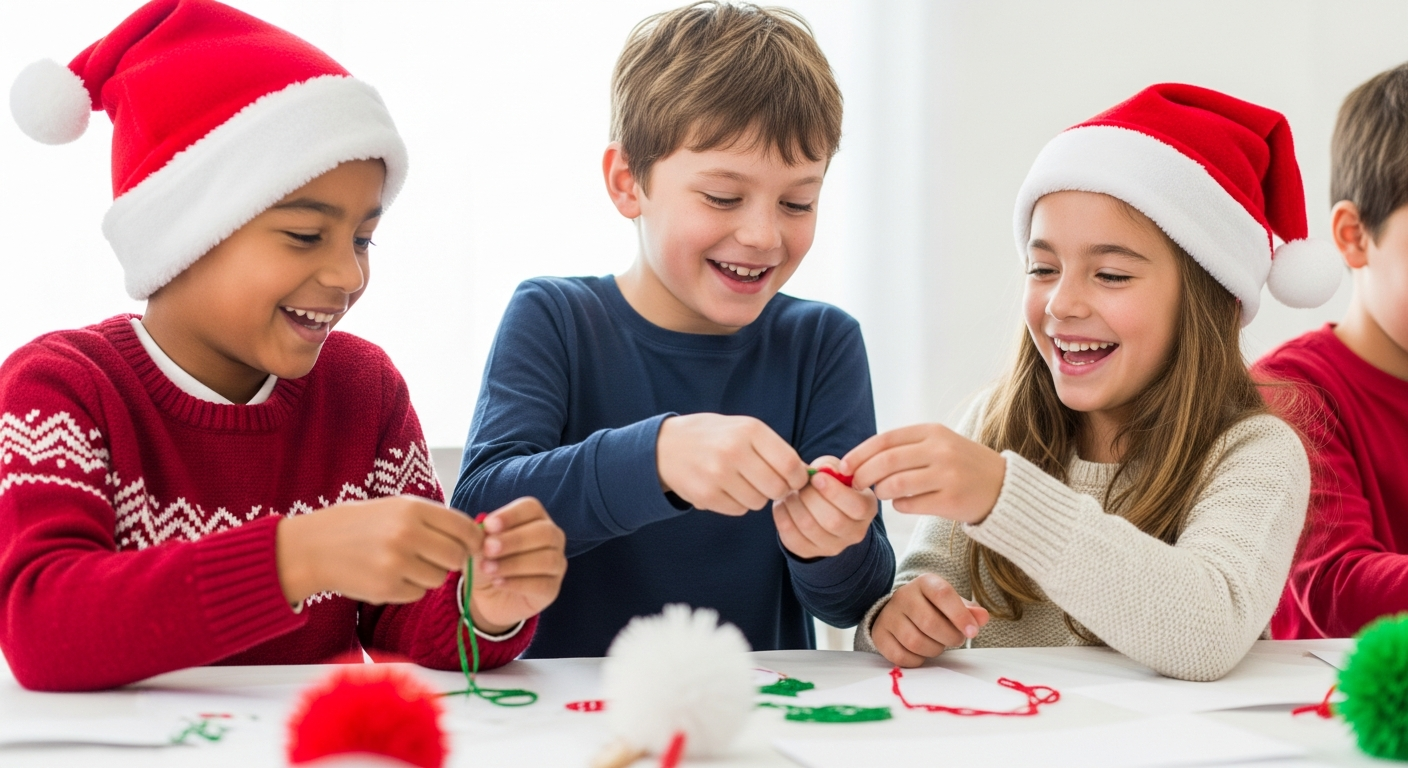
Table of Contents
- Why Christmas Crafts Are More Than Just Fun
- Getting Started: Crafting Essentials & Safety
- Enchanting Christmas Craft Ideas for Every Age
- Integrating Speech & Language Development into Every Craft
- Beyond the Craft: Displaying and Gifting
- When to Seek Additional Support: The Speech Blubs Difference
- Making Speech Blubs Part of Your Journey: Value and Plans
- Conclusion
- Frequently Asked Questions (FAQ)
The air crackles with anticipation, tiny lights twinkle, and the scent of pine fills our homes. Christmas is a magical time, especially for children. It’s a season brimming with wonder, joy, and the perfect opportunity to create lasting memories. While the holiday season often brings bustling schedules and gift-giving, it also offers a precious window for slowing down, connecting, and engaging in simple, heartwarming activities that truly matter. Among these, Christmas arts and crafts stand out as a beloved tradition, transforming ordinary moments into extraordinary adventures for little hands and budding imaginations.
More than just a way to decorate the house or create handmade gifts, Christmas crafting is a powerful catalyst for growth and development. It's a hands-on journey that sparks creativity, hones fine motor skills, and, perhaps most importantly, opens up a world of communication. At Speech Blubs, we believe every child deserves to "speak their minds and hearts," and we know that joyful, interactive experiences are key to unlocking that potential. In this comprehensive guide, we'll dive deep into a wonderland of Christmas craft ideas for kids of all ages, exploring how each creative endeavor can naturally boost speech and language development, strengthen family bonds, and create truly unforgettable holiday traditions. We'll show you how to turn glitter, glue, and paper into pathways for learning and laughter, creating not just beautiful decorations, but also stronger connections and confident communicators.

Why Christmas Crafts Are More Than Just Fun
Engaging in arts and crafts during the holidays is much more than just a way to fill time. These activities are rich with developmental benefits, quietly nurturing a child's growth in multiple, crucial areas. From the simplest gluing task to the most elaborate construction, every step in crafting is an opportunity for learning and connection.
Boosting Communication Skills
One of the most profound benefits of crafting, especially from our perspective at Speech Blubs, is its incredible power to ignite and enhance communication skills. When children are immersed in a creative project with a supportive adult, they are naturally encouraged to use language in diverse ways.
- Descriptive Language: Imagine making a glittery snowman. You can talk about the "sparkly" glitter, the "soft" cotton balls, the "round" head, and the "tiny" carrot nose. This rich vocabulary helps children understand and use adjectives, expanding their descriptive abilities.
- Following Instructions: Crafts often involve multi-step processes. "First, we glue the head, then we add the buttons." This reinforces sequencing, comprehension, and the ability to follow directions, which are foundational for understanding and expressing complex thoughts.
- Expressing Ideas and Preferences: "Do you want a red ribbon or a green one?" "What color should Santa's hat be?" These choices empower children to voice their opinions, articulate their desires, and make decisions, all while using language.
- Turn-Taking in Conversation: Collaborative crafts naturally foster turn-taking, an essential social communication skill. "My turn to cut, your turn to glue!" This mimics the back-and-forth rhythm of conversation.
- Narrative Skills: As you work, you can narrate the process: "We are making a reindeer, and it will have big antlers!" Afterward, children can "tell the story" of how they made their creation, building early narrative abilities.
- Connecting with Speech Blubs: Our approach at Speech Blubs, where children learn by watching and imitating their peers through our unique video modeling methodology, is deeply rooted in the idea that learning by doing and observing is highly effective. Just as children learn new words and sounds by engaging with our app, they also pick up communication cues and vocabulary during shared craft activities. For example, if a child is working on animal sounds while crafting a reindeer, our "Animal Kingdom" section can reinforce those same sounds in a fun, interactive way, creating a powerful synergy between hands-on play and digital learning. Discover the science behind our method on our research page.
Developing Fine Motor Skills
The intricate actions involved in crafting are perfect for strengthening those tiny hand muscles and improving dexterity.

- Cutting: Learning to hold scissors and cut along lines builds hand strength and precision.
- Gluing: Applying glue, whether with a stick or bottle, refines hand-eye coordination.
- Painting: Holding a brush, dipping it in paint, and making strokes develops control and grip.
- Molding: Working with playdough or salt dough strengthens hand muscles and encourages creative shaping.
- Pincer Grasp: Picking up small beads, sequins, or buttons for decoration enhances the pincer grasp, which is vital for writing and other self-care tasks.
These fine motor skills are not just for crafting; they are foundational for writing, dressing, and many other daily activities, directly supporting overall developmental readiness.
Encouraging Creativity and Imagination
Crafts are a canvas for imagination. They allow children to transform simple materials into anything they can envision.
- Open-Ended Projects: Giving children freedom within a craft fosters their ability to think creatively and problem-solve.
- Self-Expression: Crafting provides a non-verbal outlet for emotions and ideas, allowing children to express themselves in unique ways.
- Problem-Solving: What happens if the glue doesn't stick? How can I make this look like a snowflake? These small challenges encourage critical thinking and adaptability.
Fostering Family Bonding
The holidays are all about togetherness, and crafting offers a wonderful opportunity for family bonding.
- Shared Experiences: Creating something together builds shared memories and strengthens relationships.
- Stress Reduction: Engaging in a focused, creative activity can be calming for both children and adults.
- Creating Family Traditions: Crafting together each year can become a cherished holiday ritual, passed down through generations. These moments of connection are invaluable.
Building Confidence and Self-Esteem
Completing a craft project, no matter how simple, gives children a tremendous sense of accomplishment.
- Sense of Achievement: Seeing a finished product, especially one they made themselves, boosts their self-worth.
- Displaying Their Work: Hanging their ornament on the tree or placing their handmade card on the mantel shows them their efforts are valued and appreciated. This positive reinforcement encourages them to try new things and persevere.
Getting Started: Crafting Essentials & Safety
Before you dive into the wonderful world of Christmas crafts, a little preparation goes a long way. Having the right tools and materials on hand, along with a focus on safety, will ensure a smooth, enjoyable, and mess-free (well, mostly!) experience.
Basic Crafting Supplies
You don't need to break the bank to stock a fantastic craft cabinet. Many essentials are probably already in your home!
- Paper: Construction paper in various colors, white printer paper, cardstock, paper plates.
- Adhesives: Child-safe glue sticks, liquid craft glue, tape.
- Cutting Tools: Kid-safe scissors (blunt-tipped for younger children).
- Coloring Tools: Crayons, washable markers, tempera paints, paintbrushes.
- Decorative Elements: Glitter, sequins, pom-poms, pipe cleaners, googly eyes, cotton balls, buttons, stickers.
- Recyclables: Empty toilet paper rolls, paper towel rolls, cardboard boxes, plastic bottles, old magazines.
- Natural Elements: Pinecones, leaves, twigs (collected from outside, cleaned).
- Fabric Scraps: Felt, ribbon, yarn.
Age-Appropriate Tools
Always choose tools suitable for your child's developmental stage. Blunt-tipped scissors are a must for preschoolers, while older children might enjoy using more precise cutting tools. Consider chunky paintbrushes for toddlers and finer ones for older kids.
Supervision and Non-Toxic Materials
Safety is paramount. Always supervise young children during crafting activities, especially when using scissors, small items that could be choking hazards, or paint. Ensure all materials, especially glues and paints, are labeled "non-toxic." This commitment to safety parallels our dedication at Speech Blubs to provide a safe, nurturing, and effective learning environment for children.
Setting Up a Dedicated Craft Space
Designate an area that’s easy to clean – a kitchen table covered with an old tablecloth, a craft mat, or even an outdoor space if the weather permits. Lay out materials ahead of time and keep wipes or a damp cloth nearby for quick clean-ups. This organized approach minimizes frustration and maximizes fun.
Enchanting Christmas Craft Ideas for Every Age
Now for the fun part! Here’s a collection of Christmas craft ideas, carefully selected to offer both enjoyment and developmental benefits for children across different age groups. Remember, the goal is interaction and engagement, not perfection.
Toddler-Friendly Wonders (1-3 years)
For our littlest crafters, the focus is on sensory exploration, simple actions, and adult-guided play. These activities are perfect for developing early fine motor skills and introducing basic vocabulary.
- Cotton Ball Snowman:
- Materials: Blue or black construction paper, cotton balls, glue stick, markers, small buttons or googly eyes.
- Activity: Draw three circles for a snowman outline on the paper. Let your toddler glue cotton balls onto the circles to make the snowman's body. Then, help them add googly eyes, draw a carrot nose, and buttons.
- Speech Blubs Connection: This craft is fantastic for descriptive language. Talk about the "soft" cotton, the "sticky" glue, the "white" snow. Practice words like "more," "stick," "round," "eyes," "nose." You can make sounds for the snowman shiver, "Brrr!" For a parent whose toddler is beginning to mimic sounds, this activity provides simple, repeatable words in a fun context, much like the clear, concise repetitions offered in our app's early sound activities.
- Handprint Reindeer or Santa:
- Materials: Brown or red construction paper, child-safe paint, googly eyes, red pom-pom (for Rudolf's nose), markers.
- Activity: Paint your child's hand (brown for reindeer, red for Santa) and press it onto paper. Once dry, turn the handprint upside down. For a reindeer, the fingers become antlers. Add googly eyes and a red pom-pom nose. For Santa, the fingers are his beard. Add a hat and face.
- Speech Blubs Connection: This messy play is a hit! Talk about "my hand," "red paint," "brown paint," "wet," "dry." Identify body parts: "nose," "eyes," "fingers." Practice animal sounds for the reindeer ("baa," "moo" if they enjoy, or just "reindeer!") or "Ho ho ho!" for Santa. The direct imitation of painting and printing is a wonderful precursor to the video modeling we use in Speech Blubs, where children imitate the actions and sounds of their peers.
- Pasta Ornaments:
- Materials: Various dry pasta shapes (penne, rotini, wagon wheels), string or yarn, liquid glue, glitter, washable paint.
- Activity: Children can paint pasta shapes in festive colors. Once dry, help them string the pasta onto yarn to create simple garlands or individual ornaments. Add glitter for extra sparkle.
- Speech Blubs Connection: Discuss colors ("red," "green," "gold"), shapes ("round," "long"), and textures ("bumpy," "smooth"). Practice actions like "paint," "string," "dip." Counting the pasta pieces as you string them is also a great opportunity for early number recognition and verbalization.
Preschooler Playtime (3-5 years)
Preschoolers can handle more steps, enjoy using scissors (with supervision), and participate in more descriptive tasks. These crafts encourage creativity and expand vocabulary.
- Paper Plate Christmas Characters (Santa, Elf, Reindeer):
- Materials: Paper plates, construction paper (red, green, brown), cotton balls, markers, glue, scissors.
- Activity: Use a paper plate as the base. For Santa, add a red construction paper hat, cotton ball beard, and draw a face. For a reindeer, cut brown paper antlers and ears, add googly eyes, and a red pom-pom nose. Elves can have green hats and pointed ears.
- Speech Blubs Connection: This craft is rich with opportunities for following multi-step instructions and using descriptive words. "First, cut the red hat, then glue it on Santa's head." Talk about "round plate," "fluffy beard," "pointy hat." Ask open-ended questions like, "What kind of face should our elf have?" or "Where should Santa's eyes go?" For a parent whose child loves making animal sounds, focusing on the reindeer craft is a perfect opportunity to practice these sounds, just as they might do in the "Animal Kingdom" section of our app. Download Speech Blubs from the App Store or Google Play Store to explore fun ways to reinforce these animal sounds!
- Pom-Pom or Button Trees:
- Materials: Green construction paper (cut into a cone shape or triangle), various colored pom-poms or buttons, liquid glue.
- Activity: Have your child glue pom-poms or buttons onto the green paper to decorate their Christmas tree. They can sort by color or size, or create patterns.
- Speech Blubs Connection: This activity is excellent for counting and sorting. "How many red pom-poms do we need?" "Let's find the small blue button." Use positional words: "Put it on top," "Put it on the bottom." This task helps children practice precise language, mirroring how Speech Blubs helps children articulate specific words and phrases.
- DIY Salt Dough Ornaments:
- Materials: 1 cup flour, ½ cup salt, ½ cup water, mixing bowl, rolling pin, Christmas cookie cutters, straw, baking sheet, paint, glitter, ribbon.
- Activity: Mix flour, salt, and water to form a dough. Roll it out and use cookie cutters to make shapes. Poke a hole with a straw for hanging. Bake at 250°F (120°C) for 2-3 hours until hard. Once cooled, children can paint and decorate their ornaments.
- Speech Blubs Connection: From mixing the dough ("stir," "add water") to rolling it "flat" and cutting out "star" or "tree" shapes, this craft is a vocabulary builder. Discuss textures ("smooth," "sticky," "hard"), colors, and shapes. The multi-step nature of this project encourages following a sequence of instructions, a critical skill for language development.
School-Aged Creations (6+ years)
Older children can handle more complex, multi-step projects, often requiring greater precision and allowing for more independence and design input. These activities foster planning, problem-solving, and more detailed communication.
- Popsicle Stick Ornaments/Gingerbread Houses:
- Materials: Popsicle sticks, liquid glue, paint, glitter, sequins, small candies (for gingerbread houses), pipe cleaners, craft foam.
- Activity: Children can glue popsicle sticks together to form stars, snowflakes, or small frames for photos. For gingerbread houses, they can construct a basic frame with popsicle sticks and then decorate it with paint and small craft items to resemble candies and frosting.
- Speech Blubs Connection: This craft involves planning and construction, leading to discussions about design, structure, and problem-solving. "How will we build the roof?" "Which side should be the door?" It encourages descriptive narratives about their "house" or "ornament" and the materials they're using. These conversations build complex sentence structures, much like the activities in Speech Blubs that encourage children to express more elaborate thoughts and ideas.
- DIY Advent Calendars:
- Materials: Cardboard, small boxes, construction paper, markers, stickers, small treats or activities.
- Activity: Create a calendar with 24 compartments. Children can decorate each compartment, number them, and decide what small surprise or activity will go into each one. This can be as simple as decorating 24 envelopes and hanging them on a string.
- Speech Blubs Connection: This project is fantastic for counting, sequencing, and planning. "What will we put in number one?" "What happens after we open number five?" It encourages anticipation and discussion about upcoming events. This sequential thinking and verbalization helps children develop stronger narrative abilities and understand time concepts.
- Pinecone Animals/Ornaments:
- Materials: Pinecones, googly eyes, felt scraps, small pom-poms, liquid glue, pipe cleaners, paint, yarn (for hanging).
- Activity: Collect pinecones and transform them into festive creatures or ornaments. Add googly eyes, felt ears, pipe cleaner antlers, or paint them in bright holiday colors.
- Speech Blubs Connection: This nature craft encourages creativity and descriptive language. Discuss the "spiky" texture of the pinecone, the "smooth" eyes, the "bright" colors. Children can name their creatures and describe their features, developing their vocabulary and imagination. This activity, where children create and describe their unique "animals," directly complements the engaging "Animal Kingdom" and "What Do I See?" sections within Speech Blubs, where they learn to identify and describe various animals and objects. Curious if your child could benefit from more structured speech support? Take our quick 3-minute preliminary screener! It provides a simple assessment and a free 7-day trial to see how we can help.
Integrating Speech & Language Development into Every Craft
The true magic of Christmas crafts, from a speech and language perspective, lies not just in the finished product, but in the process and the conversations that unfold. Here’s how you can intentionally weave communication development into every project:
- Narrate Every Step: Be your child's personal commentator! "First, we take the blue paper. Now we're carefully cutting a big round circle." This models correct sentence structure and introduces new vocabulary.
- Ask Open-Ended Questions: Instead of "Do you like it?", try "What do you want to make next?" or "How does this feel?" or "What's your favorite part about this ornament?" These questions encourage more than a yes/no answer, prompting children to think and articulate fuller responses.
- Expand on Their Responses: If your child says "red," you can respond, "Yes, a bright red circle! That's a great choice for Santa's hat." This technique, known as "expansion," models slightly more complex language based on their input.
- Encourage Imitation: Demonstrate an action or a sound ("Can you say 'snip, snip' as you cut?") and have them copy. This direct imitation is a cornerstone of how children learn, and it's central to our unique video modeling methodology at Speech Blubs, where children learn by watching and imitating their real-life peers. This engaging, peer-to-peer learning helps build confidence and encourages vocalization in a natural, fun way. Learn more about our scientifically-backed video modeling on our research page.
- Use Descriptive Vocabulary: Make it a game to use as many descriptive words as possible: "sparkly," "rough," "smooth," "tiny," "enormous," "sticky," "bumpy," "shiny."
- Practice Sounds and Words: Point out and name colors, shapes, actions, and objects involved in the craft. For example, while making an animal ornament, practice the animal's name and its sound.
- Turn-Taking and Sharing: If multiple children are crafting, emphasize sharing materials and taking turns. "It's Sarah's turn for the glue, then it will be yours." This fosters crucial social communication skills.
- Real-world scenario: For a parent whose 3-year-old is a "late talker" and might be hesitant to try new words, making a simple paper chain or decorating a plain Christmas tree can be a fantastic, low-pressure opportunity. As you hand them a piece of paper, ask, "What color is this?" If they point, you can model: "Yes, it's red." "Do you want more glue?" These simple, repeated verbal prompts in a shared, joyful activity build confidence and give a tangible reason to vocalize their choices. This supportive environment complements the encouraging, peer-based learning experiences within Speech Blubs, making learning feel like play.
Beyond the Craft: Displaying and Gifting
The journey doesn't end when the glue dries. What happens next with their beautiful creations is just as important for building confidence and reinforcing communication skills.
- Creating a "Gallery": Designate a special spot in your home – a wall, a shelf, or a dedicated "art gallery" area – to display your child's masterpieces. This validates their effort and shows them their work is valued. Discuss their art with them and with visitors, asking your child to describe what they made.
- Gifting Handmade Items: Encourage your child to give their handmade ornaments or cards to grandparents, friends, or teachers. The act of giving, combined with the personal touch of a handmade gift, teaches generosity and thoughtfulness. It also provides another opportunity to talk about their creation: "This is a snowman I made for you, Grandma!"
- Discussing the Process and the Recipient's Joy: Talk about how much fun it was to make the craft and imagine the joy it will bring to the recipient. "How do you think Grandpa will feel when he sees your sparkly star?" This helps children connect their actions to others' emotions and understand the impact of their creations. These conversations deepen their understanding of social interactions and empathy.
Every step, from planning a craft to displaying it, is an opportunity for connection, learning, and communication. These simple, joyful moments accumulate to build a strong foundation for your child's confidence and their ability to express themselves freely.
When to Seek Additional Support: The Speech Blubs Difference
While hands-on activities like Christmas crafts are incredibly beneficial, sometimes parents have lingering questions about their child's speech and language development. It’s natural to wonder if your child is hitting all their milestones, or if their speech struggles are simply a phase. Recognizing potential signs of speech delays – whether it's a "late talker," difficulty with certain sounds, or unclear speech – is the first step toward providing timely support. Early intervention is key, and it can make a significant difference in a child's communication journey.
At Speech Blubs, our mission is to empower children to "speak their minds and hearts." We understand these concerns deeply because our company was born from personal experience. Our founders all grew up with speech problems and created the very tool they wished they had during their own childhoods. This personal connection fuels our commitment to providing an immediate, effective, and joyful solution for the 1 in 4 children who need speech support. We believe that learning to communicate should be an engaging and positive experience, not a frustrating one.
We blend scientific principles with play, creating one-of-a-kind "smart screen time" experiences. Unlike passive viewing like cartoons, Speech Blubs is an active, interactive learning tool. It's a screen-free alternative to endless passive content and a powerful tool for family connection, as our activities encourage adult co-play and support. Our unique approach utilizes a "video modeling" methodology, where children learn by watching and imitating their peers. This natural, engaging way of learning is highly effective, building confidence and encouraging vocalization in a supportive environment.
If you're unsure if your child could benefit from additional support, we encourage you to take our quick 3-minute preliminary screener. It involves 9 simple questions designed to give you a preliminary assessment and a personalized next-steps plan. It’s a great, no-pressure way to gain insight and includes a free 7-day trial of our app.
Speech Blubs complements hands-on play beautifully. Imagine your child building a snowman or a gingerbread house in real life, talking about the "round" head and "sticky" glue. Then, they can practice those same words and concepts in our app, reinforcing what they've learned through our video modeling features. This synergy between physical interaction and engaging digital learning creates a holistic approach to speech development. Don't just take our word for it – see what other parents are saying about their child's success with Speech Blubs. We are proud to be consistently rated among the top speech apps worldwide, a testament to our effective, research-backed methodology.
Making Speech Blubs Part of Your Journey: Value and Plans
At Speech Blubs, we are dedicated to providing accessible, high-quality speech and language support. We've designed our pricing plans to offer flexibility while ensuring exceptional value, particularly with our Yearly option.
Our Monthly plan is available for $14.99 per month. This provides a great way to start exploring the app's features and see the immediate benefits of engaging, interactive speech practice.
However, for the best value and to unlock the full potential of Speech Blubs, we highly recommend our Yearly plan, priced at just $59.99 per year. This breaks down to an incredible $4.99 per month, allowing you to save a significant 66% compared to the monthly subscription.
Beyond the substantial cost savings, the Yearly plan comes with exclusive, high-value features that enhance your child's learning journey and your overall experience:
- A 7-day free trial: This allows you and your child to fully explore all the app's engaging activities and unique video modeling features before committing.
- The extra Reading Blubs app: This bonus app provides additional tools to support early literacy, reading comprehension, and phonics skills, offering a comprehensive language development package.
- Early access to new updates: Be among the first to experience new activities, features, and content as soon as they are released, keeping the learning fresh and exciting.
- 24-hour support response time: Our dedicated support team is always ready to assist you quickly, ensuring a smooth and uninterrupted experience.
It's important to note that the Monthly plan does not include these invaluable benefits. By choosing the Yearly plan, you not only make a smart financial decision but also equip your child with a richer, more robust learning experience and access to dedicated support.
We invite you to experience the Speech Blubs difference. Download Speech Blubs from the App Store or Google Play Store today and embark on a joyful journey of communication and discovery. For instant access and to begin your 7-day free trial, create your account on our website. Make sure to select the Yearly plan to unlock all the premium features and benefits!
Conclusion
Christmas arts and crafts offer a heartwarming blend of festive fun, creative expression, and profound developmental benefits. They are more than just pretty decorations; they are opportunities to build fine motor skills, spark imagination, foster family bonds, and, crucially, ignite and nurture communication. Every snip of the scissors, every dab of glue, and every colorful stroke of paint can be a moment for a new word, a descriptive phrase, or a shared story. By engaging in these joyful activities, you're not just creating ornaments; you're crafting connections and building confidence in your child's ability to express themselves.
At Speech Blubs, we are passionate about empowering children to find their voice and "speak their minds and hearts." We understand that every interaction is a learning opportunity, and our app is designed to complement these real-world experiences by providing engaging, scientifically-backed "smart screen time" that truly makes a difference. Whether through shared crafting moments or interactive app-based learning, we are committed to supporting your child's communication journey with joy and effectiveness.
Ready to empower your child's voice and enrich your family's holiday season? Create your account and begin your 7-day free trial today! Choose the Yearly plan to get the free trial and unlock all the exclusive features, including the bonus Reading Blubs app, early access to new updates, and priority 24-hour support. Give the gift of confident communication this Christmas!
Frequently Asked Questions (FAQ)
1. Are Christmas crafts safe for all ages?
Yes, with appropriate supervision and material choices. For toddlers, focus on large, non-toxic items like cotton balls, large pom-poms, and washable finger paints. Avoid small beads or anything that could be a choking hazard. For older children, you can introduce child-safe scissors and more intricate materials, always with an adult nearby.
2. How can I make crafts more educational?
Integrate learning by narrating steps, using descriptive language (colors, textures, shapes), asking open-ended questions, encouraging turn-taking, and prompting your child to explain what they are doing or have created. These natural conversations boost vocabulary, comprehension, and expressive language.
3. What if my child isn't interested in crafting?
Don't force it! Try different types of crafts (messy vs. neat, building vs. drawing) or offer choices. Sometimes just setting out the materials and letting them explore independently can spark interest. Frame it as playtime, not a task. Short, frequent sessions are often more successful than long, drawn-out ones. You can also connect crafting to their existing interests, like making an ornament of their favorite animal.
4. How does Speech Blubs fit in with hands-on activities like crafting?
Speech Blubs complements hands-on activities beautifully by reinforcing concepts and vocabulary learned in real-world play. Our "video modeling" approach allows children to see and imitate peers, which can solidify sounds and words they've encountered while crafting. It offers structured, engaging "smart screen time" that's an alternative to passive viewing, making it a powerful supplement to your child's overall communication development plan and a tool for joyful family connection.
About the author