
Navigating Speech Delay at 2 Years Old: Tips for Parents
 By Speech Blubs Team•Mar 5, 2026•15 min.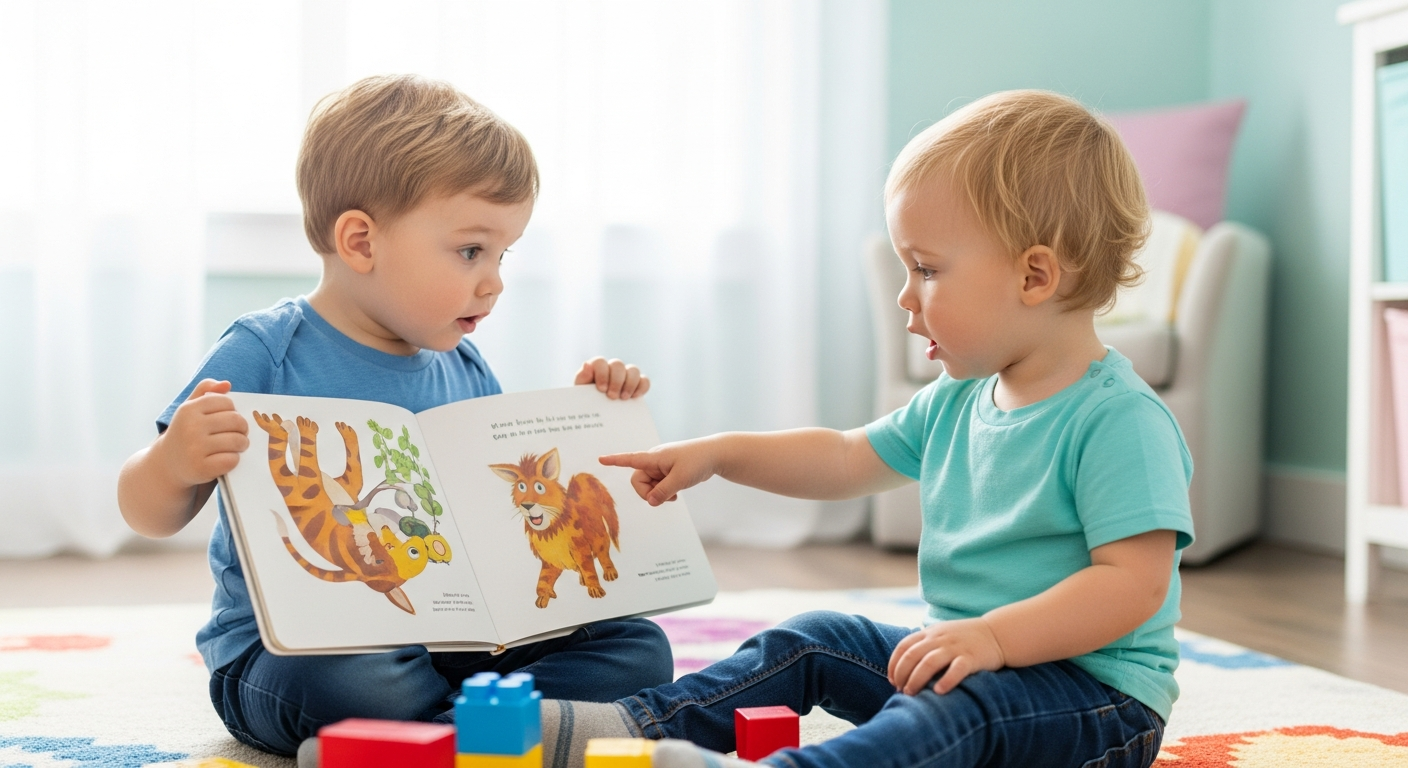
Table of Contents
- Introduction
- Understanding Speech Delay at 2 Years Old
- Communication Milestones: What to Expect at 24 Months
- Common Causes of Speech and Language Delays
- The Frustration of the "Late Talker"
- When to Seek Professional Help
- How Speech Blubs Supports Development
- Practical Tips for Parents at Home
- Investing in Your Child's Future: Pricing and Value
- Setting Realistic Expectations
- Frequently Asked Questions
- Conclusion
Introduction
Did you know that approximately one in four children will experience some form of speech or language challenge during their early developmental years? For a parent, few things are as heart-wrenching as seeing your child struggle to express a simple need, like asking for water or telling you they have a "boo-boo." You might find yourself at the playground, watching other toddlers chatter away, and wondering why your own little one is relying on pointing or frustrated tugs on your sleeve. This comparison trap is a common experience, but it is important to remember that every child is an individual who blossoms on their own timeline.
At Speech Blubs, our mission is to empower children to "speak their minds and hearts." We understand the anxiety that comes with a suspected speech delay at 2 years old because our founders grew up with speech problems themselves. They created the very tool they wished they had as children—a bridge between silence and communication that prioritizes joy and play over clinical repetition.

In this article, we will explore the nuances of speech and language development in two-year-olds. We will cover the essential milestones your child should be hitting, the common causes behind delays, and the professional avenues you can take to find support. Most importantly, we will discuss how you can transform "passive screen time" into a powerful, interactive learning experience that builds confidence and connection within your family. Our goal is to provide you with a roadmap that moves away from worry and toward proactive, joyful action.
Understanding Speech Delay at 2 Years Old
When we talk about a child's communication, it is easy to lump everything into the category of "talking." However, speech-language pathologists (SLPs) distinguish between two very different, yet overlapping, concepts: speech and language. Understanding the difference is the first step in identifying where your child might need a little extra help.
Speech vs. Language: What is the Difference?
Speech refers to the physical act of producing sounds. It involves the coordination of the breath, the vocal cords, the tongue, the lips, and the jaw. If a child has a speech delay, they might know exactly what they want to say, but the sounds come out garbled or difficult to understand. For instance, they might say "tat" instead of "cat" because they are still mastering the "k" sound.
Language, on the other hand, is the system of symbols—words, gestures, and signs—that we use to share meaning. This is further divided into two parts:
- Receptive Language: What your child understands. Can they follow a command like "Go get your shoes"? Do they point to a dog in a book when you ask, "Where is the puppy?"
- Expressive Language: How your child shares their thoughts. This includes the number of words they use, their ability to string words together into phrases, and their use of gestures or facial expressions to communicate.
A child with a speech delay at 2 years old might have a robust vocabulary but be hard to understand. Conversely, a child with a language delay might pronounce their few words perfectly but struggle to follow directions or combine words into a sentence. Many children experience a blend of both.

Communication Milestones: What to Expect at 24 Months
While "normal" is a broad spectrum in child development, experts look for specific markers at the age of two to ensure a child is on the right track. By the time your child blows out two candles on their birthday cake, they have typically reached several key milestones.
Verbal and Non-Verbal Markers
By age 2, most children can:
- Use a vocabulary of 50 to 100 words. These don't have to be perfect; "baba" for bottle or "wawa" for water counts as a word if the child uses it consistently to mean that object.
- Combine two words. Phrases like "More milk," "Mama go," or "Doggie big" are major milestones that show your child is beginning to understand grammar.
- Follow simple, one-step directions. For example, if you say "Give me the ball" without pointing, they should be able to do it.
- Point to body parts or familiar objects. When asked "Where is your nose?" or "Where is the kitty?", they should be able to identify them.
- Be understood about 50% of the time. While strangers might still find them hard to decipher, you and regular caregivers should understand roughly half of what they are trying to say.
If your child is not yet meeting these markers, it does not automatically mean there is a permanent problem. Some children are simply "late talkers"—they understand everything (good receptive language) but are slower to start producing words (expressive language). However, early intervention is the gold standard for a reason. If you have concerns, taking our 3-minute preliminary screener can provide you with an immediate assessment and a plan for your next steps.
Common Causes of Speech and Language Delays
If you notice a speech delay at 2 years old, your first question is likely "Why?" There are several factors that can influence how quickly a child begins to talk.
Physical and Oral-Motor Factors
Sometimes, the issue is purely physical. An oral impairment, such as a cleft palate or an unusually short frenulum (the fold under the tongue), can make it difficult for a child to move their tongue correctly to form sounds.
In other cases, a child might have Childhood Apraxia of Speech (CAS). This isn't a problem with the muscles themselves, but rather a "communication breakdown" between the brain and the mouth. The brain knows what it wants to say, but it struggles to plan the complex sequence of movements required to say it. A child with CAS might say the same word differently every time they try to pronounce it.
Hearing Loss and Ear Infections
Since children learn to speak by imitating what they hear, any disruption in hearing can lead to a delay. Chronic ear infections (otitis media) are a frequent culprit. When fluid builds up behind the eardrum, it’s like trying to listen to the world while underwater. Sounds become muffled, making it nearly impossible for a toddler to distinguish between "bat" and "pat."
Developmental and Neurological Conditions
A speech delay can sometimes be an early sign of a broader developmental difference. For children on the Autism Spectrum (ASD), the delay often involves social communication. They might struggle with "joint attention"—the ability to look at an object and then look back at you to share the experience. Other children might have a global developmental delay, where they are reaching milestones a bit later across several areas, including motor skills and social-emotional growth.
The Frustration of the "Late Talker"
One of the most challenging aspects of a speech delay at 2 years old isn't just the lack of words—it's the behavior that follows. Imagine being a small person with big ideas, big feelings, and a clear understanding of the world, but having no way to tell anyone what you want.
This often leads to "toddler frustration," which manifests as tantrums, hitting, or biting. For a parent, this is exhausting. We see parents every day who feel like they are failing because they can't understand their own child. At Speech Blubs, we want to shift that narrative. We believe that by providing kids with a fun, low-pressure way to practice sounds, we can reduce that frustration and build the foundational skills necessary for communication. Our approach is backed by the research page on video modeling, which shows that children are highly motivated to imitate their peers.
When to Seek Professional Help
If your gut is telling you something is up, listen to it. You are the expert on your child. While the "wait and see" approach was common in previous generations, modern science emphasizes the importance of the "early window." The brain is at its most plastic and receptive to learning between birth and age three.
The Role of the Speech-Language Pathologist (SLP)
An SLP is a specialist who evaluates how a child communicates. During an assessment, they will look at:
- Receptive Language: How much the child understands.
- Expressive Language: What the child says.
- Oral-Motor Status: How the mouth, tongue, and palate work together.
- Clarity of Speech: How well the child produces specific sounds.
In the United States, every state offers a government-funded Early Intervention (EI) program. You do not need a doctor’s referral to call them. They will perform a free evaluation, and if your child qualifies, they can provide therapy services right in your home. This is a fantastic resource for any family dealing with a speech delay at 2 years old.
How Speech Blubs Supports Development
We created Speech Blubs to be a "smart screen time" solution—a powerful supplement to professional therapy and a tool for joyful family connection. Unlike passive cartoons that children simply watch, our app requires active participation.
The Power of Video Modeling
Our unique methodology is based on video modeling. In our app, your child won't see a cartoon character; they will see a "Blub" (a real child) performing a sound or saying a word. This triggers "mirror neurons" in your toddler’s brain. When they see a peer successfully making a sound, they are much more likely to try and imitate it themselves.
Consider a practical scenario: Imagine a toddler who is obsessed with the "Animal Kingdom" but hasn't yet started using words. Within the app, they see another child wearing digital "cow ears" saying "Moo." The joy and silliness of the peer encourage your child to join in. Suddenly, "Moo" becomes their first intentional sound. This isn't just a game; it’s a building block for communication.
Screen-Free Connection
While Speech Blubs is an app, its goal is to get your child talking away from the screen. We encourage "co-play," where you sit with your child, mimic the sounds together, and then take those sounds into the real world. If you practiced the "B" sound in the "Early Words" section of the app, you can reinforce it during bath time by blowing "Bubbles."
Practical Tips for Parents at Home
Beyond using tools like Speech Blubs, there are many ways you can foster a language-rich environment in your home every day.
1. Narration and "Sports Casting"
Talk your way through the day. When you are making lunch, say, "I am cutting the red apple. Crunch, crunch, crunch! Now I put it on the blue plate." By narrating your actions, you are providing a constant stream of meaningful language for your child to absorb. Keep your sentences short and simple, but avoid "baby talk" that mispronounces words.
2. Follow Their Lead
If your child is interested in a truck, talk about the truck. Don't try to force them to look at a book about birds if their heart is set on wheels. When a child is genuinely engaged in what they are doing, they are much more likely to attempt communication.
3. Read Together Every Day
Reading is one of the best ways to build receptive language. For a two-year-old, you don't even have to read the words on the page. Just look at the pictures together. Ask, "Where is the ducky?" or say, "Look at that big green frog! Boing, boing!" Check out our parent testimonials to see how reading and Speech Blubs have helped other families spark a love for words.
4. Create a "Communication Temptation"
Sometimes, we are so good at anticipating our children's needs that they don't need to talk. Try putting a favorite toy in a clear container that they can't open. They will have to find a way to communicate—whether through a gesture, a sound, or a word—to ask for your help. This creates a natural opportunity for them to realize that communication is a tool they can use to get what they want.
Investing in Your Child's Future: Pricing and Value
We believe that every child deserves the best start possible, regardless of their developmental path. Because we are committed to transparency and providing high-quality resources, we offer flexible plans to fit your family's needs.
Monthly vs. Yearly Plans
While we offer a monthly subscription for $14.99, we strongly recommend the Yearly Plan for families who are serious about supporting their child's progress.
- The Monthly Plan ($14.99/month): This is a great way to "dip your toes in," but it does not include the full suite of features that provide the most long-term benefit.
- The Yearly Plan ($59.99/year): This is by far the superior value, breaking down to just $4.99 per month—a 66% savings compared to the monthly rate.
Choosing the Yearly Plan unlocks exclusive benefits that are essential for a comprehensive learning journey:
- 7-Day Free Trial: Experience the full power of the app risk-free before you commit.
- Reading Blubs App: Access to our companion app designed to bridge the gap between speech and early literacy.
- Priority Support: Benefit from a 24-hour response time from our support team to answer any questions.
- Early Access: Be the first to try out new updates and features as we continue to innovate based on the latest speech therapy science.
Ready to begin your journey? You can download Speech Blubs on the App Store or get it on the Google Play Store to start your free trial.
Setting Realistic Expectations
It is important to remember that progress is often a slow, steady climb rather than a sudden leap. We don't promise that your child will be reciting poetry in a month. Instead, we focus on the foundational wins: a child who smiles when they realize they can make a "pop" sound, a parent who feels less stressed during playtime, and a family that finds joy in the process of learning together.
Speech Blubs is designed to be a powerful supplement to your child's overall development plan. If your child is already in professional therapy, our app is a wonderful way to practice the "homework" your SLP gives you in a way that feels like a treat rather than a chore. If you are still waiting for an evaluation, it provides an immediate way to start encouraging sounds and building confidence.
Frequently Asked Questions
1. Is it normal for a 2-year-old to only say a few words?
While every child is different, only saying a few words at age two is generally considered a delay. Most toddlers this age should have a "vocabulary explosion" and be using between 50 and 100 words. If your child has a limited vocabulary, it is a good idea to speak with your pediatrician and consider a speech evaluation.
2. Can too much screen time cause a speech delay?
Research suggests that "passive" screen time (like watching cartoons for hours) does not provide the interactive engagement children need to learn language. However, "smart screen time"—which is interactive, peer-led, and involves adult co-play—can actually be a helpful tool for development. The key is balance and choosing high-quality, educational content.
3. Does my child need a hearing test if they seem to hear me?
Yes. Even if your child responds to loud noises or turns when you call their name, they could still have a "partial" hearing loss or fluid in their ears that makes speech sounds muffled. A comprehensive hearing test by an audiologist is a standard first step in any speech delay evaluation.
4. How long should we use Speech Blubs each day?
We recommend short, frequent sessions of about 10 to 15 minutes. The goal is to keep the experience "light and bright." Using the app together as part of your daily routine—perhaps before a snack or after a nap—helps build consistency without overwhelming your child.
Conclusion
Facing a speech delay at 2 years old can feel like navigating an unfamiliar forest. It’s natural to feel worried, but you don't have to walk this path alone. By understanding the milestones, seeking professional guidance, and creating a supportive, language-rich environment at home, you are giving your child the greatest gift possible: the ability to share their world with you.
At Speech Blubs, we are honored to be a part of your family’s story. We believe in the power of "smart screen time" to transform frustration into smiles and silence into sounds. Remember, the journey of a thousand words begins with a single "moo," "baa," or "pop."
Take the first step today. Start your 7-day free trial by creating your account on our Free Trial & Sign-Up Page. For the best experience and the most comprehensive support for your child’s development, be sure to select the Yearly Plan. It provides the best value, exclusive features like Reading Blubs, and the peace of mind that comes with a long-term commitment to your child’s communication success. Let's work together to help your little one speak their mind and heart!
About the author