
Outdoor Adventures: Fun Games for Kids to Play Outside
 By Speech Blubs Team•Jan 19, 2026•18 min.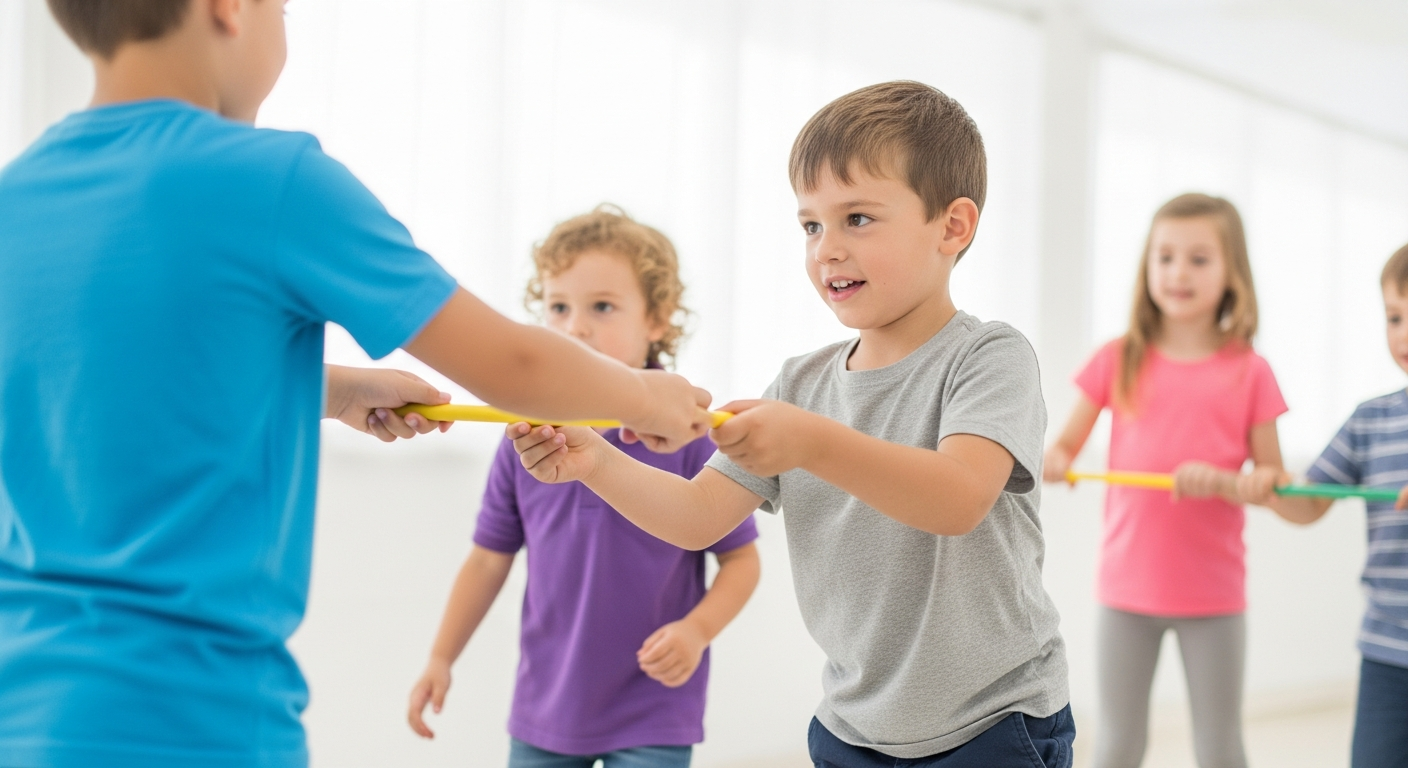
Table of Contents
- The Unrivaled Benefits of Outdoor Play
- Timeless Classics: Engaging Fun for All Ages
- Active & Strategic Games: Boosting Teamwork and Problem-Solving
- Creative & Imaginative Play: Fueling the Mind Outdoors
- Continuing the Learning Journey with Speech Blubs
- Investing in Your Child's Communication Journey
- Conclusion
- FAQ
Remember those endless summer days, bathed in sunshine, where every rustle in the bushes hinted at a hidden friend and every open patch of grass became a grand arena? Childhood memories are often painted with the vibrant hues of outdoor play, a time when imaginations soared and laughter echoed through the neighborhood. In a world increasingly tethered to screens, finding engaging ways to reconnect our children with the magic of the outdoors is more important than ever. Beyond just burning off energy, playing outside offers a rich tapestry of developmental benefits, from boosting physical health to fostering crucial social-emotional and communication skills.
At Speech Blubs, we understand the profound impact of joyful, interactive experiences on a child's development. Our mission is to empower children to speak their minds and hearts, and we believe that the foundation for strong communication often begins in the simplest, most natural settings – like playing outside. This comprehensive guide will explore a wide array of fun games for kids to play outside, blending timeless classics with creative new ideas. We'll delve into how these activities naturally enhance language development and emotional expression, and how tools like Speech Blubs can seamlessly support your child's journey to confident communication, even when the outdoor fun winds down.

The Unrivaled Benefits of Outdoor Play
Outdoor play is more than just recess; it's a critical component of healthy child development, offering a unique blend of physical, cognitive, social, and emotional advantages that indoor activities often can't replicate. When children engage in outdoor games, they're not just moving; they're learning, growing, and building essential life skills.
Physical Development and Health
The most obvious benefit of playing outside is the physical activity it provides. Running, jumping, climbing, throwing, and catching all contribute to:
- Gross Motor Skills: Developing large muscle groups, coordination, balance, and agility. Games like "Red Light, Green Light" or "Capture the Flag" are fantastic for this.
- Cardiovascular Health: Increasing heart rate and building stamina.
- Vitamin D Absorption: Exposure to sunlight helps the body produce Vitamin D, essential for bone health and immune function.
- Improved Sleep: Physical exertion during the day leads to better sleep quality at night.
Cognitive Growth and Problem-Solving
Outdoor environments are naturally stimulating, encouraging children to think critically and creatively:
- Sensory Exploration: Children engage all their senses – seeing vibrant colors, hearing birdsong, feeling different textures, smelling flowers. This rich sensory input supports brain development.
- Problem-Solving: Navigating an obstacle course, strategizing in "Hide and Seek," or figuring out how to build a fort all require creative thinking and practical problem-solving.
- Imagination and Creativity: The open-ended nature of outdoor spaces allows children to transform a stick into a magic wand or a tree stump into a castle, fostering imaginative play.
Social-Emotional Learning and Communication Skills
This is where outdoor play truly shines in its connection to our mission at Speech Blubs. Games played outside are mini-laboratories for social interaction and language practice:
- Cooperation and Teamwork: Games like "Tug of War" or "Kick the Can" require working together, teaching children to share, negotiate, and support their teammates.
- Turn-Taking and Following Rules: Essential for effective communication, these skills are practiced constantly in structured games.
- Emotional Regulation: Learning to win graciously, lose with dignity, and manage frustration are vital emotional lessons.
- Verbal Communication:
- Vocabulary Expansion: Naming objects in nature ("leaf," "tree," "flower"), describing actions ("run," "jump," "hide"), and expressing feelings ("happy," "frustrated," "excited") directly builds vocabulary.
- Articulation and Pronunciation: Chanting rhymes in "Duck, Duck, Goose" or calling out names in "Spud" provides repetitive practice for clear speech sounds.
- Asking and Answering Questions: "What time is it, Mr. Wolf?" or "Mother May I?" encourage question formulation and response.
- Initiating Conversation: Children naturally start talking to each other while playing, asking "Want to play?" or "Where should we hide?"
For a parent whose 3-year-old 'late talker' loves animals but struggles with verbalizing their names, the 'Animal Kingdom' section within Speech Blubs offers a fun, motivating way to practice 'moo' and 'baa' sounds, or name different creatures. This practice can then be applied when they spot animals or even animal tracks during outdoor play, building a bridge between the app and the real world. Our unique video modeling methodology, where children learn by watching and imitating their peers, aligns perfectly with how kids naturally learn social cues and game rules by observing others during outdoor play.

Timeless Classics: Engaging Fun for All Ages
These are the games that have transcended generations, proving their enduring appeal and developmental value. They require minimal to no equipment, making them perfect for spontaneous outdoor fun.
Hide and Seek
- How to Play: One person (the "seeker") counts to a predetermined number with their eyes closed while everyone else finds a hiding spot. Once the counting is done, the seeker searches for the others. The last person found becomes the next seeker.
- Developmental Benefits: Enhances spatial awareness, counting skills, problem-solving (finding good hiding spots), and turn-taking. For children working on early vocabulary, the act of calling out "Ready or not, here I come!" or being found and saying "Here I am!" reinforces key phrases.
Tag (and its many variations)
- How to Play: One person is "it" and chases the others, attempting to tag someone. The person tagged becomes the new "it."
- Developmental Benefits: Fantastic for gross motor skills, speed, agility, and quick decision-making. Variations add complexity:
- Freeze Tag: Tagged players freeze in place until another unfrozen player tags them. Teaches teamwork and strategic thinking.
- Shadow Tag: Best on a sunny day, players are tagged by having their shadow stepped on. Encourages awareness of light and shadows.
- Speech Blubs Connection: For a child learning action verbs, playing tag provides a real-world context for words like "run," "chase," "tag," and "freeze." These can be reinforced later with Speech Blubs' "Action Verbs" section, where animated characters and peer models demonstrate these movements.
Red Light, Green Light
- How to Play: One player is the "stoplight" and stands with their back to the others at one end of the play area. The other players (the "traffic") line up at the opposite end. The stoplight calls out "Green Light!" and the traffic runs forward. When the stoplight yells "Red Light!" and turns around, everyone must freeze. Anyone caught moving must return to the starting line. The first person to tag the stoplight becomes the next stoplight.
- Developmental Benefits: Improves listening skills, impulse control, following instructions, and gross motor skills. Great for understanding commands and consequences.
- Relatable Scenario: A child working on auditory processing benefits immensely from distinguishing "Red Light" from "Green Light" and responding quickly. This game provides a playful, low-stakes environment to practice these skills, which are then reinforced by the clear, repetitive instructions found in Speech Blubs activities.
Simon Says
- How to Play: One player is "Simon" and gives commands to the group, always prefacing them with "Simon says..." (e.g., "Simon says touch your toes"). Players only follow commands that start with "Simon says." If a player follows a command that doesn't include "Simon says," or fails to follow one that does, they are out. The last player remaining wins.
- Developmental Benefits: Excellent for listening comprehension, following multi-step directions, memory, and impulse control. It also builds body awareness.
- Speech Blubs Connection: This game directly hones a child's ability to understand and execute verbal instructions, a fundamental skill for communication. When a child struggles with processing verbal directions, our app provides clear, visual cues and consistent speech models to help them understand concepts like "touch," "jump," or "clap," bridging the gap between understanding and doing.
Duck, Duck, Goose
- How to Play: Children sit in a circle. One player walks around the outside, gently tapping each child's head, saying "Duck, duck, duck..." until they choose one child and say "Goose!" The "Goose" then jumps up and chases the first player around the circle, trying to tag them before they sit down in the empty spot. If the "Goose" succeeds, the original player is the "Goose" again. If not, the "Goose" becomes the new tapper.
- Developmental Benefits: Promotes turn-taking, auditory discrimination (listening for "Goose"), social interaction, and gross motor skills. Ideal for younger children.
Active & Strategic Games: Boosting Teamwork and Problem-Solving
These games often involve more strategic thinking, teamwork, and physical exertion, making them perfect for older children or groups looking for a challenge.
Capture the Flag
- How to Play: Divide players into two teams. Each team hides a "flag" (a bandana, cloth, or designated object) in their territory. The goal is to venture into the opposing team's territory, capture their flag, and bring it back to your own base without being tagged. Rules for tagging and "jail" vary but often involve being frozen or sent to a designated "jail" area until a teammate tags you free.
- Developmental Benefits: Fosters strategic planning, teamwork, negotiation, quick thinking, problem-solving, and intense physical activity.
- Relatable Scenario: For a child learning complex sentence structures and narrative skills, explaining the rules of "Capture the Flag" or recounting how a flag was captured provides a rich opportunity to practice sequencing and descriptive language. This ties into Speech Blubs' storytelling activities, where children can construct narratives with support.
Kick the Can
- How to Play: A combination of "Hide and Seek" and "Tag." One player is "it" and guards a can (or similar object). While "it" counts, others hide. "It" searches for players. If "it" finds someone, they race back to the can, trying to kick it before "it" tags them and sends them to "jail." If a hidden player can kick the can without being caught, all jailed players are freed.
- Developmental Benefits: Encourages strategic hiding and seeking, speed, agility, and a sense of shared victory. Promotes cooperative play and communication to free teammates.
Four Square
- How to Play: A large square is drawn on the ground and divided into four smaller squares, numbered 1 to 4. Each player occupies a square. The player in square 4 (the "King") serves a playground ball to another player. The ball must bounce once in their square, and they must hit it into another player's square. If a player faults (e.g., misses the ball, hits it out of bounds, steps on a line), they are out and move to the lowest square (or out of the game in a knockout version). The goal is to advance to square 4.
- Developmental Benefits: Enhances hand-eye coordination, quick reflexes, understanding rules, and social dynamics. Great for practicing spatial awareness and anticipation.
Spud
- How to Play: Players stand in a circle. One player throws a ball high into the air, calling out another player's name (or number). That player must catch the ball while everyone else scatters. Once the player catches the ball, they yell "Spud!" and everyone freezes. The player with the ball can take four steps towards the nearest player and try to hit them below the waist. If they hit the player, that player gets an "S." If they miss, the thrower gets an "S." The game continues, and if a player spells "SPUD," they are out. Last one standing wins.
- Developmental Benefits: Improves throwing and catching skills, quick reflexes, following instructions, and learning to spell. The repetitive calling of names and "Spud!" can be great for practicing articulation.
Creative & Imaginative Play: Fueling the Mind Outdoors
Sometimes the best outdoor games are those that don't have rigid rules but instead spark creativity and exploration.
Nature Scavenger Hunt
- How to Play: Provide children with a list (or pictures for non-readers) of natural items to find: a specific type of leaf, a smooth rock, something red, a feather, a twig shaped like a letter. Children work individually or in teams to collect or identify everything on their list.
- Developmental Benefits: Encourages observation skills, classification, early literacy (matching words to objects), and sensory exploration. It’s perfect for building vocabulary related to nature and descriptive language.
- Speech Blubs Connection: This activity is a treasure trove for language development. For a child working on adjectives, finding "smooth rocks" or "rough bark" offers real-world examples. Speech Blubs’ "Colors and Shapes" or "What Are We Seeing?" sections can directly support and expand on the vocabulary encountered during a scavenger hunt, giving children the tools to describe their discoveries.
Outdoor Obstacle Course
- How to Play: Using natural elements and household items (pillows, ropes, buckets, sticks, chalk), create a course with various challenges: crawl under a tarp, jump over a log, balance on a line of chalk, step through hoops. Children take turns navigating the course, timing themselves or encouraging each other.
- Developmental Benefits: Promotes gross motor skills, problem-solving, following sequences, and creativity in designing obstacles. It builds confidence and coordination.
- Relatable Scenario: For a child needing practice with prepositions ("over," "under," "through") or sequencing ("first I crawl, then I jump"), an obstacle course is ideal. They can narrate their actions during the course, then practice similar commands and prepositions using Speech Blubs' interactive games, reinforcing their understanding and usage in multiple contexts.
Fort Building
- How to Play: Provide blankets, sheets, large boxes, tarps, ropes, and clips. Let children use trees, bushes, and outdoor furniture as frameworks to construct their own forts or hideouts.
- Developmental Benefits: Fosters creativity, problem-solving, collaboration, spatial reasoning, and imaginative play. Children negotiate roles, plan structures, and engage in rich pretend play within their forts.
- Speech Blubs Connection: Pretend play in a fort naturally encourages dialogue, role-playing, and imaginative language. Children can practice negotiation skills ("You hold this, I'll tie that!") and descriptive language ("This is our secret hideout!"). Our app’s focus on fostering expressive language through interactive stories and character play can inspire even more elaborate scenarios for fort adventures.
Backyard Artist & Shadow Tracing
- How to Play:
- Backyard Artist: Give kids chalk, washable paints, or just sticks to draw in dirt. Challenge them to sketch, paint, or color a scene from the backyard, or reimagine it as a zoo, farm, or even a birthday party.
- Shadow Tracing: On a sunny day, have one person pose to create a shadow on a large piece of paper or paved surface, while another person traces the outline with chalk.
- Developmental Benefits: Enhances fine motor skills, observation, creativity, spatial awareness, and artistic expression. Shadow tracing encourages understanding of light and form.
Continuing the Learning Journey with Speech Blubs
While outdoor play provides an invaluable foundation, the journey of communication is ongoing. At Speech Blubs, we are committed to providing an immediate, effective, and joyful solution for the 1 in 4 children who need speech support, blending scientific principles with play into one-of-a-kind "smart screen time" experiences. We provide a screen-free alternative to passive viewing (like cartoons) and a powerful tool for family connection, extending the learning and fun from the outdoors into your home.
Our founders, all of whom grew up with speech problems, created the tool they wished they had – an empathetic, expert-designed app that empowers children to communicate confidently. Our unique approach of teaching complex communication skills through our video modeling methodology, where children learn by watching and imitating their peers, is scientifically backed and incredibly engaging. This isn't passive screen time; it's active participation that builds foundational speech and language skills. For parents who are uncertain if their child could benefit, we offer a quick 3-minute preliminary screener which provides a simple assessment and a personalized next-steps plan, along with a free 7-day trial.
Investing in Your Child's Communication Journey
Empowering your child's communication is one of the greatest gifts you can give them, unlocking their potential to connect with the world around them. At Speech Blubs, we've designed our app to be an accessible and engaging resource for families, supporting children in developing vital speech and language skills.
We offer two straightforward plans to choose from:
- Monthly Plan: For $14.99 per month, this plan offers flexibility for families who prefer a month-to-month commitment.
- Yearly Plan: Our most popular and highly recommended option, priced at just $59.99 per year. This breaks down to an incredible value of only $4.99 per month, allowing you to save 66% compared to the monthly subscription!
The Yearly plan isn't just about significant savings; it's designed to provide the most comprehensive and enriching experience for your child's speech development journey. When you choose the Yearly plan, you unlock exclusive, high-value features that are not included with the Monthly plan:
- A 7-Day Free Trial: Experience the full power of Speech Blubs before committing.
- The Extra Reading Blubs App: Enhance early literacy skills with this valuable bonus.
- Early Access to New Updates: Be among the first to explore new content and features.
- Priority 24-Hour Support Response Time: Get your questions answered quickly and efficiently.
Choosing the Yearly plan means investing in consistent, high-quality speech support and unlocking a complete suite of tools to help your child thrive. It’s a commitment to their growth that offers unparalleled value and access to everything we have to offer.
Conclusion
The great outdoors is a boundless classroom, filled with opportunities for children to grow, explore, and learn. Engaging in fun games for kids to play outside isn't just about entertainment; it's about fostering physical health, cognitive development, social-emotional intelligence, and crucially, building robust communication skills. From the simple joy of chasing friends in "Tag" to the strategic planning of "Capture the Flag," every outdoor adventure provides a rich context for language development and confident expression.
At Speech Blubs, we believe in the power of play – both outside in the sunshine and within our engaging app – to empower children to speak their minds and hearts. We’ve seen firsthand how blending scientific principles with joyful, interactive experiences can make a profound difference.
Ready to empower your child's communication journey? We invite you to explore Speech Blubs and discover how our engaging activities can complement the joy of outdoor play. Take the first step towards a brighter, more communicative future for your child. Download Speech Blubs on the App Store or Google Play today and make sure to select the Yearly plan to get your 7-day free trial and access to our full suite of empowering tools, including the Reading Blubs app and priority support!
FAQ
How can outdoor play boost my child's speech and language skills?
Outdoor play provides rich sensory experiences and natural opportunities for communication. Children use language to describe what they see and hear, negotiate rules, express emotions, ask questions, and follow instructions. Games like "Simon Says" directly practice listening and comprehension, while "Nature Scavenger Hunts" expand vocabulary related to their environment. The dynamic, unpredictable nature of outdoor play encourages spontaneous language use and problem-solving through verbal communication.
What if my child is shy or hesitant to join outdoor games?
It's perfectly normal for some children to be hesitant. Start with low-pressure, familiar games like "Hide and Seek" or a simple "Nature Scavenger Hunt" that can be done individually or with just one other person (you!). Encourage participation without forcing it. As they gain confidence, they might gradually join larger group games. Leading by example and demonstrating enthusiasm can also help. Remember, the goal is positive interaction, not perfection.
How does Speech Blubs fit into our child's outdoor play routine?
Speech Blubs complements outdoor play by reinforcing and expanding on the language skills learned in real-world contexts. For example, if your child learns new action verbs like "jump" or "run" during a game of "Red Light, Green Light," they can then practice those same words and sounds in Speech Blubs' "Action Verbs" section through engaging video modeling. Our app serves as a powerful tool to consolidate new vocabulary and speech sounds in a structured, fun, and interactive way, making screen time productive and meaningful.
Is Speech Blubs suitable for children with specific speech challenges?
Yes, Speech Blubs is designed to support a wide range of speech and language development needs. Our app was created by founders who personally experienced speech challenges, drawing on scientific principles and incorporating features like video modeling to make learning effective and engaging. While it is a powerful supplement to a child's overall development plan, and can complement professional therapy, it is not a replacement for a formal diagnosis or individualized therapy from a certified speech-language pathologist. We recommend taking our quick 3-minute preliminary screener to get an initial assessment and a personalized next-steps plan.
About the author