
Outdoor Fun for All Ages: Engaging Games Kids Will Love
 By Speech Blubs Team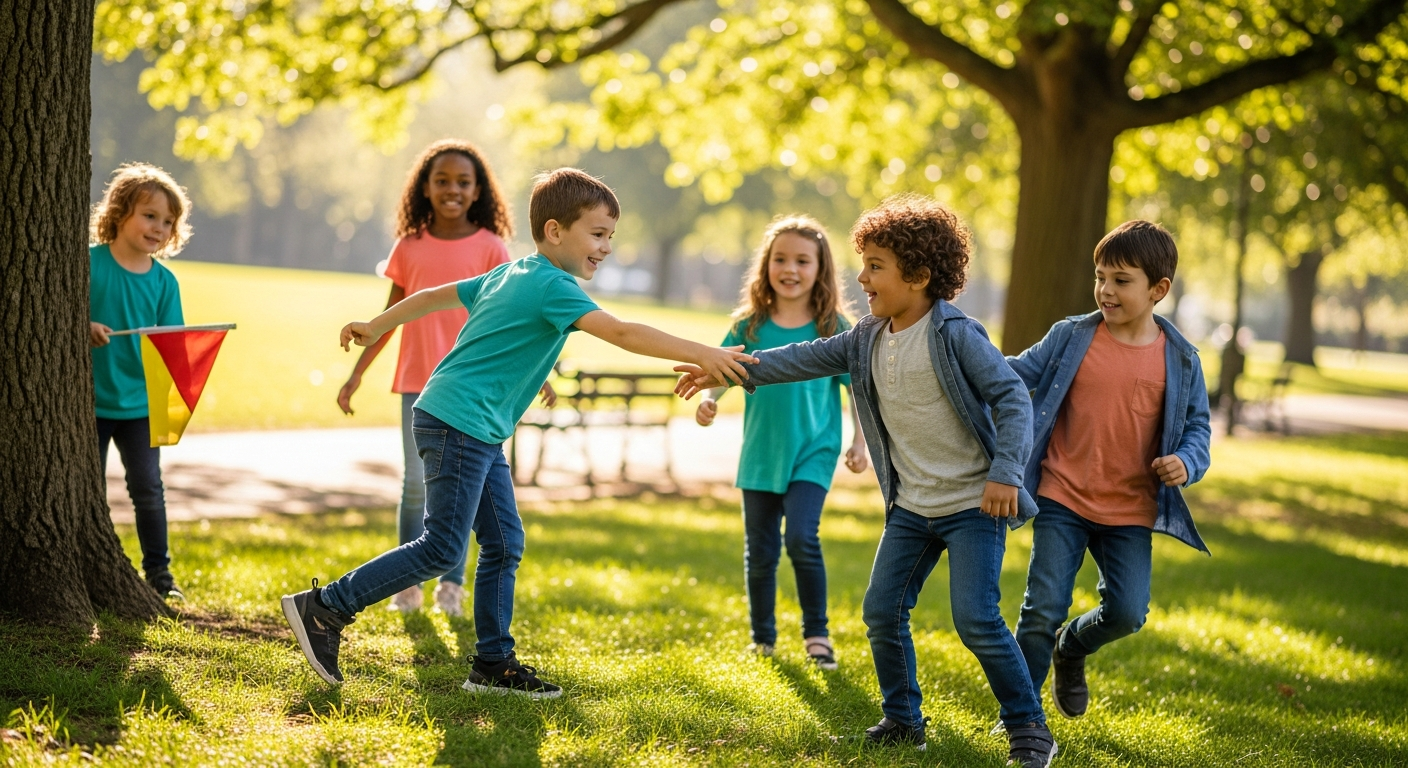
Table of Contents
- Introduction
- Why Outdoor Play is Essential for Every Child's Development
- Classic Outdoor Games for Timeless Fun
- Teamwork and Strategy: Group Games to Boost Collaboration
- Creative and Imaginative Adventures in Your Own Backyard
- Rhythm, Movement, and Laughter: Engaging Games for All Ages
- Enhancing Communication with Speech Blubs: Our Unique Approach
- Making the Most of Your Speech Blubs Experience
- Conclusion
- Frequently Asked Questions About Outdoor Play and Speech Development
Introduction
In a world increasingly captivated by screens, it's easy for children to spend hours indoors, scrolling through videos or immersed in digital games. While technology offers its own unique benefits, there's an undeniable magic that happens when kids step outside. The sun on their faces, the grass beneath their feet, and the wide-open space ignite a different kind of spark – one that fuels imagination, builds strong bodies, and, crucially, fosters invaluable communication skills. But how do we gently nudge them away from passive viewing and into active, joyful engagement? The answer lies in the timeless appeal of fun outdoor games for kids of all ages.
This post isn't just about listing games; it's about rediscovering the profound developmental benefits that come with them. We'll explore a rich variety of outdoor activities, from classic playground favorites to creative adventures, each offering unique opportunities for growth. Our goal is to inspire parents and caregivers to create memorable family moments that not only burn energy but also lay crucial foundations for speech, language, and social-emotional development. At Speech Blubs, we understand that every moment of play is a learning opportunity, and outdoor games are a powerful, often overlooked, tool in helping children speak their minds and hearts.
Why Outdoor Play is Essential for Every Child's Development
The playground isn't just a place for swings and slides; it's a dynamic classroom without walls, offering a comprehensive curriculum for physical, cognitive, and social development. When children engage in outdoor play, they're not just having fun; they're building the essential scaffolding for future learning and communication.
The Multifaceted Benefits of Fresh Air and Sunshine
Outdoor play offers a symphony of benefits that indoors simply can't replicate. Physically, it improves gross motor skills, coordination, balance, and endurance. Running, jumping, climbing, and throwing are all vital for developing strength and agility. Cognitively, it sparks creativity, problem-solving, and critical thinking as children navigate varied terrain, invent games, and overcome challenges. Sensory development is also paramount, as kids interact with different textures, sounds, sights, and even smells found in nature.
Beyond the obvious, outdoor play provides a vital mental health boost. Exposure to natural light helps regulate sleep patterns and improves mood. The freedom of open spaces reduces stress and anxiety, offering a calming counterpoint to the structured environments children often experience. This holistic development creates a strong foundation for all areas of growth, including speech and language.
Building Communication Skills Through Play
One of the most significant, yet often underestimated, aspects of outdoor play is its profound impact on communication and social skills. When children play outside together, they are constantly engaging in verbal and non-verbal exchanges:
- Negotiation: "I want to be the seeker!" "No, I was 'it' last time!"
- Instruction-following: "Run to the tree, then hop back!" "Simon says, take three giant steps."
- Problem-solving: "How do we get the flag without getting tagged?" "What do we do if the ball goes over the fence?"
- Descriptive language: "Look at the big, green leaf!" "The cloud looks like a fluffy sheep."
- Turn-taking: Waiting for your turn in hopscotch or during a game of Hot Potato.
- Emotional expression: Sharing excitement, frustration, or joy.
- Imitation: Observing older children or peers and mimicking their actions or sounds, which is a foundational aspect of learning.
These interactions are the bedrock of effective communication, teaching children to listen, respond, express themselves, and understand social cues. Just as children naturally learn social rules and strategies by observing and imitating their peers during outdoor play, our Speech Blubs app harnesses the power of "video modeling." This scientifically-backed approach allows children to learn complex communication skills by watching real kids their age, activating mirror neurons for effective speech and language acquisition. It's why our method is highly rated on the MARS scale, confirming our commitment to blending scientific principles with engaging play, much like the organic learning that happens outdoors. You can explore the research behind our approach on our research page.
Classic Outdoor Games for Timeless Fun
Some games never go out of style, and for good reason! These classics are simple to explain, require minimal equipment, and are incredibly effective at bringing joy and developmental benefits to kids of all ages.
Hide and Seek
- How to Play: One person is chosen as the "seeker" and counts loudly to a predetermined number with their eyes closed while everyone else finds a hiding spot. Once the counting is done, the seeker searches for the hidden players. The last person found often becomes the next seeker.
- Developmental Benefits: This game is a fantastic way to develop spatial awareness, problem-solving skills (where's the best spot to hide?), and patience. For speech development, it encourages turn-taking, counting practice, and using simple phrases like "Ready or not, here I come!" or "Found you!"
- Speech Blubs Connection: Just as children learn to plan and execute their hiding strategy, our app helps children plan their speech. For kids who might be hesitant to speak, the anticipation and excitement of games like Hide and Seek create a low-pressure environment for communication, much like the engaging and non-judgmental video modeling in our app.
Tag (or "It")
- How to Play: One person is "it" and tries to tag other players. Once tagged, that person becomes "it." Simple rules keep the game fast-paced and energetic.
- Developmental Benefits: Tag is excellent for developing gross motor skills, speed, and agility. Socially, it teaches quick decision-making and awareness of others in space. The simple verbal exchange "You're it!" is a direct and fun way to practice short sentences and voice projection.
- Speech Blubs Connection: The rapid back-and-forth of "You're it!" is a basic form of conversational turn-taking. Within Speech Blubs, we cultivate this skill through interactive activities where children imitate sounds and words, waiting for their "turn" to respond to the model.
Red Light, Green Light
- How to Play: One person stands with their back to the other players, calling out "Green Light!" The other players run towards them. When the caller shouts "Red Light!" and turns around, everyone must freeze in place. Anyone caught moving is sent back to the starting line. The first person to tag the caller becomes the new caller.
- Developmental Benefits: This game is a masterclass in impulse control, listening comprehension, and following directions. Children must process verbal cues and react quickly, making it a powerful tool for developing executive functions.
- Speech Blubs Connection: The core of "Red Light, Green Light" is understanding and responding to verbal instructions. Our app excels at building these foundational skills, offering various activities that help children listen attentively and execute multi-step commands, strengthening their receptive language.
Hopscotch
- How to Play: Draw a hopscotch grid with chalk on a paved surface. Players toss a small marker (like a stone) into a square, then hop through the grid, skipping the marked square, picking up the marker on the way back. The goal is to complete the entire grid without stepping on lines or losing balance.
- Developmental Benefits: Hopscotch is fantastic for balance, coordination, and number recognition. It also encourages sequential memory and precision. Children often count aloud as they hop, reinforcing numerical concepts and vocalization.
- Speech Blubs Connection: The sequential nature of hopscotch, following specific steps, mirrors the structured learning paths within Speech Blubs. For children working on sequencing sounds or words, the rhythmic and visual cues of hopscotch offer a complementary, embodied learning experience.
Simon Says
- How to Play: One person is "Simon" and gives commands, always starting with "Simon says..." Players must only follow commands preceded by "Simon says." If Simon gives a command without that phrase, players who follow it are out. The last player remaining wins.
- Developmental Benefits: This game is invaluable for active listening, auditory processing, and impulse control. It challenges children to pay close attention to verbal cues and discriminate between relevant and irrelevant information, crucial skills for language comprehension.
- Speech Blubs Connection: "Simon Says" directly trains a child's ability to follow instructions, a key component of receptive language. In Speech Blubs, we provide structured activities that help children understand and respond to verbal prompts, building their confidence in interpreting and acting upon spoken commands. For example, our "Action Words" sections encourage children to imitate actions that correspond to spoken verbs, much like responding to Simon's commands.
Teamwork and Strategy: Group Games to Boost Collaboration
Beyond individual skills, outdoor games are powerful vehicles for developing social cooperation, strategic thinking, and the ability to work effectively within a group. These games often involve more complex rules and require children to communicate and plan together.
Capture the Flag
- How to Play: Divide into two teams, each with a "flag" (a bandana or piece of cloth) hidden in their territory. The objective is to capture the opposing team's flag and bring it back to your own base without being tagged. Tagged players might go to "jail" and need to be freed by teammates.
- Developmental Benefits: Capture the Flag is a highly strategic game that promotes teamwork, planning, negotiation, and problem-solving. Children learn to strategize, communicate quietly, and understand the roles of offense and defense. It fosters leadership and the ability to adapt plans on the fly.
- Speech Blubs Connection: This game highlights the importance of complex communication for planning and executing strategy. Children must verbally agree on roles, discuss tactics, and communicate warnings. Speech Blubs supports these foundational communication skills, empowering children to express their thoughts and ideas clearly, which is vital for effective collaboration.
Tug of War
- How to Play: Two teams hold opposite ends of a long, sturdy rope, with a dividing line on the ground between them. The goal is to pull the opposing team across the central line.
- Developmental Benefits: Tug of War emphasizes teamwork, collective effort, and understanding physical force. It's a great way to teach children about working together towards a common goal and encouraging one another.
- Speech Blubs Connection: While largely physical, the verbal encouragement and coordination ("Pull! Pull together!") during Tug of War are powerful examples of group communication. At Speech Blubs, we aim to build the confidence that allows children to actively participate in and contribute to such team-based interactions.
Kick the Can
- How to Play: One person is "it" and guards a designated "can." Other players hide. The "it" person tries to find and tag hiders. If a hider is tagged, they go to "jail." Any hider who successfully sneaks past "it" and kicks the can can free all captured players.
- Developmental Benefits: This game blends elements of hide and seek with strategy and risk-taking. It enhances stealth, speed, and strategic thinking. It also teaches empathy and cooperation as players try to free their jailed teammates.
- Speech Blubs Connection: The communication around "Kick the Can" involves whispering strategies, calling out names, and celebrating success. These low-volume, high-stakes verbal interactions help children practice a range of vocal expressions. Our app also provides a safe space for children to practice different vocalizations and speech sounds without performance pressure.
Human Knot
- How to Play: A group of players stands in a circle, close together. Everyone extends their right hand to grab someone else's right hand (not the person next to them), then extends their left hand to grab someone else's left hand (again, not the person next to them or the person whose right hand they're holding). The group then works together to untangle themselves into a circle without letting go of hands.
- Developmental Benefits: This is a phenomenal game for problem-solving, spatial reasoning, and cooperative communication. Children must verbally negotiate, direct, and explain movements to untangle the "knot," fostering clear and concise language.
- Speech Blubs Connection: The Human Knot is a beautiful metaphor for the complex interactions of communication. It requires clear verbal directions, active listening, and patience – all skills we nurture at Speech Blubs. Our program encourages children to articulate their thoughts and understand others, laying the groundwork for effective collaboration in activities like this.
Creative and Imaginative Adventures in Your Own Backyard
Sometimes, the best games are those that tap into a child's boundless imagination. These activities encourage creative expression, storytelling, and pretend play, all of which are vital for language development.
Obstacle Course Challenge
- How to Play: Use everyday items like blankets, pillows, jump ropes, hula hoops, buckets, or patio furniture to create a series of challenges. Kids can crawl under, jump over, balance on, or weave through the obstacles. The goal is often to complete the course as fast as possible or with the most imaginative movements.
- Developmental Benefits: Obstacle courses are excellent for physical coordination, planning, and following a sequence of instructions. When children design their own courses, it ignites creativity and spatial reasoning. Describing the course to others or narrating their journey ("I'm crawling through a dark cave!") enriches vocabulary and narrative skills.
- Speech Blubs Connection: The imaginative storytelling and descriptive language involved in obstacle courses directly align with our goals. Speech Blubs features categories like "Animal Kingdom" or "Yummy Time" where children can learn to describe actions, objects, and scenarios, enhancing their ability to create and share their own imaginative narratives. For a parent whose child loves animals, the "Animal Kingdom" section offers a fun, motivating way to practice sounds and words like "moo," "baa," and "roar," which can then be brought into outdoor play scenarios.
Backyard Treasure Hunt
- How to Play: Hide a series of "treasures" (small toys, healthy snacks, or even a pre-drawn map) around the backyard. Provide clues – either written, pictorial, or verbal – that lead children from one location to the next until they find the final prize.
- Developmental Benefits: Treasure hunts are superb for problem-solving, following directions (especially multi-step ones), and spatial reasoning. For younger children, using picture clues or simple verbal instructions helps build receptive language. For older kids, reading and deciphering written clues enhances literacy.
- Speech Blubs Connection: Treasure hunts intrinsically involve following directions and understanding sequential information. Our app helps children develop these skills through engaging activities that require them to listen, process, and respond. The excitement of a treasure hunt can also motivate children to use their language to ask questions or express discoveries, much like our app encourages vocal participation through fun, interactive prompts.
Fort Building Extravaganza
- How to Play: Gather materials like old sheets, blankets, cardboard boxes, pool noodles, clotheslines, and outdoor furniture. Challenge children to design and construct their own fort, castle, or secret hideaway.
- Developmental Benefits: Fort building is a powerhouse for creativity, engineering skills, and collaborative planning. Children must negotiate roles, share ideas, and problem-solve together to bring their vision to life. This hands-on activity provides countless opportunities for descriptive language ("We need a tall wall here," "This blanket will be the roof") and imaginative play within their new structure.
- Speech Blubs Connection: The rich language used in fort building – planning, describing, directing, and engaging in pretend play – is exactly what Speech Blubs aims to foster. By empowering children to speak with confidence and clarity, we help them lead and participate more fully in these creative endeavors.
Mother May I?
- How to Play: One child is "Mother" (or "Captain") and stands facing away from the other players. The other players ask "Mother, may I take [number] [type] steps?" (e.g., "Mother, may I take 3 giant steps?"). Mother replies "Yes, you may" or "No, you may not, but you may take 2 baby steps." The first player to reach Mother wins.
- Developmental Benefits: This game is excellent for practicing politeness, asking for permission, and following specific instructions. It encourages creative vocabulary for different types of steps (giant, baby, froggy, spinning). It also reinforces counting and numerical concepts.
- Speech Blubs Connection: The structured question-and-answer format of "Mother May I?" is perfect for practicing sentence structure and social pragmatics. Speech Blubs, through its interactive exercises, builds these conversational back-and-forth patterns, helping children confidently formulate questions and responses.
Rhythm, Movement, and Laughter: Engaging Games for All Ages
These games combine physical activity with auditory cues, making them highly engaging and beneficial for a wide range of developmental stages.
Freeze Dance
- How to Play: Play music and have everyone dance. When the music stops, everyone must freeze in place. Anyone caught moving is out. Continue until one dancer remains.
- Developmental Benefits: Freeze Dance is fantastic for gross motor skills, listening skills, and impulse control. It encourages creative movement and the ability to stop and start on cue, strengthening auditory processing and self-regulation.
- Speech Blubs Connection: The "stop-and-go" nature of Freeze Dance mirrors the rhythmic elements of speech. For children learning to control their vocalizations or understand timing in conversation, this game provides a fun, physical analogy. Our app also incorporates rhythmic and auditory cues to help children practice speech sounds and patterns effectively.
Duck, Duck, Goose
- How to Play: Players sit in a circle. One player walks around the outside, gently tapping each person's head while saying "Duck, duck, duck..." until they choose someone and say "Goose!" The "Goose" then chases the first player around the circle, trying to tag them before they sit in the Goose's spot.
- Developmental Benefits: This game teaches turn-taking, following directions, and social interaction. The repetitive language "Duck, duck, goose" is excellent for early phonological awareness and rhythm. It's a low-pressure way for young children to engage with peers.
- Speech Blubs Connection: The clear, repetitive phrases in "Duck, Duck, Goose" are ideal for young language learners. This aligns perfectly with Speech Blubs' approach of using clear models and repetition in a fun context to build vocabulary and sentence structure. Many of our early learning activities focus on similar repetitive patterns to help children master new words and phrases.
Hot Potato
- How to Play: Players sit in a circle and quickly pass a "potato" (a soft ball or beanbag) around while music plays. When the music stops, whoever is holding the potato is out. The game continues until one player remains.
- Developmental Benefits: Hot Potato is great for quick reflexes, hand-eye coordination, and listening for auditory cues. It also teaches turn-taking and how to handle anticipation and mild frustration (when you're "out").
- Speech Blubs Connection: The fast-paced nature of Hot Potato helps children develop quick reaction times, which can translate to quicker processing of verbal information. The game's emphasis on listening for the "stop" cue reinforces auditory attention, a crucial skill for following verbal instructions in our app.
Spud
- How to Play: One player throws a ball into the air, calling out another player's name (or number). That player must catch the ball while everyone else scatters. Once the ball is caught, the player shouts "Spud!" and everyone freezes. The player with the ball takes four steps towards the nearest frozen player, spells "S-P-U-D" out loud, and then throws the ball at them (below the waist). If hit, that player gets an 'S'. If missed, the thrower gets an 'S'. The game continues until a player spells "SPUD" and is out.
- Developmental Benefits: Spud combines physical activity with counting, spelling, and quick decision-making. It reinforces name recognition and spatial reasoning. The verbal component of calling out names and spelling is excellent for literacy and auditory memory.
- Speech Blubs Connection: Spud is a fantastic example of a game that naturally integrates numerical and alphabetical learning with physical play. For children who are developing their phonological awareness or learning to recognize letters and sounds, the act of spelling out "SPUD" in a game context is highly motivating. Our Reading Blubs app (included with our Yearly plan!) also offers a playful and structured way to build early literacy skills, complementing the verbal and spelling practice found in games like Spud.
Enhancing Communication with Speech Blubs: Our Unique Approach
At Speech Blubs, we are passionate about providing children with the tools they need to communicate confidently and joyfully. We know that outdoor play is invaluable, and our app serves as a powerful supplement, offering structured, engaging experiences that build upon the natural learning children gain through play. Our company was born from the personal experiences of our founders, who all grew up with speech problems and created the tool they wished they had. We are committed to providing an immediate, effective, and joyful solution for the 1 in 4 children who need speech support, blending scientific principles with play into one-of-a-kind "smart screen time" experiences.
The Power of Video Modeling
Our cornerstone methodology is "video modeling," where children learn by watching and imitating their peers. This approach is rooted in scientific understanding of how children learn best – through observation and interaction. Instead of passively watching cartoons, children in Speech Blubs actively engage with real children on screen, mimicking their mouth movements, sounds, and words. This active engagement activates mirror neurons in the brain, making the learning process highly effective and intuitive.
Imagine your child playing "Simon Says" outside, then transitioning to our app to practice imitating facial expressions or specific sounds. The skills are complementary. This form of "smart screen time" provides a screen-free alternative to passive viewing, making every moment of interaction count. It's a powerful tool for family connection, as parents can join in, guide their children, and celebrate every new sound and word together.
More Than Just an App: A Partner in Your Child's Journey
Speech Blubs isn't just a collection of games; it's a comprehensive resource designed to foster speech and language development across various domains, including:
- Articulation: Practicing specific sounds and word pronunciations.
- Vocabulary: Expanding their word bank with hundreds of new words.
- Sentence Structure: Building more complex sentences.
- Social Skills: Learning to understand and express emotions, turn-taking, and imitation.
- Cognitive Skills: Developing listening comprehension, memory, and attention.
We believe in fostering a love for communication, building confidence, reducing frustration, and developing key foundational skills. We set realistic expectations: while our app is a powerful tool, it works best as a supplement to a child's overall development plan and, when applicable, professional therapy. The goal is always to create joyful family learning moments that empower children to express themselves fully.
Unsure if your child could benefit? Take our quick 3-minute preliminary screener. It involves just 9 simple questions and provides an assessment and a personalized next-steps plan to guide you. You can also read what other parents are saying about their child's success with Speech Blubs on our testimonials page.
Making the Most of Your Speech Blubs Experience
We're committed to making our effective speech and language support accessible to every family. That's why we offer flexible subscription options designed to fit your needs, but we also want to ensure you get the most value for your investment.
Unlocking Full Value with the Yearly Plan
For parents looking to provide comprehensive, long-term support for their child's communication journey, we strongly recommend our Yearly plan. While our Monthly plan is available at $14.99 per month, the Yearly plan offers significantly more value and exclusive features:
- Cost Savings: At just $59.99 per year, the Yearly plan breaks down to an incredible $4.99 per month, allowing you to save a substantial 66% compared to the monthly option.
- 7-Day Free Trial: The Yearly plan is the only option that includes a 7-day free trial, giving you and your child ample time to explore all the amazing activities and see the benefits firsthand before committing.
- Reading Blubs App Included: Gain access to our fantastic companion Reading Blubs app, designed to build early literacy skills and complement speech development.
- Early Access & Priority Support: Enjoy early access to new app updates and a priority 24-hour response time for any support needs.
The Monthly plan, while an option, does not include these valuable benefits. We encourage you to choose the Yearly plan to get the free trial and the full suite of features that will empower your child's communication journey.
Ready to transform your child's communication and make screen time truly smart? Download Speech Blubs on the App Store or Google Play to begin your 7-day free trial with our Yearly plan today! Or, if you prefer, you can create your account and start your trial directly on our website.
Conclusion
The joy of childhood is intrinsically linked to the freedom of outdoor play. As we've explored, "fun outdoor games for kids of all ages" are far more than just ways to pass the time; they are foundational experiences that foster physical health, cognitive growth, and, critically, robust communication and social skills. From the simple thrill of Tag to the strategic depths of Capture the Flag, each game offers unique opportunities for children to learn, grow, and express themselves in dynamic, engaging ways.
By encouraging outdoor play, we empower children to negotiate, cooperate, solve problems, and articulate their thoughts and feelings in real-time. These skills are invaluable, laying a rich groundwork for language development that complements structured learning tools like Speech Blubs. Whether through the natural imitation of a game of Simon Says or the collaborative planning of a fort, every outdoor adventure is a step towards more confident and joyful communication.
We invite you to rediscover the magic of outdoor play with your children and consider how our Speech Blubs app can further support their speech and language journey. By combining the best of both worlds – active outdoor adventures and smart, engaging digital learning – you can provide a holistic approach to your child's development.
Ready to ignite your child's communication potential? Download Speech Blubs on the App Store or Google Play Store today and start your 7-day free trial. Remember to choose the Yearly plan to unlock all features, including the Reading Blubs app and priority support, for the best value and a comprehensive solution. You can also sign up for your free trial via our website. Let's empower your child to speak their minds and hearts!
Frequently Asked Questions About Outdoor Play and Speech Development
Q1: How do outdoor games specifically help with speech development?
A1: Outdoor games significantly boost speech development by creating natural opportunities for communication. Children use language to negotiate rules, plan strategies, ask questions, give instructions, and express emotions. Games like "Simon Says" enhance listening and following directions, while "Hide and Seek" encourages turn-taking and simple phrases. The physical activity itself can also stimulate brain development critical for language acquisition.
Q2: My child is a late talker. Can outdoor games alone help, or should I also consider other resources?
A2: Outdoor games are a wonderful supplement for late talkers, providing a rich, low-pressure environment for communication practice and social interaction. However, for a late talker, they are often most effective when combined with targeted resources. Apps like Speech Blubs offer structured "video modeling" activities that scientifically encourage imitation and speech production. You can also take our quick 3-minute preliminary screener to assess your child's needs and get a personalized plan, which might include professional therapy recommendations.
Q3: What if my child is resistant to playing outside or always chooses screens?
A3: It's common for children to be drawn to screens. To encourage outdoor play, try to make it an exciting family event, not a chore. Start with games that involve you directly, like "Hot Potato" or "Red Light, Green Light." Let your child help choose or even invent games, using their interests as a springboard. Remember to frame screen time as "smart screen time" with apps like Speech Blubs, which provide active learning experiences rather than passive viewing. Gradually increase outdoor time, focusing on positive reinforcement and celebrating their engagement.
Q4: How can I integrate Speech Blubs with our outdoor play routine?
A4: Speech Blubs is a perfect complement to outdoor play. For example, if you're playing an "Animal Kingdom" game outside, your child can then use the Speech Blubs app to practice the sounds and names of those animals through "video modeling." If they're practicing following directions in "Simon Says," reinforce that skill with our app's instruction-based activities. Use the app to preview vocabulary before outdoor adventures or review sounds after. Our goal is to make communication skills a joyful, integrated part of their entire day, both in the backyard and through our smart screen time experiences. Learn more about our mission and approach on the Speech Blubs homepage.