
Outdoor Fun Games for Kids: Play, Connect, & Grow
 By Speech Blubs Team•Jan 19, 2026•23 min.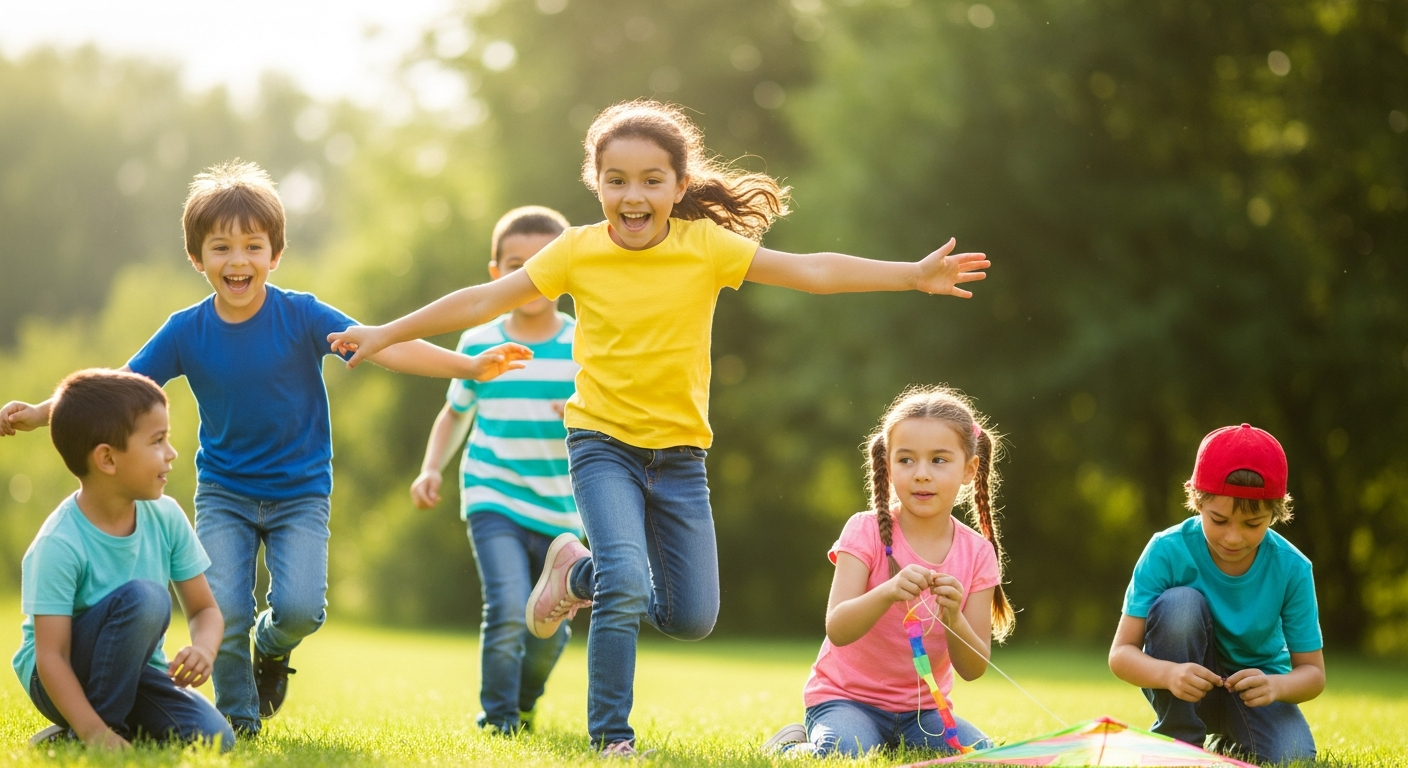
Table of Contents
- Introduction
- Why Outdoor Play Matters for Kids' Development
- The Power of Play: How Games Boost Communication
- Classic Outdoor Games for Endless Fun & Learning
- Beyond the Classics: Creative Outdoor Fun
- Bringing It All Together: Screen Time that Works for Speech Development
- Making Speech Blubs Part of Your Family's Journey
- Conclusion
- Frequently Asked Questions (FAQ)
Do you remember those sun-drenched afternoons of childhood, where the biggest decision was whether to play tag or hide-and-seek until the streetlights came on? For many children today, those experiences are often replaced by glowing screens, inviting them into virtual worlds. While modern technology offers its own benefits, there's an undeniable magic and profound developmental advantage to simply stepping outside and playing. Outdoor fun games for kids are not just about entertainment; they are powerful catalysts for growth, connection, and the foundational skills children need to navigate their world, including the vital ability to communicate effectively.
At Speech Blubs, we believe in empowering children to "speak their minds and hearts," and we understand that every moment is a learning opportunity. Our founders, who themselves grew up with speech challenges, created Speech Blubs to be the tool they wished they had – a joyful, immediate, and effective solution for the 1 in 4 children who need speech support. We blend scientific principles with play, transforming screen time into "smart screen time" through unique video modeling where children learn by imitating their peers. But we also recognize the irreplaceable value of unstructured outdoor play. This post will delve into how embracing classic and creative outdoor games can significantly boost your child's physical, cognitive, social, and, crucially, communication skills, creating joyful family learning moments that last a lifetime.

Introduction
In a world increasingly dominated by digital screens, the simple joy of outdoor play often gets overlooked. Yet, stepping outside offers children a vibrant, dynamic classroom where they can explore, discover, and develop in ways that indoor activities simply cannot replicate. From the thrill of a chase to the quiet focus of a scavenger hunt, outdoor fun games for kids provide a rich tapestry of experiences that nurture physical health, cognitive abilities, and social-emotional intelligence. More specifically, these games are instrumental in fostering crucial language and communication skills, building confidence, and reducing the frustration often associated with speech development challenges.
This article aims to reignite your passion for outdoor play by exploring a wide array of engaging games that promise not only fun but also significant developmental benefits. We'll uncover how these activities naturally encourage children to use and understand language, practice turn-taking, solve problems, and express themselves. By embracing outdoor play, you're not just creating memories; you're actively supporting your child's holistic growth and laying a strong foundation for their communication journey. Let's rediscover the power of fresh air, sunshine, and imaginative play to help every child speak their mind and heart with joy and confidence.
Why Outdoor Play Matters for Kids' Development
The benefits of outdoor play extend far beyond just letting off steam. It's a fundamental component of healthy child development, touching every aspect of their growth from physical prowess to emotional resilience.
Physical Development and Motor Skills
Outdoor environments naturally encourage children to move their bodies in diverse ways. Running, jumping, climbing, throwing, and catching are all integral parts of most outdoor games. These activities are crucial for developing:
- Gross Motor Skills: Large muscle movements essential for balance, coordination, and agility. Think about the explosive energy needed for a game of tag or the careful balancing act in hopscotch.
- Fine Motor Skills: While less obvious, many outdoor games, like picking up sticks for "Pick Up Sticks" or drawing hopscotch squares with chalk, engage smaller muscle groups, improving dexterity and hand-eye coordination.
- Cardiovascular Health: Sustained physical activity strengthens the heart and lungs, promoting overall fitness.
- Sensory Integration: The outdoors is a feast for the senses. Children encounter varied textures, sounds, sights, and smells, helping them integrate sensory information and better understand their environment.
Cognitive Growth and Problem-Solving
Outdoor play is a natural laboratory for cognitive development. Children are constantly presented with new challenges and opportunities to think critically.

- Problem-Solving: Deciding where to hide in "Hide and Seek," strategizing in "Capture the Flag," or figuring out how to free a "stuck" friend in "Stuck in the Mud" all require quick thinking and creative solutions.
- Creativity and Imagination: With fewer structured toys, children are prompted to use their imaginations to transform their surroundings. A stick becomes a magic wand, a tree stump a castle, and a patch of grass a vast ocean.
- Attention and Focus: The dynamic nature of outdoor games can actually improve a child's ability to focus and sustain attention, especially compared to more passive activities. Following complex rules in "Simon Says" or keeping track of players in "Red Light, Green Light" hones these skills.
Social-Emotional Learning and Connection
Perhaps one of the most significant benefits of outdoor fun games for kids is the rich environment they provide for social and emotional development.
- Turn-Taking and Sharing: Almost every group game requires players to take turns, fostering patience and understanding of social cues.
- Cooperation and Teamwork: Games like "Tug of War" or "Capture the Flag" teach children the value of working together towards a common goal.
- Emotional Regulation: Learning to win graciously, lose gracefully, and manage frustration are vital life skills practiced repeatedly in competitive play.
- Empathy: Children learn to consider others' feelings, negotiate rules, and resolve conflicts, building empathy and social awareness.
- Confidence Building: Successfully performing an action, mastering a new skill, or simply being chosen to be "it" can significantly boost a child's self-esteem and sense of accomplishment.
Language and Communication Development
Crucially, outdoor play is a goldmine for speech and language development. The dynamic, interactive nature of games naturally prompts communication.
- Vocabulary Expansion: Children learn new words for actions (chase, tag, hop, swing), objects (ball, stick, tree, puddle), and descriptive terms (fast, slow, high, low, rough, smooth).
- Following Directions: Games with rules, like "Simon Says" or "Red Light, Green Light," are fantastic for practicing receptive language and the ability to follow single and multi-step commands.
- Expressive Language: Children are encouraged to speak to explain rules, negotiate, cheer, describe actions, ask questions, and share their ideas.
- Social Pragmatics: Understanding the unspoken rules of conversation, taking turns talking, maintaining eye contact, and interpreting body language are all honed through interactive play.
- Narrative Skills: Creating imaginary scenarios or retelling the events of a game helps develop storytelling abilities.
At Speech Blubs, we understand that nurturing these skills is paramount. Our approach, combining scientific principles with engaging play, offers a "smart screen time" alternative that complements these outdoor adventures. For parents unsure where to start or if their child could benefit from targeted support, our quick 3-minute preliminary screener offers a simple assessment and a personalized next-steps plan. It’s an excellent first step toward empowering your child's communication journey.
The Power of Play: How Games Boost Communication
Every laugh, every chase, every whispered strategy in an outdoor game is an opportunity for language development. Let's look closer at how specific game elements naturally foster speech and language skills.
Expanding Vocabulary and Concepts
Imagine a game of "nature bingo" where children search for items based on descriptive words: "something rough," "something red," "something soft." This directly builds their descriptive vocabulary and understanding of concepts. During "Hide and Seek," a child might describe their hiding spot using spatial prepositions: "I'm behind the bush," or "I'm under the slide." This isn't just fun; it's active language learning.
Practicing Receptive and Expressive Language
Games are a fantastic, low-pressure way to practice both understanding (receptive) and using (expressive) language.
- Receptive Language: Following the rules of "Simon Says" requires careful listening and understanding multi-step commands. "Simon says take two giant steps and then hop on one foot." This complex instruction is broken down into understandable parts.
- Expressive Language: In "What's the Time Mr. Wolf?", children repeat a question and anticipate a response. When playing "Stuck in the Mud," players might shout "Save me!" or "I'm stuck!" This naturally prompts vocalization and expression of needs.
Developing Social Pragmatics and Turn-Taking
Communication isn't just about words; it's about how we use them in social contexts. Outdoor games are miniature societies where these skills are refined.
- Turn-Taking: Almost every game enforces turn-taking, which is a fundamental aspect of conversation. "My turn to be 'it'!" or "Who's next?" are common phrases.
- Negotiation and Rule-Following: When playing "Bulldog," children might negotiate boundaries or discuss who was "caught." This requires clear articulation, listening, and compromise.
- Emotional Expression: Celebrating a win, commiserating over a loss, or expressing frustration are all healthy ways children learn to verbalize their feelings in a social setting.
For a child who struggles with expressive language, games like "Simon Says" or "Red Light, Green Light" offer structured opportunities to practice action verbs and follow multi-step commands, reducing communication pressure while building confidence. Similarly, if your child finds direct speech practice challenging, a nature scavenger hunt transforms learning into an exciting adventure. Asking them to "find something rough and brown" or "point to the tallest tree" naturally prompts them to use descriptive words and spatial concepts, just like they do with interactive activities in our app.
Our commitment at Speech Blubs is to make learning speech fun and accessible. Through our engaging approach, children are encouraged to communicate actively. To see how other parents have witnessed their children's success with our methodology, we invite you to explore their heartwarming testimonials.
Classic Outdoor Games for Endless Fun & Learning
Sometimes, the best games are the ones that have stood the test of time. These classics are simple to set up, require minimal equipment, and offer rich opportunities for communication and development.
1. Tag (or It/Tig)
The epitome of simplicity, Tag is a high-energy game loved by all.
- How to Play: One person is "it" and chases others, trying to tag them. The person tagged becomes the new "it."
- Communication Benefits:
- Vocabulary: "Run," "chase," "catch," "tag," "fast," "slow."
- Social Interaction: Shouting "You're it!" or "Can't catch me!" encourages vocalization and playful banter.
- Following Rules: Understanding the simple premise of who is "it" and what a "tag" means.
2. Hide and Seek
A timeless favorite that sparks excitement and strategic thinking.
- How to Play: One person counts with their eyes closed while others hide. The seeker then searches for the hiders.
- Communication Benefits:
- Counting: The seeker practices counting aloud.
- Spatial Prepositions: Hiders might describe their spot using "behind," "under," "in," "on top of."
- Questioning: "Ready or not, here I come!" "Where are you?" "Found you!"
- Memory: Remembering where friends might hide from previous rounds.
3. Hopscotch
A fantastic game for coordination, numbers, and following sequences.
- How to Play: Draw a hopscotch grid with chalk (or sticks in dirt). Players toss a marker (stone, leaf) into a square and hop through the pattern, skipping the marked square, then retrieve their marker on the way back.
- Communication Benefits:
- Number Recognition and Sequencing: Naming numbers as they hop, understanding the order.
- Action Verbs: "Hop," "skip," "toss," "pick up."
- Instruction Following: Mastering the specific steps and rules of the game.
- Descriptive Language: Describing where their marker landed or if they stepped on a line.
4. Simon Says
A powerful tool for receptive language and impulse control.
- How to Play: One player (Simon) gives commands starting with "Simon says..." Players must only follow commands preceded by this phrase. If Simon doesn't say "Simon says," and a player follows the command, they're out.
- Communication Benefits:
- Receptive Language: Crucial for understanding and following multi-step directions. "Simon says touch your toes, then jump three times."
- Action Verbs: "Jump," "touch," "clap," "stand," "sit."
- Auditory Processing: Listening carefully to distinguish between valid and invalid commands.
- Self-Regulation: Practicing impulse control by not acting on commands without "Simon says."
5. Red Light, Green Light
Another excellent game for listening and impulse control.
- How to Play: One player (the "stop light") stands with their back to others. They call "Green Light!" and players run towards them. When they call "Red Light!" and turn around, players must freeze. Anyone caught moving is out or sent back to the start.
- Communication Benefits:
- Vocabulary: "Run," "stop," "freeze," "fast," "slow."
- Listening Skills: Paying close attention to the verbal cues.
- Impulse Control: Learning to pause and wait.
- Spatial Awareness: Understanding distance and movement.
6. Duck, Duck, Goose
Perfect for younger children, focusing on names and turns.
- How to Play: Children sit in a circle. One player walks around tapping heads, saying "Duck, duck, duck..." until they choose someone and say "Goose!" The "Goose" chases the first player around the circle to try and tag them before they sit back in the Goose's spot.
- Communication Benefits:
- Name Recognition: Identifying friends by name.
- Turn-Taking: Understanding when it's their turn to be "it" or "Goose."
- Predictable Phrases: Repeating "Duck, duck, goose" helps with rhythm and anticipation.
- Social Engagement: The excitement of being chosen as "Goose" prompts vocal reactions.
7. What's the Time Mr. Wolf?
A fun way to practice numbers and question-asking.
- How to Play: One child is "Mr. Wolf" and stands with their back to the others. The other players ask, "What's the time, Mr. Wolf?" Mr. Wolf replies with a time (e.g., "3 o'clock!"), taking that many steps forward. When Mr. Wolf says "Dinner time!", they chase the players.
- Communication Benefits:
- Question Formation: Regularly asking "What's the time, Mr. Wolf?"
- Counting and Time Concepts: Practicing numbers and understanding the concept of "time."
- Predictable Phrases: Engaging in a structured dialogue.
- Anticipation and Response: Learning to wait for a cue and react.
8. Stuck in the Mud
A cooperative twist on tag that encourages problem-solving.
- How to Play: Similar to tag, but when tagged, a player stands with legs wide apart ("stuck in the mud"). Other players can free them by crawling through their legs, risking being tagged themselves.
- Communication Benefits:
- Negotiation: Players might strategize: "I'll distract 'it,' you free Sarah!"
- Action Verbs: "Crawl," "stuck," "free," "tag."
- Teamwork and Planning: Discussing how to save teammates.
- Emotional Expression: Shouts of encouragement or pleas for rescue.
9. Kick the Can
A dynamic blend of hide-and-seek and tag, promoting strategic thinking.
- How to Play: One person is "it" and guards a can. Others hide. "It" searches for players. If "it" finds someone, they call out their name and location while touching the can, sending them to "jail." Hidden players can "kick the can" to free all jailed players.
- Communication Benefits:
- Calling Out Names/Locations: Clear vocalization of findings.
- Strategy Discussion: Players might whisper plans to kick the can or avoid capture.
- Rule Comprehension: Understanding the multiple layers of rules for hiding, seeking, capturing, and freeing.
10. Musical Statues (or Freeze Dance)
Excellent for listening and body awareness.
- How to Play: Music plays, and everyone dances. When the music stops, everyone freezes like a statue. Anyone still moving is out.
- Communication Benefits:
- Listening Skills: Attentively waiting for the music to stop.
- Action Verbs: "Dance," "freeze," "move."
- Body Awareness: Understanding and controlling one's movements.
- Emotional Regulation: Managing the excitement of movement and the discipline of stillness.
These games, simple as they are, provide invaluable opportunities for children to practice and develop their communication skills in a natural, engaging way. They are the perfect complement to the targeted, research-backed speech practice found in our app.
Beyond the Classics: Creative Outdoor Fun
Sometimes, the best outdoor fun games for kids are those that encourage creativity and adapt to your environment. These activities don't always have formal rules but are rich in opportunities for communication and exploration.
1. Nature Scavenger Hunts
Turn a simple walk into an adventure of discovery.
- How to Play: Create a list (pictures for younger kids, words for older) of items to find in nature: "something smooth," "a feather," "a red leaf," "a bumpy stick."
- Communication Benefits:
- Descriptive Vocabulary: Using adjectives like "rough," "smooth," "shiny," "crinkly."
- Questioning: "Is this smooth enough?" "Where can we find something green?"
- Identifying and Naming: Learning the names of plants, animals, and natural objects.
- Sharing Observations: "Look what I found!" "This feels so soft!"
2. DIY Obstacle Courses
Transform your backyard or a park into a fun physical challenge.
- How to Play: Use cones, hula hoops, blankets, pool noodles, or even just drawn lines on the ground to create a course. Examples: "Crawl under the blanket," "Hop over the stick," "Run to the tree."
- Communication Benefits:
- Directional Language: "Over," "under," "through," "around," "up," "down."
- Sequencing: Explaining the order of steps in the course ("First, you crawl, then you jump...").
- Giving and Following Instructions: Children can take turns designing and instructing others through the course.
- Encouragement and Problem-Solving: "You can do it!" "How can we get past this part?"
3. Water Play (e.g., Water Balloon Toss, Sprinkler Games)
Perfect for hot days and sensory exploration.
- How to Play: Simple games like tossing water balloons, running through sprinklers, or filling buckets with water and pouring them.
- Communication Benefits:
- Sensory Language: "Wet," "cold," "splash," "drip."
- Cause and Effect: "If I squeeze the sponge, water comes out."
- Simple Commands: "Throw it!", "Catch the balloon!", "Turn on the water!"
- Exclamations: "Whee!" "Brrr!" "Splash!"
4. Storytelling Walks
Spark imagination and narrative skills while exploring.
- How to Play: As you walk, take turns adding to a shared story inspired by what you see. "Once upon a time, a tiny ant lived under this big rock..." "And one day, he saw a giant butterfly flying by..."
- Communication Benefits:
- Narrative Development: Practicing creating a beginning, middle, and end to a story.
- Imagination and Creativity: Using observed elements as story prompts.
- Descriptive Language: Incorporating details from the environment into the story.
- Turn-Taking in Conversation: Each person contributes to the ongoing narrative.
5. Outdoor Art
Unleash creativity with natural materials or sidewalk chalk.
- How to Play: Collect leaves, sticks, and flowers to make a nature collage, or draw elaborate scenes with sidewalk chalk.
- Communication Benefits:
- Expressive Language: Explaining their artwork, describing choices ("I used green for the grass").
- Color and Shape Naming: Identifying and using these concepts.
- Collaboration: Working together on a large chalk mural and discussing ideas.
These creative outdoor activities show that speech and language development doesn't need to be confined to structured lessons. It flourishes naturally when children are engaged, curious, and having fun. Just as these activities build confidence in communication through play, Speech Blubs provides a dynamic, engaging environment to practice essential speech sounds and language skills. Our app uses a unique "video modeling" method, where children learn by observing and imitating their peers, making learning feel like a game and fostering a love for communication.
Bringing It All Together: Screen Time that Works for Speech Development
While we champion the immense benefits of outdoor play, we also live in a modern world where screens are an integral part of life. The key is to transform passive screen time into "smart screen time" that actively contributes to a child's development. This is precisely where Speech Blubs excels, offering a powerful complement to all the outdoor fun and learning.
At Speech Blubs, we are not just another app; we are a dedicated partner in your child's communication journey. Our mission, born from the personal experiences of our founders who faced speech challenges themselves, is to empower every child to "speak their minds and hearts." We provide an immediate, effective, and joyful solution for children needing speech support, blending scientific principles with play into one-of-a-kind "smart screen time" experiences. We stand as a screen-free alternative to passive viewing (like cartoons) and a powerful tool for family connection, designed to be used with active adult co-play and support.
Our Unique "Video Modeling" Methodology
Central to our approach is our proprietary "video modeling" methodology. Instead of animated characters, children learn by watching and imitating the speech sounds and facial movements of their real-life peers. This scientifically-backed technique leverages the power of mirror neurons, making learning intuitive, natural, and highly engaging. When your child sees another child say "ball" or "jump," they are much more likely to imitate and internalize that sound themselves. This peer-to-peer interaction makes learning feel less like therapy and more like playing with friends.
Our app's efficacy is not just anecdotal; it's backed by rigorous research. We are proud of our high MARS scale rating, placing us in the top tier of speech apps worldwide. You can delve deeper into the science behind our methods and explore our research findings on our dedicated research page. This commitment to scientific integrity ensures that your child is receiving support based on proven strategies.
Bridging Outdoor Play and Digital Learning
Consider how Speech Blubs seamlessly integrates with the benefits of outdoor play:
- Reinforcing Vocabulary: After a nature scavenger hunt, your child can practice naming "tree," "flower," or "bird" within the app's interactive sections.
- Following Instructions: The receptive language skills honed in "Simon Says" are directly transferable to following app instructions and prompts.
- Expressive Practice: The confidence gained from vocalizing during outdoor games can translate into a willingness to imitate sounds and words in the app.
- Structured Practice: When the weather isn't cooperating for outdoor games, or you need a focused speech session, Speech Blubs provides a fun, structured environment for practicing specific sounds, words, and sentences.
We encourage families to view Speech Blubs not as a replacement for outdoor exploration, but as a powerful supplement. It's about creating a balanced environment where physical play and targeted digital learning work hand-in-hand to foster comprehensive development. Whether your child is discovering new words while kicking a ball in the park or imitating sounds with their peers in the app, every moment is a step forward in their communication journey.
Making Speech Blubs Part of Your Family's Journey
We believe that every child deserves the opportunity to communicate confidently and joyfully. That's why we've designed Speech Blubs to be an accessible and effective tool for families looking to support their child's speech and language development.
When you're ready to explore how Speech Blubs can empower your child, we offer flexible subscription options designed to fit your family's needs. We encourage you to be transparent about our pricing to build trust:
- Monthly Plan: For $14.99 per month, you gain access to our core speech activities and features.
- Yearly Plan: For just $59.99 per year, you unlock our most valuable and comprehensive offering. This plan breaks down to an incredible $4.99 per month, allowing you to save 66% compared to the monthly option!
The Yearly plan isn't just about significant savings; it's about providing your child with the complete Speech Blubs experience and maximum value. With the Yearly plan, you receive:
- A 7-day free trial: An opportunity to experience the full app and see the magic firsthand with no commitment.
- The extra Reading Blubs app: Expanding learning beyond speech to early literacy skills.
- Early access to new updates: Ensuring your child always has the freshest content and features.
- 24-hour support response time: Our dedicated team is always there for you when you need us most.
The Monthly plan, while providing access to the core app, unfortunately does not include these exclusive, high-value benefits. We strongly recommend choosing the Yearly plan to get the free trial and the full suite of features that will truly accelerate your child's communication progress.
Ready to embark on this exciting journey with us? Download Speech Blubs on the Apple App Store or Google Play Store to get started with your free trial today. If you prefer to sign up via our website, you can create your account and begin your 7-day free trial here. Remember to select the Yearly plan to unlock all the fantastic benefits and give your child the best possible start.
Conclusion
The power of outdoor fun games for kids is truly remarkable. From developing robust physical skills and sharp cognitive abilities to fostering crucial social-emotional intelligence, every moment spent playing outside is an investment in your child's holistic growth. Critically, these activities provide an unparalleled, natural environment for cultivating speech and language skills—building vocabulary, refining receptive and expressive language, mastering turn-taking, and enhancing social communication.
By embracing both the timeless joy of outdoor play and the innovative "smart screen time" offered by Speech Blubs, you can create a dynamic, enriching ecosystem for your child's development. We are committed to providing the tools and resources you need to empower your child to speak their minds and hearts with confidence and joy.
Ready to take the next step in fostering your child's communication journey? Don't miss out on the incredible value and comprehensive features available with our Yearly plan. Start your 7-day free trial today by downloading Speech Blubs on the App Store or Google Play, or sign up on our website. Choose the Yearly plan to unlock all the premium features, including the extra Reading Blubs app, and give your child the best possible start to their communication adventure.
Frequently Asked Questions (FAQ)
Q1: How does outdoor play specifically help my child's speech and language development?
Outdoor play provides a rich, natural context for communication. Children use language to negotiate rules, describe their surroundings, ask questions, give instructions, and express emotions. Games like "Simon Says" enhance receptive language by requiring them to follow commands, while activities like nature scavenger hunts expand vocabulary through descriptive words (e.g., "rough," "smooth," "tall"). The dynamic interactions foster turn-taking, social cues, and confidence in vocalizing in a low-pressure environment.
Q2: What if my child is shy or hesitant about playing these games?
It's perfectly normal for some children to be hesitant. Start with activities that require less direct interaction, like a simple nature walk where you point out things and describe them together. Introduce games with just one or two other players, or even just you, before expanding to larger groups. Offer choices ("Do you want to play Tag or Hide and Seek?"). Focus on the fun and connection, rather than perfect execution, and celebrate every small vocalization or interaction. Our app, Speech Blubs, can also help build initial confidence in a controlled, engaging setting, making them more ready for social interaction later.
Q3: How does Speech Blubs fit in with all these outdoor activities?
Speech Blubs offers "smart screen time" that complements outdoor play. While outdoor games build foundational communication skills in a natural setting, Speech Blubs provides targeted, engaging practice for specific speech sounds and language concepts. For instance, after a game where your child practiced action verbs like "jump," they can reinforce these words in the app through our video modeling activities. It's about a balanced approach: using outdoor play for holistic development and Speech Blubs for focused, fun, and scientifically-backed speech practice, fostering a love for communication in all environments.
Q4: What's the best way to try Speech Blubs and access all its benefits?
The best way to experience everything Speech Blubs has to offer is by selecting our Yearly plan. This plan includes a full 7-day free trial, granting you access to all our core features and the additional Reading Blubs app. You'll also benefit from early access to new updates and 24-hour support response time. You can easily start your free trial and subscribe to the Yearly plan by downloading the Speech Blubs app from the Apple App Store or Google Play Store, or by creating an account on our website.
About the author