
Outdoor Kids Games: Fun Ideas for Active Learning
 By Speech Blubs Team•Jan 28, 2026•18 min.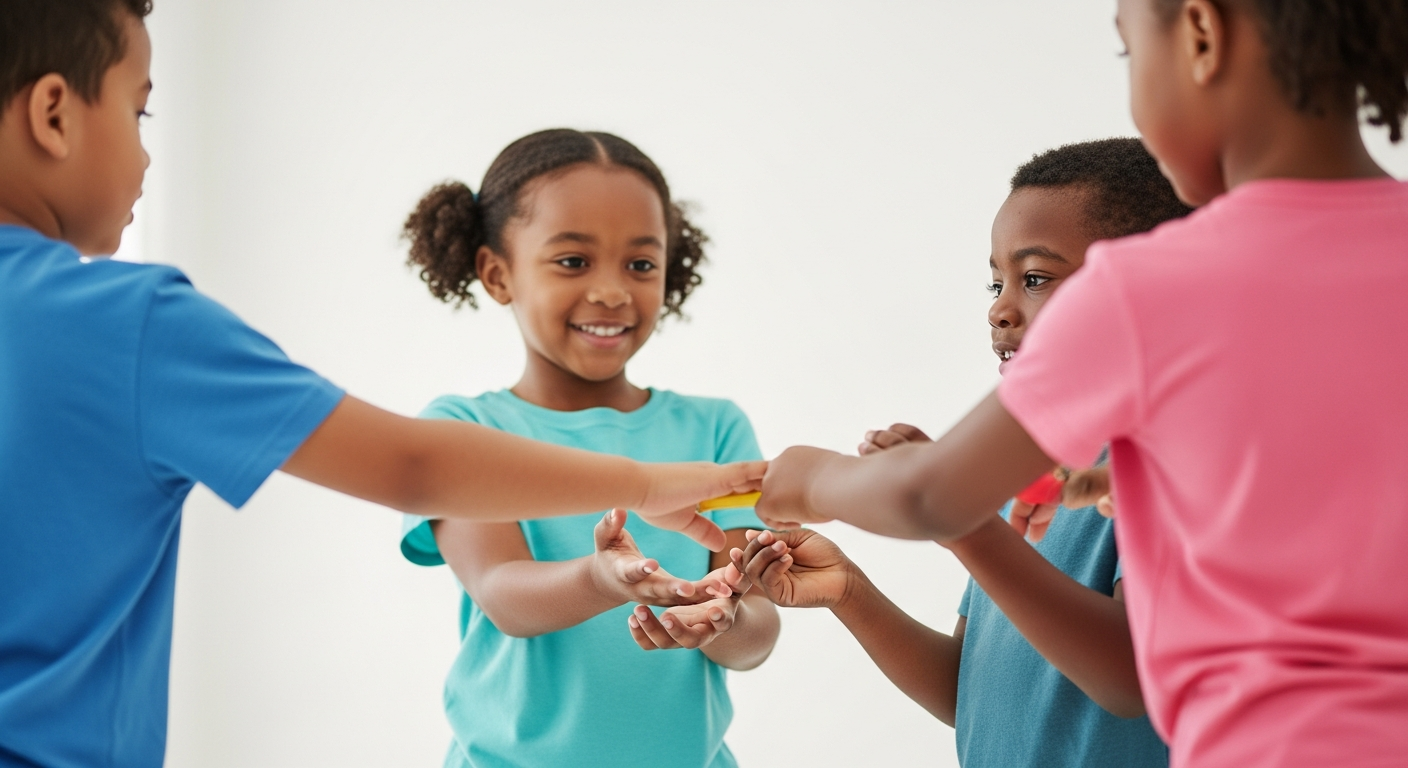
Table of Contents
- The Unrivaled Benefits of Outdoor Play for Child Development
- Classic Kids Games Ideas Outdoor: Timeless Fun, Rich Learning
- Inventive Kids Games Ideas Outdoor: Sparking Imagination and Communication
- Group Outdoor Games: Building Social Skills and Collaborative Communication
- From Outdoor Play to "Smart Screen Time": How Speech Blubs Nurtures Communication
- Unlock Your Child's Potential with Speech Blubs: Our Value and Pricing
- Conclusion
- FAQ
Do you ever find yourself reminiscing about endless summer days spent outside, playing until the streetlights came on? In an age often dominated by screens, the simple joy and profound benefits of outdoor play can sometimes feel like a forgotten art. Yet, inviting our children back into the vibrant world of outdoor games offers far more than just fresh air; it’s a powerful catalyst for physical health, social-emotional growth, and, crucially, language and communication development. At Speech Blubs, we believe in empowering children to speak their minds and hearts, and we know that play—especially active, imaginative outdoor play—is one of the most natural and joyful pathways to achieving this. This comprehensive guide will explore a treasure trove of kids games ideas outdoor, from timeless classics to creative adventures, showing you how each activity naturally fosters essential skills and sparks a lifelong love for communication. We’ll also discover how these real-world play experiences beautifully complement our unique approach to speech development, blending scientific principles with play into one-of-a-kind "smart screen time" experiences.

The Unrivaled Benefits of Outdoor Play for Child Development
Before we dive into specific outdoor kids games ideas, let's appreciate why getting outside is so vital for our children's holistic development. It’s not just about burning off energy; it's a rich, multi-sensory learning environment that supports growth in remarkable ways.
Physical Prowess and Coordination
Outdoor play is a natural gymnasium. Running, jumping, climbing, throwing, and catching all contribute to:
- Gross Motor Skills: Developing large muscle groups essential for movement and balance.
- Fine Motor Skills: Picking up small objects, drawing with chalk, or manipulating game pieces enhance dexterity.
- Coordination and Balance: Navigating uneven terrain, hopping, or playing ball games refines these critical abilities.
- Spatial Awareness: Understanding where one's body is in relation to objects and other people, crucial for avoiding collisions and participating in team sports.
Cognitive Agility and Problem-Solving
Beyond the physical, outdoor play actively stimulates the brain, fostering:
- Creativity and Imagination: Turning a stick into a magic wand or a swing set into a pirate ship.
- Problem-Solving: Figuring out how to hide better in hide-and-seek, strategizing in team games, or building a fort.
- Decision-Making: Reacting quickly in games like Tag or Red Light, Green Light.
- Attention Span: Engaging deeply with an activity can improve focus.
Social and Emotional Intelligence
Playing outside with others is a masterclass in social navigation, teaching children:
- Turn-Taking and Sharing: Essential for any group game.
- Negotiation and Compromise: Deciding on rules, teams, or what to play next.
- Empathy and Perspective-Taking: Understanding others' feelings when winning or losing.
- Resilience and Sportsmanship: Learning to cope with losing, celebrate wins gracefully, and persist through challenges.
- Communication: Expressing needs, desires, and ideas, and listening to others—a cornerstone of our mission at Speech Blubs.
Language and Communication Mastery
Perhaps most importantly for us at Speech Blubs, outdoor play provides a rich, organic environment for language development:

- Following Instructions: Games often have rules that require careful listening.
- Expressive Language: Children verbalize strategies, negotiate turns, describe actions, and tell stories during imaginative play.
- Vocabulary Expansion: Naming objects in nature, using action verbs, and describing emotions.
- Question Asking and Answering: Inquiries about rules, locations, or game outcomes.
- Narrative Skills: Creating imaginary scenarios and storytelling during free play.
These natural interactions are incredibly valuable for developing robust communication skills, forming a strong foundation that can be further enhanced by targeted support when needed.
Classic Kids Games Ideas Outdoor: Timeless Fun, Rich Learning
Let's explore some beloved outdoor kids games ideas and highlight their specific benefits for speech and language development.
1. Tag and Its Engaging Variations
Tag, Bulldog, and Stuck in the Mud are universal games that require minimal equipment and maximum energy.
- How to Play:
- Tag: One person is "it" and chases others, tagging someone to pass on the "it" role.
- Bulldog: All players line up on one side of a defined area, with one "bulldog" in the middle. Players try to run to the other side without being caught. Caught players join the bulldog.
- Stuck in the Mud: Similar to tag, but if you're tagged, you freeze with your feet wide apart (stuck in the mud). Other players can unfreeze you by crawling through your legs.
- Speech and Language Focus:
- Action Verbs: Running, chasing, tagging, freezing, crawling. Parents can narrate the action: "Daddy is running so fast!" or "You tagged Liam!"
- Spatial Prepositions: "Behind," "next to," "away from."
- Negotiation and Simple Sentences: "You're it!" "No, you touched me first!" "I'm stuck!"
- Relatable Scenario: For a parent whose child is a 'late talker' and enjoys active play, these games are fantastic. While playing, narrate everything happening to expose them to new vocabulary naturally. Our "Action Verbs" section within Speech Blubs uses video modeling to show real children performing actions like "jump," "run," and "eat," making it easier for your child to connect words with movements and imitate them. You can download Speech Blubs today on the Apple App Store or Google Play Store.
2. Hide and Seek & Kick the Can
These games add an element of stealth and strategy to the chase.
- How to Play:
- Hide and Seek: One seeker counts while others hide. The last one found wins.
- Kick the Can: A mix of hide-and-seek and tag. One person guards a can while others hide. The guard finds hiders, but hiders can "kick the can" to free jailed teammates.
- Speech and Language Focus:
- Counting: Practice numerical sequences.
- Spatial Concepts: "Behind the tree," "under the slide," "in the bushes."
- Question Formulation: "Ready or not, here I come!" "Where are you?"
- Descriptive Words: "Sneaky," "quiet," "found you!"
3. Red Light, Green Light & What's the Time, Mr. Wolf?
Excellent for practicing listening skills and impulse control.
- How to Play:
- Red Light, Green Light: One person (the "stop light") calls out "Green Light" while facing away, allowing others to run. When "Red Light" is called, they turn around, and everyone must freeze. Anyone caught moving goes back to the start.
- What's the Time, Mr. Wolf? One child is Mr. Wolf with their back turned. Others ask, "What's the time, Mr. Wolf?" Mr. Wolf replies with a time (e.g., "3 o'clock," taking three steps). Eventually, Mr. Wolf shouts "It's dinner time!" and chases the players.
- Speech and Language Focus:
- Following Multi-Step Directions: "Red Light, Green Light, freeze!" "Take three steps forward when Mr. Wolf says 3 o'clock."
- Time Concepts: Understanding and using numbers for time.
- Question-Answer Sequences: Repetitive and predictable.
- Relatable Scenario: For children who struggle with processing verbal instructions, games like these are incredibly helpful. The predictable structure helps them anticipate and respond. Speech Blubs offers engaging activities that improve listening comprehension and expressive language, helping children identify and describe actions or errors, much like needing to respond correctly in these games. Our methodology is backed by science and rated in the top tier of speech apps worldwide. You can learn more about our research here.
4. Duck, Duck, Goose
A simple, fun game perfect for younger children.
- How to Play: Players sit in a circle. One player walks around, tapping heads and saying "Duck, duck, duck..." then "Goose!" The "goose" chases the tapper around the circle to try and catch them before they sit in the empty spot.
- Speech and Language Focus:
- Repetitive Language: The rhythm of "Duck, duck, goose" is great for auditory processing.
- Naming: Children learn to identify and name peers.
- Social Routines: Practicing turn-taking and group interaction.
5. Hopscotch
A classic that combines physical activity with counting.
- How to Play: Draw a hopscotch grid with chalk. Players toss a marker (stone, beanbag) into a square, then hop through the grid, skipping the marked square, picking up their marker on the way back.
- Speech and Language Focus:
- Counting and Sequencing: "One, two, three..." "First, then, next."
- Body Movements: Discussing hopping, balancing, bending.
- Following Rules: Understanding the order and actions required.
6. Simon Says
The ultimate game for practicing listening skills and body awareness.
- How to Play: One person is "Simon" and gives commands, always starting with "Simon says..." Players only follow commands preceded by "Simon says." If Simon gives a command without saying "Simon says," players should not follow it; those who do are out.
- Speech and Language Focus:
- Listening Comprehension: The core of the game is listening carefully to instructions.
- Body Parts and Action Verbs: "Simon says touch your nose," "Simon says jump three times."
- Conditional Statements: Understanding the "if...then" structure.
- Relatable Scenario: If your child struggles with following directions or identifying body parts, "Simon Says" offers playful practice. This activity mirrors the interactive learning environment within Speech Blubs, where children watch and imitate their peers performing various actions and sounds. This unique "video modeling" approach encourages active participation, not passive viewing, making it "smart screen time." See what other parents are saying about their child's success with our interactive tools in our testimonials section.
Inventive Kids Games Ideas Outdoor: Sparking Imagination and Communication
Beyond the classics, there are many creative outdoor kids games ideas that can be adapted to foster rich language experiences.
1. DIY Obstacle Course
Transform your backyard into an adventure zone!
- How to Play: Use anything you have: blankets to crawl under, pillows to jump over, hula hoops to step through, chairs to weave around. Kids can help design and explain the course.
- Speech and Language Focus:
- Direction-Giving: "Crawl under the blanket, then step over the pillows!"
- Descriptive Language: "The tricky tunnel," "the fast slide."
- Sequencing: "First, I'll go over the log, then I'll wiggle through the hose."
- Relatable Scenario: If a child needs to build their vocabulary of spatial prepositions, creating an obstacle course is perfect. Parents can ask, "How do we get over this? Can you go through that?" Speech Blubs has an excellent "Prepositions" section that visually reinforces these concepts through engaging video models.
2. Outdoor Treasure Hunt
A thrilling way to encourage problem-solving and descriptive language.
- How to Play: Hide a "treasure" (like a favorite toy or a snack) and create a series of clues, perhaps drawn pictures for younger kids or simple riddles for older ones.
- Speech and Language Focus:
- Comprehension of Clues: Interpreting spatial information ("look under the big rock").
- Descriptive Adjectives: "A red bucket," "a tall tree."
- Narrative Skills: Creating a story around the hunt, from the map to the discovery.
3. Fort Building & Backyard Artist
Igniting creativity and collaborative speech.
- How to Play:
- Fort Building: Provide old sheets, blankets, cardboard boxes, and pillows. Let children collaborate to build their dream fort.
- Backyard Artist: Bring out chalk, washable paints, or just paper and crayons. Challenge them to draw or paint something in the backyard, or even something imaginary happening in the backyard (e.g., "our backyard with a circus").
- Speech and Language Focus:
- Planning and Negotiation (Fort Building): "You hold that side, I'll put this over here." "What materials should we use?"
- Descriptive Language (Fort Building): "Our fort is big and cozy."
- Imaginative Storytelling (Backyard Artist): "Tell me about the circus in your drawing!"
4. Nature Hunts (Alphabet or Color)
Engaging children with their environment while boosting vocabulary.
- How to Play: Give children a list (pictures for non-readers) of colors or letters. Challenge them to find something in nature that matches.
- Speech and Language Focus:
- Naming Objects: Identifying various natural items.
- Categorization: Grouping items by color, shape, or initial sound.
- Descriptive Adjectives: "A smooth rock," "a rough leaf," "a bright yellow flower."
- Phonological Awareness: Identifying initial sounds for an alphabet hunt.
- Relatable Scenario: For a child expanding their vocabulary, a nature hunt provides real-world context for new words. Our "First Words" section in Speech Blubs is specifically designed to build foundational vocabulary in a fun and interactive way, making it an excellent complement to such activities. If you're wondering about your child's speech development milestones, take our quick 3-minute preliminary screener to get a simple assessment and a free 7-day trial.
Group Outdoor Games: Building Social Skills and Collaborative Communication
These kids games ideas outdoor are fantastic for larger groups, fostering teamwork and more complex communication.
1. Capture the Flag
A classic team game requiring strategy and negotiation.
- How to Play: Divide players into teams, each with a flag hidden in their territory. The goal is to capture the opposing team's flag while protecting your own. Rules for tagging, "jail," and freeing teammates vary.
- Speech and Language Focus:
- Strategy Discussion: Teams must communicate to plan attacks and defense.
- Negotiation: Deciding roles, discussing boundaries.
- Understanding Complex Rules: Explaining and remembering multiple steps and conditions.
2. Untangle
A cooperative game that gets everyone literally tied up!
- How to Play: Players stand close together, reach out both hands, and grab the hands of two different people, forming a "knot." The goal is to work together, without letting go, to untangle into a circle.
- Speech and Language Focus:
- Collaborative Problem-Solving: "If I move this way, can you go under?"
- Giving and Following Directions: "Turn around," "step over him."
- Communication for Coordination: Essential for success in this game.
3. Four Square, Bocce Ball, & Cornhole
These structured games teach rules, sportsmanship, and simple strategy.
- How to Play:
- Four Square: Players hit a playground ball between four squares drawn on the ground, trying to advance to the "king" square.
- Bocce Ball: Teams throw balls to get closest to a smaller target ball (pallino).
- Cornhole: Players toss beanbags at a raised platform with a hole, scoring points for landing on the board or in the hole.
- Speech and Language Focus:
- Explaining Rules: Often, one player needs to teach or clarify the rules.
- Sportsmanship Language: "Good shot!" "Nice try."
- Counting and Simple Scorekeeping: "That's three points for us!"
From Outdoor Play to "Smart Screen Time": How Speech Blubs Nurtures Communication
While outdoor play is invaluable, there are times when a structured, engaging digital tool can provide targeted support for speech and language development. This is where Speech Blubs shines, offering "smart screen time" that complements the organic learning found in kids games ideas outdoor.
The Power of Observation and Imitation
Think about how children learn in outdoor games: they watch their peers, imitate actions, and learn through doing. This natural process is at the heart of Speech Blubs' unique "video modeling" methodology. Our app leverages the power of mirror neurons by showing real children modeling speech sounds, words, and phrases. Your child watches their peers (not animated characters or adults), making the learning process highly relatable and motivating. This active imitation directly translates into real-world communication skills, reinforcing the learning they get from active play. Our approach is backed by extensive research and has positioned us in the top tier of speech apps globally.
Empowering Every Child's Voice
At Speech Blubs, our mission is to empower children to "speak their minds and hearts." We understand the unique challenges children face because our company was born from the personal experiences of our founders, who all grew up with speech problems and wished for a tool like this. We are committed to providing an immediate, effective, and joyful solution for the 1 in 4 children who need speech support. By blending scientific principles with play, we offer a screen-free alternative to passive viewing (like cartoons), transforming screen time into an active, interactive learning experience.
A Tool for Family Connection
Just as outdoor games bring families together, Speech Blubs is designed to be a powerful tool for family connection. It encourages parents to engage with their children, participating in the activities, celebrating successes, and making learning a shared, joyful experience. It's about interacting with the screen together, not just handing a device over. This makes our app an ideal partner in your child's overall development plan, offering structured support that works hand-in-hand with active play. Visit our homepage to learn more about our comprehensive approach.
Unlock Your Child's Potential with Speech Blubs: Our Value and Pricing
We believe that every child deserves the opportunity to communicate confidently. That's why we’ve made Speech Blubs an accessible and effective solution for families. When considering your subscription, we want to highlight the exceptional value of our Yearly plan.
PlanPriceKey Features
Monthly Plan
$14.99 per month
Access to all Speech Blubs activities.
Yearly Plan
$59.99 per year (breaks down to just $4.99/month!)
Save 66%!
Includes a 7-day free trial to experience the full app.
Exclusive access to the Reading Blubs app.
Early access to new updates and features.
Priority 24-hour customer support response time.
The Yearly plan is undeniably the best choice, offering a substantial discount and a suite of high-value features that are not available with the Monthly plan. With the Yearly plan, you not only save a significant amount but also gain a full week to explore all that Speech Blubs has to offer, along with the added benefits of our Reading Blubs app and priority support.
Ready to see the difference Speech Blubs can make? We encourage you to choose the Yearly plan to get your 7-day free trial and unlock the full suite of features designed to empower your child's communication journey.
Conclusion
Embracing kids games ideas outdoor is a powerful way to foster not just physical health but also critical social, emotional, cognitive, and language skills. From the simple joy of Tag to the strategic complexity of Capture the Flag, each outdoor activity offers unique opportunities for children to learn, grow, and connect. These experiences naturally encourage communication, build confidence, and reduce frustration, laying a strong foundation for a child's ability to "speak their minds and hearts."
We at Speech Blubs are proud to stand with you in this journey, offering a unique "smart screen time" solution that complements these real-world learning moments. Our app's video modeling methodology harnesses the natural way children learn—by watching and imitating their peers—making speech and language development an immediate, effective, and joyful experience. By blending the active play of the outdoors with the targeted, engaging support of Speech Blubs, you’re creating a holistic environment for your child to thrive.
Don't let another day pass without igniting your child's potential. We invite you to experience the full power of our program.
Ready to get started? Choose our best-value Yearly plan to begin your 7-day free trial today and gain exclusive access to the Reading Blubs app and priority support. You can also Download Speech Blubs on the App Store or Get it on Google Play to embark on a joyful communication journey with your child.
FAQ
Q1: How do outdoor games specifically help with speech development?
A1: Outdoor games provide a natural, engaging context for speech development by encouraging children to follow instructions, ask and answer questions, use descriptive language to talk about their environment, negotiate rules with peers, and verbalize their actions during play. This organic interaction builds vocabulary, strengthens listening comprehension, and enhances narrative skills in a fun, pressure-free environment.
Q2: What's the ideal balance between outdoor play and screen time for language learning?
A2: There's no single "ideal" ratio, but the key is balance and intentionality. Prioritize active, unstructured outdoor play for its holistic benefits. When using screens, choose "smart screen time" like Speech Blubs, which is interactive, purpose-driven, and encourages active participation rather than passive viewing. This complements outdoor learning by providing targeted practice in a structured, engaging way.
Q3: How can I tell if my child might need extra support with their speech or language?
A3: If you notice your child struggling to communicate their needs, follow simple directions, or form clear sentences compared to peers, it might be beneficial to seek professional advice. Early indicators could include limited vocabulary, difficulty pronouncing sounds, or trouble understanding what others say. A great first step is to take our quick 3-minute preliminary screener to get an assessment and a personalized next-steps plan.
Q4: How does Speech Blubs integrate with my child's daily routine alongside outdoor play?
A4: Speech Blubs is designed for flexibility. It can be used in short, engaging sessions that complement active play. For instance, after an outdoor adventure, you can use Speech Blubs to reinforce new vocabulary learned outside or practice sounds related to animals or actions encountered during play. It's a powerful supplement to a child's overall development plan and, when applicable, professional therapy, making learning consistent and fun, whether indoors or out.
About the author