
Outdoor Party Games for Kids: Fun & Skill-Building
 By Speech Blubs Team•Jan 28, 2026•15 min.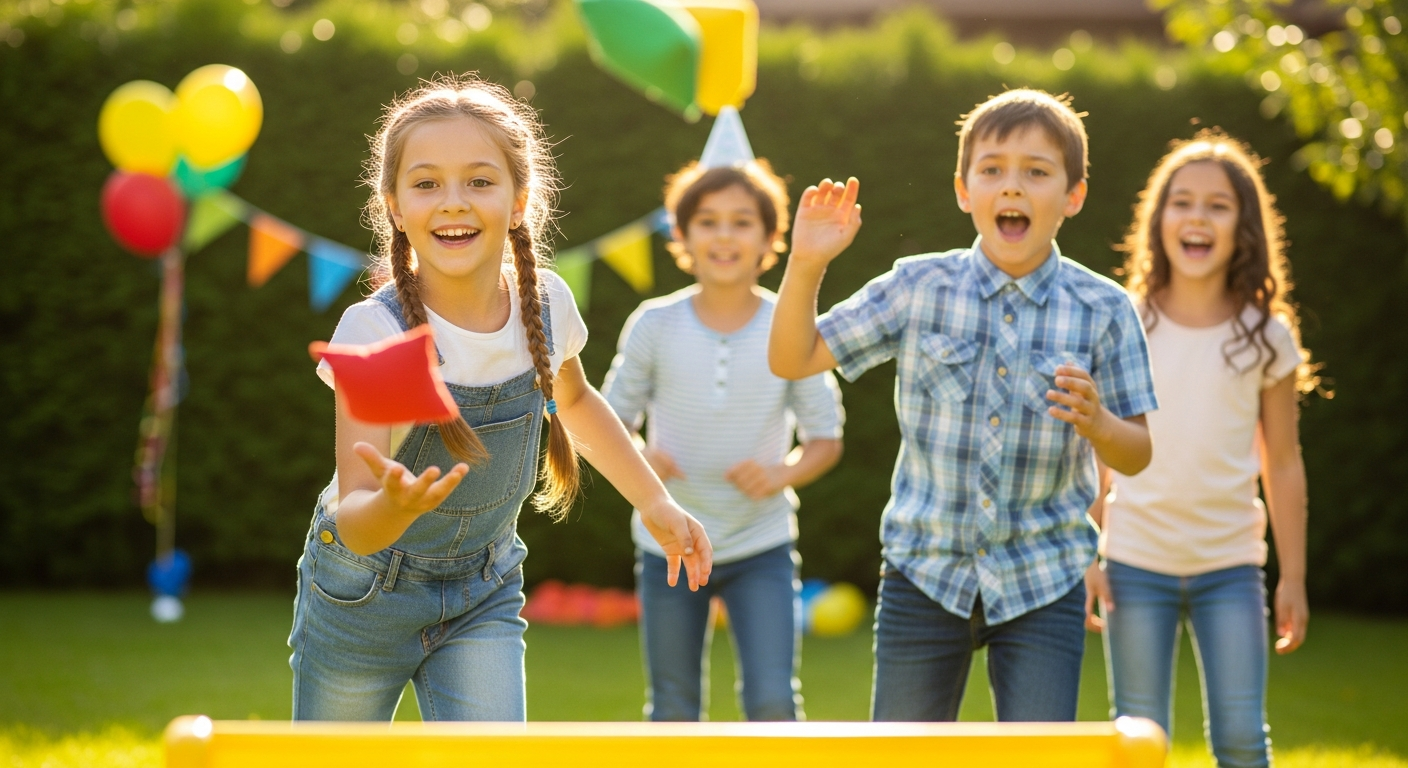
Table of Contents
- Why Outdoor Play is a Developmental Powerhouse
- Preparing for Outdoor Party Fun
- Top Outdoor Party Games for Kids
- Make Speech Blubs Part of Your Family's Learning Journey
- Conclusion
- Frequently Asked Questions (FAQ)
As parents, we often find ourselves searching for ways to spark joy and connection, especially when it comes to celebrating our children's milestones or simply enjoying a sunny afternoon. Picture this: a yard filled with laughter, eager shouts, and the energetic buzz of kids immersed in play. It's a scene we all cherish, but sometimes, getting there requires a little inspiration, especially when it comes to keeping little ones engaged and developing crucial skills.
In a world increasingly dominated by screens, the magic of outdoor play remains unparalleled. It’s not just about burning off energy; it’s a vibrant classroom where children learn, grow, and communicate in ways that are deeply enriching. For many families, finding activities that are both fun and supportive of developmental milestones, particularly in speech and language, can feel like a quest. That’s why we at Speech Blubs are so passionate about blending the best of both worlds: encouraging dynamic, real-world interactions while also providing "smart screen time" solutions that reinforce learning. Our mission is to empower children to speak their minds and hearts, and often, the most natural pathway to this empowerment begins in the great outdoors.

This post will dive deep into a treasure trove of engaging outdoor party games for kids, offering not just entertainment, but also valuable opportunities for skill development. We’ll explore classic favorites and fresh ideas, providing practical tips for execution, and showing you how these games can naturally foster communication, social skills, and confidence. Whether you’re planning a birthday bash, a family reunion, or just a spontaneous playdate, get ready to transform your backyard into an arena of joyful discovery and meaningful connection.
Why Outdoor Play is a Developmental Powerhouse
Before we dive into the games, let's briefly touch on why outdoor play is so vital for children's holistic development. Beyond the obvious physical benefits of running and jumping, outdoor environments offer a rich sensory experience that is crucial for cognitive and communicative growth. The fresh air, natural textures, open space, and sheer unpredictability of nature stimulate curiosity and encourage spontaneous interaction.
The Benefits Beyond Burning Energy
When children play outdoors, they are constantly problem-solving. They might strategize how to catch a ball, negotiate turns with friends, describe what they see, or invent elaborate imaginative scenarios. These actions are inherently laden with communication opportunities. They learn to:
- Express Needs and Wants: "My turn!" or "Can I have the ball?"
- Follow Instructions: Understanding game rules and directions.
- Describe Actions and Objects: "The frisbee flew so high!" or "Look at that shiny rock."
- Negotiate and Collaborate: Working together to achieve a common goal, like building a fort or winning a team game.
- Understand Social Cues: Reading body language, responding to cheers, or consoling a friend who lost.
These are the foundational communication skills that we champion at Speech Blubs. Our founders, having personally navigated speech challenges in childhood, created a tool they wished they had – one that understands the blend of scientific principles with the sheer joy of play. This commitment to "smart screen time" means that while our app provides targeted support for speech and language, we deeply believe in complementing it with rich, interactive, and often screen-free experiences like outdoor games.

Preparing for Outdoor Party Fun
A successful outdoor party with games starts with a little preparation. Think about your space, the age range of the children, and any materials you might need.
Safety First
- Clear the Area: Remove any hazards like sharp objects, uneven ground, or fragile decor.
- Sun Protection: Have sunscreen, hats, and shady spots readily available.
- Hydration: Keep plenty of water on hand.
- Supervision: Ensure adequate adult supervision for all activities.
- Allergies: Be mindful of any known allergies, especially food or insect-related.
Materials and Adaptations
Many of the best outdoor games require minimal equipment, often things you already have around the house. Consider items like:
- Balls (various sizes)
- Chalk
- Ropes
- Buckets
- Water balloons (weather permitting)
- Recycled materials (cardboard boxes, old sheets)
- Music player
- Prizes (stickers, small toys, or simply bragging rights!)
Remember, games can always be adapted. For younger children, simplify rules and focus on participation over competition. For older kids, you can introduce more complex strategies or team dynamics. And for any child who might be working on their communication skills, always encourage them to verbalize their thoughts and feelings during play. If you're wondering how to best support your child's communication journey, our quick 3-minute preliminary screener can offer immediate insights and an action plan, leading to a free 7-day trial of our app.
Top Outdoor Party Games for Kids
Now, let's get to the heart of the matter – a fantastic collection of outdoor party games designed to get kids moving, laughing, and communicating!
1. Active & Energetic Games
These games are perfect for burning off energy and encouraging gross motor skills.
Freeze Dance Extravaganza
- How to Play: Play upbeat music and have the kids dance. When the music stops, everyone must freeze in place like a statue. Anyone who moves is out. The last dancer remaining wins.
- Communication Boost: Encourage kids to describe their dance moves ("I'm doing the robot!"), cheer for friends, or make requests ("Play 'Wheels on the Bus'!"). This simple activity can be a powerful way to practice following auditory commands and expressing preferences.
- Materials: Music player with a fun playlist.
Red Light, Green Light
- How to Play: One person stands with their back to the group and yells "Red Light, Green Light!" While they say "Green Light," the other players run towards them. When they yell "Red Light" and turn around, everyone must freeze. Anyone caught moving is sent back to the start. The first player to reach the caller becomes the new caller.
- Communication Boost: This game is fantastic for practicing impulse control and understanding commands. Kids can verbalize their excitement or frustration, and the caller gets practice in clear vocal commands.
Water Balloon Toss (Warm Weather Fun!)
- How to Play: Pair children up and have them stand a short distance apart. They toss water balloons back and forth, taking a step back after each successful catch. The last pair to have an unbroken balloon wins.
- Communication Boost: Excellent for practicing "ready, set, go!" commands, counting steps, and expressing emotions like surprise or triumph. It's also a great chance to use descriptive words like "wet," "splash," and "cold."
Capture the Flag
- How to Play: Divide players into two teams. Each team has a "flag" (a bandana or piece of fabric) hidden in their territory. The goal is to capture the other team's flag and bring it back to your territory without being tagged. If tagged in enemy territory, a player goes to "jail" and can only be freed by a teammate.
- Communication Boost: A classic for teamwork and strategy. Kids will naturally engage in planning, calling out warnings, celebrating successes, and negotiating during play. This type of collaborative play nurtures problem-solving through spoken language.
2. Creative & Imaginative Games
These games spark creativity and encourage storytelling.
Nature Scavenger Hunt
- How to Play: Create a list of natural items for kids to find (e.g., "a smooth stone," "a feather," "a green leaf," "something rough," "something that smells good"). Kids can work individually or in teams. The first to find all items wins.
- Communication Boost: Encourages descriptive language ("This leaf is long and pointy!"), categorization, and asking questions. For children who may struggle with expanding their vocabulary, finding and naming objects in the real world provides a tangible learning experience, much like our app's extensive library of words and sounds.
- Materials: Printed lists, bags or buckets for collecting items.
Outdoor Storytelling Circle
- How to Play: Sit in a circle. One person starts a story with a sentence. The next person adds a sentence, and so on, building a collaborative story. You can use a prop (like a talking stick) to indicate whose turn it is.
- Communication Boost: This activity is a fantastic way to develop narrative skills, sequencing, and active listening. It encourages children to articulate their ideas clearly and build upon others' contributions. For a parent whose child struggles with sentence formation, this offers a low-pressure, playful way to practice.
Obstacle Course Challenge
- How to Play: Design an obstacle course using everyday outdoor items: crawl under a blanket draped over chairs, jump over a rope, weave around cones, balance on a low beam, army crawl through a tunnel. Time each child as they go through.
- Communication Boost: As children navigate the course, they can describe their actions ("I'm crawling!" "Now I'm jumping!"), give instructions to others, and use directional words. This helps connect verbs and prepositions to physical actions, reinforcing language concepts.
3. Collaborative & Social Games
These games emphasize teamwork and social interaction, which are crucial for speech development.
Group Charades
- How to Play: Write down various actions, animals, or objects on slips of paper. Kids take turns acting out a word without speaking, while their team tries to guess.
- Communication Boost: While it's a silent game, charades builds non-verbal communication skills, empathy, and active listening as kids try to interpret clues. When guessing, children practice asking clarifying questions and using descriptive vocabulary. It also encourages turn-taking and patience.
Giant Bubble Blowing
- How to Play: Make or buy a giant bubble solution and wands. Have kids take turns creating enormous bubbles.
- Communication Boost: The sheer wonder of bubbles often elicits excited gasps and exclamations ("Wow!" "Big!" "Pop!"). This is excellent for early sound production, practicing words like "more," "up," and "catch," and describing size and movement. Simple and joyful, it’s a wonderful way to encourage spontaneous vocalization.
- Materials: Bubble solution, large wands (DIY with sticks and string works great!).
Team Scarf Dancing
- How to Play: Give each child a colorful scarf. Play music and have them dance, encouraging them to create synchronized movements or follow a leader.
- Communication Boost: While primarily physical, this activity promotes non-verbal communication, coordination, and the ability to follow a leader. It's a great way for shy children to participate and express themselves without the pressure of speaking, building confidence that can later transfer to verbal interactions.
4. Classic Revived Outdoor Games
Sometimes, the simplest games are the most effective.
Sack Race
- How to Play: Provide burlap sacks or large pillowcases. Kids stand inside the sacks, hold the top, and hop to a finish line.
- Communication Boost: Great for counting (how many hops?), cheering, and simple commands like "Go!" or "Faster!" It also introduces concepts of competition and sportsmanship.
Three-Legged Race
- How to Play: Pair children up. Tie one leg of each partner together. They must then work together to race to the finish line.
- Communication Boost: This game is a masterclass in collaboration and communication. Partners must talk to each other to coordinate their steps, deciding "left, right, left!" and adjusting their pace. This direct need for verbal coordination makes it a fantastic language-building activity.
Ring Toss or Bean Bag Toss
- How to Play: Set up targets (e.g., stakes in the ground, buckets, or painted spots on a board) and have kids toss rings or bean bags to hit them. Assign points for different targets.
- Communication Boost: Encourages counting, spatial language ("over," "under," "in front of"), and turn-taking phrases ("my turn," "your turn"). Kids can describe their aim and celebrate their successes. This is an excellent activity for children to practice articulating their intentions and results in a structured, fun environment.
- Materials: Rings, bean bags, targets.
Integrating Speech Blubs into Your Play Journey
While these outdoor games provide fantastic opportunities for communication, we understand that some children need extra support. That’s where Speech Blubs comes in. We offer a unique approach to teaching complex communication skills through our "video modeling" methodology, where children learn by watching and imitating their peers. This creates a powerful, engaging, and joyful learning experience.
For instance, after a rousing game of "Red Light, Green Light," where a child practiced following commands, they could then engage with a Speech Blubs activity focused on verbs or action words, reinforcing the vocabulary learned through play. For a child whose communication challenges might make them hesitant to participate in a large group game, starting with our app’s interactive activities can build confidence in a controlled, supportive environment.
We've observed countless children blossom, moving from hesitant sounds to confident conversations, thanks to the engaging and scientifically-backed activities within our app. Don't just take our word for it; explore our testimonials page to see what other parents are saying about their child's success. Our method is backed by science, placing us in the top tier of speech apps worldwide, as detailed on our research page.
Make Speech Blubs Part of Your Family's Learning Journey
We are committed to providing an immediate, effective, and joyful solution for the 1 in 4 children who need speech support. Our app offers a screen-free alternative to passive viewing experiences like cartoons, transforming screen time into "smart screen time" that fosters active learning and family connection.
Ready to see the difference Speech Blubs can make for your child? It’s easier than ever to get started!
We offer two flexible subscription plans:
- Monthly Plan: Priced at $14.99 per month.
- Yearly Plan: Our best value at just $59.99 per year, which breaks down to an incredible $4.99 per month! By choosing the Yearly plan, you save a significant 66% compared to the monthly option.
The Yearly plan is truly the superior choice, offering an abundance of exclusive, high-value features designed to maximize your child's progress and your family's convenience:
- 7-Day Free Trial: Explore all the amazing features of Speech Blubs before committing.
- The Extra Reading Blubs App: Unlock an additional app focused on early reading skills, complementing your child's language development.
- Early Access to New Updates: Be among the first to experience our latest features and content.
- 24-Hour Support Response Time: Get quick and dedicated assistance whenever you need it.
The Monthly plan, while flexible, does not include these fantastic benefits, nor does it come with a free trial. We wholeheartedly encourage you to choose the Yearly plan to unlock the full suite of features and embark on a comprehensive speech and language adventure with your child.
Don't wait to empower your child's voice. Take the first step today! Download Speech Blubs on the App Store Get Speech Blubs on Google Play Or, if you prefer, create your account and begin your 7-day free trial today on our website! We can’t wait for you to join our family of happy learners.
Conclusion
Outdoor party games for kids are more than just fun; they are powerful catalysts for development, offering rich environments for physical activity, creative expression, social interaction, and, most importantly, communication. From energetic sack races to collaborative storytelling, each game presents a unique opportunity for children to practice vital speech and language skills in an engaging, natural setting.
At Speech Blubs, we believe in supporting every child's journey to express themselves confidently. Our app provides targeted, joyful "smart screen time" that perfectly complements the dynamic learning found in outdoor play. By combining the magic of play with evidence-based strategies, we help children build the confidence to speak their minds and hearts, fostering a love for communication that lasts a lifetime. So, gather your little party-goers, head outside, and let the games – and the language learning – begin!
Ready to combine the joy of outdoor play with targeted speech and language support? Explore Speech Blubs today! Start your 7-day free trial by selecting the Yearly plan and unlock all the premium features and benefits designed to help your child thrive.
Frequently Asked Questions (FAQ)
Q1: What age range are these outdoor party games suitable for?
A1: Many of these games are highly adaptable and suitable for a wide range of ages, generally from toddlers (with simplified rules and close supervision) up to pre-teens. For younger children, focus on games with simple instructions and lots of movement, while older kids might enjoy more strategic or competitive options. Always tailor the game to the specific group of children attending.
Q2: How can I encourage a shy child to participate in outdoor party games?
A2: Start with less competitive, more collaborative games or activities where they can observe first, like giant bubble blowing or a nature scavenger hunt. Offer roles that don't require being the center of attention, such as a "tracker" in a scavenger hunt or a "cheerleader" for a team. Positive reinforcement for any participation, no matter how small, is key. Our Speech Blubs app also provides a safe, engaging space for children to practice communication skills in a low-pressure environment, which can build confidence for group interactions.
Q3: What if I don't have a large outdoor space for games?
A3: Many games can be adapted for smaller spaces! A simple sidewalk can become a canvas for chalk games like hopscotch or "follow the leader." A small patio or deck is perfect for charades or a storytelling circle. Even a local park can serve as a fantastic venue for more active games like "Red Light, Green Light" or a scavenger hunt. Creativity is your best friend when space is limited.
Q4: How do outdoor games specifically help with speech and language development?
A4: Outdoor games provide natural, context-rich opportunities for communication. Children use language to express needs ("My turn!"), follow and give instructions, describe actions and objects ("The ball went high!"), negotiate rules, problem-solve with peers, and express emotions. The dynamic environment encourages spontaneous vocalizations and expands vocabulary in a fun, engaging way, reinforcing the kinds of foundational communication skills we foster at Speech Blubs.
About the author