
Paint Joyful Christmas Crafts with Kids
 By Speech Blubs Team•Dec 22, 2025•17 min.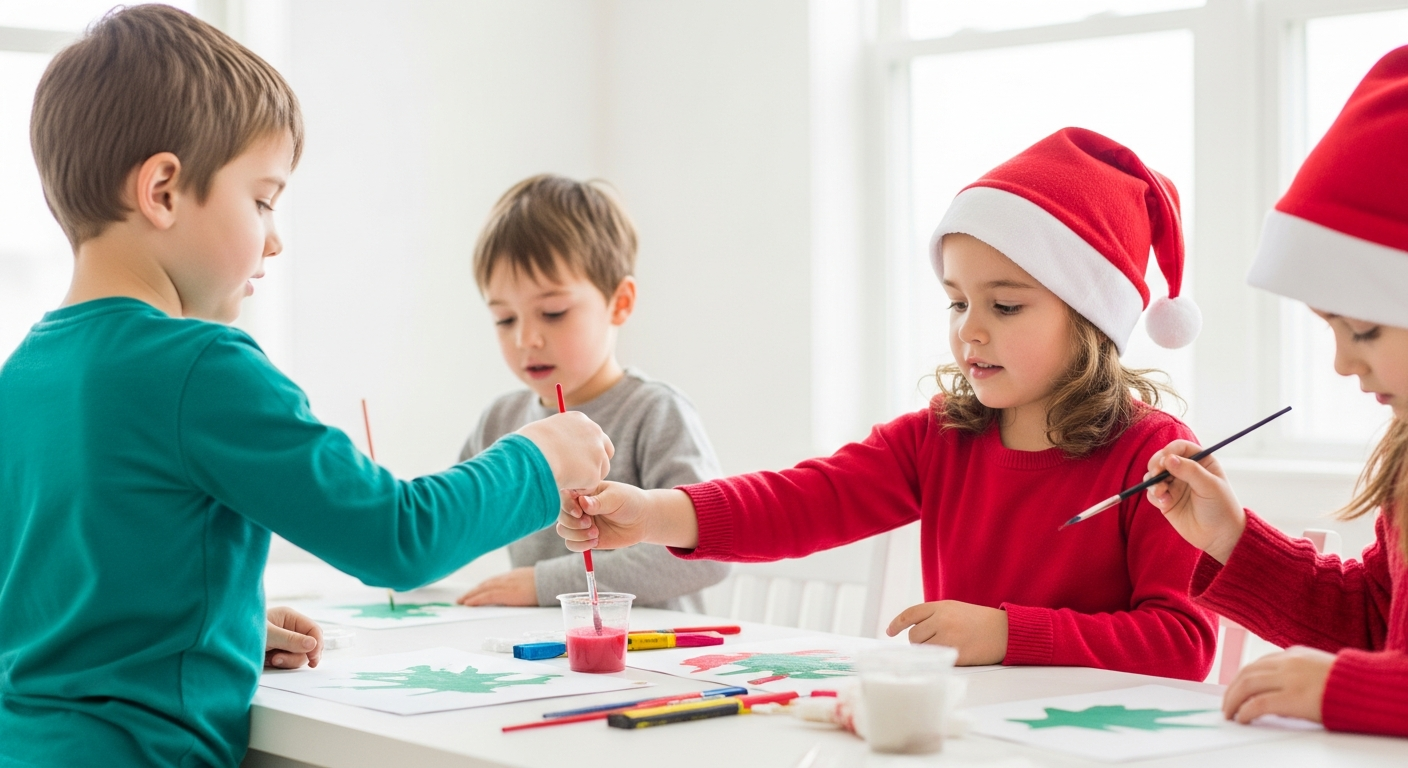
Table of Contents
- Introduction
- The Magic of Christmas Crafts for Child Development
- Beyond the Brushstroke: Speech & Language Benefits
- Top 10 Engaging Christmas Painting Crafts for Kids
- Maximizing the Learning: How to Turn Craft Time into "Smart Screen Time" with Speech Blubs
- When to Consider Speech Blubs – And How to Get Started
- Tips for a Successful Craft & Language Session
- Conclusion
- FAQ
Introduction
The air hums with anticipation as the festive season approaches, bringing with it the sparkle of lights, the warmth of family, and the joy of creation. For many families, Christmas crafts are a cherished tradition, filling homes with handmade ornaments, heartfelt gifts, and vibrant memories. But what if these joyful artistic endeavors could also be powerful catalysts for your child's speech and language development? Beyond the glitter and glue, engaging in painting Christmas crafts offers a rich, multi-sensory environment that naturally encourages communication, builds vocabulary, and strengthens fine motor skills—all while creating treasured keepsakes. This blog post will explore a delightful array of Christmas painting crafts perfect for kids, delve into the profound developmental benefits each activity offers, and illustrate how these creative moments can be amplified into truly "smart screen time" experiences with the help of Speech Blubs. Our goal is to show you how to transform holiday crafting into an engaging journey of discovery and communication, empowering your child to speak their minds and hearts with confidence and joy.

The Magic of Christmas Crafts for Child Development
Creating art is far more than just a pastime for children; it’s a fundamental pathway to learning and growth. The simple act of painting a Christmas ornament engages multiple facets of a child's development simultaneously, laying crucial groundwork for cognitive, emotional, and physical milestones.
Sensory Exploration and Engagement
From the smooth glide of a paintbrush across paper to the sticky texture of glitter glue, Christmas painting crafts are a feast for the senses. Children explore different colors, experiment with various tools and materials, and feel the textures of paint, paper, and natural elements like pinecones. This sensory input is vital for brain development, helping children to understand and categorize their world. It also provides rich opportunities for descriptive language, as they articulate what they see, feel, and create.
Cultivating Fine Motor Skills
Holding a paintbrush, squeezing a tube of paint, dabbing a sponge, or carefully placing a sequin all require precise movements of the small muscles in the hands and fingers. These activities refine fine motor skills, which are essential for everyday tasks like writing, buttoning clothes, and self-feeding. As children gain control over their movements, their confidence in tackling new challenges also grows.
Boosting Cognitive Development
Crafting involves a surprising amount of cognitive work. Children learn to follow instructions, plan their creations, and solve problems that arise (like what to do if the paint drips!). They engage in decision-making, choosing colors, shapes, and designs. This process fosters critical thinking, sequencing abilities, and creative problem-solving—skills that are transferable to all areas of learning.
Nurturing Emotional Expression and Confidence
Art provides a safe and open space for children to express their feelings, ideas, and creativity. There's no "right" or "wrong" way to paint a snowman, which liberates children to experiment and take risks. The pride they feel in completing a handmade craft, especially one that will be displayed or gifted, significantly boosts their self-esteem and sense of accomplishment. These moments of pride build foundational confidence that extends beyond the craft table.

Beyond the Brushstroke: Speech & Language Benefits
While the visual and tactile aspects of painting Christmas crafts are immediately apparent, the deeper benefits for speech and language development are equally profound. These activities naturally encourage children to use and understand language in meaningful, context-rich ways.
Expanding Vocabulary
Craft time is a goldmine for introducing and reinforcing new words. As children select materials, paint, and create, they can learn the names of colors, shapes, objects (e.g., "star," "angel," "reindeer"), actions (e.g., "paint," "cut," "glue," "mix"), and descriptive adjectives (e.g., "sparkly," "rough," "smooth," "bright," "shiny"). For a child who is just starting to string words together, describing the "red" paint or the "big" snowman provides invaluable practice. These moments are where real learning happens, helping children speak their minds and hearts.
Practicing Following Directions
"First, paint the tree green, then add the yellow star." Craft instructions provide an excellent, low-pressure environment for children to practice listening and following multi-step directions. This skill is critical for classroom learning and everyday routines. Parents can model and break down instructions, helping children build their comprehension gradually.
Developing Descriptive Language
Encourage your child to talk about their creations. "Tell me about your sparkly blue ornament!" or "What sound does your painted reindeer make?" Such prompts encourage them to use adjectives, verbs, and more complex sentence structures. This practice helps children articulate their thoughts and observations more clearly, enriching their communication skills.
Fostering Narrative Skills
Crafting can be a fantastic springboard for storytelling. As they create, children can narrate the process ("I am painting the snowman's hat") or invent stories about their finished pieces ("This snowman lives in a snowy village"). This helps develop narrative structure, sequencing of events, and imaginative thinking, all key components of strong communication.
Enhancing Social Communication
When crafting together, children learn valuable social communication skills such as sharing materials, taking turns, asking for help, and expressing preferences. This collaborative environment fosters empathy and teaches them how to engage in meaningful conversations with others. Even a simple "Can I have the blue paint?" is a huge step in developing functional language.
Top 10 Engaging Christmas Painting Crafts for Kids
Let's dive into some wonderful painting Christmas crafts that are perfect for kids of all ages, complete with their unique developmental boosts. Remember, the focus is on the process and the conversation, not perfection!
1. Handprint and Footprint Ornaments
The Craft: Use salt dough, air-dry clay, or even paper cutouts to capture your child's handprint or footprint. Once dry, let them paint these imprints with festive colors, adding glitter or names. Developmental Boost: This craft is fantastic for sensory exploration (the feeling of clay or paint), naming body parts ("my hand," "your foot"), and learning color vocabulary. It also encourages simple requests like "More paint, please!"
2. Salt Dough Christmas Ornaments
The Craft: Mix flour, salt, and water to create a pliable dough. Roll it out, use cookie cutters (stars, trees, bells) to make shapes, bake until hard, and then let your child paint them. Developmental Boost: Rolling, kneading, and cutting the dough strengthen hand muscles and coordination. Painting the ornaments reinforces shape and color recognition, and talking about the texture of the dough ("smooth," "sticky") builds descriptive vocabulary.
3. Pinecone Animals and Ornaments
The Craft: Collect pinecones and let your child paint them in festive colors. They can then glue on googly eyes, felt ears, or small pom-poms to transform them into woodland creatures, or add glitter and ribbon to make rustic ornaments. Developmental Boost: This craft connects children with nature. Painting the irregular surface of the pinecone is a fine motor challenge. Talking about the "spiky" texture of the pinecone or the "soft" cotton ball beard for a Santa pinecone enhances descriptive language.
4. Christmas Rock Painting
The Craft: Gather smooth, flat rocks and clean them. Let your child paint them to look like Christmas characters (snowmen, Santa faces, reindeer), ornaments, or festive scenes. These can be used as garden decorations or paperweights. Developmental Boost: This activity encourages imaginative play and storytelling. As they paint a snowman's face, you can talk about the eyes, nose, and mouth, reinforcing body part vocabulary and facial expressions.
5. Cardboard Tube Christmas Characters
The Craft: Collect empty toilet paper or paper towel rolls. Children can paint them to create Santa, elves, reindeer, or even carolers. Add felt, cotton balls, googly eyes, or pipe cleaners for extra details. Developmental Boost: Recycling materials teaches resourcefulness. Painting a cylindrical shape develops different fine motor control. Creating characters naturally leads to role-playing and imaginative dialogue, boosting narrative skills and character naming.
6. Window Clings with Gel Paints
The Craft: Use special window gel paints (or even washable tempera mixed with a little dish soap) on plastic sheets (like binder dividers) or directly on windows. Children can draw and paint festive designs like snowflakes, Santa, or stockings. Once dry, they can peel off. Developmental Boost: Painting on a vertical surface engages different arm and shoulder muscles. The large motor movements encourage gross motor skill development, while naming the shapes and figures they create builds vocabulary.
7. Paper Plate Snowflakes or Wreaths
The Craft: Have children paint paper plates white or green. For snowflakes, they can cut out sections (adult supervision required for younger kids) or use stencils and paint designs. For wreaths, they can glue on painted paper "berries" or bows. Developmental Boost: Cutting along lines improves scissor skills (fine motor). The circular motion of painting the plate reinforces spatial concepts. Talking about "big" or "small" cuts, or the "round" shape, enhances descriptive vocabulary.
8. Cotton Ball Snowmen
The Craft: Children paint a snowman outline on paper. Then, they glue cotton balls onto the snowman's body, painting details like buttons, eyes, and carrot noses. Developmental Boost: The tactile experience of gluing cotton balls and painting details is wonderful for sensory exploration. Using words like "soft," "fluffy," "sticky," and naming colors and body parts all contribute to language development.
9. Fingerprint Christmas Lights
The Craft: Draw a string on a piece of paper. Children dip their fingertips in different colored paints and press them along the string to create colorful "lights." Developmental Boost: This simple craft is excellent for fine motor precision, color recognition, and counting. You can say, "Let's make a red light, then a blue light," building sequencing and vocabulary.
10. Q-Tip Pointillism Christmas Scenes
The Craft: Provide paper with a simple Christmas outline (tree, star, present). Children use Q-tips dipped in paint to create a scene using small dots of color. Developmental Boost: This activity significantly enhances fine motor control and concentration. Discussing the "dots" and the "colors" as they fill in the scene reinforces specific vocabulary and attention to detail.
Maximizing the Learning: How to Turn Craft Time into "Smart Screen Time" with Speech Blubs
The real magic happens when you pair these hands-on craft activities with intentional language learning opportunities. This is where Speech Blubs comes in, offering a unique bridge between creative play and targeted speech development. Our mission at Speech Blubs is to empower children to speak their minds and hearts, and we believe in providing immediate, effective, and joyful solutions for the 1 in 4 children who need speech support. Our company was born from the personal experiences of our founders, all of whom grew up with speech problems and created the tool they wished they had.
The Power of Interactive "Smart Screen Time"
Unlike passive viewing of cartoons, Speech Blubs offers "smart screen time" that actively engages children and turns screen time into a powerful tool for family connection. We blend scientific principles with play, transforming learning into a fun, interactive experience.
Imagine your child is proudly displaying their newly painted red Santa. After the craft, you can open Speech Blubs to the "Colors" section, reinforcing the word "red" through fun, interactive games. Or, if they've crafted a pinecone reindeer, the "Animal Kingdom" section can help them practice "reindeer" or "deer" sounds and words, along with associated animal noises. This repetition and varied context solidify learning, making it more memorable and applicable in different situations.
Our Unique Video Modeling Methodology
At the heart of Speech Blubs is our one-of-a-kind "video modeling" methodology. Children learn by watching and imitating their peers, not just animated characters. This approach is incredibly effective because it taps into mirror neurons—the brain cells that fire both when we perform an action and when we observe someone else performing that same action. When children see other kids their age successfully producing sounds and words, they are naturally motivated to imitate. Our scientifically-backed approach, placing us in the top tier of speech apps worldwide, is designed to make learning intuitive and engaging. You can explore more about the science behind our method on our research page.
A Powerful Tool for Family Connection
Speech Blubs isn't just an app for individual learning; it's a powerful tool for family connection. We encourage co-play and support, where parents engage with their children during app activities, just as they would during craft time. This shared experience strengthens bonds and makes learning a collaborative adventure. By actively participating, you can model correct pronunciation, provide encouragement, and celebrate every small victory.
When to Consider Speech Blubs – And How to Get Started
If you've noticed your child struggling with certain sounds, having difficulty expressing themselves, or simply want to give their language development an extra boost, integrating Speech Blubs alongside hands-on activities like painting Christmas crafts can be incredibly beneficial. We offer immediate, effective, and joyful solutions for children needing speech support.
Unsure if Your Child Could Benefit?
Sometimes, it's hard to know if a child's speech patterns are within the typical range or if they might benefit from additional support. If you're unsure, take our quick 3-minute preliminary screener. It involves 9 simple questions and provides an assessment and next-steps plan tailored to your child's needs, often suggesting activities within Speech Blubs to support their development.
Our Commitment to Value
We believe that every child deserves the opportunity to communicate effectively and joyfully. That's why we've designed Speech Blubs to be accessible and packed with value.
Our pricing plans are straightforward:
- Monthly Plan: For $14.99 per month, you get access to our core Speech Blubs features.
- Yearly Plan: This is our most popular and value-packed option at just $59.99 per year, which breaks down to an incredible $4.99 per month. Choosing the Yearly plan means you save 66% compared to the monthly subscription!
The Yearly plan doesn't just offer significant savings; it comes with exclusive, high-value features that enhance your child's learning journey:
- A 7-day free trial: Experience the full power of Speech Blubs before committing.
- The extra Reading Blubs app: Further support your child's literacy development.
- Early access to new updates: Be the first to try out exciting new content and features.
- 24-hour support response time: Get prompt assistance whenever you need it.
The Monthly plan does not include these fantastic benefits. To experience the full range of features and provide your child with comprehensive support, including a 7-day free trial and access to our Reading Blubs app, we encourage you to choose our Yearly plan.
Parents globally are seeing amazing results and building confidence in their children's communication skills. See what other parents are saying about their child's success with Speech Blubs testimonials.
Ready to get started? Download Speech Blubs today on the App Store or Google Play and embark on a joyful journey of communication with your child.
Tips for a Successful Craft & Language Session
To make your Christmas painting craft sessions as enriching and fun as possible for language development, keep these tips in mind:
- Prepare Your Space: Set up your craft area beforehand with all materials easily accessible. A designated "creation station" helps children focus.
- Keep it Pressure-Free: The goal is exploration and enjoyment, not perfection. Let your child lead the creative process, even if the result isn't what you envisioned. This fosters a love for communication and builds confidence, reducing frustration.
- Talk About the Process: Narrate what you're doing, and encourage your child to do the same. "I'm squeezing the blue paint," "You're painting the star yellow."
- Ask Open-Ended Questions: Instead of "Is it finished?" try "Tell me about your painting," or "What's your favorite part?" These questions invite more detailed responses.
- Model Language: If your child points, provide the word. "You want the red paint!" Expand on their utterances: if they say "tree," you can say, "Yes, a big green Christmas tree!"
- Focus on the Fun, Not Perfection: Celebrate their efforts and creativity. Acknowledging their hard work and unique ideas builds self-esteem and encourages continued engagement.
- Co-Play and Support: Be present and engage with your child. Your active involvement makes the experience more meaningful and provides crucial language modeling and support. Remember, Speech Blubs is a powerful supplement to a child's overall development plan and, when applicable, professional therapy, but adult co-play is key.
Conclusion
Christmas painting crafts offer a wonderful opportunity to blend festive fun with significant developmental growth. From honing fine motor skills and expanding vocabulary to fostering emotional expression and building confidence, these activities provide a rich tapestry for learning. By intentionally engaging in conversations, asking open-ended questions, and modeling language, parents can transform simple craft time into powerful language-building sessions. When combined with the innovative, scientifically-backed approach of Speech Blubs, these learning opportunities are amplified, providing a holistic pathway to clear and confident communication. We are committed to providing an immediate, effective, and joyful solution for children, turning screen time into "smart screen time" that truly makes a difference.
Ready to fill your home with the joy of creation and boost your child's communication skills this holiday season? Take the first step towards empowering your child to speak their minds and hearts. Download Speech Blubs from the App Store or Google Play, or sign up for your free trial on our website today. Remember to choose the Yearly plan to unlock your 7-day free trial, get the Reading Blubs app, and access all the exclusive features for the best value!
FAQ
Q1: What age group are these Christmas painting crafts suitable for? A1: Many of these crafts can be adapted for a wide range of ages, from toddlers (with more hands-on help and supervision) to older children. Simple activities like fingerprint lights or handprint ornaments are great for very young children, while older kids can tackle more complex designs like detailed rock painting or salt dough ornaments. The key is to adapt the complexity and level of assistance to your child's developmental stage.
Q2: How can I make these crafts educational for speech development? A2: Engage in constant conversation! Narrate what you're doing, ask open-ended questions ("What color are you using?"), encourage them to describe their creations, and introduce new vocabulary. Focus on naming colors, shapes, actions (paint, glue, cut), and descriptive words (sparkly, soft, big, small). Connecting these activities with interactive apps like Speech Blubs can reinforce the learned vocabulary and sounds through targeted, playful practice.
Q3: What if my child isn't interested in painting? A3: Don't force it! There are many other types of Christmas crafts that don't involve paint, such as collages, paper crafts, or building with blocks. If they prefer painting, try offering different tools (sponges, cotton balls, fingers) or a variety of surfaces (cardboard, rocks, fabric) to spark their interest. The goal is engagement and communication, regardless of the medium. You can also integrate Speech Blubs with any activity that encourages interaction and sound practice.
Q4: How does Speech Blubs specifically help with language skills related to crafting? A4: Speech Blubs reinforces the vocabulary and communication skills naturally used during crafting. For example, after painting a "blue star," you can use the "Colors" or "Shapes" sections in Speech Blubs to practice those words in a new, interactive context. If you've made animal-themed crafts, our "Animal Kingdom" section helps practice animal sounds and names. The app's video modeling encourages imitation of speech sounds and words, making learning engaging and effective, thereby solidifying the language concepts introduced during hands-on play. If you're wondering if Speech Blubs is a good fit, remember you can always take our quick 3-minute preliminary screener.
About the author