
Play, Move, and Grow: Fun Fitness Activities for Kids to Boost Development
 By Speech Blubs Team•Jan 13, 2026•18 min.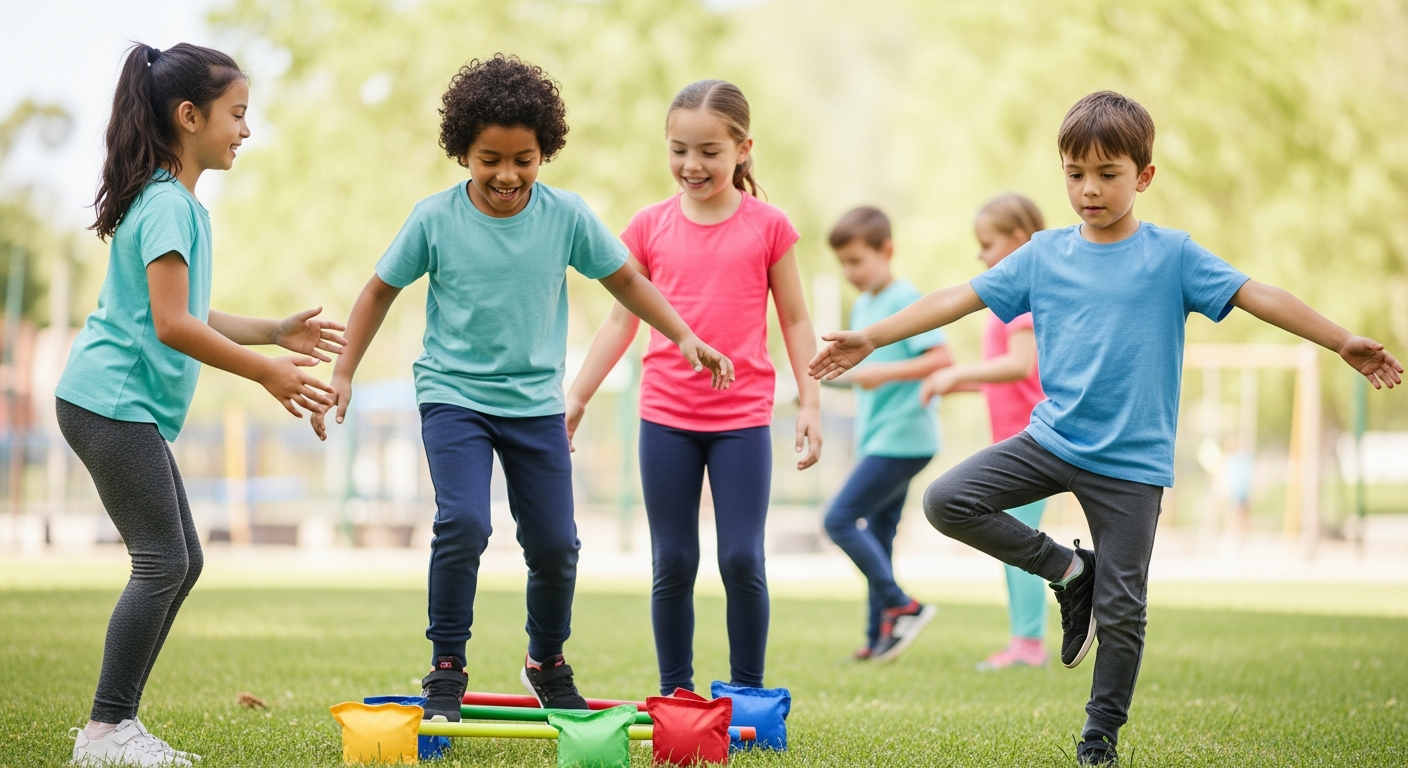
Table of Contents
- Introduction
- The Power of Play: Why Movement Matters for Every Child
- Fun Fitness Activities for Every Age
- Making the Connection: Integrating Movement and Communication
- Speech Blubs: Your Partner in Joyful Development
- Conclusion
- FAQ
Do you ever feel like your children are bundles of endless energy, always ready to bounce off the walls (sometimes literally)? Or perhaps you worry that screen time is making them a little too sedentary? You’re not alone. In a world brimming with digital distractions, finding engaging ways to keep kids active can feel like a constant challenge. But what if we told you that getting your child moving isn't just about physical health, but also a powerful pathway to unlocking their full communication potential?
This blog post isn't just a list of fun fitness activities for kids; it’s a comprehensive guide to understanding why movement is so vital for holistic development, from strengthening muscles to sparking language. We'll explore a wide array of playful activities suitable for various age groups, demonstrating how you can seamlessly weave physical activity into daily routines, both indoors and out. More importantly, we’ll show you how purposeful play, whether it’s a game of animal charades or a simple obstacle course, creates rich opportunities for communication and learning. At Speech Blubs, we believe in empowering children to "speak their minds and hearts," and often, that journey begins with active bodies and curious minds.

Introduction
Imagine a child, eyes wide with excitement, mimicking a frog's hop or a bear's crawl across the living room floor. They're not just playing; they're developing crucial physical skills, building confidence, and, perhaps surprisingly, laying the groundwork for stronger communication. The connection between physical movement and language development is more profound than many realize. Gross motor skills – the big movements of the body – influence fine motor skills, which are essential for tasks like writing, feeding, and even the intricate movements of the mouth and tongue needed for clear speech. When children move their bodies, they engage their senses, learn about spatial relationships, and develop the coordination necessary for self-expression.
We understand the challenges parents face in encouraging active lifestyles. With busy schedules and the allure of screens, it’s easy for physical activity to take a backseat. Our mission at Speech Blubs was born from personal experience; our founders, who grew up with speech problems, created the very tool they wished they had. We are committed to providing an immediate, effective, and joyful solution for the 1 in 4 children who need speech support, blending scientific principles with play. This post aims to provide you with practical, fun fitness activities for kids that will not only get them moving but also create joyful, speech-rich moments for your entire family. You’ll discover how simple games can foster a love for communication, build confidence, reduce frustration, and develop key foundational skills, all while supporting your child's overall development.
The Power of Play: Why Movement Matters for Every Child
Physical activity is far more than just burning off energy; it's a cornerstone of a child's overall growth. The benefits extend across every facet of their development, creating a ripple effect that supports academic achievement, social skills, and emotional well-being.
Holistic Benefits of Physical Activity
- Physical Health: Regular movement strengthens muscles and bones, improves cardiovascular health, enhances coordination and balance, and helps maintain a healthy weight. These are foundational for lifelong well-being.
- Cognitive Development: Studies consistently show a link between physical activity and improved attention levels, concentration, memory, and problem-solving skills. When the body is active, the brain is primed for learning. Children who move more often perform better in school.
- Emotional Regulation: Movement is a natural stress reliever. It helps children manage their emotions, reduce anxiety, and can significantly improve mood. The sense of accomplishment from mastering a new physical challenge also boosts self-esteem and confidence.
- Social Skills: Many physical activities are inherently social, requiring children to cooperate, negotiate, share, and communicate with peers. Games teach them about turn-taking, fair play, and empathy.
- Language and Communication: This is where the magic truly happens, especially for us at Speech Blubs. Gross motor activities, like running and jumping, help develop body awareness and control. These large-scale movements provide a foundation for finer motor control, including the precise movements of the mouth and tongue needed for articulation. When children describe their actions, give instructions during a game, or imitate animal sounds while waddling like a penguin, they are actively building their vocabulary, understanding action verbs, and practicing speech in a natural, engaging context.
Speech Blubs: Encouraging Active Communication
At Speech Blubs, we embrace the idea of "smart screen time." This isn't about passive viewing; it's about engaging children in interactive experiences that stimulate communication. Our unique "video modeling" methodology allows children to learn by watching and imitating their peers, a powerful tool that leverages the brain's mirror neurons. While our app focuses on communication, we recognize that it thrives in an environment of holistic development. Pairing physical play with our app's exercises creates a rich, multi-sensory learning experience.

For example, a child learning about farm animals on Speech Blubs can then engage in "animal walk races," making the sounds they just learned while moving their body. This reinforces the connection between the word, the sound, and the physical action, deepening comprehension and encouraging expressive language. Our app is a powerful supplement, providing structured practice that can be integrated into your child's broader developmental plan, fostering a love for communication and building confidence step by step. If you're wondering if your child could benefit from a little extra support, take our quick 3-minute preliminary screener to get a simple assessment and a free 7-day trial.
Fun Fitness Activities for Every Age
We believe that getting kids moving should always be about play, not pressure. The key is to make it enjoyable and adaptable to your child's developmental stage and interests. Remember, adult co-play and support are crucial – children learn best when you join in the fun!
Toddlers & Preschoolers (Ages 1-4): Exploratory Movement and Sensory Fun
For the youngest adventurers, activities should be less structured, focusing on exploration, sensory input, and basic motor skills. These are perfect opportunities to build early language through imitation and description.
1. Animal Walk Races
- How to Play: Challenge your child to move like different animals. "Can you hop like a frog?" "Waddle like a penguin?" "Crawl like a bear?" Make animal sounds together as you move!
- Developmental Benefits: Enhances gross motor skills, coordination, imitation, body awareness. Encourages imaginative play and vocalization of animal sounds, action verbs, and descriptive words.
- Speech Blubs Connection: For a parent whose child loves animals, the 'Animal Kingdom' section on Speech Blubs offers a fun, motivating way to practice 'moo' and 'baa' sounds, or practice "roar" while pretending to be a lion. Then, take those sounds and put them into action with animal walks. This direct link between digital learning and physical play strengthens vocabulary and sound production.
2. Keep the Balloon Up!
- How to Play: Simply blow up a balloon and instruct your child to keep it from touching the floor using any part of their body. This can get hilariously rambunctious!
- Developmental Benefits: Improves visual tracking, hand-eye coordination, motor planning, and quick reactions. Builds body awareness and spatial reasoning.
- Language Opportunities: Use phrases like "Up, up, up!" "Don't let it touch!" "Hit it!" "Kick it!"
3. Dancing & Musical Freeze
- How to Play: Turn on some music and have a dance party! For musical freeze, when the music stops, everyone freezes in a pose.
- Developmental Benefits: Develops rhythm, coordination, balance, gross motor skills, and self-expression.
- Language Opportunities: Describe movements ("fast," "slow," "wiggle," "spin"), name body parts, or make silly sounds while dancing. Our app's 'Sing-Along' section provides songs with clear, repetitive lyrics that can be a great starting point for a family dance-off.
4. Balance Beam Fun
- How to Play: Use masking tape on the floor to create straight lines, zig-zags, or spirals. Challenge your child to walk along the line without stepping off.
- Developmental Benefits: Crucial for developing balance, coordination, and proprioception (awareness of one's body in space).
- Language Opportunities: Use directional words ("forward," "backward," "side-to-side"), descriptive words ("wobbly," "steady"), and action verbs ("walk," "tip-toe," "jump").
5. Sensory Bins
- How to Play: Fill a container with rice, beans, water beads, or sand, and add scoops, small toys, and cups. Let your child explore freely.
- Developmental Benefits: Stimulates multiple senses, develops fine motor skills, encourages imaginative play, and provides calming sensory input.
- Language Opportunities: Describe textures ("bumpy," "smooth," "gritty"), actions ("scoop," "pour," "bury"), and hidden objects. Sensory bins for toddlers: Our Favorite Ideas and Items is a great resource for getting started!
Early Elementary (Ages 5-8): Games, Imaginative Play, and Simple Challenges
At this age, children enjoy more structured games, imaginative scenarios, and activities that involve following rules and interacting with others.
1. Obstacle Courses (Indoor & Outdoor)
- How to Play: Use household items like pillows, blankets draped over chairs (tunnels), cushions (stepping stones), or masking tape (balance beams) indoors. Outdoors, use a ladder laid flat, hula hoops, or chalk lines. Have kids crawl, jump, climb, and weave through the course.
- Developmental Benefits: Boosts planning skills, problem-solving, gross motor coordination, balance, and sequencing.
- Language Opportunities: Give and follow multi-step instructions ("Crawl under the table, then jump over the pillow!"), use directional language, and describe actions.
- Relatable Scenario: For a child who struggles with multi-step directions, creating a simple obstacle course and narrating each step ("First, we crawl! Next, we jump!") can be incredibly helpful. You can reinforce these action words and sequencing with the 'Action Verbs' section in Speech Blubs, making the connection between the words and the physical tasks.
2. Simon Says
- How to Play: One person is "Simon." Children only follow commands that start with "Simon Says." If a command doesn't start with "Simon Says" and they follow it, they're out!
- Developmental Benefits: Excellent for listening skills, following instructions, impulse control, and body awareness.
- Language Opportunities: Teaches body parts, action verbs, and the importance of specific phrasing. This game directly supports auditory processing and executive functions, both crucial for communication.
3. Scavenger Hunts
- How to Play: Create a list (pictures for younger kids, words for older) of items to find around the house or yard. Set a timer for added excitement.
- Developmental Benefits: Enhances problem-solving, critical thinking, observation skills, and reading/picture recognition. Encourages sustained movement.
- Language Opportunities: Develops vocabulary related to objects, colors, and locations. Practice asking and answering questions ("Where is it?," "I found the red ball!").
4. Follow the Leader
- How to Play: One person leads, and everyone else copies their movements exactly. Change up the leader frequently.
- Developmental Benefits: Promotes imitation, coordination, observation skills, and gross motor development.
- Language Opportunities: Describe the leader's actions, use action verbs, and encourage participants to suggest new movements. Imitation is a fundamental skill that Speech Blubs harnesses with its video modeling, making this game a natural extension of our methodology.
5. Jumping Rope
- How to Play: Start with basic two-feet jumps, then try alternating feet, criss-cross, or jumping jacks while skipping.
- Developmental Benefits: Builds cardiovascular endurance, coordination, rhythm, and timing.
- Language Opportunities: Count jumps, give instructions, or sing jump rope rhymes.
6. Yoga Freeze Dance
- How to Play: Combine dancing with yoga poses. Play music and dance, then when the music stops, everyone strikes and holds a yoga pose (like tree pose or downward dog).
- Developmental Benefits: Develops balance, flexibility, strength, body awareness, and impulse control. It also teaches calming techniques through deep breathing.
- Language Opportunities: Learn the names of poses, describe how the body feels, and practice following instructions. Check out these fun animal yoga poses for kids for inspiration.
Older Elementary & Pre-Teens (Ages 9-12): Skill Building, Challenges, and Teamwork
At this stage, children are ready for more complex games that involve strategy, teamwork, and developing specific fitness skills. They can also focus on improving personal bests.
1. Relay Races
- How to Play: Divide into teams and set up a course with different actions (running, skipping, crab walking, jumping jacks, carrying an object). The first team to have all members complete the course wins.
- Developmental Benefits: Improves speed, agility, coordination, teamwork, and healthy competition.
- Language Opportunities: Encourage team communication, giving instructions, cheering, and discussing strategy. This is an excellent way to practice expressive language in a dynamic setting.
2. X-Circuit
- How to Play: Choose six different fitness activities (e.g., planks, lunges, pushups, jumping jacks, squats, burpees). Arrange markers in an "X" shape. Participants move through the circuit, completing reps at each station for a set time (e.g., 2 minutes).
- Developmental Benefits: Builds endurance, strength, and introduces structured exercise patterns. Teaches proper form and perseverance.
- Language Opportunities: Count repetitions, describe exercises, and encourage self-talk or peer encouragement.
3. Shuttle Runs with Variations
- How to Play: Place a single marker at a starting point and several markers 30 feet away. Run to pick up one marker, return to the start, and repeat until all markers are collected.
- Developmental Benefits: Boosts conditioning, agility, and develops various footwork patterns.
- Language Opportunities: Call out footwork patterns ("side shuffle," "grapevine," "backpedal"), count trips, and discuss strategy for speed.
4. Timed Scavenger Hunts with Exercises
- How to Play: Hide objects (e.g., tennis balls) around the house, each with a small paper detailing an exercise (e.g., "10 pushups," "20 jumping jacks"). Children find an object, complete the exercise, and bring the object to "home base" within a time limit.
- Developmental Benefits: Combines physical exertion with problem-solving and time management.
- Language Opportunities: Read exercise instructions aloud, describe movements, and report progress.
5. Fitness Challenges
- How to Play: Introduce specific challenges with bronze, silver, and gold targets. Examples include "The Plank Challenge," "Speed Bounce Challenge," or "Star Jumps Challenge." Children aim to beat their personal bests.
- Developmental Benefits: Fosters resilience, perseverance, goal-setting, and a "compete against yourself" mindset.
- Language Opportunities: Set goals, discuss progress, use numbers for counting, and encourage positive self-talk.
Making the Connection: Integrating Movement and Communication
The magic of these fun fitness activities for kids truly shines when you intentionally weave in communication. Every hop, skip, and jump is an opportunity for language.
- Narrate and Describe: As your child moves, describe what they are doing. "You're jumping so high!" "Look how fast you're running!" "You're crawling under the blanket." This models rich vocabulary and descriptive language.
- Action Verbs Galore: Physical activities are a goldmine for teaching action verbs. "Jump," "run," "throw," "catch," "crawl," "climb," "balance," "spin," "kick"—the list is endless. Emphasize these words as your child performs the actions. Speech Blubs has dedicated sections to Action Verbs that can be practiced on the app and then immediately applied during play.
- Give and Follow Instructions: Simple games like Simon Says or obstacle courses are perfect for practicing following single-step or multi-step directions. Encourage your child to give you instructions too, practicing their expressive language and turn-taking.
- Ask Open-Ended Questions: Instead of "Did you have fun?", try "What was your favorite part of the obstacle course?" or "What animal was the hardest to imitate?" This encourages more elaborate responses and critical thinking.
- Sound Effects and Imitation: Encourage animal sounds during animal walks, car sounds during a "driving" game, or "zoom!" as they run. Imitation is a core learning strategy, both in play and within the Speech Blubs app.
- Connect to Speech Blubs: For a parent whose child is working on specific sounds or words, like 'b' words, you could say "Big bounce!" during a trampoline session or "Let's build a bridge!" in an obstacle course. Then, when it’s screen time, transition to a relevant section in Speech Blubs, such as 'Early Sounds' or 'Rhyming Words', to reinforce those concepts. This creates a powerful, synergistic learning experience. Our scientific methodology, backed by extensive research, shows the effectiveness of this peer-to-peer modeling, and it truly shines when complemented by active, real-world practice.
Speech Blubs: Your Partner in Joyful Development
We believe in making learning fun and accessible for every child. At Speech Blubs, our mission is to empower children to "speak their minds and hearts," and we're dedicated to providing parents with effective, joyful, and immediate solutions. Our founders created the tool they wished they had growing up with speech challenges, blending scientific principles with play into one-of-a-kind "smart screen time" experiences. We offer a screen-free alternative to passive viewing (like cartoons) and a powerful tool for family connection, using our unique "video modeling" methodology where children learn by watching and imitating their peers.
We understand that every child's journey is unique, and while we don't promise guaranteed outcomes, we are committed to fostering a love for communication, building confidence, reducing frustration, and developing key foundational skills. Our app is designed to create joyful family learning moments and serve as a powerful supplement to a child's overall development plan and, when applicable, professional therapy. Don't just take our word for it, see what other parents are saying about their child's success with Speech Blubs.
We want to make this incredible resource available to as many families as possible. That's why we offer transparent and flexible pricing options:
- Monthly Plan: For just $14.99 per month, you get access to all the core Speech Blubs features.
- Yearly Plan: This is our best value option at $59.99 per year. This breaks down to just $4.99 per month, allowing you to save 66% compared to the monthly plan!
But the savings aren't the only benefit of the Yearly plan. It also includes exclusive, high-value features designed to supercharge your child's learning journey:
- A 7-day free trial: Experience the full power of Speech Blubs before committing.
- The extra Reading Blubs app: Double the fun, double the learning!
- Early access to new updates: Be the first to enjoy our latest features and improvements.
- 24-hour support response time: Get your questions answered quickly and efficiently.
The Monthly plan, while flexible, does not include these valuable benefits. We strongly encourage you to choose the Yearly plan to unlock the free trial and the complete suite of features that support your child's holistic development.
Conclusion
The journey of childhood is one of constant discovery, and movement is often the first language children learn. From the simplest wobble of a toddler to the complex coordination of an older child mastering a relay race, physical activity profoundly impacts every area of development, including communication. By incorporating these fun fitness activities for kids into your daily routine, you're not just creating active bodies; you're nurturing curious minds, building confidence, and laying a strong foundation for a child who is ready to speak their mind and heart.
Remember, the goal isn't perfection, but consistent, joyful engagement. Every hop, skip, and playful sound you make together is a step forward. And when you're looking for an immediate, effective, and joyful solution to support your child's speech and language development, we are here to help.
Ready to see the incredible difference that intentional, playful learning can make? Take the first step today! We encourage you to start your 7-day free trial and experience the full benefits of our app. To get started and unlock the best value, choose the Yearly plan and gain access to the full suite of features, including Reading Blubs and priority support.
Download Speech Blubs on the App Store or Google Play to begin your child's journey to confident communication. If you prefer to sign up via our website, create your account and begin your 7-day free trial today! Let's move, play, and grow together!
FAQ
Q1: How much physical activity do children need each day?
A1: Experts recommend that children aged 3-5 years should be active throughout the day, while those aged 6-17 years should aim for at least 60 minutes or more of moderate-to-vigorous intensity physical activity daily. This can be broken into short bursts throughout the day rather than one long session.
Q2: My child is more interested in screens than playing outside. How can I encourage them to be more active?
A2: Make it fun and involve yourself! Children are more likely to engage in activities if their parents participate. Try turning everyday tasks into games, like racing to tidy up or having a dance party. Incorporate "smart screen time" with apps like Speech Blubs that promote interaction and then extend that learning into physical play. Gradually introduce outdoor activities, even short walks or trips to the park, and emphasize it as "play" rather than "exercise."
Q3: What if my child isn't very coordinated or athletic?
A3: That's perfectly fine! The goal isn't to create Olympic athletes, but to foster a love for movement and build foundational skills. Start with simple, non-competitive activities like animal walks, dancing, or building an indoor obstacle course. Focus on participation and enjoyment rather than performance. Many activities, like yoga or balance games, can significantly improve coordination over time without high-pressure competition.
Q4: How does Speech Blubs connect with physical activities?
A4: Speech Blubs complements physical activities by reinforcing language and communication skills in a structured and engaging way. For instance, after doing animal walks and making sounds, you can practice those same animal sounds and words in our app. Our video modeling helps children learn action verbs, descriptive words, and expressive language that can then be immediately applied and practiced during active play. This holistic approach supports both gross motor development and communication, creating a rich, multi-sensory learning environment. Explore our homepage for more insights into our approach.
About the author