
Playful Hands: Fun Fine Motor Activities for Kids
 By Speech Blubs Team•Jan 13, 2026•20 min.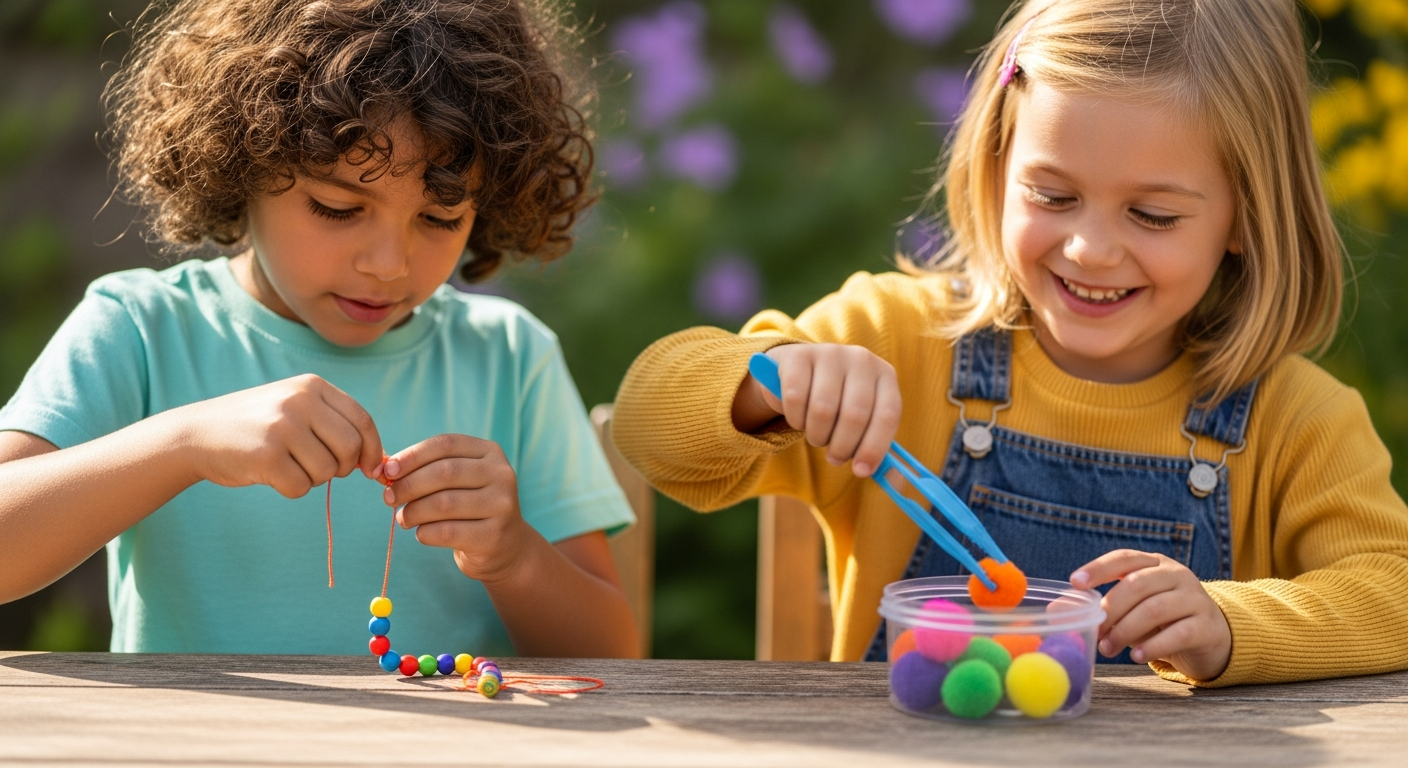
Table of Contents
- Introduction
- What Are Fine Motor Skills and Why Are They So Important?
- The Power of Play: Making Learning Enjoyable
- Engaging Fine Motor Activities for Kids
- Integrating Fine Motor Skills with Speech and Language Development
- Recognizing When Professional Support Might Be Needed
- Making Speech Blubs Part of Your Child's Journey
- Conclusion
- Frequently Asked Questions (FAQ)
Have you ever stopped to think about the incredible coordination required for your child to simply pick up a tiny Lego brick, hold a crayon, or even form the words to tell you about their day? These seemingly small actions are all powered by fine motor skills – the intricate dance of the small muscles in their hands, fingers, and even their mouths. Without well-developed fine motor skills, children can face challenges in everything from self-care to academic success and, critically, clear communication. This post will dive deep into why these skills are so vital, offering a wealth of fun and engaging activities you can easily incorporate into your child's daily routine. We’ll explore how these playful moments build foundational strength and dexterity, and we’ll also discover how these skills are intimately connected to speech development, empowering children to speak their minds and hearts.

Introduction
Imagine a world where the simplest tasks feel overwhelmingly complex – buttoning a shirt, holding a fork, or drawing a picture. For many children, this can be their reality if fine motor skills aren't adequately developed. These crucial abilities, involving the coordination of small muscles, are more than just about dexterity; they are fundamental building blocks for independence, learning, and self-expression. In fact, a significant aspect of speech and language development also relies heavily on precise fine motor control of the oral structures – the tongue, lips, and jaw.
At Speech Blubs, we understand this intricate connection. Our mission, born from the personal experiences of our founders who faced speech challenges themselves, is to empower every child to "speak their minds and hearts." We believe in providing an immediate, effective, and joyful solution for the 1 in 4 children who need speech support. This post will guide you through a diverse array of engaging fine motor activities that not only strengthen little hands but also lay a powerful foundation for clearer communication. Get ready to transform everyday play into opportunities for growth, confidence, and connection, all designed to foster a lifelong love for learning and self-expression.
What Are Fine Motor Skills and Why Are They So Important?
Fine motor skills refer to the coordination of small muscles in conjunction with the eyes. They involve the synchronized use of hands and fingers with the eyes, enabling precise and controlled movements. While often associated with the hands, fine motor skills also extend to the muscles of the face, mouth, and tongue, which are critical for eating, making facial expressions, and, of course, speech.
These skills are indispensable for a child’s overall development and daily functioning. Think about it:
- Self-Care: Dressing (buttoning, zipping, tying laces), feeding themselves (holding utensils, bringing food to mouth), and personal hygiene all rely on fine motor precision.
- Academics: Handwriting, drawing, cutting with scissors, turning pages, and using a computer mouse are direct applications of fine motor control that directly impact school readiness and performance.
- Play and Creativity: Building with blocks, playing with dolls, doing crafts, and manipulating small toys all require dexterity, fostering imagination and problem-solving.
- Communication: This is where the connection becomes especially profound. The intricate movements of the tongue, lips, and jaw required for articulation – forming specific sounds and words – are a form of oral fine motor skill. Without this precise control, children may struggle with clarity in speech, leading to frustration for both them and their caregivers.
Developing strong fine motor skills builds confidence, reduces frustration, and sets a child up for success in numerous aspects of life. It’s about more than just doing tasks; it's about gaining independence and the ability to express oneself fully. For a deeper understanding of our approach to child development, visit our Speech Blubs homepage.

The Power of Play: Making Learning Enjoyable
Children are natural explorers and learners, and play is their primary vehicle for discovery. When fine motor activities are presented as fun games rather than chores, children are far more likely to engage, persist, and develop these crucial skills without even realizing they're "working." The key is to embrace their curiosity, encourage experimentation, and always provide a supportive, interactive environment where adult co-play is encouraged. Remember, the goal isn't perfection, but progress, confidence, and joyful learning moments.
Integrating fine motor practice into everyday routines and playtime makes it a natural part of their day. Whether it’s helping set the table, engaging in a craft, or playing a board game, these seemingly simple interactions accumulate to create a strong foundation. Let’s explore some fantastic categories of activities that will get those little hands and mouths ready for anything!
Engaging Fine Motor Activities for Kids
Here’s a comprehensive list of fun and effective fine motor activities, categorized to help you focus on different aspects of development. Remember to supervise children, especially with small items.
Activities for Everyday Dexterity and Precision
These activities focus on developing the pincer grasp (using the thumb and index finger), hand-eye coordination, and the ability to make small, controlled movements.
- Peeling and Placing Stickers: This simple yet powerful activity is fantastic for developing the pincer grasp. Place stickers on your child’s hand, clothing, or a piece of paper. The act of peeling them off requires precise finger movements. For an added challenge, draw circles or shapes on a paper and have your child place the stickers exactly within the targets.
- Relatable Scenario: For a parent whose child struggles with fastening small buttons or manipulating small toy pieces, practicing sticker peeling directly builds the same pincer grasp and visual-motor coordination skills needed. It’s a low-pressure way to mimic the dexterity required for daily tasks.
- Stringing Beads, Pasta, or Cereal: Start with larger, chunky beads or pieces of dry rigatoni pasta, and thick string or pipe cleaners. As your child's skills improve, gradually introduce smaller beads and thinner string. This activity significantly boosts hand-eye coordination, bilateral integration (using both hands together), and concentration.
- Tip: Threading Cheerios onto uncooked spaghetti can be a fun twist for little ones, requiring careful handling.
- Placing Coins in a Piggy Bank: This classic activity encourages the use of a pincer grasp as children pick up coins and requires visual motor coordination to orient them correctly into the slot. You can increase the challenge by asking them to sort and stack coins by size before placing them, enhancing precision and visual perceptual skills.
- Mazes and Tracing Activities: Whether with a finger or a pencil, tracing mazes improves hand-eye coordination and visual-motor integration. Drawing lines to connect dots or following a printed maze requires careful, controlled movements. You can find free printable mazes online for various age groups.
- Perler Beads and Pegboards: Placing tiny Perler beads onto a pegboard requires immense precision and finger control, making it excellent preparation for developing a mature pencil grasp. Pegboards, especially those with small pegs, also strengthen grasp and visual-motor skills while encouraging pattern recognition and creativity.
- Puzzles: Puzzles are not just about problem-solving; they are fantastic for fine motor precision. Handling and manipulating small puzzle pieces, rotating them, and fitting them into the correct spots strengthens finger muscles and improves spatial reasoning. Start with knobbed puzzles for toddlers and progress to interlocking jigsaw puzzles.
Activities for Hand and Finger Strength
These activities focus on building the muscle strength in the hands and fingers necessary for tasks like writing, cutting, and grasping.
- Ripping or Crumpling Paper: Provide different types of paper (newspaper, construction paper, tissue paper) and encourage your child to rip it into small pieces or crumple it into balls. This bimanual activity strengthens the small muscles of the hand and promotes the bimanual use required for tasks like unsnapping a jacket. The resistance of the paper provides a great workout.
- Using Clothespins: Clothespins are incredibly versatile. Have your child attach them to the edges of a board book to make "legs" for characters, or clip them onto the rim of a basket. A fun variation is to attach clothespins to your child’s clothing and have them find and remove them. The squeezing action of opening and closing clothespins is a powerful precursor to the motion and strength required for using scissors and developing a mature pencil grasp.
- Playdough, Clay, or Therapy Putty: This is a classic for a reason! Squeezing, rolling, flattening, pinching, and shaping dough helps develop hand and finger strength. You can hide small objects like coins or beads inside the putty for an added challenge, requiring more precise finger manipulation to retrieve them.
- Relatable Scenario: A child who struggles to hold a pencil with sufficient pressure or endurance might benefit significantly from regular playdough sessions. The resistive feedback strengthens the same muscles needed for a sustained, functional grip on writing tools.
- Using Syringes, Eye Droppers, or Squirt Bottles: For art projects or water play, squeezing these tools to transfer liquids (colored water, paint) is excellent for building hand strength and finger control. Painting with a squirt bottle or squirting down a tower of cups adds a fun, dynamic element.
- Picking Up Items with Tweezers, Tongs, or Clothespins: Set up a sorting activity where your child uses tweezers, kitchen tongs, or a clothespin to pick up small objects (cotton balls, pom-poms, beads) and transfer them into different containers. This strengthens the pincer grip and improves coordination and precision.
- Using a Hole Puncher: Punching holes in paper, especially cardstock, requires a surprising amount of force and precision, making it a great activity for developing hand strength and coordination.
- Building with LEGOs™: Snapping Lego bricks together and pulling them apart builds significant fine motor strength in the fingers and hands. The different sizes and connections offer varying levels of resistance, providing a progressive challenge. Building also enhances spatial awareness and creative problem-solving.
Activities for Bilateral Coordination and Isolation
These activities encourage both hands to work together (bilateral coordination) or focus on the independent movement of individual fingers (finger isolation).
- Sewing and Lacing Cards: These cards, often made of sturdy cardboard with holes punched along the edges, allow children to lace string or yarn through them. This activity promotes bilateral coordination (one hand holds the card, the other threads the lace) and improves concentration. Start with larger holes and thicker laces.
- Origami: Folding paper into various shapes requires fine finger dexterity, precise creasing, and excellent bilateral coordination. Even simple folds can provide a great fine motor workout and foster patience.
- Pick Up Sticks: This classic game challenges children to carefully pick up one stick at a time without disturbing the others. Encourage specific finger isolation by asking them to use their index finger and thumb, then middle finger and thumb, and so on.
- Playing Musical Instruments: Many instruments, especially those involving keys, strings, or specific hand placements, are excellent for bilateral coordination and fine motor precision. A toy piano, ukulele, or even simple shakers and drums that require precise gripping and striking can be beneficial. Learning an instrument can dramatically improve coordination as both hands often perform different, complex actions simultaneously.
- Braiding Hair or Yarn: Braiding requires a high degree of bilateral coordination, finger isolation, and repetitive practice. Starting with thick yarn or even doll hair can be a great way to learn the intricate movements of sectioning, holding, and weaving.
Creative and Sensory Play for Fine Motor Development
These activities leverage sensory input and creativity to make fine motor practice engaging and multi-faceted.
- Sidewalk Chalk and Finger Painting: Drawing with sidewalk chalk on a large surface or finger painting allows for large, sweeping movements that strengthen hand and finger muscles. As children gain control, they can refine their strokes, improving coordination. Finger painting also provides rich sensory input.
- Sensory Bins: Fill a bin with dried rice, beans, pasta, or sand, and hide small toys or objects within. Provide scoopers, small cups, and tweezers. Children can use their fingers or tools to search for and retrieve objects, enhancing fine motor control and sensory processing. This encourages exploring different textures and developing a delicate touch.
- Popping Bubbles: An ultimate child favorite, bubbles are a simple way to add fine motor fun. Blowing bubbles requires oral motor control, and then having your child visually track and pop them encourages finger isolation (poking with one finger), pincer grasp (pinching with two fingers), or whole-hand grasping.
- Coloring and Painting: Learning to hold different mediums (crayons, markers, paintbrushes) and applying appropriate pressure is essential for fine motor development. Coloring within lines improves precision and control, while painting with various brushes enhances wrist and finger movements.
- Food Decorating: Involving your child in decorating food is highly motivating. Whether it's arranging fruit on pancakes, spreading frosting on cookies, or placing pepperoni on a mini-pizza, these activities require picking up small objects, squeezing (from an icing bag), and strategic placement, all while engaging their senses of taste and smell.
Fun Fine Motor Games for Kids
Games often disguise learning as pure fun, making them excellent tools for developing fine motor skills.
- Board Games: Many board games require precise fine motor movements.
- Connect 4: Sticking disks into specific slots.
- Jenga: Carefully extracting and replacing blocks, demanding a steady hand and precise touch.
- Dominos: Setting up a long trail requires meticulous placement and a very careful hand to avoid premature collapse.
- Operation: Using tweezers to "operate" on the patient without touching the sides.
- Lite-Brite™: Placing tiny pegs into holes, strengthening finger precision and promoting creativity.
- Relatable Scenario: For a child who thrives on competitive play, Jenga offers an exciting way to practice hand steadiness and strategic thinking, directly translating to better control in other fine motor tasks.
- Sorting Games: Beyond sorting coins or beads, you can use colorful candies (Skittles, M&Ms), small buttons, or LEGO pieces. Provide an ice cube tray or small bowls for sorting by color, size, or shape. This activity develops hand and finger strength, pincer grasp, and visual discrimination.
Integrating Fine Motor Skills with Speech and Language Development
The connection between fine motor skills and speech development is more direct than many parents realize. Articulation, or the clear production of speech sounds, relies on incredibly precise and coordinated movements of the oral motor muscles – the lips, tongue, jaw, and soft palate. These are, in essence, fine motor skills of the mouth.
Consider these links:
- Oral Motor Control: Just as a child needs dexterity to manipulate a crayon, they need fine motor control of their tongue to produce sounds like /l/ or /r/, and lip closure for /p/, /b/, /m/. Weakness or lack of coordination in these muscles can lead to speech sound errors or difficulties with feeding (chewing, swallowing).
- Hand-Eye Coordination: Activities that build hand-eye coordination also train the brain's ability to coordinate sensory input with motor output. This translates to the visual and auditory processing needed to imitate speech sounds and mouth movements.
- Engagement and Attention: Fun fine motor activities improve a child's ability to focus and sustain attention on a task. This improved attention span is crucial when practicing speech sounds or engaging in language-rich activities.
At Speech Blubs, we leverage this understanding by making communication development a joyful and interactive experience. Our unique "video modeling" methodology, backed by science, shows children real kids speaking words and sounds. Children learn by watching and imitating their peers, directly engaging their mirror neurons and facilitating motor planning for speech. This isn't passive screen time; it's "smart screen time" that actively builds complex communication skills, complementing the fine motor work you do with hands-on activities. Our tool was created by founders who themselves experienced speech challenges, so we truly understand the journey and are committed to helping children speak their minds and hearts.
We provide a screen-free alternative to passive viewing (like cartoons) and a powerful tool for family connection, where parents can actively participate in their child's learning journey. Many parents have seen remarkable progress. See what other parents are saying about their child's success with Speech Blubs and discover how our app helps bridge the gap between fine motor development and confident communication. Our method is backed by extensive research, placing us in the top tier of speech apps worldwide. You can explore the research behind our innovative approach here.
Recognizing When Professional Support Might Be Needed
While engaging in fun fine motor activities at home is incredibly beneficial, it’s also important to be aware of developmental milestones. If you notice your child consistently struggling with tasks appropriate for their age, such as difficulty holding a crayon, using scissors, buttoning clothes, or if their speech is unclear compared to peers, it might be helpful to seek professional advice. Early intervention can make a significant difference.
If you’re unsure whether your child could benefit from additional support in their communication journey, we offer a valuable first step. Take our quick 3-minute preliminary screener to get a simple assessment and a personalized next-steps plan. It involves just 9 simple questions and can provide clarity and guidance, leading you directly to a free 7-day trial of our app if appropriate.
Making Speech Blubs Part of Your Child's Journey
At Speech Blubs, we are committed to providing an effective and joyful solution for children needing speech support, blending scientific principles with play. Our app is designed to be a powerful supplement to your child's overall development plan and, when applicable, professional therapy. By combining hands-on fine motor activities with our engaging "smart screen time" experiences, you're giving your child a comprehensive toolkit for growth.
We believe every child deserves the chance to communicate confidently. Our app empowers them to develop critical oral motor skills and build a love for communication, reducing frustration and creating joyful family learning moments.
Ready to see the difference Speech Blubs can make? We offer flexible plans to fit your family's needs:
- Monthly Plan: For $14.99 per month, you can access our core features and begin your child’s speech journey.
- Yearly Plan: For just $59.99 per year, you save a significant 66% compared to the monthly plan, breaking down to an incredible value of only $4.99 per month! This plan is designed to give you the most comprehensive and beneficial experience.
Why choose the Yearly Plan? It's not just about saving money; it’s about unlocking the full potential of Speech Blubs. The Yearly plan includes:
- A 7-day free trial so you can experience the magic before committing.
- Access to the extra Reading Blubs app, further enhancing your child's literacy development.
- Early access to new updates and a dedicated 24-hour support response time, ensuring you always have the best experience and assistance.
The Monthly plan does not include these exclusive, high-value benefits. We strongly encourage you to choose the Yearly plan to get your free trial and the complete suite of features designed to support your child's success.
To begin your child's journey with confidence and joy, download Speech Blubs today.
Alternatively, you can create your account and begin your 7-day free trial today on our website, ensuring you select the Yearly plan to unlock all the benefits!
Conclusion
Developing strong fine motor skills is a cornerstone of a child's growth, empowering them with independence, academic readiness, and the crucial ability to communicate effectively. From the simple act of peeling a sticker to the complex coordination of speech articulation, every small muscle movement contributes to their overall development. By transforming everyday interactions into fun, engaging activities, you’re not just building dexterity; you’re fostering confidence, reducing frustration, and creating invaluable bonding moments.
Remember, the journey of development is unique for every child. Consistent, playful practice, combined with tools designed to support their progress, can make a world of difference. Speech Blubs is here to support you every step of the way, offering a scientifically-backed, joyful solution that complements these hands-on activities. Our commitment is to help your child speak their minds and hearts, creating a future filled with confident communication and joyful connections.
Don't wait to give your child the gift of confident communication and refined fine motor skills. Take the first step today! We encourage you to start your 7-day free trial by downloading the Speech Blubs app from the App Store or Google Play. When signing up, remember to choose the Yearly plan to unlock the free trial, the Reading Blubs app, early updates, and 24-hour support – the best value for your child's developmental journey!
Frequently Asked Questions (FAQ)
Q1: What exactly are fine motor skills, and why are they so crucial for my child?
Fine motor skills involve the coordination of small muscles, primarily in the hands, fingers, and even the mouth, often with eye coordination. They are crucial because they underpin almost every daily activity: from dressing and feeding oneself to writing, drawing, and playing. Strong fine motor skills build a child's independence, support academic success, and are fundamental for clear speech and communication.
Q2: How do fine motor activities directly relate to my child's speech development?
The connection is very direct! Articulation, the ability to produce clear speech sounds, relies heavily on oral motor skills – which are a specialized form of fine motor skills. Precise control of the lips, tongue, and jaw is essential for forming words correctly. Activities that enhance general fine motor control can also indirectly support oral motor development by improving overall muscle coordination and motor planning, while targeted practice of mouth movements directly impacts speech clarity.
Q3: How often should we be doing these fine motor activities with our child?
Consistency is key, but it doesn't have to feel like a chore! Integrate these activities into your child's daily routine through play. Aim for several short, engaging sessions throughout the day rather than one long, forced one. For example, include a fine motor activity during playtime, meal prep, or even bathtime. The goal is joyful, consistent engagement, often with adult co-play and support, to foster a love for communication and build foundational skills naturally.
Q4: How can Speech Blubs further assist in developing these skills and communication?
Speech Blubs offers a unique "smart screen time" experience that complements hands-on fine motor activities. Our app uses a video modeling methodology, where children imitate real peers, engaging mirror neurons to develop crucial oral motor skills for speech. It’s an interactive, joyful, and scientifically-backed tool for speech and language development, designed by founders who overcame speech problems. By making speech practice engaging, Speech Blubs empowers children to speak their minds and hearts, building confidence and reducing frustration, and creating powerful family learning moments. We highly recommend our Yearly Plan, which includes a 7-day free trial and additional features like the Reading Blubs app, to give your child the most comprehensive support.
About the author