
Playful Learning: Educational Fun Games for Kids
 By Speech Blubs Team•Jan 19, 2026•17 min.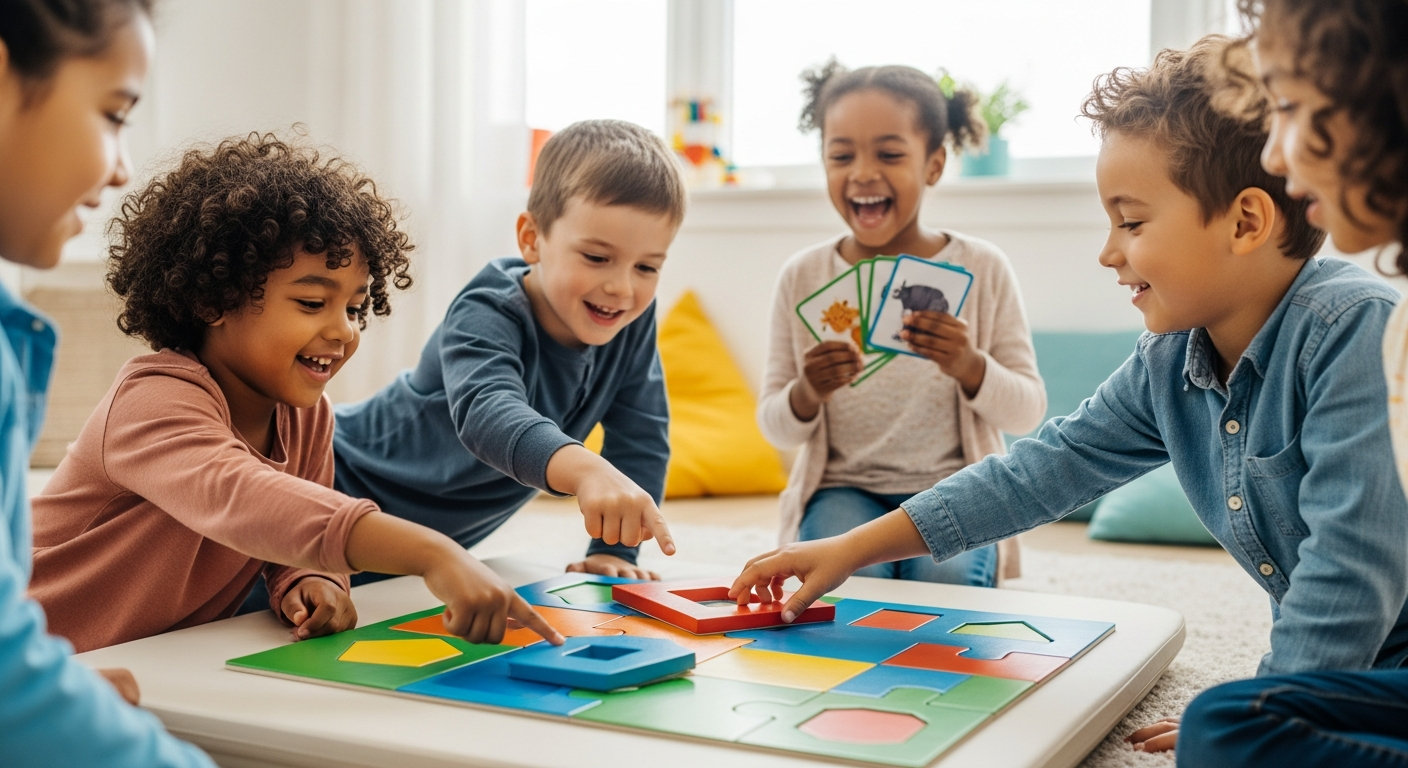
Table of Contents
- Introduction
- The Profound Power of Play-Based Learning
- The Transformative Potential of "Smart Screen Time"
- Educational Fun Games for Language & Communication
- Educational Fun Games for Math & Logic
- Educational Fun Games for Creativity & Social-Emotional Growth
- Integrating Play into Daily Routines
- Finding the Right Fit for Your Family: Investing in Joyful Communication
- Conclusion
- FAQ
Do you ever find yourself wishing learning could be less of a chore and more of an adventure for your child? Many parents share this sentiment, constantly seeking ways to spark curiosity and build essential skills without the pressure of traditional schooling. The truth is, learning doesn't have to be confined to textbooks or quiet study time. In fact, some of the most profound developmental leaps happen when children are completely absorbed in activities they genuinely enjoy. This post will dive deep into the world of educational fun games for kids, exploring how purposeful play can unlock incredible learning potential across various developmental areas. We'll discuss why integrating play into learning is crucial, how to choose the right activities, and how innovative tools, like our very own Speech Blubs app, are redefining "smart screen time" to make learning both effective and incredibly fun. Our main message is simple: joyful engagement is the secret ingredient to lasting learning and development.

Introduction
Imagine a child so engrossed in an activity that they don't even realize they're mastering new concepts, refining motor skills, or expanding their vocabulary. This isn't a fantasy; it's the reality of play-based learning. For generations, play has been the primary way children make sense of the world around them, experiment with ideas, and develop crucial social, emotional, and cognitive abilities. Yet, in our achievement-focused society, the value of pure, unadulterated fun can sometimes be overlooked in favor of more structured, academic pursuits. The challenge for many parents lies in bridging this gap: how do we ensure our children are learning effectively while still preserving the magic and joy of childhood?
This article aims to illuminate the powerful synergy between education and fun. We'll explore the scientific basis for why play is such an effective teacher and how it nurtates a lifelong love for learning. We’ll look at diverse categories of games—from classic board games to cutting-edge digital tools—that expertly blend entertainment with developmental benefits. You’ll discover strategies for integrating these playful learning opportunities into your daily routine, fostering not just academic growth, but also confidence, resilience, and creativity. We’ll also delve into how innovative platforms like Speech Blubs are transforming screen time into a dynamic, interactive, and highly beneficial learning experience, empowering children to communicate effectively and "speak their minds and hearts."
The Profound Power of Play-Based Learning
Play isn't just a leisure activity; it's a fundamental aspect of child development, as essential as nutrition and sleep. Through play, children naturally engage in active learning, problem-solving, and critical thinking.
Beyond Rote Memorization: The Depth of Play
Traditional learning often focuses on memorization and repetition, which can be effective for certain facts but rarely fosters a deep understanding or application of knowledge. Play, on the other hand, encourages experimentation and discovery. When a child plays a game that requires them to count items, they're not just reciting numbers; they're understanding quantity, one-to-one correspondence, and basic arithmetic in a tangible, meaningful context. This active engagement helps solidify concepts in a way that passive learning often cannot. It's about building neural pathways through experience, making learning stick and become truly integrated.

Developing Core Skills Through Fun
Educational games are powerful tools for developing a wide array of skills. Consider how a simple puzzle game can enhance fine motor skills, spatial reasoning, and problem-solving. Or how a pretend-play scenario can build language skills, empathy, and social negotiation. These are not isolated skills; they are foundational to a child's overall development, supporting their ability to learn, interact, and thrive in all aspects of life.
- Cognitive Skills: Games boost memory, attention span, logical thinking, and creativity.
- Language and Communication: From describing game pieces to negotiating rules, play is a natural language laboratory.
- Social-Emotional Skills: Learning to share, take turns, cope with losing, and celebrate winning teaches invaluable lessons in empathy, resilience, and cooperation.
- Physical Development: Many games involve movement, hand-eye coordination, and fine motor control.
The Joy of Discovery: Fueling Intrinsic Motivation
Perhaps the most significant benefit of fun educational games is the joy they bring. When children enjoy what they are doing, they are intrinsically motivated to continue, explore further, and tackle challenges. This intrinsic motivation is a far more powerful engine for learning than external rewards or pressure. It fosters a positive association with learning that can last a lifetime, encouraging children to become curious, lifelong learners who aren't afraid to try new things or make mistakes.
The Transformative Potential of "Smart Screen Time"
In today's digital age, screen time is an undeniable part of most children's lives. The key, however, isn't to eliminate screens entirely, but to transform passive consumption into active, "smart screen time" experiences that are genuinely educational and developmentally supportive.
Screen Time Redefined: Active vs. Passive Engagement
Not all screen time is created equal. Watching cartoons passively is vastly different from engaging with an interactive app that requires active participation, decision-making, and communication. "Smart screen time" focuses on high-quality, interactive digital experiences that challenge children, encourage interaction, and provide genuine learning opportunities. These tools can offer unique advantages, such as adaptive learning paths, immediate feedback, and access to a diverse range of learning materials.
Video Modeling: Learning from Peers
At Speech Blubs, we believe in the power of this "smart screen time" approach. Our app is built on a unique "video modeling" methodology, where children learn by watching and imitating their peers. This approach taps into children's natural inclination to observe and mimic, stimulating "mirror neurons" in the brain and making the learning process incredibly intuitive and effective. For example, a child who is just starting to articulate certain sounds can watch other children their age clearly pronounce words, providing a relatable and engaging model that professional adults cannot always replicate. This peer-to-peer interaction fosters a comfortable, non-intimidating learning environment.
This technique is a powerful screen-free alternative to passive viewing, making digital interaction a tool for active development. We're committed to providing an immediate, effective, and joyful solution for the 1 in 4 children who need speech support, blending scientific principles with play into one-of-a-kind "smart screen time" experiences. Our company was born from the personal experiences of our founders, who all grew up with speech problems and created the tool they wished they had—a testament to our mission to empower children to "speak their minds and hearts." You can learn more about the science behind our method on our research page.
Educational Fun Games for Language & Communication
Language development is a cornerstone of all learning, impacting everything from social interactions to academic success. Fun games can significantly boost vocabulary, articulation, storytelling abilities, and overall communication skills.
Building Vocabulary & Articulation: The Speech Blubs Way
Many children, especially those with speech delays, can become frustrated when they struggle to express themselves. Educational games offer a low-pressure environment for practice. For a parent whose 3-year-old 'late talker' loves animals but struggles with specific sounds, the "Animal Kingdom" section within Speech Blubs offers a fun, motivating way to practice "moo," "baa," and "roar" sounds. The video modeling shows other children making these sounds, encouraging imitation in a playful context.
Similarly, for a child working on their "s" sounds, interacting with the "Amazing Animals" section in the app provides engaging repetition and visual cues as they watch their peers articulate words like "snake" and "sun." This isn't just about making sounds; it's about building confidence and reducing the frustration often associated with speech challenges. We help foster a love for communication, one joyful interaction at a time.
Storytelling & Social Skills
Games that involve storytelling, role-playing, or charades are excellent for language development.
- Story Cubes: Dice with pictures that children roll and then use to create a narrative. This fosters imagination, sequencing, and expressive language.
- Puppet Play: Simple puppets can encourage shy children to vocalize and experiment with different voices and scenarios, building confidence in expressing thoughts and feelings.
- "I Spy" or "20 Questions": These classic games sharpen descriptive language skills, questioning abilities, and logical deduction.
These types of interactions are also fantastic for building social skills, as children learn to listen, respond, and adapt their communication based on others' cues.
Interactive Apps for Speech Development
Beyond general language games, dedicated apps like Speech Blubs provide targeted support. Our app offers thousands of expertly designed activities that cover a wide range of speech and language skills. From identifying objects to forming sentences, each activity is crafted to be engaging and effective. We focus on active learning, ensuring children are not just passively watching but actively participating, mimicking, and interacting. This approach makes learning to speak an exciting journey of discovery, not a daunting task. Download Speech Blubs on the App Store or Get Speech Blubs on Google Play to explore the possibilities.
Educational Fun Games for Math & Logic
Math and logic skills are critical for problem-solving and critical thinking in everyday life. Fun games can make these abstract concepts tangible and enjoyable.
Number Sense & Problem Solving
Many children struggle with math when it's presented as abstract formulas. Games can bring math to life.
- Board Games with Dice: Games like "Snakes and Ladders" or "Monopoly Junior" naturally integrate counting, number recognition, and simple addition.
- Card Games: Simple card games like "War" or "Go Fish" reinforce number comparison and matching. For older children, games like "Five Crowns" challenge them to organize numbers and strategize.
- "Shop" Pretend Play: Setting up a pretend shop and using play money teaches basic addition, subtraction, and understanding of value in a practical context.
These activities transform what might seem like tedious calculations into exciting challenges, building a strong foundation for future mathematical learning.
Strategic Thinking
Logic games are excellent for developing critical thinking, planning, and problem-solving skills.
- Puzzles: Jigsaw puzzles and brain teasers enhance spatial reasoning, pattern recognition, and focus.
- Strategy Board Games: Games like "Connect Four," "Checkers," or simplified versions of "Chess" teach children to think several steps ahead, anticipate an opponent's moves, and adapt their strategy.
- Coding Games (Digital): Age-appropriate coding games introduce foundational logical sequencing and computational thinking in a playful environment, teaching children how to break down complex problems into smaller, manageable steps.
These games teach children to analyze situations, make informed decisions, and understand consequences—skills vital far beyond the game board.
Educational Fun Games for Creativity & Social-Emotional Growth
Beyond academics, play is vital for nurturing a child's creativity and emotional intelligence.
Imaginative Play: Building Worlds and Empathy
Unstructured imaginative play is a powerful incubator for creativity.
- Dress-Up & Role-Playing: Allowing children to dress up and enact different roles helps them explore various perspectives, understand social norms, and develop empathy. A child pretending to be a doctor, a chef, or an astronaut is not just playing; they are practicing real-world scenarios, developing vocabulary related to these roles, and honing their problem-solving skills.
- Building Blocks & LEGOs: These classic toys encourage children to visualize, design, and construct, fostering spatial reasoning and problem-solving while allowing for endless creative expression.
- Art & Craft Activities: Providing open-ended art supplies encourages self-expression, fine motor development, and the joy of creating something unique.
These activities empower children to explore their inner worlds and translate their ideas into tangible forms, building confidence in their creative abilities.
Cooperation & Empathy
Many games, both structured and unstructured, offer opportunities to develop social and emotional skills.
- Cooperative Board Games: Games where players work together towards a common goal (rather than competing against each other) teach teamwork, communication, and shared problem-solving.
- Outdoor Group Games: Tag, hide-and-seek, or building a fort together all require negotiation, compromise, and understanding group dynamics.
- "Feelings Charades": Acting out different emotions helps children recognize and articulate their own feelings and understand the feelings of others, boosting emotional literacy.
These experiences are crucial for developing strong interpersonal skills, helping children navigate friendships, resolve conflicts, and become compassionate individuals.
Integrating Play into Daily Routines
Making learning fun isn't about scheduling more activities; it's about shifting perspective and incorporating playful moments into the everyday.
Family Game Nights: A Tradition of Togetherness
Designating a regular "family game night" creates a cherished tradition that combines learning with quality family time. This could involve anything from a simple card game to a more elaborate board game. The benefits extend beyond the specific skills learned in the game itself; it builds family bonds, creates lasting memories, and reinforces the idea that learning can be a shared, joyful experience.
Utilizing Educational Apps Effectively
Educational apps, like Speech Blubs, are powerful tools when used intentionally and with adult co-play and support. This means sitting with your child, engaging with the app together, and extending the learning beyond the screen. For instance, after practicing animal sounds in Speech Blubs, you might visit a zoo or read a book about those animals, reinforcing the vocabulary and concepts learned in the app. When choosing digital tools, look for those that:
- Are highly interactive and require active participation.
- Offer clear learning objectives.
- Provide positive reinforcement.
- Are free from distracting ads.
- Encourage collaboration or discussion with a caregiver.
Remember, the goal is "smart screen time" – purposeful, engaging, and balanced. If you're wondering if your child could benefit from a speech-focused app, take our quick 3-minute preliminary screener. It involves 9 simple questions and provides an assessment along with a next-steps plan.
Choosing the Right Tools
With so many options available, selecting the right educational games can feel overwhelming. Here are some tips:
- Consider Age-Appropriateness: Ensure the game's complexity matches your child's developmental stage.
- Focus on Interests: Children are more likely to engage with games that align with their passions (e.g., dinosaurs, outer space, princesses).
- Read Reviews: Look for feedback from other parents and educators.
- Balance Variety: Offer a mix of game types – physical, digital, cooperative, solo – to develop a wide range of skills.
- Observe and Adapt: Pay attention to how your child responds to different games and adjust your choices accordingly. What's "fun" for one child might not be for another.
Finding the Right Fit for Your Family: Investing in Joyful Communication
At Speech Blubs, we understand that every child's journey is unique, and supporting their development, especially in communication, is a top priority for parents. Our mission is clear: to empower children to "speak their minds and hearts" by providing an immediate, effective, and joyful solution for the 1 in 4 children who need speech support. We believe that learning to communicate should be an adventure filled with laughter and discovery, not stress or struggle.
Our Mission: Empowering Children
We created Speech Blubs from a deeply personal place. Our founders, having experienced speech challenges themselves as children, developed the tool they wished they had—a testament to our commitment to making a real difference. We blend scientific principles, like video modeling which leverages children's natural imitation abilities, with engaging play to create one-of-a-kind "smart screen time" experiences. This isn't just an app; it's a powerful tool for family connection, turning screen time into meaningful, interactive learning. Don't just take our word for it, see what other parents are saying about their child's success with Speech Blubs.
Affordable Access to Expert Support
We are transparent about our pricing because we believe in providing exceptional value to every family. Choosing the right plan means choosing the best for your child's communication journey.
- Monthly Plan: For $14.99 per month, you get access to our core features.
- Yearly Plan: At just $59.99 per year, this plan offers incredible value, breaking down to only $4.99 per month. This means you save 66% compared to the monthly plan!
Choosing Your Path: Monthly vs. Yearly
The Yearly plan isn't just more affordable; it's designed to give your child the most comprehensive and rewarding experience:
- 7-Day Free Trial: Only the Yearly plan includes a 7-day free trial, allowing you to experience the full potential of Speech Blubs before committing.
- Reading Blubs App: Get access to our additional Reading Blubs app, expanding your child's learning journey beyond speech to literacy.
- Early Access & 24-Hour Support: Yearly subscribers receive early access to new updates and a prioritized 24-hour response time for customer support, ensuring you always have the help you need.
The Monthly plan, while flexible, does not include these valuable extra features or the free trial. For the best value, the most features, and the chance to try it out risk-free, the Yearly plan is the clear best choice for your family.
Conclusion
The journey of childhood is one of constant discovery and growth. By embracing educational fun games, we can transform learning from a series of tasks into a vibrant tapestry of joyful experiences. Whether it's through a classic board game that teaches patience and strategy, imaginative play that fosters empathy, or innovative digital tools like Speech Blubs that enhance communication skills, the common thread is active engagement and the sheer delight of exploration. Remember, the goal isn't just to teach facts, but to cultivate a love for learning, build confidence, reduce frustration, and develop key foundational skills that will serve your child throughout their life.
We are dedicated to supporting families in this journey, providing tools that make learning to "speak their minds and hearts" an accessible and joyful reality for every child. We invite you to experience the transformative power of play-based learning and smart screen time.
Ready to empower your child with the gift of confident communication? Start your 7-day free trial today and unlock a world of fun and effective speech development. When you sign up, be sure to select the Yearly plan to get the free trial and access to all our exclusive features, including the Reading Blubs app and early updates, providing the best value and comprehensive support for your child's growth. Download Speech Blubs on the App Store or Get Speech Blubs on Google Play and begin your adventure!
FAQ
Q1: How do educational games help with a child's overall development? A1: Educational games contribute to holistic development by fostering cognitive skills (problem-solving, memory), language and communication, social-emotional skills (sharing, empathy), and even physical development (fine motor skills, coordination). They make learning engaging, encouraging children to explore, experiment, and build confidence in a fun, low-pressure environment.
Q2: What is "smart screen time" and how does Speech Blubs fit into it? A2: "Smart screen time" refers to high-quality, interactive digital experiences that promote active learning, as opposed to passive viewing. Speech Blubs embodies smart screen time by using a unique "video modeling" approach where children learn by watching and imitating their peers, actively participating in thousands of speech and language activities. This transforms screen engagement into a powerful, effective, and joyful learning tool, supported by scientific principles.
Q3: Is the Speech Blubs app suitable for children with specific speech challenges? A3: Yes, Speech Blubs is designed to support children with various speech and language needs, including late talkers, those with articulation difficulties, and children on the autism spectrum. Our methodology is backed by science and focuses on building foundational communication skills in an engaging way. While it's a powerful supplement, we always recommend consulting with a speech-language pathologist for personalized guidance if you have concerns about your child's development. Our quick 3-minute preliminary screener can also help you understand potential areas of need.
Q4: What's the best way to get started with Speech Blubs and what are the pricing options? A4: The best way to get started is by choosing our Yearly plan. This plan includes a 7-day free trial, giving you full access to all features. After the trial, it's just $59.99 per year (saving you 66% compared to the monthly cost of $14.99). The Yearly plan also includes the Reading Blubs app, early access to new updates, and 24-hour support response time. You can start your 7-day free trial by creating an account on our website or by downloading the app from the Apple App Store or Google Play Store.
About the author