
Playful Learning: Fun Kids Activity Ideas for Speech & Confidence
 By Speech Blubs Team•Jan 13, 2026•17 min.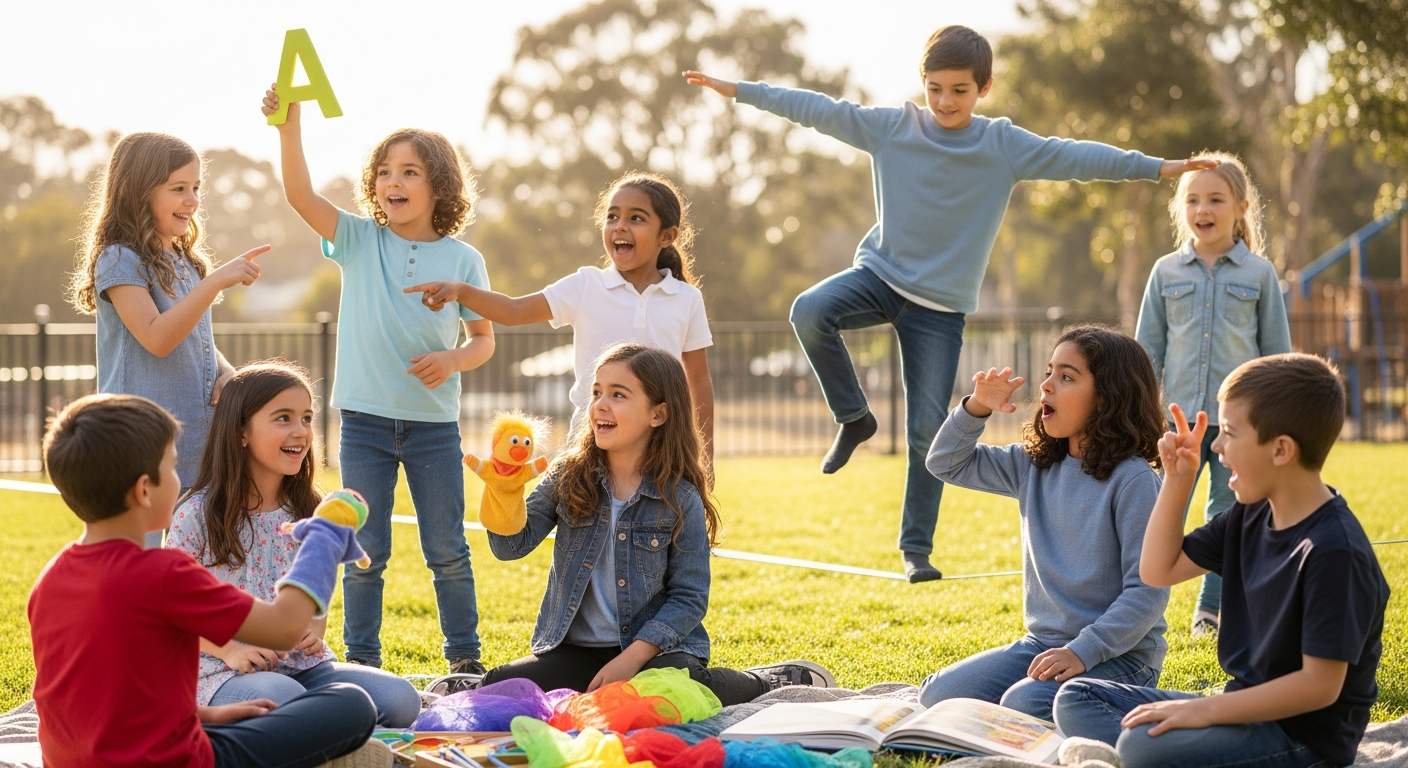
Table of Contents
- Introduction
- The Power of Play: More Than Just Fun
- Bringing the Outdoors In: Indoor Fun for All Ages
- Adventures Beyond the Home: Engaging Activities Out and About
- Hands-On Learning: Practical Activities for Development
- Smart Screen Time: A New Approach to Digital Engagement
- Maximizing Your Child's Potential with Speech Blubs
- Choosing the Right Path: Speech Blubs Pricing and Value
- The Role of Adult Support and Co-Play
- Conclusion
- FAQ
Introduction
Do you ever find yourself caught in the modern parent's dilemma: how to keep your children joyfully engaged, continuously learning, and developing crucial communication skills without simply defaulting to passive screen time? It’s a challenge many of us face, especially when the weather keeps us indoors or daily routines demand creativity. We all want to foster an environment where our kids thrive, not just pass the time.
This post isn't just another list of things to do; it’s an exploration into the profound power of play and purposeful engagement. We'll dive into a wealth of fun, interactive activities that not only entertain but also significantly support your child's developmental milestones, especially in speech and language. More importantly, we’ll show you how blending active, imaginative play with a new approach to "smart screen time" can be an absolute game-changer for your family. By embracing intentional, engaging activities – both off-screen and with innovative tools like Speech Blubs – we can create joyful, enriching learning environments that truly empower children to speak their minds and hearts.

The Power of Play: More Than Just Fun
At its core, play is a child’s natural language and their primary vehicle for learning. It's how they explore the world, test boundaries, understand social cues, and develop crucial cognitive, emotional, and physical skills. Far from being just a frivolous pastime, play is the engine of development, especially when it comes to communication.
When children engage in play, they are constantly practicing new words, experimenting with sounds, negotiating roles, expressing feelings, and following instructions. Whether they are building a towering fort, pretending to be a valiant knight, or creating a masterpiece with crayons, every interaction sparks a dialogue. This active participation fosters vocabulary growth, strengthens sentence structure, and enhances their ability to articulate thoughts and feelings. Engaging in play together also strengthens family bonds, creating shared experiences that become the foundation for richer conversations and deeper connections. It’s through these playful moments that children build the confidence to use their voice, reducing frustration and laying a strong foundation for future learning.
Bringing the Outdoors In: Indoor Fun for All Ages
When outdoor adventures aren't possible, transforming your indoor space into a hub of activity can be just as exciting and beneficial for development. These activities encourage creativity, problem-solving, and provide countless opportunities for communication.
Fort Building Extravaganza
There’s something universally magical about building a fort. Gathering blankets, pillows, and furniture to create a secret hideaway is an epic adventure. As your child negotiates which cushion makes the best wall or how to secure a roof with clothesline and clips, they are practicing spatial reasoning, planning, and collaborative language. Encourage them to describe their fort, assign roles ("You're the queen, I'm the guard!"), and tell stories within its cozy walls. This activity is a fantastic way to spark imaginative dialogue and build descriptive vocabulary.

Obstacle Course Challenges
Turn your living room or hallway into an epic obstacle course. Use pillows to jump over, tape on the floor as a "balance beam," crawl under chairs, or weave around toys. This activity hones gross motor skills and following multi-step directions. Talk through each step: "First, crawl under the table, then hop over the blue pillow, and finally, tiptoe around the tower!" This provides excellent practice for prepositions, sequencing, and expressive language.
Dance Parties and Movement Games
Sometimes, the best way to burn energy and boost spirits is a good old-fashioned dance party! Put on your child's favorite music and let loose. Encourage them to describe how the music makes them feel ("Happy! Bouncy!"), imitate different dance moves, or create their own. Games like "Follow the Leader" with movements or "Freeze Dance" are fantastic for developing listening skills, body awareness, and the ability to express themselves non-verbally and verbally.
Creative Arts & Crafts
A table laden with art supplies can unleash boundless creativity and serve as a powerful catalyst for communication.
- Painting and Drawing: Whether it's washable paints, chunky crayons, or colorful markers, providing materials for open-ended art encourages self-expression. Ask your child about their artwork: "Tell me about your red monster!" or "What's happening in this picture?" This promotes narrative skills and the use of descriptive adjectives.
- Play-Doh and Kinetic Sand: The tactile experience of molding, squishing, and shaping these materials offers a calming yet engaging activity. As they create, encourage them to describe what they are making, the textures, and the colors. "I'm making a long, squiggly snake!" or "This sand feels soft and bumpy." These sensory experiences naturally lead to rich vocabulary development.
- DIY Instruments: Create shakers from plastic bottles filled with rice or dry beans, or turn tissue boxes into guitars with rubber bands. Then, put on a family concert! This encourages cause-and-effect language ("When I shake it, it makes noise!"), auditory discrimination, and collaborative play.
Imaginative Play Worlds
- Dress-Up and Role-Playing: Raid the costume bin or use old clothes and scarves to transform into different characters. Pretend to be doctors, chefs, firefighters, or brave explorers. Role-playing allows children to experiment with different voices, practice social scripts, and explore new vocabulary related to various professions and scenarios.
- Puppet Shows: With simple sock puppets or paper bag characters, your child can create an entire world. Encourage them to invent characters, plotlines, and dialogue. This is excellent for developing storytelling skills, voice modulation, and expressing emotions through their puppets.
- Pretend Stores or Restaurants: Set up a mini grocery store with toy food or a restaurant with play-doh meals. Assign roles (shopper, cashier, chef, waiter) and practice social interactions, counting, and requesting items. "May I please have three apples?" or "What would you like for dinner?" These scenarios are fantastic for practicing polite language, making requests, and developing conversational turn-taking.
For a child who is particularly drawn to the magic of animals and imitation, our app offers a fantastic extension to this imaginative play. For example, in the "Animal Kingdom" section of Speech Blubs, children can watch real kids make animal sounds and actions, then imitate them. This unique video modeling approach, backed by scientific principles, leverages mirror neurons to make learning new sounds and words intuitive and engaging. It's a perfect way to reinforce vocabulary learned during imaginative play, like roaring like a lion or chirping like a bird.
Adventures Beyond the Home: Engaging Activities Out and About
Stepping out into the world, even just around your neighborhood, presents endless learning opportunities. These outings naturally spark curiosity and provide real-world contexts for communication.
Nature Walks and Scavenger Hunts
A simple walk can become a grand adventure. Head to a local park, nature trail, or even just around your block. Encourage your child to observe their surroundings. "What do you see?" "Can you hear the birds singing?" Engage them in a scavenger hunt: "Find something green," "Look for a smooth rock," or "Spot a dog." This builds observational skills and expands descriptive vocabulary related to nature, colors, and textures. You can even bring a magnifying glass to explore tiny details.
Library Trips and Bookstores
Libraries and bookstores are treasure troves for language development. Let your child choose books that interest them. Spend time browsing, pointing out covers, and discussing the stories. Reading aloud together is one of the most powerful ways to foster language skills, improve comprehension, and introduce new vocabulary. After a trip, discuss what you saw and read. "What was your favorite book today?" "Which character did you like the most?"
Exploring Community Places
Everyday errands can be transformed into engaging learning experiences.
- Pet Stores: Observing different animals provides a rich context for naming creatures, describing their features, and discussing animal sounds. Just remember to set expectations beforehand that you won't be bringing a new pet home!
- Grocery Stores: Involve your child in picking out items. "Can you find the red apples?" "We need milk and bread." This helps with categorization, counting, and following instructions.
- Local Museums or Aquariums: These places offer visual stimulation and new information. Talk about what you see: "Look at that giant dinosaur skeleton!" or "The fish are swimming so fast!" This exposure to new concepts and vocabulary is invaluable.
For parents who observe their child struggling with communication in social settings or needing support to articulate their experiences from these outings, our Preliminary Screener can be incredibly helpful. It's a quick 3-minute screener with just nine simple questions, designed to provide an assessment and a personalized next-steps plan. It’s a great first step if you’re unsure whether your child could benefit from targeted speech support.
Hands-On Learning: Practical Activities for Development
Practical, hands-on activities provide concrete learning experiences that build independence, fine motor skills, and functional language.
Cooking and Baking Together
Involving children in meal preparation is a fantastic way to teach sequencing, measurement, and new vocabulary. From washing vegetables to stirring batter, every step offers a chance to talk. "First, we crack the egg, then we mix it." "What does the flour feel like?" "We need two cups of milk." This activity is rich in imperative verbs, sensory descriptions, and following multi-step directions. Plus, the reward of eating what you’ve made is incredibly motivating!
Board Games and Card Games
Beyond mere entertainment, board games and card games are excellent tools for cognitive and social development. They teach turn-taking, problem-solving, strategic thinking, and emotional regulation (especially when losing!). Games like "Uno," "Candyland," or "Memory" encourage kids to follow rules, identify colors and numbers, and practice expressive language as they describe their moves or react to the game.
Simple Chores and Household Tasks
Even mundane chores can become learning opportunities. Cleaning up toys, sorting laundry, or wiping down counters involves following instructions, categorizing, and using action verbs. "Put the blocks in the basket." "Find all the blue shirts." This builds responsibility and vocabulary related to household items and actions.
Building with Blocks, Legos, or Cardboard Boxes
Constructing with various materials stimulates creativity and spatial reasoning. Provide open-ended materials and let their imagination soar. As they build, encourage them to describe their creations, explaining their choices and planning their next steps. "I'm building a tall tower for my princess," or "This big box will be a race car!" This strengthens descriptive language and narrative skills.
For a child who struggles to articulate their ideas or descriptions during these creative building sessions, Speech Blubs can act as a powerful reinforcement. For example, after building a "tall tower," you can explore vocabulary related to shapes, sizes, and architectural elements within the app's various categories, building upon their real-world experience.
Smart Screen Time: A New Approach to Digital Engagement
In a world where screens are ubiquitous, the debate often centers around limiting screen time. However, at Speech Blubs, we believe in transforming it. Our mission is to empower children to "speak their minds and hearts," and we do this by turning passive viewing into active, engaging, and educational "smart screen time."
Our company was born from the personal experiences of our founders, who all grew up with speech problems. They created the tool they wished they had – an immediate, effective, and joyful solution for the 1 in 4 children who need speech support. We achieve this by blending scientific principles with play, offering one-of-a-kind experiences that foster communication.
We specifically provide a screen-free alternative to passive viewing, like mindless cartoons, and a powerful tool for family connection. Our unique approach teaches complex communication skills through our "video modeling" methodology. Children learn by watching and imitating their peers, which is incredibly effective because it taps into their natural inclination to mimic others and leverages the power of mirror neurons in the brain.
Practical Scenarios with Speech Blubs:
- For the Animal Lover: Imagine a child fascinated by animals but struggling to make the sounds. Instead of just watching animal cartoons, with Speech Blubs, they can explore the "Animal Kingdom" section. Here, they'll see other children happily making sounds like "moo," "roar," and "quack." This video modeling makes imitation fun and approachable, building their confidence to produce these sounds themselves.
- Expressing Emotions: Many children, especially those with emerging language skills, find it difficult to articulate their feelings, leading to frustration. Our "When I Feel" section provides a safe space for them to learn about different emotions by watching peers demonstrate expressions and naming them. This helps children identify and verbally express feelings like "happy," "sad," or "angry," empowering them to communicate their internal world more effectively. Ready to see the difference? Download Speech Blubs on the App Store or Google Play Store to begin your family's journey.
- Building Foundational Vocabulary: For a 2-year-old "late talker" or a 4-year-old expanding their vocabulary, Speech Blubs offers rich categories like "Early Words," "Colors," or "Numbers." The interactive games and peer videos encourage active participation, helping them learn and practice new words in a playful, low-pressure environment. It transforms screen time into an opportunity for growth and family bonding. Create your account and begin your 7-day free trial today!
Maximizing Your Child's Potential with Speech Blubs
Our commitment at Speech Blubs is to provide an immediate, effective, and joyful solution for children’s speech and language needs. We’ve meticulously crafted our app to combine the rigorous principles of speech therapy with the engaging power of play. Our "smart screen time" isn't about passive consumption; it's about active engagement, imitation, and interaction.
The core of our methodology, video modeling, is rooted in scientific understanding. When children see other children performing a sound, word, or action, their brains activate mirror neurons, making imitation a natural and powerful learning tool. This makes complex communication skills more accessible and less intimidating. The result is a more confident child, a child who finds joy in expressing themselves, and a child whose frustration is significantly reduced as their ability to communicate grows.
We are proud of the positive impact we've had on families worldwide. Don't just take our word for it; see what other parents are saying about their child's success with Speech Blubs. Our app consistently receives high ratings and is recognized globally for its effectiveness and user-friendliness.
Choosing the Right Path: Speech Blubs Pricing and Value
We believe in transparency and making our powerful tool accessible to as many families as possible. When considering Speech Blubs, you have two flexible plan options:
- Monthly Plan: For just $14.99 per month, you get access to our core features, allowing your child to start their speech development journey.
- Yearly Plan: This is by far the best value! At $59.99 per year, it breaks down to just $4.99 per month, representing a fantastic 66% saving compared to the monthly plan.
The Yearly Plan isn't just cheaper; it's also packed with exclusive, high-value features designed to give your child the most comprehensive experience:
- A 7-day free trial: Experience the full power of Speech Blubs before committing.
- The extra Reading Blubs app: An incredible bonus to further enhance early literacy skills.
- Early access to new updates: Be the first to enjoy new features and content.
- 24-hour support response time: Get your questions answered quickly and efficiently.
The Monthly plan does not include these valuable benefits. We highly encourage you to choose the Yearly plan to unlock the 7-day free trial and gain access to the full suite of features that will truly accelerate your child's communication journey. It’s an investment in their future that offers unparalleled value and comprehensive support.
The Role of Adult Support and Co-Play
While Speech Blubs is a powerful, intuitive tool, it’s most effective when used as part of a collaborative learning experience. Our "smart screen time" is designed not to replace parent-child interaction but to enhance it. When your child engages with Speech Blubs, sitting alongside them, echoing sounds, asking questions, and celebrating their successes transforms the experience into a rich bonding opportunity.
Co-play means participating in the activity with your child, whether it's building a fort, baking cookies, or using the app. Ask open-ended questions like, "What did you learn in the Animal Kingdom today?" or "Can you show me your favorite word?" Your presence, encouragement, and active participation are invaluable, fostering a love for communication and strengthening the confidence they build within the app. Remember, Speech Blubs is a powerful supplement to your child's overall development plan and, when applicable, professional therapy, designed to create joyful family learning moments every step of the way.
Conclusion
From imaginative indoor adventures to exciting outdoor explorations, and from hands-on learning in the kitchen to engaging "smart screen time" with Speech Blubs, the world is full of fun kids activity ideas that foster speech, language, and confidence. The key is intentional engagement – turning every moment into an opportunity for connection and communication. These activities are more than just ways to fill time; they are building blocks for your child's verbal and emotional development, empowering them to express themselves fully and confidently.
At Speech Blubs, we are dedicated to providing the tools that help make this journey joyful and effective. Our unique video modeling methodology and commitment to blending scientific principles with play offer an unparalleled approach to supporting your child's communication skills.
Don't let another day pass by wondering if your child could benefit. Take the first step towards empowering your child to speak their minds and hearts. Create your account and begin your 7-day free trial today! Remember, for the best value and access to all premium features, including the extra Reading Blubs app and 24-hour support, choose our Yearly plan. You can also directly download Speech Blubs on the App Store or Google Play Store to get started immediately.
FAQ
Q1: How do "fun kids activities" specifically help with speech development?
A1: Fun kids activities are crucial for speech development because they create natural, engaging contexts for communication. When children play, they are constantly exposed to new vocabulary, practice making sounds, follow instructions, ask questions, and narrate their actions. Activities like imaginative play (e.g., dress-up, puppet shows), creative arts, and even simple chores provide opportunities to use language purposefully, enhancing vocabulary, sentence structure, and conversational skills in a low-pressure environment.
Q2: How is Speech Blubs different from other educational apps or cartoons?
A2: Speech Blubs stands out by transforming screen time into "smart screen time" through its unique video modeling methodology. Unlike passive cartoons, Speech Blubs actively engages children by having them watch and imitate real peers on screen. This taps into mirror neurons, making learning sounds, words, and concepts more intuitive and effective. We blend scientific principles with play, focusing on active participation to empower children to speak, rather than just passively consume content. It's designed as an interactive tool for learning and family connection, not just entertainment.
Q3: At what age is Speech Blubs most beneficial for children?
A3: Speech Blubs is designed to be beneficial for a wide range of ages, generally from toddlers (around 18 months) to early elementary school (up to 8-9 years old), depending on their individual developmental needs. We offer content that supports early word acquisition, articulation practice, vocabulary expansion, and even social-emotional learning. The app's flexibility means it can grow with your child, adapting to their evolving communication skills and offering targeted support where needed.
Q4: What are the key benefits of choosing the Yearly plan for Speech Blubs?
A4: Choosing the Yearly plan for Speech Blubs offers significant advantages beyond just saving 66% compared to the monthly plan. The Yearly plan, priced at $59.99 annually, includes a 7-day free trial, allowing you to experience the full app before committing. You also gain access to our extra Reading Blubs app, early access to new updates, and a prompt 24-hour support response time. These exclusive features provide a more comprehensive and supported journey for your child's speech and language development, making it the clear best choice for families.
About the author