
Playful Plates: Fun Food Games for Kids and Growing Minds
 By Speech Blubs Team•Jan 19, 2026•20 min.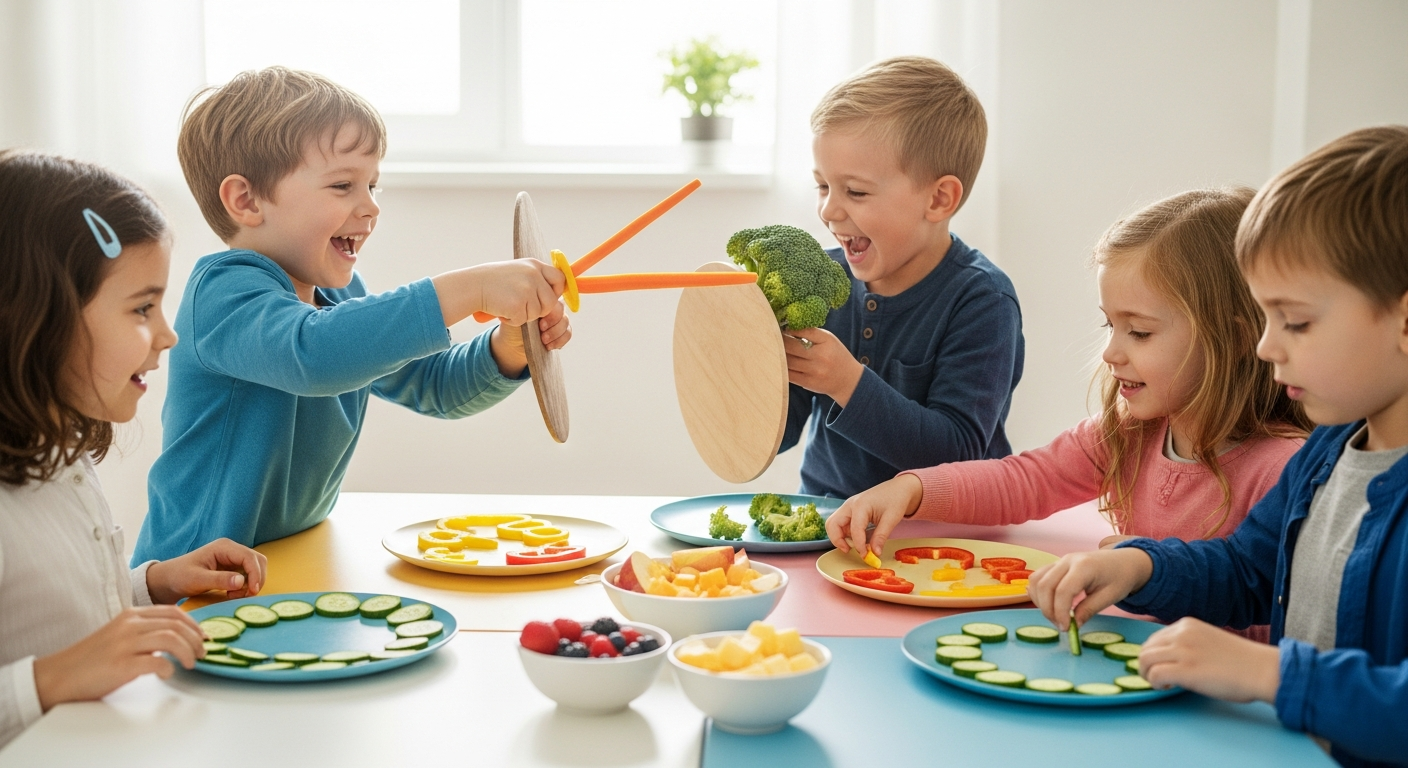
Table of Contents
- Introduction
- Why Food Games Are More Than Just Play
- The Kitchen as a Learning Hub: Fun Food Games for All Ages
- Speech Blubs: Your Partner in Playful Communication and Learning
- Making the Most of Your Speech Blubs Experience
- Tips for Parents: Creating a Language-Rich Environment with Food Games
- Conclusion
- FAQ
Has mealtime at your home ever felt less like a joyful gathering and more like a silent standoff over a plate of untouched vegetables? Or perhaps you've wished for a way to turn everyday activities into exciting learning opportunities, especially when it comes to nurturing your child's communication skills? You are certainly not alone! Many parents grapple with encouraging healthy eating habits and finding engaging, screen-free ways to foster development.
The good news is that the solution might be closer, and much more delicious, than you think: fun food games for kids! Beyond just nourishing their bodies, food offers a fantastic, multi-sensory playground for young minds. From stimulating conversation and expanding vocabulary to developing fine motor skills and encouraging adventurous eating, playful interactions with food can transform the kitchen and dining table into a dynamic learning environment. This post will explore a delectable menu of engaging food games, designed to make learning about nutrition enjoyable, build crucial developmental skills, and, most importantly, empower your child to speak their minds and hearts about their experiences.

Introduction
Imagine your child not just tolerating, but enthusiastically discussing the "crunchy carrot sticks" or the "squishy banana," using rich descriptive language. Picture them confidently asking for "more peas, please!" or explaining how they "mixed the batter" to make cookies. This vibrant interaction with food is entirely achievable, and it begins with turning mealtime, snack time, and even grocery shopping into an adventure. In an era saturated with passive screen consumption, creating hands-on, interactive experiences is vital for holistic child development.
This article delves into the wonderful world of fun food games, showcasing how simple ingredients and creative play can dramatically boost your child's cognitive, physical, and, critically, their communication skills. We'll provide a smorgasbord of ideas, from sensory exploration to kitchen-based science experiments, all while highlighting how these activities naturally support speech and language development. Our goal is to equip you with practical, valuable advice that nurtures a love for communication, builds confidence, and fosters a positive relationship with food, creating joyful family learning moments that extend far beyond the plate.
Why Food Games Are More Than Just Play
Food is, of course, essential for physical growth, but its potential as a catalyst for comprehensive child development is often underestimated. When children engage in fun food games, we're not merely entertaining them; we're actively cultivating a broad spectrum of skills and establishing a foundation for lifelong healthy habits and effective communication. It's a holistic approach to learning that naturally taps into a child's innate curiosity and desire to explore.
Fostering a Positive Relationship with Food
One of the most profound benefits of food games is their ability to demystify food and make it approachable, especially for picky eaters. New foods can often be intimidating, leading to mealtime battles. By transforming food into a playful medium, we gently remove the pressure of consumption and replace it with the sheer joy of exploration. When children interact with ingredients through touch, smell, and sight before they're asked to eat them, they become more comfortable and curious. This hands-on engagement can shift mealtime struggles into moments of discovery, helping children develop a healthier, more adventurous palate over time. It's about building confidence and enjoyment around food, rather than focusing solely on demanding clean plates.

Boosting Cognitive Development
Food games are powerful, stealthy educators, packed with opportunities for cognitive growth across various domains:
- Math Skills: The kitchen is a living math lab! Every recipe involves measuring ingredients, which introduces fundamental concepts of volume, weight, and fractions. Counting out pieces of fruit, setting timers for baking, and understanding ratios (e.g., "we need two scoops of flour for every one scoop of sugar") all build crucial mathematical literacy. When a child helps measure flour for muffins, they're not just following instructions; they're engaging in a practical application of numerical concepts that makes abstract ideas tangible.
- Science Concepts: Why does dough rise? What happens when ice melts into water, then freezes again? How does a vegetable change color when cooked? These are all scientific questions that food games can answer through direct observation and experimentation. Children learn about chemical reactions, states of matter, density, and even basic biology (like the role of yeast in bread or how plants grow) in a tangible, exciting way. For instance, making homemade butter by shaking cream demonstrates the physical transformation of liquids into solids, providing a memorable, hands-on science lesson.
- Language and Literacy: This is where food games truly shine for communication development. Reading simple recipes together, identifying ingredients, and discussing flavors significantly expand vocabulary and comprehension. Describing textures ("slimy," "bumpy," "smooth"), smells ("spicy," "sweet," "fresh"), and tastes ("sour," "bitter," "umami") helps children articulate their sensory experiences, moving beyond simple "good" or "bad." Games like "Name That Food" encourage word association, categorization, and the formation of descriptive sentences. As children learn to describe their food adventures, they build stronger language foundations that empower them to share their thoughts and feelings in all aspects of life.
- Problem-Solving and Critical Thinking: What do you do if you realize you're missing an ingredient? How can you adjust a recipe to make more servings for unexpected guests? These real-world scenarios encourage children to think critically, strategize, and find creative solutions. They learn to anticipate outcomes, troubleshoot issues, and adapt plans, developing valuable problem-solving skills they can apply far beyond the kitchen.
Enhancing Fine Motor Skills and Coordination
From stirring batter and kneading dough to carefully placing toppings on a mini-pizza or decorating cookies, food games provide excellent practice for developing fine motor skills. These activities demand precision, hand-eye coordination, and dexterity, all of which are crucial for tasks like writing, drawing, using scissors, and even tying shoelaces. The tactile nature of working with various food items—feeling the stickiness of dough, the slipperiness of oil, or the firmness of a fruit—offers unique sensory input that further refines these essential skills.
Sparking Creativity and Imagination
Food is an incredible, edible canvas for creativity. Children can experiment with colors, shapes, and textures to create edible art, whether it's arranging fruit into a rainbow or designing fantastical sandwiches. Imaginary scenarios, like running a pretend restaurant, hosting a "mystery ingredient" challenge, or cooking for stuffed animals, foster imaginative play and storytelling. These activities allow children to express themselves, think outside the box, and see possibilities in everyday items, transforming mundane ingredients into magical components of their play.
Strengthening Family Bonds
Perhaps one of the most heartwarming benefits of fun food games is the invaluable opportunity for family bonding. Spending time together in the kitchen, collaborating on a recipe, sharing laughter over a silly food challenge, or even just discussing what's on the menu, creates shared experiences and cherished memories. It's a chance for parents and children to connect, communicate, and work as a team, strengthening relationships in a joyful, low-pressure environment. These moments of togetherness, conversation, and shared purpose are truly invaluable in our often-busy lives.
Screen-Free Engagement
In a world where digital devices increasingly dominate attention, hands-on food games offer a much-needed and refreshing alternative. They provide engaging, interactive experiences that stimulate multiple senses, encourage active participation, and foster direct interaction, rather than passive consumption. This dedicated screen-free time is vital for healthy child development, promoting imaginative play, physical activity, and rich social and communicative interactions. At Speech Blubs, we understand the challenge of navigating screen time, which is why we're committed to offering "smart screen time" experiences that are interactive, educational, and designed to foster active participation, making them a powerful tool for family connection, even when technology is involved.
The Kitchen as a Learning Hub: Fun Food Games for All Ages
The kitchen is arguably the most dynamic classroom in the home, offering an unparalleled environment for blending food, STEM (Science, Technology, Engineering, and Math), and the arts with communication development. Let's explore some delicious ways to turn your kitchen and dining area into an interactive learning hub.
Sensory & Exploratory Games: Engaging All Five Senses
These games are fantastic for helping children become more comfortable with different foods and for expanding their descriptive vocabulary.
- Blindfolded Taste Tests: "Name That Food"
- How to Play: Prepare small, safe samples of various foods – think apple slices, cheese cubes, a raisin, a carrot stick, or a piece of bread. Blindfold your child (or take turns!) and have them taste each item, guessing what it is.
- Communication Focus: Encourage them to describe what they experience using all their senses. Ask: "What does it feel like in your mouth? Is it crunchy, squishy, smooth, or chewy?" "What does it taste like – sweet, sour, salty, bitter?" "Does it have a strong smell?" This helps develop rich descriptive language, categorizing skills, and the ability to articulate sensory input.
- Texture Detective
- How to Play: Provide a variety of raw and cooked ingredients for children to touch (with clean hands, of course!). Think squishy cooked pasta, grainy sugar, smooth yogurt, bumpy broccoli florets, rough oats, or slippery oil.
- Communication Focus: Introduce and practice vocabulary like "viscous," "gritty," "slimy," "crumbly," "sticky," and "smooth." Discuss how cooking or preparing food changes textures (e.g., a raw potato vs. a mashed potato). This directly builds vocabulary and comprehension.
- Aromatic Adventures
- How to Play: Fill small, opaque containers with different aromatic ingredients – coffee beans, lemon zest, vanilla extract, fresh herbs like mint or basil, or even a piece of garlic. Have children smell them blindfolded and try to identify the scents.
- Communication Focus: Talk about where these smells come from and how they contribute to the overall flavor of food. This introduces the concept of how smell influences taste and provides opportunities to use words like "strong," "faint," "pleasant," "spicy," or "sweet-smelling."
Cognitive & Educational Games: Learning Through Culinary Challenges
These activities weave academic skills into delightful food-based play.
- MyPlate Relay Race & Food Group Sorting
- How to Play: Create or print pictures of various foods. Draw simple "MyPlate" templates with sections for fruits, vegetables, grains, protein, and dairy. Children race (individually or in teams) to sort the food pictures into the correct categories on their plate, aiming for a balanced meal.
- Communication Focus: Reinforce food group vocabulary ("That's a fruit! Apples go in the fruit section."). Ask "wh-" questions: "What food group is chicken in?" "Why is this a healthy choice?" "Where do vegetables come from?" This promotes categorization, critical thinking about nutrition, and active discussion. For parents curious about their child's current communication development, consider taking our quick 3-minute preliminary screener to get an assessment and a personalized next-steps plan.
- Letter and Food Word Puzzles
- How to Play: Write letters on individual pieces of paper or foam tiles. Show a picture of a fruit or vegetable (e.g., an apple). Have your child find the letters to spell the word. Alternatively, provide a set of jumbled letters and a picture, and have them arrange the letters correctly.
- Communication Focus: This activity directly supports early literacy and phonological awareness. As they find each letter, encourage them to say the sound ("A-a-apple"). For slightly older children, ask them to describe the food, its color, and where it grows. This integrates spelling with descriptive language.
- Grocery Store Scavenger Hunt
- How to Play: Before heading to the store, give your child a list (pictures for younger children, words for older) of healthy food items to find, perhaps by color ("Find a red fruit") or category ("Find a vegetable that grows underground"). They check off each item they find and help add it to the cart.
- Communication Focus: This is a fantastic opportunity for practicing asking questions ("Where are the bananas?"), identifying items, describing features ("That cucumber is long and green!"), and following multi-step directions ("First, we need to find the bread, then the milk"). It also provides a natural setting for conversation and interaction, building confidence in public communication.
Creative & Imaginative Games: Unleashing Culinary Artistry and Storytelling
These games transform food into a medium for artistic expression and imaginative narratives.
- "I'm the Chef" or "Dining Room Manager" Role-Play
- How to Play: Let your child take on the role of a chef, preparing a pretend meal, or a dining room manager, setting the table and announcing "specials." You can provide safe, simple ingredients like slices of bread, cheese, and vegetables for them to "cook" or arrange.
- Communication Focus: Encourage storytelling about the restaurant, describing the "dishes" they're creating, and using polite language for "ordering" or "serving." For instance, a child might proudly say, "Today's special is a super-duper sandwich with crunchy lettuce!" This builds narrative skills, expands vocabulary related to cooking and dining, and fosters social communication.
- Edible Art Creations
- How to Play: Provide a variety of colorful, healthy ingredients – fruit slices, veggie sticks, cheese shapes, whole-grain crackers, spreads like hummus or cream cheese. Challenge your child to create a "picture" or "scene" on their plate using these ingredients.
- Communication Focus: Encourage them to describe their creation: "I made a monster with broccoli hair and carrot eyes!" Ask them about their choices: "Why did you choose red grapes for the nose?" This promotes descriptive language, imaginative storytelling, and expressing preferences. Seeing how other children communicate can be a powerful motivator. Speech Blubs uses a unique video modeling methodology where kids learn by watching and imitating their peers, providing excellent examples for language development.
Silly & Active Games: Fun for Parties and Playful Moments
Sometimes, the silliest games are the best for sparking laughter and encouraging engagement! These can be adapted for individual or group play and always offer opportunities for communication.
- Doughnut Hang Man (A Sweet Challenge)
- How to Play: Hang glazed doughnuts from strings at various heights. The challenge is for players to eat their doughnut as quickly as possible, without using their hands.
- Communication Focus: Even though it's hands-free, this game provides rich opportunities for expressive communication. Children can cheer each other on, describe the challenge ("It's so sticky!"), or express their effort and excitement. Simple phrases like "Go, go, go!" or "I can do it!" are perfect for practicing verbal expression in a fun context.
- Face the Cookie
- How to Play: Each player places an Oreo (or similar biscuit) on their forehead. The goal is to move the cookie from their forehead to their mouth using only facial expressions and movements, no hands allowed!
- Communication Focus: This is a wonderfully silly game that naturally elicits laughter and expressive sounds. Children can communicate their frustration, determination, and ultimate triumph through sounds, non-verbal cues, and simple exclamations like "Almost!" or "Got it!" It also fosters observation as they watch others.
- Menu Mayhem
- How to Play: Create a menu with silly, imaginative names for common foods (e.g., "Green Goblin Guts" for spinach, "Sunshine Circles" for orange slices). Have your child "order" a meal using the silly names, then serve them the real food.
- Communication Focus: This game is fantastic for practicing imaginative language, following multi-step instructions ("Can I have the Green Goblin Guts with a side of Sunshine Circles?"), and making choices. It encourages flexible thinking about language and how words can be used playfully.
Speech Blubs: Your Partner in Playful Communication and Learning
At Speech Blubs, we believe deeply in empowering children to "speak their minds and hearts." Our company was founded by individuals who personally navigated speech challenges in their own childhoods, driven by the desire to create the tool they wished they had. We are committed to providing an immediate, effective, and joyful solution for the 1 in 4 children who need speech support, seamlessly blending scientific principles with play into one-of-a-kind "smart screen time" experiences.
While hands-on food games provide invaluable real-world learning, Speech Blubs offers a powerful complement, designed to reinforce and expand on those foundational communication skills. For example, imagine your child delighting in a "Blindfolded Taste Test" and learning to describe a "crunchy apple." You can then transition to the Speech Blubs app's "Yummy Time" or "First Words" sections, where they can see peer models clearly articulating "apple" and other food-related words. This unique video modeling methodology—where children learn by watching and imitating their peers—is scientifically proven to be highly effective, fostering imitation and building vocabulary.
Our app isn't about passive viewing like cartoons; it's an interactive tool for active participation and family connection. You and your child can explore categories like "Animal Kingdom," "Yummy Time," "Sing-Along," and "Sounds Fun," building vocabulary, practicing sounds, and developing early literacy skills. For a parent whose 3-year-old "late talker" loves animals and has just mastered making animal sounds during playtime, the "Animal Kingdom" section offers a fun, motivating way to practice "moo" and "baa" sounds, building foundational vocabulary while developing imitation skills crucial for speech development. This kind of targeted, engaging practice, inspired by real-world play, is what makes Speech Blubs so effective.
We aim to make every interaction with the app a step forward in your child's communication journey, building their confidence and reducing frustration. Our commitment to high-quality, research-backed content means Speech Blubs consistently ranks in the top tier of educational apps worldwide. We invite you to see for yourself why so many families trust us to support their child's speech and language development; you can read what other parents are saying about their child's success with Speech Blubs on our testimonials page.
Making the Most of Your Speech Blubs Experience
To get the full benefit of what Speech Blubs has to offer, understanding our plans is key. We strive for transparency and want to ensure you choose the option that best suits your family's needs.
Our pricing options are designed to provide flexibility, but one truly stands out for its value and comprehensive features:
- Monthly Plan: For $14.99 per month, you gain access to our core speech and language activities. Please note, this plan does not include a free trial, the extra Reading Blubs app, early access to new updates, or our 24-hour support response time.
- Yearly Plan: This is our most recommended and popular option, priced at just $59.99 per year. This breaks down to an incredible value of only $4.99 per month – allowing you to save 66% compared to the monthly plan! Beyond the significant cost savings, the Yearly plan includes:
- A 7-day free trial, giving you ample time to explore all the features with your child.
- The valuable extra Reading Blubs app, designed to boost early literacy skills.
- Early access to new updates and content, ensuring you're always at the forefront of our educational innovations.
- A dedicated 24-hour support response time, meaning our team is always there to help you swiftly.
For the best value and access to our complete suite of features, we strongly encourage you to choose the Yearly plan. It truly provides the most comprehensive and supportive experience for your child's developmental journey.
Tips for Parents: Creating a Language-Rich Environment with Food Games
Integrating food games into your routine is a fantastic way to foster communication. Here are some simple tips to maximize their language-building potential:
- Be Present and Engaged: Your active participation is key. Join in the games, ask questions, and offer encouragement. These shared moments are invaluable for bonding and learning.
- Focus on Process, Not Perfection: The goal isn't a perfectly cooked meal or spotless play. It's about the interaction, the exploration, and the language development that happens along the way. Embrace the mess and the learning!
- Encourage Verbalization: Ask open-ended questions that go beyond "yes" or "no." Instead of "Do you like this?", try "What does this apple taste like to you?" or "How does this dough feel?" Encourage them to describe, explain, and articulate their experiences.
- Model Language: Use a rich vocabulary yourself. Describe the colors, textures, smells, and tastes of the food. Narrate your actions ("I'm gently stirring the batter now"). This provides excellent examples for your child to imitate and integrate into their own speech.
- Celebrate Every Effort: Acknowledge and praise their attempts at communication, no matter how small. "Great job describing that!" or "I love how you said 'squishy'!" builds confidence and motivates them to keep trying.
- Integrate with Speech Blubs: Use the app to reinforce concepts and vocabulary learned during food play. If you played a "Rainbow Food Hunt," for instance, follow up by finding colorful foods in the Speech Blubs app's "Yummy Time" category. This creates a powerful synergy between real-world experiences and targeted speech practice.
Conclusion
Fun food games for kids offer a vibrant and effective pathway to holistic child development, transforming everyday ingredients into exciting opportunities for learning, bonding, and communication. By engaging all five senses, these activities not only cultivate a positive relationship with food and combat picky eating but also significantly boost cognitive skills, enhance fine motor coordination, spark creativity, and strengthen invaluable family bonds. Crucially, they create a natural, low-pressure environment for speech and language development, allowing children to build vocabulary, articulate their thoughts, and speak their minds and hearts with confidence.
As you embark on these delicious adventures, remember that every stir, every taste, and every shared laugh is a building block for your child's future. And when you're ready to amplify these real-world gains with expert-designed, interactive "smart screen time," Speech Blubs is here to help. Our unique video modeling methodology and engaging activities provide a joyful supplement to your child's communication journey.
Ready to embark on a playful path to better communication and healthy habits? Discover the full potential of Speech Blubs today! Download Speech Blubs on the App Store or Google Play to begin your 7-day free trial. For the best value and exclusive features like the Reading Blubs app and priority support, make sure to select the Yearly plan during sign-up. Your child's voice is waiting to be heard!
FAQ
Q1: What are some key benefits of incorporating fun food games into my child's routine?
A1: Fun food games offer a wide range of benefits, including fostering a positive relationship with healthy foods, reducing picky eating, boosting cognitive skills (math, science, language), enhancing fine motor skills, sparking creativity, strengthening family bonds, and providing valuable screen-free engagement. They create a natural, low-pressure environment for communication development, helping children expand their vocabulary and express themselves.
Q2: How can food games specifically help children who are picky eaters or hesitant about new foods?
A2: Food games help picky eaters by removing the pressure of eating and focusing on sensory exploration. When children interact with foods through touch, smell, and sight in a playful, non-judgmental context, they become more familiar and comfortable with them. Activities like "Texture Detective" or "Aromatic Adventures" allow them to engage with food without the expectation of consumption, often leading to a greater willingness to try new foods later on.
Q3: How does Speech Blubs support communication development alongside real-world food games?
A3: Speech Blubs complements real-world food games by reinforcing vocabulary and speech sounds in a structured, engaging digital environment. For instance, words learned during a "Grocery Store Scavenger Hunt" can be practiced and solidified within the app's "Yummy Time" category. Our unique video modeling methodology, where children imitate their peers, provides excellent models for articulation and language use, bridging the gap between imaginative play and targeted speech practice.
Q4: Which Speech Blubs plan offers the best value for families, and what are its key advantages?
A4: The Yearly plan for Speech Blubs offers the best value for families. Priced at $59.99 per year (just $4.99/month), it provides a significant 66% saving compared to the monthly plan. Key advantages of the Yearly plan include a 7-day free trial to explore all features, access to the additional Reading Blubs app, early access to new content updates, and a dedicated 24-hour support response time. We highly recommend the Yearly plan for the most comprehensive and beneficial experience.
About the author