
Playful Toddler Alphabet Activities for Early Learning
 By Speech Blubs Team•Mar 25, 2026•15 min.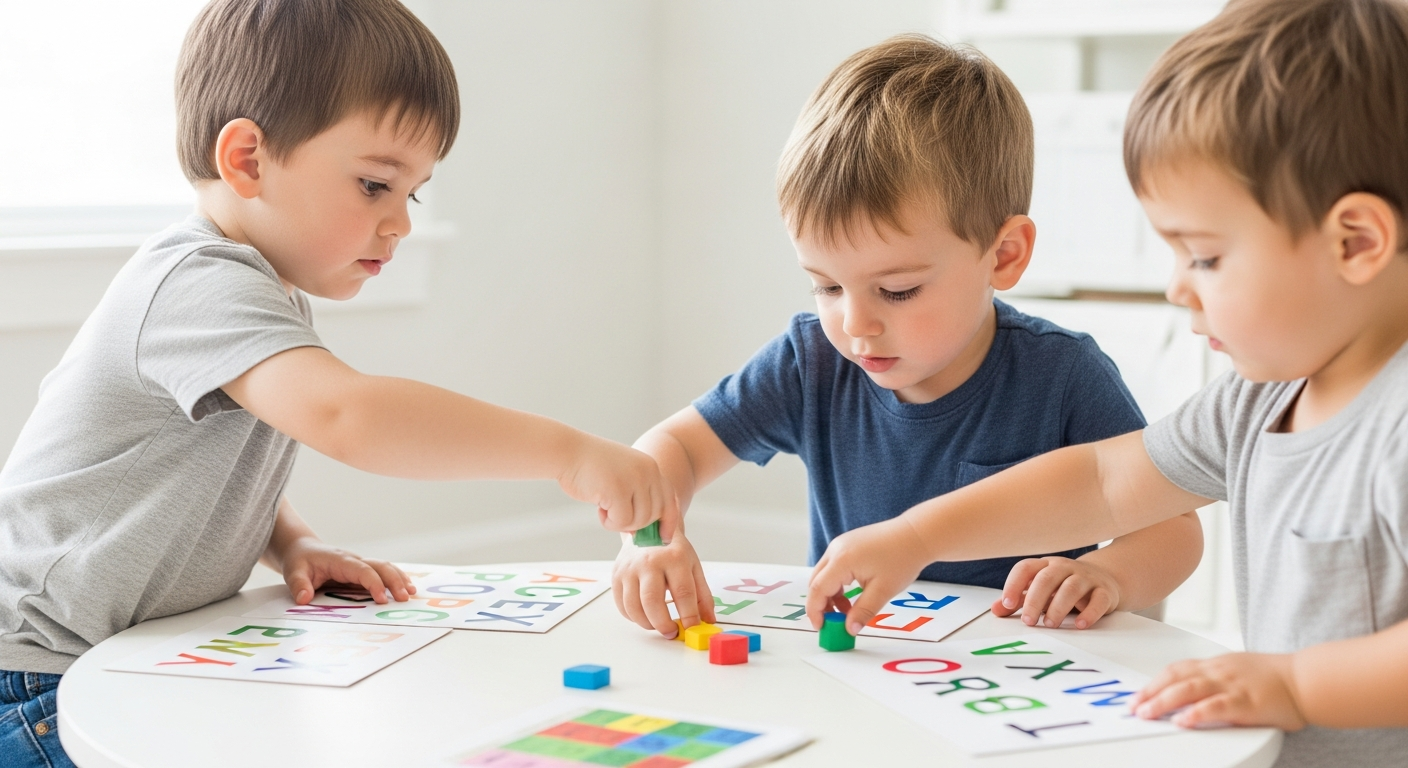
Table of Contents
- Introduction
- The Power of Play in Alphabet Learning
- Sensory Alphabet Activities
- Creative Arts and Alphabet Crafts
- Active and Outdoor Alphabet Games
- Manipulatives and Building Activities
- Smart Screen Time: The Speech Blubs Approach
- Setting Realistic Expectations
- Integrating Alphabet Learning into Daily Routines
- Bridging the Gap Between Screen and Play
- Frequently Asked Questions
- Conclusion
Introduction
Did you know that children who engage in playful, hands-on literacy activities before entering kindergarten often show significantly higher levels of confidence and curiosity when they eventually begin formal reading instruction? For a toddler, a letter isn't just a symbol on a page; it is a shape to be felt, a sound to be mimicked, and a building block for "speaking their minds and hearts." At Speech Blubs, we believe that the journey to communication should be filled with joy rather than pressure. Our founders, who navigated their own speech challenges as children, designed our tools to be the joyful, effective support they wished they had growing up.
In this guide, we will explore a variety of engaging toddler alphabet activities designed to turn your home into a vibrant learning environment. We’ll cover everything from sensory bins and messy art to active outdoor games and "smart screen time" strategies. You will learn how to weave letter recognition into your daily routine without relying on dry worksheets or repetitive drills. Our goal is to provide you with practical, evidence-based strategies that foster a genuine love for language.

The core message of this post is simple: when you combine scientific principles—like the video modeling we use in our app—with the power of play, you create an environment where your child can thrive. By the end of this article, you’ll have a toolkit of activities to help your little one develop foundational literacy skills while creating precious family memories.
The Power of Play in Alphabet Learning
Traditional teaching methods often focus on rote memorization, which can be frustrating for a high-energy toddler. Instead, we advocate for "play-based learning." This approach respects the toddler's developmental stage, where movement and sensory input are the primary ways they process information. When a child "builds" a letter out of Play-Doh or "fishes" for a plastic 'B' in a bubble bath, they are engaging multiple senses, which helps solidify the connection between the letter's shape, its name, and its sound.
At Speech Blubs, we take this a step further by utilizing the power of peer-to-peer learning. Our scientific methodology is rooted in video modeling. This technique leverages "mirror neurons" in the brain; when your child sees another child (their peer) performing a task or making a sound, their brain reacts as if they are doing it themselves. This reduces the "performance pressure" often felt when adults lead an activity and makes learning feel like a fun social interaction.
If you are curious about where your child stands in their development, you can take our quick 3-minute preliminary screener. It involves just 9 simple questions and provides you with an assessment and a next-steps plan to support your child’s unique journey.
Sensory Alphabet Activities
Sensory play is a toddler's "work." By engaging the senses of touch, sight, and even smell, you create "sticky" learning experiences that help kids retain information.
1. Alphabet Ice Painting
This is a fantastic activity for warm days or when you need a high-engagement indoor task.
- The Setup: Use an alphabet ice mold to freeze water overnight. Place the ice letters in a large sensory bin or on a tray.
- The Activity: Provide your child with washable paints and brushes. As they paint each frozen letter, encourage them to say the letter’s name or the sound it makes.
- The Benefit: The transition from cold ice to liquid paint provides a tactile experience that keeps them focused.
2. Bubble Foam Letter Hunt
Who doesn't love bubbles? This activity turns a sensory bin into a treasure hunt.

- The Setup: Mix two tablespoons of dish soap with 2/3 cup of water and a few drops of food coloring in a blender. Whip it until it forms thick, stiff foam. Dump it into a bin and hide plastic alphabet letters inside.
- The Activity: Give your child a slotted spoon or "scooper." Challenge them to find specific letters. "Can you find the letter that starts your name?"
- The Practical Scenario: For a parent whose child is obsessed with the "Big Mouth" section of our app—where they practice mouth movements—this activity is a great follow-up. While they scoop the letters, you can encourage them to mimic the mouth shapes for 'B-B-B-Bubbles' or 'P-P-P-Pink Foam,' reinforcing the speech patterns they saw in the app.
3. Alphabet Soup Sensory Bin
- The Setup: Fill a large bowl with water and add a few drops of blue food coloring. Drop in various plastic letters and provide a large ladle and several smaller bowls.
- The Activity: Tell your child you are making "Alphabet Soup." Ask them to serve you a bowl of 'S' soup or 'T' soup.
- The Benefit: This builds fine motor skills (scooping and pouring) while reinforcing letter recognition in a pretend-play context.
Creative Arts and Alphabet Crafts
Crafting allows toddlers to see letters as creative shapes rather than just abstract symbols.
4. Letter Collages
Focusing on one letter at a time helps prevent overwhelm.
- The Activity: Draw a large "bubble letter" on a piece of cardstock. If you’re working on the letter 'D', you might turn it into a Dinosaur. Have your child glue green tissue paper scraps inside the letter and add "spikes" and a googly eye.
- The Connection: If your toddler loves the "Animal Kingdom" section of Speech Blubs, they might recognize the sounds the animals make. You can pair the 'D is for Dino' craft with the dinosaur sounds in the app to bridge the gap between the visual letter and the auditory sound.
5. Do-A-Dot Letters
Do-A-Dot markers are a parent's best friend because they are relatively mess-free and very easy for small hands to grip.
- The Activity: Print out large block letters. Have your child use the markers to "stamp" along the lines of the letter.
- The Focus: This helps with "visual tracking"—the ability of the eyes to follow a path, which is a foundational skill for future reading.
6. Sponge Painting ABCs
- The Setup: Cut kitchen sponges into basic letter shapes or simply use strips of sponges to "build" letters with paint.
- The Activity: Let your child dip the sponges into bright colors and stamp them onto large rolls of easel paper. This is a great way to see what we call "big scale" letters, which are often easier for toddlers to process than small print in a book.
Key Takeaway: Toddlers learn best when their whole body is involved. Don't be afraid of a little mess; it's often a sign of deep engagement and learning!
Active and Outdoor Alphabet Games
Sometimes, the best way to learn the alphabet is to move through it. Physical activity increases blood flow to the brain, which can improve focus and retention.
7. Sidewalk Chalk Letter Jump
- The Activity: Write the letters of the alphabet in large, colorful circles on your driveway or sidewalk.
- The Game: Call out a letter and have your child "jump," "stomp," or "dance" over to that letter.
- The Benefit: This integrates gross motor skills with cognitive recognition. It’s also an excellent way to burn off energy before nap time!
8. Nature Alphabet Hunt
- The Activity: Take a walk in your backyard or a local park. Look for "natural" letters. A twig might look like a 'Y', or a stone might look like an 'O'.
- The Extension: Collect sticks and stones and try to "build" letters on the ground.
9. Sticky Note Scavenger Hunt
- The Activity: Write letters on sticky notes and hide them around a room at your child's eye level.
- The Goal: Give them a "base map" (a piece of paper with the same letters written on it). Their job is to find the hidden sticky notes and match them to the letters on the base map.
- Why it Works: This satisfies a toddler's natural urge to explore and discover. It turns a "lesson" into a high-stakes adventure.
Manipulatives and Building Activities
Using toys your child already loves is a seamless way to introduce the ABCs.
10. Play-Doh Letter Building
Play-Doh is a staple in most households for a reason—it’s incredibly engaging.
- The Activity: Help your child roll the dough into "snakes." Use these snakes to form the shapes of letters.
- Pro Tip: You can find testimonials from parents who have used tactile play alongside our app to help their "late talkers" find their voice. Combining the physical "feel" of a letter with the peer-led sounds in the app is a powerful combination.
11. Magnet Block Letter Match
If you have magnetic building tiles, you have a ready-made alphabet game.
- The Setup: Use a chalk marker (which wipes off easily) to write letters on the tiles.
- The Activity: Have your child build a "tower" of 'A's or a "train" that spells their name.
- The Benefit: This teaches that letters can be moved, stacked, and rearranged to create something new—the very essence of spelling!
12. Baking Sheet Letters
- The Setup: Use a simple cookie sheet and a set of colorful magnetic letters.
- The Activity: Draw a "letter of the day" on a piece of paper and tape it to the top of the sheet. Have your child find all the matching magnetic letters from a pile and stick them to the tray.
- Why it Works: The magnetic "snap" provides a satisfying sensory reward every time they get it right.
Smart Screen Time: The Speech Blubs Approach
In an era where passive screen time (like mindlessly watching cartoons) is a major concern for parents, we offer a "smart" alternative. At Speech Blubs, we believe technology should be a tool for connection and active participation, not just a distraction. Our app is designed to be used with a parent, creating moments of shared joy and learning.
Video Modeling and Peer Learning
Our unique approach centers on video modeling. When your child opens the app, they don't see an adult "teaching" them. They see another child making a sound, saying a word, or performing an action. This peer-to-peer connection is based on the science of mirror neurons, making it one of the most effective ways to encourage imitation and speech development.
Our app isn't just about the alphabet; it covers a wide range of communication skills, from basic sounds to complex sentences. It’s a powerful supplement to the hands-on activities listed above. For example, after doing a "Letter S" craft, you can open the "S" section in Speech Blubs to see a peer making the "sss" sound, helping your child connect the visual 'S' with the physical act of speaking.
Choosing the Right Plan for Your Family
We want to make our tools accessible and valuable for every family. To get the most out of Speech Blubs, we offer two primary plans:
- Monthly Plan: $14.99 per month. This is a great way to try out the app and see how your child responds to the video modeling.
- Yearly Plan: $59.99 per year. This is our best value option, breaking down to just $4.99 per month—a 66% savings compared to the monthly rate.
When you choose the Yearly Plan, you also get exclusive benefits that aren't included in the monthly option:
- A 7-day free trial to explore all features risk-free.
- The Reading Blubs app, which focuses specifically on early literacy and phonics.
- Early access to new updates and features.
- Priority 24-hour support response time.
To start your journey, you can download Speech Blubs on the App Store or get it on Google Play. If you prefer to set up your account on a computer first, you can visit our Web Account Creation page to begin your 7-day free trial.
Setting Realistic Expectations
It is important to remember that every child develops at their own pace. Some toddlers might pick up the entire alphabet in a few weeks, while others might focus on just a few letters for months. Both are perfectly normal! Our goal isn't to turn your two-year-old into a public speaker overnight. Instead, we want to help you:
- Foster a love for communication: Make learning something they want to do.
- Build confidence: Every correctly identified letter or imitated sound is a win.
- Reduce frustration: Giving your child the tools to express themselves helps them feel heard.
- Create joyful family moments: These activities are opportunities for you to bond with your little one.
Speech Blubs is a tool for empowerment. We provide the "smart screen time," but you provide the love and encouragement that truly makes the difference. Whether you're using our app or playing in a bin of alphabet bubbles, the focus should always be on the process of learning, not just the end result.
Integrating Alphabet Learning into Daily Routines
You don't always need a "planned activity" to teach the alphabet. The best learning often happens in the "in-between" moments of your day.
At the Grocery Store
The grocery store is a giant alphabet classroom. "Look, there's a big 'A' on the Apple sign!" or "Can you find a letter 'B' on this cereal box?" This helps children understand that letters are everywhere in the real world.
During Bath Time
Foam letters that stick to the side of the tub are a classic for a reason. While your child is playing, you can "write" simple words or just practice recognizing the letters of their name. The relaxed environment of a warm bath is perfect for low-pressure learning.
Reading Together
While reading your favorite books, occasionally point to a large letter and say its name. You don't have to do this on every page—just enough to pique their curiosity. Alphabet books, specifically, are designed for this, but any book with bold text will work.
Bridging the Gap Between Screen and Play
One of the most effective ways to use Speech Blubs is to use it as a "prompt" for physical play.
- Step 1: Watch a short session in the app (e.g., the "Animal Kingdom" section).
- Step 2: Act out what you saw. If the peer in the video was making an "Mmm" sound for a cow, go to your Play-Doh station and build a letter 'M'.
- Step 3: Celebrate the effort!
This loop—seeing it on the screen, doing it in real life, and receiving positive reinforcement—is the gold standard for toddler learning. It transforms the digital experience into a tangible, real-world skill.
For more information on how we developed this approach, feel free to visit our main homepage to learn about our story and our commitment to children's speech health.
Frequently Asked Questions
1. At what age should I start doing alphabet activities with my toddler? Most children start showing interest in letters and symbols between the ages of 2 and 3. However, you can start introducing them through play and reading as early as 18 months. The key is to keep it fun and never force the activity. If they aren't interested today, try again in a few weeks!
2. My child knows the names of the letters but not the sounds. Is that okay? Yes, that is completely normal! Often, children learn the "names" of the letters first (like through the ABC song). Phonemic awareness—the understanding that letters make specific sounds—usually develops a bit later. Activities like those in Speech Blubs are specifically designed to help bridge this gap by focusing on the sounds peers make.
3. How much "screen time" is appropriate for a toddler using Speech Blubs? We recommend short, focused sessions of 5–15 minutes, ideally with an adult present to "co-play." This ensures the screen time is an active, social experience rather than a passive one. Our "smart screen time" is designed to be a supplement to, not a replacement for, physical play and human interaction.
4. Does Speech Blubs replace the need for professional speech therapy? While Speech Blubs is a powerful tool designed by experts to support speech development and build confidence, it is not a replacement for a clinical diagnosis or professional therapy when needed. Many parents find it to be an excellent supplement to professional therapy, providing a way to practice skills at home in a joyful, low-stress way.
Conclusion
Teaching your toddler the alphabet is one of the first big steps in their journey toward lifelong literacy. By using a mix of sensory play, creative crafts, active games, and "smart screen time," you are providing them with a rich, multi-dimensional learning experience. Remember that the goal is to foster a love for language and a sense of confidence in their ability to communicate "their minds and hearts."
At Speech Blubs, we are honored to be a part of your family’s journey. Whether you are navigating a speech delay or simply want to give your child a head start, our peer-led video modeling is designed to make learning a joyful, shared experience.
Ready to unlock your child's potential? Create your account and begin your 7-day free trial today. For the best experience and the most comprehensive toolset—including the Reading Blubs app and priority support—make sure to select our Yearly plan. It’s the most cost-effective way to support your child's development all year long, and it's backed by our commitment to effective, science-based play.
Download Speech Blubs on the App Store or get it on Google Play and start building those foundational skills through the power of play!
About the author