
Playtime Power: Fun Games to Play with Kids for Growing Minds
 By Speech Blubs Team•Jan 19, 2026•23 min.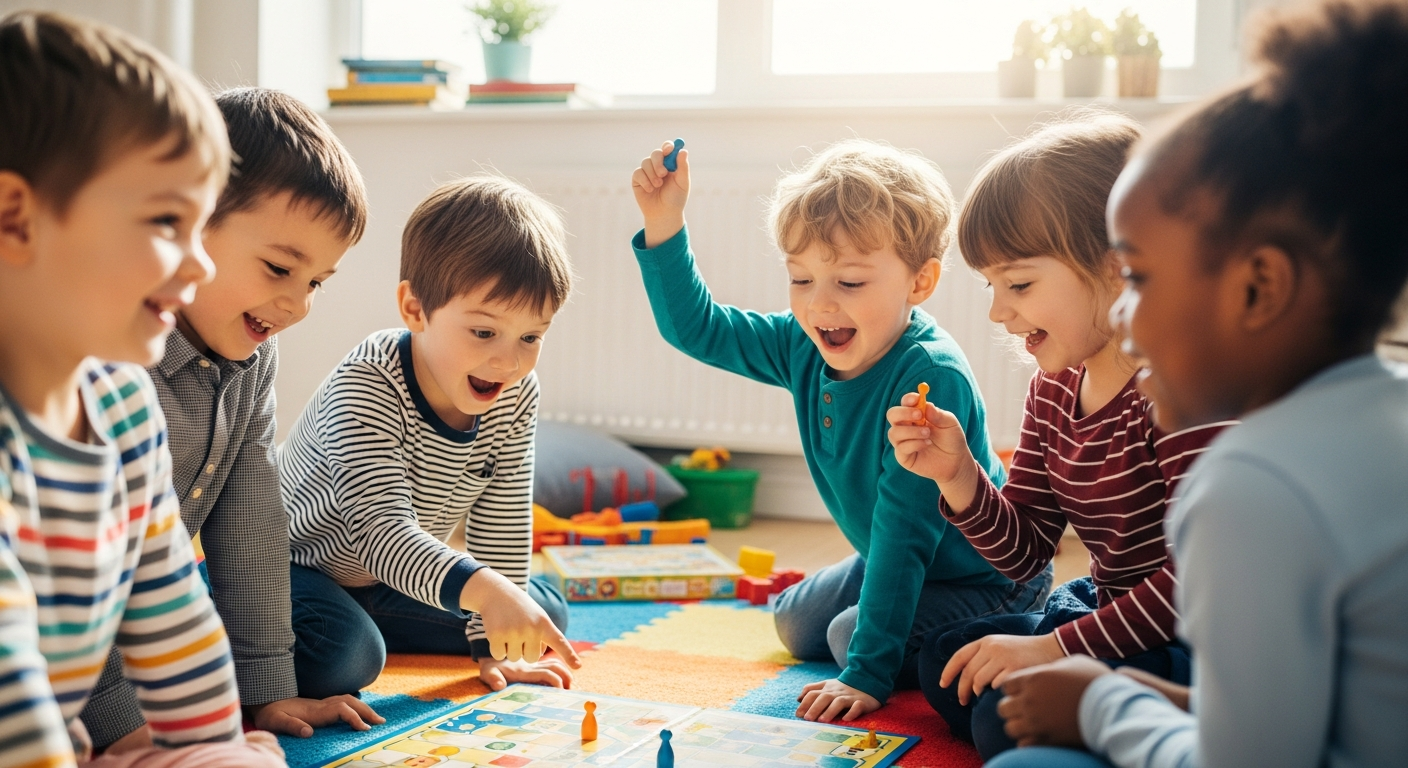
Table of Contents
- Introduction
- The Power of Play: More Than Just Fun
- Choosing the Right Games for Every Age and Stage
- Boosting Communication with Intentional Play: Our Philosophy
- Fun Games to Play with Kids: Categories and Ideas for Communication Growth
- Integrating Speech Blubs into Your Playtime Routine
- Understanding Your Child's Needs: When to Seek Support
- Joining the Speech Blubs Family: Your Path to Confident Communication
- Conclusion
- FAQ
Imagine a world where learning feels less like a chore and more like an exciting adventure. For children, this world is called play. It’s where imaginary kingdoms are built, silly voices bring characters to life, and the foundational blocks of communication are laid down, one joyful moment at a time. As parents and caregivers, we often seek out activities that are not just entertaining but also secretly educational, especially when it comes to fostering crucial developmental skills. This blog post is your comprehensive guide to unlocking the incredible potential of play, exploring how simple, fun games can become powerful tools for cognitive growth, social-emotional development, and most importantly, effective communication in children. We will delve into various types of games, offer practical ideas you can implement today, and show you how resources like Speech Blubs can seamlessly integrate into and amplify these invaluable learning experiences. Our main message is clear: intentional, joyful play is one of the most effective ways to help children truly speak their minds and hearts.

Introduction
Have you ever noticed how a child’s eyes light up when they're fully immersed in a game? That sparkle isn't just about fleeting fun; it’s the visible manifestation of deep engagement, active learning, and profound growth. Play is far more than mere entertainment; it's the primary language of childhood, the universal method through which young ones explore their world, develop critical skills, and connect with others. While the benefits of physical activity and creativity through play are often highlighted, its profound impact on communication development is frequently underestimated. From the simplest peek-a-boo with a baby to elaborate pretend play scenarios with preschoolers, games naturally encourage interaction, listening, turn-taking, and expressive language.
This article aims to reveal the hidden developmental treasures within everyday games, demonstrating how you can transform ordinary playtime into extraordinary learning opportunities. We will explore how different types of games contribute to a child's holistic development, with a special focus on enhancing speech and language skills. You’ll discover a wealth of "fun games to play kids" that are not only engaging but also strategically designed to build vocabulary, improve articulation, foster social communication, and boost confidence. We will also introduce you to Speech Blubs, an innovative tool born from our founders' personal experiences with speech challenges, that blends scientific principles with play to empower children and support families on their communication journey. Get ready to rethink playtime, turning every game into a step forward in your child's developmental adventure.
The Power of Play: More Than Just Fun
Play is the bedrock of childhood development, a dynamic process through which children learn about themselves, others, and the world around them. It's often perceived as trivial, a break from "serious" learning, but in reality, play is the engine that drives cognitive, social, emotional, and physical growth. When children engage in play, they are not just passing the time; they are actively experimenting, problem-solving, and building crucial neural pathways.

Holistic Benefits of Play
- Cognitive Development: Games stimulate critical thinking, memory, attention span, and problem-solving abilities. Whether it's figuring out how to stack blocks without them toppling or strategizing in a simple board game, children are constantly challenging their minds. They learn about cause and effect, patterns, and basic numerical concepts, all within a playful context.
- Social-Emotional Growth: Play is a rehearsal for life. Through shared games, children learn empathy, negotiation, cooperation, and conflict resolution. They navigate friendships, understand different perspectives, and practice self-regulation. Pretend play, in particular, allows them to explore various social roles and emotional scenarios in a safe, imaginative space.
- Physical Development: Many games involve movement, boosting gross and fine motor skills. Running, jumping, throwing, catching, manipulating small game pieces – these activities refine coordination, balance, and dexterity, which are essential for everything from writing to self-care.
Focus on Communication Skills: The Heart of Development
While all these benefits are vital, the impact of play on communication skills is truly profound. Games provide natural, low-pressure environments for children to:
- Expand Vocabulary: New words emerge naturally as children describe actions, characters, and objects within a game. A game of "farm animals" isn't just about identifying a cow; it's about learning "moo," "udder," "barn," and "graze."
- Practice Articulation: Many games encourage repetition of sounds and words, helping children refine their pronunciation. Singing silly songs or repeating phrases in a game can make sound practice fun and less like drilling.
- Develop Listening Skills: Following rules, understanding instructions, and responding to cues in a game all require active listening. This foundational skill is critical for both comprehension and expressive language.
- Master Turn-Taking: Conversation is essentially a game of turn-taking. Games explicitly teach children to wait for their turn, observe others, and know when it’s appropriate to speak. This is a cornerstone of pragmatic language skills.
- Foster Expressive Language: From narrating a puppet show to explaining their strategy in a building game, children use language to express ideas, feelings, and intentions. Play encourages them to articulate their thoughts, ask questions, and share their experiences.
At Speech Blubs, we understand that nurturing these communication skills isn't just about correcting sounds; it's about empowering children to truly "speak their minds and hearts." Our mission is to provide an immediate, effective, and joyful solution for the 1 in 4 children who need speech support, knowing that a strong foundation in communication boosts confidence and reduces frustration in all aspects of life.
Choosing the Right Games for Every Age and Stage
Selecting games that are age-appropriate and align with your child’s developmental stage is key to maximizing their learning potential and enjoyment. What captivates a toddler might frustrate an early elementary child, and vice-versa. Understanding these nuances helps you create enriching play experiences that genuinely support growth.
Tailoring Play to Developmental Needs
- For Infants (0-12 months): Focus on sensory exploration and early social interaction. Games like "peek-a-boo," tickle games, and simple songs with hand gestures introduce concepts of object permanence, turn-taking, and sound-making. Even babbling back and forth is a foundational communication game!
- For Toddlers (1-3 years): This is a crucial period for language explosion. Games should encourage imitation, simple requests, and naming. Building blocks (describing colors, shapes), matching games, and simple dramatic play with dolls or stuffed animals are excellent. Focus on single words and two-word phrases. For example, playing with a toy car, you might say, "Car go!"
- For Preschoolers (3-5 years): Preschoolers are developing longer sentences, understanding complex instructions, and engaging in imaginative play. Board games with simple rules (like "Candy Land" or "Chutes and Ladders"), dress-up, storytelling games, and "I Spy" are perfect. Encourage them to describe characters, narrate actions, and ask "why" questions.
- For Early Elementary (5-8 years): Children in this age group are refining social skills, reading, and problem-solving. Games like "Uno," "Sushi Go!," cooperative board games, and more complex imaginative scenarios become engaging. Encourage them to explain rules, negotiate roles, and articulate their thoughts and feelings about the game.
It's also important to remember that every child develops at their own pace. What’s engaging for one 4-year-old might be too simple or too complex for another. Observe your child’s interests and frustrations, and don’t be afraid to adapt game rules or introduce variations to suit their current skill level. The goal is always to foster a love for communication and learning, not to push for specific outcomes.
For parents who are uncertain about their child's communication development, our quick 3-minute preliminary screener can provide a simple assessment and next-steps plan, offering valuable insights and potentially leading to a free 7-day trial of our app.
Boosting Communication with Intentional Play: Our Philosophy
At Speech Blubs, we believe that communication is the key to unlocking a child’s full potential. Our mission is to empower children to "speak their minds and hearts" – to express their thoughts, feelings, and ideas with clarity and confidence. This mission is deeply personal for us; our company was born from the founders' own experiences growing up with speech problems. We created the tool we wished we had, understanding firsthand the frustrations and triumphs that come with the journey of developing communication skills.
We are committed to providing an immediate, effective, and joyful solution for the 1 in 4 children who need speech support. Our approach blends robust scientific principles with the inherent joy of play, creating a truly one-of-a-kind "smart screen time" experience. We know that passive screen time, like watching cartoons, offers little developmental benefit. That's why Speech Blubs provides a screen-free alternative to passive viewing, transforming screen time into an active, interactive, and powerful tool for family connection and learning.
The Science Behind Our Success: Video Modeling
Central to our methodology is "video modeling," a scientifically validated technique where children learn by watching and imitating their peers. This approach leverages the power of mirror neurons in the brain, which fire not only when we perform an action but also when we observe someone else performing it. When children see other kids their age clearly articulating sounds and words in our app, their brains are primed to imitate and learn. This peer-to-peer interaction makes the learning process incredibly engaging, natural, and highly effective.
Our app is meticulously designed around this principle, offering hundreds of fun activities that encourage speech repetition in a playful context. It’s not about rote memorization; it's about making sounds and words come alive through interactive experiences. This unique blend of scientific rigor and playful engagement has positioned us at the forefront of speech development apps, a fact supported by our high MARS scale rating. You can read more about the research behind our methods and why they are so effective.
We don't promise guaranteed outcomes like "your child will be giving public speeches in a month" because real development is a journey, not a race. Instead, we focus on the profound benefits of the process: fostering a genuine love for communication, building unwavering confidence, significantly reducing frustration, developing key foundational skills, and creating countless joyful family learning moments. Our app acts as a powerful supplement to a child's overall development plan and, when applicable, professional therapy, ensuring that parents are always a vital part of the learning journey through co-play and support.
Ready to see the magic of video modeling in action? Download Speech Blubs on the App Store or Google Play to begin your family's journey today!
Fun Games to Play with Kids: Categories and Ideas for Communication Growth
Let's dive into some specific categories of "fun games to play kids" that are not only enjoyable but also provide rich opportunities for communication development. Remember, the key is active participation and interaction, turning every game into a chance for conversation and learning.
1. Imaginative & Pretend Play Games
Imaginative play is a powerhouse for language development. It encourages children to create narratives, develop characters, and use expressive voices, all while engaging in complex social scenarios.
- Benefits: Boosts narrative skills, vocabulary expansion, emotional expression, social role-playing, and understanding abstract concepts.
- Examples:
- "Restaurant": Set up a pretend restaurant with toy food. One child is the chef, another the waiter, and parents are customers. Encourage them to describe dishes, take orders, and use polite language. Communication Focus: Role-playing dialogues, descriptive vocabulary (e.g., "spicy soup," "crunchy carrots"), asking and answering questions.
- "Vet Clinic": Use stuffed animals as patients. Children can diagnose ailments, give instructions for "treatment," and comfort their "patients." Communication Focus: Empathy, problem-solving language, giving instructions, using medical vocabulary in a simplified way.
- "Superheroes": Invent a crisis and have your child be the hero. They can describe their powers, plan their rescue mission, and even create a "superhero catchphrase." Communication Focus: Story creation, action verbs, descriptive adjectives, expressing courage and determination.
- How Speech Blubs Helps: Our app features sections like "Guess the Animal," "Yummy Time," and "When I Grow Up," which naturally complement imaginative play. Children can practice animal sounds and names, food vocabulary, or explore different professions through our video models, then apply these new words and concepts in their pretend play.
2. Interactive Storytelling Games
Storytelling is fundamental to communication, teaching sequencing, cause and effect, and the structure of narratives.
- Benefits: Enhances sequencing skills, vocabulary, creativity, listening comprehension, and expressive language.
- Examples:
- "Round Robin Story": Start a story with one sentence (e.g., "Once upon a time, a fluffy cloud floated over a sleepy town..."). Each person adds one sentence, building the narrative collaboratively.
- "Picture Prompt Stories": Use picture cards, magazine cutouts, or even photos from your day. Pick one or two pictures and create a story around them.
- "Puppet Show": Use hand puppets or even socks to create characters. Encourage your child to give their puppet a voice and personality, then act out a simple scene.
- How Speech Blubs Helps: Speech Blubs offers various sections that help with narrative development and vocabulary. Practicing verbs and nouns within the app can give children the building blocks they need to construct more complex stories. Our "Early Sounds" and "Word Play" sections are fantastic for expanding the lexicon needed for creative storytelling.
3. Sound & Word Play Games
These games directly target phonological awareness, articulation, and vocabulary expansion in a fun, non-threatening way.
- Benefits: Improves articulation, phonological awareness (recognizing and manipulating sounds), vocabulary, and listening discrimination.
- Examples:
- "I Spy (Sound Edition)": Instead of "I spy with my little eye something blue," try "I spy with my little eye something that starts with the /b/ sound." Or, for articulation practice, "I spy something that has the /sh/ sound."
- "Rhyming Games": Say a word (e.g., "cat") and take turns finding words that rhyme. Make silly rhymes if real ones are hard to find.
- "Silly Sounds/Animal Sounds": Make various animal sounds, vehicle sounds, or even silly made-up sounds. Encourage imitation and sound exploration.
- "Word Association": Say a word, and the next person says a word associated with it (e.g., "beach" -> "sand" -> "castle" -> "king").
- How Speech Blubs Helps: This is where our app shines! Speech Blubs is built around sound and word practice. Our video modeling technique provides clear examples for children to imitate, making articulation practice engaging. For example, for a parent whose 3-year-old "late talker" loves animals, the "Animal Kingdom" section offers a fun, motivating way to practice "moo" and "baa" sounds, reinforcing early vocalizations. The app covers a wide range of sounds and words, helping children build a strong phonetic foundation. You can download Speech Blubs on the App Store or Google Play to explore these sections.
4. Turn-Taking & Social Games
These games are crucial for developing the pragmatic aspects of language – how we use language in social contexts.
- Benefits: Fosters turn-taking, sharing attention, listening, cooperative play, and understanding social cues.
- Examples:
- Simple Board Games: Games like "Candyland," "Memory," or "Roll-and-Move" games teach children to wait for their turn, follow rules, and experience winning and losing gracefully.
- "Catch": A simple game of catch teaches turn-taking, eye contact, and even simple requests like "My turn!" or "Throw it!"
- Building Blocks (Shared Goal): Instead of building separately, work together on a single tower or structure. Negotiate who places the next block and describe what you're building.
- How Speech Blubs Helps: The interactive nature of Speech Blubs, where children respond to prompts and imitate peers, inherently teaches turn-taking in a digital context. It also builds the confidence needed to engage in these social games more actively.
5. Movement & Action Games
Movement combined with language can reinforce vocabulary and help children follow instructions.
- Benefits: Enhances listening skills, following multi-step directions, associating words with actions, and non-verbal communication.
- Examples:
- "Simon Says": A classic for following directions and listening carefully. You can adapt it to focus on specific body parts or actions (e.g., "Simon says touch your nose," "Simon says hop like a bunny").
- "Red Light, Green Light": Practice color recognition and understanding commands (stop/go).
- "Freeze Dance with Word Cues": Play music and have children dance. When the music stops, call out a word (e.g., "tree," "airplane," "cat") and have them freeze in a pose representing that word.
- How Speech Blubs Helps: Sections focusing on verbs and actions within Speech Blubs can provide the vocabulary for these games. For example, a child can learn words like "jump," "dance," or "sleep" from the app and then apply these actions in a "Simon Says" game.
6. Problem-Solving & Puzzle Games
These games encourage critical thinking and provide opportunities for descriptive language as children explain their thought processes.
- Benefits: Develops critical thinking, spatial reasoning, descriptive language, and negotiation skills.
- Examples:
- Jigsaw Puzzles: Work together on a puzzle. Encourage children to describe the pieces they are looking for ("I need a piece with a red corner," "Where's the horse's head?").
- Building Challenges (Lego, Duplo, Magnatiles): Give a challenge like "Build a tall tower" or "Build a garage for this car." Encourage them to explain their design choices and problem-solve when things don't work.
- How Speech Blubs Helps: While Speech Blubs doesn't directly offer puzzles, the structured learning activities within the app require focus and attention, which are transferable skills for problem-solving games. Our "Amazing Animals" or "Food Adventures" categories can provide specific vocabulary to describe puzzle elements or building materials.
Integrating Speech Blubs into Your Playtime Routine
Speech Blubs is designed to be a vibrant, active addition to your child's communication development journey, not a replacement for your invaluable one-on-one interaction. Think of it as a powerful co-pilot in your child's learning adventure. Our app thrives on the principle of "smart screen time," transforming what could be passive viewing into an engaging, interactive, and language-rich experience.
Here’s how you can seamlessly integrate Speech Blubs into your child's playtime routine:
- Warm-Up & Cool-Down: Use Speech Blubs as a fun "warm-up" before engaging in related screen-free play. For instance, if you're planning a pretend play session about animals, let your child explore the "Animal Kingdom" section in Speech Blubs first to practice animal sounds and names. Afterward, use it as a "cool-down" to reinforce new words learned during playtime.
- Targeted Practice, Then Play: If your child is working on specific sounds or words (e.g., /sh/ sounds, or words related to transportation), spend a dedicated, short session in the relevant Speech Blubs section. For a parent whose 4-year-old is working on consonant blends and loves vehicles, the "Transportation" section in Speech Blubs offers engaging video models to practice sounds like 'tr' in 'truck' or 'pl' in 'plane.' Afterward, immediately transition to a game like "I Spy" with toy cars or building a train track, where they can practice those same sounds and words in a different context. This reinforces learning in a natural, fun way.
- Conversation Starters: The diverse themes and characters in Speech Blubs can spark countless conversations. Ask your child about what they saw, what sounds they made, or what their favorite character was. "What did the pirate say?" or "Can you show me how the elephant moved?"
- Family Connection: Our app is built for adult co-play. Sit with your child, share their excitement, mimic the sounds together, and celebrate their successes. This shared experience makes learning feel safe, supported, and joyful, strengthening your bond.
- Complementing Therapy: If your child is receiving professional speech therapy, Speech Blubs can be an excellent supplement. Many therapists recommend practicing at home, and our app provides a structured, fun, and consistent way to do just that, reinforcing the concepts learned in therapy.
At Speech Blubs, we are committed to helping your child thrive. Our unique video modeling method, where children learn by watching and imitating their peers, is scientifically backed and designed to make learning effective and enjoyable. Parents consistently share their positive experiences, noting significant progress and increased confidence in their children. See what other parents are saying about their child's success with Speech Blubs.
Understanding Your Child's Needs: When to Seek Support
While play is incredibly powerful for development, it's also important for parents to be aware of developmental milestones and know when their child might benefit from additional support. Every child develops at their own pace, but there are general guidelines for speech and language acquisition.
Signs that your child might benefit from a closer look at their speech and language development include:
- Limited babbling or gesturing by 12 months.
- Not speaking single words by 16 months.
- Not combining two words by 24 months.
- Difficulty understanding simple instructions.
- Only imitating speech or actions, but not producing words or phrases spontaneously.
- Difficulty being understood by family members by age 2, or by strangers by age 3.
- Struggling with social interaction or turn-taking in games.
- Showing frustration when trying to communicate.
If you have any concerns, early intervention is key. A speech-language pathologist can provide an accurate assessment and guidance. To help you get a clearer picture, we’ve developed a valuable tool. Our quick 3-minute preliminary screener involves just 9 simple questions and provides an assessment along with a personalized next-steps plan. It’s a great first step to understanding your child's communication needs and discovering how Speech Blubs can support their journey. This valuable assessment also comes with a free 7-day trial of our app, so you can experience its benefits firsthand.
Joining the Speech Blubs Family: Your Path to Confident Communication
We believe every child deserves the opportunity to communicate confidently and joyfully. That's why we’ve poured our personal experiences and scientific expertise into creating Speech Blubs, making it accessible and effective for families worldwide. We offer flexible plans designed to fit your family’s needs, with transparent pricing and clear value.
Our Pricing Plans:
- Monthly Plan: For just $14.99 per month, you get access to all the core features of Speech Blubs, helping your child on their communication journey.
- Yearly Plan: The Best Value! This is our most popular and recommended option. At just $59.99 per year, it breaks down to an incredible $4.99 per month, allowing you to save 66% compared to the monthly plan!
Why Choose the Yearly Plan?
The Yearly Plan isn't just about significant savings; it's about unlocking the full potential of Speech Blubs and ensuring your child has continuous access to the tools they need to thrive. With the Yearly Plan, you'll receive exclusive, high-value features:
- A 7-day Free Trial: Experience Speech Blubs risk-free and see the difference it can make for your child. The Monthly plan does not include a free trial.
- The Extra Reading Blubs App: This bonus app helps children develop early literacy skills, creating a powerful synergy with their speech development.
- Early Access to New Updates: Be among the first to explore exciting new features and content as soon as they are released.
- 24-Hour Support Response Time: Get your questions answered quickly and efficiently by our dedicated support team, ensuring a smooth and stress-free experience.
We are confident that Speech Blubs will become an invaluable partner in your family's journey. With our unique video modeling methodology and commitment to joyful learning, we're here to empower your child to speak their minds and hearts.
Ready to embark on this transformative journey? Don't miss out on the incredible value and exclusive features of our Yearly Plan. Create your account and begin your 7-day free trial today! Choose the Yearly plan to get the free trial and the full suite of benefits.
Conclusion
The journey of childhood is one of continuous discovery, and at its heart lies the magical world of play. As we’ve explored, the "fun games to play kids" are not merely distractions; they are potent catalysts for development, shaping young minds, fostering social connections, and laying the essential groundwork for confident communication. From the imaginative narratives of pretend play to the targeted practice of sound games, every shared laugh and new word learned builds a stronger foundation for your child's future.
At Speech Blubs, we are honored to be a part of this incredible journey. Born from a personal desire to provide the best possible support for children with speech challenges, our app embodies our mission: to empower every child to "speak their minds and hearts." Through our scientifically-backed video modeling methodology and our commitment to making learning joyful, we offer a unique "smart screen time" solution that complements your efforts and creates powerful family connection moments.
Remember, fostering a love for communication is a marathon, not a sprint. It’s about creating an environment rich in language, encouragement, and playful interaction. Speech Blubs is here to support you every step of the way, providing an engaging, effective, and accessible tool that makes learning to speak an adventure.
Don’t wait another day to unlock your child’s full communication potential. Create your Speech Blubs account and begin your 7-day free trial today! Choose the Yearly plan to gain access to the free trial, the bonus Reading Blubs app, early updates, and dedicated 24-hour support – truly the best value for your family’s journey toward confident communication. We look forward to welcoming you to the Speech Blubs family!
FAQ
Q1: How do "fun games to play kids" specifically help with speech development?
A1: Fun games promote speech development by creating natural, low-pressure environments for children to practice key communication skills. They encourage vocabulary expansion through exposure to new words, improve articulation through repetition and imitation, enhance listening skills by requiring children to follow rules, and develop turn-taking abilities crucial for conversational flow. Imaginative play, in particular, boosts narrative skills and expressive language.
Q2: Is Speech Blubs designed to replace traditional speech therapy?
A2: No, Speech Blubs is designed as a powerful supplement to a child's overall development plan and, when applicable, professional speech therapy. We provide an immediate, effective, and joyful tool for home practice that reinforces concepts learned in therapy and encourages consistent engagement. Our app empowers parents to actively participate in their child's speech journey, but it is not a substitute for a licensed speech-language pathologist's personalized assessment and intervention.
Q3: What makes Speech Blubs' "video modeling" method effective?
A3: Our "video modeling" method is scientifically validated and highly effective because children learn by watching and imitating their peers. This approach leverages the brain's mirror neurons, which are activated when observing others, making imitation more natural and engaging. Seeing other children clearly articulate sounds and words motivates and guides a child's own speech attempts, transforming learning into an interactive, play-based experience. You can find more about the science behind our app on our research page.
Q4: How can I get the most value out of my Speech Blubs subscription?
A4: To get the most value, we highly recommend choosing the Yearly Plan. At just $59.99 per year, it saves you 66% compared to the monthly option. The Yearly Plan also includes a 7-day free trial, the bonus Reading Blubs app, early access to new updates, and a 24-hour support response time, none of which are available with the Monthly Plan. These exclusive features provide a comprehensive and supported experience for your child's communication and early literacy development. You can create your account and start your free trial to experience the full benefits.
About the author