
Popsicle Stick Christmas Crafts for Kids
 By Speech Blubs Team•Dec 22, 2025•21 min.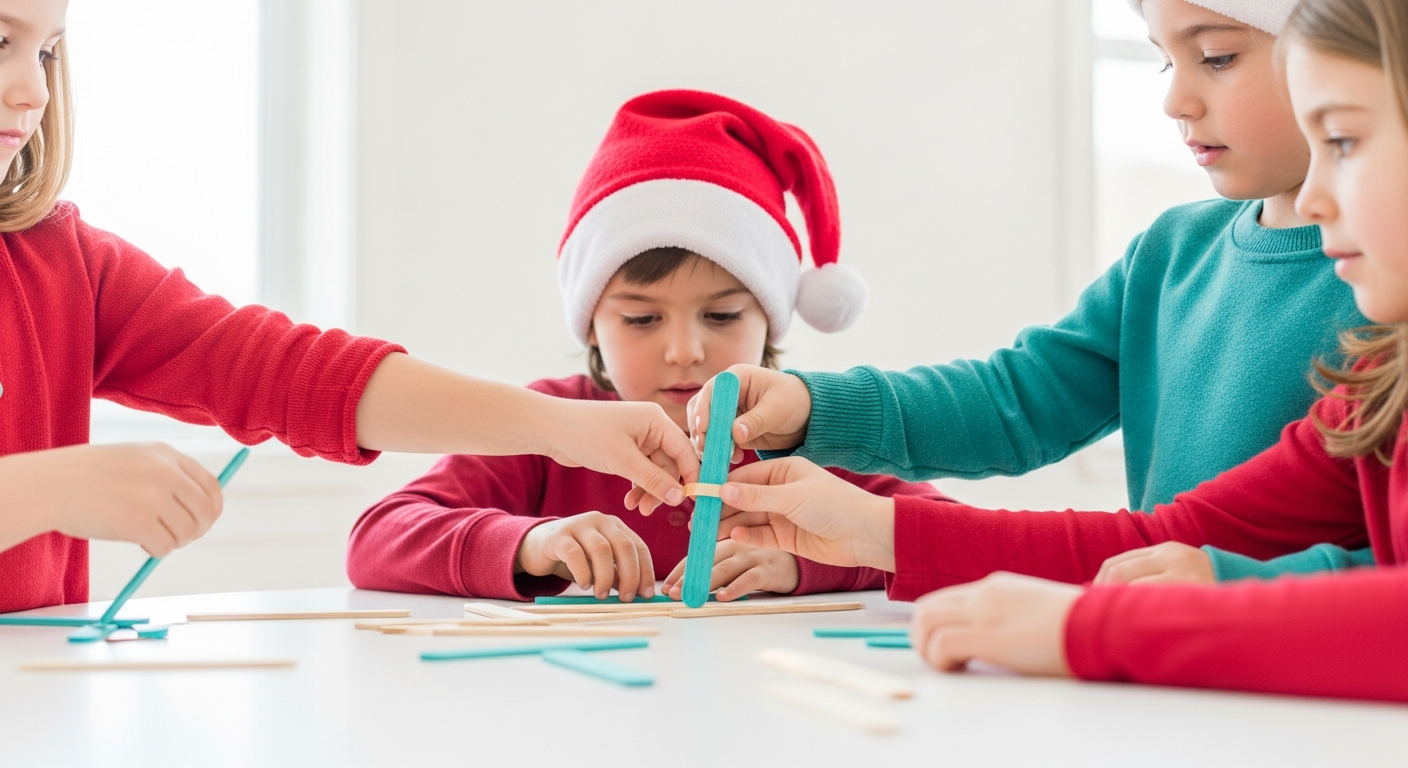
Table of Contents
- Introduction
- Why Popsicle Stick Crafts are Perfect for Kids (and Parents!)
- The Hidden Speech & Language Benefits of Crafting Together
- Our Favorite Popsicle Stick Christmas Crafts for Kids (with a Developmental Twist)
- Tips for Maximizing Speech and Language Development During Craft Time
- When to Consider Extra Support for Speech Development
- How Speech Blubs Elevates Your Child's Communication Journey
- Joining the Speech Blubs Family: Pricing and Value
- Conclusion
- Frequently Asked Questions (FAQ)
Christmas is a magical time of year, filled with twinkling lights, festive carols, and the sweet aroma of holiday treats. But for many families, the true magic lies in the quiet moments of togetherness, especially when little hands are busy creating. Imagine a cozy afternoon, snuggled up with your child, transforming simple wooden sticks into shimmering snowflakes or jolly Santas. These aren't just crafts; they're moments of connection, creativity, and incredible developmental growth.
This holiday season, we invite you to rediscover the simple joy of popsicle stick Christmas crafts for kids. More than just adorable decorations for your tree or mantelpiece, these projects offer a wealth of opportunities to boost your child's fine motor skills, foster their imagination, and, crucially, ignite their communication and language development. We'll explore a variety of engaging crafts, delve into the unexpected ways they support speech growth, and share how resources like Speech Blubs can seamlessly integrate into your holiday fun, empowering your child to speak their minds and hearts.

Introduction
Do you remember the thrill of creating something beautiful with your own hands as a child? The simple act of gluing, painting, and assembling can unlock a world of imagination and learning. The holiday season offers a perfect backdrop for these creative adventures, turning everyday objects into cherished keepsakes. While many parents seek engaging activities to keep their children entertained during the festive period, few realize the profound developmental benefits hidden within something as humble as a popsicle stick.
This post isn't just about making cute decorations; it's about harnessing the power of play and creation to nurture critical skills in your child. We'll explore why popsicle stick Christmas crafts are an excellent choice for kids of all ages, detailing their contributions to fine motor skills, cognitive development, and emotional well-being. Most importantly, we'll dive deep into how these crafting sessions become vibrant playgrounds for speech and language development, offering practical tips and showing how digital tools like Speech Blubs can enhance this learning journey. Our goal is to equip you with ideas and inspiration, transforming holiday crafting into joyful, educational experiences that help your child build confidence and communication skills, one festive stick at a time.
Why Popsicle Stick Crafts are Perfect for Kids (and Parents!)
Popsicle stick crafts are a perennial favorite for a reason. They represent the perfect blend of simplicity, versatility, and developmental richness, making them an ideal activity for families during the festive season.
Simplicity and Accessibility
At their core, popsicle stick crafts are incredibly straightforward. The main material – popsicle sticks – is inexpensive, readily available at any craft store or even a dollar store, and safe for small hands. This low barrier to entry means you don't need fancy equipment or extensive planning. A few basic supplies like glue, paint, and some embellishments are often all it takes to spark a child's creativity. This accessibility makes it easy for parents to initiate spontaneous crafting sessions, reducing stress and increasing the likelihood of engaging in these valuable activities.

Fine Motor Skill Development
Crafting with popsicle sticks is a powerful workout for little fingers. The actions involved – picking up sticks, applying glue with precision, holding brushes for painting, and carefully attaching small decorations like beads or sequins – all contribute significantly to the development of fine motor skills. These skills are crucial for tasks like writing, buttoning clothes, and self-feeding. As children manipulate the sticks, they improve their hand-eye coordination, finger strength, and dexterity, laying essential groundwork for future academic and life skills.
Creativity and Imagination
Unlike many structured activities, popsicle stick crafts often encourage open-ended play. While you might start with an idea (like a Christmas tree), children are free to interpret and personalize their creations. They choose the colors, the arrangement of sticks, and the type of decorations, allowing their imagination to soar. This freedom fosters creative thinking, problem-solving, and self-expression. There’s no "right" or "wrong" way to make a craft, which builds confidence and a sense of artistic ownership.
Cognitive Benefits
Beyond creativity, crafting engages several cognitive functions. Children learn to follow multi-step instructions, understand spatial relationships as they arrange sticks into shapes, and problem-solve when a stick doesn't quite fit or glue doesn't hold. They also practice sequencing (first paint, then glue, then decorate) and categorization (sorting sticks by size or color). These mental exercises are vital for developing critical thinking and logical reasoning abilities that extend far beyond the craft table.
Emotional Development
The process of crafting offers numerous emotional benefits. Completing a project, no matter how simple, gives children a profound sense of accomplishment and boosts their self-esteem. It teaches patience as they wait for paint to dry or glue to set. It can also be a wonderful outlet for self-expression, allowing children to communicate feelings or ideas through their art. Sharing their finished creations with family provides validation and pride, strengthening their emotional resilience and confidence.
Family Bonding
Perhaps one of the most heartwarming benefits of popsicle stick crafts is the opportunity for genuine family connection. Sitting side-by-side, sharing materials, discussing ideas, and helping each other creates precious moments of quality time. These shared experiences build stronger bonds, create lasting memories, and reinforce the importance of collaboration and mutual support within the family unit.
The Hidden Speech & Language Benefits of Crafting Together
While you're busy admiring your child's sparkly reindeer or colorful tree ornament, you might not realize the incredible amount of speech and language development happening simultaneously. Crafting with popsicle sticks provides a natural, low-pressure environment perfect for nurturing communication skills.
Vocabulary Expansion
Crafting introduces a rich vocabulary naturally. As you work, you can name the materials ("Here's a red popsicle stick," "Pass the glue," "We need some glitter," "These are sequins"). You can also talk about actions ("Paint the stick," "Glue it down," "Cut the paper," "Arrange the pieces"). This concrete, hands-on experience helps children connect words to objects and actions, making new vocabulary stick more effectively than simply hearing words in isolation.
Following Instructions
Craft projects often involve a series of steps, which is excellent practice for following instructions. You can give simple one-step commands ("Get the paint") and gradually increase to multi-step directions ("First, paint the stick red, then glue it to the other stick"). This helps children develop auditory processing skills and reinforces their understanding of sequencing words like "first," "then," and "next."
Descriptive Language
Crafts are fantastic for encouraging descriptive language. Ask your child to describe their creation: "Tell me about your snowflake. What colors did you use? Is it sparkly? Is it big or small?" You can prompt them to describe textures (rough, smooth, sticky), shapes (triangle, star), and colors. For a child who struggles with descriptive words, having a tangible object like a sparkly ornament they just made together can be incredibly motivating. This is where tools like Speech Blubs, with its focus on encouraging verbal imitation and descriptive language through engaging videos, becomes a powerful ally, helping children put words to their sensory experiences.
Asking and Answering Questions
Craft time is ripe for questions and answers. "What color should we use next?" "Where does this stick go?" "How can we make it stand up?" Encourage your child to ask questions too, modeling curiosity and problem-solving. This interactive dialogue helps build conversational skills and expands their understanding of question words (who, what, where, when, why, how).
Narrative Skills
Once a craft is finished, encourage your child to tell a story about it. If they made a reindeer, "What is Rudolph doing? Where is he going?" If they made a puppet, "What does your Santa puppet say?" This helps them develop narrative skills, sequencing events, and creating imaginative scenarios. These storytelling opportunities are fundamental for developing strong communication abilities.
Turn-Taking and Social Communication
Crafting together naturally promotes turn-taking. "My turn to glue, then your turn to add glitter." Sharing materials and discussing ideas fosters social communication skills like negotiation, cooperation, and active listening. It's a fantastic way to practice reciprocal communication in a fun and engaging context.
Our Favorite Popsicle Stick Christmas Crafts for Kids (with a Developmental Twist)
Let's dive into some specific craft ideas that are not only fun to make but also packed with opportunities for speech and language development.
Popsicle Stick Christmas Trees
- Activity: Gather green popsicle sticks (or paint them green), glue them into a triangle shape, and decorate with glitter, pom-poms, sequins, or small buttons. You can add a brown stick for the trunk.
- Speech Focus:
- Colors: "Let's use the green sticks." "Which red pom-pom do you want?"
- Sizes: "Do you want a big star or a small star for the top?"
- Textures: "This glitter is so sparkly! The stick feels smooth."
- Counting: "How many pom-poms should we put on our tree?" "One, two, three..."
- Actions: "Paint the tree. Glue the star."
Popsicle Stick Snowflakes
- Activity: Arrange several white or blue popsicle sticks in a criss-cross pattern to form a snowflake shape. Glue them together at the center. Once dry, paint them white, blue, or silver, and add glitter, gems, or small beads.
- Speech Focus:
- Spatial Concepts: "Put this stick over that one." "Let's glue them in between." "Where should the gem go? On top? Under?"
- Symmetry and Patterns: Discuss how snowflakes are unique but often symmetrical. "Does your snowflake look the same on both sides?"
- Describing Weather: Talk about snow, ice, and cold. "What do we do when it's cold outside?"
- Shapes: Identify the star shape in the middle, or the points of the snowflake.
Popsicle Stick Reindeer
- Activity: Paint a popsicle stick brown. Glue on googly eyes near one end. Add a red pom-pom for Rudolph's nose. For antlers, you can cut small pieces of brown pipe cleaner and glue them to the back of the stick.
- Speech Focus:
- Animal Sounds: "What sound does a reindeer make?" (Though not typical, you can make up a silly sound or discuss other animals' sounds).
- Body Parts: "Where are Rudolph's antlers? Can you point to his red nose? He has two eyes."
- Actions: "Rudolph is running! He is flying through the sky!"
- Narrative: Create a simple story about Rudolph and his journey to help Santa. "Rudolph helps Santa pull the sleigh."
Popsicle Stick Santa/Elf/Snowman Puppets
- Activity: Paint a popsicle stick to resemble Santa (red body, white beard area), an elf (green, pointy hat), or a snowman (white, black dots for eyes). Add paper cutouts for hats, fabric scraps for clothes, or cotton balls for a beard. Attach a larger craft stick to the back to hold it like a puppet.
- Speech Focus:
- Character Voices: Encourage your child to use different voices for each character. "What does Santa say? 'Ho ho ho!'" This activity directly ties into the 'video modeling' approach we champion at Speech Blubs, where children learn by watching and imitating their peers, practicing sounds and phrases in a fun, contextual way.
- Social Roles: Discuss what Santa does, what elves do, or what snowmen like.
- Storytelling: Use the puppets to act out a simple Christmas story or create a dialogue between them. "Santa talks to the elf. What do they say?"
- Prepositions: "Santa is in the sleigh. The elf is next to Santa."
Popsicle Stick Ornaments (Stars, Angels, Gifts)
- Activity: Arrange sticks into various shapes like stars (five sticks), angels (three sticks for body/wings, a small wooden bead for head), or gift boxes (four sticks glued into a square). Decorate with paint, glitter, ribbon, or small bows. Add a loop of string to hang them.
- Speech Focus:
- Shape Recognition: "We're making a star! How many points does a star have?" "This is a square gift."
- Counting: Counting the sticks needed for each shape or the points on a star.
- Describing Feelings: "This ornament makes me feel happy!" "It's a special gift."
- Concepts: "This ornament is up high on the tree." "It's shiny."
Popsicle Stick Nativity Scene
- Activity: Create simplified figures from popsicle sticks. Paint some sticks brown for animal bodies, or wrap others in fabric scraps for Mary, Joseph, and baby Jesus. A small yellow stick can be the star. Glue them to a larger base stick or a cardboard box.
- Speech Focus:
- Storytelling: Retell the story of Christmas using the crafted figures. "First, Mary and Joseph traveled... then baby Jesus was born."
- Character Names: "This is Mary. This is Joseph."
- Sequencing Events: Practice the order of events in the story.
- Emotional Vocabulary: Discuss feelings related to the story: "They were happy! The baby was peaceful."
Tips for Maximizing Speech and Language Development During Craft Time
To truly unlock the language-boosting potential of your holiday crafting, consider these effective strategies:
- Follow Your Child's Lead: Let your child choose the craft, the colors, and the embellishments whenever possible. When children are genuinely interested and engaged, they are more motivated to communicate. Respond to their ideas and incorporate them into the activity.
- Narrate Everything: Be a language model. Verbally describe every step of the process. "We're taking out the red paint now. I'm squeezing the glue onto the stick. Now I'm attaching this sparkly pom-pom." This constant exposure to descriptive language and action verbs helps build their receptive and expressive vocabulary.
- Ask Open-Ended Questions: Move beyond simple yes/no questions. Instead of "Do you want blue?" try "What color should we use next?" or "How do you think we can make this stand up?" "Tell me about your favorite part of your snowflake." These questions encourage more elaborate responses and critical thinking.
- Expand on Their Words: When your child says a word or a short phrase, expand on it. If they say "tree," you can respond, "Yes, a tall, green Christmas tree!" If they say "glue," you can say, "You need more sticky glue." This models more complex sentence structures and enriches their vocabulary without correcting them directly.
- Introduce New Vocabulary: Naturally weave in new, slightly more advanced words. Instead of just "put on," try "Let's adorn our tree with glitter," or "We need to assemble the sticks." Use words like festive, dazzling, sparkle, create, attach, decorate, unwrap. Explain their meaning briefly or through context.
- Encourage Imitation: Say a word or a short phrase clearly and encourage your child to repeat it. If they struggle with a particular sound, incorporate words with that sound into the craft dialogue. For instance, if they're working on the 's' sound, talk about "sparkly stars" or "silly Santa." This mirrors our proven video modeling method at Speech Blubs, where children learn by observing and imitating their peers, providing a clear visual and auditory model for sounds and words.
- Praise Effort, Not Perfection: Focus your praise on your child's participation, effort, and communication attempts, rather than the aesthetic perfection of the craft. "I love how hard you worked on that!" "You told me so much about your reindeer!" This builds confidence and encourages them to keep trying, even if they make mistakes.
- Turn Crafts into Communication Practice: Once the craft is done, use it as a prop for further language practice. Play a game where you hide the craft and give directional clues ("It's under the blanket!"), or use it for "I spy" ("I spy something red and round on your Santa!").
When to Consider Extra Support for Speech Development
Engaging in activities like popsicle stick crafts is incredibly beneficial for all children, but sometimes, a child might need a little extra support on their communication journey. It's natural for parents to wonder if their child's speech development is on track. Signs like limited vocabulary for their age, difficulty following simple instructions, persistent articulation errors, or frequent frustration when trying to communicate can be indicators that additional help might be beneficial. Early intervention is always key to fostering strong communication skills.
If you're ever wondering if your child could benefit from a little extra support, we've developed a quick 3-minute preliminary screener that can provide an immediate assessment and a personalized next-steps plan. It's a simple, confidential way to gain insight and clarity about your child's speech development.
How Speech Blubs Elevates Your Child's Communication Journey
At Speech Blubs, we understand the incredible power of play and connection in a child's development. Our mission is to empower children to "speak their minds and hearts," providing an immediate, effective, and joyful solution for the 1 in 4 children who need speech support. Our company was born from the personal experiences of our founders, who all grew up with speech problems and created the tool they wished they had. We are deeply committed to blending scientific principles with play, transforming screen time into "smart screen time" that truly benefits your child.
Our Scientific Methodology - Video Modeling
The core of our approach lies in our unique video modeling methodology. Instead of learning from animated characters or adult voices, children learn by watching and imitating their peers. This is incredibly powerful because mirror neurons in the brain are highly active when observing others, making imitation a natural and effective way for children to learn new sounds, words, and complex communication skills. It's not passive viewing like cartoons; it's active engagement that encourages verbal repetition and interaction.
Personalized and Engaging Learning
Speech Blubs offers a wide range of activities tailored to various developmental stages and interests. Whether your child is fascinated by animals, vehicles, or everyday objects, our app provides engaging content that makes speech practice feel like an exciting game rather than a chore. This personalized approach keeps children motivated, reducing frustration and fostering a love for communication. Imagine a child who struggles with articulation; our 'Sounds' section offers engaging peer models demonstrating correct mouth movements for challenging sounds, which can then be reinforced during a craft session by focusing on words containing those sounds.
A Powerful Tool for Family Connection
We believe that speech development is a journey best shared. Speech Blubs is designed for co-play, transforming screen time into quality bonding moments for children and their caregivers. Parents can actively participate, guide their child through activities, and celebrate every small victory together. This collaborative approach strengthens family ties and reinforces the learning process. Don't just take our word for it; read testimonials from other parents who've seen incredible progress in their children's communication skills and confidence.
Beyond Speech: Building Foundational Skills
While our primary focus is speech, the benefits of Speech Blubs extend much further. Our activities help children develop:
- Confidence: As they successfully imitate sounds and words, their self-esteem blossoms.
- Reduced Frustration: By providing a clear path to communication, we help alleviate the frustration often associated with speech delays.
- Key Foundational Skills: From phonological awareness to early reading skills, our app supports a holistic approach to language development.
- Joyful Learning: We strive to make every interaction joyful, ensuring that children associate communication with positive, fun experiences.
Joining the Speech Blubs Family: Pricing and Value
We're transparent about our pricing because we believe in providing exceptional value to every family. Choosing the right plan means unlocking the full potential of your child's communication journey with Speech Blubs.
We offer two main plans:
- Monthly Plan: For $14.99 per month, you get access to our core app features. While it offers flexibility, it doesn't include some of our most valuable benefits.
- Yearly Plan: This is our recommended and most popular choice, offering significantly more value at just $59.99 per year. This breaks down to an incredible $4.99 per month, meaning you save 66% compared to the monthly plan!
Choosing the Yearly plan isn't just about saving money; it's about unlocking the complete Speech Blubs experience:
- 7-Day Free Trial: The Yearly plan begins with a full 7-day free trial, allowing you and your child to explore all our features and see the magic unfold firsthand before committing. The Monthly plan does not include this trial.
- Extra Reading Blubs App: Exclusively with the Yearly plan, you'll also receive access to our Reading Blubs app, providing even more comprehensive language and literacy support.
- Early Access to New Updates: Get a head start on new content and features as soon as they're released.
- 24-Hour Support Response Time: Enjoy peace of mind knowing our dedicated support team is there for you with a quick response time.
To truly experience the full suite of benefits and embark on a joyful communication journey with your child, we highly encourage you to select the Yearly plan. It's the smartest choice for comprehensive, long-term development.
Conclusion
The holiday season offers a unique opportunity to slow down, connect with our children, and engage in meaningful activities. Popsicle stick Christmas crafts are far more than just festive decorations; they are powerful catalysts for your child's overall development, especially their speech and language skills. From building fine motor dexterity to expanding vocabulary and fostering storytelling abilities, these simple crafts provide a rich, interactive learning environment.
By embracing these creative moments, narrating the process, asking open-ended questions, and following your child's lead, you can transform a fun craft session into a significant step forward in their communication journey. And for those moments when you want to enhance this learning with expert-designed, engaging activities, Speech Blubs is here to support you. With our scientifically backed video modeling approach, we turn screen time into "smart screen time," helping children speak their minds and hearts, just as our founders wished they could have.
Ready to embark on a joyful journey of communication and creativity with your child? Get started today! Download Speech Blubs on the App Store or Google Play and select the Yearly plan to begin your 7-day free trial and unlock exclusive features like the Reading Blubs app. You can also create your account and start your free trial on our website. Choose the Yearly plan to get the best value and give your child the gift of confident communication this Christmas!
Frequently Asked Questions (FAQ)
1. What age group are popsicle stick Christmas crafts best for?
Popsicle stick crafts are wonderfully versatile and can be adapted for a wide range of ages. Toddlers (2-3 years old) can practice basic gluing and painting with larger sticks. Preschoolers (3-5 years old) can follow more detailed instructions and engage in more complex designs, while school-aged children (6+) can independently create intricate crafts and even design their own. The key is to choose projects appropriate for your child's developmental stage and provide adult supervision and assistance as needed.
2. What are the essential materials I need for these crafts?
To get started with most popsicle stick Christmas crafts, you'll need:
- Popsicle sticks (regular and jumbo sizes)
- Craft glue (PVA glue works well and dries clear)
- Washable paints (acrylic or tempera) and paintbrushes
- Various embellishments like glitter, pom-poms, sequins, googly eyes, pipe cleaners, and construction paper. Having a mat or newspaper to protect your work surface is also highly recommended.
3. How can I make these crafts more educational for my child?
Beyond the inherent developmental benefits, you can make crafting more educational by:
- Asking lots of questions: "What colors are you mixing?" "How many sticks did you use?" "What will this character do?"
- Introducing new vocabulary: Use descriptive words for textures, colors, and actions.
- Encouraging storytelling: Ask your child to tell a story about their finished craft.
- Practicing following instructions: Give clear, multi-step directions.
- Integrating Speech Blubs: Reinforce sounds or words practiced in the app by pointing them out in your craft materials or the finished product. For example, if your child is working on 's' sounds in Speech Blubs, talk about "sparkly" glitter or "Santa" during crafting.
4. How can Speech Blubs help my child's speech development in conjunction with crafting?
Speech Blubs provides a structured, engaging, and scientifically backed approach to speech and language development that complements hands-on activities like crafting. While crafting allows for natural conversation, Speech Blubs specifically targets articulation, vocabulary, and communication skills through its unique video modeling methodology where children imitate peers. You can use the app to practice specific sounds or words, and then reinforce those skills during craft time by incorporating them into your dialogue (e.g., if working on "tree" sounds, make a "Christmas tree" craft and repeat the word often). This combination creates a powerful, multi-sensory learning experience, fostering foundational communication skills and confidence.
About the author