
Pumpkin Play: Fun Activities for Kids
 By Speech Blubs Team•Jan 13, 2026•22 min.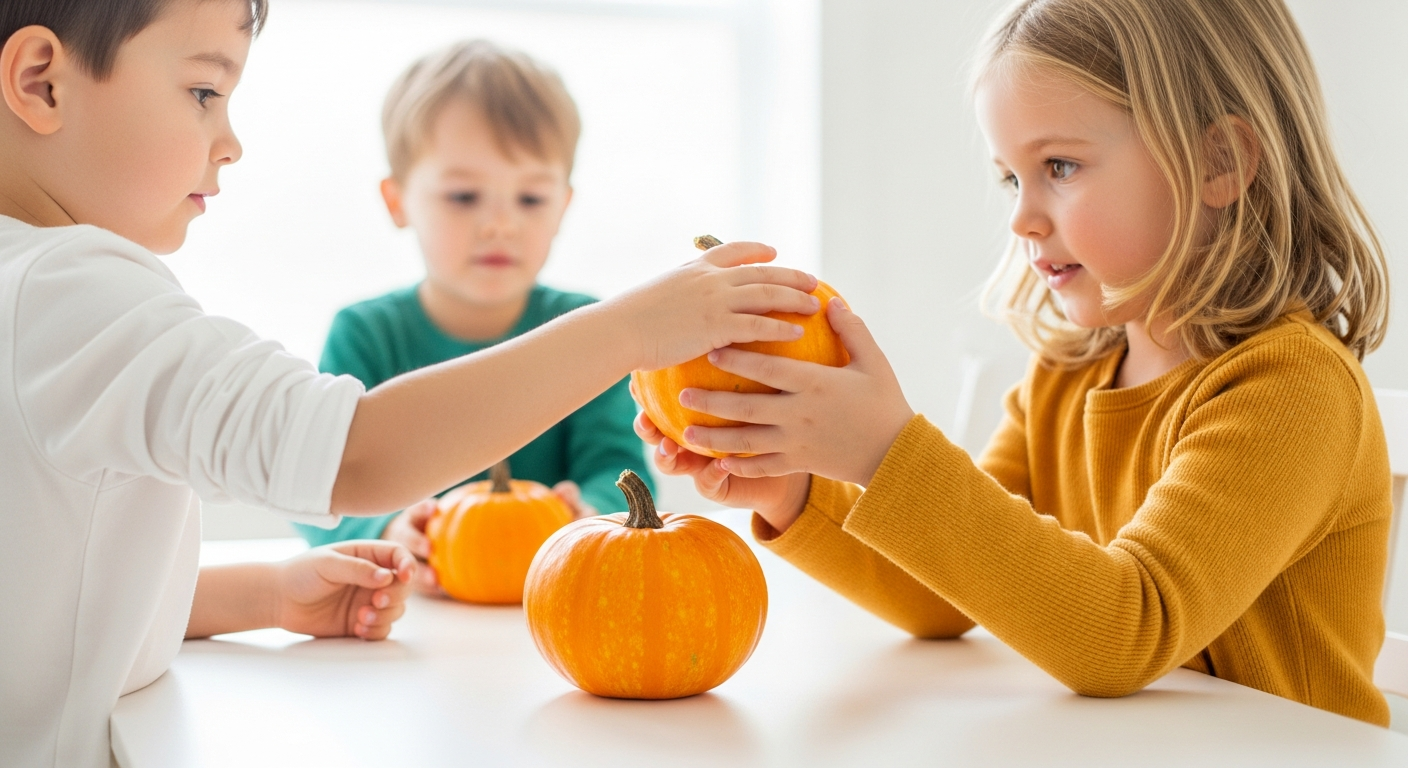
Table of Contents
- Introduction
- The Magic of Pumpkins: More Than Just a Gourd
- Developmental Benefits of Pumpkin Play
- Our Philosophy at Speech Blubs: Play with Purpose
- Engaging Pumpkin Activities for Every Child
- Making the Most of Your Playtime: Parental Engagement and Support
- When to Consider Extra Support: The Speech Blubs Difference
- Ready to Empower Your Child's Voice?
- Join the Speech Blubs Family Today!
- Conclusion
- Frequently Asked Questions (FAQ)
The crisp autumn air, the vibrant hues of changing leaves, and the comforting scent of pumpkin spice often signal one thing: pumpkin season! For many of us, pumpkins evoke images of jack-o'-lanterns and delicious pies. But what if we told you that these quintessential symbols of fall hold a treasure trove of opportunities for rich, hands-on learning and developmental growth for your child? From toddlers taking their first sensory steps to preschoolers mastering new words, pumpkins offer an unparalleled, natural playground for exploration.
At Speech Blubs, we believe that every child deserves the chance to "speak their minds and hearts." Our mission, born from the personal experiences of our founders who faced speech challenges themselves, is to provide effective, joyful solutions. We know firsthand the power of integrating play with scientific principles to create "smart screen time" experiences. This is why we're so passionate about sharing ways to foster development, even through simple, seasonal fun. This blog post isn't just about fun pumpkin activities; it's about unlocking a world of sensory, motor, cognitive, and language development right in your home. Get ready to transform your pumpkins from simple decorations into powerful tools for growth and connection.

Introduction
As the days shorten and a familiar chill enters the air, families eagerly embrace the autumn season. While pumpkin patches, hayrides, and Halloween costumes bring undeniable joy, the humble pumpkin itself offers far more than just carving potential. Many parents find themselves with several pumpkins destined for decoration, often wondering how to extend their use beyond a mere display. The truth is, these autumnal gourds are fantastic natural tools for engaging children in a myriad of developmentally beneficial activities that can significantly impact their early learning journeys.
This article delves deep into a wide array of fun pumpkin activities for kids, demonstrating how these simple, accessible materials can be transformed into opportunities for learning and growth. We will explore how different activities foster crucial skills—from fine motor coordination and sensory processing to early math concepts and, most importantly, language and communication development. Our goal is to equip you with creative ideas that leverage the natural curiosity of children, turning everyday moments into powerful learning experiences. These hands-on activities perfectly complement the foundational work we do at Speech Blubs, where we blend scientific methodology with play to empower children to communicate with confidence and joy.
The Magic of Pumpkins: More Than Just a Gourd
Pumpkins have held a special place in human culture for centuries, evolving from ancient food sources to iconic symbols of harvest and celebration. For children, they are large, intriguing objects that naturally invite interaction. Their varied shapes, sizes, textures, and even smells make them perfect for exploratory play. Unlike manufactured toys, pumpkins offer a unique, organic experience that engages multiple senses and encourages open-ended discovery.
Beyond their seasonal charm, pumpkins are incredibly versatile. They can be painted, poked, smashed, rolled, or even used as vessels for other activities. This inherent adaptability makes them an ideal resource for parents and caregivers looking to provide rich, engaging experiences without needing expensive or complicated supplies. Embracing pumpkin play allows children to connect with nature, understand cycles of growth, and develop an appreciation for the world around them, all while having an absolute blast.

Developmental Benefits of Pumpkin Play
Engaging in pumpkin activities offers a holistic approach to child development, touching upon several key areas. Each interaction with a pumpkin, whether it’s scooping out seeds or rolling it down a hill, contributes to a child’s growing skill set.
Sensory Exploration
Pumpkins provide a rich sensory experience. The smooth, hard exterior gives way to a slimy, stringy interior. The distinct earthy smell, the vibrant orange color, and the cool, wet feel of the pulp all stimulate a child’s senses. Sensory play is vital for developing cognitive skills, improving fine motor control, and helping children understand the world through touch, smell, and sight. It also helps children regulate their emotions and can be incredibly calming.
Fine Motor Skills
Many pumpkin activities inherently involve the development of fine motor skills. Tasks like scooping seeds with a spoon, peeling stickers off a sheet to decorate a pumpkin, or hammering golf tees into its surface require precision, hand-eye coordination, and strengthening of the small muscles in the hands and fingers. These skills are fundamental for future tasks such as writing, drawing, and self-care.
Gross Motor Skills
From rolling a pumpkin across the yard for "pumpkin bowling" to carrying a small gourd during a "mini pumpkin hunt," these activities promote gross motor development. Children develop balance, coordination, strength, and spatial awareness as they move their bodies in various ways. These larger movements are essential for overall physical health and the development of self-confidence.
Cognitive Development
Pumpkins can be excellent tools for fostering cognitive growth. Activities involving sorting seeds, measuring circumference, or predicting whether a pumpkin will sink or float introduce early math and science concepts. Problem-solving skills are sharpened as children figure out how to manipulate objects or complete a task. Open-ended play also encourages creativity and imaginative thinking.
Language and Communication
Perhaps one of the most significant benefits, especially close to our hearts at Speech Blubs, is the opportunity for language and communication development. As children engage with pumpkins, they naturally encounter new vocabulary (e.g., squishy, slimy, round, heavy, smooth). Describing their actions, making predictions, asking questions, and narrating their play are all powerful ways to expand their expressive and receptive language skills. These interactions create a context for meaningful conversations, where parents can model correct speech and encourage their child to "speak their minds and hearts."
Social-Emotional Growth
Shared pumpkin activities foster social-emotional development. Taking turns, cooperating on a joint project, expressing joy or frustration, and persisting through a challenge all contribute to a child’s emotional intelligence and social skills. These moments of connection between child and caregiver are invaluable for building strong bonds and a sense of security.
Our Philosophy at Speech Blubs: Play with Purpose
At Speech Blubs, our commitment to empowering children's voices is deeply personal. Our founders, each with their own childhood experiences of speech challenges, envisioned and built the very tool they wished they had: an immediate, effective, and joyful solution for the 1 in 4 children who need speech support. We believe that learning should be fun, engaging, and rooted in solid scientific principles. This is why we've pioneered a unique "smart screen time" experience, offering a screen-free alternative to passive viewing while simultaneously providing a powerful tool for family connection.
Our methodology, backed by extensive research, centers on "video modeling." Children learn by watching and imitating their peers, a natural and highly effective way to acquire complex communication skills. Just as hands-on pumpkin activities create rich contexts for language use, our app provides a structured, motivating environment where children can practice sounds, words, and sentences, building confidence one interaction at a time. The playful scenarios and peer-to-peer learning within Speech Blubs are designed to spark curiosity and encourage active participation, mirroring the exploratory spirit of the activities we'll discuss.
Engaging Pumpkin Activities for Every Child
Let's dive into some fantastic pumpkin activities that cater to various developmental stages and interests, all while creating precious autumn memories.
1. Sensory Exploration with Pumpkins
Sensory play is fundamental for young children, helping them to process information about the world around them. Pumpkins offer a wealth of sensory experiences.
a. Pumpkin Guts Investigation
- Activity: This classic activity involves cutting open a pumpkin and letting children explore its interior. Provide spoons, scoops, or even just their hands to dig out the seeds and stringy pulp. Place the pumpkin in a large bin or on a tray to contain the mess.
- Benefits: This is a powerhouse for sensory input – the slimy, cool, squishy texture, the earthy smell, and the visual aspects of the seeds and strings. It also builds fine motor skills as children scoop and separate.
- Speech & Language Connection: This is a prime opportunity for vocabulary expansion. Encourage descriptive words like slimy, gooey, sticky, wet, stringy, bumpy, smooth, hard, soft. Ask open-ended questions: "How does it feel?" "What do you see?" For a parent whose child is working on descriptive adjectives, this activity provides a perfect, tangible context. Just like in Speech Blubs' "Animal Kingdom" or "Yummy Time" sections, where children learn to describe animals or food, this activity grounds new vocabulary in a real-world sensory experience.
- Materials: Pumpkin, carving tools (adult use), spoons/scoops, large bin/tray.
b. Pumpkin Sensory Bin Adventures
- Activity: Take a large plastic bin and fill it with various pumpkin-themed items. This could include mini pumpkins, dried pumpkin seeds, corn kernels, fall leaves, pinecones, cinnamon sticks, or even pumpkin-shaped pasta. Add scooping tools, small cups, and bowls.
- Benefits: Encourages tactile exploration, imaginative play, sorting, and early math concepts (counting, categorizing). Children can pour, scoop, hide, and discover.
- Speech & Language Connection: Ideal for practicing action verbs (scoop, pour, hide, find), prepositions (in, on, under), and categorization (seeds, leaves, pumpkins). Narrate your child's actions: "You are scooping the seeds into the cup!" This type of descriptive narration, which we encourage parents to do alongside our app, helps children internalize sentence structure and word usage.
- Materials: Large bin, mini pumpkins, dried seeds, fall leaves, scooping tools, small containers.
c. "Frozen Pumpkin Rescue"
- Activity: Freeze small pumpkins or pumpkin pieces in a block of ice (in a container or balloon). Once frozen, give your child warm water, droppers, squirt bottles, and small hammers or plastic tools to "rescue" the pumpkin.
- Benefits: Problem-solving, fine motor skill development (using droppers), hand strength, and understanding cause-and-effect.
- Speech & Language Connection: Focus on action words like melt, drip, pour, chip, break, squirt. Discuss concepts like cold, warm, wet, frozen. You can narrate the process: "The ice is so cold! Let's pour some warm water to help the pumpkin melt out." These action-oriented descriptions are crucial for building early verbs and concepts, similar to the dynamic scenarios presented in Speech Blubs that prompt active vocalization.
- Materials: Small pumpkins/pieces, freezer-safe container, water, warm water, droppers, squirt bottles, plastic tools.
2. Creative Arts & Crafts with Pumpkins
Unleash your child's inner artist with these delightful pumpkin-centric creative activities.
a. Drip, Splatter, and Brush: Pumpkin Painting
- Activity: Instead of carving, let your child paint pumpkins! Provide non-toxic, washable paints, various brushes, sponges, and even squeeze bottles. White pumpkins offer a fantastic canvas for vibrant colors. Lay down a drop cloth or do this activity outdoors.
- Benefits: Boosts fine motor control, color recognition, and self-expression. It's a less intimidating and safer alternative to carving for younger children.
- Speech & Language Connection: A perfect opportunity to name colors, describe actions (paint, drip, spread), and discuss the artwork ("That's a blue pumpkin with green dots!"). This encourages descriptive language and helps children articulate their creative choices, fostering their ability to "speak their hearts."
- Materials: Pumpkins (white if possible), non-toxic paints, brushes, sponges, squeeze bottles, drop cloth.
b. Sticker & Collage Art
- Activity: Provide a variety of stickers (seasonal, shapes, animals), fabric scraps, yarn, googly eyes, and non-toxic glue. Let your child adorn their pumpkin with a unique collage. For toddlers, focus on larger stickers that are easier to peel.
- Benefits: Excellent for fine motor skills (peeling, sticking, gluing), spatial reasoning, and creativity.
- Speech & Language Connection: Work on positional words (on top, next to, under), colors, shapes, and textures (fuzzy, smooth, rough). Give simple instructions: "Put the red sticker on top of the pumpkin." This helps with following multi-step directions, a skill reinforced through the guided activities within Speech Blubs.
- Materials: Pumpkins, stickers, fabric scraps, yarn, googly eyes, non-toxic glue.
c. Pumpkin Papier Mache (Balloon Base)
- Activity: Inflate a balloon to the desired pumpkin size. Mix flour and water to create a paste. Dip newspaper strips in the paste and layer them over the balloon, leaving an opening at the top for a "stem." Let it dry completely, then pop the balloon. Paint the resulting shell orange and add a green pipe cleaner stem.
- Benefits: Teaches patience, sequencing (first, next, then), and fine motor control. It's a multi-step project that culminates in a tangible, lasting creation.
- Speech & Language Connection: This activity is rich for sequencing and narrative. Describe each step as you do it: "First, we mix the glue. Then, we dip the paper. Next, we stick it on the balloon." This explicit sequencing helps children develop pre-narrative skills, much like the story-based activities in Speech Blubs that encourage children to put events in order.
- Materials: Balloons, newspaper strips, flour, water, mixing bowl, orange/green paint, paintbrushes, green pipe cleaners.
3. Science & Math Adventures
Transform pumpkins into hands-on learning tools for early scientific and mathematical exploration.
a. Sink or Float: The Great Pumpkin Experiment
- Activity: Fill a large tub with water. Gather pumpkins of various sizes. Ask your child to predict if each pumpkin will "sink" or "float" before placing it in the water. Discuss the results.
- Benefits: Introduces concepts of density, prediction, observation, and encourages scientific inquiry. Children learn about cause-and-effect in a fun, tangible way.
- Speech & Language Connection: Emphasize the vocabulary: sink, float, heavy, light, big, small. Encourage children to explain why they think a pumpkin will sink or float. "The big pumpkin is heavy, so it will sink!" This activity naturally promotes comparative language and reasoning.
- Materials: Large tub of water, pumpkins of different sizes.
b. Pumpkin Measurement Mania
- Activity: Provide various pumpkins and tools like yarn, measuring tape, or a simple kitchen scale. Have children measure the circumference of pumpkins with yarn, compare lengths, or weigh them.
- Benefits: Introduces non-standard and standard measurement, number recognition, and comparison. Great for hands-on math skills.
- Speech & Language Connection: Focus on comparative adjectives: longer, shorter, heavier, lighter, bigger, smaller. Count along as you measure. For a child working on numerical concepts or comparisons, this activity makes abstract ideas concrete and provides a natural opportunity for verbalizing observations.
- Materials: Pumpkins, yarn, measuring tape, kitchen scale.
c. Foaming Pumpkin Volcano
- Activity: Carefully carve out a small hole in the top of a pumpkin. Inside, place baking soda and a few drops of dish soap and food coloring (optional). Then, pour vinegar into the hole and watch the "lava" erupt!
- Benefits: A captivating demonstration of chemical reactions, cause-and-effect, and observation skills. It's exciting and memorable!
- Speech & Language Connection: Elicit exclamations like Wow! Boom! Fizz! Look!. Describe the action: "The pumpkin is foaming! It's bubbling! The lava is coming out!" This encourages expressive language and provides a high-interest context for action verbs.
- Materials: Pumpkin (with small top hole), baking soda, dish soap, food coloring, vinegar, tray to catch foam.
4. Fine & Gross Motor Skill Builders
Pumpkins can be surprisingly effective tools for developing both precise small movements and larger body coordination.
a. Hammering Tees into Pumpkins
- Activity: Give your child golf tees and a small toy hammer (or their hands) and let them hammer the tees into the pumpkin's surface.
- Benefits: Excellent for developing hand-eye coordination, fine motor strength, and concentration. It's a satisfying activity that offers a unique tactile experience.
- Speech & Language Connection: Focus on action verbs: hammer, tap, push, pull. Count the tees as they go in. Ask, "How many tees are left?" This helps with number concepts and action-oriented vocabulary.
- Materials: Pumpkin, golf tees, small toy hammer (or hands).
b. Pumpkin Bowling
- Activity: Arrange several small pumpkins or gourds as "pins." Use a slightly larger, rounder pumpkin as the "bowling ball." Set up a "lane" indoors or outdoors and let your child roll the pumpkin to knock over the pins.
- Benefits: Boosts gross motor skills, hand-eye coordination, balance, and understanding of cause-and-effect. It's a great way to incorporate active play.
- Speech & Language Connection: Practice counting the pins knocked down. Use positional words: roll, over, down, crash. Encourage turn-taking and phrases like "My turn!" and "Your turn!" which are crucial for social communication.
- Materials: 6-10 small pumpkins/gourds (pins), 1 medium-sized round pumpkin (ball).
c. Mr. Pumpkin Head
- Activity: Using a screwdriver (adult supervision required for making holes), poke various holes into a pumpkin. Then, provide Mr. Potato Head parts (eyes, nose, mouth, ears) for your child to push into the holes, creating funny faces.
- Benefits: Develops fine motor skills, hand strength, problem-solving, and body part identification. It also encourages creative expression.
- Speech & Language Connection: This is fantastic for naming body parts (eyes, nose, mouth, ears) and discussing emotions (happy, sad, silly). You can model phrases like "Put the big red nose on Mr. Pumpkin Head." This direct naming and labeling is a core strategy in early language acquisition, echoed in the structured learning segments of Speech Blubs.
- Materials: Pumpkin, screwdriver (adult use), Mr. Potato Head parts.
5. Language-Rich Pumpkin Play
Integrate specific strategies to maximize the language and communication benefits of your pumpkin fun.
a. Storytelling with Pumpkin Characters
- Activity: After decorating several pumpkins, assign each one a "character." Encourage your child to create a story using these pumpkin characters. You can provide prompts like "Once upon a time..." or "What happens next?"
- Benefits: Fosters narrative skills, imagination, sequencing, and expressive language.
- Speech & Language Connection: This activity directly supports the development of complex sentence structures and storytelling abilities. Children learn to connect ideas, introduce characters, and describe actions, which are advanced communication skills that Speech Blubs helps to build through interactive narratives and prompts.
- Materials: Decorated pumpkins, props (optional).
b. "Pumpkin, Pumpkin, What Do You See?" (I-Spy)
- Activity: Hide small objects inside a hollowed-out pumpkin or around a pumpkin display. Play a game of "I Spy" using descriptive clues about the hidden objects. Alternatively, have your child reach inside a pumpkin (with the top off and guts removed) and describe what they feel without looking.
- Benefits: Enhances object identification, descriptive language, listening skills, and questioning abilities.
- Speech & Language Connection: Focus on sensory adjectives and object names. "I spy something orange and round..." or "I feel something soft and bumpy." This activity encourages both receptive (listening to clues) and expressive (giving clues, describing feelings) language, directly supporting the vocabulary and articulation practice found in the Speech Blubs app.
- Materials: Pumpkin, small objects to hide.
c. Pumpkin Rhymes & Songs
- Activity: Incorporate classic pumpkin-themed songs and fingerplays like "Five Little Pumpkins." You can also make up your own simple rhymes about your pumpkin activities.
- Benefits: Develops phonological awareness (rhyming, syllables), memory, and rhythm.
- Speech & Language Connection: Rhyming is a critical pre-reading skill that helps children recognize patterns in language and discriminate between sounds, which is fundamental for clear articulation. Singing and repeating rhymes also build auditory memory and vocabulary.
- Materials: None needed, just your voices!
Making the Most of Your Playtime: Parental Engagement and Support
The true magic of these pumpkin activities isn't just in the pumpkins themselves, but in the interaction between you and your child. Your active engagement is the most powerful catalyst for learning and development.
- Be Present and Co-Play: Join in the fun! Get messy, ask questions, and share in your child's discoveries. When you play with them, you create a rich environment for connection and learning.
- Ask Open-Ended Questions: Instead of "What color is it?" try "What do you notice about this pumpkin?" or "How do you think this feels?" These questions encourage more detailed responses and critical thinking.
- Follow Your Child's Lead: If your child is more interested in squishing pumpkin guts than painting, embrace it! Their curiosity is a powerful guide.
- Narrate and Model Language: Describe what your child is doing, seeing, and feeling. Use rich vocabulary and full sentences. For example, "You are carefully scooping the slimy seeds into the small red bowl."
- Celebrate Small Victories: Acknowledge their efforts, their creativity, and their attempts at communication, no matter how small. Positive reinforcement builds confidence and encourages further engagement.
When to Consider Extra Support: The Speech Blubs Difference
Sometimes, despite all the wonderful hands-on play, you might notice your child struggling with certain sounds, vocabulary, or putting sentences together. As parents who personally experienced speech challenges, our founders understood this journey. They created Speech Blubs to be a supportive, scientifically-backed resource for families seeking that extra boost.
Our app's "smart screen time" uses engaging video modeling, where children learn by observing and imitating their peers. This unique approach transforms screen time from a passive activity into an active learning experience, empowering children to develop crucial communication skills. It's a powerful supplement to real-world interactions and, when applicable, professional therapy, providing an immediate, effective, and joyful solution for improving speech and language. We're proud that our methodology is highly rated and backed by science, consistently placing us in the top tier of speech apps worldwide.
Ready to Empower Your Child's Voice?
If you're wondering whether your child could benefit from targeted speech and language support, we invite you to take the first step. Our quick 3-minute preliminary screener is designed with 9 simple questions to give you a clearer understanding of your child's communication development. It provides an immediate assessment and a personalized next-steps plan, guiding you toward the best path forward. This screener also offers a free 7-day trial of Speech Blubs, allowing you to experience our unique, joyful approach firsthand.
Join the Speech Blubs Family Today!
Embark on a journey to empower your child’s voice and foster their love for communication. At Speech Blubs, we are dedicated to providing the tools and support families need to help their children "speak their minds and hearts."
We offer two convenient subscription plans to fit your family's needs:
- Monthly Plan: Priced at $14.99 per month.
- Yearly Plan: Our most popular and best-value option, at just $59.99 per year. This breaks down to an incredible value of only $4.99 per month – a savings of 66% compared to the monthly plan!
Choosing the Yearly plan isn't just about saving money; it unlocks a comprehensive suite of features designed for maximum impact:
- 7-day free trial: Experience the full power of Speech Blubs risk-free.
- The extra Reading Blubs app: An invaluable companion for developing early literacy skills.
- Early access to new updates: Be the first to enjoy new content and features.
- 24-hour support response time: Get prompt assistance whenever you need it.
The Monthly plan, while flexible, does not include these additional benefits, making the Yearly plan the clear choice for families committed to their child's long-term development.
Don't miss out on the full Speech Blubs experience. Start your journey toward confident communication today! Create your account and begin your 7-day free trial by selecting the Yearly plan to unlock all features.
Or, if you’re ready to dive in, Download Speech Blubs on the App Store or Google Play today!
Conclusion
From sensory explorations to creative masterpieces and scientific discoveries, pumpkins offer a vibrant, natural canvas for countless hours of fun and learning. These hands-on activities are not just about celebrating the autumn season; they are powerful opportunities to foster essential developmental skills, build vocabulary, and create meaningful connections with your child. By embracing these ideas, you're investing in your child's cognitive, motor, and social-emotional growth, all while making cherished memories.
Just as these pumpkin activities provide a playful foundation for learning, Speech Blubs is here to reinforce and amplify that development. Our unique app ensures that even screen time is smart, active, and rooted in helping your child gain confidence in their voice. Together, through engaging hands-on play and our innovative "video modeling" approach, we can empower your child to truly "speak their minds and hearts." We believe in realistic expectations—fostering a love for communication, building confidence, reducing frustration, and developing key foundational skills, one joyful moment at a time. So, go ahead, grab a pumpkin, and let the learning (and the fun!) begin!
Frequently Asked Questions (FAQ)
1. How can pumpkin activities support my child's speech development?
Pumpkin activities provide rich, natural contexts for language use. Children can learn new vocabulary (e.g., slimy, round, heavy), practice descriptive language, follow instructions, ask questions, and engage in storytelling. Activities like scooping seeds or pumpkin painting offer real-world scenarios for using action verbs and adjectives, which are critical for expanding expressive language. Parents can narrate the play, model correct pronunciation, and encourage conversation.
2. Are these activities suitable for all ages?
Yes, pumpkin activities are highly adaptable for various age groups. For toddlers, focus on sensory exploration like gut scooping or simple painting. Preschoolers can engage in more structured activities like "Mr. Pumpkin Head" or "Pumpkin Bowling," which involve following multi-step directions and developing social skills. Older children can enjoy complex science experiments, storytelling, or detailed craft projects. The key is to adjust the complexity and level of supervision to match your child's developmental stage.
3. What if my child isn't interested in a particular activity?
It's common for children to have varying interests. If your child isn't keen on one activity, don't force it. Instead, observe what does capture their attention and pivot accordingly. Perhaps they prefer the sensory aspect of touching the pumpkin to the artistic side of painting it. Offer choices and let them lead the play. The goal is engagement and enjoyment, which will naturally lead to learning. Providing a variety of options throughout the season can also help spark new interest.
4. How does Speech Blubs fit in with these hands-on activities?
Speech Blubs perfectly complements hands-on activities by providing structured, targeted practice in a fun, digital environment. While pumpkin play offers organic language exposure, Speech Blubs uses "smart screen time" with video modeling to help children actively practice sounds, words, and sentences they encounter in real life. It reinforces vocabulary, improves articulation, and builds confidence in a way that’s engaging and effective. Think of the app as a powerful supplementary tool that strengthens the foundational communication skills children develop during real-world play, empowering them to "speak their minds and hearts" with greater clarity and joy.
About the author