
Quick & Easy Christmas Crafts for Happy Kids
 By Speech Blubs Team•Dec 22, 2025•22 min.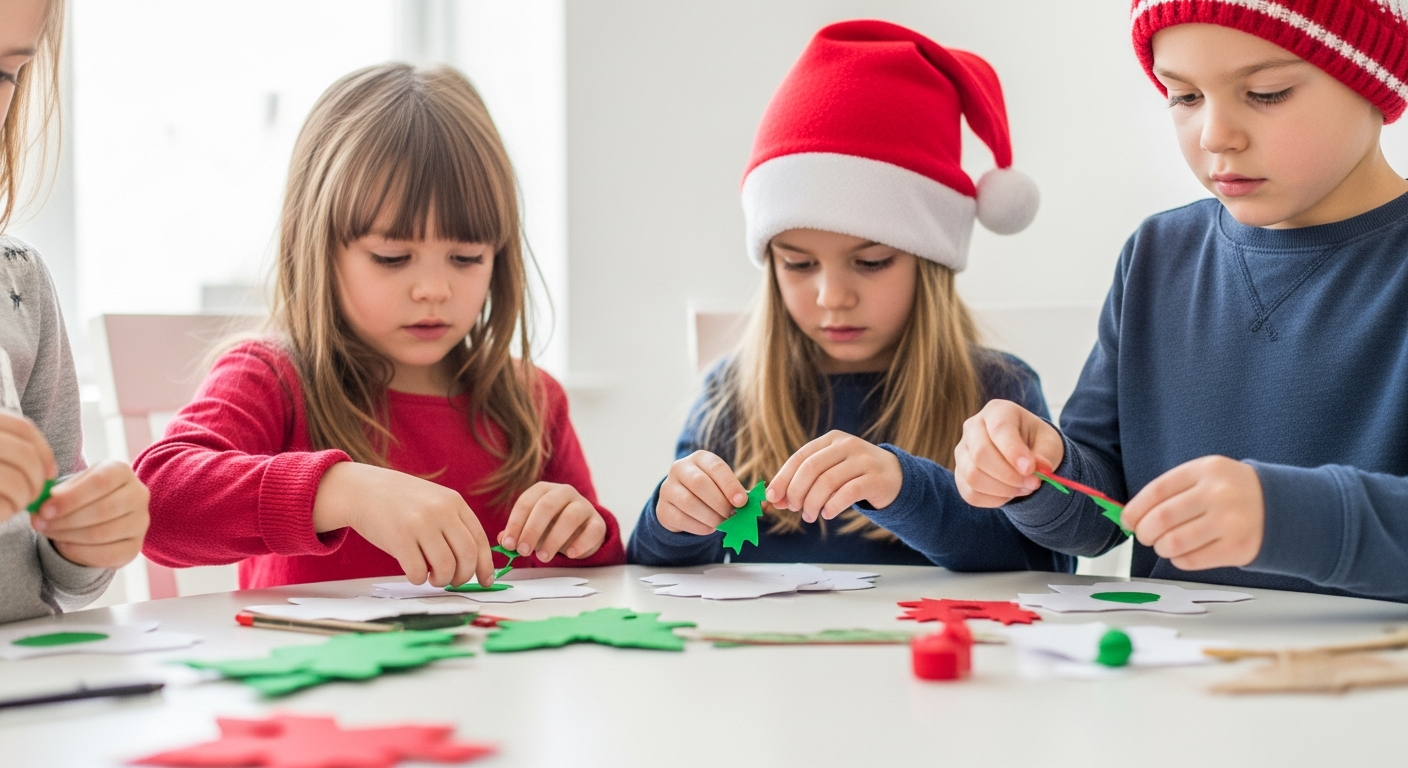
Table of Contents
- Why Crafting is More Than Just Fun
- Quick & Easy Christmas Crafts by Category
- Maximizing Language Opportunities During Craft Time
- Why Speech Blubs is Your Perfect Crafting Companion
- Getting Started with Speech Blubs Today
- Conclusion
- FAQ
The holiday season often feels like a whirlwind of joyful chaos – endless to-do lists, festive preparations, and the magical anticipation of Christmas morning. Amidst the hustle and bustle, one common challenge for parents is finding engaging, meaningful activities that truly connect the family and capture the spirit of the season without adding extra stress. Many of us yearn for those heartwarming moments of shared creativity, but the thought of complex projects with messy cleanups can feel daunting. But what if we told you that creating lasting memories and boosting your child’s development doesn't require a master art degree or hours of preparation?
This blog post is your ultimate guide to a treasure trove of quick and easy Christmas crafts designed specifically for kids. We’ll explore a delightful array of festive projects that are simple to set up, fun to make, and easy to clean up, ensuring more joy and less stress for everyone. Beyond the sheer fun, we’ll delve into how these hands-on activities are powerful tools for fostering essential skills, from fine motor coordination to problem-solving. Most importantly, we'll uncover how these creative moments naturally become rich opportunities for language development and connection, transforming simple crafting into a meaningful learning experience. Our core message is that with a little creativity and the right approach, you can turn holiday crafting into cherished family traditions that nurture your child's imagination, build their confidence, and even empower their voice, making this Christmas truly special.

Why Crafting is More Than Just Fun
Crafting with children during the holidays is a time-honored tradition that brings warmth and wonder into our homes. But the benefits extend far beyond simply creating a festive decoration or a handmade gift. These simple activities are incredibly potent catalysts for a child's holistic development, touching upon physical, cognitive, emotional, and, crucially, linguistic domains.
Think about the sheer concentration on a child’s face as they carefully snip paper with safety scissors, the precision required to apply a dab of glue, or the decision-making involved in choosing the perfect glitter color. Each of these small actions builds crucial fine motor skills and hand-eye coordination – the very foundation for tasks like writing, dressing themselves, and even feeding. Moreover, crafting encourages creativity and imagination, allowing children to express their unique ideas and see their visions come to life. There's a wonderful sense of accomplishment when they hold up their finished masterpiece, fostering self-esteem and pride.
The Power of Play for Language Development
Perhaps one of the most significant, yet often underestimated, benefits of crafting is its profound impact on language development. When children engage in hands-on activities, they are naturally immersed in a world of words. Crafting provides countless organic opportunities for:
- Vocabulary Expansion: Naming materials (glue, glitter, paper, ribbon), describing colors, shapes, and textures (sticky, smooth, sparkly, soft, bumpy), and identifying actions (cut, paste, draw, fold, paint).
- Following Instructions: Listening to and understanding multi-step directions, which is a vital skill for both academic success and daily life.
- Descriptive Language: Encouraging children to talk about their creations, explain their choices, and describe what they are making. This helps them articulate thoughts and feelings.
- Questioning and Answering: Prompting natural questions like "What's next?" or "Can I have the red one?" and practicing answering prompts like "What did you make?"
- Social Communication: Engaging in conversations with family members, sharing ideas, and even negotiating turns with materials.
These interactions are not just about making a craft; they are about building a rich linguistic environment where communication is natural, exciting, and purposeful. It’s during these joyful, low-pressure moments that children feel most comfortable exploring sounds, words, and sentences.

How Speech Blubs Enhances This Learning
At Speech Blubs, we deeply understand the power of play and interaction in fostering communication skills. Our mission is to empower children to "speak their minds and hearts," and we believe that every interaction, including crafting, is an opportunity for growth. While these crafts provide fantastic "screen-free" interaction, we recognize that sometimes children need a little extra support and fun, scientifically-backed engagement. This is where Speech Blubs steps in as a powerful companion.
We were founded by individuals who grew up with speech problems, leading them to create the very tool they wished they had: an immediate, effective, and joyful solution for the 1 in 4 children who need speech support. Our app blends scientific principles with play, creating one-of-a-kind "smart screen time" experiences that complement hands-on activities.
For instance, if your child is working on specific sounds or vocabulary while making a "Pinecone Reindeer" (perhaps practicing "nose" or "brown"), our app offers sections dedicated to articulation practice and word categories. We use a unique "video modeling" methodology, where children learn by watching and imitating their peers, providing an engaging and effective way to practice sounds and words related to their crafting experience. This approach capitalizes on the power of "mirror neurons" – the very same neurological mechanism activated when children observe and imitate actions in real life, making our "smart screen time" a dynamic, interactive experience, far removed from passive viewing.
Unsure if your child could benefit from a little extra speech support? Take our quick 3-minute preliminary screener to get a simple assessment and a free 7-day trial. It’s a great first step to understanding your child's communication needs and discovering how our unique approach can help.
Quick & Easy Christmas Crafts by Category
Let's dive into some wonderful, stress-free Christmas craft ideas that are perfect for kids of all ages. Remember, the goal is fun, creativity, and communication, not perfection!
1. Dazzling Ornaments
Handmade ornaments are not just decorations; they are cherished keepsakes that bring back memories year after year.
a. Salt Dough Ornaments (Ages 3+)
- Materials: 1 cup flour, 1/2 cup salt, 1/2 cup water (approx.), cookie cutters, straw, paints, glitter, ribbon.
- Process: Mix flour, salt, and water to form a dough. Roll it out, cut shapes with Christmas cookie cutters (stars, trees, bells). Use a straw to make a hole for hanging. Bake at 250°F (120°C) for 2-3 hours until hard, or air dry for 24-48 hours. Once cooled, children can paint and decorate them.
- Communication Opportunities:
- Vocabulary: "Dough," "roll," "cut," "smooth," "star," "tree," "bake," "paint," "glitter," "ribbon."
- Following Instructions: "Roll the dough flat," "Use the star cutter," "Paint it red."
- Descriptive Language: "My ornament is sparkly!" "This tree is green."
- Scenario: For a child working on action words, say "roll the dough!" or "cut the star!" Emphasize these words. If they love learning about colors, our app has a vibrant "Colors" section where they can practice naming and identifying hues, reinforcing what they use on their ornaments.
b. Pinecone Reindeer Ornaments (Ages 4+)
- Materials: Pinecones, googly eyes, small red pom-poms (for noses), brown pipe cleaners (for antlers), glue, string or ribbon.
- Process: Glue googly eyes onto the wide end of the pinecone. Attach a red pom-pom below the eyes for a nose. Twist pipe cleaners into antler shapes and glue them to the top of the pinecone. Add a loop of string for hanging.
- Communication Opportunities:
- Body Parts: "Eyes," "nose," "antlers."
- Animal Sounds/Names: "Reindeer," "What sound does a reindeer make?" (Imaginary).
- Spatial Concepts: "On top," "below," "next to."
- Scenario: If your child is fascinated by animals, this craft is perfect! After making the reindeer, you could explore our Speech Blubs app in the "Animal Kingdom" section to practice animal sounds and names, making connections between their craft and new vocabulary.
c. Handprint Santa/Snowman Ornaments (Ages 2+)
- Materials: Air-dry clay or salt dough, paints, brushes, glitter.
- Process: Roll out clay/dough. Press child's hand firmly into it. Cut around the handprint shape. Make a hole for hanging. Let dry. Once dry, paint the thumb as Santa's head and fingers as his beard, or paint it all white for a snowman.
- Communication Opportunities:
- Body Parts: "Hand," "fingers," "thumb."
- Color Names: "Red," "white," "pink."
- Descriptive Words: "My hand," "big," "small," "cold" (for snowman).
- Scenario: For a toddler just starting to label body parts, this craft reinforces "hand" and "fingers." Then, while painting, practice colors. "What color is Santa's hat? Red!" This simple repetition helps solidify new words.
2. Festive Decorations for the Home
These crafts add a personal touch to your holiday décor and are easy for little hands to manage.
a. Paper Chain Countdown (Ages 3+)
- Materials: Construction paper (red, green, white), glue stick or tape, scissors.
- Process: Cut paper into strips. Form the first strip into a loop and secure it. Thread the next strip through the first loop, secure it, and repeat until you have a long chain. Make one loop for each day until Christmas!
- Communication Opportunities:
- Counting: Counting the strips, counting down the days.
- Colors: "Red strip," "green loop."
- Actions: "Cut," "glue," "loop," "hold."
- Scenario: This is fantastic for early math skills and sequencing. As you count down the days, you can ask, "How many sleeps until Christmas?" or "Which color comes next?" For children developing sentence structure, encourage "I cut the paper" or "I made a loop."
b. Cotton Ball Snowman (Ages 2+)
- Materials: Blue or black construction paper, cotton balls, glue, googly eyes, orange construction paper (for nose), markers.
- Process: Draw three circles on the paper (big, medium, small). Have the child glue cotton balls inside the circles to fill them. Add googly eyes, an orange triangle nose, and draw a mouth and stick arms.
- Communication Opportunities:
- Sizes: "Big," "medium," "small."
- Textures: "Soft," "fluffy."
- Body Parts: "Eyes," "nose," "mouth," "arms."
- Scenario: This craft helps reinforce size concepts. "Which circle is big? Which one is small?" For children struggling with labeling emotions, you can draw different mouths (happy, sad, surprised) and ask them to name the feeling, connecting visual cues with emotional vocabulary.
c. Cardboard Roll Santa/Elf (Ages 3+)
- Materials: Empty toilet paper rolls, construction paper (red, green, white), cotton balls, glue, markers.
- Process: Wrap a toilet paper roll in red paper for Santa or green for an elf. Add a white strip for Santa's beard, cotton balls for his hat trim and beard, and a tiny pom-pom for his nose. For an elf, add pointy ears and a hat. Draw faces.
- Communication Opportunities:
- Character Names: "Santa," "Elf."
- Clothing Items: "Hat," "beard," "ears."
- Colors: "Red," "green," "white."
- Scenario: Role-playing with these figures after they're made is a great way to encourage imaginative play and conversation. You can ask, "What does Santa say?" or "What gift does the elf have?" This naturally expands into storytelling and developing narrative skills.
3. Thoughtful Gifts & Cards
Nothing beats a handmade gift from a child. These are simple ways for kids to share their love.
a. Personalized Christmas Cards (Ages 2+)
- Materials: Cardstock, markers, crayons, stickers, glitter glue, child's photo (optional).
- Process: Fold cardstock in half. Let children decorate the front with drawings, stickers, or their own photos. Write a simple message inside, or have them dictate a message to you.
- Communication Opportunities:
- Sharing & Giving: Discussing who the card is for and why.
- Emotions: "Happy," "loving," "sending wishes."
- Writing/Drawing: Describing their artwork, practicing pre-writing strokes.
- Scenario: This is a perfect opportunity for children to think about others. "Who are we sending this card to? What do you want to tell Grandma?" If your child is a "late talker" but loves to draw, this gives them a tangible item to talk about: "My drawing! My tree! My Santa!" These small utterances are vital steps towards more complex sentences. If you're observing your child is a late talker, you can learn more about how we help on our Speech Blubs homepage.
b. Decorated Treat Bags (Ages 3+)
- Materials: Brown paper bags, markers, stamps, stickers, candy/small treats.
- Process: Children decorate paper bags with festive drawings, stamps, or stickers. Once dry, fill with homemade cookies or small candies.
- Communication Opportunities:
- Descriptive Adjectives: "Sweet," "yummy," "colorful," "pretty."
- Actions: "Decorate," "fill," "give."
- Social Language: "Thank you," "Merry Christmas."
- Scenario: This craft encourages generosity and social interaction. Talk about the treats, their flavors, and who will receive them.
4. Sensory & Play Crafts
Engaging multiple senses can be incredibly beneficial for development and adds an extra layer of fun.
a. Jingle Bell Shakers (Ages 1+)
- Materials: Empty plastic bottles (water bottles work well), small jingle bells, rice or dried beans, glue (to seal lid).
- Process: Help children put jingle bells and some rice/beans into the bottle. Securely glue the lid shut. Shake, shake, shake!
- Communication Opportunities:
- Sounds: "Shake," "jingle," "loud," "quiet."
- Actions: "Shake," "listen," "make music."
- Cause and Effect: "If I shake it, it makes noise!"
- Scenario: Excellent for very young children or those working on sound imitation. Mimic the "shake, shake" sound. Encourage them to say "bell" or "shake." Our app has specific sections for imitating sounds and actions, which would pair well with this sensory activity.
b. Christmas Slime (Ages 4+)
- Materials: Clear glue, liquid starch or contact solution + baking soda, food coloring (red/green), glitter, small festive beads or sequins.
- Process: Follow a simple slime recipe. Add food coloring and glitter to the glue before mixing with the activator. Knead until it forms slime.
- Communication Opportunities:
- Textures: "Stretchy," "sticky," "squishy," "smooth."
- Colors & Sparkle: "Green," "red," "sparkly."
- Actions: "Stretch," "pull," "squeeze," "mix."
- Scenario: Slime is a sensory powerhouse! It naturally encourages children to describe what they're feeling and doing. "It's so stretchy!" or "Look, the red glitter!" This provides a fantastic, tactile way to build descriptive vocabulary.
5. Edible Crafts
Combining crafting with a tasty treat is always a winner!
a. Cookie Decorating (Ages 2+)
- Materials: Pre-baked sugar cookies (store-bought or homemade), icing (tubes or bowls), sprinkles, candies.
- Process: Set out cookies, icing, and toppings. Let children decorate to their hearts' content.
- Communication Opportunities:
- Colors: "Green icing," "red sprinkles."
- Shapes: "Star cookie," "round candy."
- Taste: "Sweet," "yummy."
- Actions: "Spread," "sprinkle," "eat."
- Scenario: This is a classic for a reason. It's a low-pressure activity where the reward is immediate. Focus on simple vocabulary like "more icing," "sprinkle," and naming the colors. For a parent whose 3-year-old is a "late talker" and loves sweets, this is a highly motivating way to elicit words like "cookie," "more," or "eat."
b. Chocolate-Dipped Pretzel Rods (Ages 3+)
- Materials: Pretzel rods, melting chocolate (white, dark, milk), festive sprinkles.
- Process: Melt chocolate. Dip pretzel rods halfway into the chocolate. Immediately cover with sprinkles. Place on parchment paper to cool and harden.
- Communication Opportunities:
- Textures: "Crunchy" (pretzel), "smooth" (chocolate), "sprinkly."
- Colors: "White chocolate," "colorful sprinkles."
- Actions: "Dip," "sprinkle," "cool."
- Scenario: This activity is great for following simple sequences. "First, dip in chocolate. Then, sprinkle." Reinforce the action words.
Maximizing Language Opportunities During Craft Time
Crafting inherently offers a rich environment for language development, but with a few intentional strategies, you can supercharge these moments. Remember, the goal is natural interaction, not forced drills.
Engaging in Back-and-Forth Communication
The most crucial element is simply talking! Narrate your actions, ask open-ended questions, and respond enthusiastically to your child's attempts at communication.
- Describe Everything: "I'm cutting the long, red paper." "You're gluing the sticky cotton ball."
- Ask Open-Ended Questions: Instead of "Do you like it?", try "What's your favorite part?" or "Tell me about what you're making." This encourages more than a 'yes' or 'no' response.
- Follow Their Lead: If your child points to the glitter, say "Oh, you want the sparkly glitter!" and offer it. Expand on their interests.
- Scenario: For a child working on developing conversational turn-taking, creating "Paper Plate Reindeer" provides a great opportunity. You can say, "I'm gluing the eyes," then wait for them to respond or take their turn. "Your turn! What do you want to glue next?" This helps build the rhythm of conversation.
Expanding Vocabulary
Introduce new words and use descriptive language frequently.
- Label Everything: Name tools, colors, shapes, and textures as you use them.
- Use Adjectives: "This glue is sticky." "Look at the bright green tree." "This ribbon is shiny."
- Categorize: "These are all ornaments." "These are things we need for decorating."
- Scenario: When making "Salt Dough Ornaments," you can talk about the "texture" of the dough, the "fragrance" of the paint, and the "shimmering" glitter. This enriches their vocabulary beyond basic nouns.
Practicing Sounds and Articulation
Craft time can be a fun, pressure-free way to practice specific speech sounds.
- Highlight Target Sounds: If your child is working on the "s" sound, gather scissors, stickers, and sprinkles for a craft. "Can you snip the paper with the scissors?"
- Repetition: Repeat words with target sounds in a natural context. For a child working on 'k' sounds, make a 'Christmas card' with 'cotton' balls and 'crayons'.
- Sound Effects: Incorporate fun sounds – "snip-snip" for cutting, "squish" for glue, "boing" for a springy decoration.
- Scenario: For a parent whose child is working on the 'k' sound, making a "Cotton Ball Snowman" offers opportunities to say "cotton," "cold," "circle," and "cookie" (if you're having a snack break!).
Encouraging Descriptive Language
Help your child become a storyteller about their creations.
- "Tell Me About It": After a craft is finished, ask your child to describe it. "Tell me about your Santa. What's special about him?"
- Compare and Contrast: "Your snowman has big buttons, and mine has small ones!"
- Explain Steps: "How did you make that star?"
- Scenario: After decorating "Gingerbread Cookies," encourage your child to describe their cookie using adjectives: "My cookie is sparkly and has a big red nose!" This builds confidence in expressing ideas.
Following Instructions
Crafts are perfect for practicing listening skills and understanding multi-step directions.
- One-Step Directions (for younger children): "Glue the eye." "Put on the hat."
- Two-Step Directions (for older children): "First, cut the paper, then glue it on."
- Visual Cues: Demonstrate the steps as you give instructions.
- Scenario: While making "Pinecone Reindeer Ornaments," you can say, "First, get two googly eyes. Then, put glue on the back." This helps children practice auditory processing and memory.
Remember, fostering a love for communication and building confidence are key. Don't worry about perfection; focus on the process, the interaction, and the joy of creating together.
Why Speech Blubs is Your Perfect Crafting Companion
As parents, we're always looking for tools that genuinely support our children's growth. We understand that crafting is about more than just a finished product; it’s about shared experiences and developmental strides. At Speech Blubs, we believe in supporting every step of that journey.
Our Mission to Empower Voices
Our company was born from a very personal place. Our founders all grew up with speech problems, which gave them a unique insight into the challenges children and families face. This experience fueled their passion to create the immediate, effective, and joyful solution they wished they had—a tool to empower every child to "speak their minds and hearts." We are committed to providing robust speech support that blends scientific principles with playful activities, creating what we call "smart screen time." This isn't passive entertainment; it's an interactive, educational experience.
The Science Behind Our "Smart Screen Time"
Our unique video modeling methodology is at the heart of the Speech Blubs experience. Instead of static images or cartoons, children learn by watching and imitating their peers on screen. This approach is rooted in the neuroscience of "mirror neurons," which are brain cells that fire both when an individual performs an action and when they observe the same action performed by another. When children watch their peers speaking and making sounds in our app, their mirror neurons activate, helping them imitate and learn effectively. This scientific backing is why we’ve achieved a high MARS scale rating, placing us in the top tier of speech apps worldwide. You can explore more about our robust scientific research on our website.
We provide a powerful screen-free alternative to passive viewing. Our app serves as a dynamic, interactive tool that encourages children to actively participate, vocalize, and engage. This makes it a fantastic complement to hands-on activities like Christmas crafting, where communication is naturally encouraged. It’s about creating holistic learning opportunities, bridging the gap between digital and real-world interactions.
A Powerful Tool for Family Connection
Speech Blubs isn't just for kids; it's a tool for family connection. The app encourages active co-play and support, turning screen time into quality time you spend together. Just as you’d sit side-by-side helping your child glue cotton balls onto a snowman, you can sit with them, imitate sounds, and celebrate their progress on the app. This creates a cohesive approach to development, where both hands-on play and "smart screen time" contribute to building foundational skills, boosting confidence, and reducing frustration.
Don't just take our word for it; read what other parents are saying about their children's success with Speech Blubs. Their stories reflect the real impact our app has on everyday families.
Getting Started with Speech Blubs Today
Are you ready to bring more joy, connection, and communication growth into your home this holiday season? Imagine combining the fun of these quick and easy Christmas crafts with the proven, engaging methods of Speech Blubs.
We offer clear, transparent pricing options to ensure our tool is accessible to families:
- Monthly Plan: For just $14.99 per month, you can access a wealth of interactive speech activities.
- Yearly Plan: Our most popular and valuable option is the Yearly plan for $59.99 per year. This breaks down to an incredible $4.99 per month, allowing you to save 66% compared to the monthly plan!
Choosing the Yearly plan isn't just about saving money; it’s about unlocking the full Speech Blubs experience. The Yearly plan includes:
- A 7-day free trial, giving you ample time to explore all the features and see the magic for yourself.
- Access to the extra Reading Blubs app, further enhancing your child's literacy journey.
- Early access to new updates and a 24-hour support response time, ensuring you always have the best and most current resources at your fingertips.
The Monthly plan does not include these valuable extra benefits, making the Yearly plan the clear best choice for committed parents.
Ready to take the next step in empowering your child's voice? Download Speech Blubs on the App Store or Google Play to begin your 7-day free trial with the Yearly plan today! If you prefer, you can also create your account on our website to get started.
Conclusion
This holiday season, let's redefine "quick and easy" beyond just speed – let's infuse it with meaning, connection, and growth. We've explored a delightful array of simple Christmas crafts that are perfect for kids, from heartwarming salt dough ornaments to festive paper chains. These activities are not just about creating decorations; they are vibrant opportunities to foster creativity, develop essential fine motor skills, and most importantly, enrich your child's language and communication abilities.
By embracing these hands-on projects, you create a nurturing environment where words flow naturally, questions are encouraged, and every "snip" and "stick" becomes a chance to learn and connect. When combined with the innovative "smart screen time" offered by Speech Blubs, using our video modeling and peer imitation techniques, you have a powerful, holistic approach to supporting your child's development. Our mission is to empower children to speak their minds and hearts, and with tools like these crafts and our app, we can make that a joyful reality.
Don't let the holiday rush overshadow these precious moments of growth and connection. Start building beautiful memories and strengthening your child's voice today.
Ready to make this Christmas a season of joyful communication and creativity? Begin your journey with Speech Blubs now! Download Speech Blubs on the App Store or Google Play to experience the full suite of features and our exclusive Reading Blubs app with a 7-day free trial. Remember to select the Yearly plan to get the best value and access to all premium features! Alternatively, you can sign up for your free trial and account on our website.
FAQ
Q1: How old do kids need to be for these Christmas crafts? Most of the crafts listed are adaptable for a wide range of ages, generally from toddlers (around 1-2 years old with significant adult help) up to elementary school children. Simple activities like Handprint Santa ornaments or Jingle Bell Shakers are great for younger ones, while older children can take on more detailed tasks like Salt Dough Ornaments or elaborate cookie decorating with less supervision. Always tailor the complexity to your child's skill level and attention span.
Q2: What if my child doesn't want to craft? It's completely normal for children to have varying interests. If your child isn't keen on traditional crafting, try to make it an invitation, not a requirement. Offer a selection of materials and let them explore freely without pressure. Focus on the sensory aspect (squishing clay, tearing paper) or incorporate their current obsessions (e.g., if they love cars, make a "reindeer car" craft). Sometimes, just observing you crafting can pique their interest. Remember, the goal is connection, so if crafting isn't working, find another shared activity.
Q3: How can these crafts specifically help with speech development? Christmas crafts create natural, low-pressure environments for language practice. They provide concrete objects to label (colors, shapes, materials), actions to describe (cut, glue, paint), and opportunities to follow instructions and engage in back-and-forth conversation. By narrating your actions, asking open-ended questions, and enthusiastically responding to your child's communication attempts, you can significantly boost their vocabulary, articulation, and descriptive language skills in a fun and memorable way.
Q4: Is Speech Blubs a replacement for professional speech therapy? No, Speech Blubs is designed to be a powerful supplementary tool to support a child's overall language development plan, not a replacement for professional speech therapy. While our app uses scientifically-backed methods like video modeling and is highly effective in encouraging communication skills, children with significant speech delays or disorders may still require individualized assessment and intervention from a certified speech-language pathologist. We encourage parents to consult with a professional if they have concerns about their child's speech development.
About the author