
Quick Fun Games for Kids: Spark Joy and Boost Communication
 By Speech Blubs Team•Jan 14, 2026•19 min.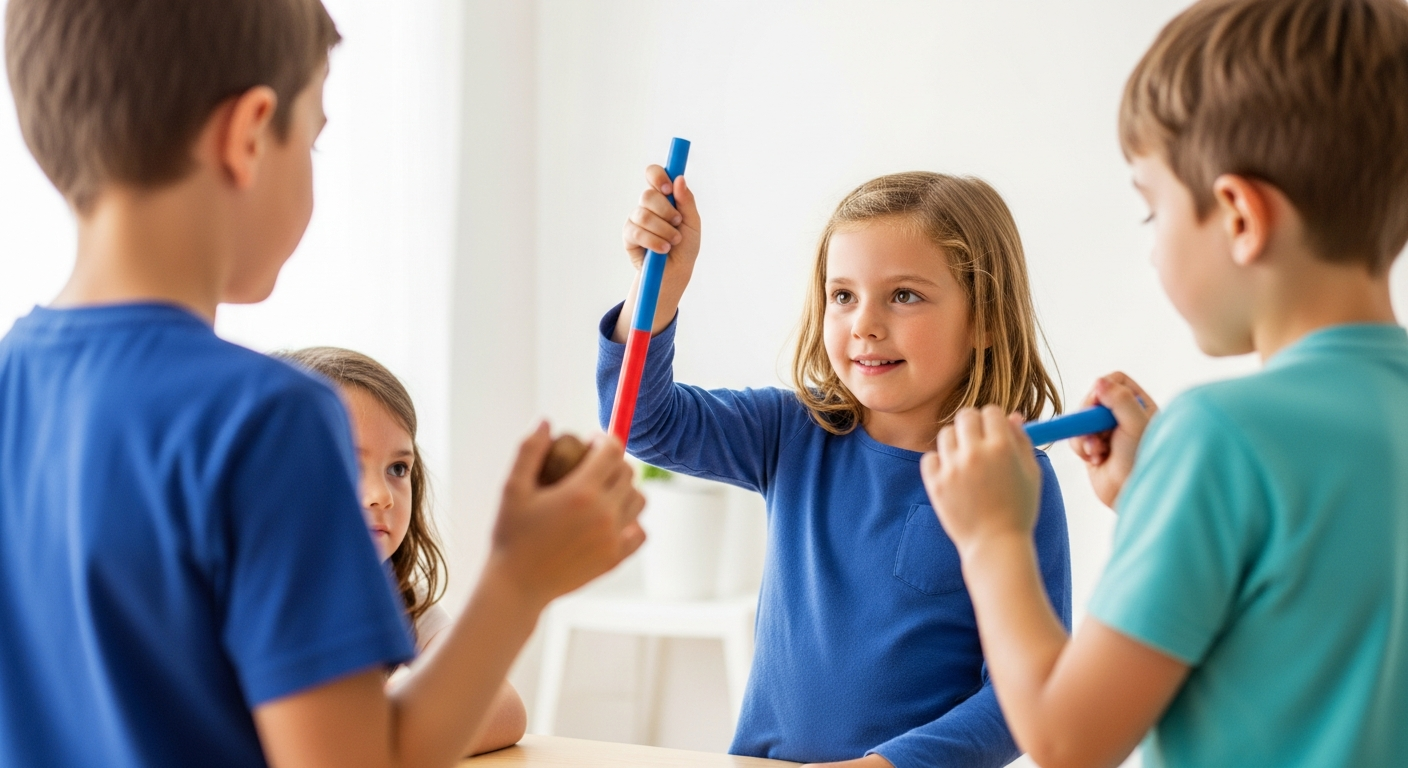
Table of Contents
- The Unseen Power of Play: More Than Just Fun
- "Minute to Win It" Inspired Games for Language Development
- Integrating Speech Blubs: Making Smart Screen Time Work for You
- Conclusion
- Frequently Asked Questions
Ever felt like you’re juggling a dozen tasks while trying to keep your little ones entertained and engaged? It’s a common scenario for parents everywhere. We all want to provide enriching experiences for our children, but the demands of daily life often leave us searching for activities that are both quick and genuinely fun. The good news is, you don't need elaborate setups or expensive toys to foster incredible growth and create lasting memories. Sometimes, the most powerful learning happens through the simplest, most joyful games.
This blog post is designed to be your go-to resource for a treasure trove of quick, engaging games that not only promise giggles and excitement but also secretly (or not-so-secretly!) supercharge your child’s speech and language development. We believe that every child deserves the chance to express themselves fully, to "speak their minds and hearts." This conviction is deeply embedded in the very foundation of Speech Blubs, a company born from our founders' personal journeys with speech challenges. We created the tool we wished we had—a joyful, effective solution for the 1 in 4 children who need speech support, blending scientific principles with play. We’ll explore how these simple, screen-free games lay crucial groundwork for communication skills, and how our unique app offers "smart screen time" that complements active play to further empower your child’s voice. Get ready to transform everyday moments into powerful learning opportunities, filled with laughter and connection.

The Unseen Power of Play: More Than Just Fun
Play is often seen as mere entertainment, a way for children to pass the time. Yet, for child development experts, play is the most powerful engine for learning and growth. It's the natural classroom where children explore, experiment, and make sense of their world. When we engage our children in quick, fun games, we're not just filling time; we're actively building foundational skills across multiple developmental domains.
For speech and language development, play is absolutely critical. It provides the context for:
- Vocabulary Expansion: Naming objects, actions, and concepts within a game.
- Following Directions: Listening and understanding multi-step instructions ("First do this, then do that").
- Turn-Taking & Social Cues: Learning the rhythm of conversation, understanding non-verbal communication, and developing patience.
- Problem-Solving: Figuring out how to win, how to achieve a goal, or how to collaborate.
- Emotional Regulation: Managing frustration, celebrating success, and expressing feelings in a safe environment, all of which are vital for clear communication.
- Imaginative Play & Narrative Skills: Creating stories, characters, and scenarios, which builds the basis for telling personal narratives later on.
- Sound Production & Articulation: Imitating sounds, practicing specific word pronunciations in a low-pressure, playful setting.
These quick games offer a fantastic "screen-free" alternative to passive viewing, promoting active engagement and strengthening family bonds. They provide opportunities for joint attention—where you and your child are focused on the same thing at the same time—a cornerstone of language acquisition. Through shared laughter and focused interaction, you're not just playing; you're building a communicative bridge with your child. To see how we at Speech Blubs integrate these principles into our "smart screen time" approach, visit our main homepage.
Our Mission: Empowering Children to Speak Their Minds and Hearts
At Speech Blubs, our commitment stems from a deeply personal place. Our founders, each with their own childhood experiences of speech difficulties, understood the profound impact that communication challenges can have. This personal journey fueled the creation of Speech Blubs – a tool designed to be the immediate, effective, and joyful solution they wished they'd had.

We firmly believe that every child deserves the opportunity to express themselves fully, to share their thoughts, feelings, and ideas without hesitation. That's why we meticulously blend scientific principles with the magic of play, transforming screen time from a passive experience into a vibrant, interactive learning adventure. Our unique "video modeling" methodology, where children learn by watching and imitating their peers, is central to our approach, fostering natural and engaging communication development. We ensure that our app not only supports speech but also strengthens the precious connection between children and their families, making learning a shared, joyful experience.
"Minute to Win It" Inspired Games for Language Development
Inspired by the concept of quick, fun challenges, these games are designed to be low-prep, use everyday items, and offer rich opportunities for speech and language practice. Remember to be an active participant – narrate actions, ask questions, and encourage your child's responses.
1. Balloon Blaster!
- Materials: Masking tape, large rubber bands, balloons.
- How to Play: Tape a large circle on the floor. Inflate and tie off 6-12 balloons and place them in the circle. Give each child (or adult) a rubber band. The goal is to shoot the balloons out of the circle using only the rubber band.
- Speech & Language Boosters:
- Action Verbs: "Shoot," "blast," "push," "move," "fly."
- Prepositions: "Out," "in," "over," "under."
- Counting: Count how many balloons are left or how many were shot out.
- Exclamations: "Pop!" "Whoosh!" "Go!"
- Breath Control: Blowing hard to inflate balloons (great for oral motor strength).
- Scenario: For a child who is learning about cause and effect, you can say, "If you shoot the rubber band, the balloon will fly out!" For children working on breath control, have them try to blow balloons out of the circle instead of using rubber bands.
2. Pass the Paper
- Materials: Rolls of toilet paper (one per team).
- How to Play: Form two or more teams. Each team stands in a line. The first person in line holds onto the end of the tissue and passes the roll down the line without breaking the tissue. Players continue passing the roll up and down until it runs out.
- Speech & Language Boosters:
- Sequencing: "First, then, next, last."
- Vocabulary: "Roll," "pass," "unroll," "break," "careful," "gentle."
- Cooperation & Communication: Encouraging team members, giving verbal cues ("Hold it steady!").
- Concepts: "Long," "short," "full," "empty."
- Scenario: This game is fantastic for practicing multi-step directions. "Hold the paper gently, then pass it to your friend behind you, but don't break it!" Focus on the 'break' vs 'not break' concept.
3. Blow Your Nose (Tissue Race)
- Materials: Coffee stirrers or straws, tissues, tables.
- How to Play: Give each child a coffee stirrer/straw and a tissue. Kids crumple up their tissues and lay them at one end of a table. The object is to blow through the stirrer/straw to get the tissue all the way across the table.
- Speech & Language Boosters:
- Oral Motor Skills: Practicing controlled blowing (essential for some speech sounds).
- Directionality: "Across," "forward," "straight."
- Concepts: "Fast," "slow," "stop," "go."
- Descriptive Words: "Light," "fluffy," "crumpled."
- Scenario: For a child who needs practice with the 'p' or 'b' sounds, encourage them to make a strong puff of air. "Big breath, puff!" or "Blow it past the finish line!"
4. Food Processor (Straw Suction Challenge)
- Materials: Drinking straws, small snack items (e.g., M&M’s, Goldfish crackers), empty cups, cups with snacks.
- How to Play: Give each player an empty cup, a drinking straw, and a cup with a few snack items. Kids pick up each snack item using only the straw to create suction and then transfer it to the empty cup – no hands allowed.
- Speech & Language Boosters:
- Oral Motor Strength & Control: Developing lip and tongue strength through suction (important for feeding and speech).
- Counting: Count the transferred snacks.
- Vocabulary: Naming the snacks, "pick up," "transfer," "suction," "sticky."
- Problem-Solving: "How can I get it to stick?"
- Scenario: A child working on articulation can practice the initial sounds of the snacks as they pick them up, like "Mmm, M&M!" or "Goldfish!"
5. Tiny Towers (Cheerio Stacking)
- Materials: Cheerios cereal.
- How to Play: Form pairs. One partner lies flat on the floor, facing up. The other partner gets Cheerios. Build the tallest tower of Cheerios on their partner’s nose without it falling over.
- Speech & Language Boosters:
- Prepositions: "On," "off," "up," "down."
- Concepts: "Tall," "short," "more," "less," "balance," "fall."
- Counting: Count the Cheerios in the tower.
- Turn-Taking & Collaboration: Giving instructions and encouragement.
- Scenario: For a child who struggles with the concept of "on," this provides a direct, hands-on example: "Put the Cheerio on your nose!" If it falls, "Oh no, it fell off!"
6. Shooting Star (Cotton Ball Flip)
- Materials: Plastic spoons, cotton balls, bowls or cups.
- How to Play: Place bowls/cups on the floor. Stand about a foot away. Place a cotton ball on the spoon, aim at the bowl, and try to flip it in. If it misses, pick it up and try again. If it lands, step back and try from farther away.
- Speech & Language Boosters:
- Spatial Concepts: "Into," "out," "far," "close," "over."
- Action Verbs: "Flip," "aim," "catch," "miss," "try."
- Sequencing: "First, put it on the spoon. Then, aim. Last, flip it!"
- Descriptive Words: "Soft," "light," "white."
- Scenario: Great for children who need practice with spatial words. "Flip it into the cup!" "Oh, it went over the cup!"
7. Make Your Mark (Marker Tower)
- Materials: Lots of markers that can be linked together end to end.
- How to Play: Teams of four. Place a pile of markers in the center. Each team builds a free-standing tower out of markers by connecting them. Build it without falling in five minutes.
- Speech & Language Boosters:
- Collaboration & Negotiation: "What should we do next?" "Can you hold this?"
- Descriptive Vocabulary: "Tall," "strong," "wobbly," "colorful," "connected."
- Problem-Solving Language: "How can we make it taller?" "If we do this, it will fall."
- Counting & Colors: Identifying colors and counting markers used.
- Scenario: For children developing narrative skills, they can describe the "story" of their tower: "Our tower is strong and red and it won't fall down!"
8. Sticky Note Challenge (Stick Up)
- Materials: A pack of sticky notes for every two players.
- How to Play: Form pairs. One person is the "Sticker," one is the "Stickee." The Sticker places sticky notes on their partner, trying to cover them in two minutes. Play a second round by removing notes.
- Speech & Language Boosters:
- Body Part Vocabulary: Naming where the sticky notes are placed ("on your head," "on your arm," "on your nose").
- Following & Giving Directions: "Put it on my leg," "Take it off your shirt."
- Concepts: "Cover," "uncover," "many," "few."
- Color Identification: Naming the colors of the sticky notes.
- Scenario: For children learning body parts, this is incredibly engaging. "Where should I put the blue sticky note?" "Put it on your knee!"
9. Crayon Clean-Up (Pencil Chopsticks)
- Materials: Two pencils, a small box of crayons per player.
- How to Play: Empty the box of crayons on the table. Use the pencils like chopsticks to pick up crayons and place them back in the box, pointed end up. Race to place as many as possible.
- Speech & Language Boosters:
- Fine Motor Skills: Crucial for writing readiness and speech articulation.
- Color & Object Naming: "Red crayon," "blue crayon."
- Sequencing: "First, pick up. Then, put in. Last, close the box."
- Counting: How many crayons did you get in?
- Scenario: For children practicing "in" and "out," this is perfect. "Put the crayon in the box." "Now, take them out again!"
10. Go Fish (Goldfish Catch)
- Materials: One cup of Goldfish crackers, an empty cup for every two players.
- How to Play: Form pairs. Partners stand two feet apart. One is the "Pond" (holds cup of Goldfish), the other is the "Fisher" (holds empty cup on head). Pond tosses Goldfish, Fisher tries to catch in the cup on their head.
- Speech & Language Boosters:
- Gross Motor Skills: Coordination.
- Action Verbs: "Toss," "catch," "drop," "eat."
- Spatial Concepts: "In," "out," "on," "off," "up," "down."
- Sharing & Turn-Taking: Deciding who is the Pond and who is the Fisher.
- Scenario: For children struggling with prepositions, "The Goldfish went into the cup!" or "It fell off your head!"
11. Clip Dips (Pipe Cleaner & Paper Clip)
- Materials: A pile of paper clips, a paper cup, a chenille wire (pipe cleaner) for each child.
- How to Play: Use the chenille wire to pick up paper clips and put them in a cup – no hands allowed. Gather as many as you can.
- Speech & Language Boosters:
- Fine Motor Skills: Pincer grasp development, important for articulation and pre-writing.
- Counting & Quantity: "Many," "few," "more," "less," counting the clips.
- Action Verbs: "Pick up," "put in," "drop."
- Color & Shape Recognition: If using colored clips.
- Scenario: For children learning to count, "One clip, two clips, three clips in the cup!"
12. Sensory Bin Search
- Materials: A large bin, sensory filler (rice, beans, pasta, water beads), small hidden objects (e.g., toy animals, letters, shapes).
- How to Play: Hide various objects within the sensory filler. Provide scoops or small tools. Children search for the hidden objects.
- Speech & Language Boosters:
- Descriptive Vocabulary: "Soft," "rough," "smooth," "tiny," "big," "hidden," "found."
- Object Naming: Identifying each object as it's found.
- Question Asking & Answering: "What did you find?" "Is it a car?"
- Imaginative Play: Creating scenarios with the found objects.
- Scenario: For a child expanding their adjective vocabulary, "Wow, you found a tiny, smooth rock!" Or, for a child learning animal sounds, "Look, a cow! What does a cow say? Moooo!"
13. Sound Scavenger Hunt
- Materials: No materials needed, or a list of sounds.
- How to Play: Go on a "listening walk" indoors or outdoors. Challenge your child to identify specific sounds. "Can you hear something loud?" "Can you hear a bird?" Alternatively, give them a sound (e.g., "Find something that starts with the 'b' sound" or "Find something that makes a 'ding' sound").
- Speech & Language Boosters:
- Auditory Discrimination: Learning to differentiate between different sounds.
- Vocabulary: Naming the source of the sound (e.g., "car," "dog," "wind").
- Sound Awareness: Identifying initial sounds of words.
- Question Formation: "What's that sound?"
- Scenario: For a child developing phonological awareness, "Listen, can you hear something that goes 'clippety-clop'?" (horse). Or, "Can you find something that starts with a 's-s-s' sound?" (snake, sun).
14. Emotion Charades
- Materials: Slips of paper with different emotions written or drawn (happy, sad, angry, surprised, silly, sleepy).
- How to Play: Each player picks an emotion and acts it out without speaking. Others guess the emotion.
- Speech & Language Boosters:
- Emotional Vocabulary: Learning and using words for feelings.
- Non-Verbal Communication: Understanding and expressing emotions through facial expressions and body language.
- Inferencing: Guessing what someone is feeling based on their actions.
- Question Asking: "Are you happy?" "Why are you sad?"
- Scenario: For a child who struggles to express feelings, this provides a safe, playful outlet. "You look angry! What makes you feel angry?"
15. Story Cubes/Dice
- Materials: Story dice (dice with pictures on each face, available online or DIY with stickers on regular dice).
- How to Play: Roll the story dice. Players take turns creating a story that incorporates the pictures on the dice, building on each other's contributions.
- Speech & Language Boosters:
- Narrative Skills: Developing the ability to create a cohesive story with a beginning, middle, and end.
- Vocabulary Expansion: Using descriptive words, action verbs, and connectors.
- Sequencing: Ordering events logically.
- Imagination & Creativity: Encouraging imaginative thought.
- Scenario: For a child who needs practice with sentence structure or conjunctions, "The boy saw a cat, and the cat was playing with a ball."
Integrating Speech Blubs: Making Smart Screen Time Work for You
While these screen-free games are incredibly valuable, we understand that smart screen time can also be a powerful tool in your child's communication journey. That's where Speech Blubs comes in. Our app is designed to complement these activities, providing targeted practice and reinforcement of the skills your child is developing through play.
Imagine this: your child just finished playing "Animal Charades" and is excited about making animal sounds. You can then transition to the "Animal Kingdom" section in Speech Blubs, where they watch and imitate their peers making those very same sounds and words. This unique video modeling approach activates "mirror neurons" in the brain, making learning intuitive and engaging. This isn't passive viewing; it's active, interactive learning that brings concepts to life.
Speech Blubs offers a dynamic and personalized learning experience. For parents wondering if their child could benefit from a structured approach, we offer a quick 3-minute preliminary screener. It involves just 9 simple questions and provides an assessment along with a personalized next-steps plan. It’s a great way to gain clarity and can even lead to a free 7-day trial of our app!
Our app is packed with thousands of engaging activities across various categories, all designed by speech-language pathologists and educational experts. We are proud of our methodology, which has earned us a top-tier rating on the Mobile Application Rating Scale (MARS). You can delve deeper into the science and research behind our approach on our website. We're committed to providing a fun and effective solution, ensuring that every minute your child spends with Speech Blubs is a minute well spent on their communication growth.
Our Commitment to Your Child's Journey
At Speech Blubs, we are dedicated to fostering a love for communication, building confidence, and reducing the frustration often associated with speech development challenges. Our goal is to provide a powerful supplement to your child's overall development plan and, when applicable, professional therapy. We don't promise overnight transformations, but rather a consistent, joyful path toward clearer, more confident speech. We emphasize practical, valuable advice and realistic expectations – celebrating every step of progress, big or small.
Don't just take our word for it. Read what other parents are saying about their child's success and confidence building with our app. Their stories are a testament to the positive impact Speech Blubs has on families around the world. Visit our testimonials page to hear directly from our community.
Making the Most of Speech Blubs: Value & Pricing
We believe in transparency and providing exceptional value to empower every child's voice. That's why we offer two straightforward subscription plans for Speech Blubs, with the Yearly plan offering the best experience and savings.
Monthly Plan: For just $14.99 per month, you can access our core features and help your child build essential communication skills. This plan offers flexibility if you prefer a month-to-month commitment.
Yearly Plan: The Smart Choice! Our Yearly plan is $59.99 per year, which breaks down to an incredible $4.99 per month – a savings of 66% compared to the monthly plan! This is not just a better deal financially; it also unlocks exclusive, high-value features designed to give your child the most comprehensive support:
- 7-Day Free Trial: Try out all the premium features and see the magic of Speech Blubs for yourself, completely risk-free.
- The Extra Reading Blubs App: Get full access to our companion app, Reading Blubs, designed to complement speech development with early reading skills.
- Early Access to New Updates: Be among the first to experience our latest features and content.
- 24-Hour Support Response Time: Get priority support from our dedicated team whenever you need it.
The Monthly plan does not include these premium benefits, making the Yearly plan the clear best choice for sustained progress and maximum value.
Ready to provide your child with an immediate, effective, and joyful solution for speech support? We encourage you to choose the Yearly plan to unlock the incredible value, including your 7-day free trial and the bonus Reading Blubs app. You can get started by creating your account and beginning your free trial today! Alternatively, you can download Speech Blubs on the App Store or Google Play Store and select the Yearly plan to activate your trial and full features.
Conclusion
Engaging your child in quick, fun games is one of the most powerful and joyful ways to support their overall development, especially their burgeoning speech and language skills. These simple activities foster connection, build confidence, and create a rich environment for learning vocabulary, social cues, and articulation. By incorporating both active, screen-free play and smart, interactive screen time with tools like Speech Blubs, you're providing a comprehensive approach to empowering your child's voice.
At Speech Blubs, we are honored to be a part of your child's communication journey. Our scientifically-backed, play-based app, featuring video modeling and engaging content, is designed to be a supportive companion, making speech practice a delightful experience for both children and parents.
Don't wait to give your child the gift of clear and confident communication. Take the first step today! We highly recommend you choose the Yearly plan to gain full access to all our exclusive features, including the bonus Reading Blubs app and your 7-day free trial. Download Speech Blubs on the App Store or Google Play Store and select the Yearly plan, or sign up for your free trial on our website to unlock a world of joyful communication for your child.
Frequently Asked Questions
Q1: How do quick games specifically help with my child's speech development?
A1: Quick games are fantastic for speech development because they naturally encourage crucial skills like turn-taking, following directions, expanding vocabulary (by naming objects and actions), practicing different sounds and words in a fun context, and developing social communication skills through interaction and cooperation. They create a low-pressure environment for communication practice.
Q2: What exactly do you mean by "smart screen time" with Speech Blubs?
A2: "Smart screen time" refers to using digital tools in an active, engaging, and developmentally beneficial way, rather than passive viewing. With Speech Blubs, children are actively participating by imitating real children through our video modeling, engaging with interactive activities, and practicing speech sounds and words. It’s designed to be a tool for learning and connection, not just entertainment.
Q3: Is Speech Blubs a replacement for professional speech therapy?
A3: Speech Blubs is a powerful supplemental tool designed to support and enhance your child's speech and language development. While it provides a structured and engaging way to practice essential skills, it is not intended to replace professional speech therapy. We always recommend consulting with a speech-language pathologist if you have significant concerns about your child's communication.
Q4: How do I get started with the Speech Blubs app?
A4: Getting started is easy! You can download the Speech Blubs app directly from the Apple App Store or the Google Play Store. We highly recommend choosing the Yearly plan, as it includes a 7-day free trial and additional valuable features like the Reading Blubs app. You can also create your account and begin your free trial on our website.
About the author